17 Modern Garden Fencing Ideas That Upgrade Privacy and Curb Appeal
Published: 8 Sep 2026
A fence does more work in a yard than most homeowners give it credit for — it defines the boundary of the entire outdoor space, and a dated or purely utilitarian fence can undercut an otherwise well-designed garden. Modern garden fencing ideas solve that problem by treating the fence as a genuine design element rather than an afterthought, using clean lines, mixed materials, and thoughtful detailing to add privacy and structure without looking like a barrier bolted on as a last step. Many of these ideas also improve on standard wood fencing in terms of long-term durability and maintenance. This guide covers 17 modern garden fencing ideas for every budget and yard style, from horizontal slat wood to steel, glass, and living green options. Along the way, you will find honest pros and cons, real price ranges, a materials comparison table, maintenance advice, and answers to the questions people search for most before choosing a new fence. By the end, you will know exactly which style fits your yard, your budget, and your climate.
Is a Modern Fence Upgrade Right for You?
A modern fencing upgrade is one of the more visible investments you can make in a yard, but it is worth weighing the trade-offs honestly before committing to a full perimeter replacement.
Pros
● Strong curb appeal impact — a fence is often one of the first things visible from the street, so upgrading it can noticeably improve how the entire property reads.
● Improved privacy without a solid wall feel — many modern styles, like horizontal slats or louvered panels, offer strong privacy while still allowing light and airflow through.
● Better long-term durability options — materials like Corten steel, aluminum, and composite significantly outlast standard untreated wood fencing.
● Can be phased by section — fencing can often be replaced in sections over time, spreading the cost rather than requiring the full perimeter to be redone at once.
Cons
● Higher upfront cost than basic fencing — most modern materials and styles cost more per linear foot than a standard picket or chain-link fence.
● Some materials require specialized installation — metal, glass, and mixed-material fences often need professional installation rather than a straightforward DIY weekend project.
● HOA or local code restrictions may apply — height limits, material restrictions, and style guidelines vary significantly by neighborhood and municipality.
● Climate affects material choice significantly — certain materials, like unsealed wood or untreated steel, perform very differently depending on regional humidity, salt exposure, or freeze-thaw cycles.
For most homeowners, a modern fencing upgrade is worth the investment, especially when the fence is highly visible from the street or a main outdoor living area, though it is worth checking HOA rules and material suitability for your climate before finalizing a style.
1. Horizontal Slat Wood Fence
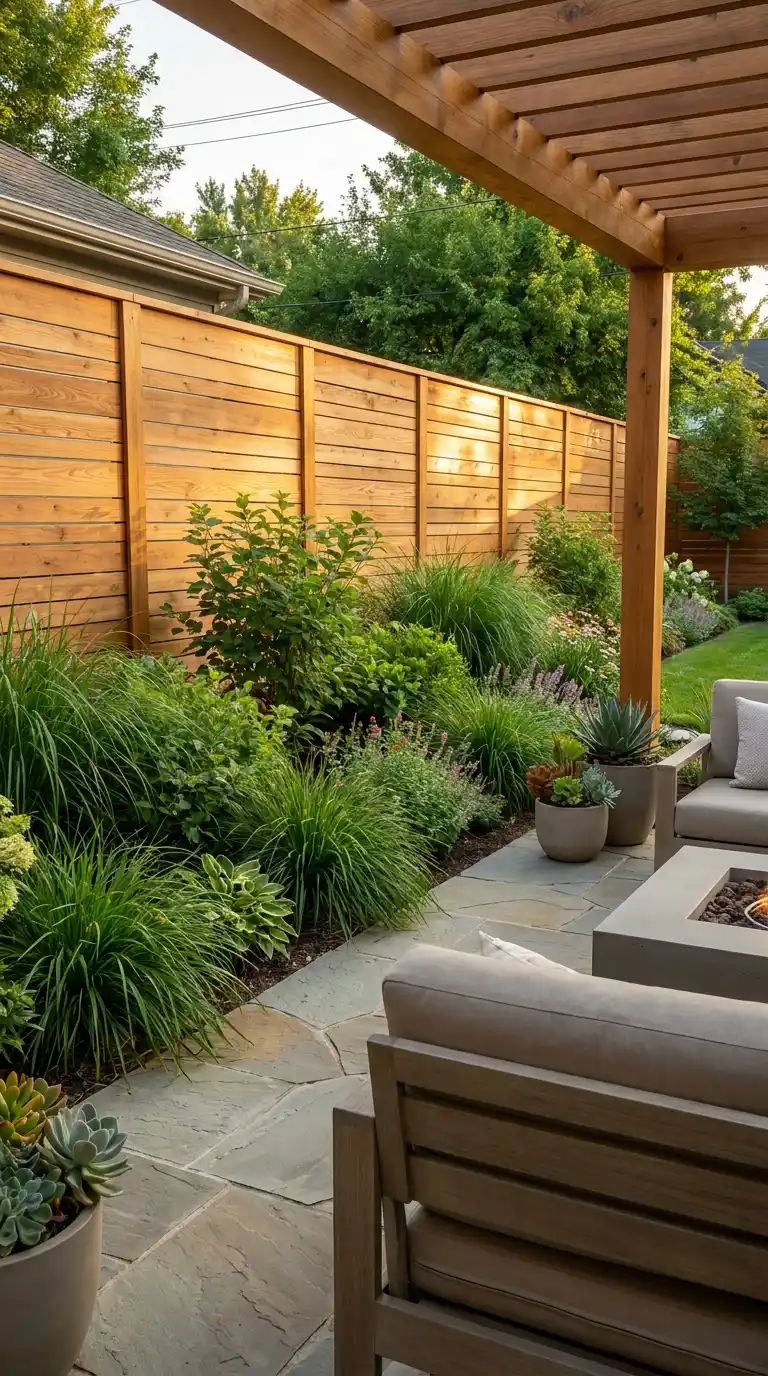
A horizontal slat fence is one of the most recognizable modern fencing styles, trading the traditional vertical picket orientation for clean horizontal lines that read as more contemporary and less utilitarian.
Choose a naturally rot-resistant wood like cedar or redwood, and apply a protective sealant to maintain the warm tone longer, since horizontal slats show weathering and graying more visibly than vertical boards.
Best suited for contemporary and mid-century-style homes and yards wanting warmth alongside a clean, modern look.
2. Corten Steel Fence Panels
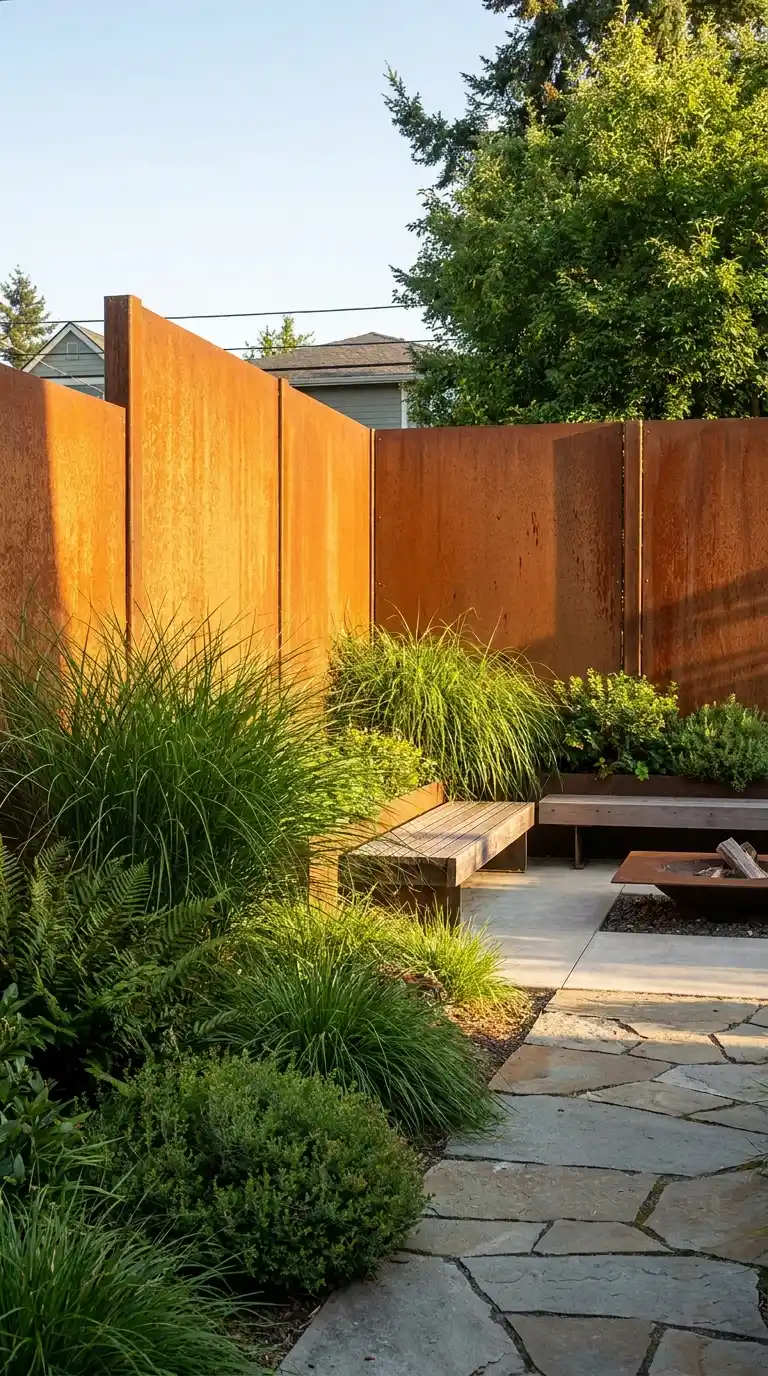
Corten steel fencing develops a stable, protective rust patina over time, which gives the material a warm, textured appearance that continues to evolve for the first year or two after installation before stabilizing.
Confirm proper drainage and ground clearance during installation, since Corten steel can stain adjacent concrete or paving with rust runoff if not installed with the right base detailing.
Best suited for: industrial-modern and desert-modern landscapes, and homeowners wanting a distinctive, low-maintenance metal fence.
3. Mixed Wood and Metal Fence
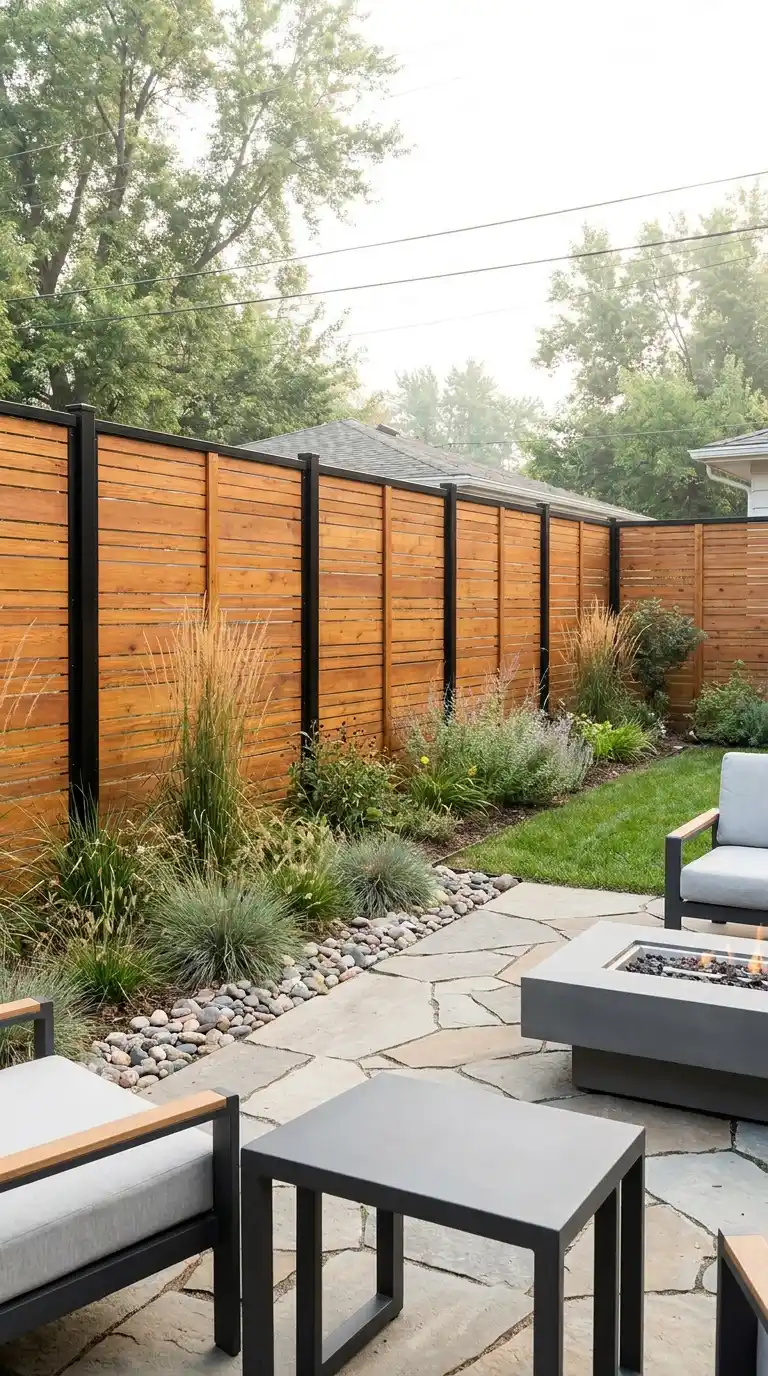
Combining wood infill with a metal frame gives a fence the warmth of natural wood alongside the structural durability and clean lines of steel or aluminum, often outlasting an all-wood fence significantly.
Choose a matte black or dark bronze metal frame to create contrast against lighter wood tones, which reinforces the intentional, designed quality of the mixed-material approach.
Best suited for: yards wanting the visual warmth of wood without sacrificing the long-term durability of a metal structural frame.
4. Living Green Wall Fence
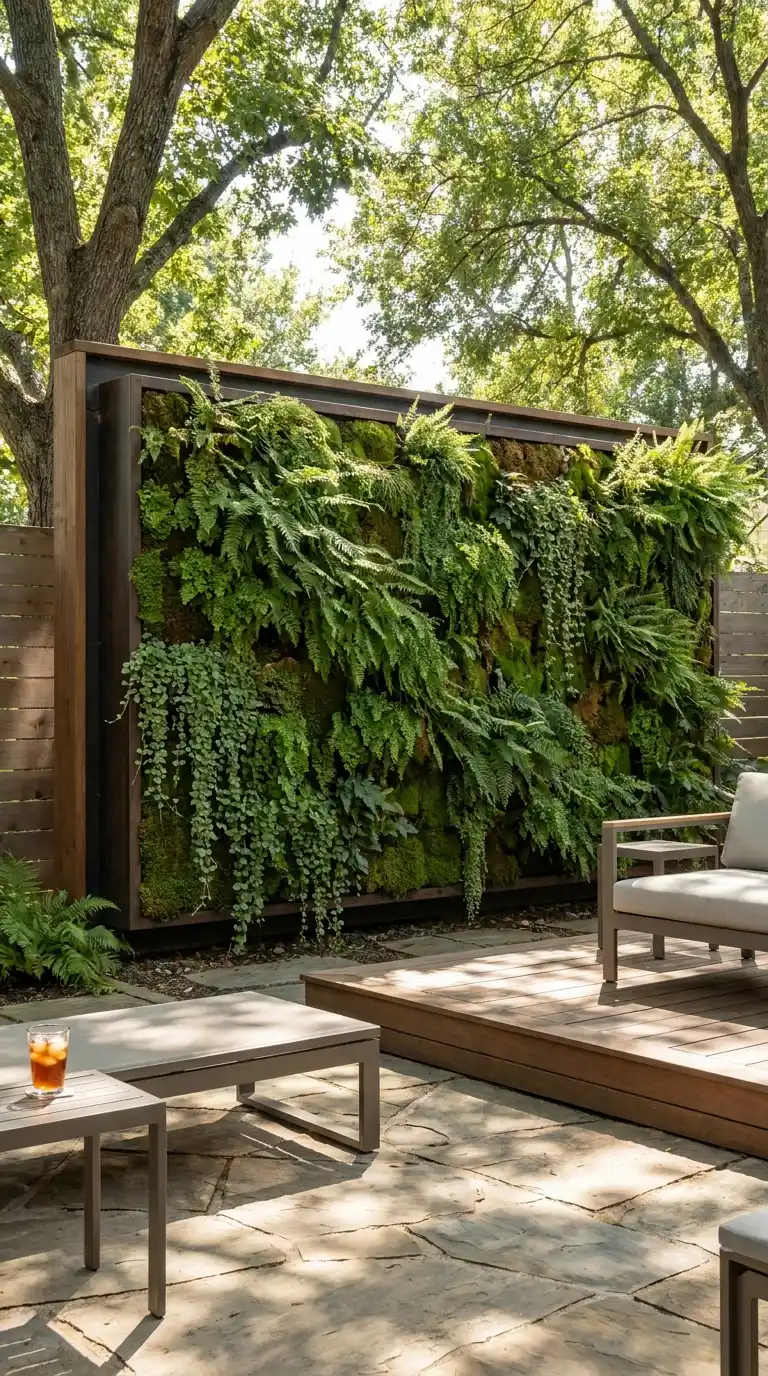
A living green wall fence uses a structural frame and integrated planting system to turn the fence itself into a vertical garden, offering privacy and a strong biophilic design element in one feature.
Choose a drought-tolerant, climate-appropriate plant mix and confirm the integrated irrigation system before installation, since living walls require more ongoing maintenance planning than static fencing materials.
Best suited for: gardens prioritizing greenery and biophilic design, and homeowners willing to commit to the additional maintenance a living system requires.
5. Powder-Coated Aluminum Slat Fence
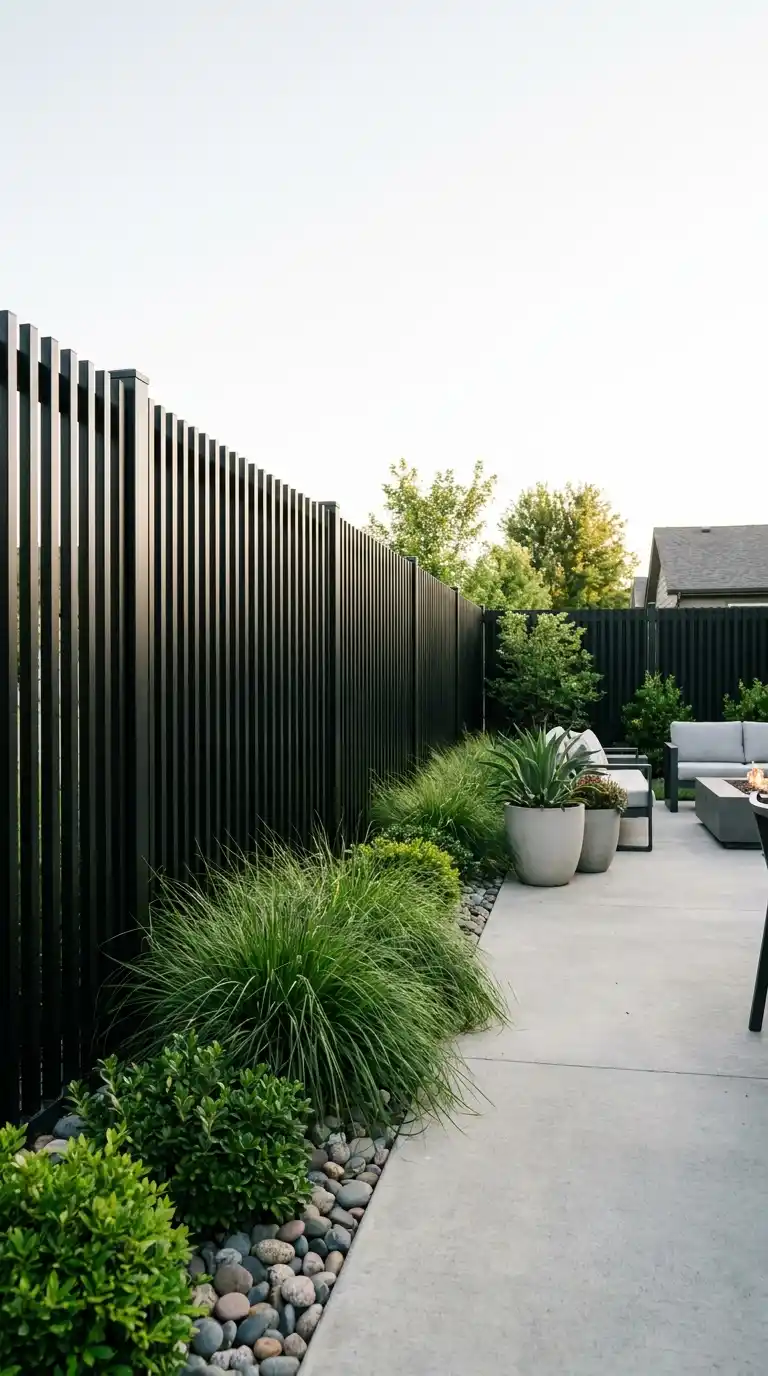
Powder-coated aluminum offers a clean, modern slat profile without the maintenance demands of wood, since the material does not rot, warp, or require refinishing the way natural wood fencing does over time.
Choose a slat spacing based on your privacy needs, since tighter spacing offers more visual privacy while wider spacing allows more airflow and a lighter overall look.
Best suited for: homeowners wanting a long-term, low-maintenance fencing solution with a clean modern profile.
6. Frosted Glass Panel Fencing
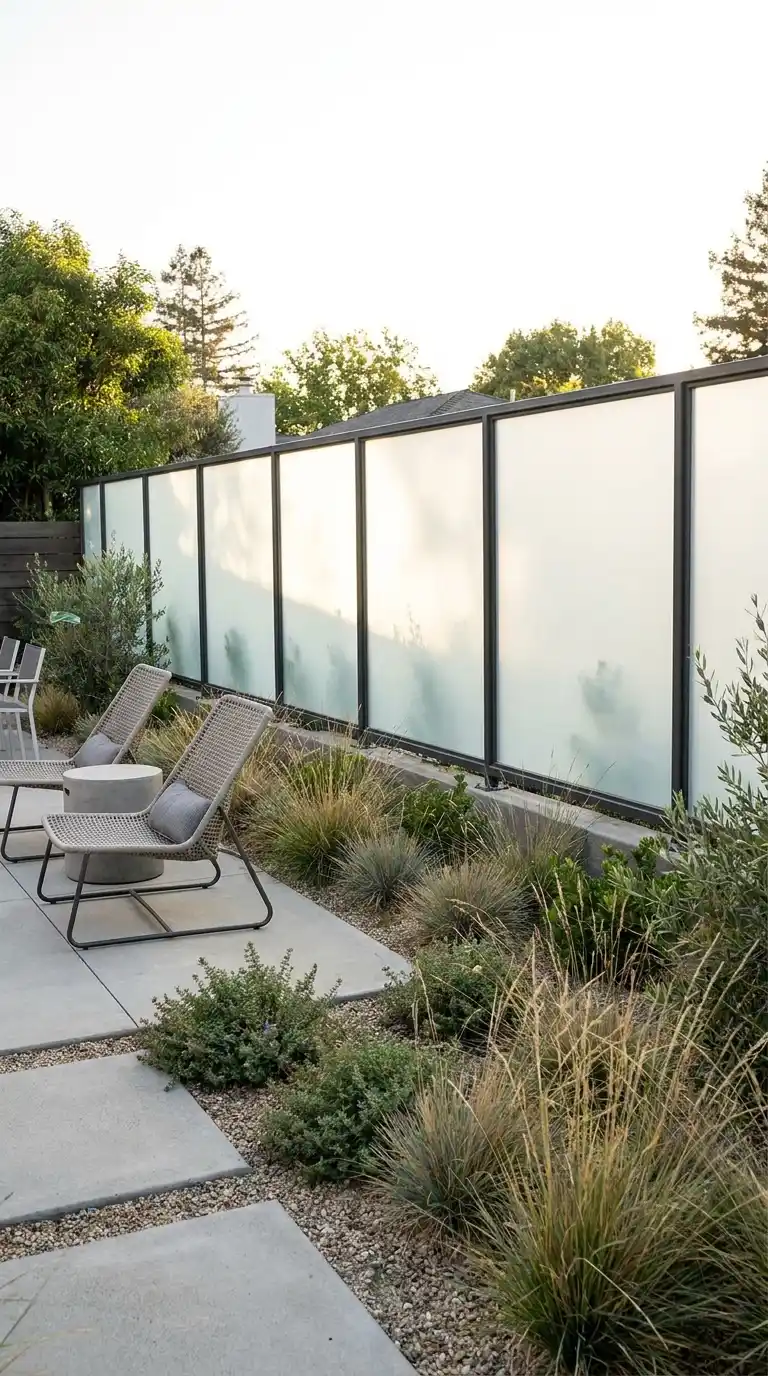
Frosted glass panels offer privacy while still allowing natural light to pass through, which keeps a fenced yard from feeling as visually closed off as a solid wood or metal privacy fence would.
Choose tempered, frosted glass specifically rated for outdoor use, and confirm local code requirements, since glass fencing regulations vary and often include specific safety glazing standards.
Best suited for: modern and minimalist homes prioritizing light and openness alongside privacy, particularly around pool areas or patios.
7. Bamboo Screening Fence
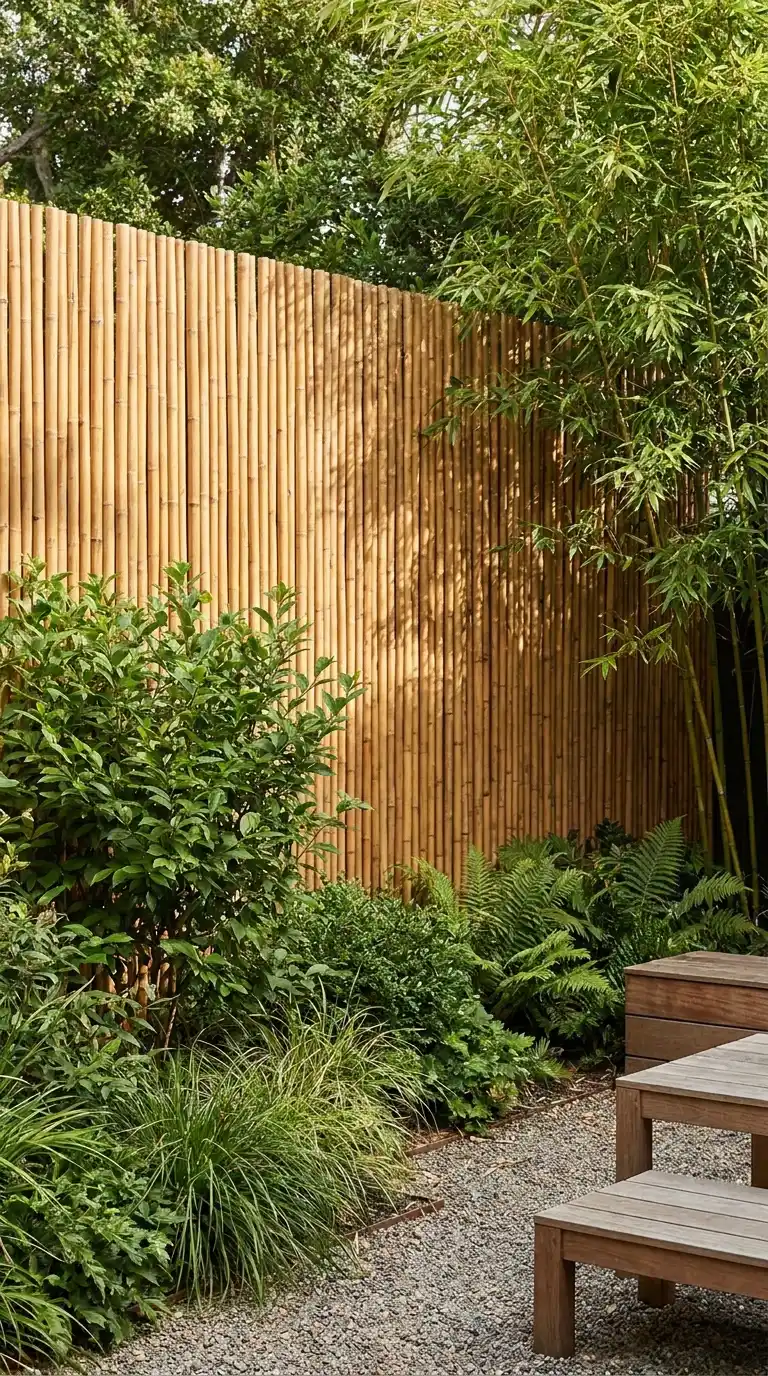
A bamboo screening fence brings natural texture and warmth at a lower cost than most wood or metal alternatives, and its organic material pairs especially well with tropical or Zen-inspired garden designs.
Choose treated or naturally rot-resistant bamboo species, since untreated bamboo fencing generally has a shorter lifespan than most other materials on this list, particularly in humid climates.
Best suited for: budget-conscious upgrades and gardens with a tropical, coastal, or Zen-inspired design direction.
8. Board-on-Board Privacy Fence With Modern Trim
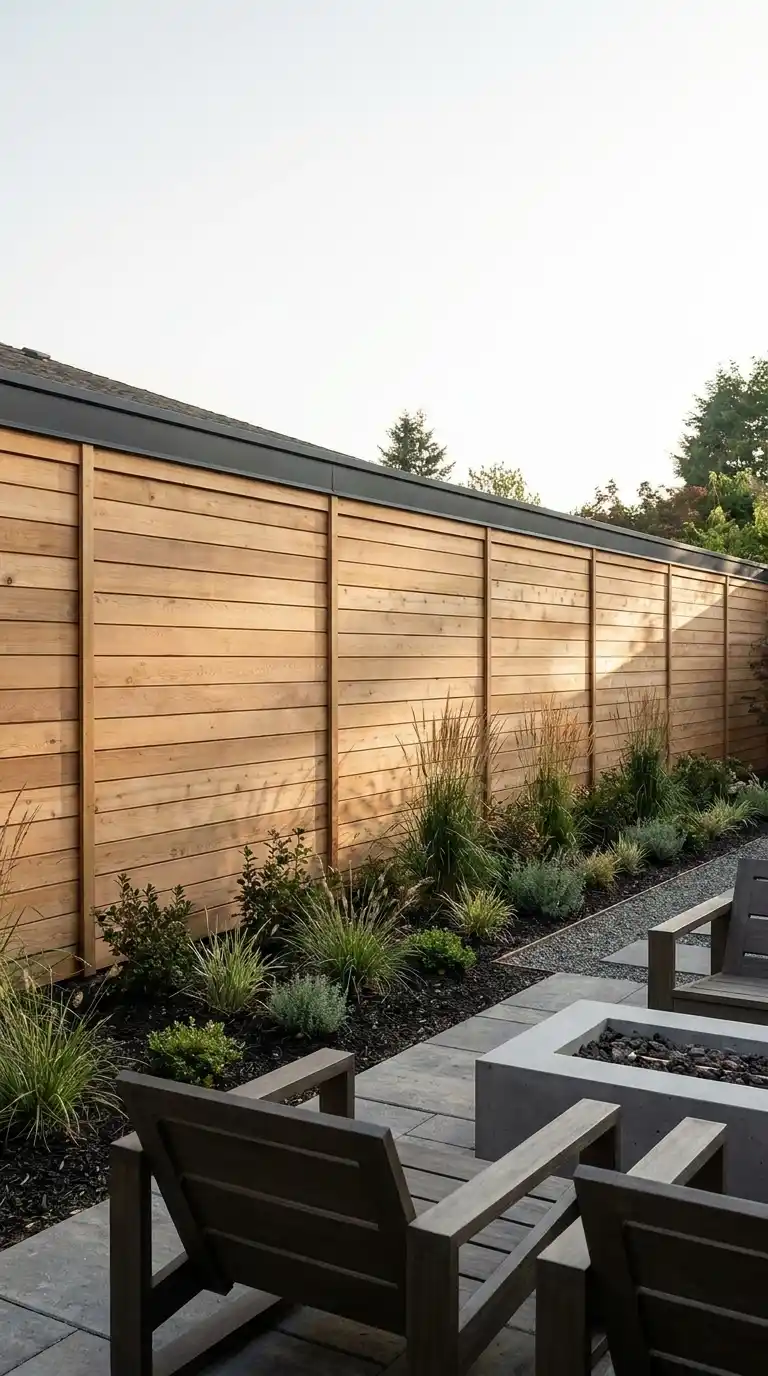
A board-on-board fence offers complete privacy with no visible gaps between boards, and adding a modern trim detail like a metal top cap elevates the style beyond a standard builder-grade privacy fence.
Stain the boards a single consistent tone rather than leaving them to weather naturally and unevenly, which keeps the fence looking intentional and maintained rather than simply functional.
Best suited for: yards needing maximum privacy, particularly in denser neighborhoods with close neighboring properties.
9. Minimalist Cable and Wire Tension Fence
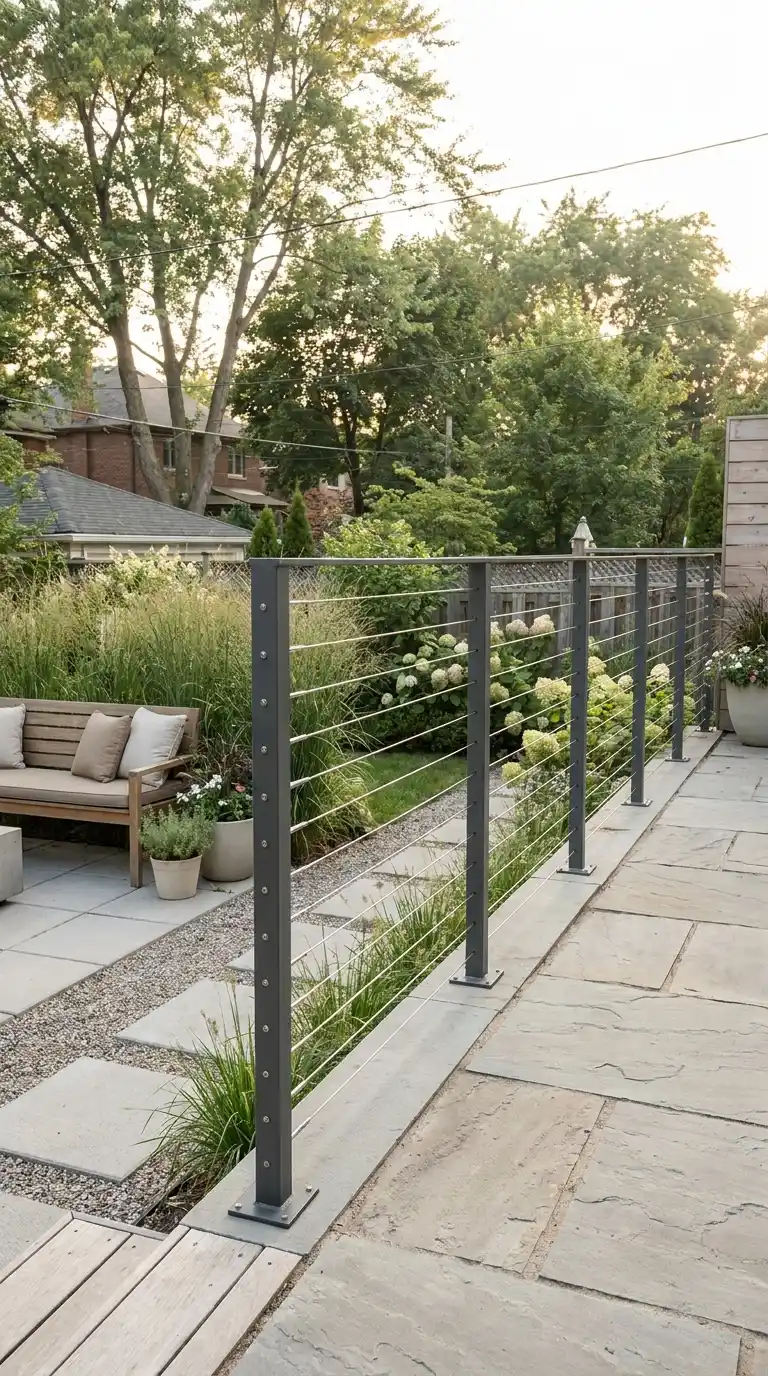
A cable tension fence defines a property boundary with minimal visual weight, using slim posts and horizontal steel cables rather than solid panels, which keeps garden views and airflow largely unobstructed.
This style works best as a boundary marker rather than a true privacy solution, so it is often paired with strategic landscaping in areas where more screening is needed.
Best suited for: yards with a scenic view worth preserving and gardens prioritizing openness over full privacy.
10. Woven Willow or Wattle Fence Panels
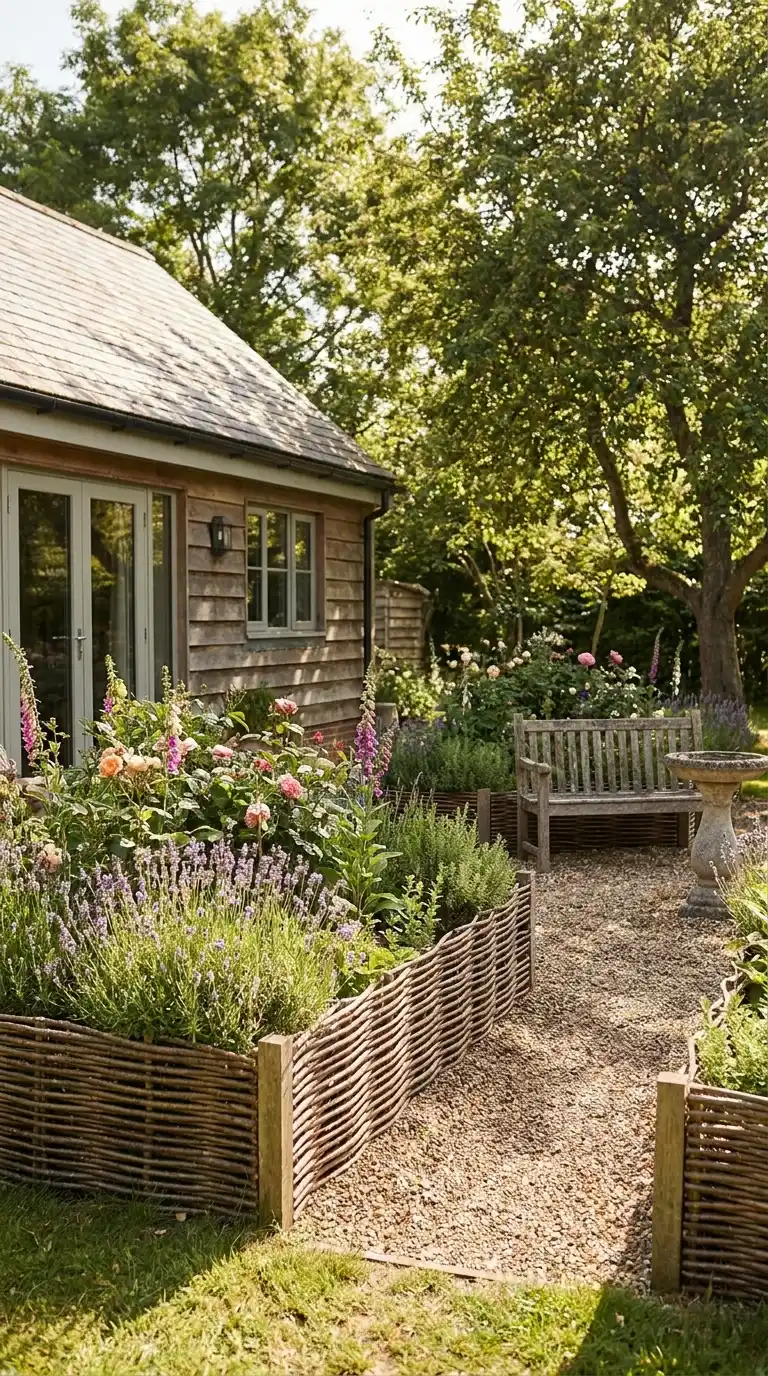
Woven willow fencing brings a handcrafted, textural quality to a garden border, and its natural basket-weave pattern works especially well as a low garden divider rather than a full privacy fence.
Use willow panels for interior garden bed borders or low decorative sections rather than the full perimeter, since the material typically has a shorter lifespan than more structural fencing options.
Best suited for: cottage garden and organic-modern landscapes, and low-cost interior garden divisions.
11. Concrete and Steel Post Combination Fence
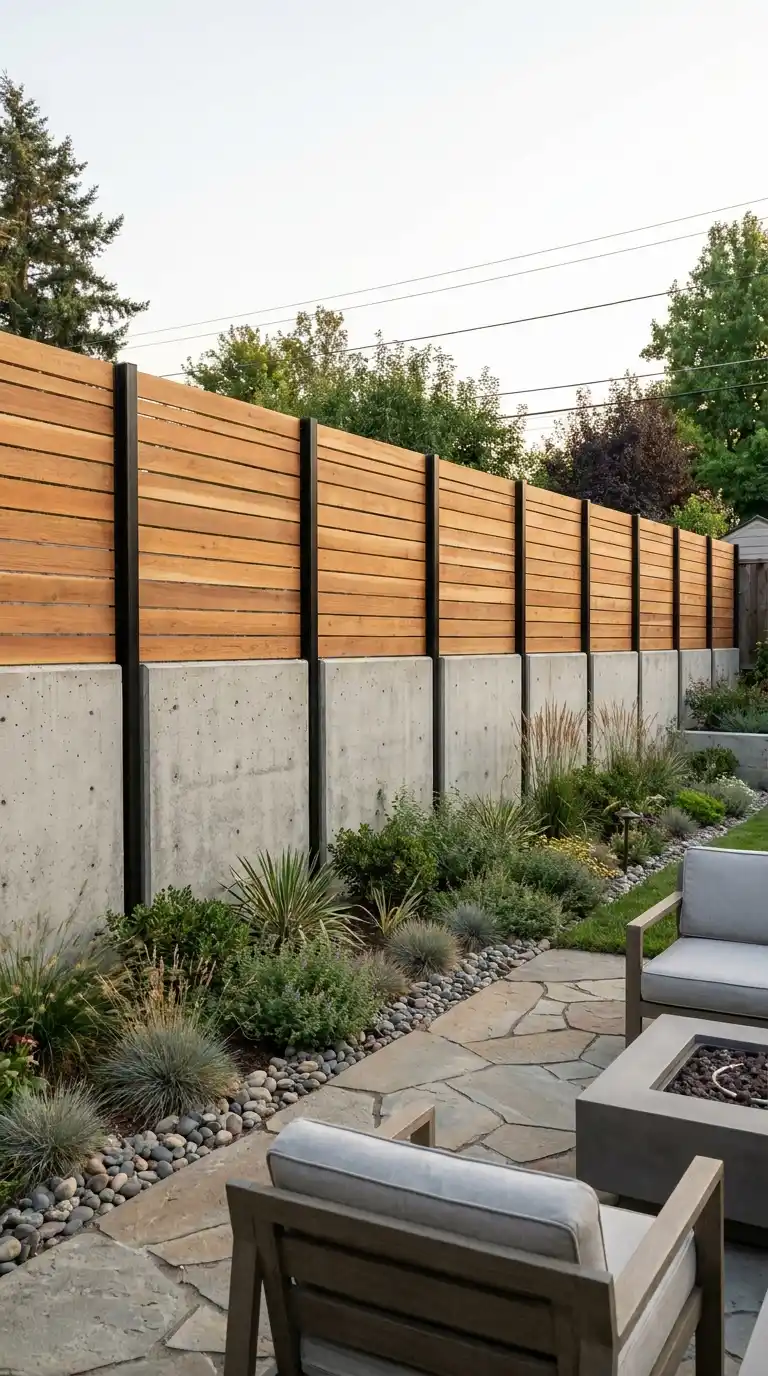
Combining a solid concrete lower section with a lighter wood or metal upper section gives a fence significant structural durability at the base while keeping the overall profile from feeling too heavy or fortress-like.
This approach works well on sloped properties, since a solid concrete base can be stepped or leveled more easily than trying to level an all-wood fence across uneven grade.
Best suited for: sloped yards and homeowners wanting a highly durable, architectural fencing solution.
You May Also Like: 20 Modern Kitchen Ideas That Feel Custom, Not Cookie-Cutter
12. Perforated Metal Screen Fence
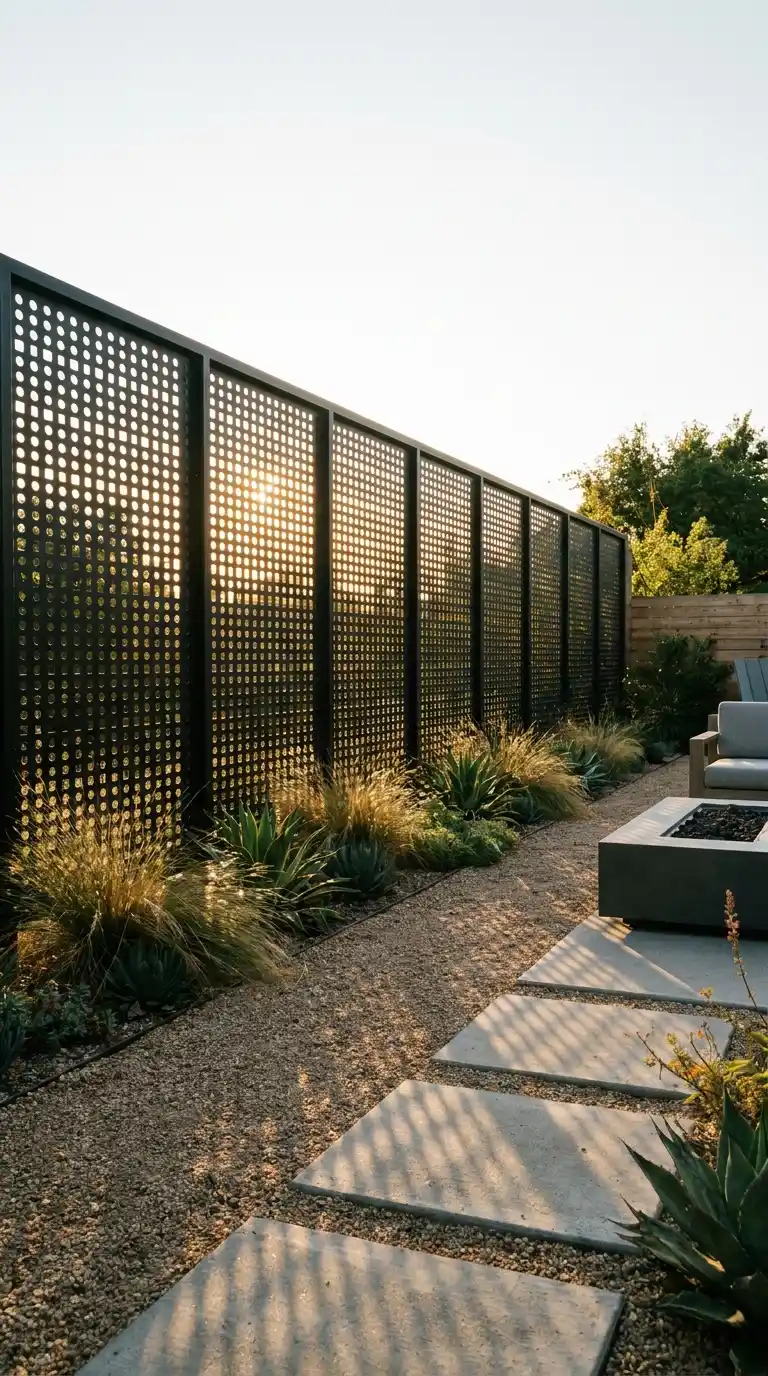
A perforated metal screen fence uses a pattern of cutouts to allow partial visibility and airflow while still providing meaningful screening, and the shadow patterns it casts add a decorative element throughout the day.
Choose a perforation pattern and density based on your specific privacy needs, since denser, smaller cutouts offer more screening than larger, more widely spaced patterns.
Best suited for: contemporary and architectural homes wanting a fence that doubles as a design feature.
13. Modern Black Metal Picket Fence
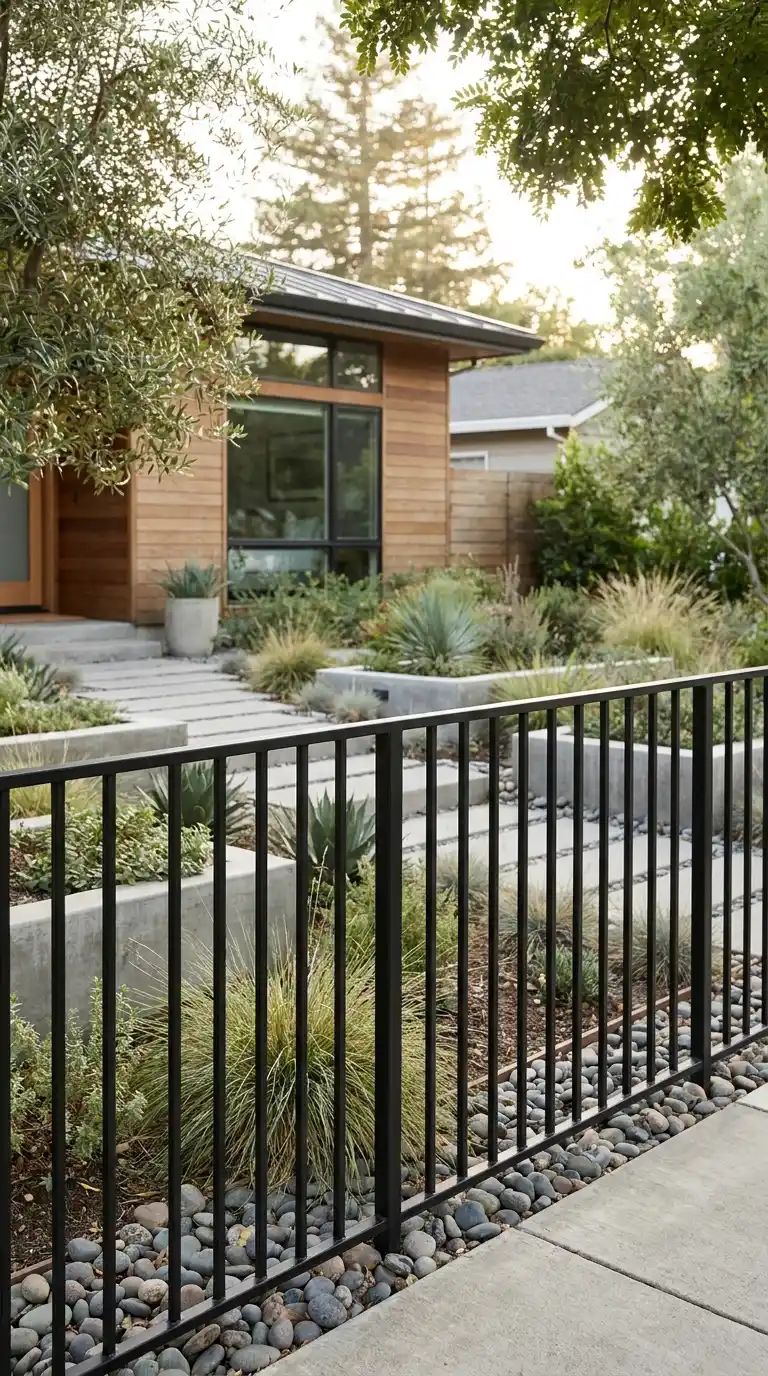
A modern take on the classic picket fence uses slimmer, more evenly spaced metal pickets in matte black rather than traditional white wood, keeping the familiar silhouette while updating the material and finish.
Choose powder-coated steel or aluminum pickets for long-term durability, since this style is most commonly used in front yards where curb appeal and low maintenance both matter significantly.
Best suited for: front yard boundaries and homeowners wanting a classic silhouette with a more contemporary material and finish.
14. Vertical Garden Trellis Fence
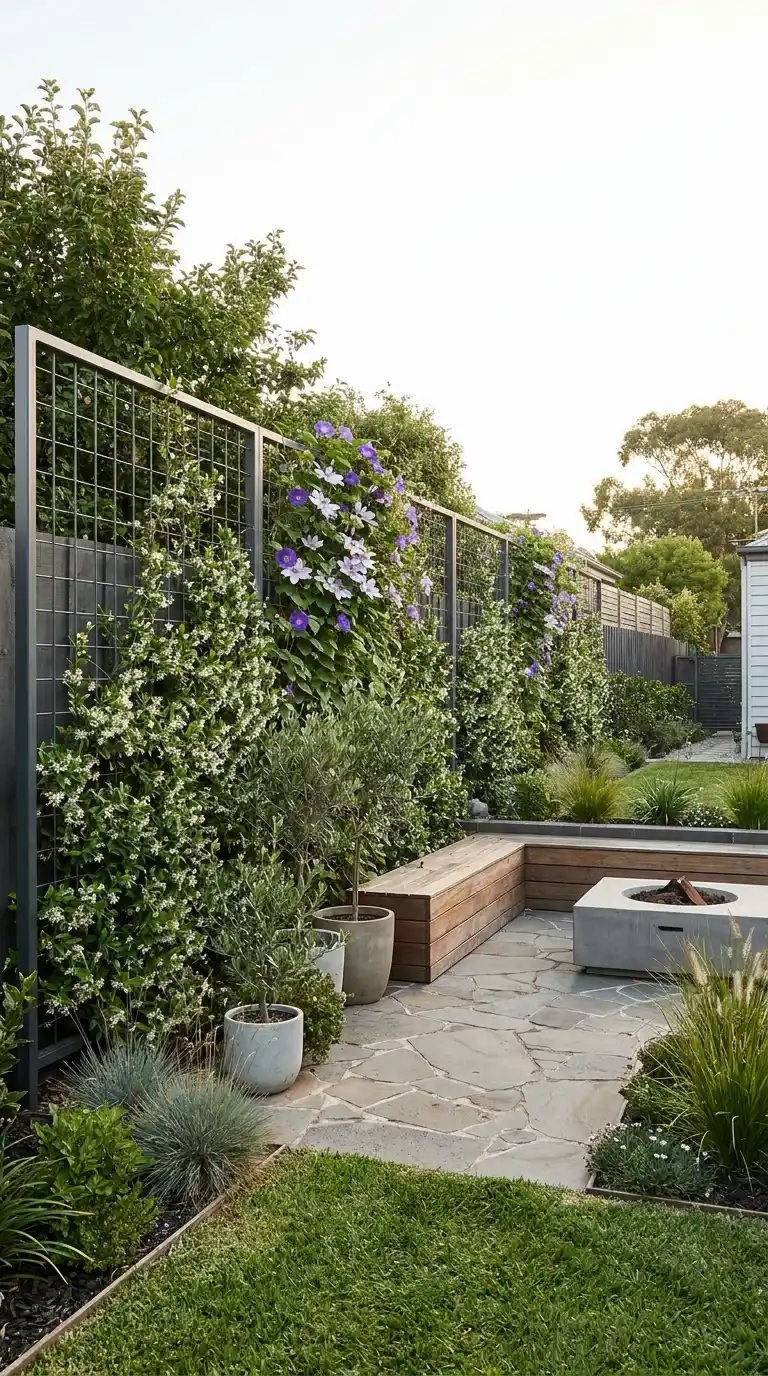
A trellis-style fence combines a structural frame with climbing plants, giving the fence a green, living quality once the plants mature, while starting out with a clean architectural grid pattern on its own.
Choose climbing plants suited to your climate and the trellis material, since some vines can damage certain fence materials over time if not properly trained or maintained.
Best suited for: gardeners who want to incorporate climbing plants and vertical greenery into their fencing from the start.
15. Stained Horizontal Batten Fence With Integrated Lighting
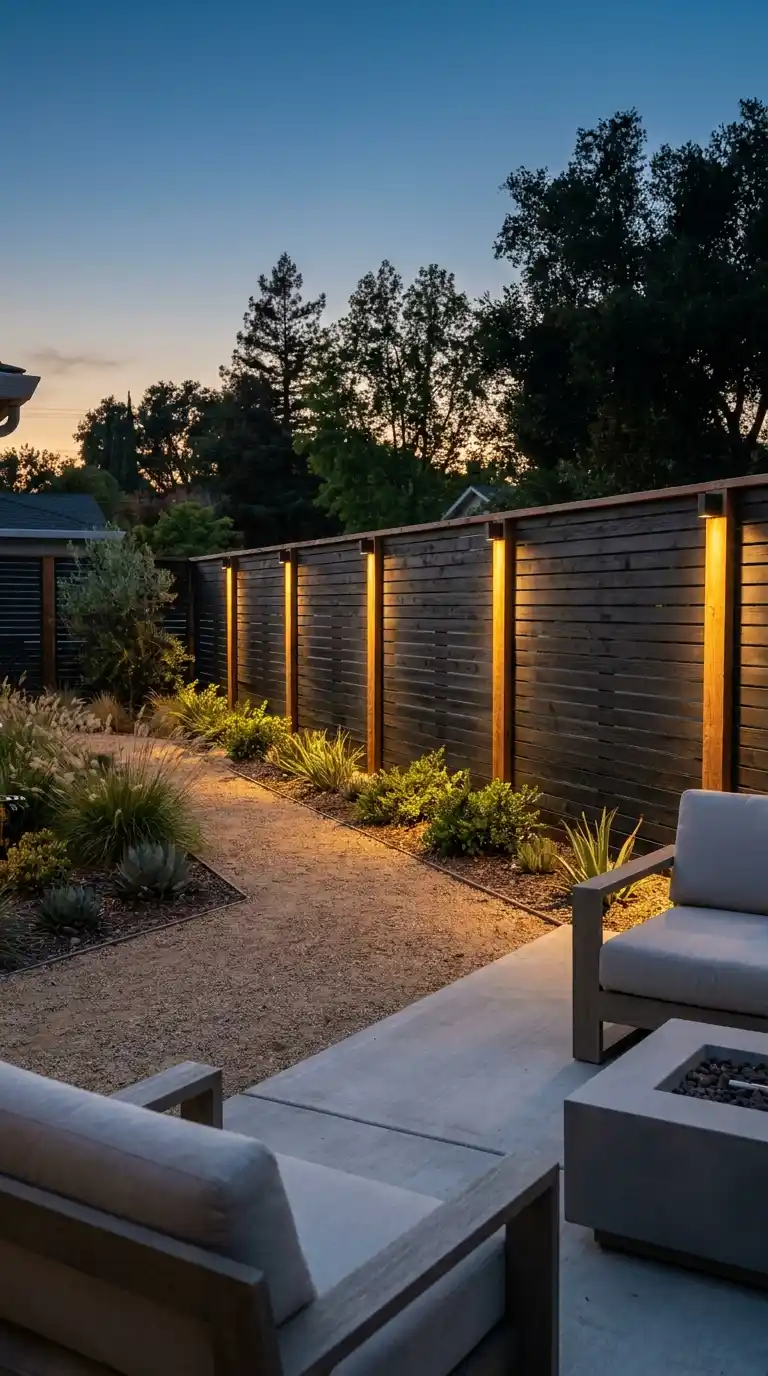
Adding integrated low-voltage lighting to fence posts extends the fence’s usefulness into the evening, providing both ambient lighting and improved visibility along the yard’s perimeter after dark.
Plan the wiring and lighting fixture placement during the fence’s initial installation, since retrofitting integrated lighting into an existing fence is significantly more labor-intensive than building it in from the start.
Best suited for: yards that see regular evening use and homeowners wanting their fence to double as a functional lighting feature.
16. Gabion Wall Fence
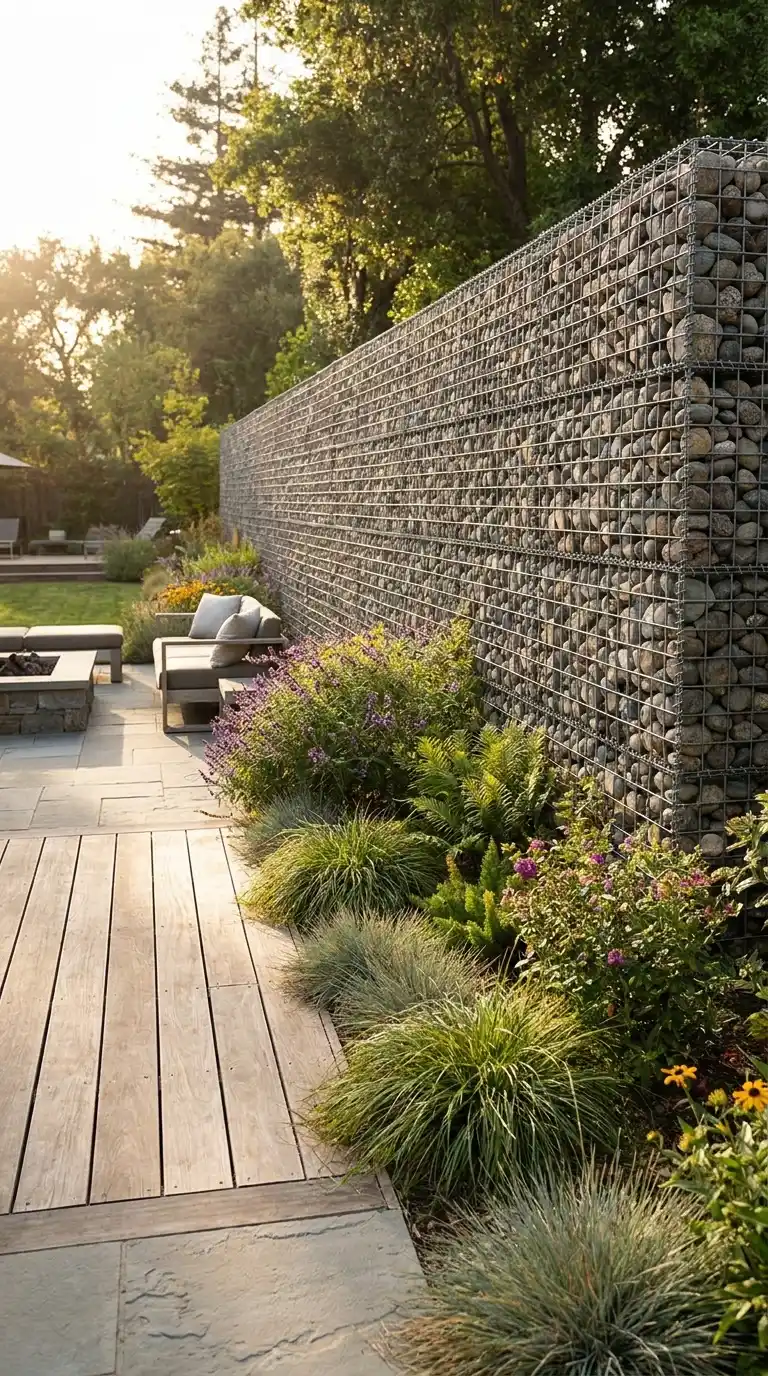
A gabion wall, made of wire cages filled with stone, offers a highly durable, low-maintenance fencing solution with a naturally textured appearance that few other fencing materials can replicate.
Confirm that your soil and site conditions can support the significant weight of a stone-filled gabion structure, since this fencing style is considerably heavier than wood, metal, or glass alternatives.
Best suited for: sloped properties needing retaining support alongside a fence and homeowners wanting a substantial, natural-material boundary.
17. Louvered Privacy Screen Fence
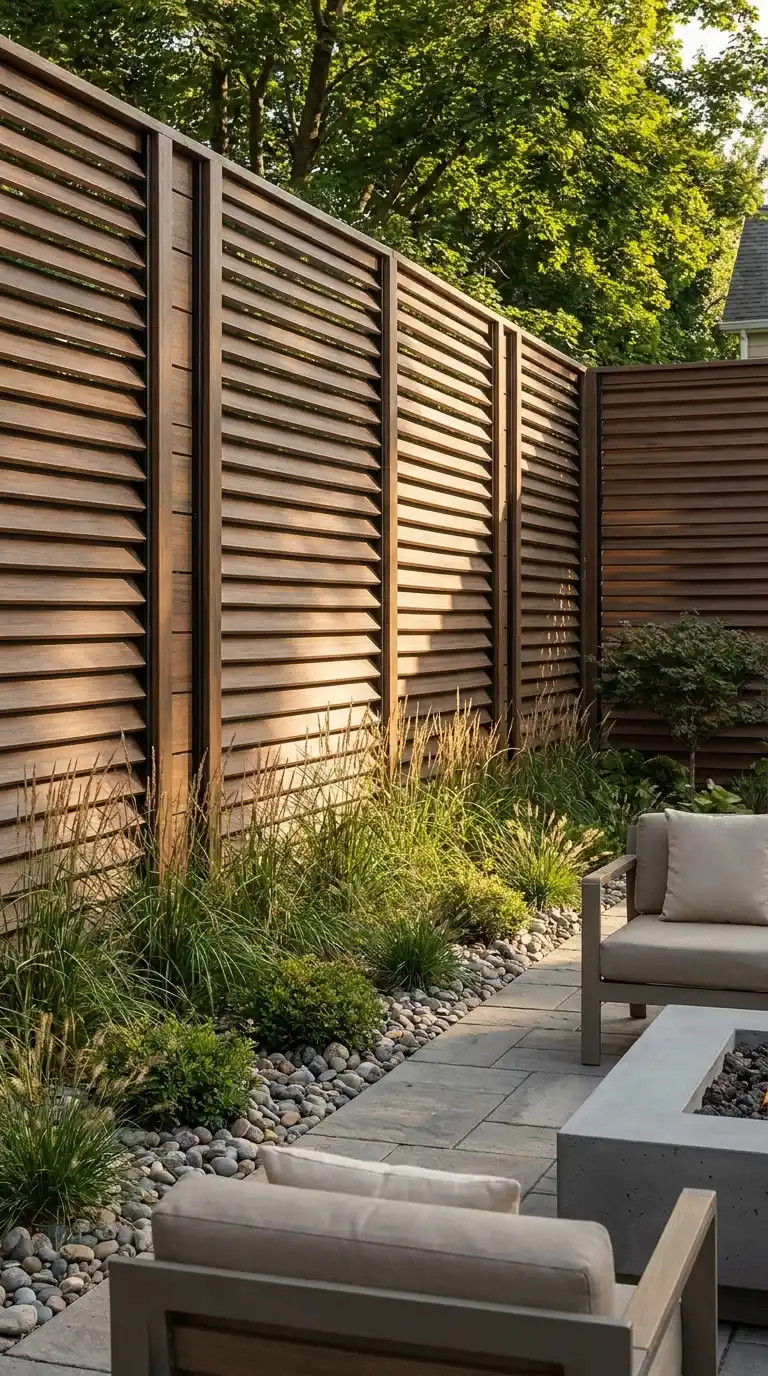
A louvered fence uses angled slats rather than flat, parallel boards, which block direct sightlines from most angles while still allowing airflow and some natural light through the fence.
Consider the louver angle relative to your yard’s primary sightlines, such as from a neighboring window or street, to maximize privacy exactly where you need it most.
Best suited for: yards needing targeted privacy from a specific sightline rather than full, solid screening across the whole perimeter.
Planning and Buying Tips
A few practical decisions up front will help your new fence hold up structurally and stay within local rules, not just look good on installation day.
● Check local codes and HOA guidelines before finalizing a design — height limits, material restrictions, and setback requirements vary significantly and can affect which styles are even permitted.
● Standard sizing to shop for — residential privacy fences typically run 6 feet tall, while front yard or decorative fencing is often limited to 3 to 4 feet depending on local code.
● Confirm property lines with a survey before installation — fences built even slightly over a property line can create disputes with neighbors and complications during a future home sale.
● Choose materials suited to your climate — coastal areas need corrosion-resistant metal and hardware, while freeze-thaw climates need fencing and footings designed to handle ground movement.
● Plan post spacing and footing depth based on material weight — heavier materials like gabion, concrete, or glass require deeper, more substantial footings than lightweight wood or aluminum fencing.
● Budget for gates as a separate line item — gate hardware and framing often cost more per linear foot than the fence itself, so factor this in early rather than as an afterthought.
Cost Breakdown: Budget, Mid-Range, and Luxury Fencing
Modern fencing costs vary significantly by material, with a wide range between the most affordable options and premium materials like glass, steel, or gabion.
Budget ($15–$35 per linear foot)
Bamboo screening, basic horizontal wood slat fencing, and woven willow panels fall in this range. Installation is often DIY-friendly for smaller sections, though full perimeter installs are commonly hired out.
Mid-Range ($35–$75 per linear foot)
Powder-coated aluminum, board-on-board with modern trim, mixed wood and metal fencing, and louvered privacy screens sit in this tier. Professional installation is typically standard and included in most contractor quotes at this level.
Luxury / Premium ($75–$200+ per linear foot)
Corten steel panels, frosted glass fencing, gabion walls, and integrated lighting systems fall here. Professional installation is required for nearly all options at this tier, particularly for glass and gabion, which need specialized structural and safety considerations.
Fencing Material Comparison
| Material | Price Range | Durability | Maintenance | Best For |
| Cedar/redwood wood slat | $15–$40 per linear ft | Moderate — 15 to 20 years with care | Moderate — periodic sealing/staining | Warm, contemporary residential yards |
| Powder-coated aluminum | $35–$70 per linear ft | Very high — 30+ years | Low | Long-term, low-maintenance modern fencing |
| Corten steel | $60–$120 per linear ft | Very high — 50+ years | Very low once patina stabilizes | Industrial and desert-modern landscapes |
| Frosted glass panel | $100–$200 per linear ft | High if tempered and properly installed | Low — occasional cleaning | Pool areas and light-focused privacy |
| Bamboo screening | $10–$25 per linear ft | Lower — 5 to 10 years untreated | Moderate | Budget-conscious, tropical or Zen gardens |
| Gabion (stone-filled wire) | $50–$150 per linear ft | Very high — 50+ years | Very low | Sloped properties, substantial boundary walls |
Maintenance Tips
● Wood fencing — reseal or restain every one to three years depending on climate exposure, and check for rot near ground contact points annually, since this is where wood fencing typically fails first.
● Aluminum and steel fencing — rinse periodically to remove dirt and debris, and touch up any chipped powder coating promptly to prevent corrosion from starting at the exposed metal.
● Corten steel — allow the initial patina to develop undisturbed for the first year, and avoid pressure washing, which can disrupt the protective rust layer that gives the material its long-term durability.
● Glass panels — clean with a standard glass cleaner regularly, and inspect frame seals periodically to ensure panels remain securely mounted, particularly after storms or high winds.
● Living green wall and trellis fencing — maintain the irrigation system and prune plant growth regularly to prevent overgrowth from damaging the structural frame underneath.
● Common mistake to avoid — installing fence posts without adequate footing depth for the local frost line, which is one of the most frequent causes of fence posts heaving or shifting over time in colder climates.
Frequently Asked Questions
What is the most low-maintenance modern fencing material?
Powder-coated aluminum and Corten steel are generally considered the most low-maintenance modern fencing materials, since neither requires the periodic sealing or staining that wood fencing needs to maintain its appearance and structural integrity.
How much does a modern fence cost per linear foot?
Modern fencing typically ranges from $15 to $200 per linear foot depending on material, with budget options like bamboo and basic wood slats on the lower end and premium materials like Corten steel, glass, and gabion walls on the higher end.
Do I need a permit to install a new fence?
In most areas, yes, particularly for fences over a certain height or those built along a property line, so it is worth checking local building codes and any HOA guidelines before finalizing a fence design and height.
What is the best modern fence style for privacy without feeling closed in?
Horizontal slat fencing, louvered screens, and perforated metal panels are generally considered the best options for privacy without a fully closed-off feel, since all three allow some airflow and light through while still blocking direct sightlines.
How deep should fence post footings be?
Fence post footings should generally extend below the local frost line, commonly 24 to 36 inches in colder climates, though exact requirements vary by region and should be confirmed against local building code before installation.
How to Choose the Right Modern Fencing Idea for You
The right fencing style depends on three factors: your privacy needs, your budget, and your climate. Yards needing full privacy are best served by board-on-board, louvered, or solid slat fencing, while yards prioritizing openness or a scenic view benefit more from cable tension or perforated screen options.
Budget should guide material choice as much as style — lower-cost materials like wood and bamboo can achieve a modern look through slat orientation and finish alone, while higher-end materials like Corten steel and glass are worth the investment mainly when long-term durability and a distinctive appearance matter more than upfront cost.
Finally, factor in your specific climate and site conditions. Coastal, humid, and freeze-thaw climates all favor different materials, and sloped properties may need structural solutions like gabion or concrete-based fencing regardless of style preference.


- Be Respectful
- Stay Relevant
- Stay Positive
- True Feedback
- Encourage Discussion
- Avoid Spamming
- No Fake News
- Don't Copy-Paste
- No Personal Attacks
- Be Respectful
- Stay Relevant
- Stay Positive
- True Feedback
- Encourage Discussion
- Avoid Spamming
- No Fake News
- Don't Copy-Paste
- No Personal Attacks
