19 Hobby Room Ideas That Will Instantly Transform Your Extra Space
Published: 3 Sep 2026
An unused spare room, a corner of the basement, or even a wide hallway nook can become one of the most rewarding rooms in the house once it’s set up for a hobby you actually love. Hobby room ideas work so well for reclaiming underused space because they turn a vague, catch-all area into something with a clear purpose, whether that’s painting, sewing, gaming, reading, or building. Instead of packing supplies away after every session or working on a cramped kitchen table, a dedicated hobby space keeps everything set up and ready, which makes it far easier to actually use the hobby regularly.
This guide walks through 19 hobby room ideas, from craft and sewing stations to gaming setups and pottery corners, along with practical planning tips, a cost breakdown, a furniture and storage comparison table, maintenance advice, and answers to the most common questions homeowners ask before setting up a hobby room.
Is a Hobby Room Right for You?
Setting up a dedicated hobby room is a rewarding project for most homeowners, but it’s worth weighing the pros and cons before converting a space.
Pros
• Gives supplies and equipment a permanent home, so projects don’t need to be packed away between sessions
• Encourages more consistent use of a hobby by removing setup friction
• Can be scaled to fit any budget, from a single corner to a fully converted room
• Adds functional, personalized value to an otherwise underused space
• Can support multiple hobbies at once with the right flexible furniture
Cons
• Requires giving up a room or significant portion of one that could serve another purpose
• Some hobbies, like woodworking or pottery, need ventilation, water access, or noise buffering that not every space can offer
• Specialty furniture and storage can add up in cost if bought all at once
• A poorly planned layout can feel cluttered rather than functional
• Shared multi-hobby rooms require some compromise on layout and noise between activities
For most people, starting with a single hobby zone and expanding gradually offers the best balance of cost, function, and long-term flexibility.
1. Dedicated Craft and Sewing Station
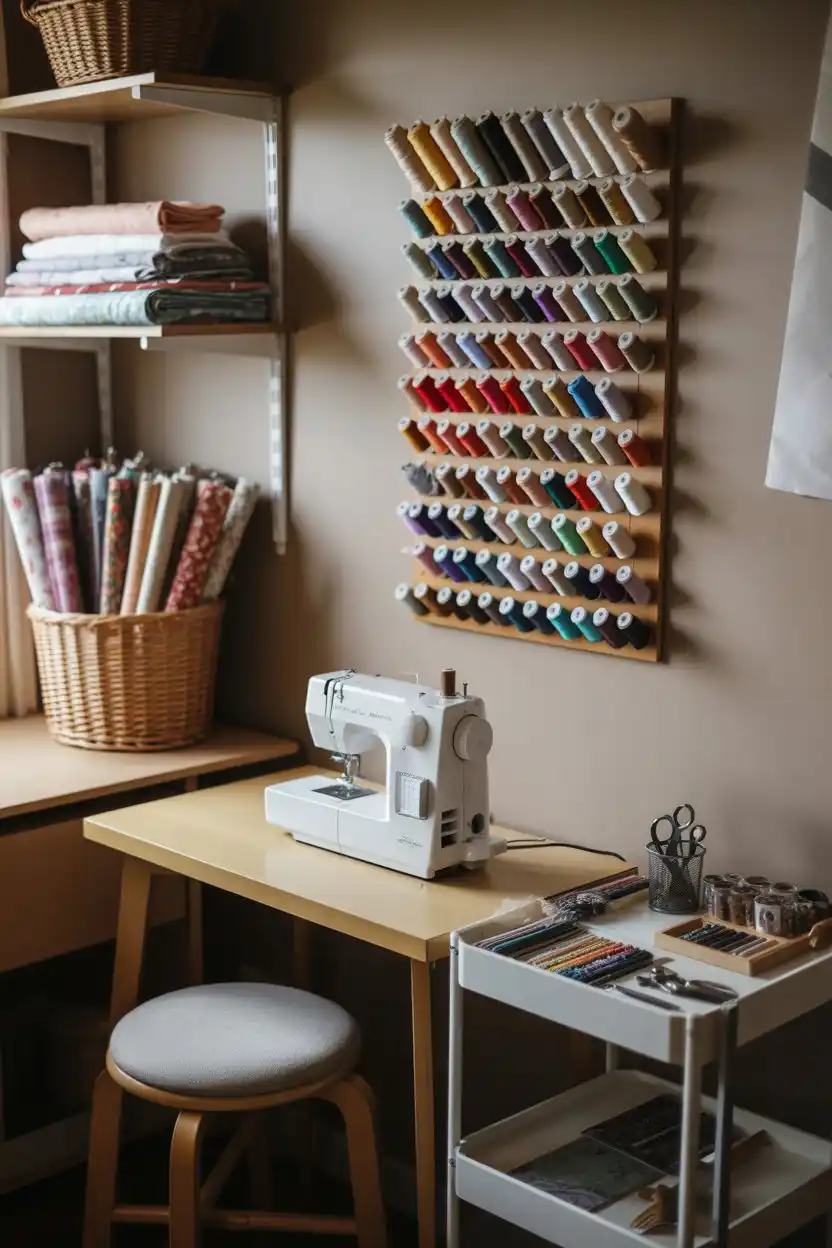
A dedicated sewing and craft station gives a hobby room genuine functionality, letting you leave a project mid-stitch without having to pack everything away between sessions.
A sturdy table at the right height, good task lighting, and organized thread or fabric storage nearby make the biggest difference in how enjoyable the space feels to actually use.
Best suited for anyone who sews, quilts, or does regular fabric-based crafting, and especially valuable for those who currently work on a shared kitchen or dining table.
2. Art Studio Corner with Easel
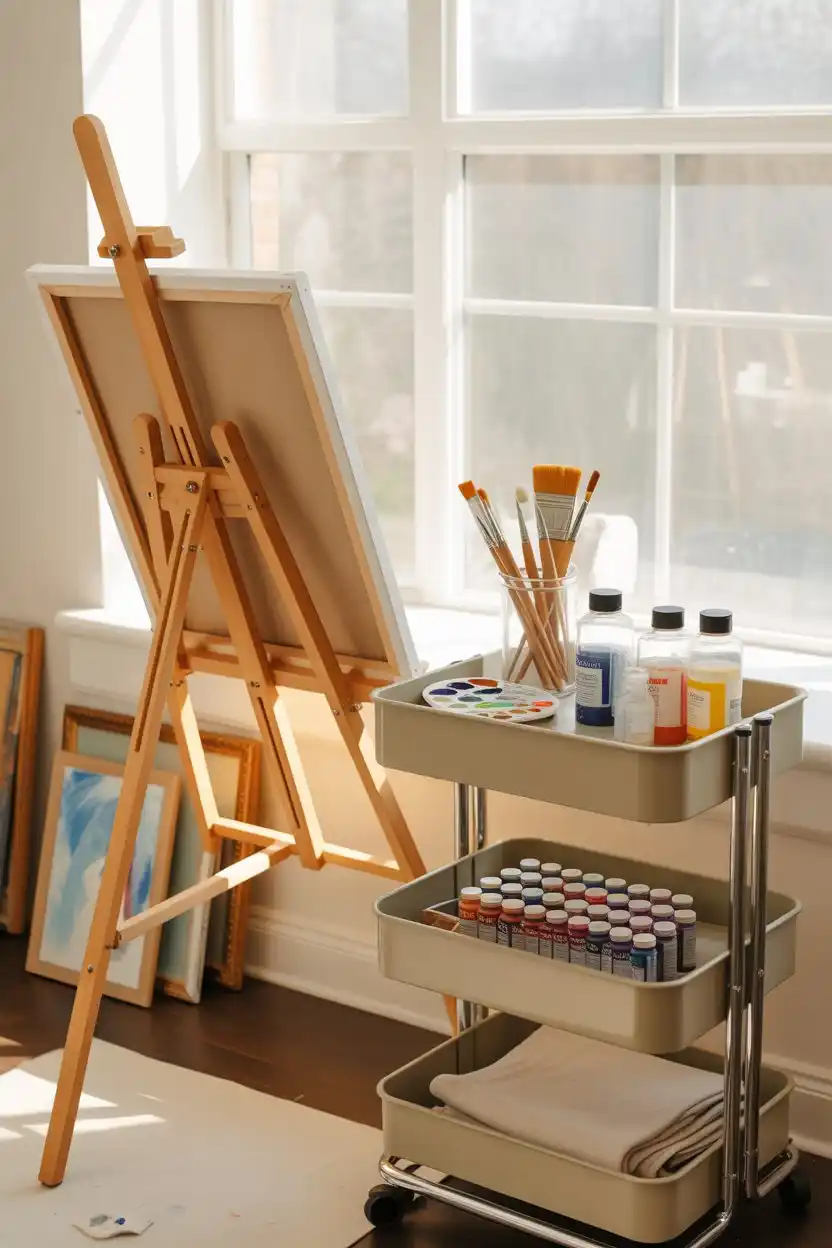
An art studio corner built around a proper easel and good natural light makes a meaningful difference for painters, letting colors read accurately and reducing the strain of working on a flat table.
A rolling cart or tackle-box-style organizer keeps paints, brushes, and palettes contained and easy to move out of the way when the space needs to be shared with other hobbies.
Best suited for painters and mixed-media artists, and ideally placed near a window with indirect natural light rather than harsh direct sun.
3. Bookshelf Reading Nook
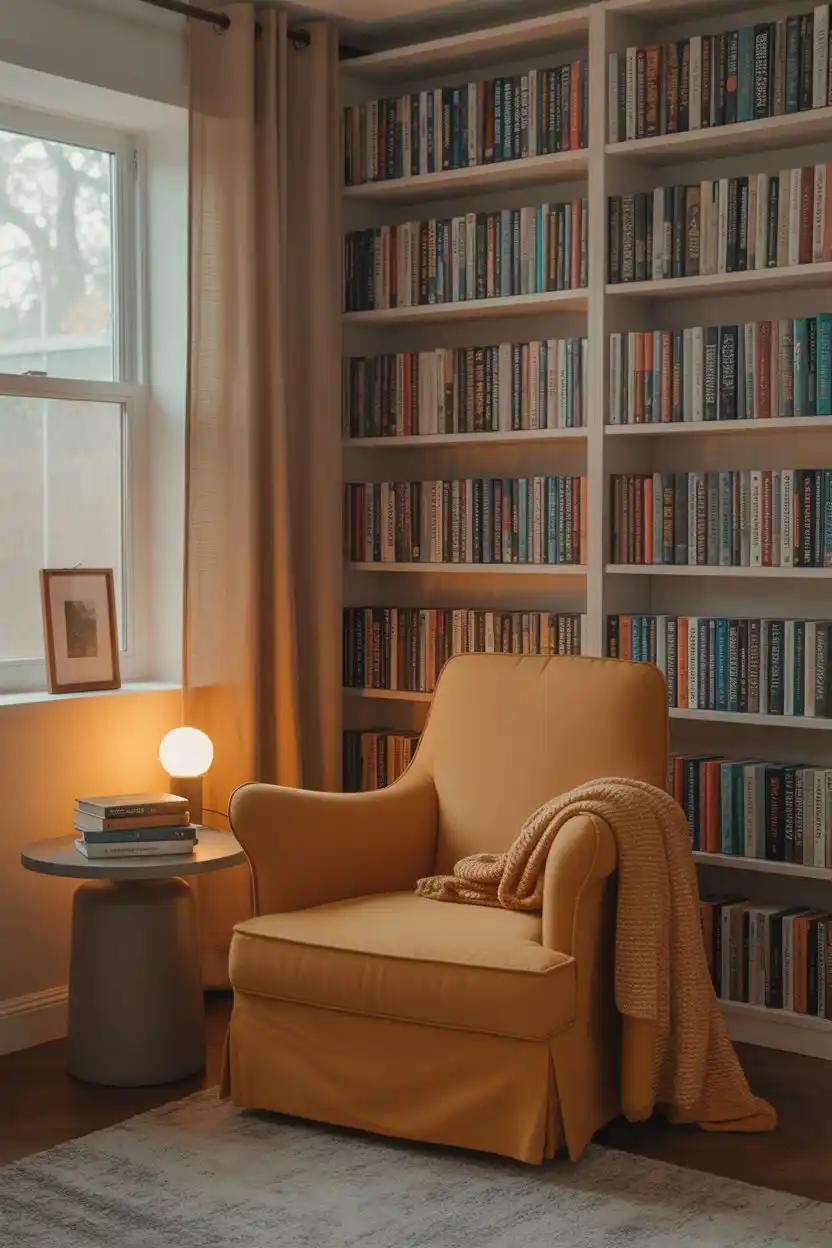
A reading nook turns even a small unused corner into a genuine retreat, and the combination of a full bookshelf and a single comfortable chair keeps the footprint compact without feeling cramped.
Good lighting is essential here: pair natural daylight with a dedicated reading lamp so the space stays usable well into the evening.
Best suited for avid readers, and especially effective in a shared hobby room where the nook can serve as a quiet zone separate from noisier activities.
4. Gaming Setup with Multi-Monitor Desk
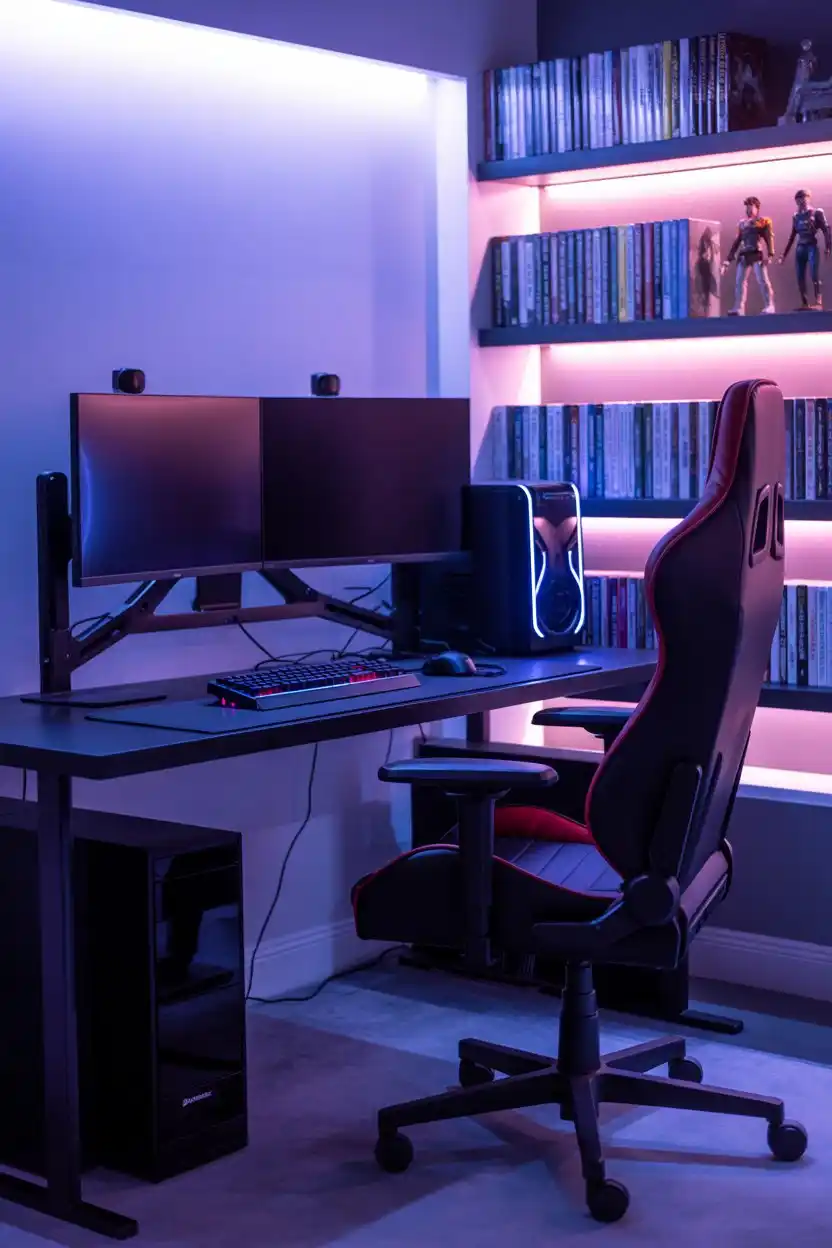
A gaming setup benefits enormously from being its own dedicated space, since a proper desk height, chair, and monitor arrangement reduce fatigue during long sessions far better than a makeshift setup in a shared room.
Ambient LED lighting and good cable management aren’t just aesthetic choices; they also reduce eye strain and keep the space feeling intentional rather than chaotic.
Best suited for gamers who spend significant time at a desk and for anyone wanting a hobby room with a distinct, immersive personality.
5. Music Practice Room with Acoustic Panels
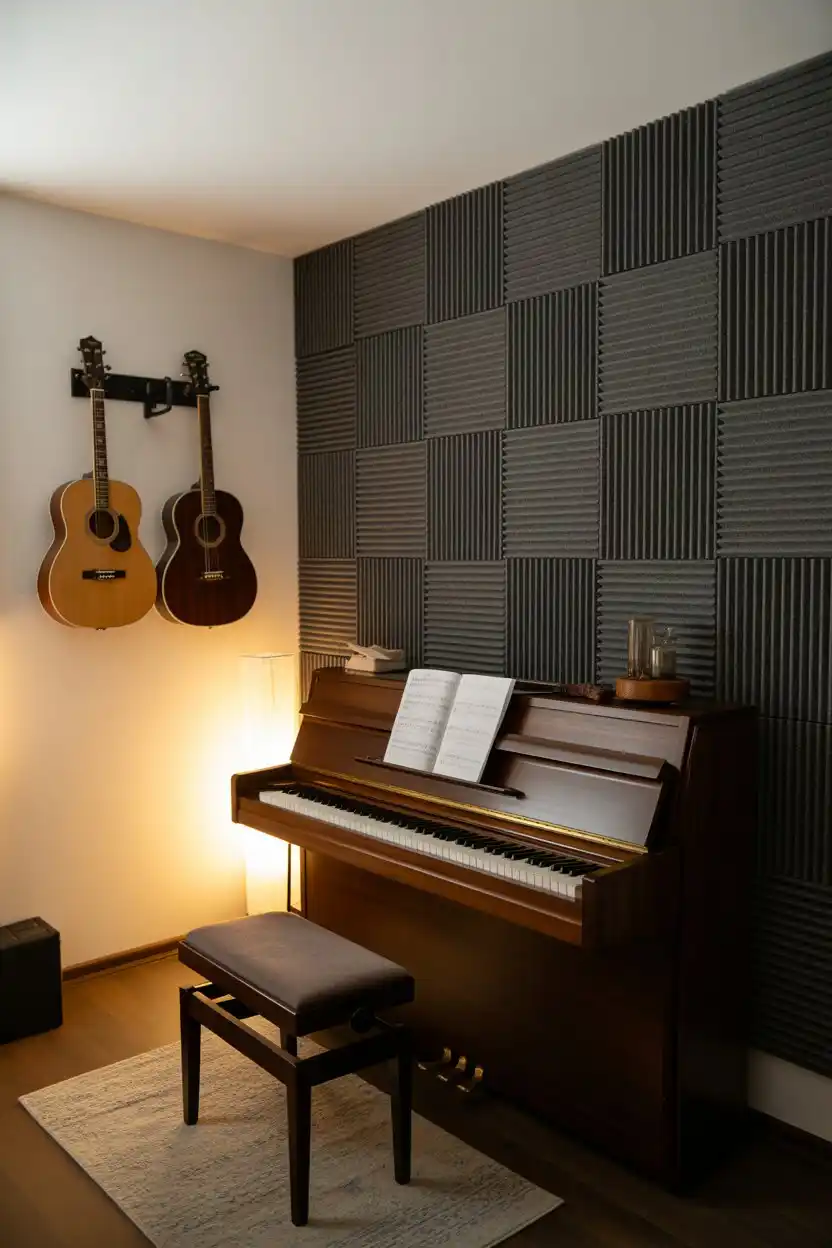
A music practice room benefits significantly from basic acoustic treatment, since foam panels reduce harsh echo and make both practice and recording sound noticeably better, even in a small space.
Keep instruments easily accessible with wall mounts or stands rather than cases, since visible, ready-to-play instruments get picked up and practiced far more often than stored ones.
Best suited for musicians of any level, and especially valuable for households with shared walls where reducing sound bleed matters.
6. Yoga and Meditation Corner
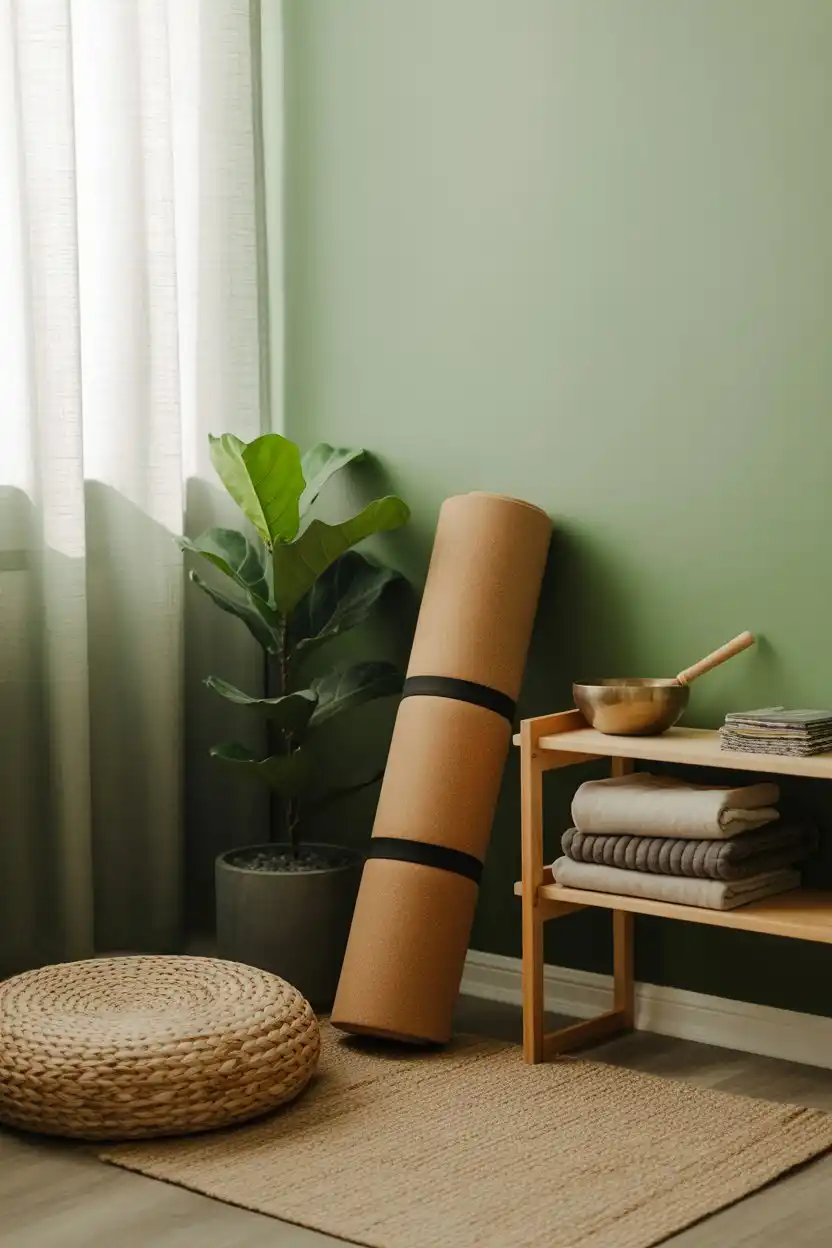
A dedicated yoga and meditation corner works best when kept deliberately simple, since visual clutter undermines the calm the space is meant to provide.
A soft rug or mat, a plant, and minimal storage for props like blocks or blankets are usually all that’s needed, keeping the footprint small enough to fit into even a shared hobby room.
Best suited for anyone building a regular mindfulness or movement practice, and particularly effective when placed near natural light and away from household noise.
7. Puzzle and Board Game Table
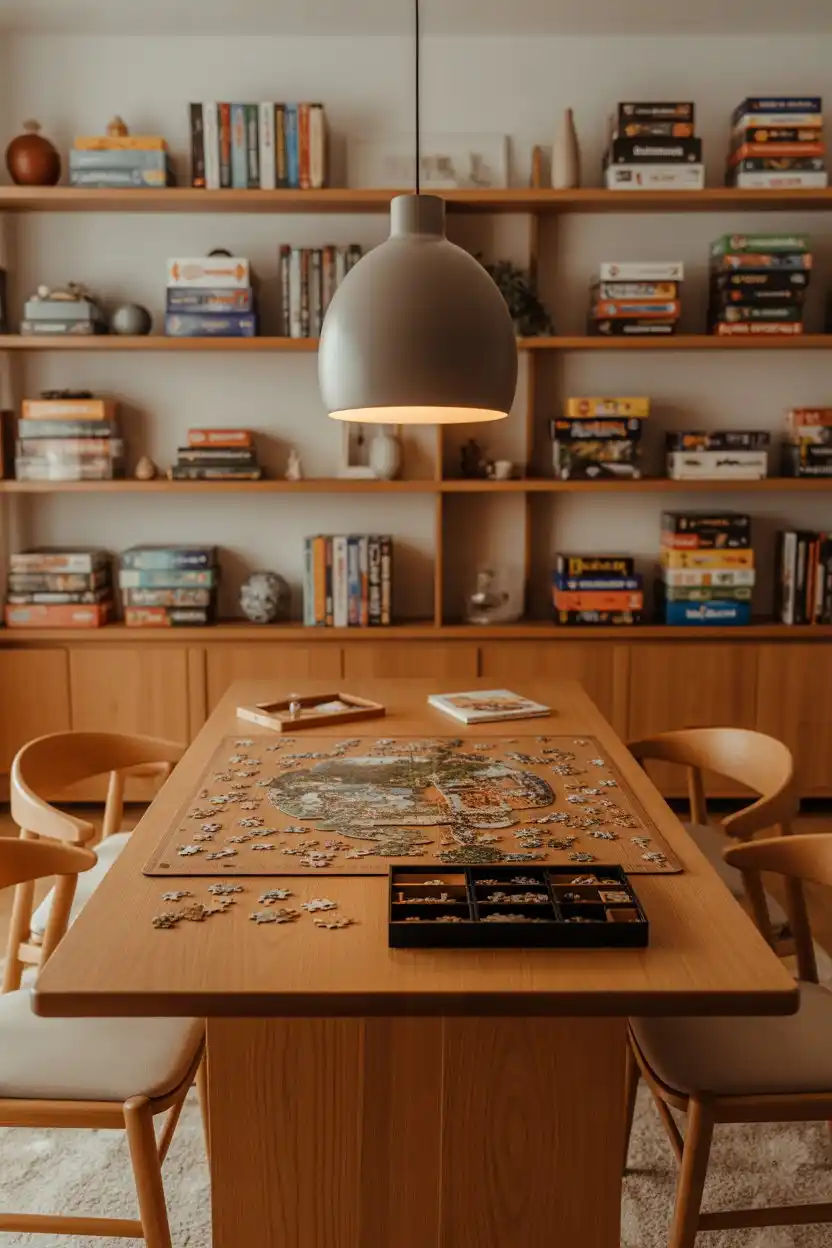
A dedicated puzzle and game table solves one of the most common frustrations of this hobby: needing to clear an in-progress puzzle off the dining table for every meal.
A table with a felt-lined surface or fitted puzzle board lets you pause a project indefinitely, while nearby shelving keeps a game collection organized and easy to browse.
Best suited for families, regular game night hosts, and anyone who enjoys long-term puzzle projects that need a permanent home.
8. Plant Propagation and Gardening Station
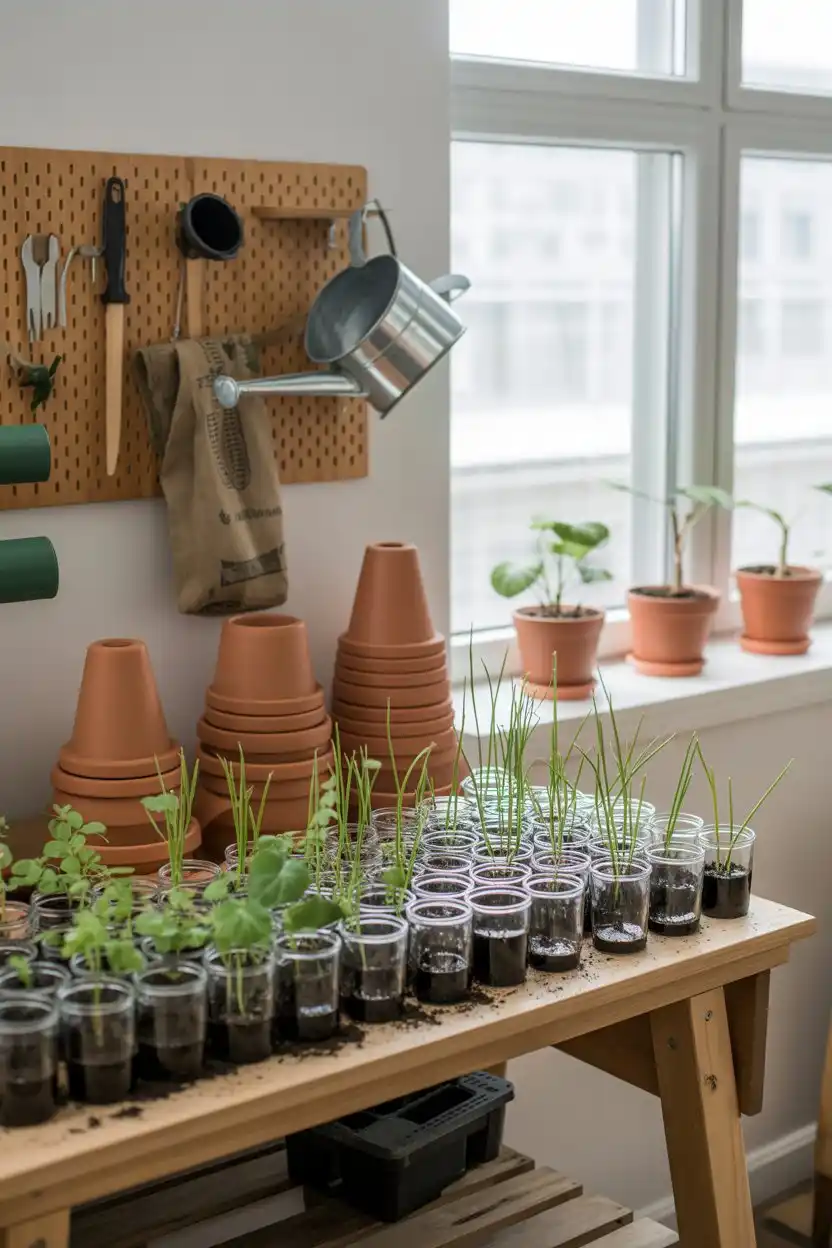
A plant propagation and gardening station gives indoor plant hobbyists a proper workspace for potting, propagating cuttings, and organizing tools, rather than working on a kitchen counter that needs to be cleared afterward.
A water-resistant surface like a potting bench or a table with a sealed top protects the room from soil and water spills, while a pegboard keeps tools visible and within reach.
Best suited for plant collectors and anyone with a growing propagation habit, ideally positioned near the room’s best natural light source.
9. Vinyl Record and Music Listening Lounge
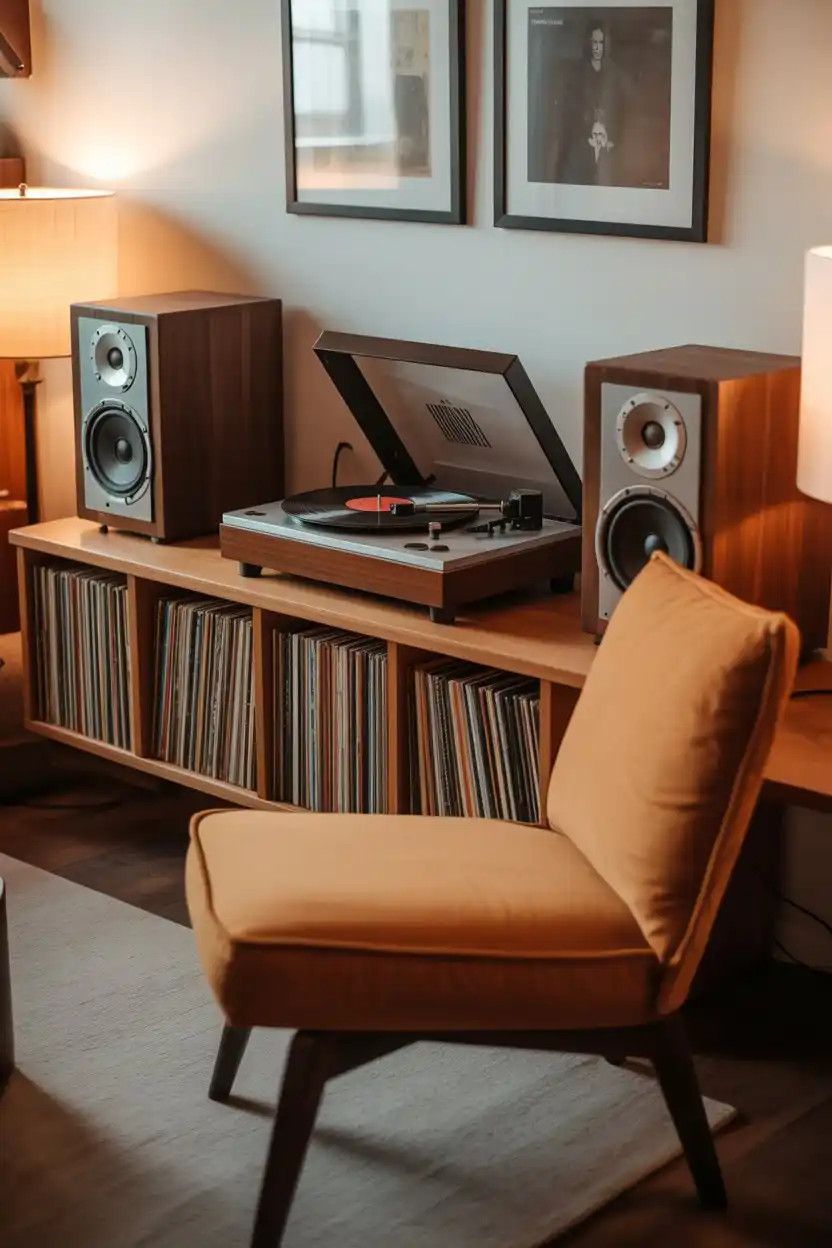
A vinyl listening lounge turns music into a deliberate, screen-free activity, built around a comfortable chair positioned for good sound rather than a desk or workstation.
Proper record storage, kept upright rather than stacked flat, protects the collection while keeping it easy to browse and display as part of the room’s decor.
Best suited for music collectors and anyone who wants a hobby room built around slowing down and focusing on one activity at a time.
10. Photography Studio Corner
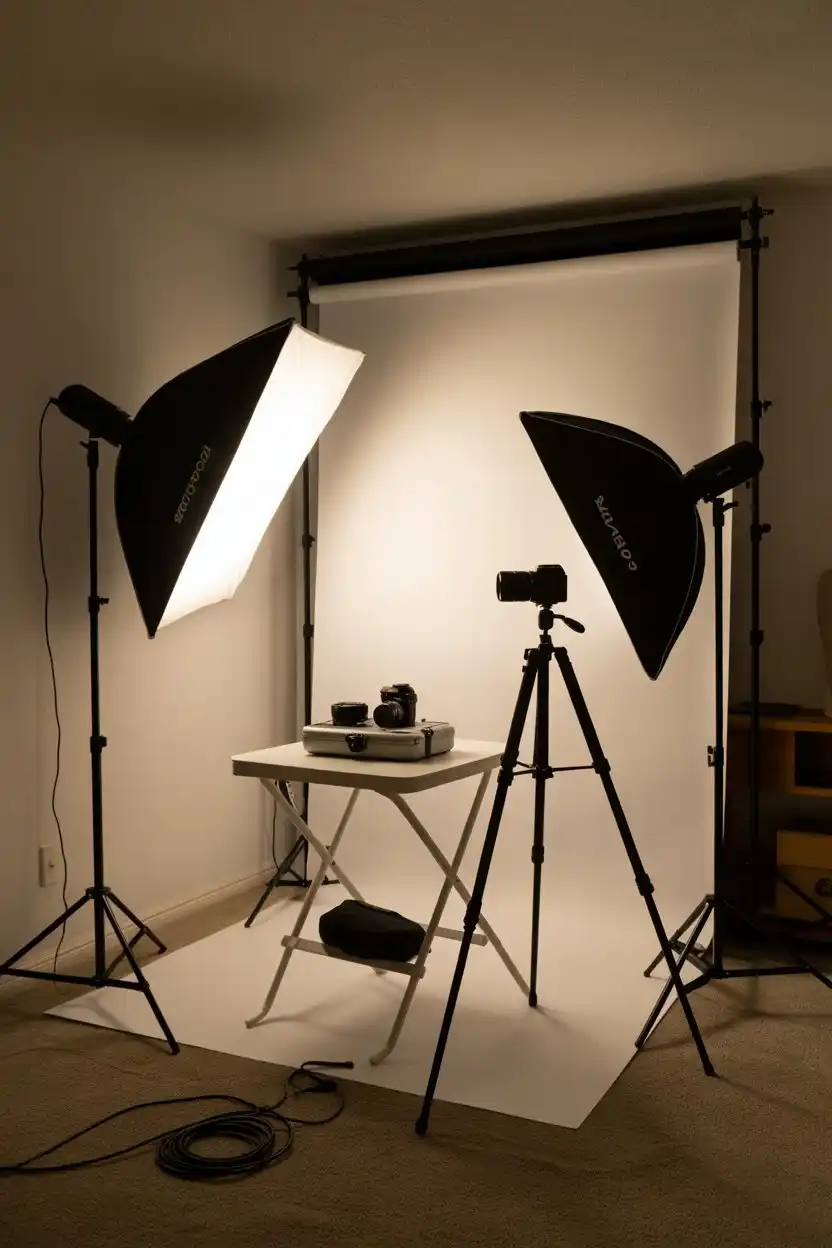
A photography studio corner doesn’t require a huge footprint; a collapsible backdrop and a couple of softbox lights can transform even a small section of a room into a functional shooting space.
Because the equipment is largely portable, this setup can often be broken down and stored when not in use, making it a good fit for multi-purpose hobby rooms.
Best suited for hobbyist or small-business photographers who need a consistent space for product shots, portraits, or content creation.
11. Woodworking Workbench Nook
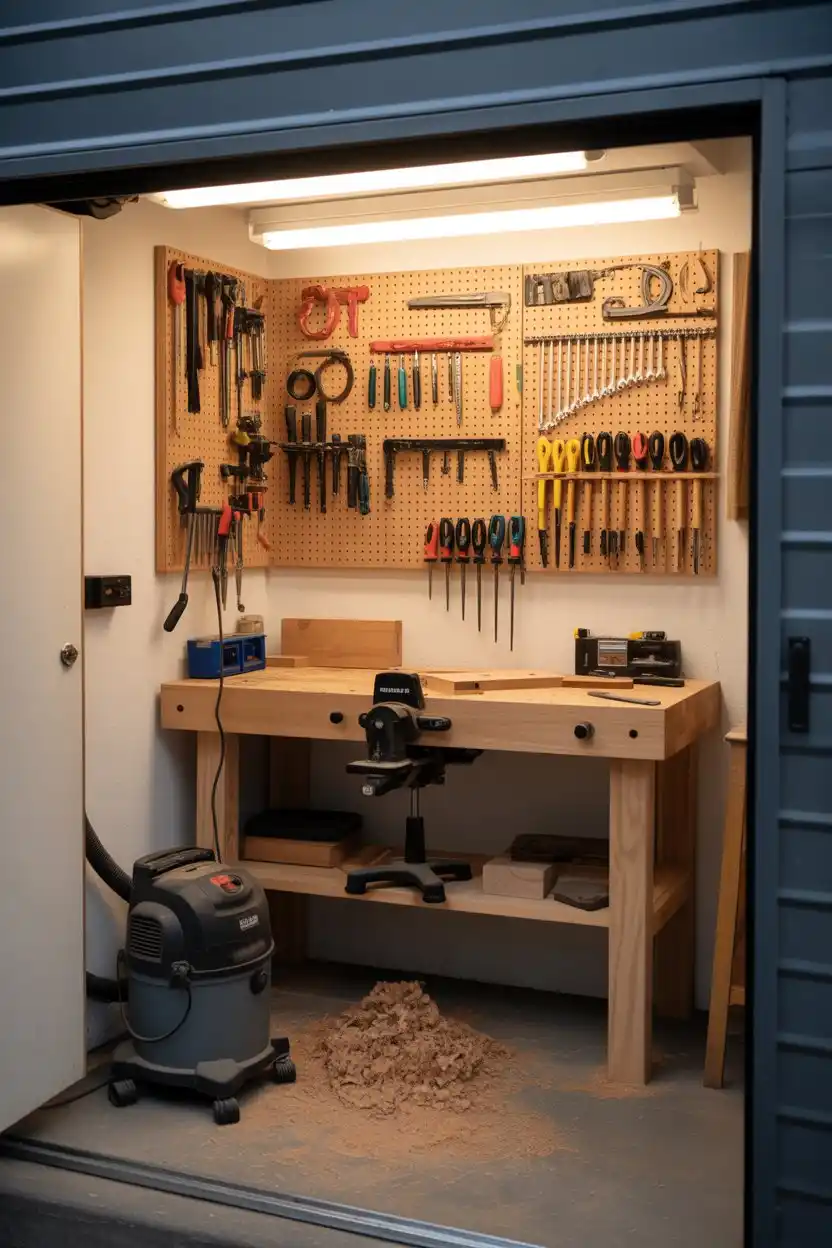
A woodworking nook needs to prioritize function above all else: a sturdy, stable workbench, strong task lighting, and organized tool storage make the biggest difference in both safety and enjoyment.
A pegboard or wall-mounted tool rack keeps frequently used tools visible and within reach, while also making it immediately obvious when something needs to be put back.
Best suited for garages, basements, or sheds rather than upstairs living spaces, given the noise, dust, and ventilation needs of the hobby.
12. Model Building and Miniature Painting Station
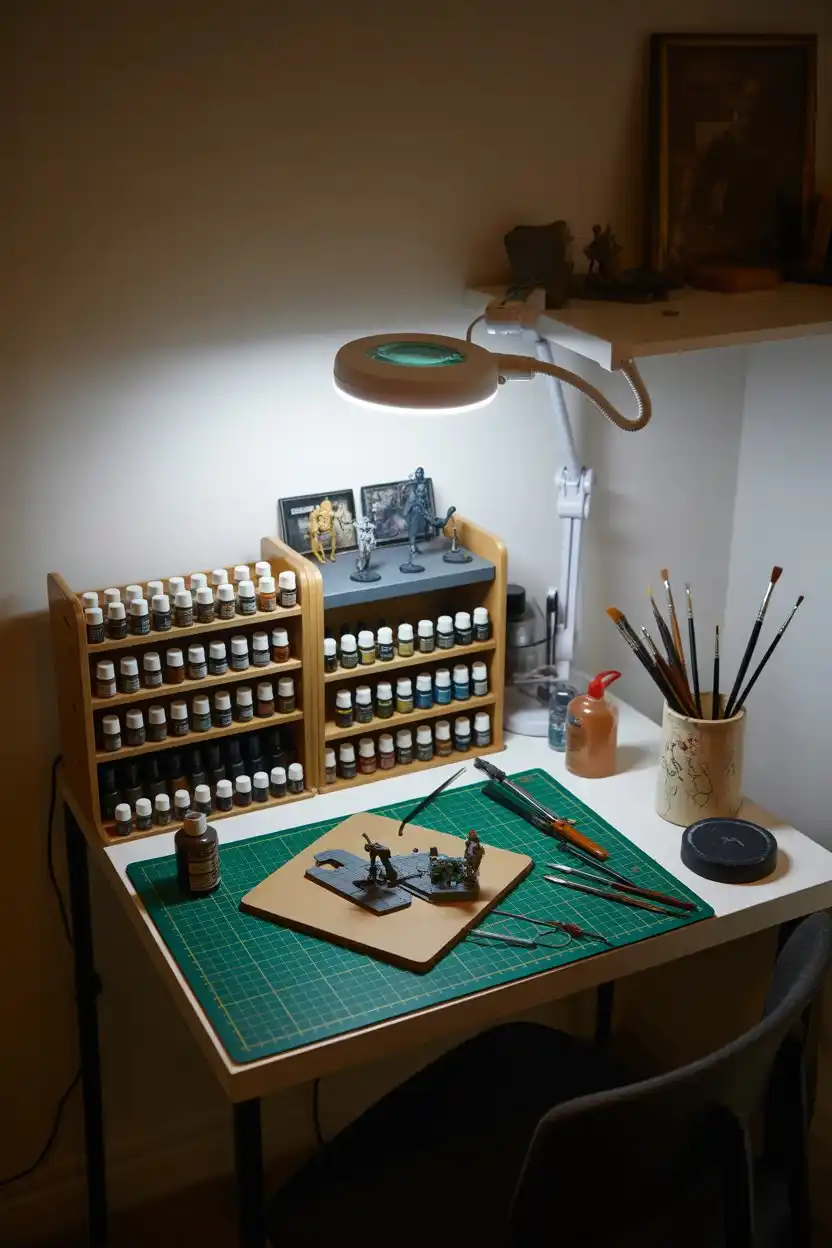
Model building and miniature painting both demand strong, focused lighting and a stable, clutter-free surface, making a dedicated small desk far more effective than working on a shared table.
Organizing paints by color and keeping tools like brushes and clippers in fixed holders saves significant time during detailed work sessions and reduces lost pieces.
Best suited for tabletop gaming hobbyists and model kit enthusiasts, and easily fits into even a small desk footprint within a larger multi-purpose room.
13. Scrapbooking and Memory-Keeping Table
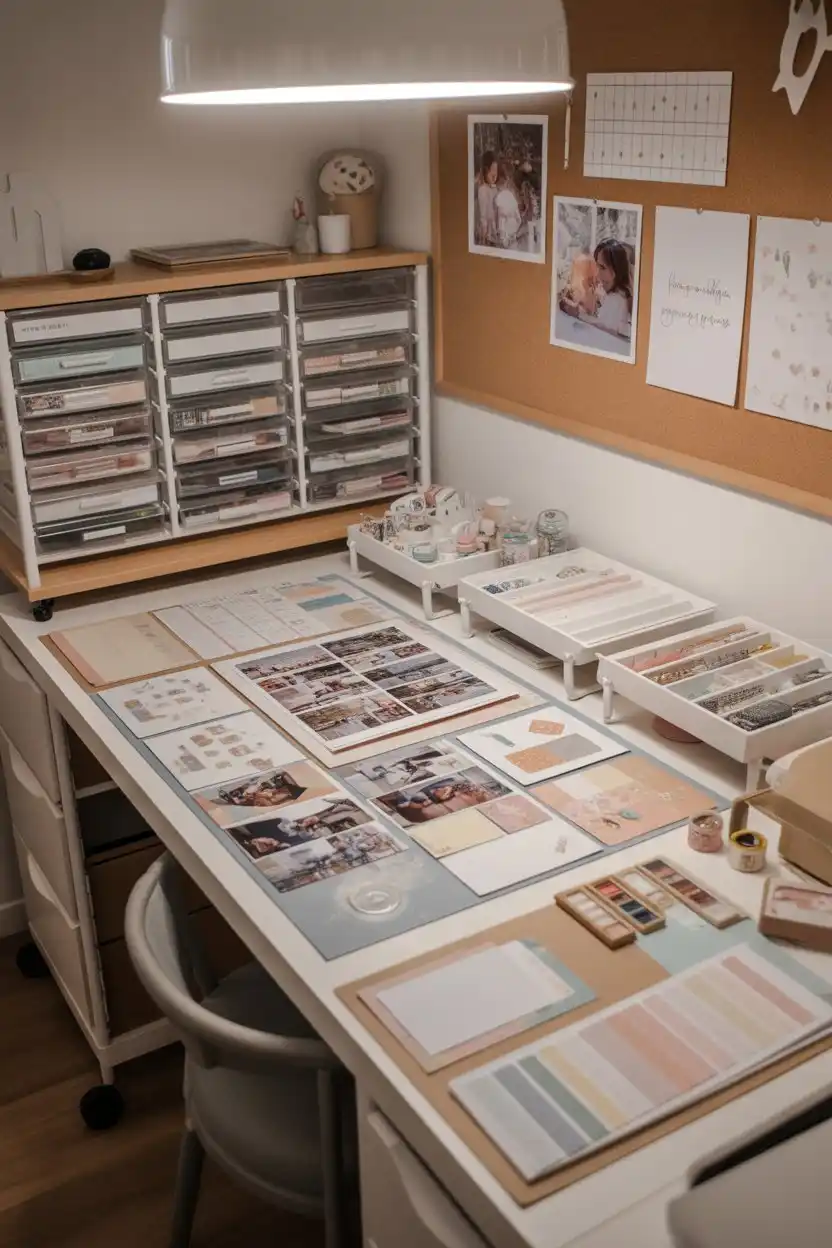
A scrapbooking table benefits from generous surface area, since layouts often require spreading out photos, paper, and embellishments before committing to a final design.
A rolling cart with labeled drawers keeps small supplies like stickers, tape, and adhesives sorted and easy to find, which matters enormously given how many small items this hobby involves.
Best suited for memory keepers and card makers, and works especially well positioned near a corkboard or display wall for inspiration and finished pages.
14. Home Gym Corner
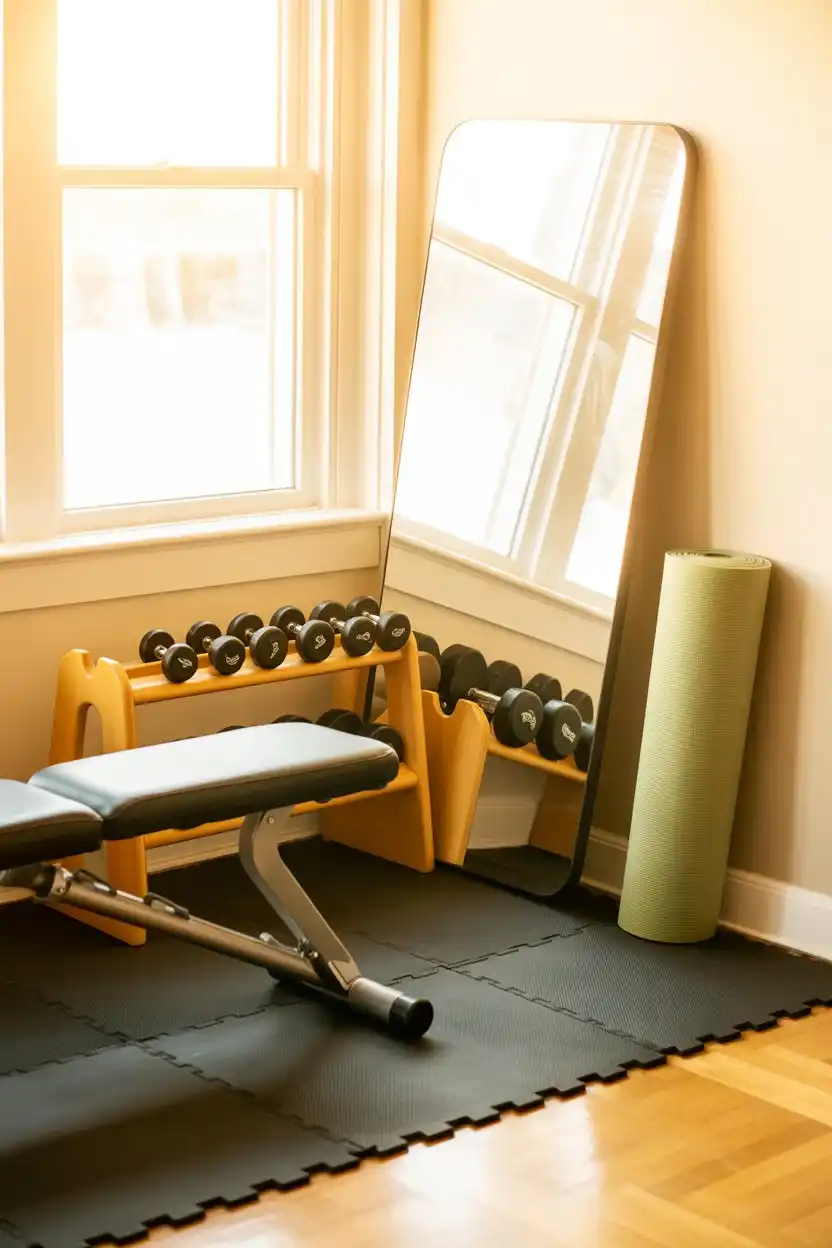
A home gym corner works well as part of a multi-purpose hobby room when equipment is chosen for its compact footprint; dumbbells, a foldable bench, and a mirror take up far less space than a full machine setup.
Rubber flooring tiles protect both the equipment and the underlying floor and are simple to install without any permanent modification to the room.
Best suited for anyone building a consistent home workout habit and especially practical in a room that needs to serve other hobbies as well.
15. Knitting and Fiber Arts Nook
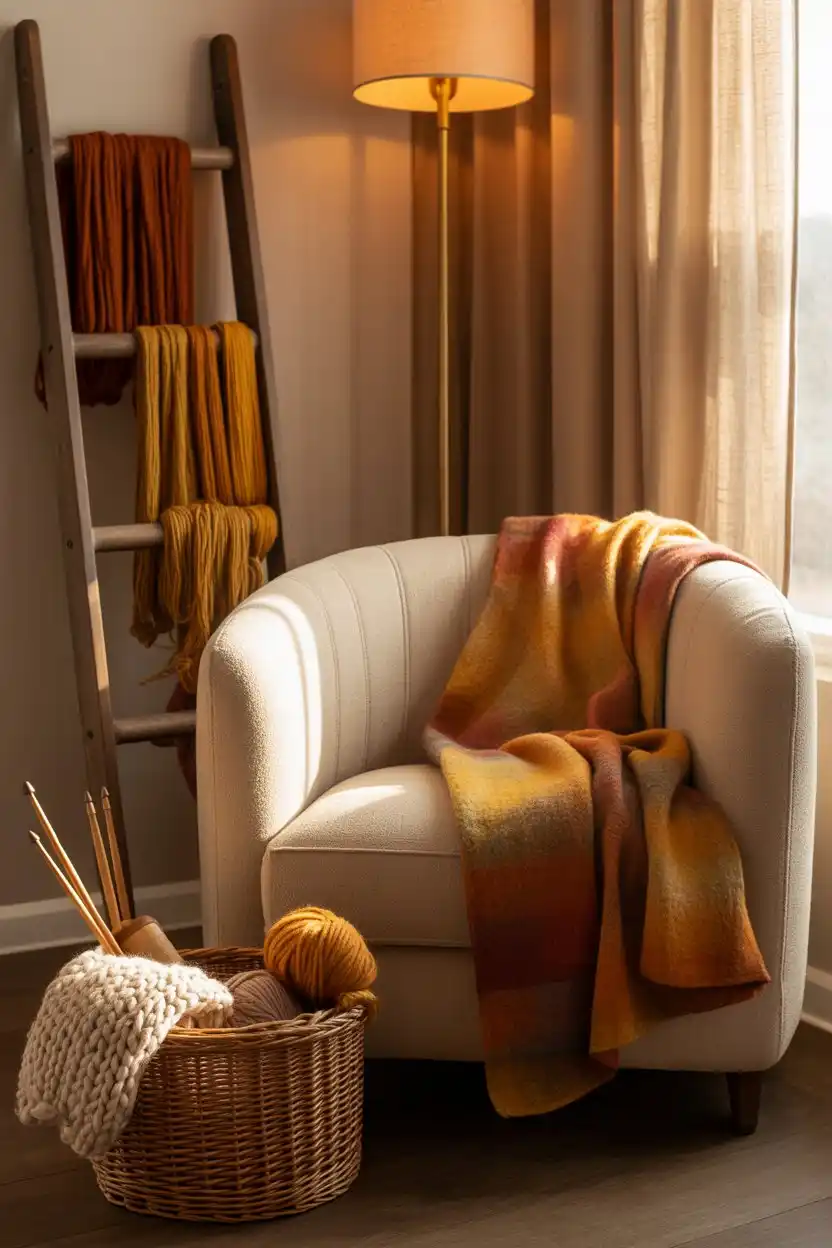
A knitting or fiber arts nook centers around comfort above all else; a supportive chair and good lighting matter more here than a large work surface, since most of the work happens in the lap.
Open yarn storage, like a ladder shelf or woven baskets, doubles as decor while keeping the full color palette of a yarn stash visible and easy to choose from.
Best suited for knitters, crocheters, and weavers, and works well tucked into even a small corner of a shared hobby room.
16. Pottery and Ceramics Corner
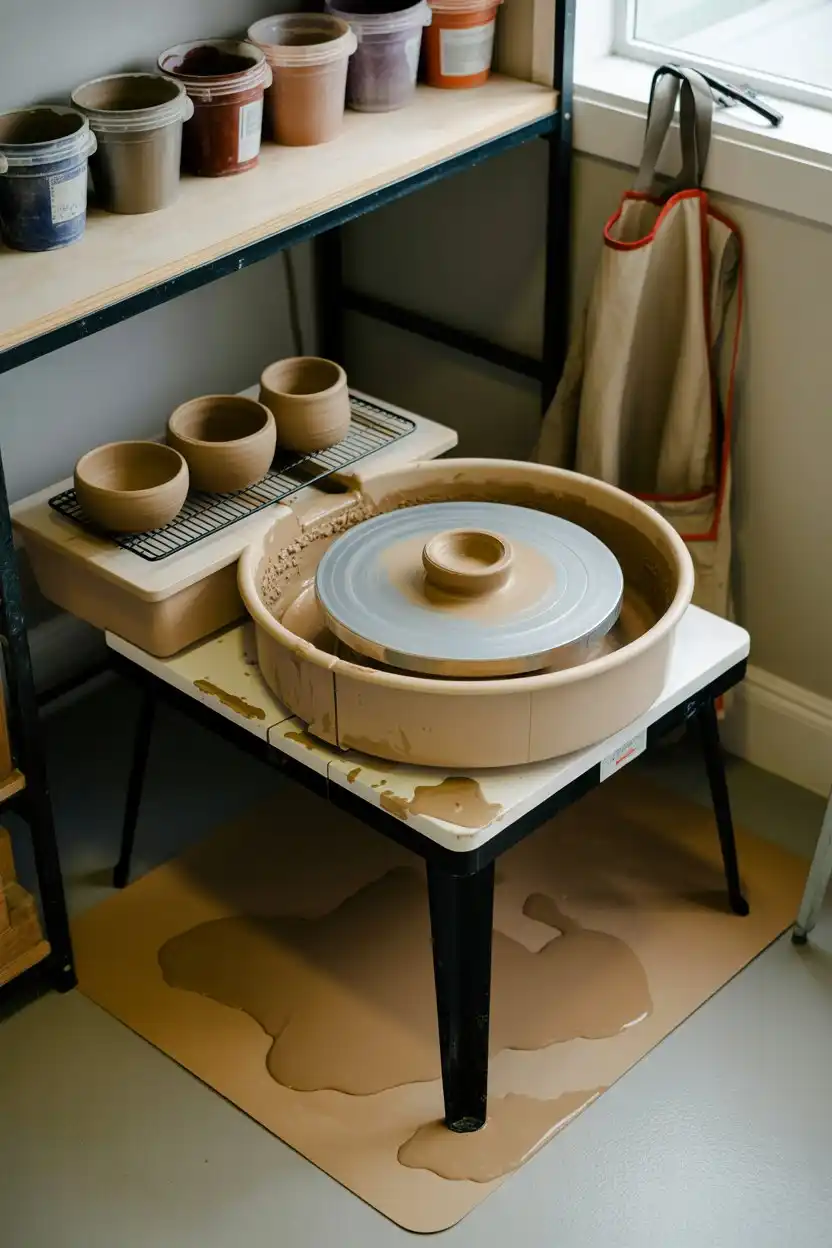
A pottery corner requires more consideration for mess and water resistance than most other hobby spaces; a sealed work surface and protective flooring make cleanup dramatically easier.
Open shelving for drying pieces and glaze storage keeps the workflow efficient, since pottery involves multiple stages that each need their own dedicated space.
Best suited for ceramic artists with access to a nearby water source, and works best in a garage, basement, or easily cleanable room rather than a carpeted space.
17. Journaling and Writing Desk
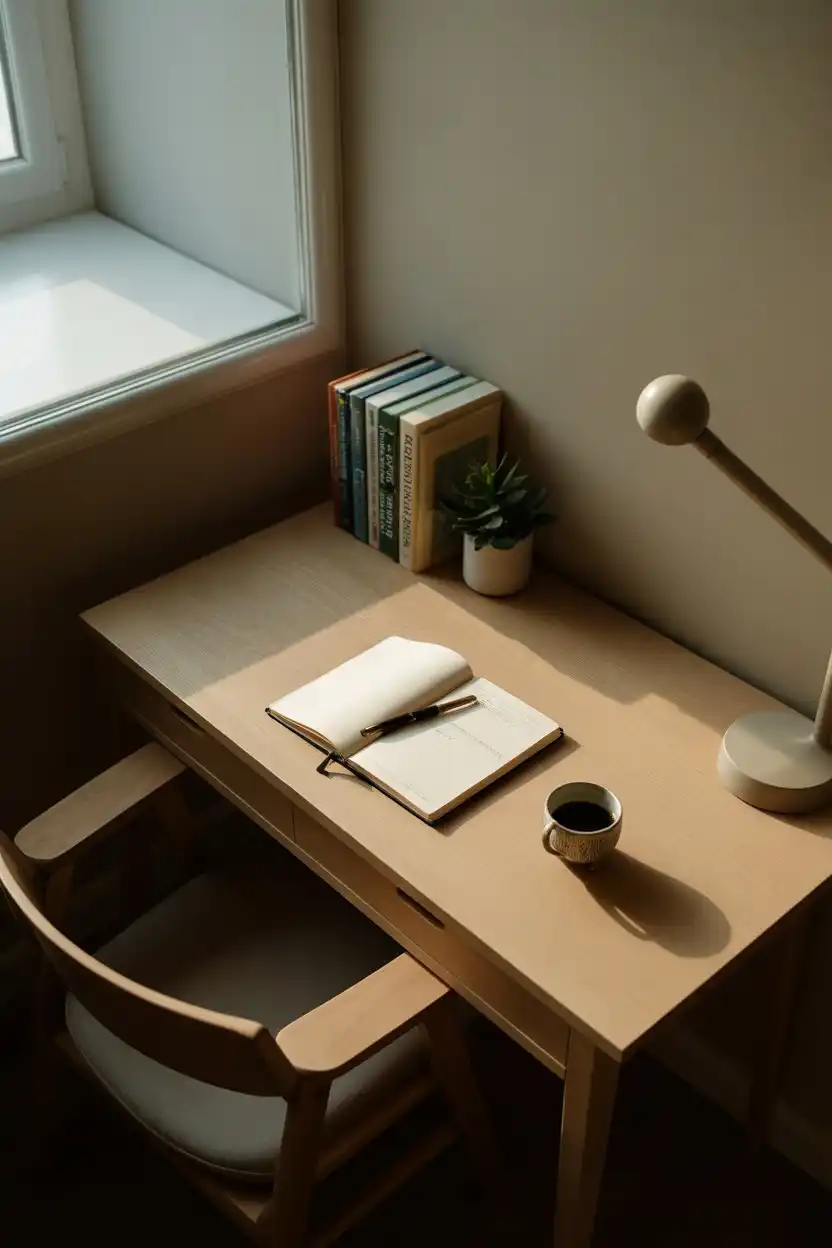
A dedicated journaling or writing desk works best when kept deliberately minimal, since a clutter-free surface reduces distraction and makes it easier to sit down and start writing without friction.
A comfortable chair and warm, adjustable lighting matter more here than storage, since the hobby itself requires very little physical equipment beyond a notebook and pen.
Best suited for writers, journalers, and planners, and works well as a small standalone corner even within a larger multi-purpose room.
18. Collector’s Display Wall
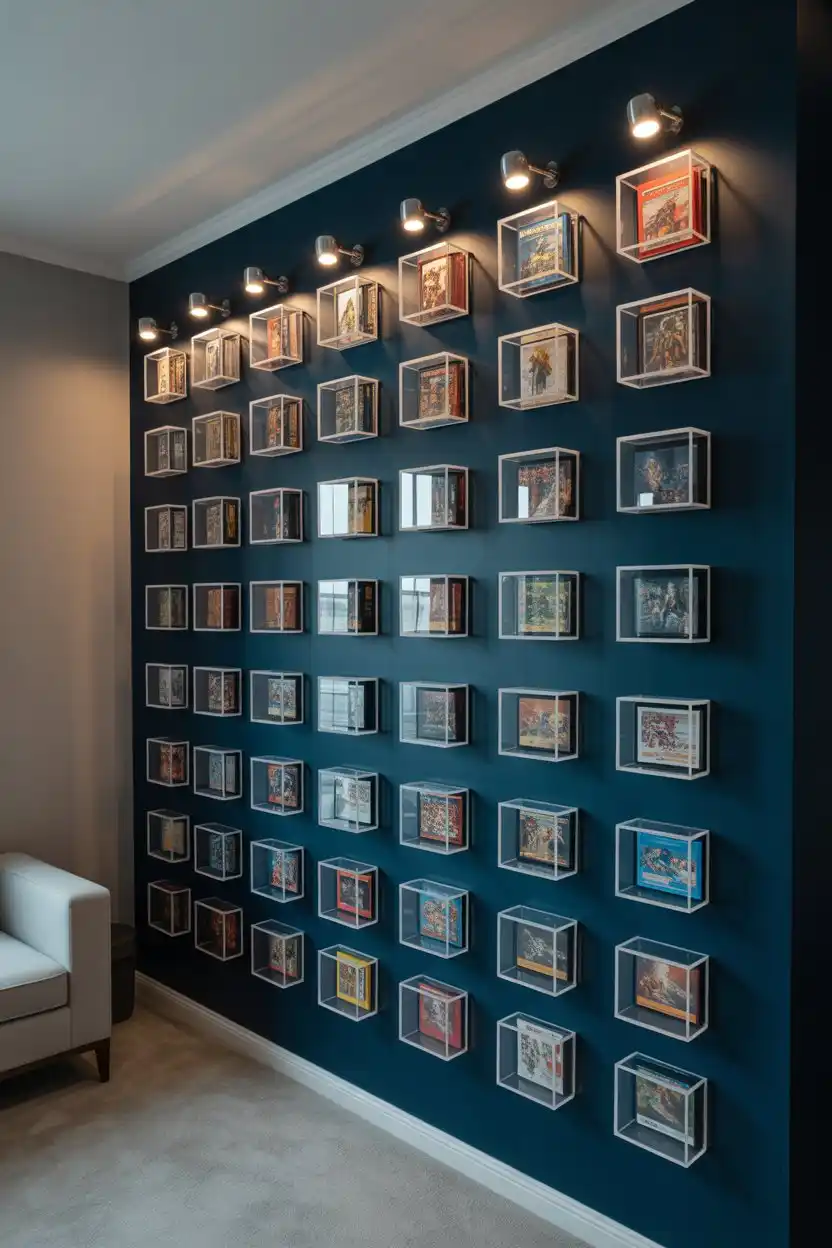
A collector’s display wall turns a hobby that might otherwise sit boxed away into a genuine design feature, giving cards, figures, or memorabilia the same treatment as fine art.
Uniform display cases and consistent spacing keep a growing collection looking curated rather than cluttered, even as new pieces are added over time.
Best suited for collectors of any kind, from trading cards to vintage toys, and particularly effective on a bold accent wall that makes the display pop.
19. Multi-Purpose Craft Cart System
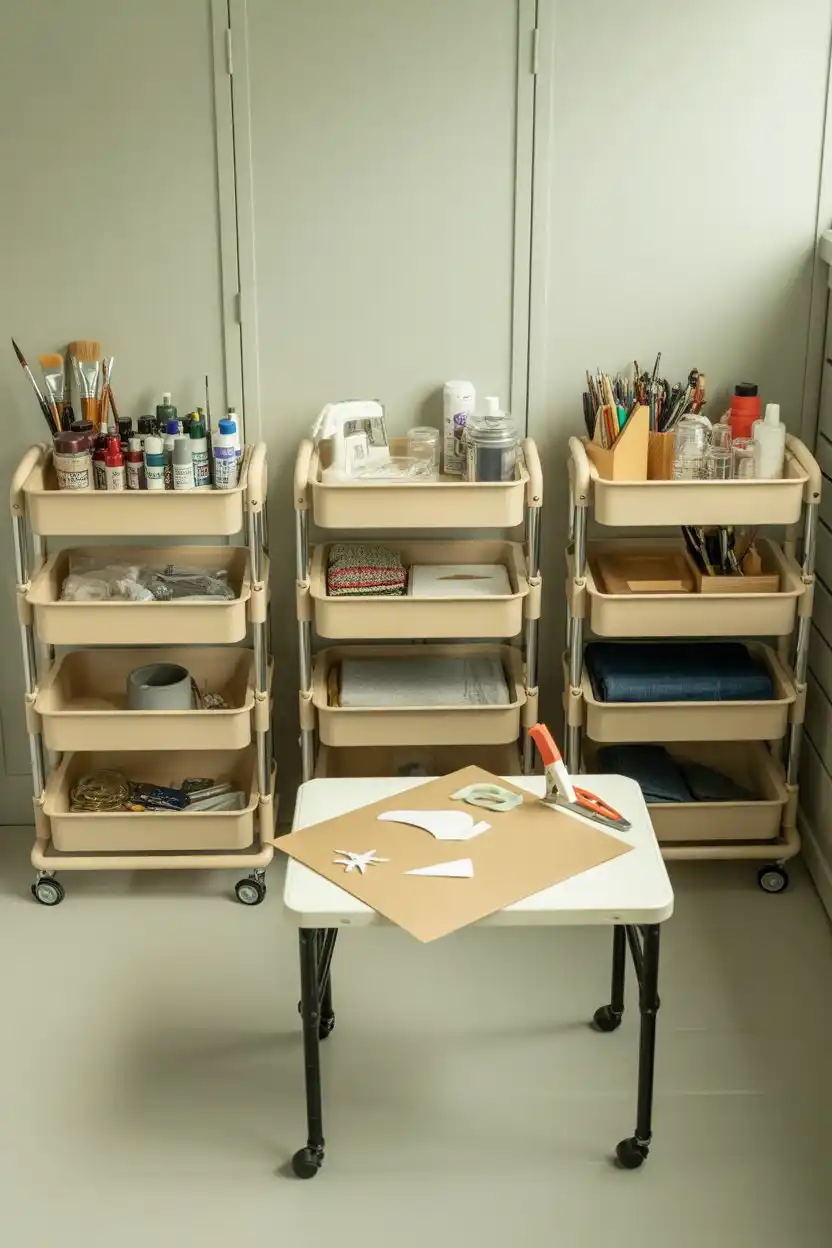
A multi-purpose craft cart system is the most flexible option on this list, letting several different hobbies share a single small room by keeping each hobby’s supplies mobile and self-contained.
A central folding or drop-leaf table can then be used for whichever hobby is active that day, while carts roll out of the way and tuck against a wall when not needed.
Best suited for small hobby rooms, shared spare bedrooms, or anyone who enjoys more than one craft and doesn’t want to commit permanent space to each one individually.
Planning and Buying Tips
Match the room to the hobby’s needs first. Messy or water-based hobbies like pottery and painting do best in garages, basements, or easily cleanable rooms, while quiet hobbies like reading or journaling work well in almost any spare corner.
Prioritize lighting early. Detail-oriented hobbies like sewing, painting, and model building need strong, glare-free task lighting, while relaxation-focused spaces like reading nooks benefit more from warm, ambient lighting.
Plan for noise and ventilation. Music practice, woodworking, and gaming setups all generate meaningful noise, so consider acoustic panels, door placement, or locating these hobbies away from shared living spaces or bedrooms.
Choose furniture that fits the footprint. Standard craft desks typically range from 40 to 60 inches wide, while a compact multi-purpose folding table often runs 30 to 48 inches, making it easier to fit a functional setup even in a small room.
Build in flexible storage from the start. Rolling carts, labeled bins, and modular shelving make it far easier to reorganize or add a second hobby later without needing to redo the whole room.
Cost Breakdown
Budget (under $200 total): A basic setup using an existing table or desk, a few storage bins, and simple shelving falls in this range. Most budget setups require no installation beyond assembling flat-pack furniture.
Mid-range ($200 to $800 total): This tier covers a proper dedicated desk or table, task lighting, a comfortable chair, and organized storage like a rolling cart or wall-mounted shelving. Some pieces, like wall shelving or pegboards, may need basic anchoring hardware.
Luxury and Premium ($800 and up): Fully outfitted rooms with built-in cabinetry, acoustic treatment, specialty equipment like a pottery wheel or multi-monitor gaming desk, and professional lighting fall into this category, often reaching $2,000 or more. Rooms requiring electrical work, plumbing, or built-ins typically need professional installation, adding $300 to $1,500 depending on scope.
Furniture and Storage Comparison
Different hobby room setups call for different furniture and storage systems. Use this table as a quick reference when comparing options.
| Setup Type | Price Range | Space Needed | Mobility | Best For |
| Rolling craft cart | $50-$200 | Small | High | Multi-hobby, small rooms |
| Dedicated craft desk | $100-$400 | Medium | Low | Sewing, painting, writing |
| Built-in cabinetry | $500-$2,000+ | Medium-Large | None | Permanent single-hobby rooms |
| Wall shelving/pegboard | $30-$150 | Small | Low | Tool and supply display |
| Folding multi-use table | $60-$250 | Small-Medium | High | Shared or flex spaces |
| Specialty equipment (wheel, easel, desk) | $100-$800+ | Medium | Varies | Single dedicated hobby |
Maintenance Tips
• Wipe down work surfaces after each session, especially for paint, clay, or adhesive-based hobbies that can leave residue
• Vacuum or sweep hobby rooms more frequently than other rooms, since craft supplies like thread, sawdust, and paper scraps accumulate quickly
• Check and tighten furniture hardware on rolling carts and folding tables every few months, since frequent movement loosens screws faster than stationary furniture
• Store liquid supplies like paint, glaze, and adhesives upright and sealed to prevent leaks from damaging shelving or flooring
• Rotate or air out fabric, yarn, and paper stashes periodically to prevent moisture buildup, especially in basement hobby rooms
• Dust electronics and monitors in gaming or photography setups weekly to prevent buildup that can affect performance over time
Frequently Asked Questions
What is the best size for a hobby room?
Most single-hobby setups function well in 80 to 120 square feet, roughly the size of a small spare bedroom, though many hobbies like journaling or knitting can work in a corner as small as 25 to 40 square feet.
How do I set up a hobby room in a small space or shared room?
Rolling carts, folding tables, and wall-mounted storage let a hobby room share space with another function, since supplies and equipment can be wheeled out for use and tucked away afterward.
What lighting is best for a craft or hobby room?
Detail work like sewing, painting, and model building benefits most from bright, glare-free task lighting around 4000 to 5000 Kelvin, while relaxation-focused hobby spaces do better with warmer, softer ambient lighting.
Can a hobby room double as a guest room or office?
Yes, many hobby rooms successfully double as guest rooms or home offices by using rolling storage, a daybed instead of a full bed, and furniture that can be quickly cleared or reconfigured as needed.
How much does it cost to set up a basic hobby room?
A functional basic hobby room setup, including a table, chair, lighting, and storage, typically costs between $150 and $500 depending on the hobby and whether existing furniture can be repurposed.
How to Choose the Right Hobby Room Setup for You
The right hobby room comes down to matching the setup to your available space, your budget, and the specific hobby or hobbies you want to support. A small corner works well for quiet, low-mess hobbies like reading, journaling, or knitting, while messier or noisier activities like pottery, woodworking, and music benefit from a fully dedicated room with the right ventilation or acoustic treatment. If the budget is tight, start with a single functional piece, like a good desk or a rolling cart, and build outward as needs and funds allow. If you’re working with limited square footage, flexible, mobile storage lets multiple hobbies share the same space without permanent commitment to any one layout.
Ready to build your own hobby room? Pick the idea that fits your space and your favorite hobby, and start setting up your first dedicated corner today.


- Be Respectful
- Stay Relevant
- Stay Positive
- True Feedback
- Encourage Discussion
- Avoid Spamming
- No Fake News
- Don't Copy-Paste
- No Personal Attacks
- Be Respectful
- Stay Relevant
- Stay Positive
- True Feedback
- Encourage Discussion
- Avoid Spamming
- No Fake News
- Don't Copy-Paste
- No Personal Attacks
