16 Modern Dining Room Ideas That Feel Custom-Designed, Not Off-the-Shelf
Published: 7 Sep 2026
A dining room can be one of the most-used rooms in a home, or one of the most neglected — and the difference usually comes down to how intentional the design feels. Modern dining room ideas work well for anyone stuck with a generic table-and-four-chairs setup that does not reflect their style or actually invite people to linger. The right combination of lighting, furniture, and layout can turn a purely functional room into a genuine gathering space, without requiring a full renovation or a designer’s budget. This guide covers 16 modern dining room ideas for every space and budget, from statement lighting to built-in banquette seating. Along the way, you will find honest pros and cons, real price ranges, a furniture and material comparison table, maintenance advice, and answers to the questions people search for most before redesigning their dining space. By the end, you will know exactly which ideas fit your room, your budget, and how you actually use the space.
Is a Modern Dining Room Refresh Right for You?
A modern dining room update can range from a single new light fixture to a full furniture overhaul, so it is worth weighing the trade-offs honestly before deciding how far to take it.
Pros
● Flexible investment level — you can refresh a dining room with one statement piece, like lighting or a rug, or go further with new furniture, depending on your budget.
● High visual impact — dining rooms are often open to or visible from other living spaces, so updates here tend to improve how the whole main floor feels, not just one room.
● Encourages more use of the space — a dining room that actually feels good to sit in gets used more often, for everyday meals as well as entertaining.
● Works with existing furniture — many modern updates, like lighting, a rug, or an accent wall, can be layered onto furniture you already own rather than requiring a full replacement.
Cons
● Lighting and electrical work can add cost — a statement chandelier or pendant cluster may require an electrician if you are relocating the fixture location, which adds to the budget.
● Modern furniture can be expensive — sculptural tables and designer chairs often cost more than traditional counterparts of similar quality.
● Small rooms limit some ideas — bold furniture silhouettes and large lighting fixtures can overwhelm a compact dining area if not scaled carefully.
● Trend risk — some modern styling choices age faster than classic ones, so it is worth balancing trend-forward pieces with a few timeless anchors.
For most homes, a modern dining room refresh is worth doing in stages — start with lighting and a rug, since both have an outsized visual impact for the cost, and add furniture or structural updates like a banquette or accent wall once you know how the room is actually used.
1. Statement Pendant Lighting Cluster
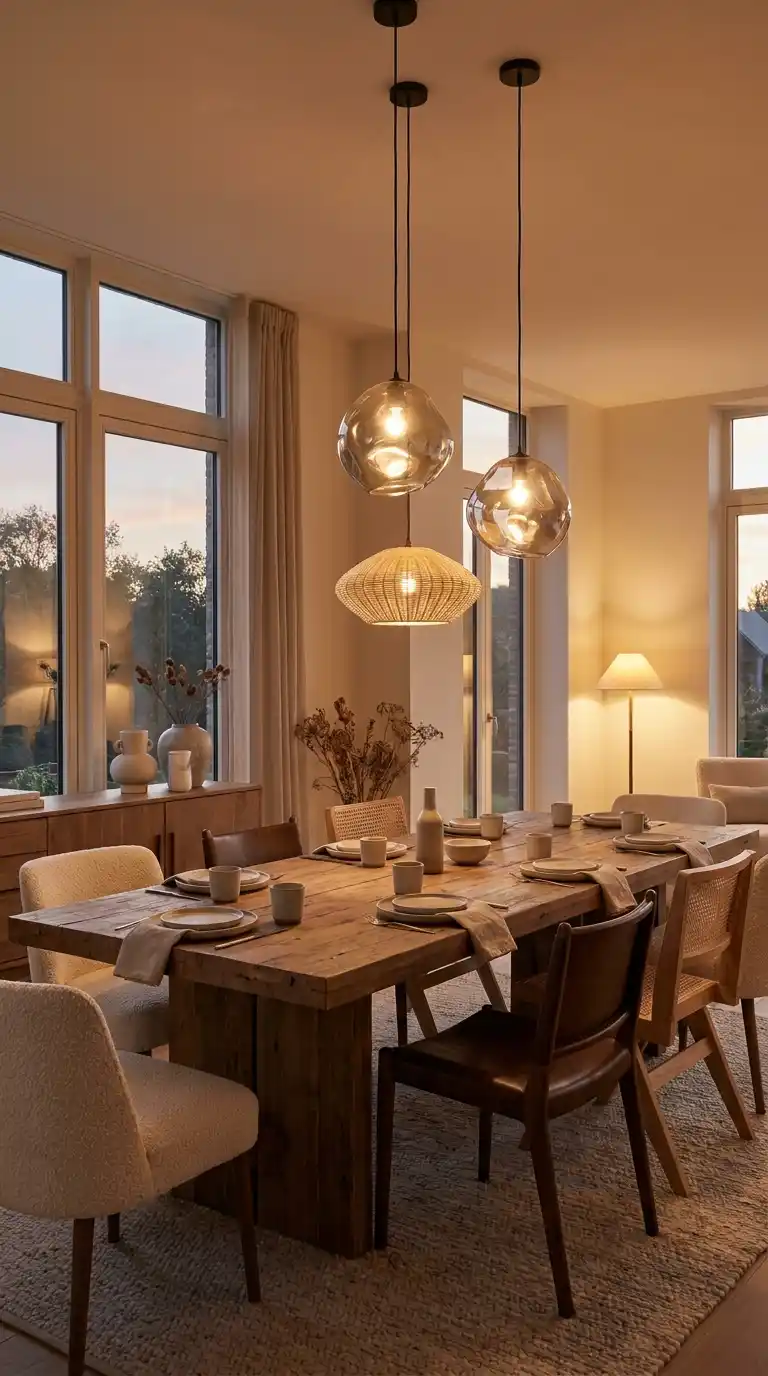
A cluster of pendant lights hung at staggered heights creates far more visual interest than a single centered fixture, and it reads as a deliberate design choice rather than a builder-grade light swap.
Choose pendants in an organic or sculptural shape rather than a strictly geometric one if your table and chairs already have clean, minimal lines, so the lighting becomes the room’s focal point.
Best suited for: dining rooms with a rectangular table and higher ceilings that can accommodate multiple hanging fixtures.
2. Minimalist Wood Table With Sculptural Legs
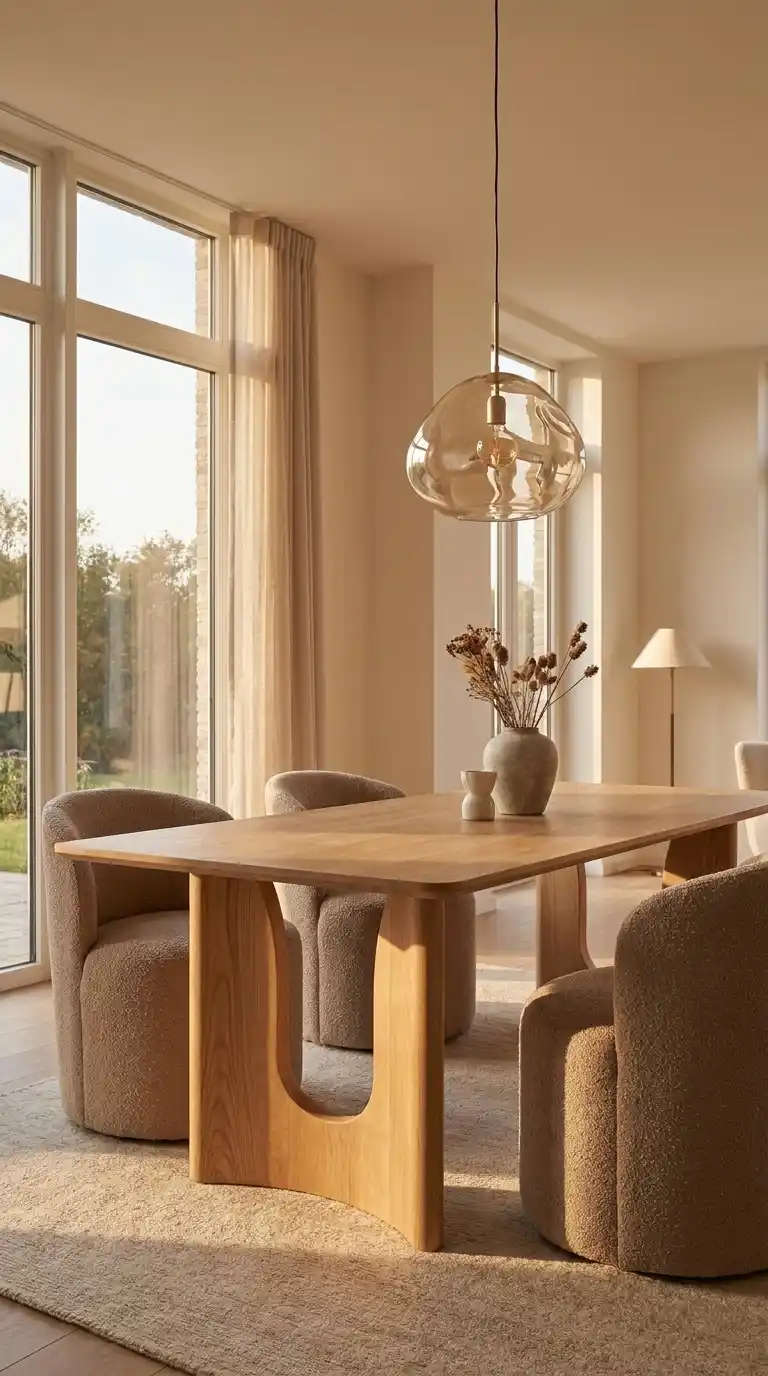
A table with sculptural, curved legs adds a subtle design statement without requiring bold color or pattern elsewhere in the room, letting the furniture itself do the visual work.
Pair a sculptural table with simple, unfussy chairs so the leg detail remains the clear focal point rather than competing with an equally busy chair design.
Best suited for: modern and organic-modern dining rooms wanting a quieter design statement.
3. Upholstered Bench Seating Combo
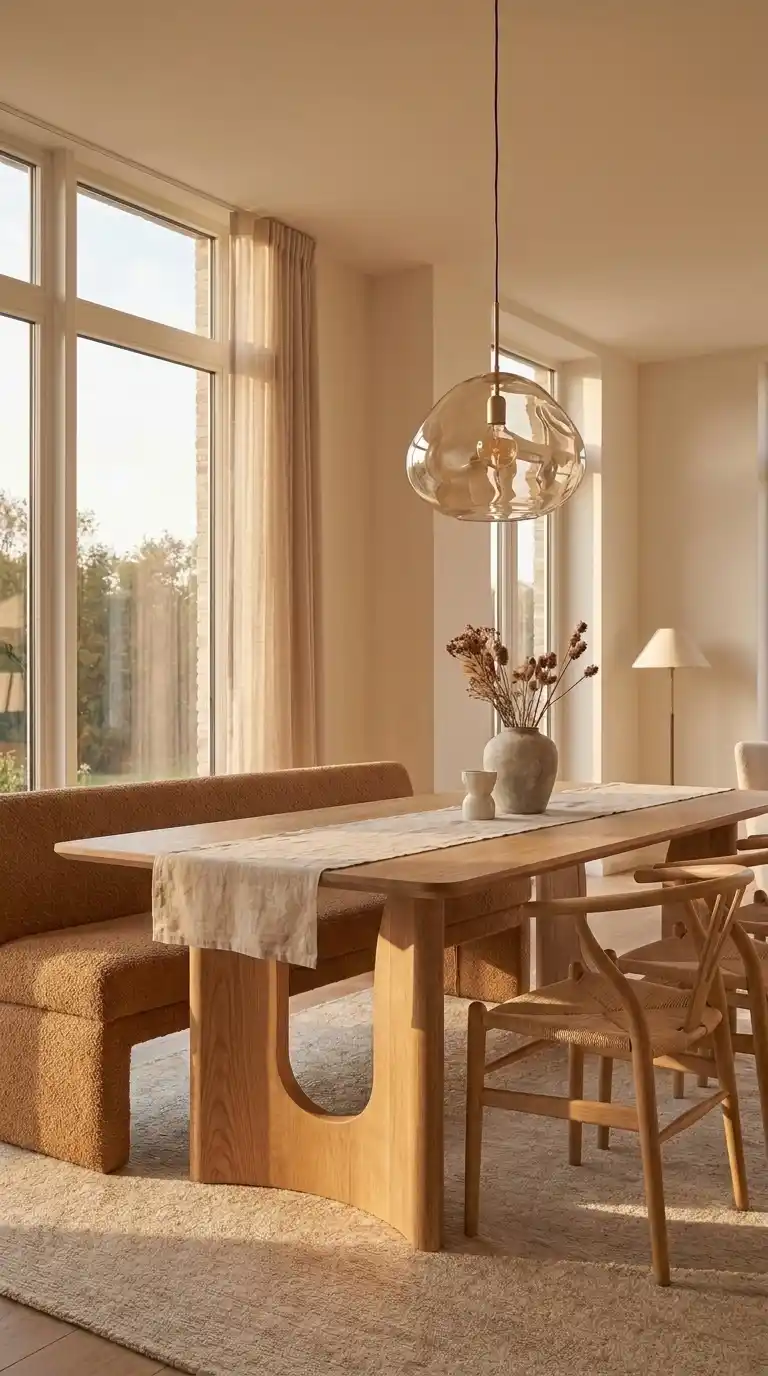
Pairing a bench on one side of the table with individual chairs on the other adds visual interest and often creates more actual seating capacity than four matching chairs would in the same footprint.
Choose a bench upholstery that can handle regular wear, like a performance fabric or boucle blend, since bench seating tends to see more direct contact than individual chairs.
Best suited for: family dining rooms and anyone wanting flexible, higher-capacity seating without a larger table.
4. Bold Accent Wall Behind the Dining Table
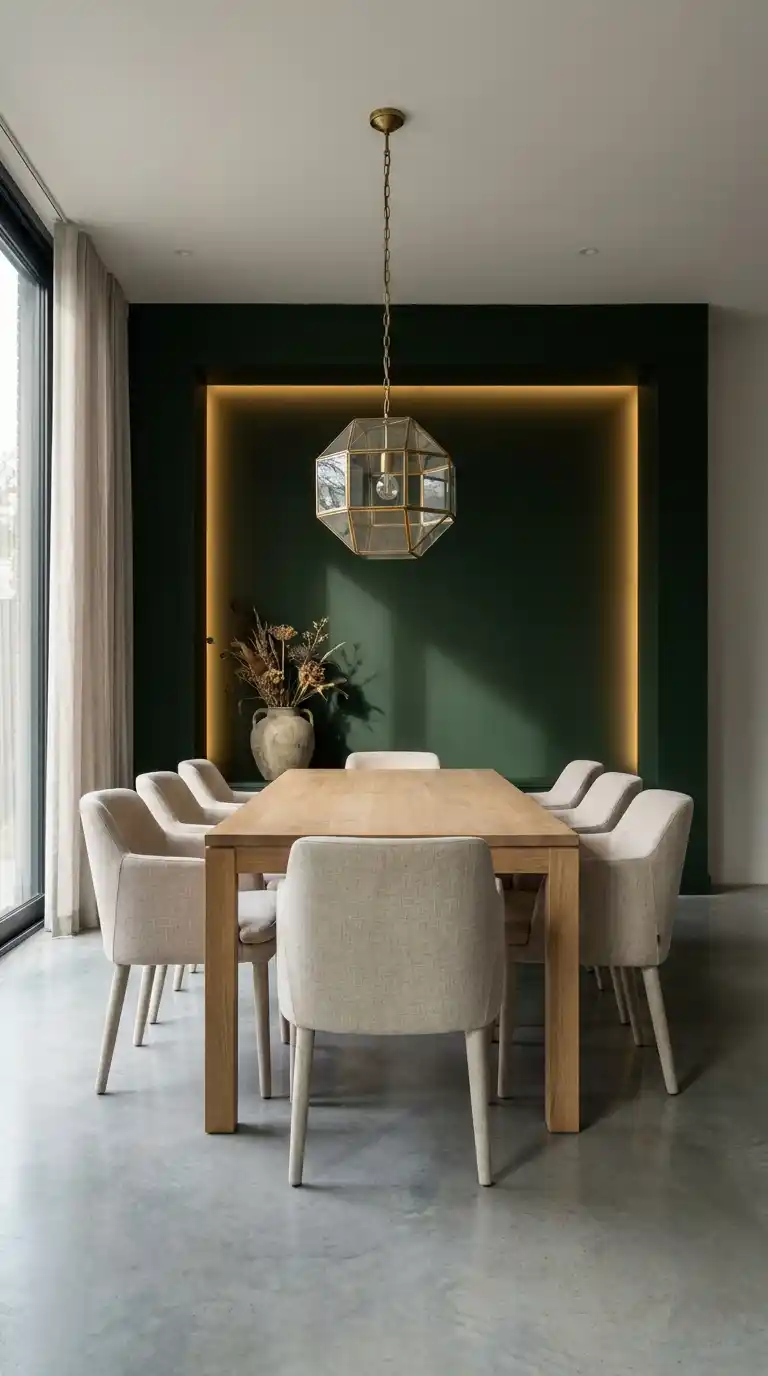
A single bold accent wall directly behind the dining table gives the room a clear focal point and makes an otherwise simple furniture setup feel more intentional and styled.
Choose a deep, saturated color rather than a pastel for the strongest visual impact, and keep the furniture in front of the wall neutral so the color has room to stand out.
Best suited for: dining rooms with a single dominant wall behind the table and homeowners comfortable committing to a bold paint color.
5. Open Shelving and Bar Cart Styling
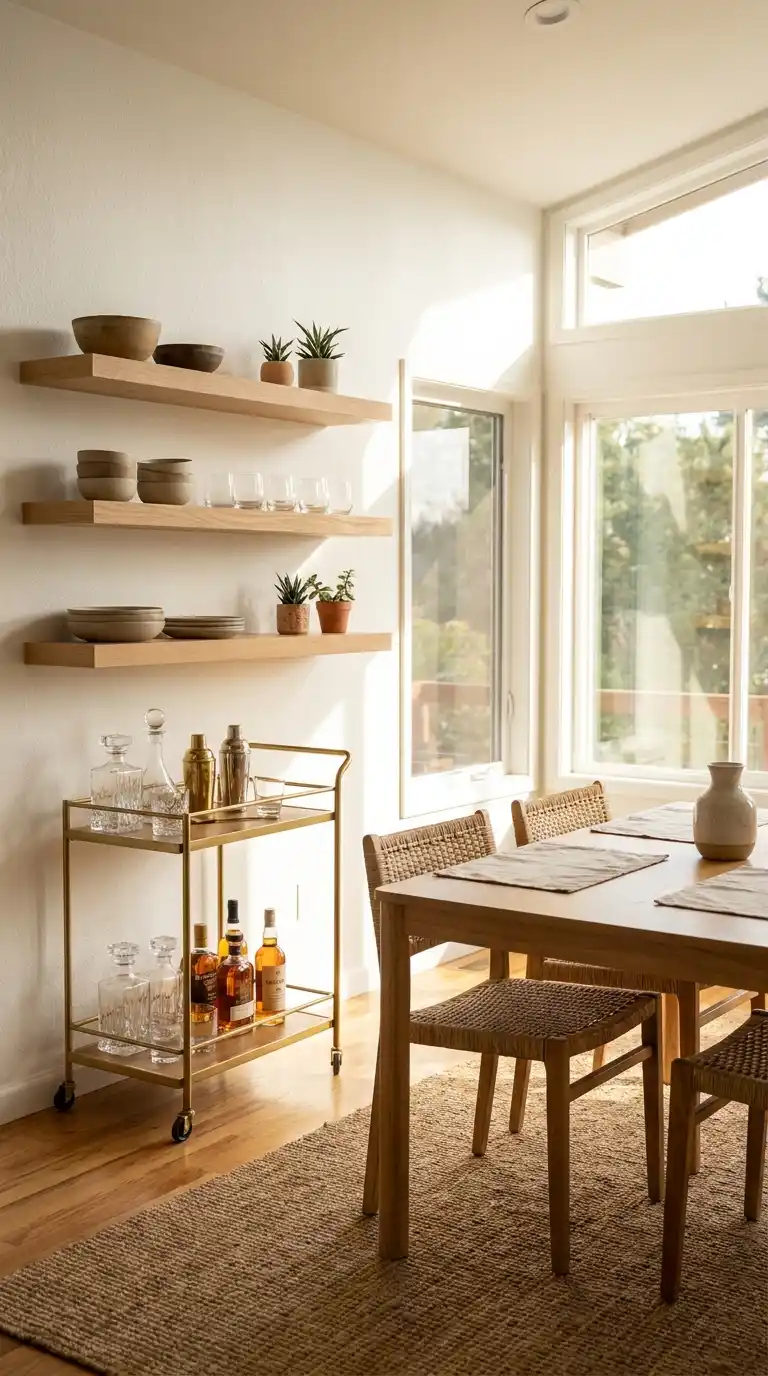
Open shelving styled with dishware and a nearby bar cart gives a dining room a functional, lived-in quality that a bare room with just a table and chairs often lacks.
Style shelves with a mix of heights and a limited color palette, grouping similar items together rather than spacing everything out evenly, for a more curated, magazine-worthy look.
Best suited for: dining rooms with an open wall for shelving and anyone who entertains regularly.
6. Round Dining Table for Small Spaces
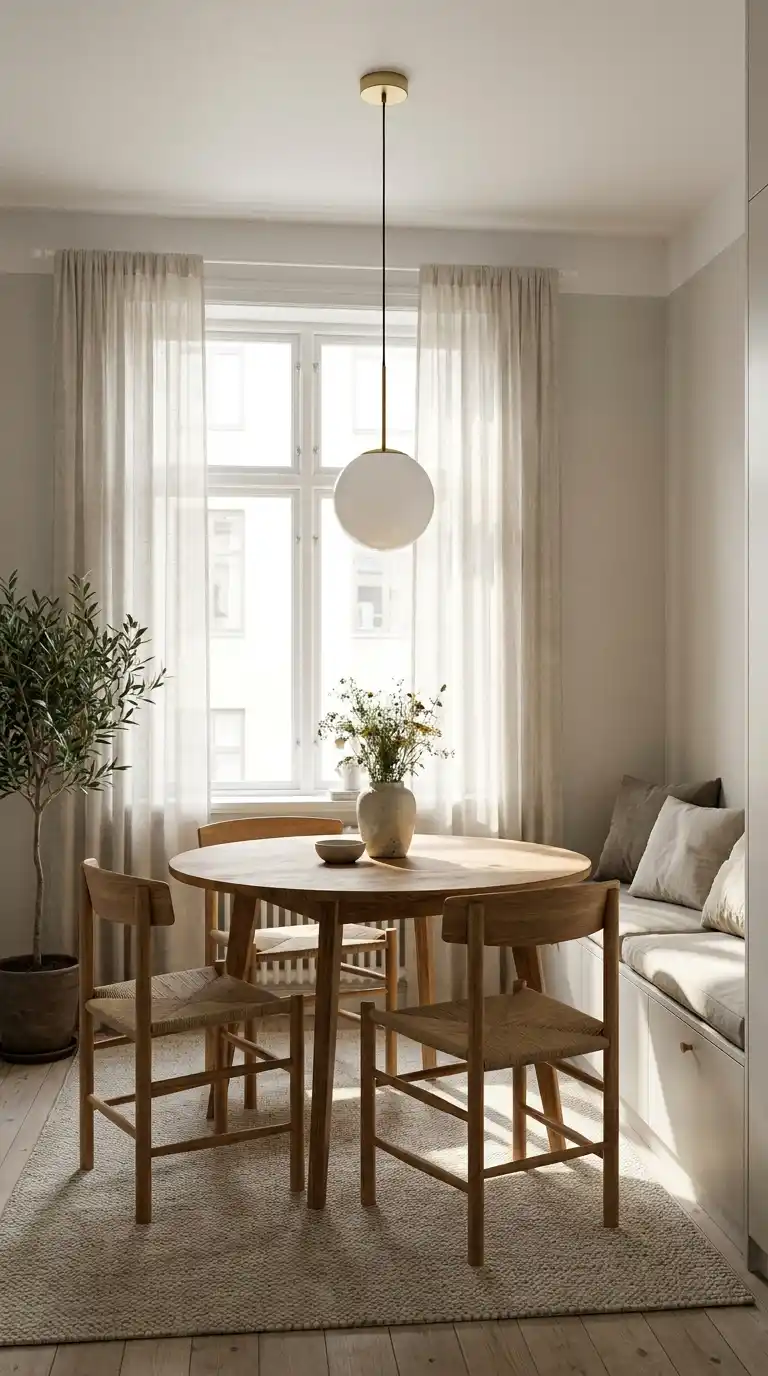
A round table takes up less visual and physical space than a rectangular one of similar seating capacity, and it eliminates sharp corners, which matters in a tighter walking path around the table.
Choose a pedestal base rather than four individual legs for a round table in a small room, since a single central base makes it easier to pull chairs in and out without bumping into table legs.
Best suited for: small dining rooms, apartments, and open-plan spaces where the dining area shares a footprint with a living room or kitchen.
7. Curated Mixed Dining Chair Styles
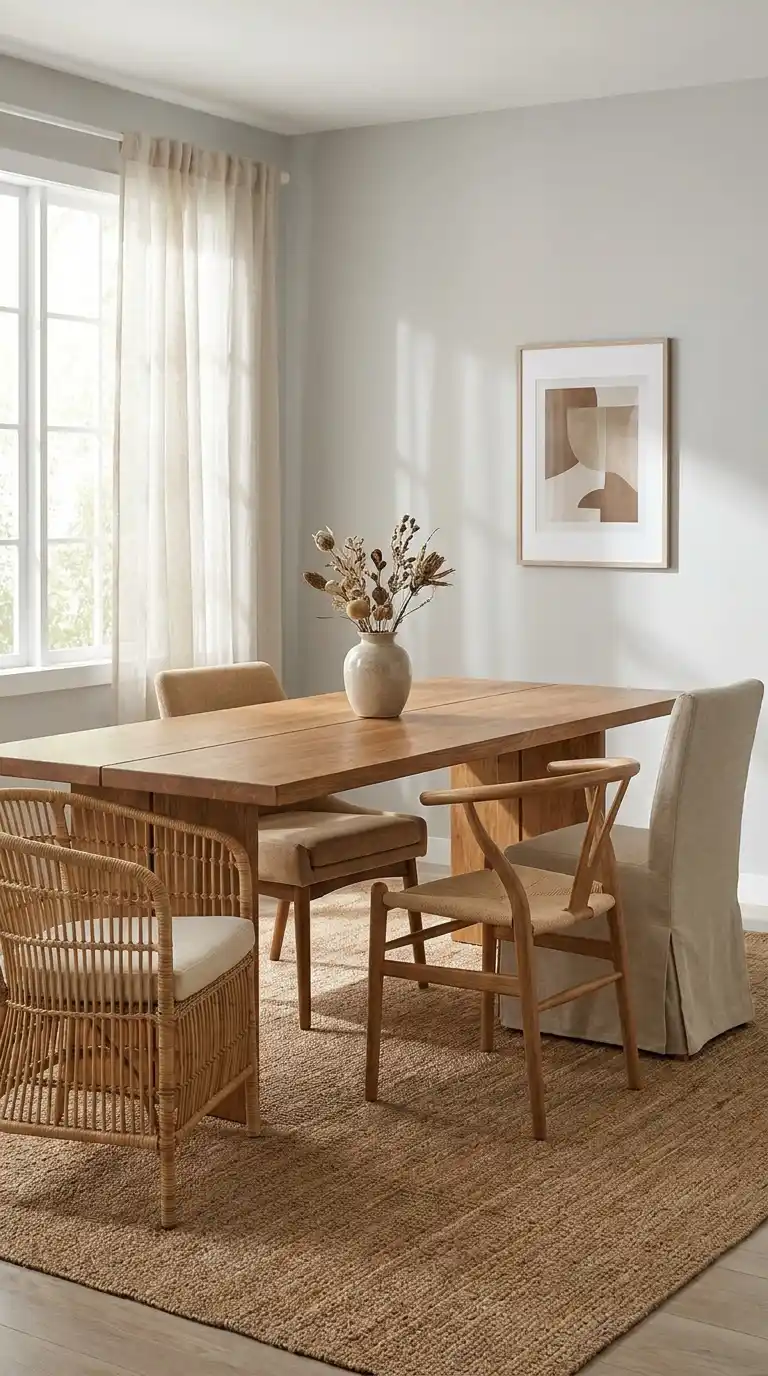
Mixing several different chair styles around one table, rather than using a matching set, gives a dining room a collected-over-time quality that feels more personal and less showroom-generic.
Keep the mixed chairs cohesive by limiting them to a shared color palette or material family, such as all-wood or all-neutral upholstery, so the variety reads as intentional rather than mismatched.
Best suited for: eclectic and collected-modern dining rooms, and anyone furnishing gradually rather than buying a full matching set at once.
8. Sculptural Chandelier as Focal Point
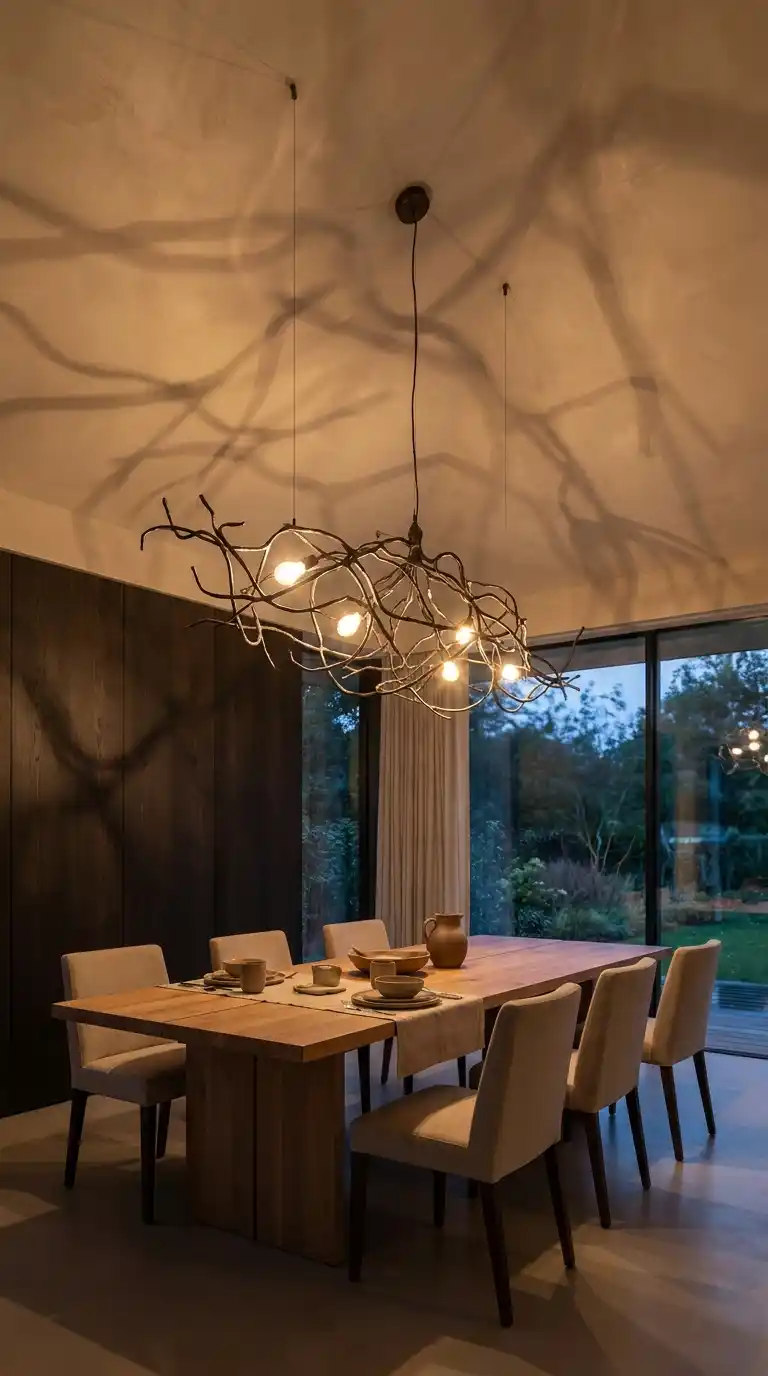
A sculptural chandelier with an unusual silhouette turns the light fixture itself into the room’s primary art piece, which allows the table and chairs underneath to stay simple and understated.
Size the chandelier to roughly half to two-thirds of the table’s length for the most proportionate look, and hang it low enough to feel connected to the table without interfering with sightlines across it.
Best suited for: dining rooms wanting a single dramatic focal point rather than several competing design elements.
9. Built-In Banquette Seating
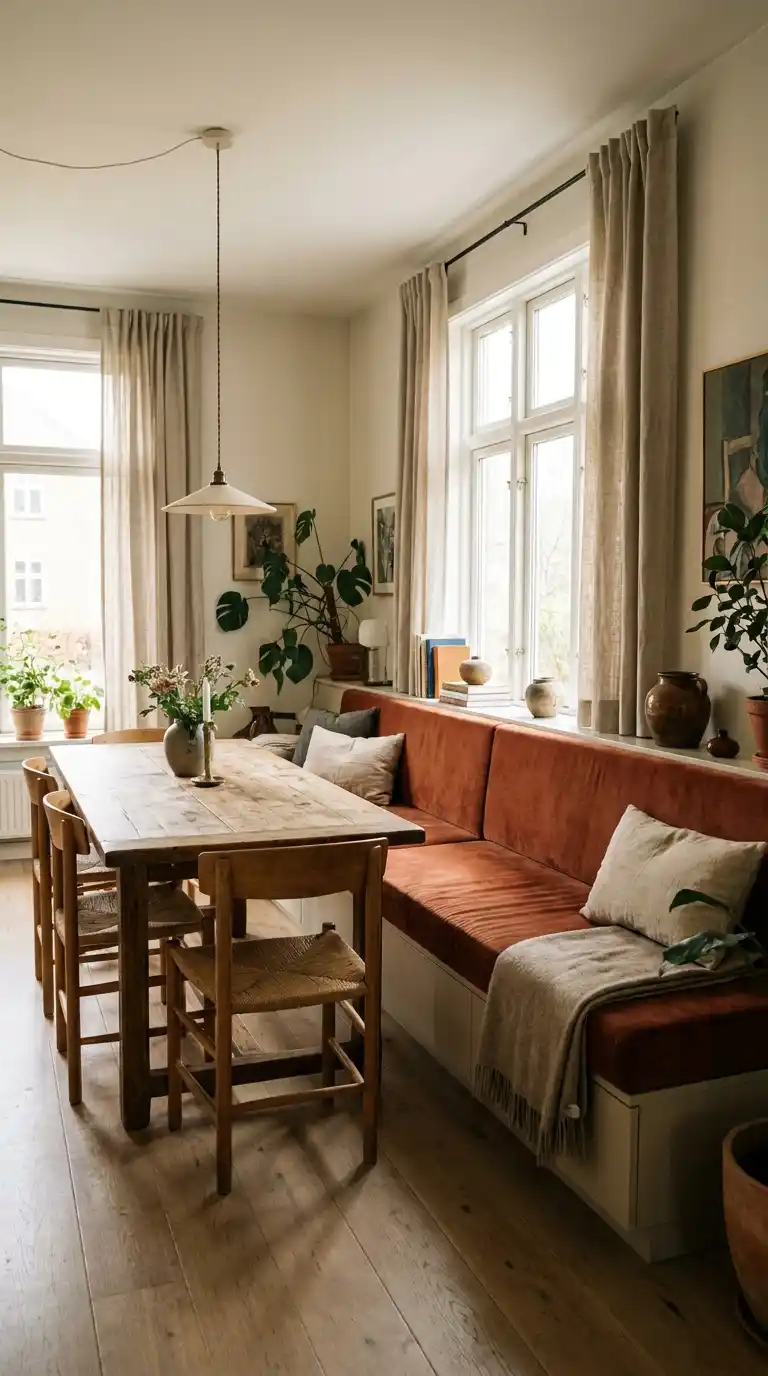
A built-in banquette maximizes seating capacity in a fixed footprint and often includes hidden storage underneath, making it one of the more functional upgrades on this list for smaller or awkwardly shaped dining nooks.
Position the banquette along the wall with the least foot traffic, since built-in seating is harder to move around than freestanding chairs, and pair it with a table that can be pulled slightly away from the wall for easier seating access.
Best suited for: breakfast nooks, awkward corners, and dining spaces that also need extra storage.
10. Statement Mirror to Expand the Space
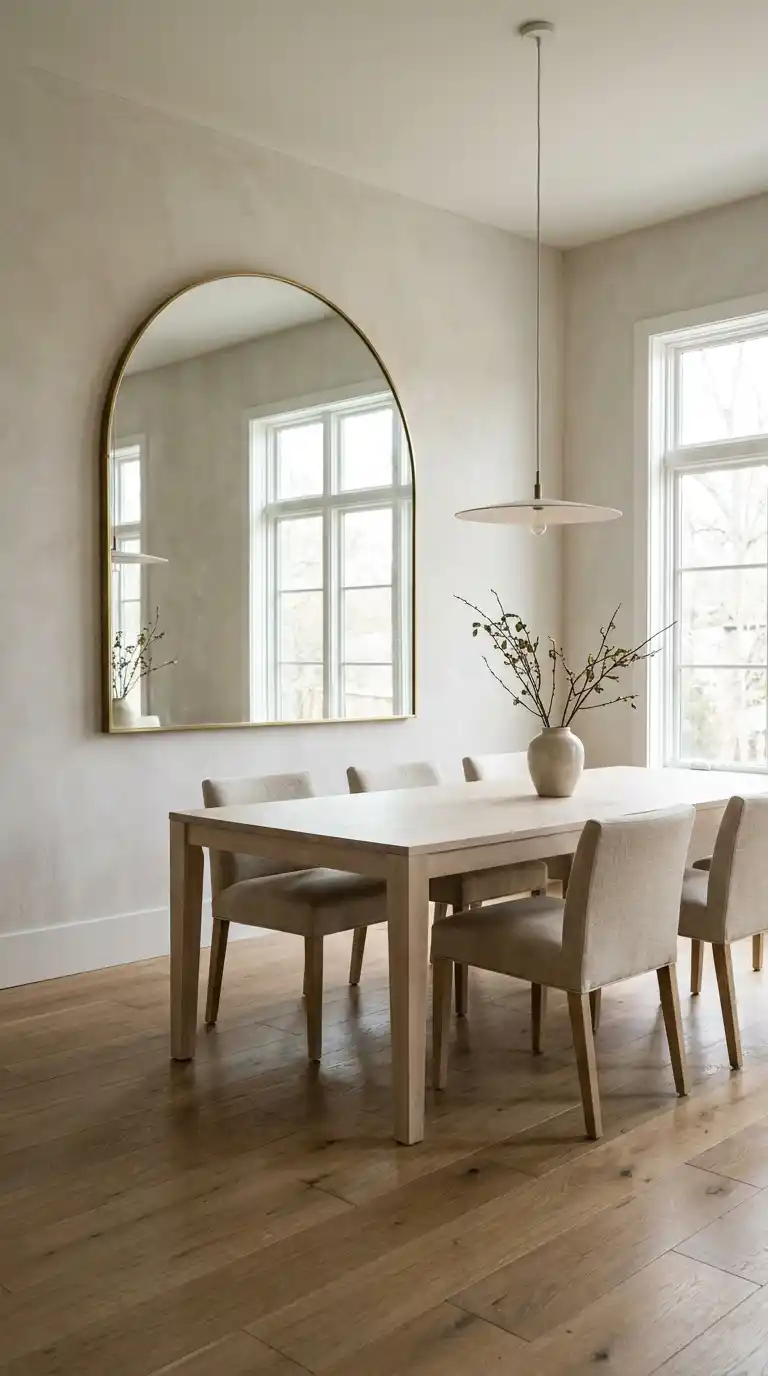
A large mirror positioned to reflect a window or light fixture makes a dining room feel significantly larger and brighter, which is especially useful in a windowless or narrow dining space.
Hang the mirror opposite the room’s main light source rather than opposite a wall, so it actively bounces light back into the room instead of reflecting a blank surface.
Best suited for: small, dark, or windowless dining rooms needing a boost in perceived light and space.
11. Layered Textured Area Rug
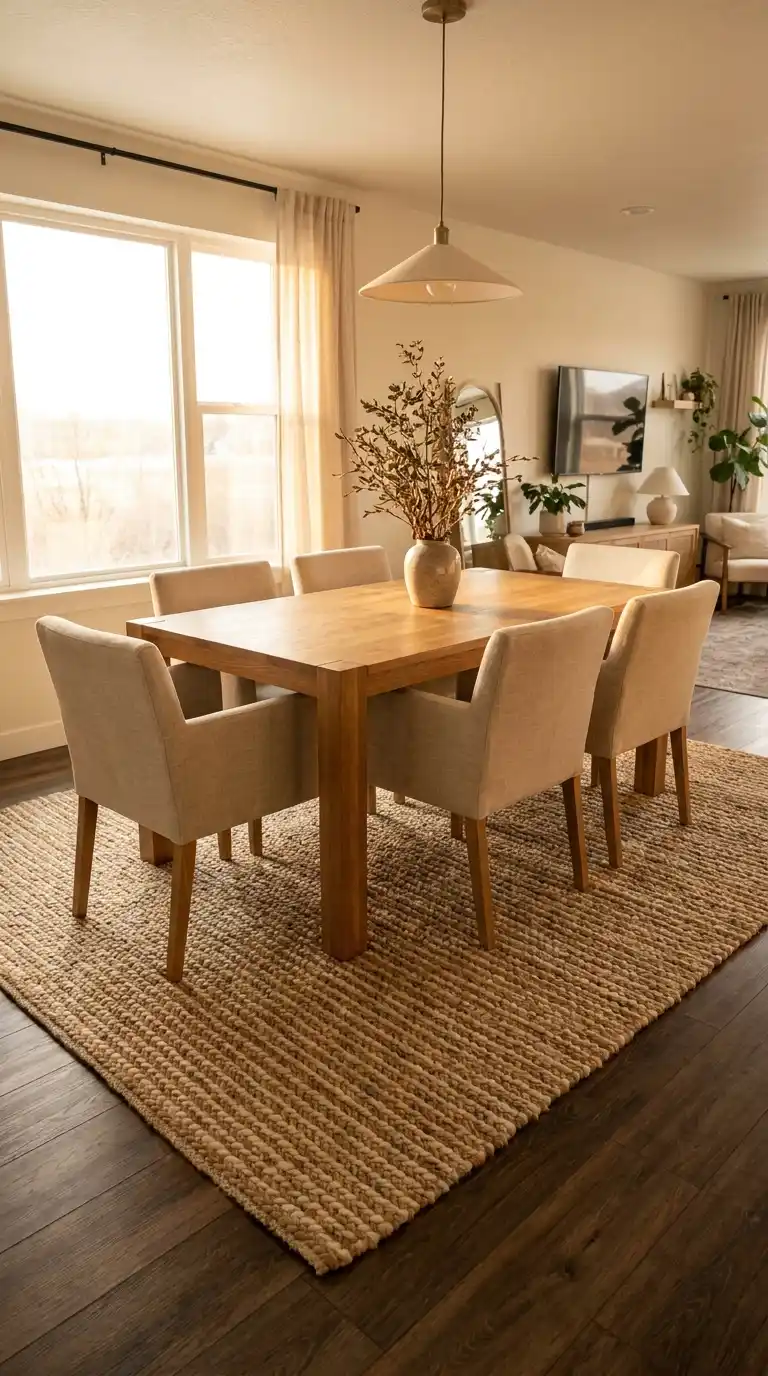
A properly sized rug grounds the entire dining set visually, giving the table and chairs a defined zone rather than floating on a bare floor, particularly in open-plan spaces without walls to define the room.
Size the rug so it extends at least 24 to 30 inches beyond the table on all sides, ensuring chairs stay on the rug even when pulled out from the table.
Best suited for: open-plan dining areas and any room needing more warmth and texture underfoot.
12. Glass or Acrylic Table for an Airy Feel
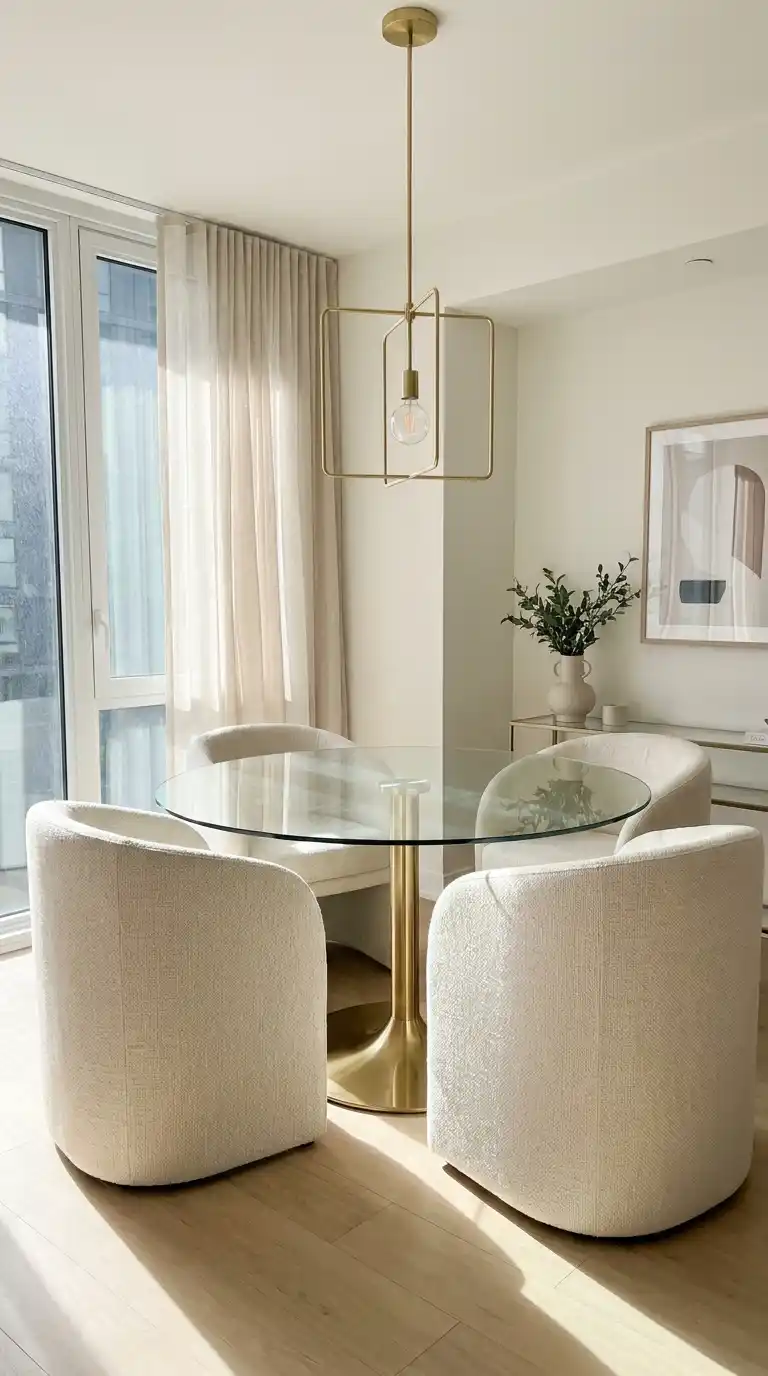
A glass or acrylic tabletop visually takes up less space than a solid wood one, letting light and sightlines pass through, which makes it a strong choice for smaller or open-plan dining areas.
Balance the lightness of a glass table with a more substantial base or chair upholstery, so the overall room does not feel too sparse or cold.
Best suited for: small dining rooms, open-plan spaces, and modern or glam-leaning aesthetics.
13. Warm Wood Tones With Black Metal Accents
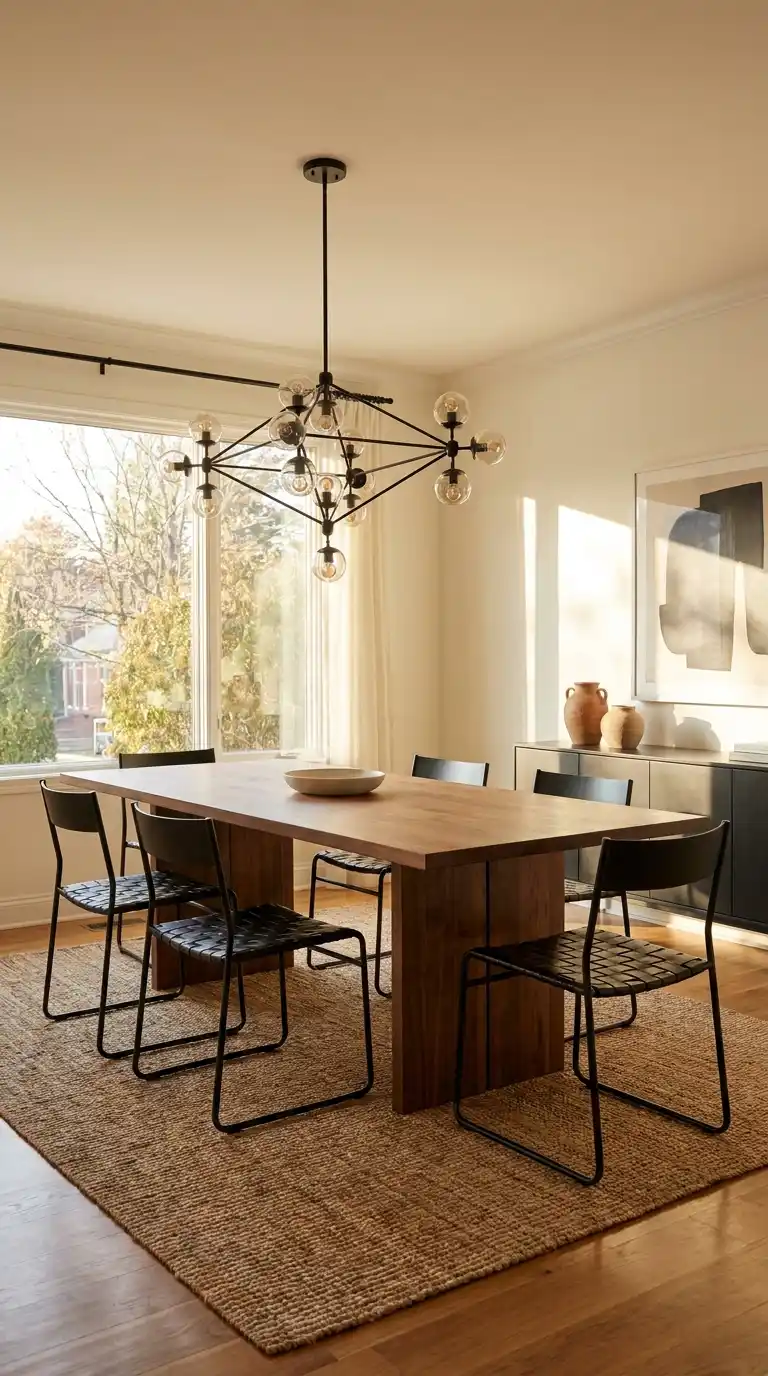
Pairing warm wood furniture with black metal accents — chair frames, light fixtures, hardware — is one of the most reliable modern color and material combinations, offering contrast without feeling cold or stark.
Repeat the black metal accent in at least two places, such as the chairs and the light fixture, so the pairing feels intentional rather than a single isolated detail.
Best suited for: modern and industrial-transitional dining rooms wanting warmth with defined contrast.
14. Gallery Wall or Single Art Moment
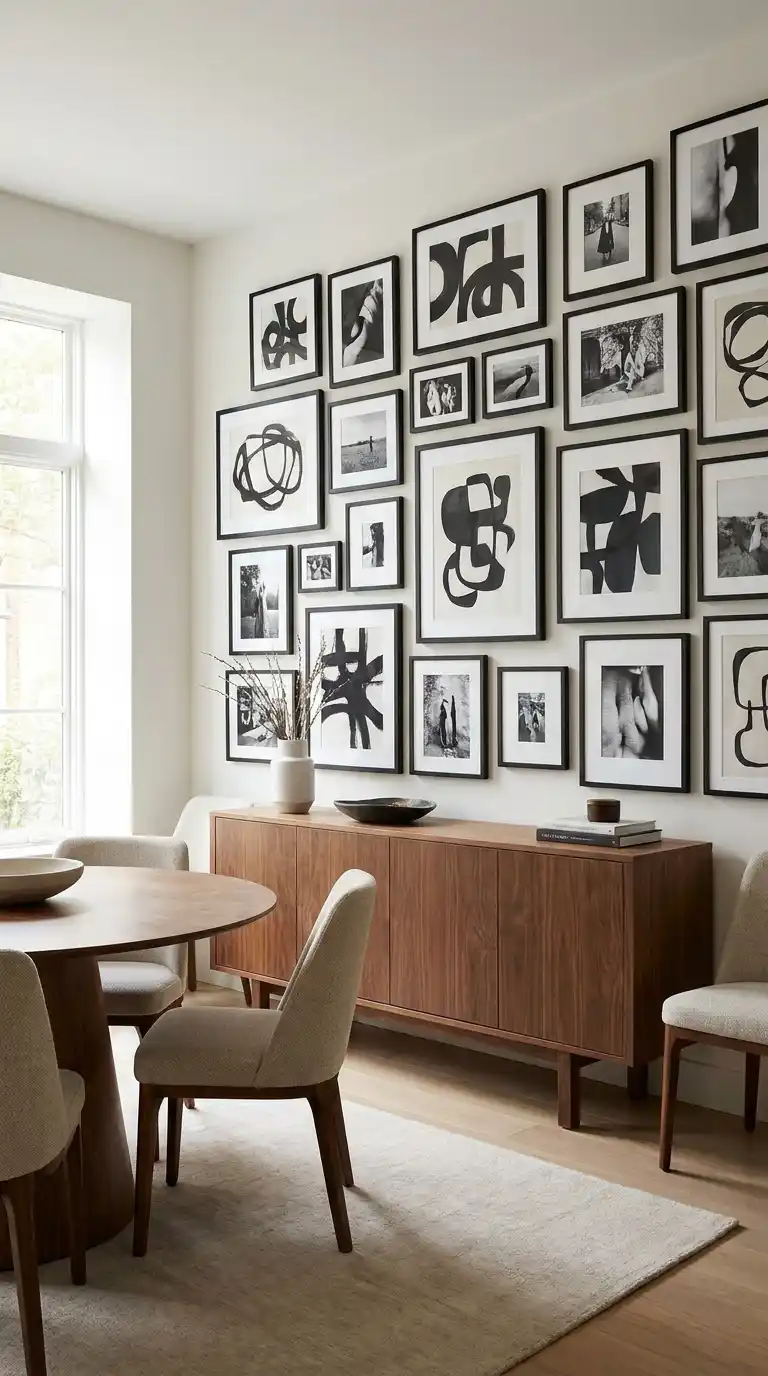
A gallery wall or single large art piece gives the dining room a personal, curated quality, especially when hung on a wall adjacent to the table where it is visible during meals rather than only in passing.
Choose art with a color palette that complements the table and chairs, and keep frame styles consistent across a gallery wall so the collection reads as cohesive rather than accumulated at random.
Best suited for: dining rooms with a secondary wall not occupied by the main table setup, and anyone wanting a more personal design touch.
15. Layered Greenery and Plant Styling
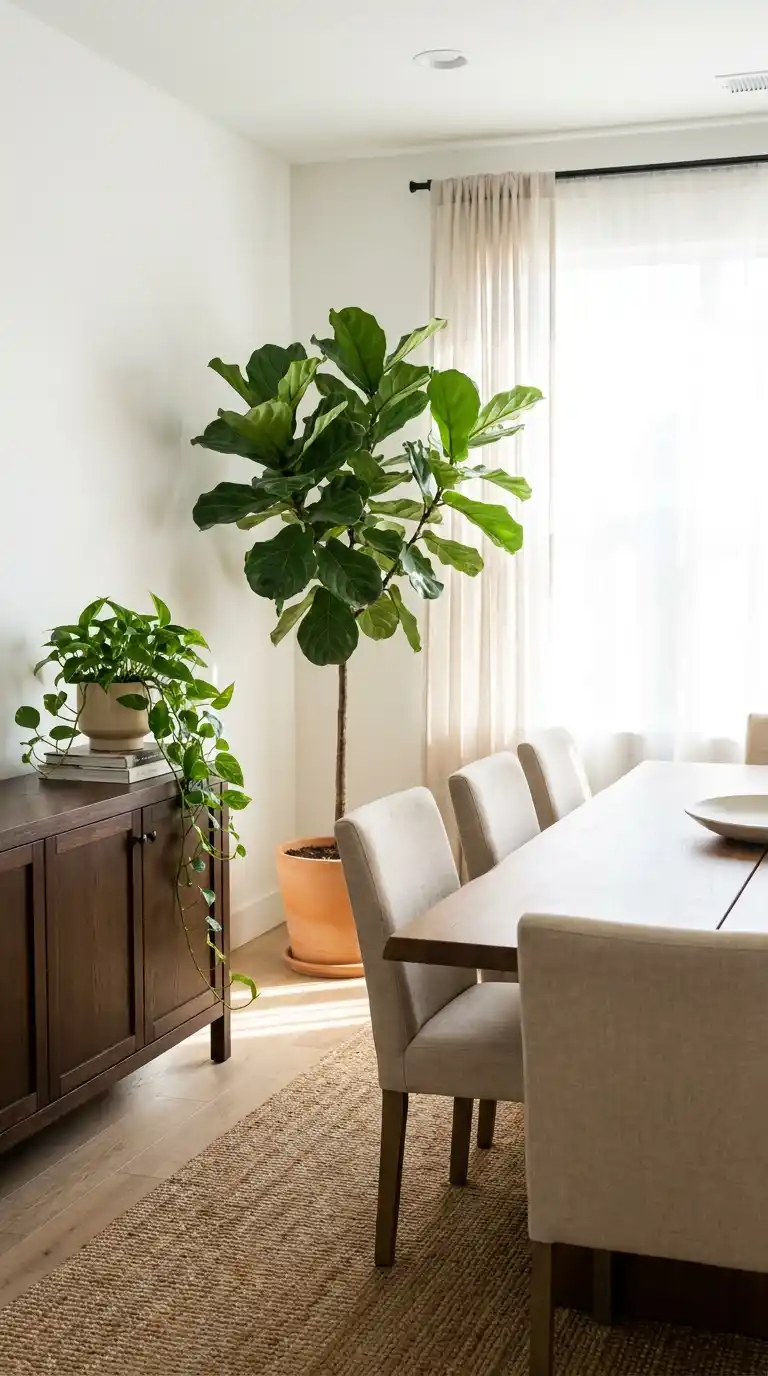
Adding one or two well-placed plants brings life and softness to a dining room that might otherwise feel purely functional, and it is one of the lowest-cost updates on this entire list.
Choose a larger floor plant for an empty corner and a smaller trailing plant for a credenza or shelf, rather than several small plants scattered without a clear anchor point.
Best suited for: any dining room, and especially rooms with strong natural light that can support larger plants.
16. Multi-Functional Dining and Workspace Combo
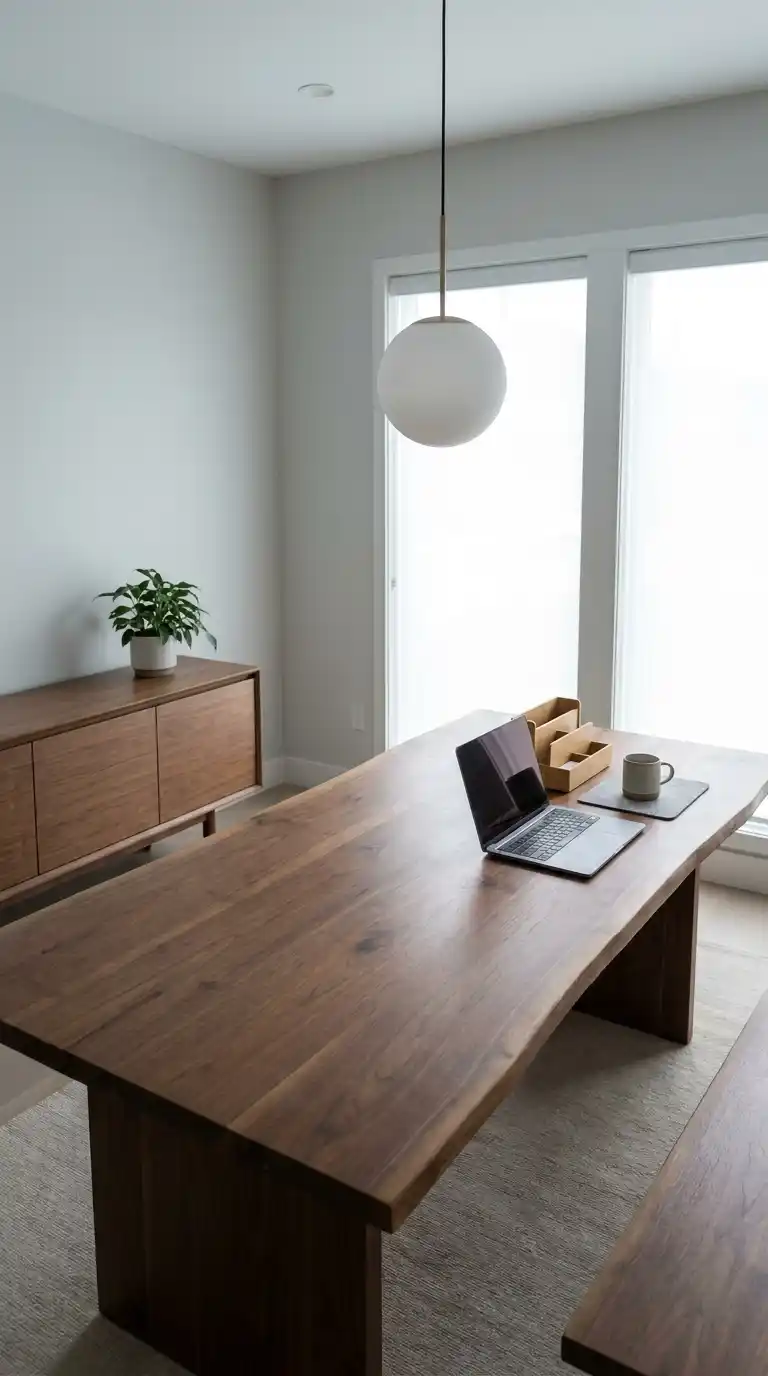
Designing a dining room to double as a workspace makes sense in homes without a dedicated office, and a longer table with a credenza nearby for supply storage keeps the two functions from visually colliding.
Choose a table long enough that a laptop and work supplies can occupy one end while leaving the rest fully usable for meals, and use a rolling cart or credenza drawer to clear work items away quickly when guests arrive.
Best suited for: smaller homes without a dedicated office and anyone who regularly works from a shared space.
Planning and Buying Tips
A few practical decisions up front will help your dining room updates work as well functionally as they look visually.
● Measure clearance around the table — leave at least 36 inches between the table edge and the nearest wall or furniture piece so chairs can be pulled out comfortably.
● Standard sizing to shop for — most dining tables seat comfortably at 24 inches of table length per person, and standard table height runs 28 to 30 inches to work with most chair heights.
● Plan pendant or chandelier height carefully — hang the bottom of the fixture 30 to 36 inches above the tabletop for a ceiling height of about 8 feet, adjusting up for taller ceilings.
● Check electrical placement before buying a large light fixture — relocating a ceiling electrical box to properly center a new fixture over the table may require an electrician.
● Choose performance fabrics for dining chairs — dining seating sees more spills and wear than almost any other upholstered furniture in the home, so stain-resistant fabric is worth the investment.
● Size the rug to the full table and chair footprint — a rug that is too small will catch chair legs when pulled out, which is one of the most common dining room styling mistakes.
Cost Breakdown: Budget, Mid-Range, and Luxury Updates
A modern dining room refresh can range from a single low-cost swap to a full furniture and lighting overhaul, depending on how much of the room you update at once.
Budget ($100–$600)
A new area rug, a single statement pendant light, plants, and a gallery wall of affordable prints fall in this range. Installation is typically DIY, with pendant swaps sometimes requiring a licensed electrician for $75–$150 if wiring needs adjustment.
Mid-Range ($600–$3,000)
A new dining table, a set of upholstered chairs, or a sculptural chandelier sits in this tier. Delivery and basic assembly typically add $50–$200 depending on the retailer and piece size.
Luxury / Premium ($3,000–$10,000+)
A full furniture set with designer chairs, a custom-built banquette, and a statement chandelier requiring electrical relocation falls here. Custom banquette installation alone typically runs $1,500–$4,000 depending on materials and built-in storage.
Furniture and Material Comparison
| Item | Price Range | Durability | Maintenance | Best For |
| Solid wood table | $500–$3,000+ | Very high | Wipe clean; reseal finish every few years | Long-term investment, family use |
| Glass-top table | $300–$1,500 | High, but can chip at edges | Wipe clean with glass cleaner | Small or open-plan rooms |
| Upholstered dining chairs | $100–$500 each | Moderate — fabric wears over time | Spot clean; consider performance fabric | Comfort-focused, everyday dining |
| Built-in banquette | $1,500–$4,000 | Very high | Wipe or spot clean upholstery regularly | Small nooks, families needing extra storage |
| Statement chandelier/pendant cluster | $200–$2,000+ | Very high | Dust regularly; clean glass elements as needed | Rooms wanting a strong focal point |
| Area rug (wool/jute blend) | $150–$1,200 | High | Vacuum regularly; professional clean as needed | Grounding open-plan or hardwood-floor rooms |
Maintenance Tips
● Wood tables — wipe up spills immediately, use coasters and placemats for hot dishes, and reseal or refinish the surface every few years depending on use.
● Upholstered chairs and banquettes — spot-clean spills right away with a fabric-safe cleaner, and vacuum fabric surfaces regularly to prevent crumbs and dust from settling into the weave.
● Glass tabletops — clean with a dedicated glass cleaner rather than an all-purpose spray, which can leave streaks or residue on larger glass surfaces.
● Light fixtures — dust pendant and chandelier fixtures every few weeks, and clean any glass or crystal elements with a soft cloth to maintain brightness.
● Rugs — vacuum weekly and rotate the rug every six months if it sits in direct sunlight, to prevent uneven fading across the surface.
● Common mistake to avoid — placing a rug too small for the table and chair footprint, which causes chair legs to repeatedly catch the rug edge and wear it unevenly over time.
Frequently Asked Questions
What makes a dining room feel modern?
A modern dining room typically combines clean-lined furniture, a mix of natural and matte black materials, statement lighting, and a limited, cohesive color palette rather than heavily patterned or ornate traditional pieces.
How high should a pendant light hang over a dining table?
The bottom of a pendant or chandelier should generally sit 30 to 36 inches above the tabletop for a standard 8-foot ceiling, adding roughly 3 inches of additional height for every foot of ceiling height beyond that.
What size rug should go under a dining table?
Choose a rug that extends at least 24 to 30 inches beyond the table’s edge on all sides, so that chairs remain on the rug even when pulled out from the table during use.
Is it okay to mix dining chair styles?
Yes — mixing dining chair styles is a popular modern approach as long as the chairs share a common thread, such as a consistent color palette, wood tone, or material family, so the variety looks intentional rather than mismatched.
How much clearance is needed around a dining table?
Leave at least 36 inches between the table’s edge and the nearest wall or furniture piece, and closer to 42 to 48 inches if the space also functions as a walkway, to allow chairs to be pulled out and people to pass behind seated guests.
How to Choose the Right Modern Dining Room Ideas for You
The right combination of ideas depends on three factors: your room size, your budget, and how often you actually use the space for entertaining versus everyday meals. Smaller rooms benefit most from a round or glass table, a well-placed mirror, and layered lighting, while larger rooms have more room for bold accent walls, sculptural chandeliers, and mixed seating arrangements.
Budget should guide where you start rather than where you finish — lighting, a rug, and plants offer the highest visual impact for the lowest cost, while furniture replacement and built-in banquettes are worth saving for once you know how the room will actually be used long-term.
Finally, think about your household’s daily habits. If the room doubles as a workspace or homework station, prioritize a durable, multi-functional table and easy-to-clean surfaces over more delicate design choices like glass tabletops or light upholstery.


- Be Respectful
- Stay Relevant
- Stay Positive
- True Feedback
- Encourage Discussion
- Avoid Spamming
- No Fake News
- Don't Copy-Paste
- No Personal Attacks
- Be Respectful
- Stay Relevant
- Stay Positive
- True Feedback
- Encourage Discussion
- Avoid Spamming
- No Fake News
- Don't Copy-Paste
- No Personal Attacks
