18 Small Sewing Room Ideas That Make Every Inch Work Harder
Published: 4 Sep 2026
A sewing room does not need to be a spare bedroom to function well. Whether you are working out of a closet, a corner of a guest room, or a single blank wall, small sewing room ideas are built around the exact problem most crafters actually have: too much fabric, thread, and equipment for too little floor space. Done right, a compact setup can be just as functional as a dedicated studio, and often more efficient, since everything stays within arm’s reach instead of spread across a room. This guide walks through 18 small sewing room ideas for every space and budget, from fold-down wall tables to closet conversions and vertical storage systems. Along the way, you will find honest pros and cons, real price ranges, a storage and furniture comparison table, maintenance advice, and answers to the questions people search for most before setting up their own space. By the end, you will know exactly which setup fits your room, your budget, and how you actually sew.
Is a Small Sewing Room Right for You?
A compact, dedicated sewing space works well for most crafters, but it is worth weighing the trade-offs honestly before you commit a closet, corner, or nook to the project.
Pros
● Lower cost than a full room — a small setup can be built with a fold-down table, a few storage bins, and basic shelving for a fraction of what a dedicated studio would cost.
● Everything stays within reach — a compact layout keeps your machine, notions, and fabric close together, which often speeds up your actual workflow compared to a spread-out room.
● Works in almost any home — closets, corners, landings, and even under-stairs nooks can all become functional sewing spaces with the right furniture choices.
● Easy to keep tidy — a smaller footprint naturally limits clutter, since there is less room for projects and supplies to pile up unchecked.
Cons
● Limited surface area — cutting large pieces of fabric or working on bigger projects like quilts can be genuinely difficult without a nearby table to extend onto.
● Storage runs out fast — fabric stashes and notions collections grow quickly, and a small room can hit its storage capacity sooner than you expect.
● Ventilation and lighting can be a challenge — closets and nooks often lack natural light or airflow, both of which matter for long sewing sessions.
● Set-up and pack-down time — if your space doubles as something else, like a guest room, you may spend real time setting up and breaking down your station each session.
For most home sewists, a well-planned small space outperforms a large, disorganized one. The key is matching your furniture and storage choices to your actual project size and habits rather than trying to fit a full studio’s worth of equipment into a closet.
1. Fold-Down Wall-Mounted Sewing Table
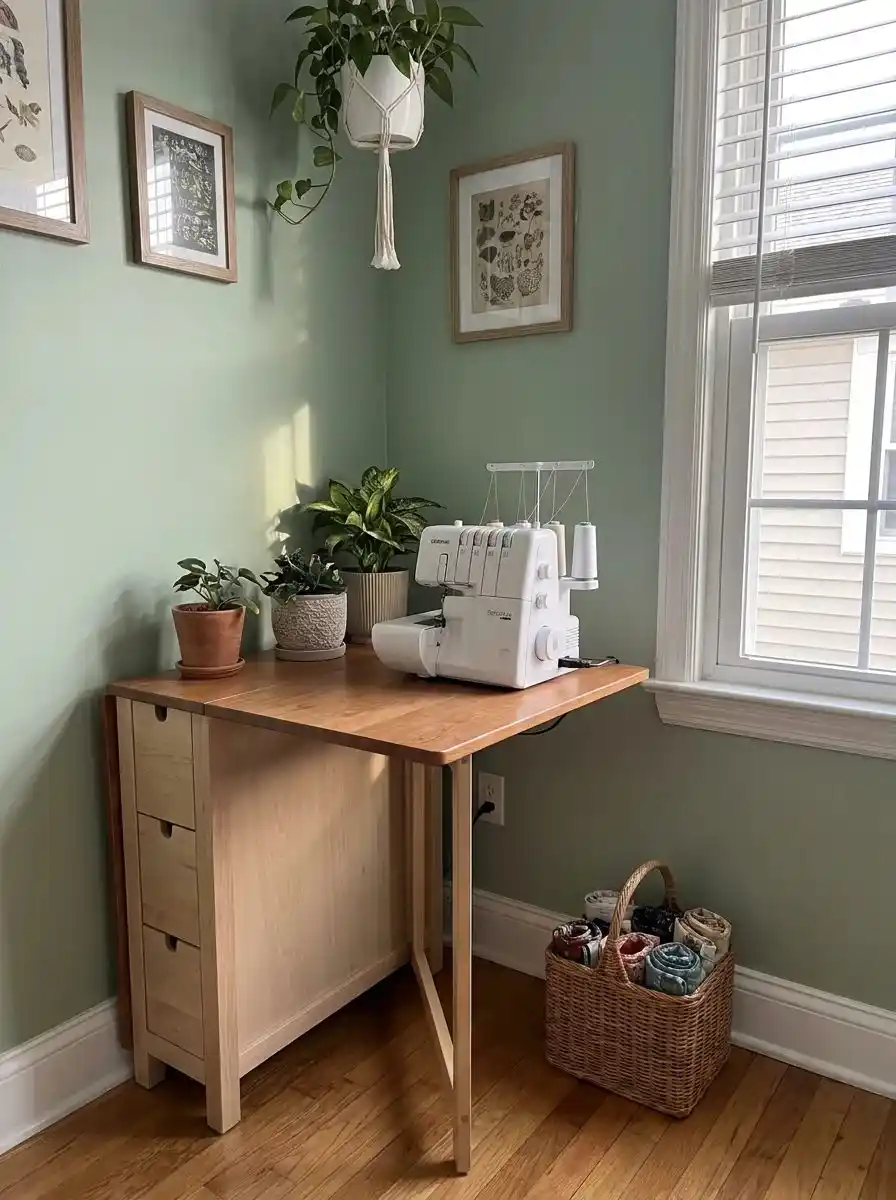
A fold-down table mounted directly to the wall is one of the most space-efficient setups possible — when you are done sewing, the entire table folds flat against the wall, giving the room back to whatever else it needs to be.
Look for a model with built-in drawers or a shallow shelf behind the folding surface so thread, bobbins, and small tools stay organized even when the table is closed.
Best suited for: multi-purpose rooms, guest bedrooms, and anyone who needs the sewing station to disappear when not in use.
2. Closet-to-Sewing-Nook Conversion
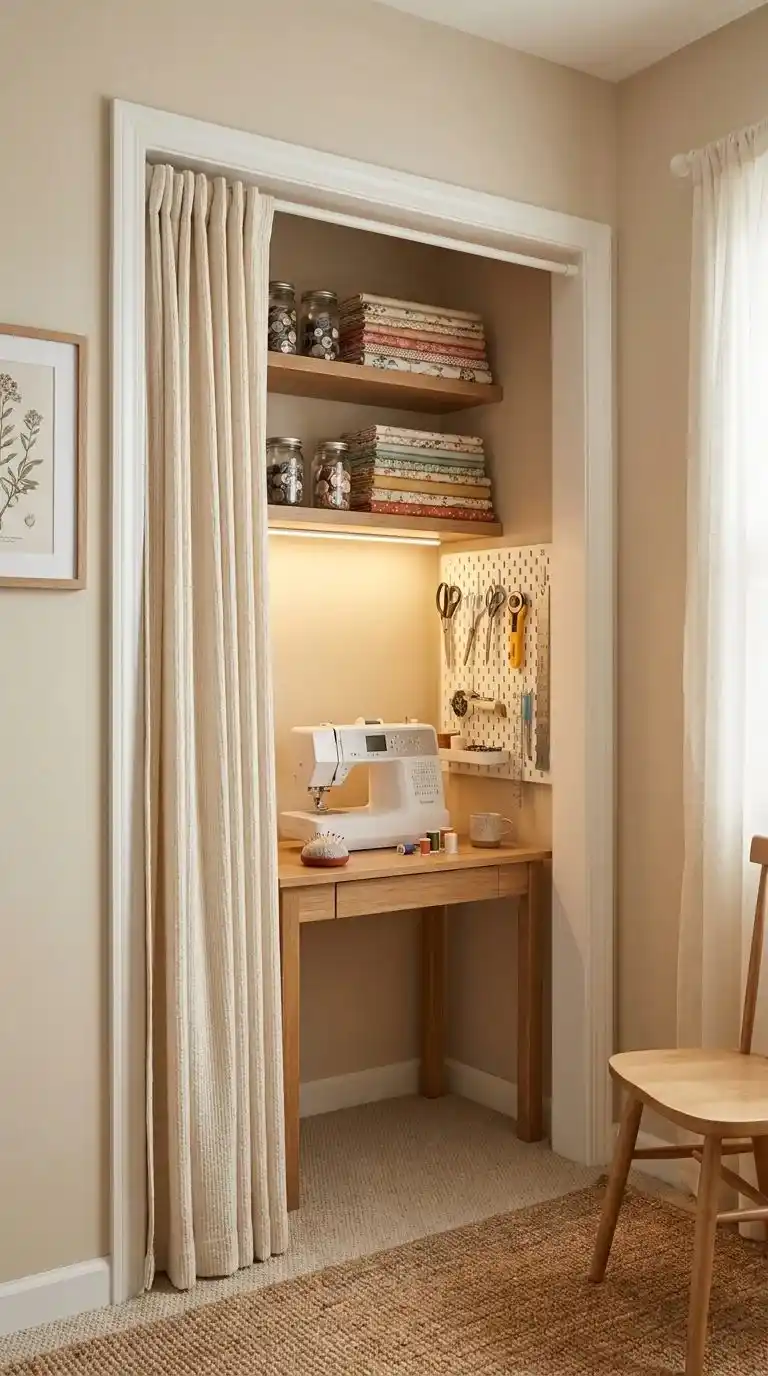
Converting an unused closet into a sewing nook is one of the highest-value small sewing room ideas, since it uses square footage that would otherwise sit empty and keeps your entire setup contained behind a door or curtain.
Add a small desk or fold-out shelf at a comfortable sewing height, install shelving above for fabric, and mount a strip light under the top shelf since closets rarely have great overhead lighting on their own.
Best suited for: apartments, shared bedrooms, and anyone without a spare room to dedicate to sewing.
3. Pegboard Fabric and Notions Wall
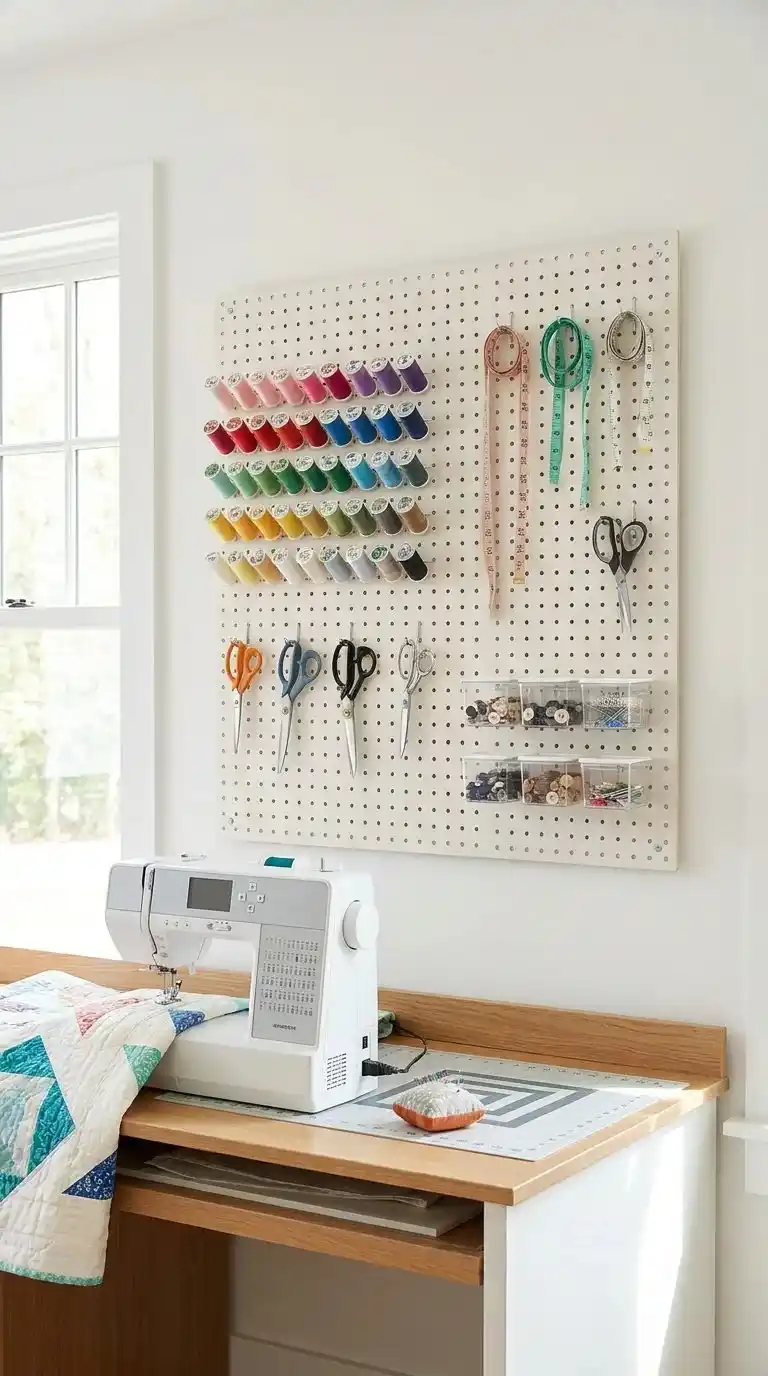
A pegboard turns unused wall space into active storage, keeping scissors, thread, rulers, and small tools visible and within reach instead of buried in a drawer.
Use a mix of hooks, small shelves, and baskets on the pegboard so you can store items of different shapes and sizes without wasted space between pegs.
Best suited for: any small sewing space, especially ones where desk and drawer space is limited but wall space is available.
4. Rolling Cart Storage for Machines and Supplies
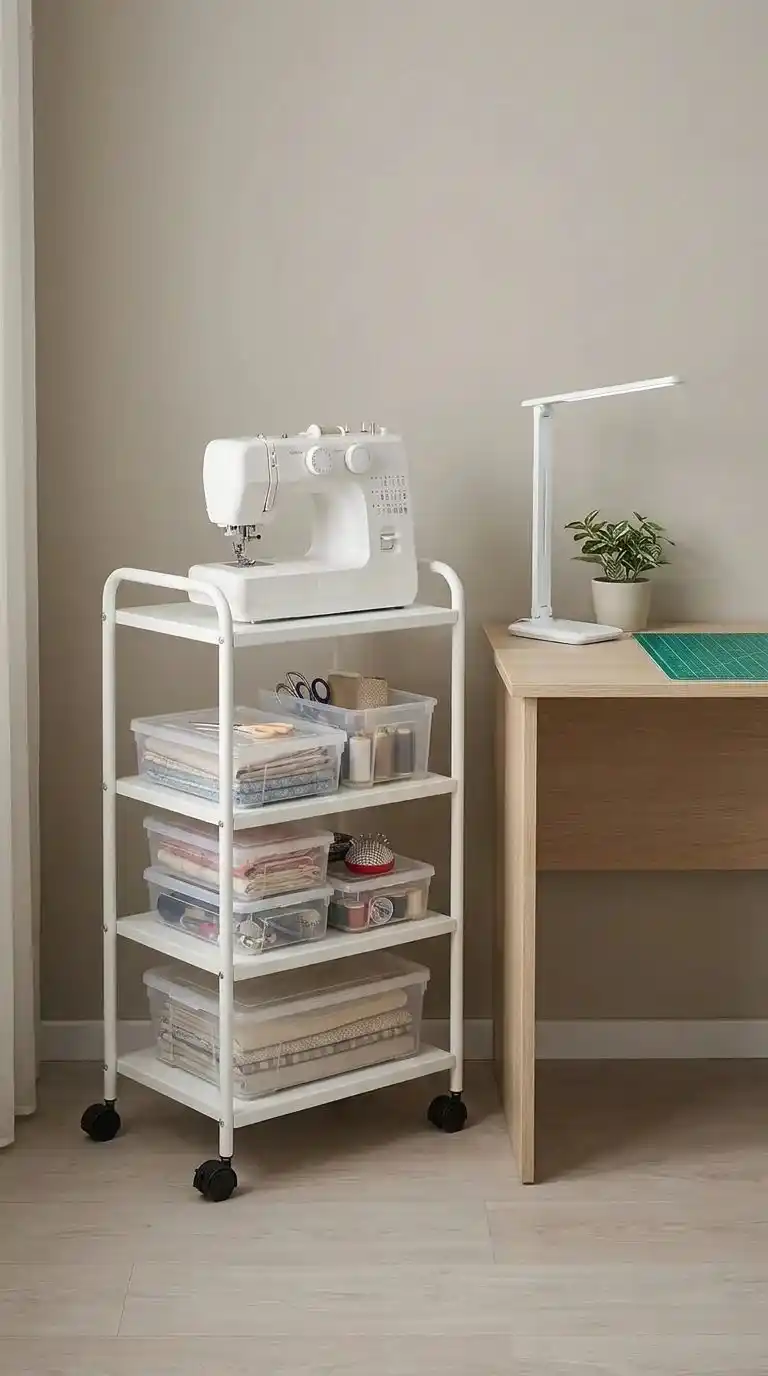
A rolling cart gives you a mobile sewing station that can move between rooms, tuck into a closet, or slide under a desk when not in use, which makes it one of the most flexible small sewing room ideas available.
Choose a cart with at least three tiers so your machine, fabric, and notions each get their own level, and look for one with a lip or edge on each shelf to keep items from sliding off during transport.
Best suited for: renters, shared spaces, and anyone who needs their sewing setup to be fully portable.
5. Under-Stairs Sewing Nook
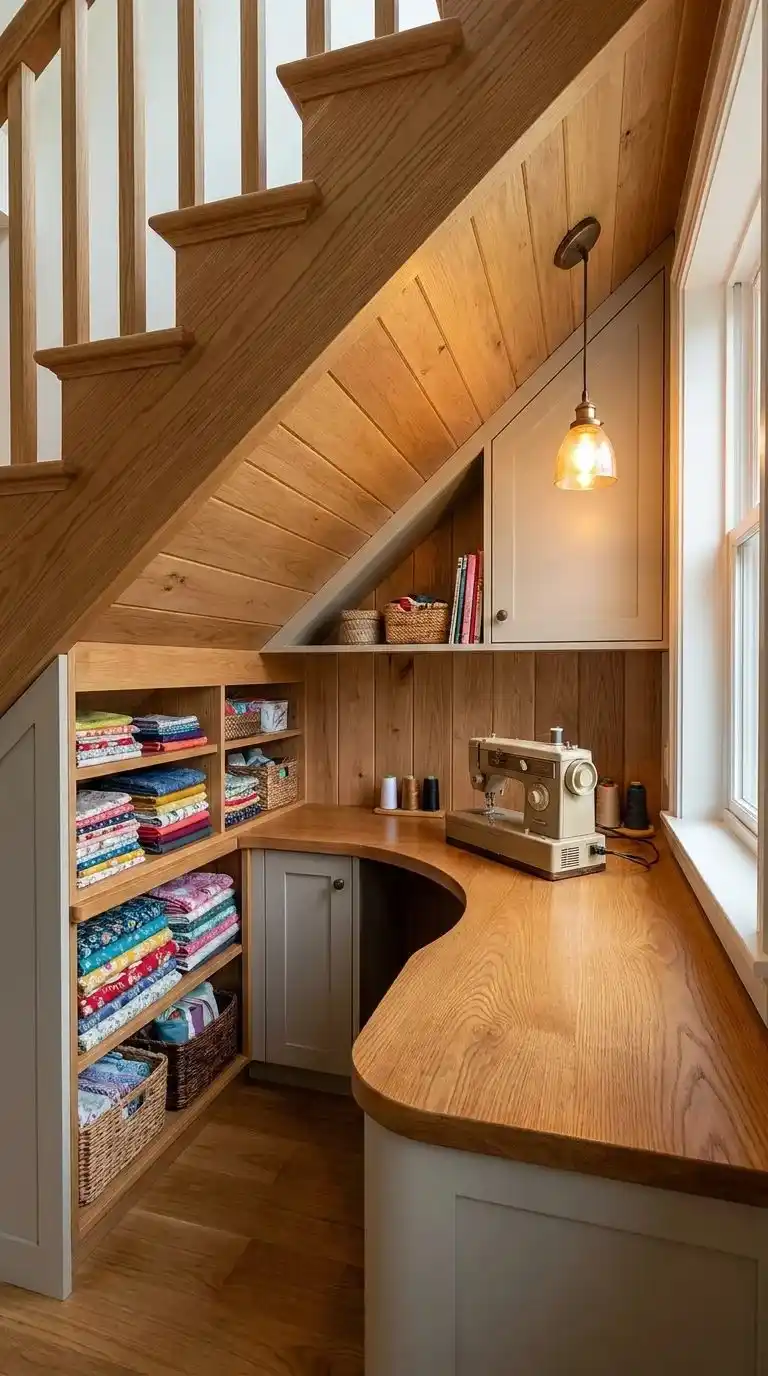
The space under a staircase is often wasted entirely, but with a custom-fit desk and shelving that follow the slope of the stairs, it can become a surprisingly functional sewing nook.
Use the taller end of the space for your machine and active work area, and reserve the lower, sloped end for bins and shelving where you do not need to stand or sit upright.
Best suited for: homes with an open or underused staircase area and anyone comfortable with a semi-custom build.
6. Corner Sewing Desk With L-Shaped Layout
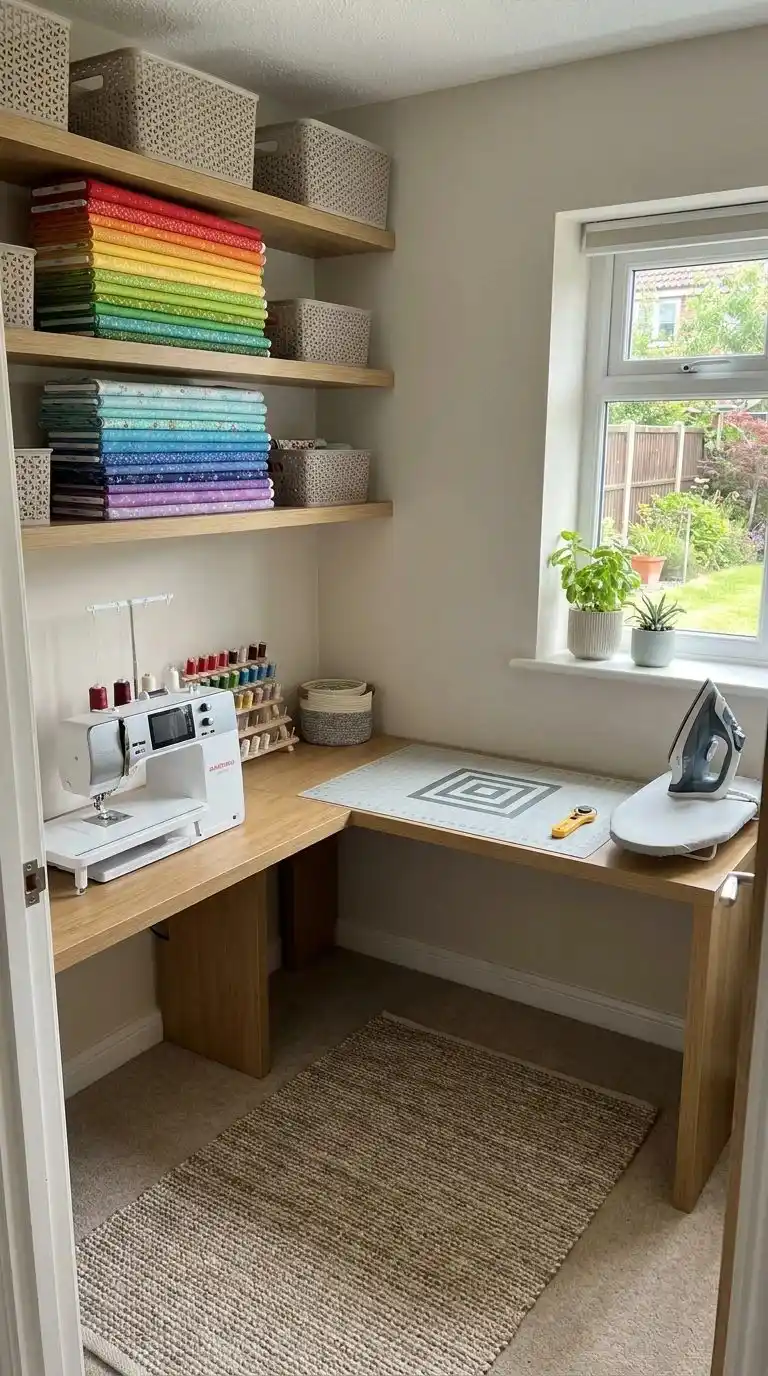
An L-shaped desk makes use of an often-ignored corner, giving you two full work surfaces — one for sewing, one for cutting or pressing — without requiring a large open floor plan.
Position your machine on the side with better lighting, and use the second surface for tasks that need more room to spread out, like pinning patterns or pressing seams.
Best suited for: spare bedrooms, home offices doubling as craft space, and anyone who needs two distinct work zones.
7. Vertical Thread and Spool Organizer
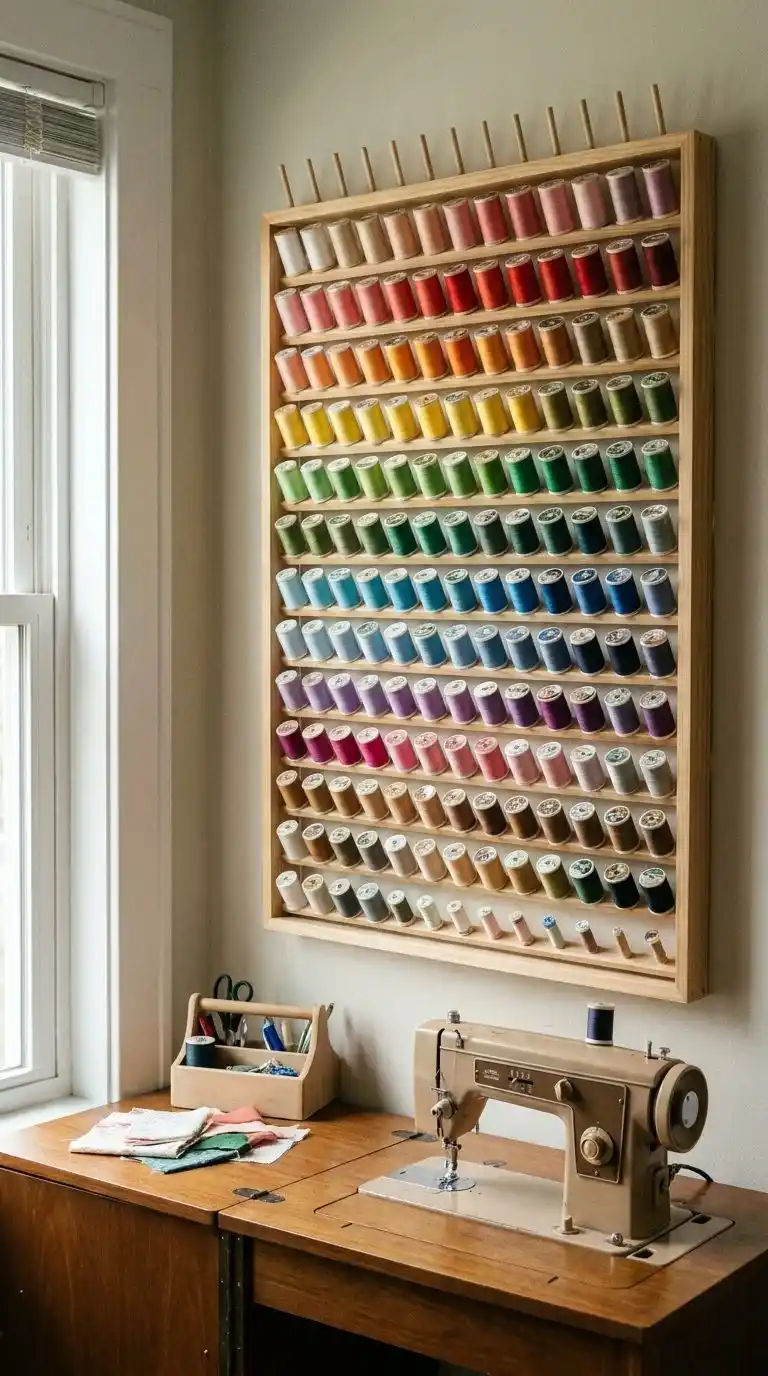
A vertical thread rack takes a supply that easily becomes clutter — loose spools in a drawer or box — and turns it into a visible, color-coded display that also happens to look great on the wall.
Mount it directly above or beside your machine so you can grab a spool without leaving your seat, and group colors together to make finding the right shade faster mid-project.
Best suited for: sewists with a growing thread collection and anyone short on drawer space.
8. Multi-Functional Cutting Table With Storage Drawers
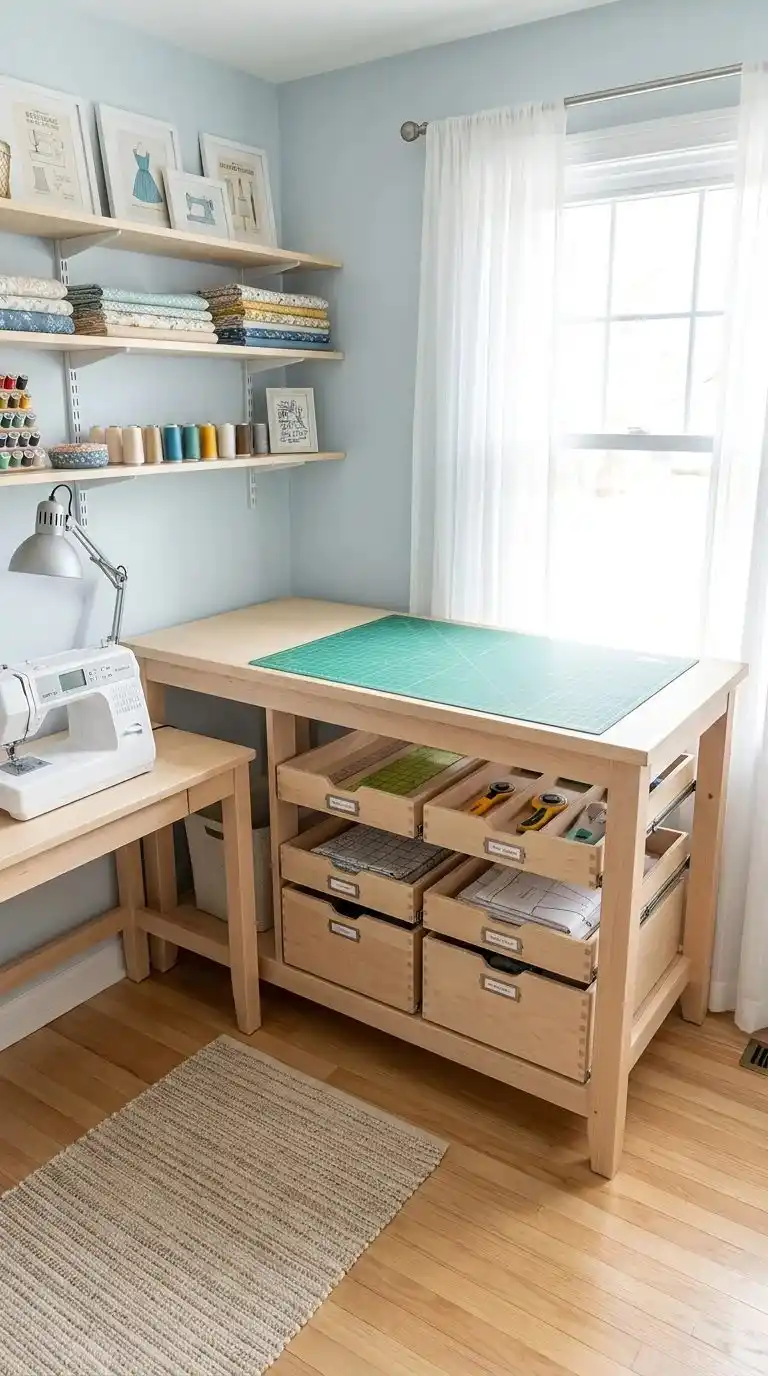
A cutting table with built-in storage solves two problems at once — it gives you a proper surface for cutting fabric and pinning patterns, while the drawers underneath keep tools like rulers and rotary cutters out of sight but close by.
Choose a table sized to fit a folded piece of standard fabric width so you rarely need to shift material mid-cut, and use the drawers to separate tools by task rather than piling everything together.
Best suited for: anyone who regularly works with quilting or garment patterns that need a flat cutting surface.
9. Labeled Fabric Storage Bins and Shelving
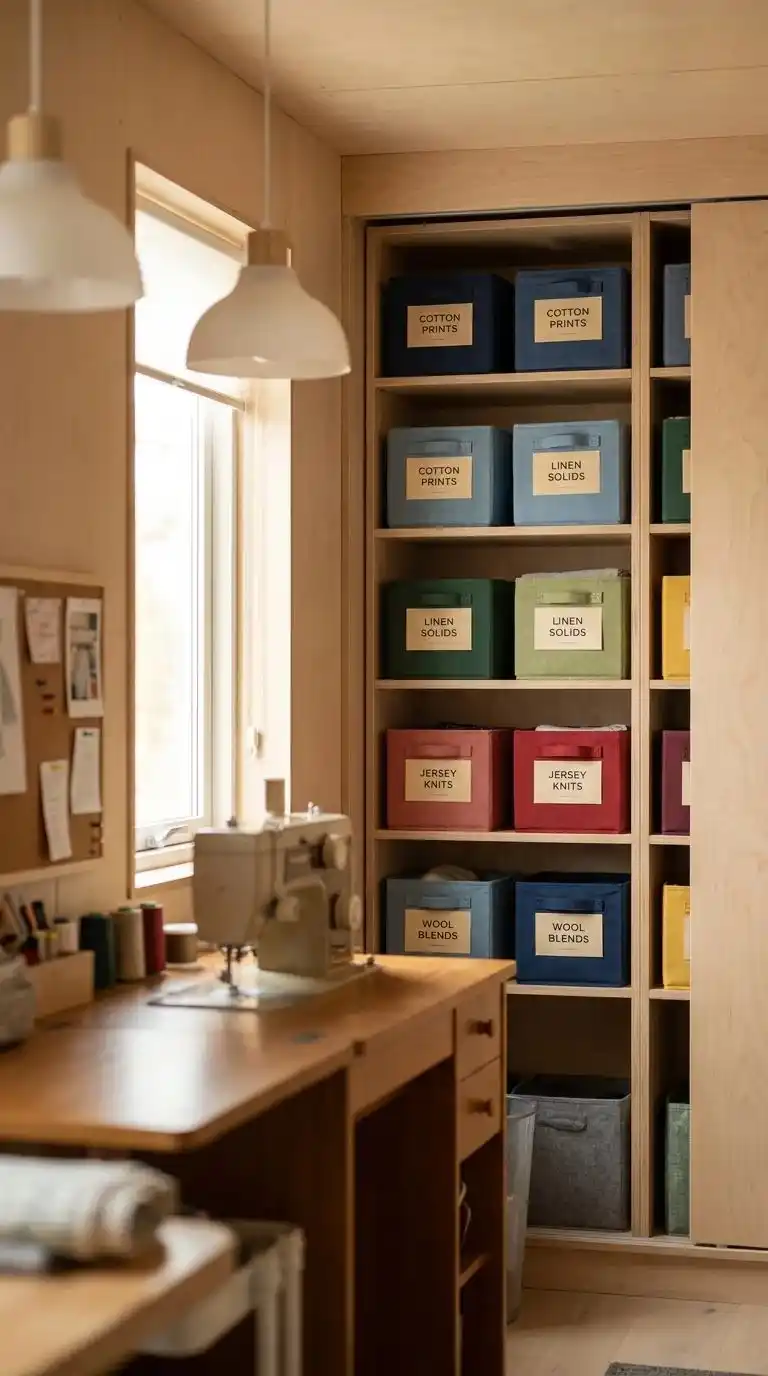
Fabric stashes are one of the fastest things to overwhelm a small sewing room, and labeled bins on open shelving solve that by making every piece of fabric visible and easy to find without digging through a pile.
Sort bins by fabric type, project, or color family, whichever matches how you actually shop and plan projects, and leave a little extra room in each bin so new fabric has somewhere to go.
Best suited for: sewists with an active or growing fabric collection who want it to stay usable rather than just stored.
10. Wall-Mounted Fold-Down Ironing Board
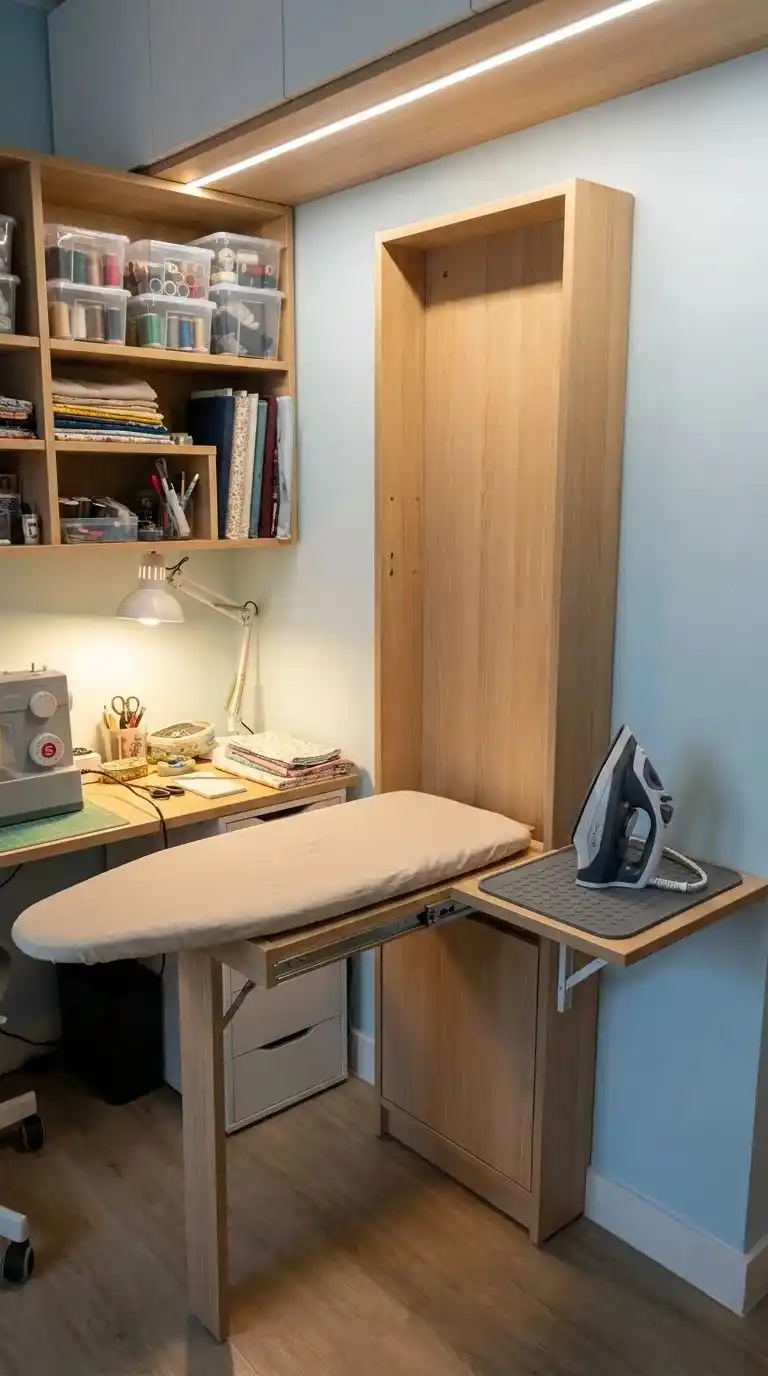
A wall-mounted ironing board that folds flat when not in use solves one of the biggest space problems in small sewing rooms — a standard freestanding ironing board takes up a surprising amount of floor space for something used in short bursts.
Install it close enough to the sewing station that you are not carrying pressed pieces across the room, and choose a model with a small storage compartment for your iron when it is folded away.
Best suited for: closets, nooks, and any sewing space where floor space is at a premium.
11. Window Nook Sewing Station
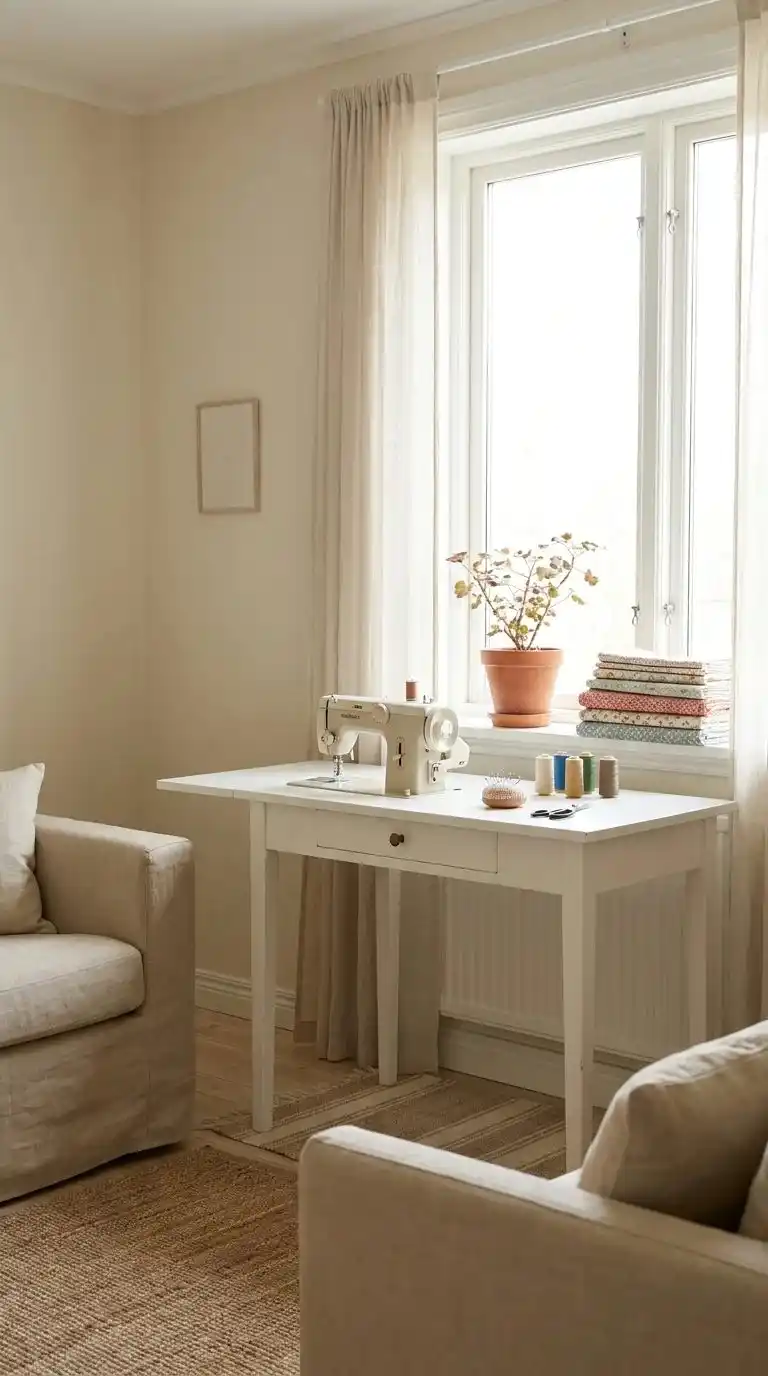
Positioning your sewing station directly under or beside a window gives you the best possible natural light for color matching fabric and reading fine print work, which artificial lighting alone often cannot replicate.
Keep the desk shallow enough that you are not blocking too much of the window, and add a simple task lamp for evening sessions when natural light fades.
Best suited for: rooms with strong natural light and sewists who do detailed handwork or color-sensitive projects.
12. Repurposed Dresser as Sewing Station
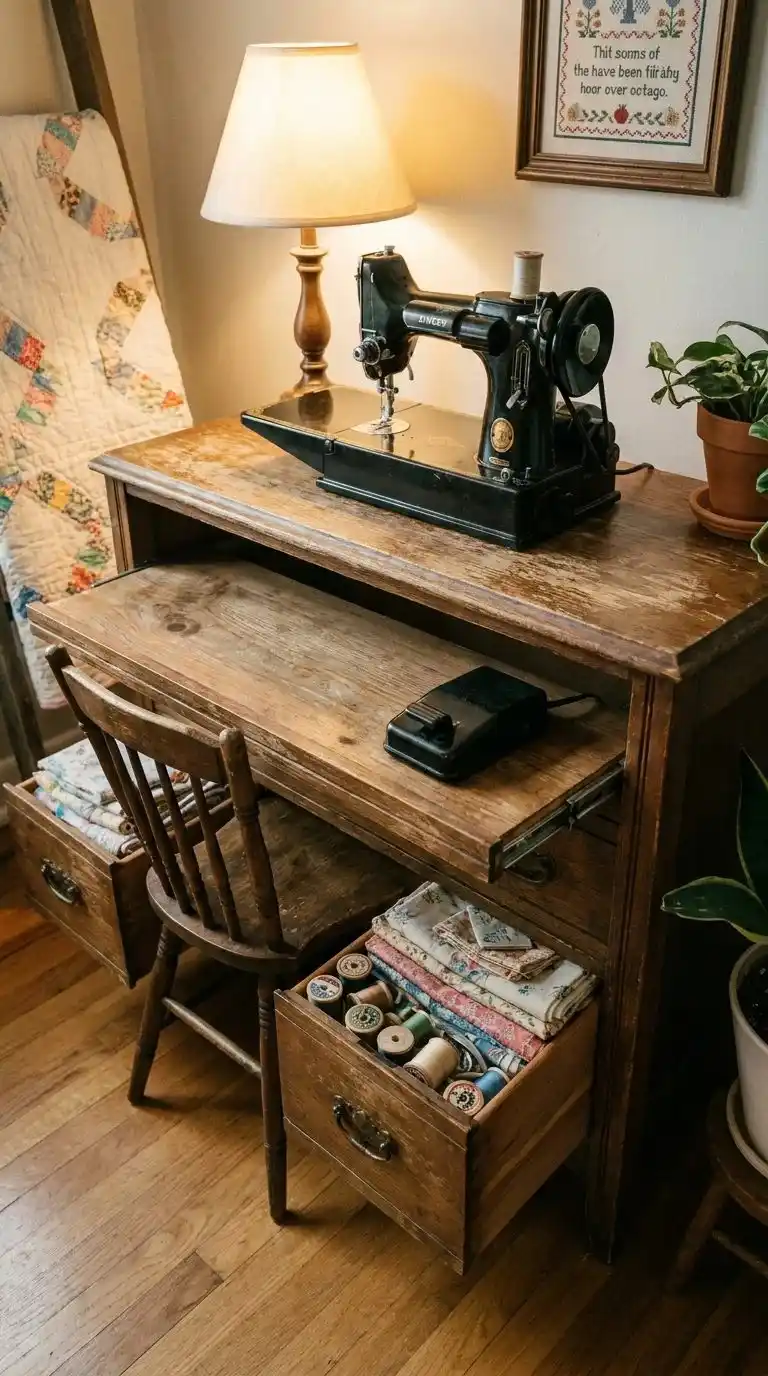
An old dresser gives you a sewing station and a full set of built-in storage in a single piece of furniture, which is hard to beat for the cost, especially if you already own one or can find one secondhand.
Use the top surface for your machine, convert one drawer into a pull-out shelf for the foot pedal if the height works, and dedicate the remaining drawers to fabric, patterns, and notions by category.
Best suited for: budget-conscious sewists and anyone who prefers a vintage or repurposed aesthetic over new furniture.
13. Ladder Shelf for Pattern and Fabric Storage
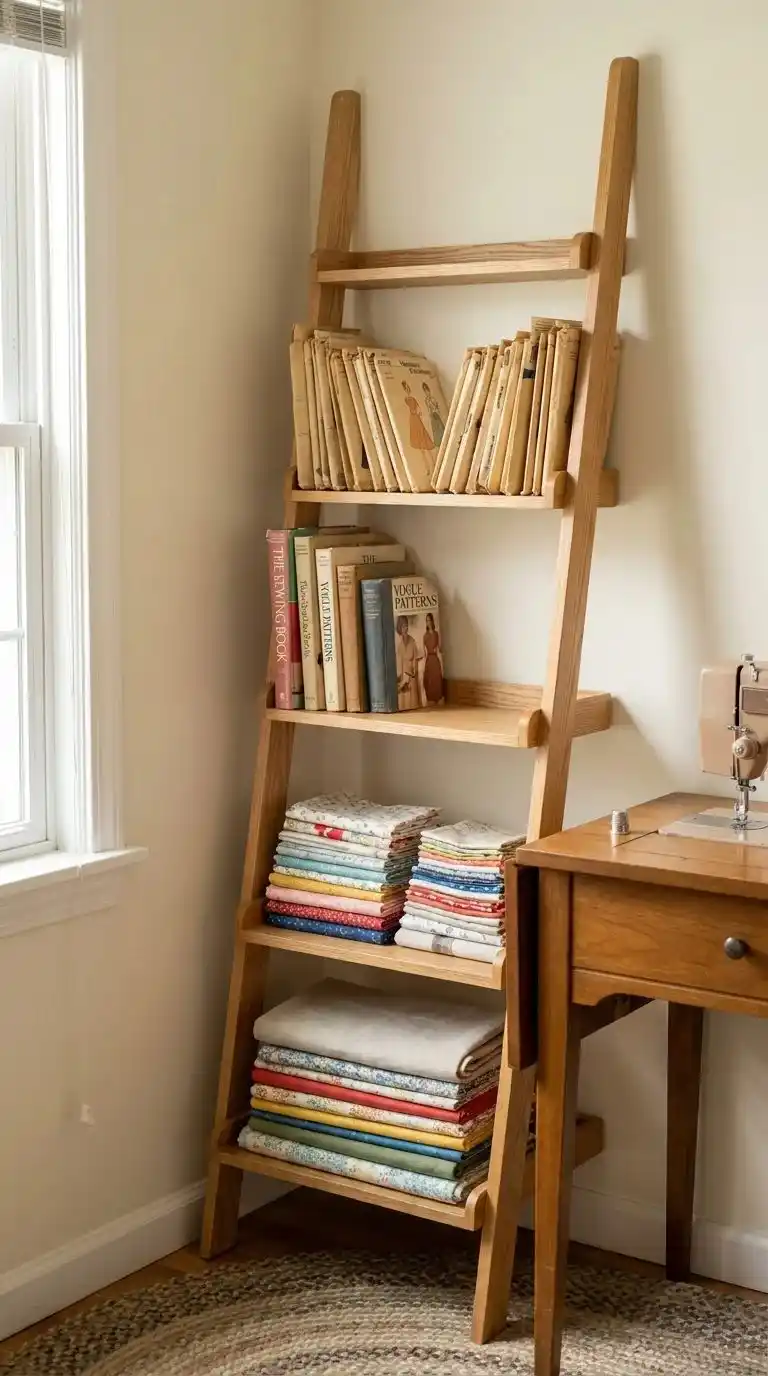
A leaning ladder shelf takes up very little floor space compared to a traditional bookcase, while still offering several tiers for fabric, pattern envelopes, and reference books.
Use the lower shelves for heavier fabric stacks and the upper shelves for lighter items like patterns and books, both for stability and easier reach.
Best suited for: narrow rooms and anyone who wants storage that reads as decor rather than purely functional shelving.
14. Hanging Pegboard for Scissors and Tools
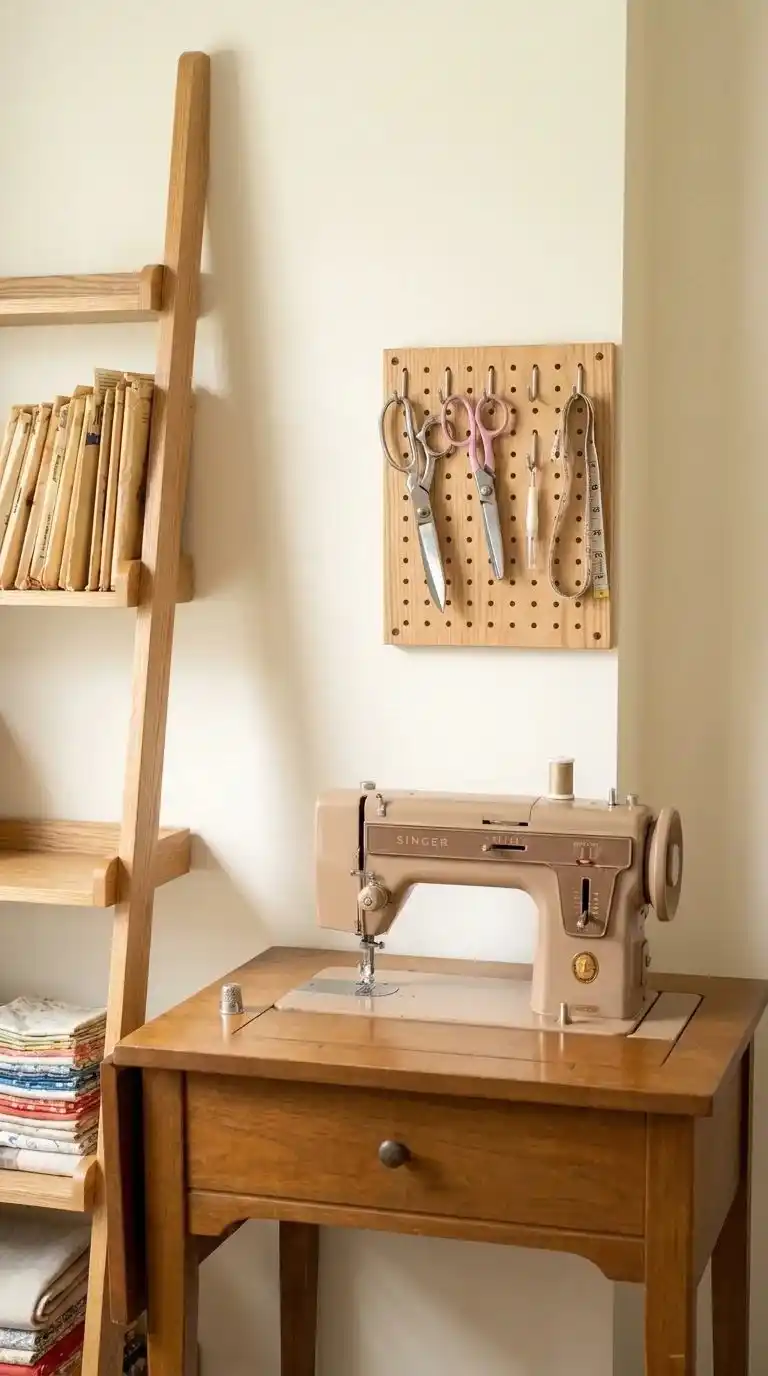
A smaller, dedicated pegboard just for cutting tools keeps your sharpest and most-used items — scissors, shears, seam rippers — visible and instantly accessible instead of tangled together in a drawer.
Outline each tool’s spot with a marker or washi tape so everything has a clear home, which makes it far easier to notice when something is missing.
Best suited for: very small spaces where a full-size pegboard will not fit but a compact tool-only version will.
15. Compact Serger and Machine Storage Cart
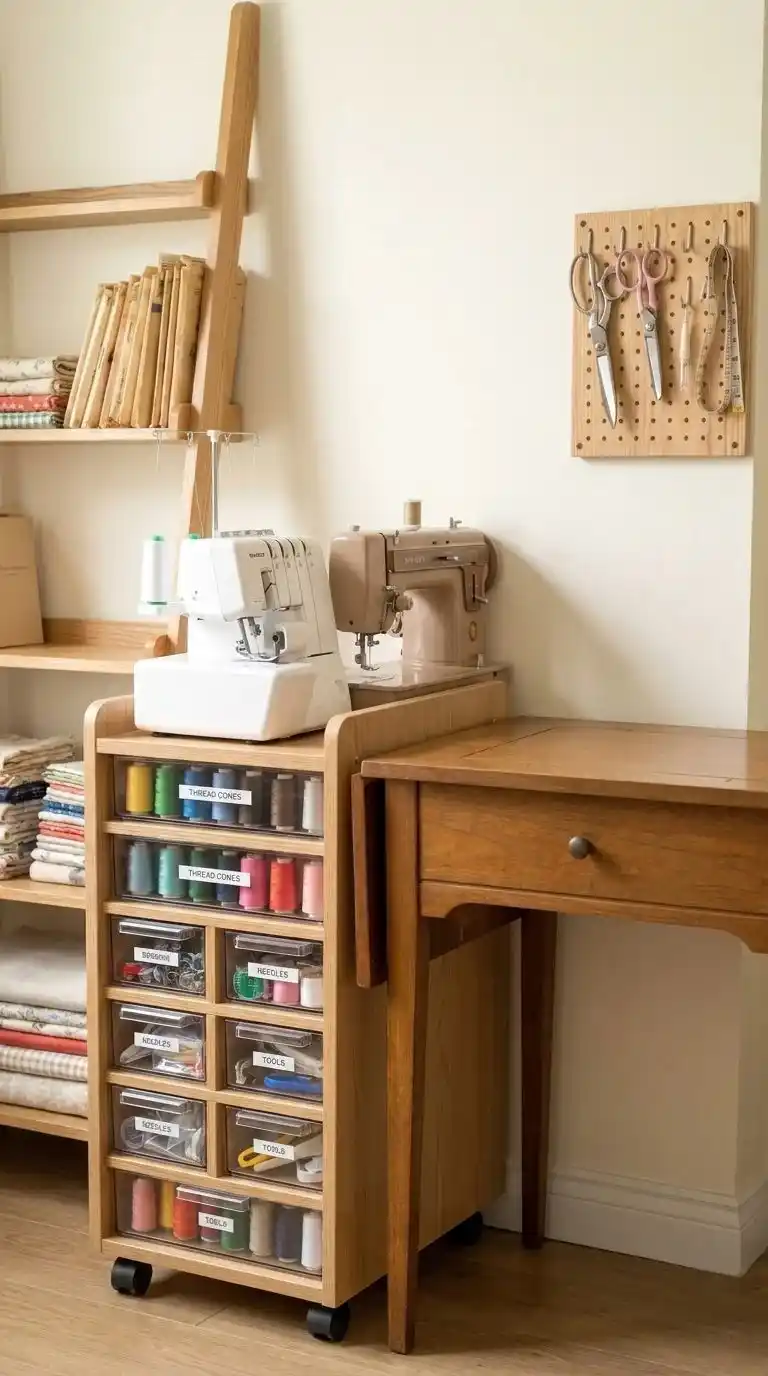
For sewists who use both a sewing machine and a serger, a dedicated storage cart keeps both machines close together without permanently occupying two separate desk spaces.
Choose a cart sized to fit your specific serger model, since sergers vary more in footprint than standard sewing machines, and use the small drawers for cone thread and specialty needles.
Best suited for: sewists working on garment construction who need quick access to both machines.
16. Fold-Out Murphy Sewing Table
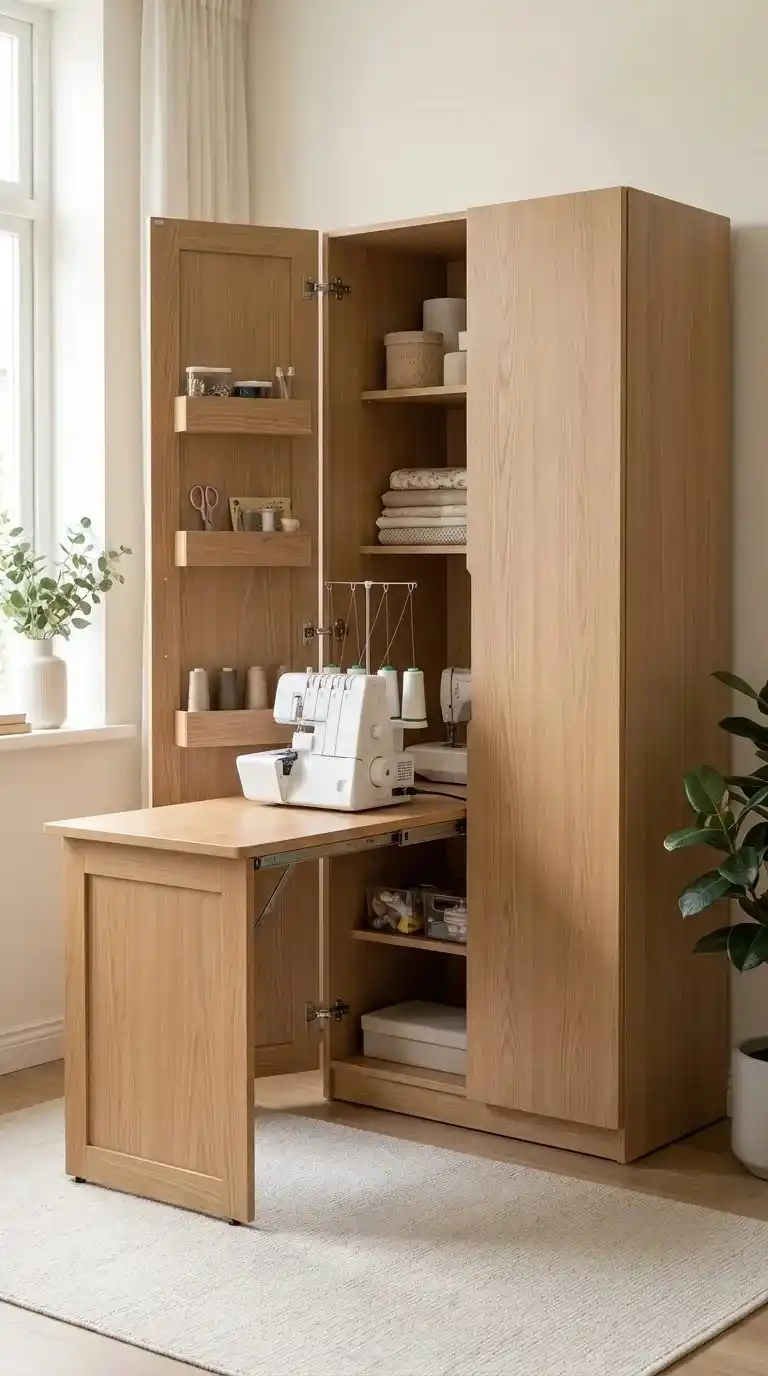
A Murphy-style sewing table takes the fold-down wall table concept further, hiding an entire workstation, and sometimes storage, behind cabinet doors when closed, so the room can fully return to another purpose.
This option requires more upfront investment and sometimes custom building, but it offers the cleanest transformation of any small sewing room idea on this list when the room needs to double as a guest space.
Best suited for: guest rooms, home offices, and anyone who wants their sewing setup completely hidden when not in use.
17. Small-Space Inspiration and Design Wall
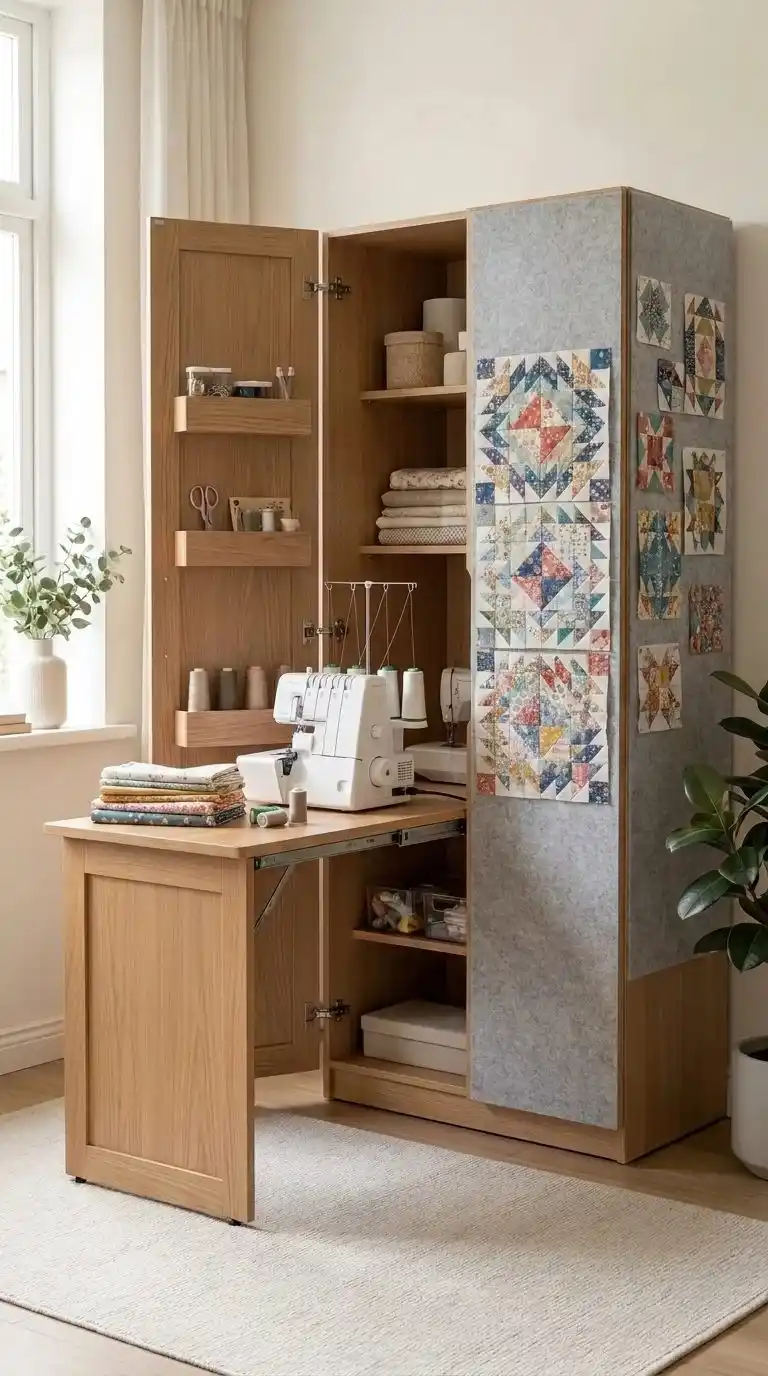
A design wall gives you a place to lay out and step back from a project, especially for quilting or garment piecing, without needing a large table or floor space to spread pieces across.
A flannel- or felt-backed board lets fabric pieces stick without pins for quick rearranging, and even a small 2-by-3-foot section is enough to plan most block or panel layouts.
Best suited for: quilters and anyone working on projects that benefit from stepping back to see the full layout before sewing.
18. Under-Bed Storage for Fabric Stash
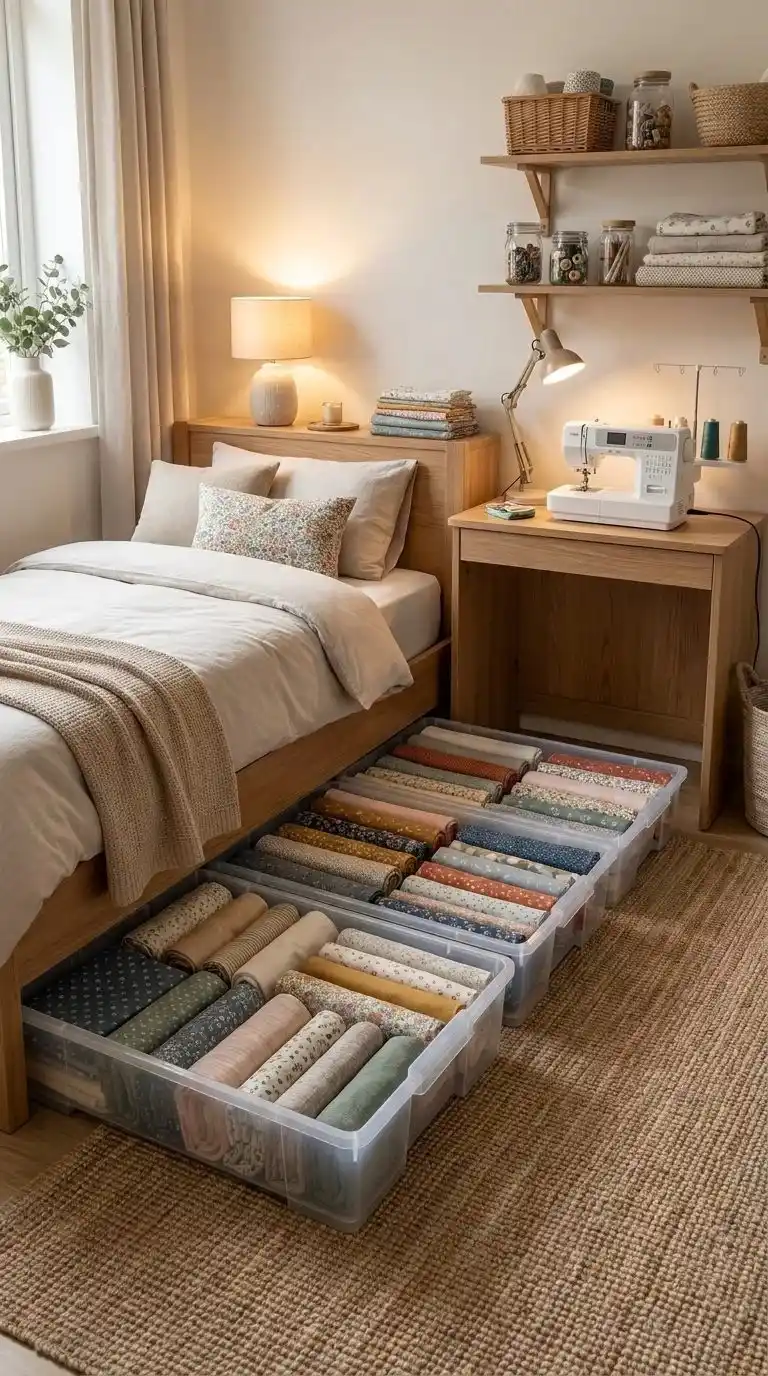
When a sewing space shares a room with a bed, the space underneath is often the single largest unused storage area available, and flat bins are purpose-built to make use of it.
roll rather than fold delicate or wrinkle-prone fabrics before storing them under the bed, and use clear or labeled bins so you are not pulling every container out just to find one piece of fabric.
Best suited for: shared or multi-purpose rooms where floor and wall space are already fully committed to other furniture.
Planning and Buying Tips
A few practical decisions up front will determine whether your small sewing room actually works day to day or just looks good until the first big project.
● Measure your machine’s footprint with the lid or accessory tray open, not just closed — many sewing machines need several extra inches of clearance during actual use.
● Standard sizing to shop for — compact sewing desks typically run 30 to 40 inches wide, fold-down wall tables run 24 to 36 inches wide, and a usable cutting surface should be at least 40 by 60 inches when unfolded.
● Plan for outlet access — sewing machines, irons, and task lighting all need power, so confirm outlet placement before finalizing your layout, especially in closets or under-stairs nooks.
● Prioritize task lighting over ambient lighting — a single overhead fixture is rarely enough for detail work; add a dedicated lamp or under-shelf light directly at your machine.
● Choose wall-mounted or folding furniture wherever the room serves double duty — every piece that can disappear when not in use effectively expands your usable space.
● Leave a buffer for growth — fabric stashes and Notion collections tend to expand faster than expected, so avoid maxing out your storage capacity on day one.
Cost Breakdown: Budget, Mid-Range, and Luxury Setups
A small sewing room can be built on almost any budget, with the biggest cost differences coming from furniture quality and how much of the setup is custom-built versus off-the-shelf.
Budget ($50–$300)
A repurposed dresser or basic folding table, a pegboard, and a few labeled storage bins fall in this range. Installation is typically DIY with basic tools, so there is little to no added labor cost.
Mid-Range ($300–$1,200)
A dedicated fold-down wall table, a rolling storage cart, ladder shelving, and a proper cutting table with drawers sit in this tier. Basic wall mounting or minor carpentry may add $50–$150 if you hire help.
Luxury / Premium ($1,200–$5,000+)
Custom closet conversions, built-in Murphy tables, and fully outfitted under-stairs nooks fall here, often requiring a carpenter or cabinet installer. Professional installation and custom millwork typically run $500–$2,000 depending on the scope of the build.
Furniture and Storage Comparison
| Option | Price Range | Space Efficiency | Setup Effort | Best For |
| Fold-down wall table | $100–$500 | Very high | Moderate — wall mounting required | Multi-purpose rooms, renters with landlord approval |
| Rolling storage cart | $60–$250 | High | Low — fully assembled or simple build | Portable setups, shared spaces |
| Repurposed dresser | $0–$300 | Moderate | Low | Budget-conscious, vintage-style rooms |
| Closet conversion | $200–$1,500 | Very high | High — shelving and lighting install | Apartments, homes without a spare room |
| Custom built-in/murphy table | $1,000–$5,000+ | Very high | High — professional installation | Guest rooms needing full concealment |
| Ladder shelf/open shelving | $40–$300 | Moderate | Low | Fabric and pattern storage, narrow rooms |
Maintenance Tips
● Sewing machines — dust the exterior weekly and clean lint from the bobbin case after every few projects to keep tension consistent and avoid jams.
● Fabric storage — refold or re-roll stored fabric every few months to prevent permanent crease lines, and keep bins away from direct sunlight to avoid fading.
● Pegboards and hanging tools — wipe down scissors and blades regularly and store them dry to prevent rust, especially in closets with limited airflow.
● Wall-mounted folding furniture — check hinges and wall anchors every six months, since these see repeated motion and carry weight each time they are opened.
● Cutting mats — store flat rather than rolled or folded, and clean with a damp cloth to remove fabric lint and dust that dull rotary blades faster.
● Common mistake to avoid — overloading fold-down tables or shelves beyond their weight rating, which is one of the most frequent causes of hardware failure in small sewing spaces.
Frequently Asked Questions
How much space do I need for a small sewing room?
A functional sewing station can fit in as little as 15 to 20 square feet, such as a closet or a single wall nook, as long as you include a stable surface for your machine and at least one storage element for fabric and tools nearby.
What is the best layout for a small sewing room?
An L-shaped or corner layout tends to work best in small spaces, since it separates your sewing surface from your cutting or pressing surface without requiring a large open footprint, and it keeps both areas within a few steps of each other.
How do I store fabric in a small sewing space?
Labeled bins on open shelving, under-bed storage containers, and a ladder shelf are the most space-efficient options. Sort fabric by type or project rather than trying to fit everything into one large, undifferentiated pile.
Can I fit a sewing room into a closet?
Yes — a reach-in closet with the doors removed or replaced by a curtain can hold a small desk, a sewing machine, and shelving above for fabric, making it one of the most popular small sewing room ideas for apartments.
What lighting is best for a small sewing room?
Task lighting positioned directly over your sewing machine and cutting surface matters more than overall room lighting. A clip-on or under-shelf LED lamp with a natural white color temperature is generally best for accurate color matching and reducing eye strain.
How to Choose the Right Small Sewing Room Setup for You
The right setup depends on three things working together: how much space you actually have, how much you sew, and whether the room needs to serve another purpose too. A closet or nook works well for occasional sewists who need everything contained and out of sight, while a dedicated corner or under-stairs build suits someone who sews regularly and wants a permanent station.
Budget should follow function rather than the other way around — a repurposed dresser or fold-down table covers most needs at a low cost, while custom builds and Murphy-style tables are worth the investment mainly when the room truly needs to disappear back into another use.
Finally, think honestly about your habits. If your fabric stash grows quickly, prioritize storage capacity over desk size; if you work on larger projects like quilts, prioritize a solid cutting surface even if it means less storage nearby.


- Be Respectful
- Stay Relevant
- Stay Positive
- True Feedback
- Encourage Discussion
- Avoid Spamming
- No Fake News
- Don't Copy-Paste
- No Personal Attacks
- Be Respectful
- Stay Relevant
- Stay Positive
- True Feedback
- Encourage Discussion
- Avoid Spamming
- No Fake News
- Don't Copy-Paste
- No Personal Attacks
