`18 Dining Room Wall Decor Ideas That Turn Blank Walls Into a Focal Point
Published: 24 Sep 2026
A dining room’s walls get more sustained attention than almost any other room in the house, since guests spend an extended, seated amount of time facing them during every meal. Dining room wall decor ideas solve the common problem of a table and chairs surrounded by empty, unfinished walls, using everything from statement mirrors to gallery walls and molding detail to give the room a genuine sense of occasion. The right wall treatment also does double duty, often making a dining room feel larger and better lit through reflective or light-colored elements. This guide covers 18 dining room wall decor ideas for every style and budget, from art and mirrors to molding and lighting. Along the way, you will find honest pros and cons, real price ranges, a materials comparison table, maintenance advice, and answers to the questions people search most before decorating dining room walls. By the end, you will know exactly which ideas fit your room, your budget, and your existing furniture.
Is a Dining Room Wall Decor Update Right for You?
Dining room wall decor is one of the more visible updates you can make to a home, but it is worth weighing a few practical factors before committing to a specific direction.
Pros
● High visibility for the investment — because guests face dining room walls directly and for extended periods during meals, decor here has an outsized impact relative to less-viewed spaces.
● Can improve the room’s light and scale — mirrors and light-colored treatments in particular can make a dining room feel larger and brighter, which matters since dining rooms are sometimes windowless or enclosed.
● Works at almost any budget — a single statement mirror or gallery wall can transform the room for a relatively modest cost compared to furniture or a full renovation.
● Can be updated seasonally or over time — art, mirrors, and smaller decor pieces are generally easier to swap out later than more permanent choices like wallpaper or molding.
Cons
● Some materials need careful placement near food — porous or delicate wall treatments should be kept a reasonable distance from the table where food splatter or steam could cause damage.
● Bold wallpaper and molding represent a bigger commitment — these choices are more involved to change later compared to swapping out art or a mirror.
● Large statement pieces carry real cost — an oversized mirror or a substantial art piece scaled to a dining room wall often costs more than a smaller decorative item.
● Gallery walls require careful planning — an uneven or poorly spaced gallery wall is more noticeable in a dining room, where guests have extended time to study it up close.
For most dining rooms, investing in wall decor is worthwhile, starting with a single statement piece like a mirror or large art piece above the primary wall, before adding smaller layered details like sconces or a gallery wall as budget and style preference allow.
1. Oversized Statement Mirror
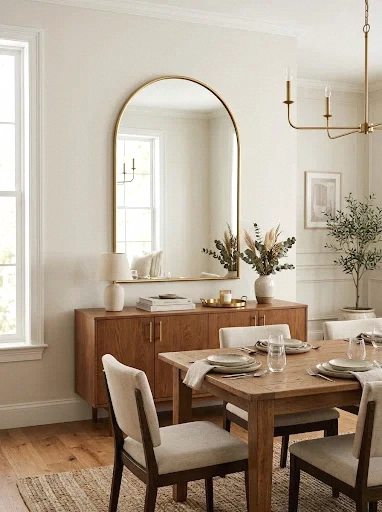
An oversized mirror above a buffet or console wall reflects light and the table setting back into the room, making a dining room feel noticeably larger and brighter, particularly in rooms with limited natural light.
Position the mirror to reflect a window or a light fixture rather than a blank wall, maximizing the light-bouncing benefit alongside its decorative impact.
Best suited for: dining rooms with a buffet or console wall, and rooms wanting a brighter, more expansive feel.
2. Curated Gallery Wall
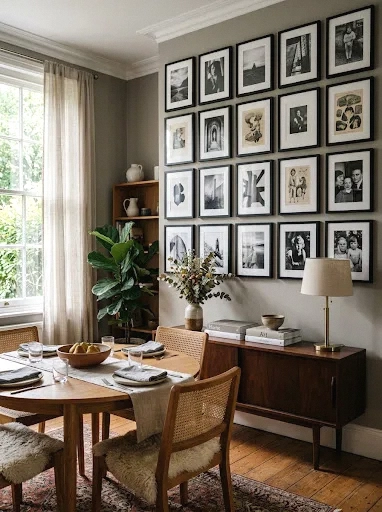
A gallery wall gives a dining room a personal, collected quality, and since guests have extended, seated time to actually look at the wall during meals, a well-curated collection genuinely earns its place as a conversation piece.
Keep frame styles and colors consistent across the gallery wall, and measure the full layout on the floor before hanging anything, since even spacing is what separates a polished gallery wall from one that looks unplanned.
Best suited for: larger dining room walls and homeowners wanting a personal, evolving art display.
3. Bold Wallpaper Accent Wall
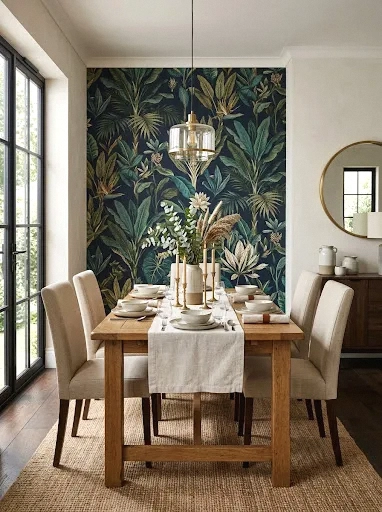
A dining room is one of the best rooms in a home for bold, dramatic wallpaper, since the space is used for a limited, specific purpose rather than daily lounging, which makes a strong pattern feel intentional rather than overwhelming.
Choose a wallpaper pattern with a color palette that coordinates with your dining chairs or table, and confirm it is rated for the room’s specific conditions if the dining area sits close to a kitchen with regular steam exposure.
Best suited for: dining rooms wanting a strong design statement and homeowners comfortable with a bolder pattern commitment.
4. Wall Sconces Flanking a Buffet
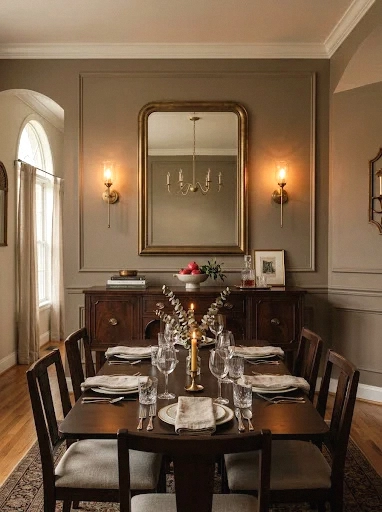
A pair of wall sconces flanking a mirror or art piece above a buffet adds warm, layered lighting that a single overhead chandelier alone cannot achieve, while also framing the central decor piece symmetrically.
Choose a sconce style and finish that coordinates with your dining room’s other metal finishes, like a chandelier or hardware, so the lighting feels like part of a cohesive design rather than an isolated addition.
Best suited for: dining rooms with a buffet or console wall, and rooms wanting more layered, ambient lighting.
5. Wood Paneling or Molding Accent Wall
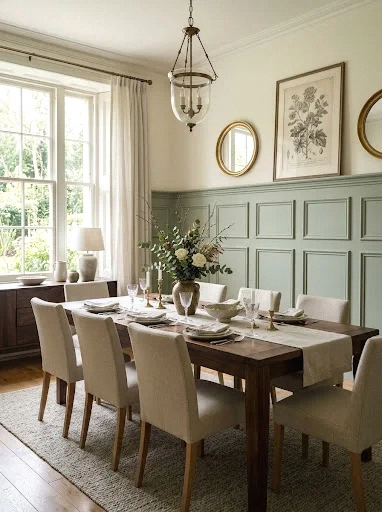
Wood paneling or picture-frame molding brings genuine architectural detail to a dining room wall, and the shadow lines it creates add texture and dimension that flat paint alone cannot provide.
Choose a molding style proportional to your room’s ceiling height, and paint the molding a single tone-on-tone color with the wall behind it for a subtle, sophisticated look, or a contrasting color for a bolder statement.
Best suited for: full dining room renovations and homeowners wanting a timeless, architectural upgrade.
6. Large Abstract Canvas
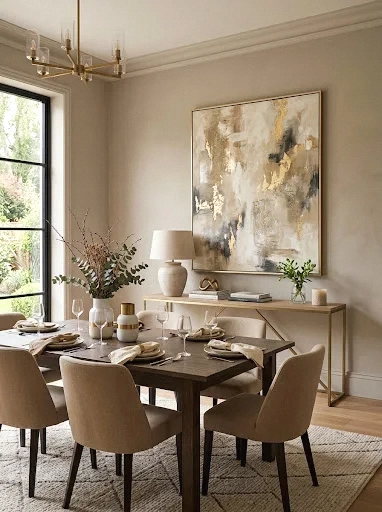
A single large abstract canvas gives a dining room wall a clear, confident focal point, and its scale means one well-chosen piece can fill significant wall space without needing several smaller items arranged around it.
Size the canvas to roughly two-thirds the width of the furniture beneath it, like a buffet or console, for the most proportionate and intentional-looking placement.
Best suited for: dining rooms wanting a single bold statement piece rather than a multi-piece gallery arrangement.
7. Decorative Plate Wall Display
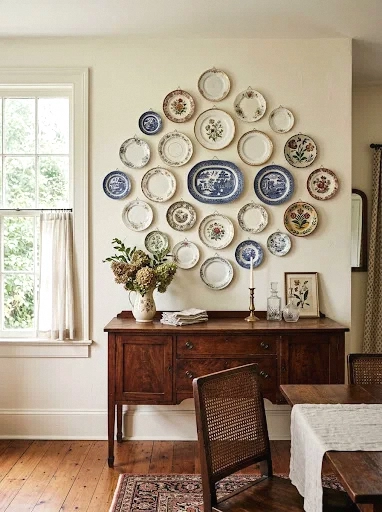
A plate wall display brings genuine color and pattern to a dining room in a way that directly nods to the room’s function, and it is an especially good way to display vintage or inherited china that would otherwise sit unused in a cabinet.
Vary plate sizes but repeat a color or motif across the collection so the cluster reads as intentional, and use plate hangers rated for each specific plate’s weight to keep the display securely mounted.
Best suited for: traditional and eclectic dining rooms, and homeowners with a collection of decorative or vintage china.
8. Woven Textile Wall Hanging
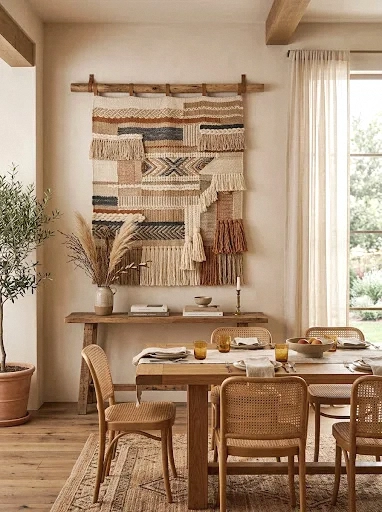
A woven wall hanging brings texture and warmth to a dining room without relying on framed art, and its organic, handmade quality softens a room that can otherwise feel formal or overly matched.
Choose a hanging in a color palette that complements your table linens or chair upholstery, and position it away from direct proximity to the table to minimize exposure to food splatter or steam.
Best suited for: boho and organic-modern dining rooms, and homeowners wanting texture rather than a flat art piece.
9. Framed Botanical Prints
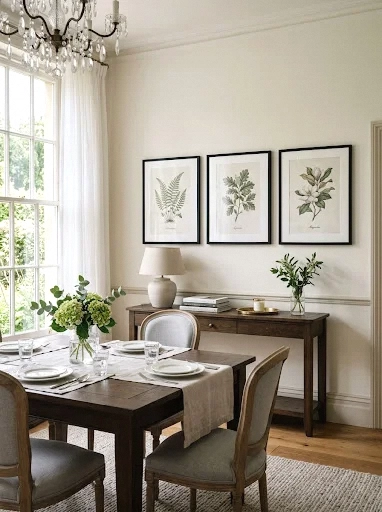
A set of framed botanical prints brings a fresh, classic quality to a dining room, and the natural subject matter tends to suit a dining room’s typically more formal, gathering-focused purpose better than more casual art styles.
Choose a consistent frame style and matting across the entire set, and space the prints evenly, generally two to three inches apart, for a clean, cohesive row.
Best suited for: traditional and transitional dining rooms, and homeowners wanting a timeless, classic look.
10. Statement Wall Clock
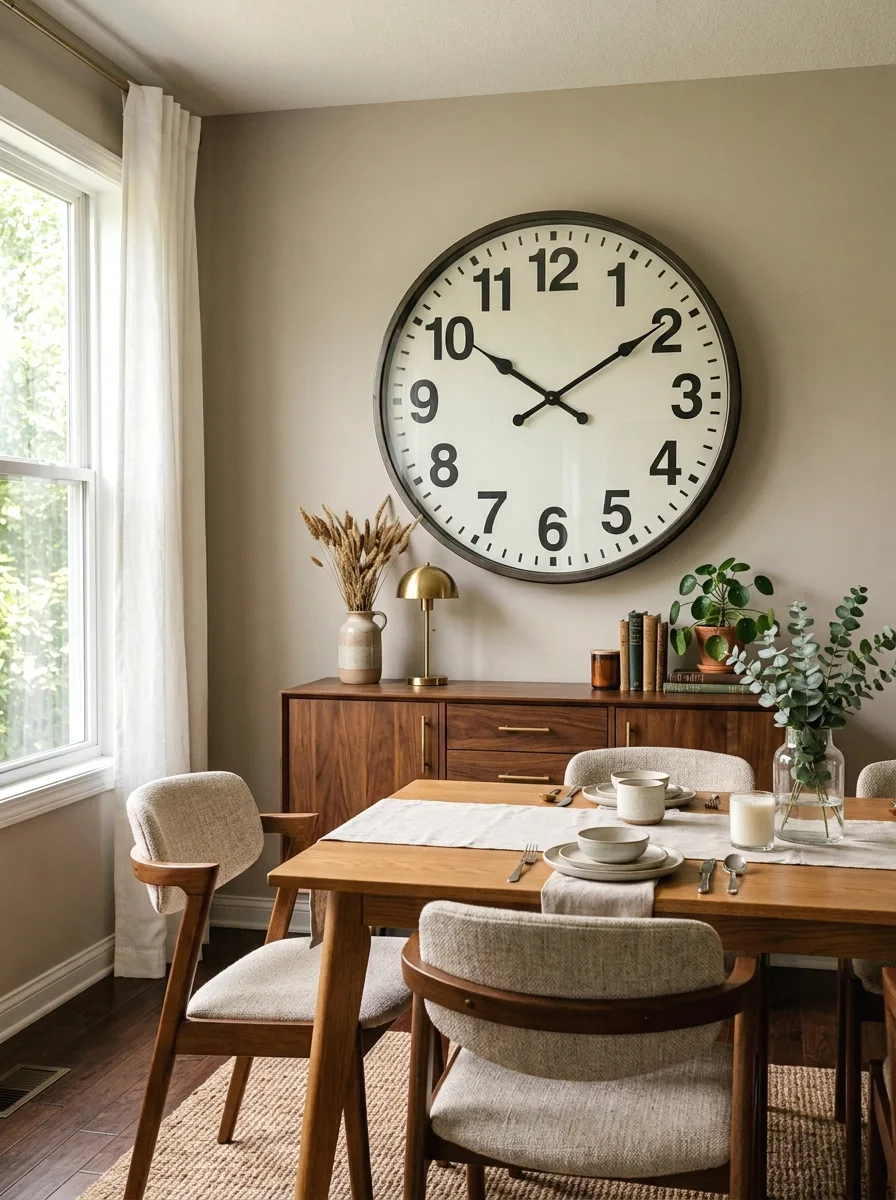
A large statement clock combines genuine function with a strong decorative silhouette, and it works especially well in a dining room where the family gathers regularly and appreciates an easy visual time check.
Choose a clock size proportional to the wall space available, generally at least 24 inches in diameter for a genuine statement effect above furniture like a buffet, and confirm it is easily readable from the dining table.
Best suited for: dining rooms wanting a functional decor piece and a mid-century or retro-inspired aesthetic.
11. Built-In Shelving With Styled Decor
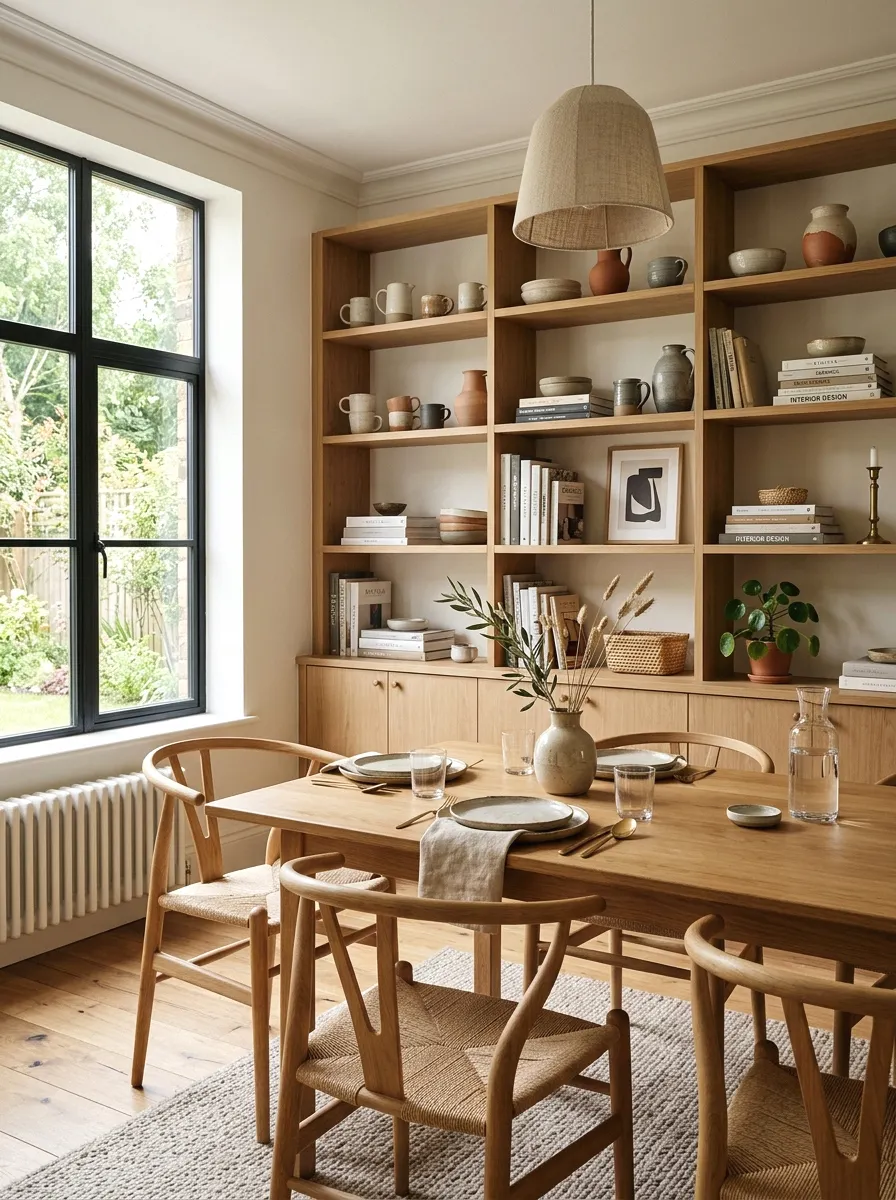
Built-in shelving gives a dining room wall genuine function alongside its decorative role, offering display space for dishware, glassware, and decor items that might otherwise be stored out of sight in a separate cabinet.
Style shelves with a mix of heights and a limited color palette, grouping similar items together rather than spacing everything evenly, for a more curated, intentional look.
Best suited for: dining rooms with an open wall suited to built-in construction, and homeowners wanting functional display storage.
12. Grouped Mirror Cluster
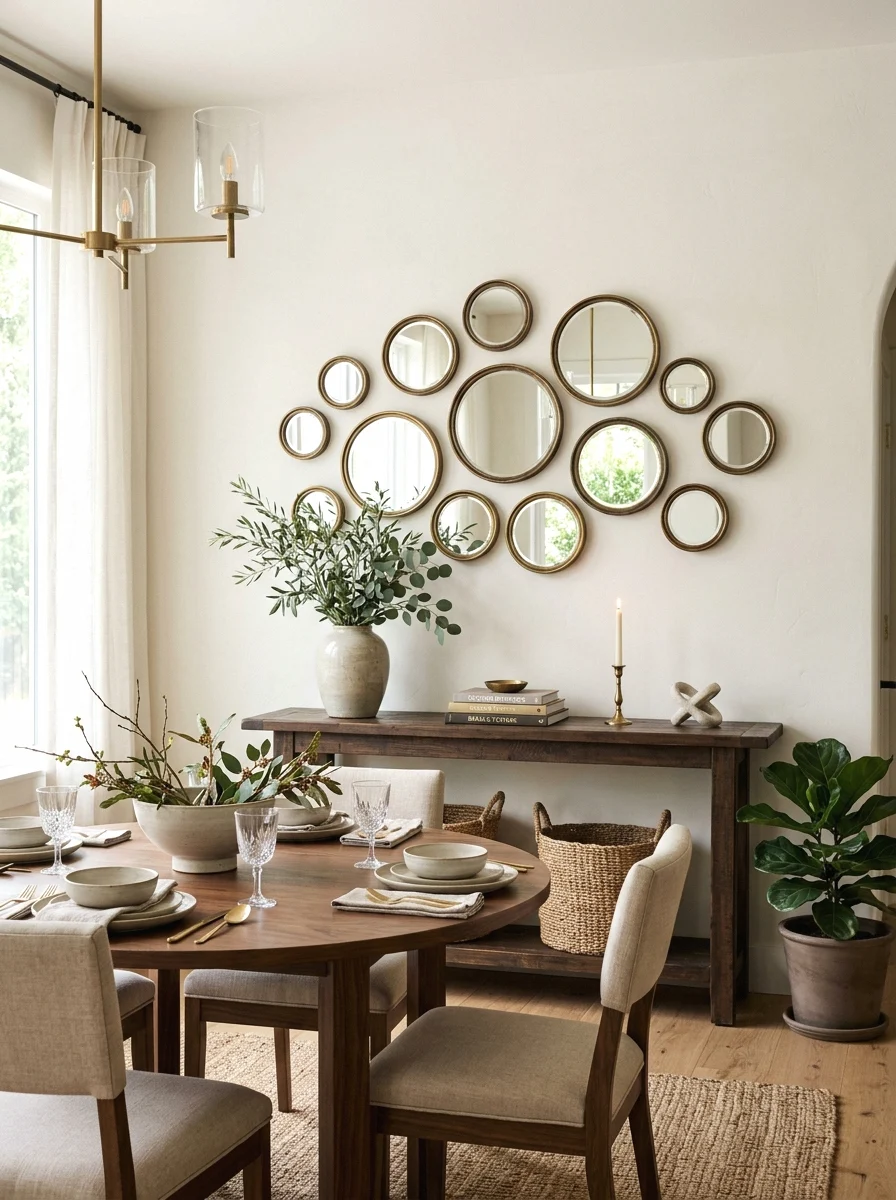
A grouped cluster of smaller mirrors, rather than one large piece, creates a dynamic, multi-faceted reflection of light around the room and offers a distinctive alternative to a single oversized mirror.
Vary mirror sizes and shapes slightly within a consistent frame finish, and arrange the cluster with the largest piece as a visual anchor rather than spacing all mirrors evenly.
Best suited for: dining rooms wanting a more eclectic, layered mirror display than a single statement piece.
13. Wine and Bar-Themed Wall Art
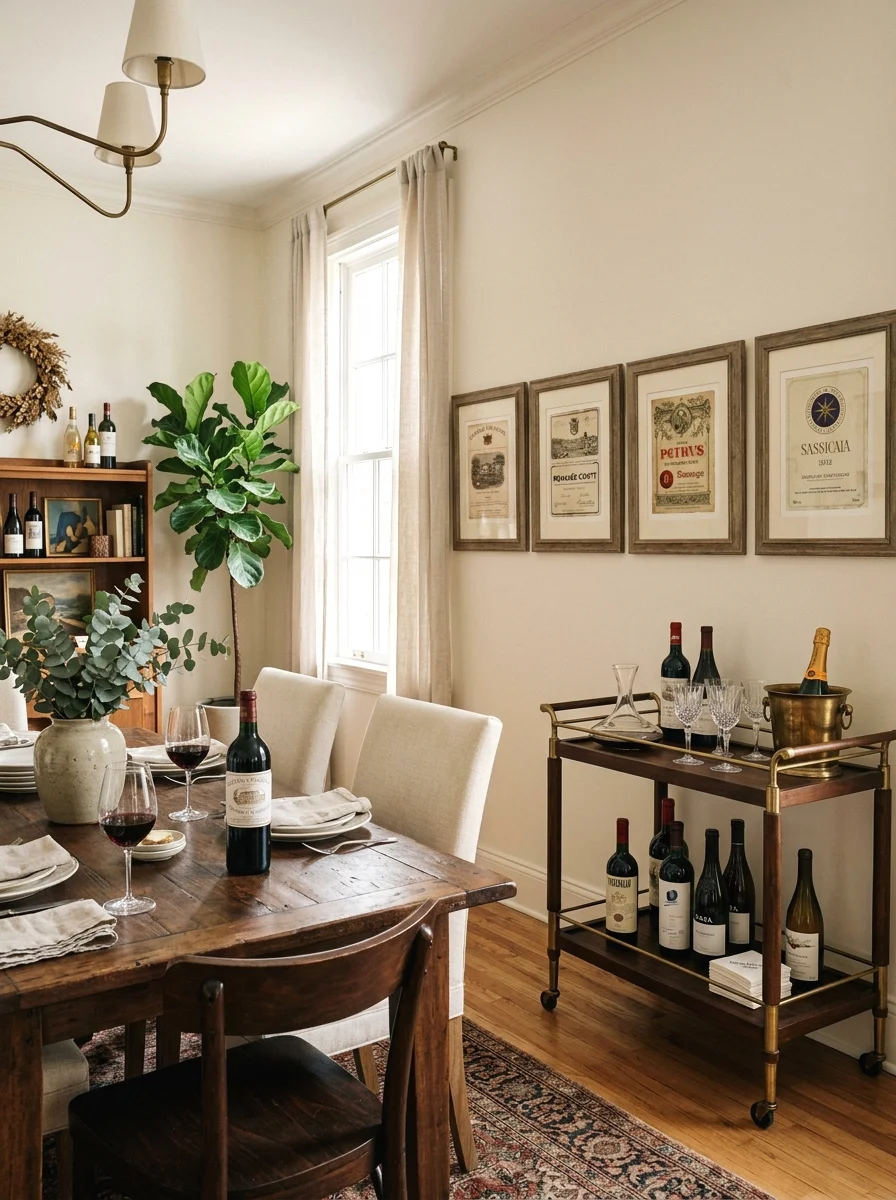
Wine or bar-themed art, like vintage label prints or abstract vineyard imagery, reinforces a dining room’s social, entertaining-focused purpose while adding a sophisticated, collected quality to the wall.
Choose art with a muted, editorial color palette rather than bright graphic labels for a more elevated, less novelty-shop feel, and pair the display with a nearby bar cart or buffet for a cohesive themed moment.
Best suited for: dining rooms that double as an entertaining space, and homeowners who enjoy wine or cocktail culture.
14. Floating Shelves for Display
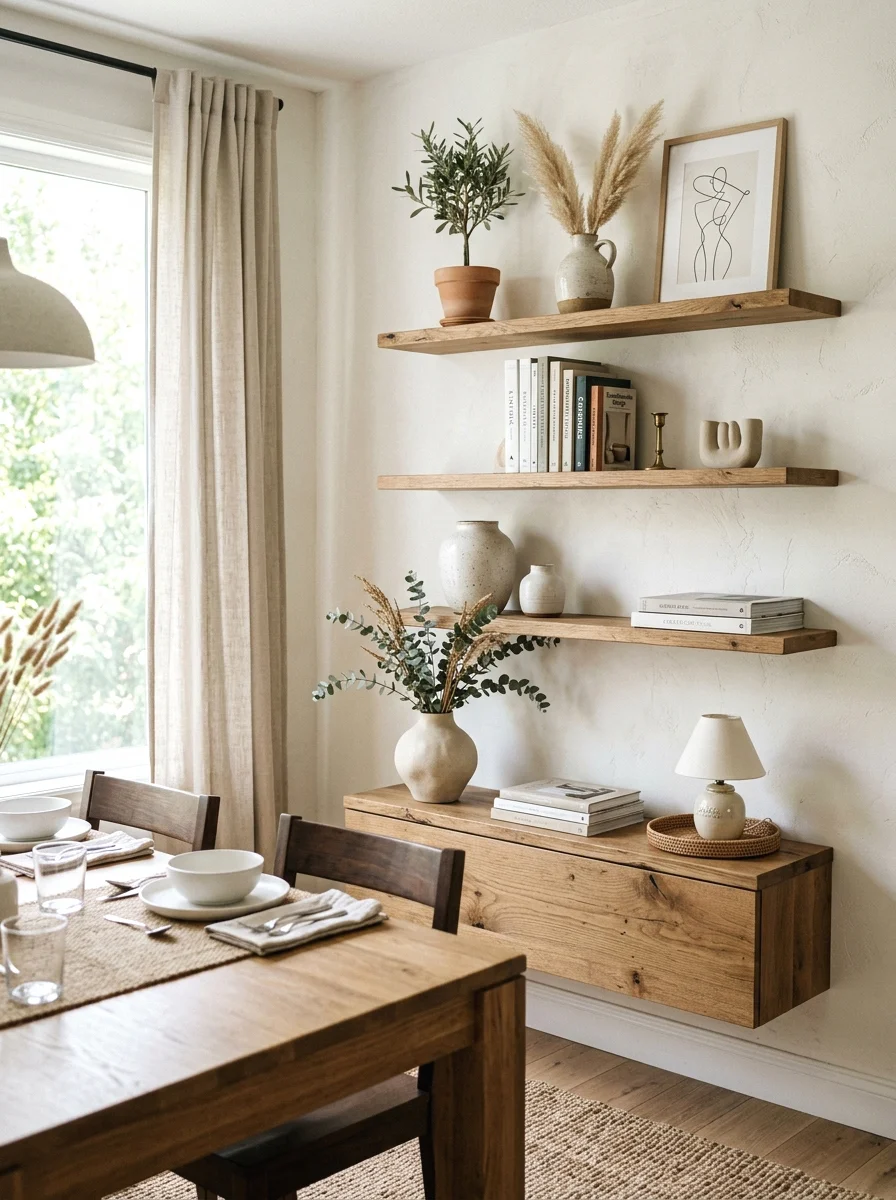
Floating shelves offer flexible, changeable display space for decor, books, or dishware, and unlike a fixed gallery wall, the items on display can be swapped seasonally or whenever the mood strikes without new nail holes.
Style shelves with restraint, limiting each shelf to a few coordinated items rather than filling every inch, since open shelving depends on negative space to look intentional.
Best suited for: dining rooms wanting a flexible, easily updated display rather than permanently hung art.
15. Chalkboard or Menu Wall
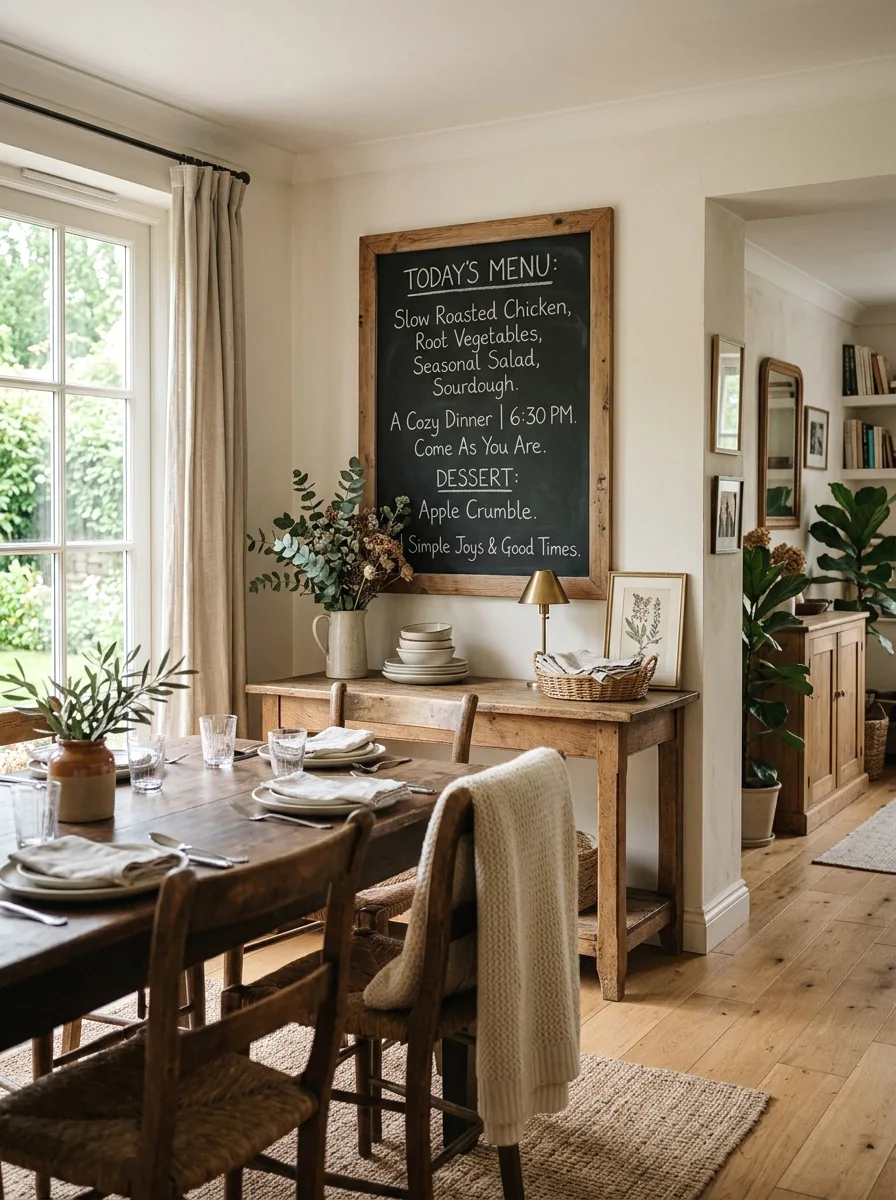
A chalkboard wall gives a dining room a genuinely functional, changeable decor element, letting you write a rotating menu, a quote, or a seasonal message that keeps the space feeling fresh without any new purchases.
Choose a framed chalkboard rather than chalkboard paint directly on the wall for most homes, since a framed version is easier to reposition or remove later if your style preferences change.
Best suited for: casual and farmhouse-style dining rooms, and hosts who enjoy a rotating, personal decor detail.
16. Vintage Map or Travel Art
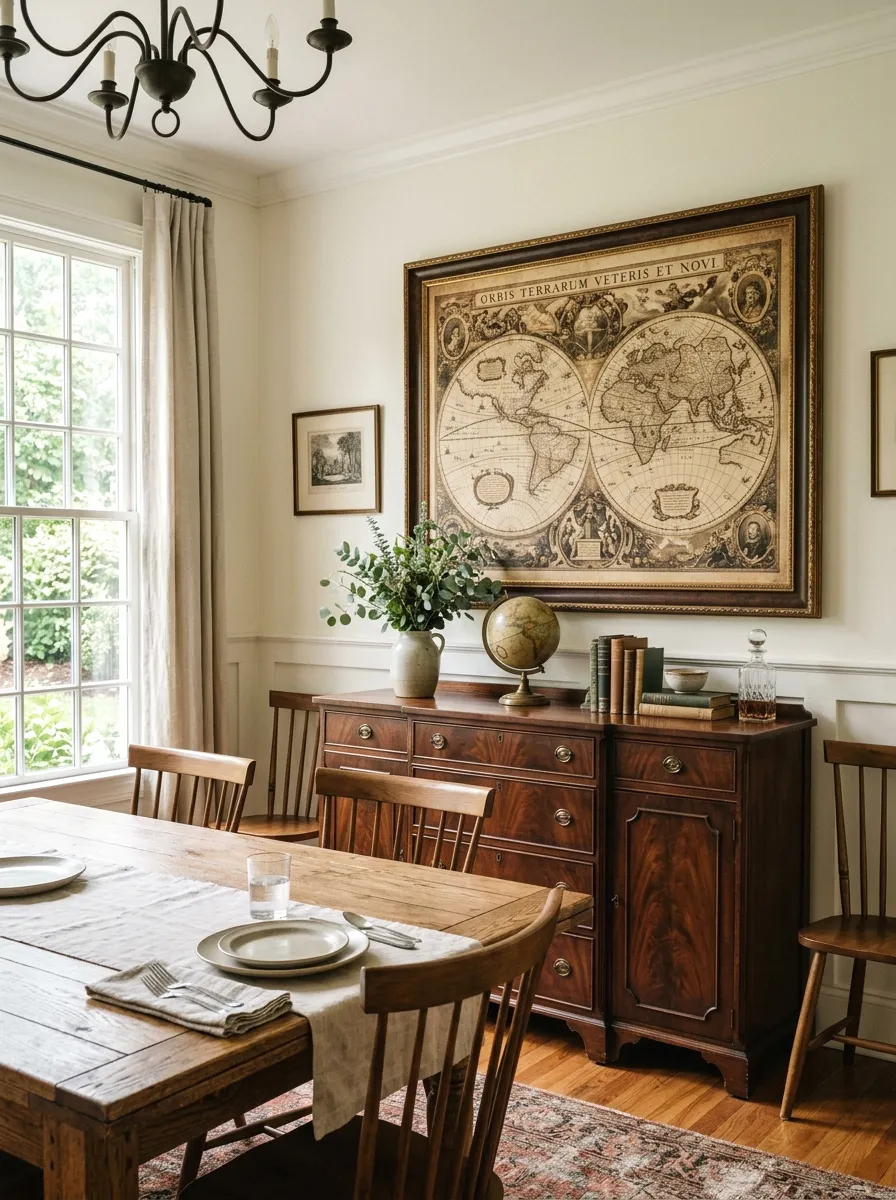
A vintage-style map or travel-inspired art piece brings a worldly, well-traveled quality to a dining room, and it often serves as a genuine conversation starter for guests during meals.
Choose a map or travel piece with personal significance, like a place you have visited or plan to travel to, since this personal connection tends to make the piece feel more meaningful than a purely decorative choice.
Best suited for: dining rooms wanting a personal, conversation-starting decor piece.
17. Framed Family Photos
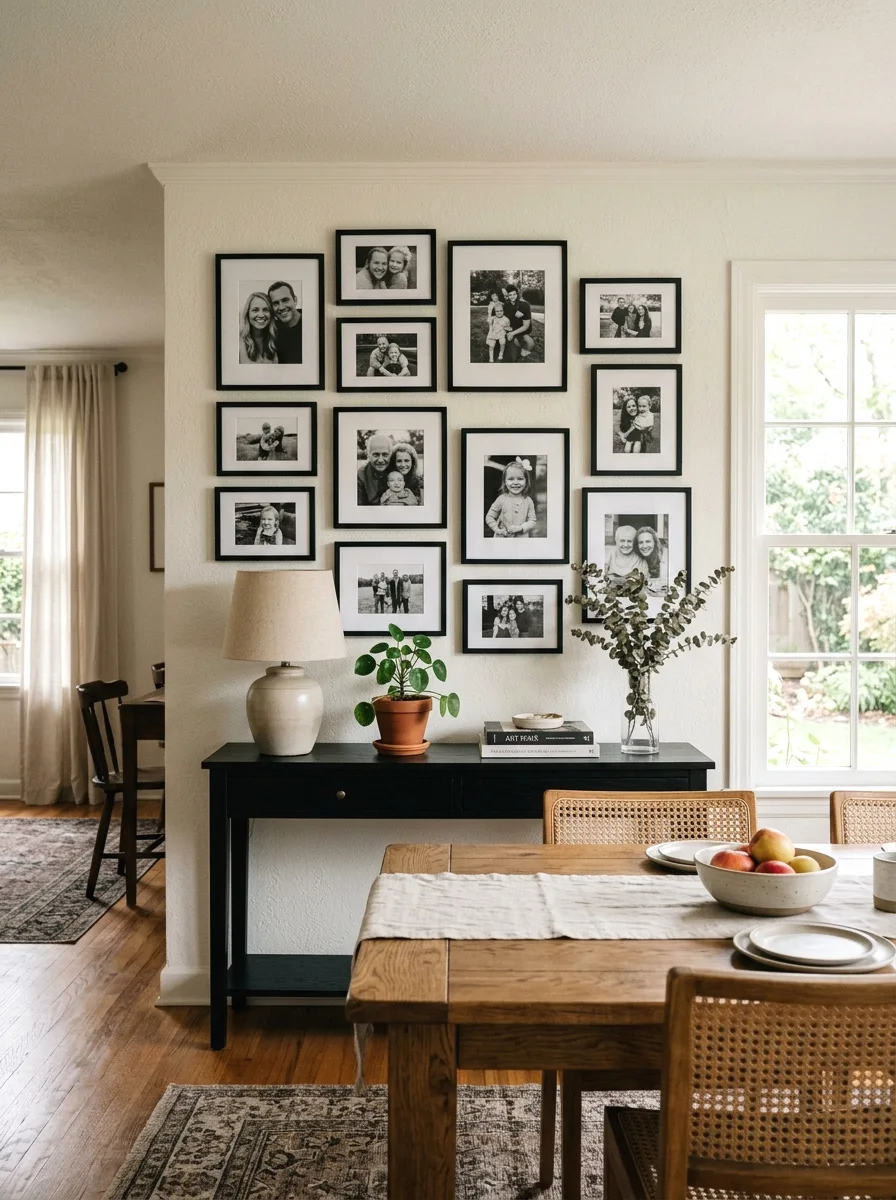
A curated arrangement of framed family photos gives a dining room genuine warmth and personal meaning, and since the space is often used for family gatherings and holidays, the photos reinforce the room’s role as a gathering place.
Convert photos to a consistent color treatment, either all black and white or all color, before framing, since mixing treatments in the same display can look visually inconsistent.
Best suited for: family dining rooms and hosts wanting genuinely personal, meaningful wall decor.
18. Wall-Mounted Candle Sconces
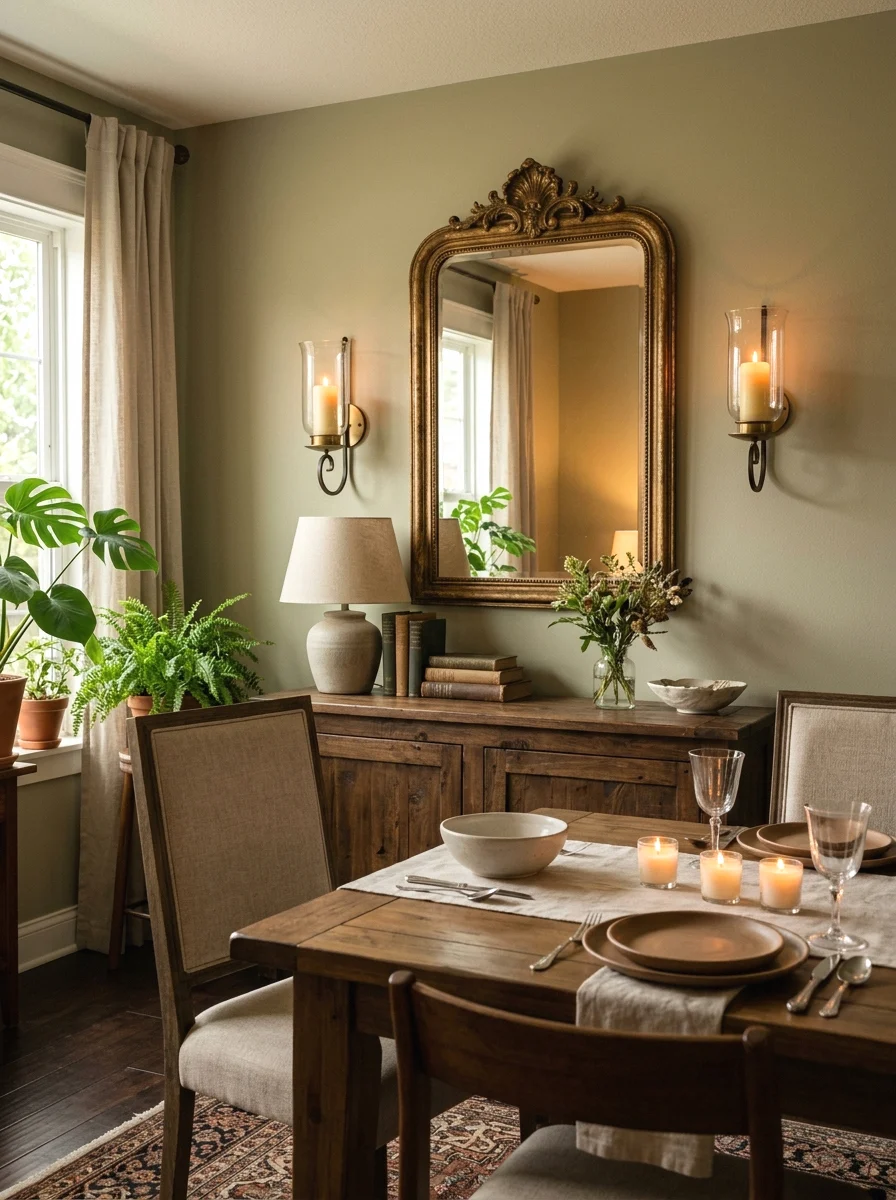
Wall-mounted candle sconces bring genuine warmth and a romantic quality to a dining room, particularly for evening meals, and they offer flickering ambient light that electric fixtures cannot fully replicate.
Choose sconces with a glass hurricane shade for safety and to reduce dripping wax onto the wall, and position them at a height that avoids direct proximity to any nearby drapery or flammable material.
Best suited for: dining rooms wanting a warmer, more intimate evening atmosphere for dinners and gatherings.
Planning and Buying Tips
A few practical decisions up front will help your dining room wall decor look proportionate and intentional rather than randomly assembled.
● Size art and mirrors to the furniture beneath them — a piece roughly two-thirds the width of a buffet or console generally looks the most proportionate, rather than a piece that is noticeably smaller or wider than the furniture below.
● Standard sizing to shop for — dining room mirrors commonly range from 30 to 48 inches wide for a substantial statement above a buffet, and gallery wall arrangements typically work best with two to three inches of spacing between frames.
● Hang art and mirrors at a height suited to seated sightlines — since guests spend extended time seated at the table, center wall decor slightly lower than typical eye-level standing height for the most comfortable viewing angle.
● Choose materials suited to proximity to food — keep delicate textiles or porous materials a reasonable distance from the table, and favor sealed, wipeable finishes for anything closer to where food is served.
● Coordinate metal finishes across the room — match sconces, mirror frames, and any hardware to a consistent metal tone, since mixing several different finishes in one room tends to look unplanned rather than intentionally layered.
● Plan lighting alongside wall decor — sconces and reflective surfaces like mirrors both affect how light moves through the room, so consider these elements together rather than as entirely separate decisions.
Cost Breakdown: Budget, Mid-Range, and Luxury Wall Decor
Dining room wall decor spans a wide cost range, from an affordable framed print to a full molding and lighting renovation.
Budget ($30–$300)
Framed prints, a small gallery wall, a chalkboard, and basic wallpaper for a small accent area fall in this range. Installation is largely DIY, with wallpaper application being the main labor consideration.
Mid-Range ($300–$1,500)
A large statement mirror, wall sconces, a substantial abstract canvas, and a woven textile hanging sit in this tier. Basic electrical installation for hardwired sconces typically adds $100–$300 if hired out.
Luxury / Premium ($1,500–$6,000+)
Full wood paneling or molding installation, a custom-framed gallery wall, and a designer mirror or chandelier package fall here. Professional installation for molding or paneling typically runs $1,000 to $4,000 or more depending on the wall’s size and the complexity of the detail work.
Wall Decor Type Comparison
| Decor Type | Price Range | Commitment Level | Light-Enhancing Effect | Best For |
| Statement mirror | $150–$1,200 | Moderate | Very high | Brightening a windowless or small dining room |
| Gallery wall | $100–$800 | Low to moderate — easy to adjust | Low | Personal, evolving art displays |
| Wallpaper accent wall | $100–$500 | High — more involved to change | Low to moderate depending on pattern | A bold, dramatic design statement |
| Wood paneling/molding | $500–$4,000+ | Very high — semi-permanent | Low | Timeless, architectural upgrades |
| Wall sconces | $100–$600 (pair) | Moderate | Moderate — adds ambient light | Layered evening lighting |
| Floating shelves | $40–$200 | Low — easy to remove | Low | Flexible, changeable display space |
Maintenance Tips
● Mirrors — clean with a standard glass cleaner regularly, and dust the frame periodically to prevent buildup, particularly on textured or detailed frame finishes.
● Framed art and gallery walls — dust glass and frames regularly, and avoid hanging any paper-based art in direct sunlight for extended periods, which can cause fading over time.
● Wallpaper — wipe down washable or vinyl-coated wallpaper with a damp cloth as needed, particularly if the dining room sits close to a kitchen with regular cooking steam or splatter.
● Wood paneling and molding — dust regularly, and touch up any chipped paint promptly to prevent moisture from affecting the material underneath.
● Sconces and candle fixtures — dust fixtures regularly, and clean any glass elements to maintain brightness, checking candle sconces periodically for wax drips that need removal.
● Common mistake to avoid — hanging delicate textiles or porous decor pieces too close to the dining table, where they are more likely to be exposed to food splatter or steam over time.
Frequently Asked Questions
What is the best size mirror for a dining room wall?
A mirror roughly two-thirds the width of the furniture beneath it, such as a buffet or console, generally looks the most proportionate, which typically means a mirror in the 30 to 48 inch range for most standard dining room furniture.
How high should art be hung in a dining room?
Since guests spend extended time seated, dining room art is often hung slightly lower than the standard 57 to 60 inch center height used in other rooms, positioning the piece for a comfortable seated sightline rather than a standing one.
Is wallpaper a good choice for a dining room?
Yes, dining rooms are generally considered one of the best rooms for bold wallpaper, since the space is used for a specific, limited purpose rather than daily lounging, which makes a strong pattern feel intentional rather than overwhelming.
How do I arrange a gallery wall in a dining room?
Lay the frames out on the floor first in your intended arrangement, keep two to three inches of spacing between each piece, and use painter’s tape on the wall to map the layout before hanging anything, keeping frame styles consistent for a cohesive look.
What wall decor works best for a small or windowless dining room?
A large mirror is generally the most effective choice for a small or windowless dining room, since it reflects existing light and the table setting back into the space, making the room feel noticeably larger and brighter than art alone would achieve.
How to Choose the Right Dining Room Wall Decor for You
The right combination of ideas depends on three factors: your room’s natural light situation, your budget, and how formal or casual you want the space to feel. Small or dark dining rooms benefit most from a large mirror, while well-lit rooms have more flexibility for bold wallpaper or a dramatic art piece.
Budget should guide where to start rather than the final scope — a single statement piece like a mirror or large art piece offers significant impact for a moderate cost, while wallpaper, molding, and sconces represent bigger investments worth making once you know the direction you want.
Finally, consider how the room is actually used. A dining room used mainly for formal entertaining suits sconces, a substantial mirror, or classic molding, while a more casual family dining space might lean toward a chalkboard wall, family photos, or a relaxed gallery arrangement.
Start with one statement piece, like a large mirror or a significant art piece, above your buffet or main wall, then layer in smaller details like sconces or a gallery arrangement from there — a dining room’s walls come together best through one confident focal choice, with everything else building around it.


- Be Respectful
- Stay Relevant
- Stay Positive
- True Feedback
- Encourage Discussion
- Avoid Spamming
- No Fake News
- Don't Copy-Paste
- No Personal Attacks
- Be Respectful
- Stay Relevant
- Stay Positive
- True Feedback
- Encourage Discussion
- Avoid Spamming
- No Fake News
- Don't Copy-Paste
- No Personal Attacks
