19 Dining Room Ideas for Every Style, Space, and Way You Actually Entertain
Published: 23 Sep 2026
A dining room means something different in nearly every home — for some it’s a formal space reserved for holidays, for others it’s the daily hub where homework, dinner, and morning coffee all happen at the same table. Dining room ideas work best when they start from how the room is actually used rather than a single trending aesthetic, which is why the right approach for a small city apartment looks nothing like the right approach for a large open-concept farmhouse. The good news is that most dining rooms can be meaningfully improved without a full renovation, using the right furniture, layout, and styling choices for the specific space and household. This guide covers 19 dining room ideas spanning different styles, room sizes, and household needs, from farmhouse and formal traditional looks to small-space solutions and multi-functional layouts. Along the way, you will find honest pros and cons, real price ranges, a furniture and style comparison table, maintenance advice, and answers to the questions people most often search for before furnishing a dining room. By the end, you will know exactly which direction fits your space, your budget, and how your household actually eats and gathers.
Is a Dining Room Refresh Right for You?
A dining room update can range from a single furniture swap to a full room reconfiguration, so it is worth weighing the trade-offs honestly based on how the room actually functions in your home.
Pros
● Flexible investment level — you can refresh a dining room with a new rug and lighting, or go further with a full furniture and layout change, depending on your budget and how much the room gets used.
● High visual impact on the whole home — dining rooms are often open to or visible from the kitchen or living room, so an update here tends to improve how connected spaces feel as well.
● Encourages more use of the space — a dining room that genuinely works for your household’s habits gets used far more often than one furnished for an idealized version of how you might entertain.
● Style can evolve gradually — furniture, lighting, and rugs can typically be updated individually over time rather than requiring a complete room overhaul all at once.
Cons
● The right style depends heavily on household habits — a beautiful formal dining set is wasted if your household actually eats most nights casually, so matching furniture to real use matters more here than in some other rooms.
● Small or awkward room shapes limit some layouts — a narrow or oddly configured dining space may not accommodate certain furniture arrangements without some compromise.
● Multi-functional rooms require more planning — a dining room doubling as a workspace or playroom needs furniture and storage that can transition cleanly between uses.
● Larger furniture pieces represent a real commitment — a table and full chair set is a bigger investment than most other room updates and is less easily changed later than smaller decor elements.
For most households, a dining room refresh is worth doing thoughtfully rather than quickly, starting with an honest look at how the room is actually used day to day before choosing a style direction and furniture scale that matches that reality.
1. Farmhouse Dining Set With Bench Seating
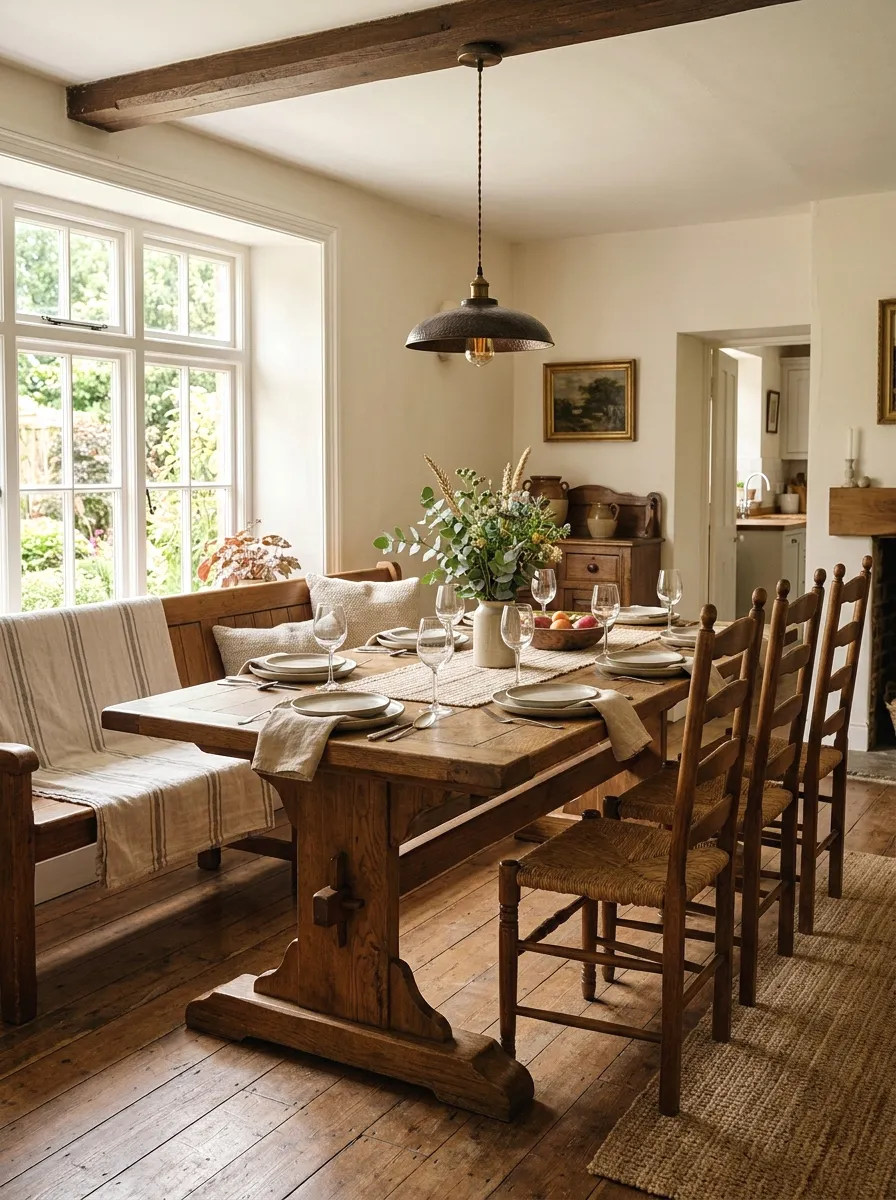
A farmhouse dining set pairs a sturdy wood trestle table with a bench on one side, which both reinforces the casual, gathering-focused farmhouse aesthetic and often provides more flexible seating capacity than a full set of individual chairs.
Choose a table with a durable, slightly distressed wood finish that can handle daily family use without showing every scratch, since farmhouse style embraces some visible wear as part of its character.
Best suited for: family homes wanting a warm, casual dining space that can handle daily use.
2. Traditional Formal Dining With China Cabinet
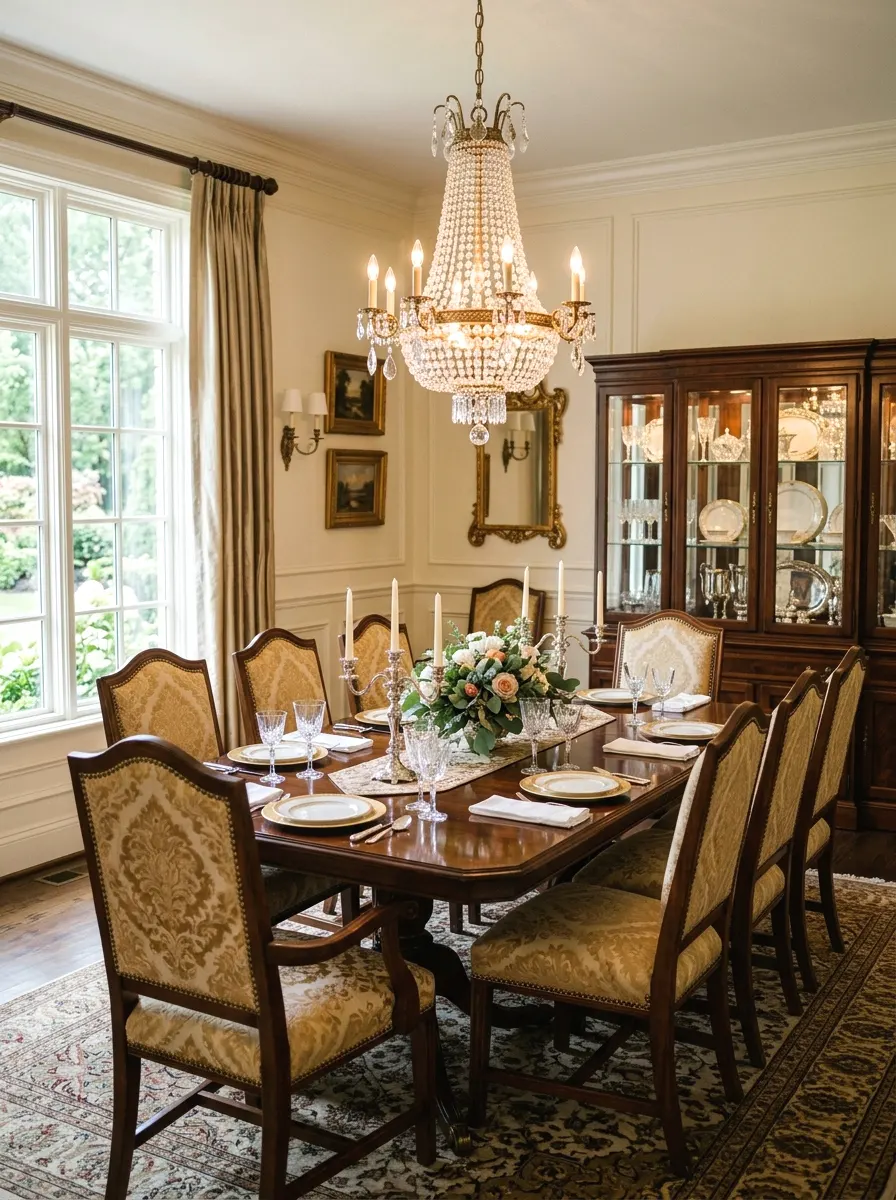
A traditional formal dining room, centered around a polished wood table, upholstered chairs, and a china cabinet for display, suits households that host holiday gatherings or formal dinners and want a dedicated space that feels distinctly special.
Choose a china cabinet sized to actually display your dishware collection rather than an oversized piece that dominates the room, and coordinate the wood tone between the table and cabinet for a cohesive traditional look.
Best suited for: households that regularly host formal gatherings and want a dedicated, elegant entertaining space.
3. Small-Space Dining Nook With Banquette
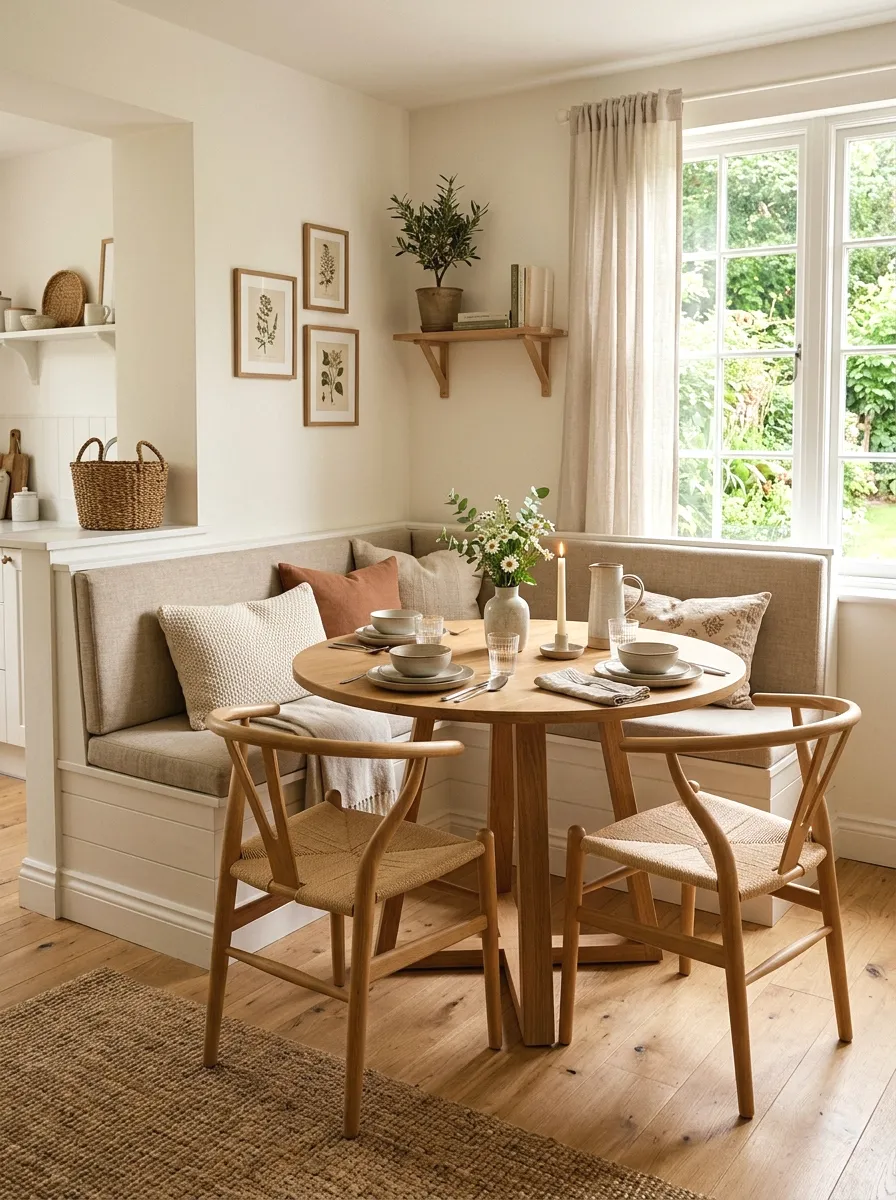
A built-in banquette maximizes seating capacity in a tight footprint and often includes hidden storage underneath, making it one of the most practical solutions for small dining nooks or awkward corners that cannot fit a full table and chair set.
Pair the banquette with a round table rather than a rectangular one, since round shapes have no corners to navigate around in a tight space and make it easier to slide in and out of the built-in seating.
Best suited for: small apartments, breakfast nooks, and awkward corners needing maximum seating in minimal space.
4. Open-Concept Dining Flowing Into the Kitchen
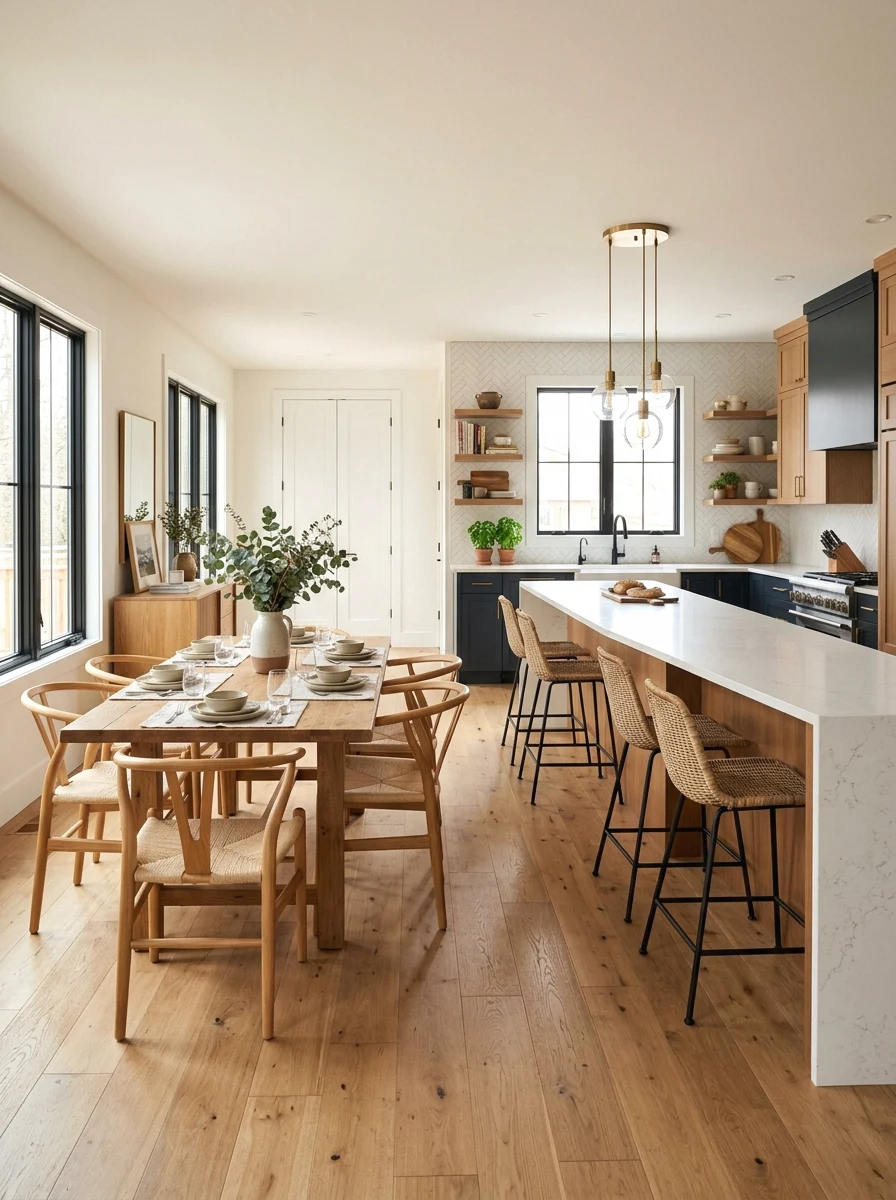
An open-concept layout keeps the dining area visually and physically connected to the kitchen, which works especially well for households that want whoever is cooking to stay part of the conversation rather than isolated in a separate room.
Use a rug or a change in flooring material to visually define the dining zone within the larger open space, giving the area a sense of its own identity even without a wall.
Best suited for: households that entertain often and homes with an open floor plan connecting the kitchen and dining areas.
5. Round Table for Cozy Family Dinners
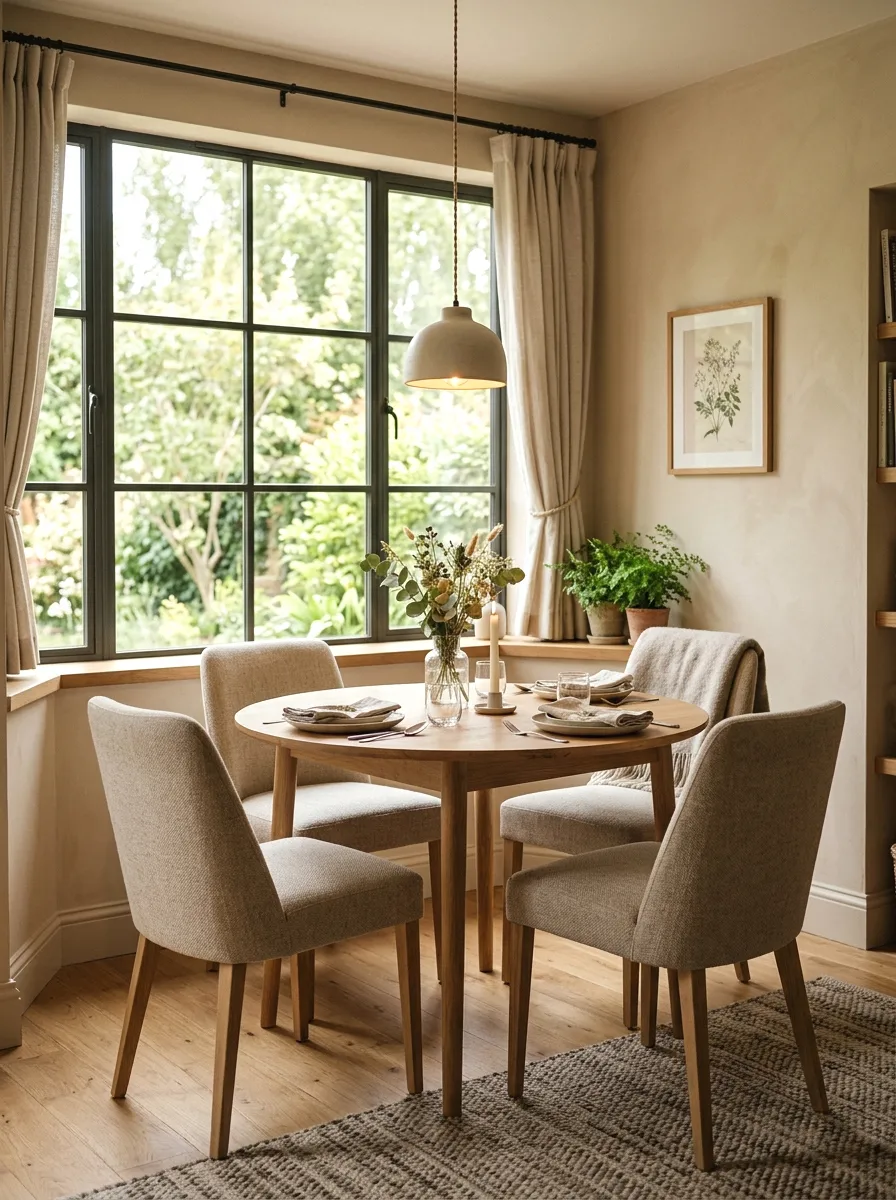
A round table naturally encourages conversation, since everyone seated is equally close to everyone else, and it works especially well for smaller households or family dinners where connection matters more than maximum seating capacity.
Choose a pedestal base rather than four individual legs for a round table, since a single central base makes it easier to pull chairs in and out without navigating around table legs.
Best suited for: smaller households and family-focused dining, and rooms without a lot of extra square footage.
6. Extendable Table for Hosting Flexibility
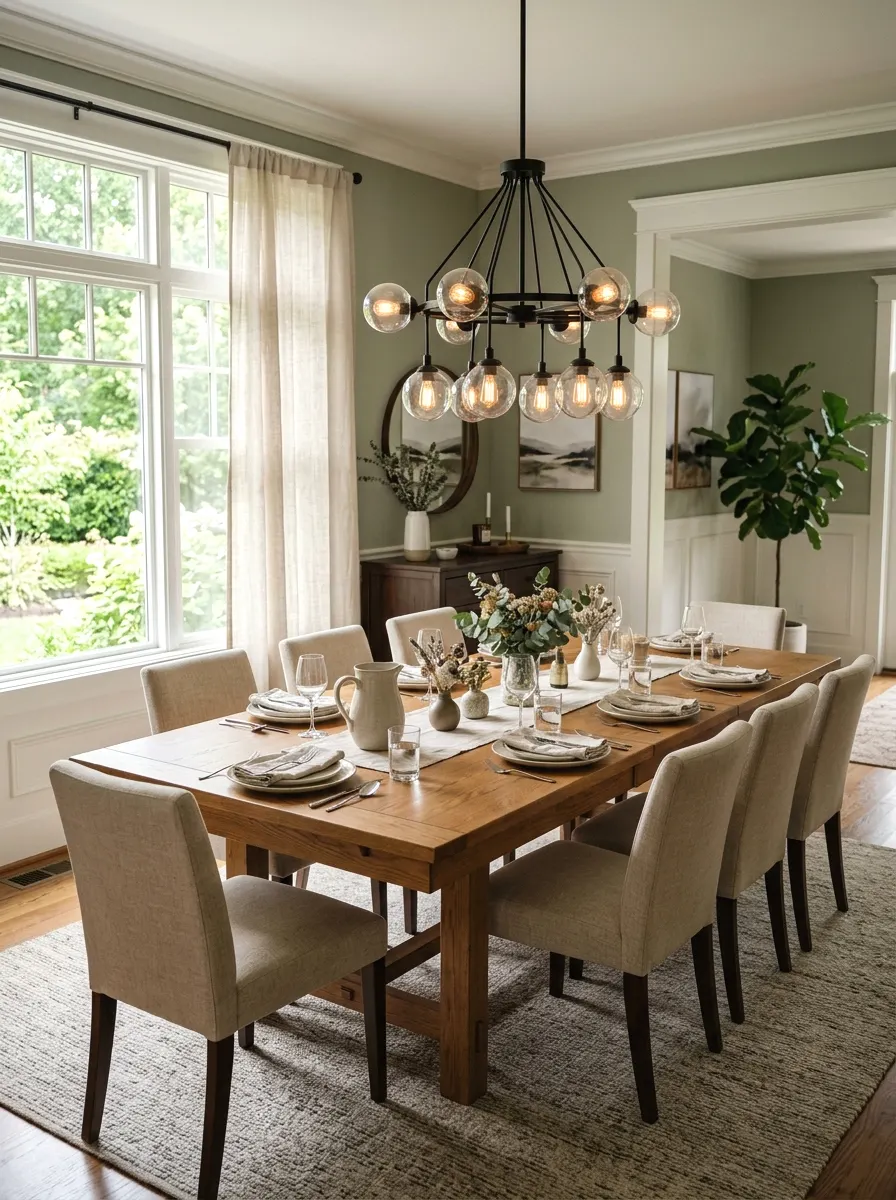
An extendable table gives you the flexibility of a smaller, more appropriately scaled table for daily use while still accommodating larger gatherings when needed, without requiring separate furniture for each scenario.
Confirm you have adequate room clearance for the table’s fully extended length before purchasing, and check whether extension leaves need to be stored separately or fold into the table itself.
Best suited for: households that host occasionally but do not want a permanently oversized table for daily use.
7. Mixed Seating With Bench, Chairs, and Stools
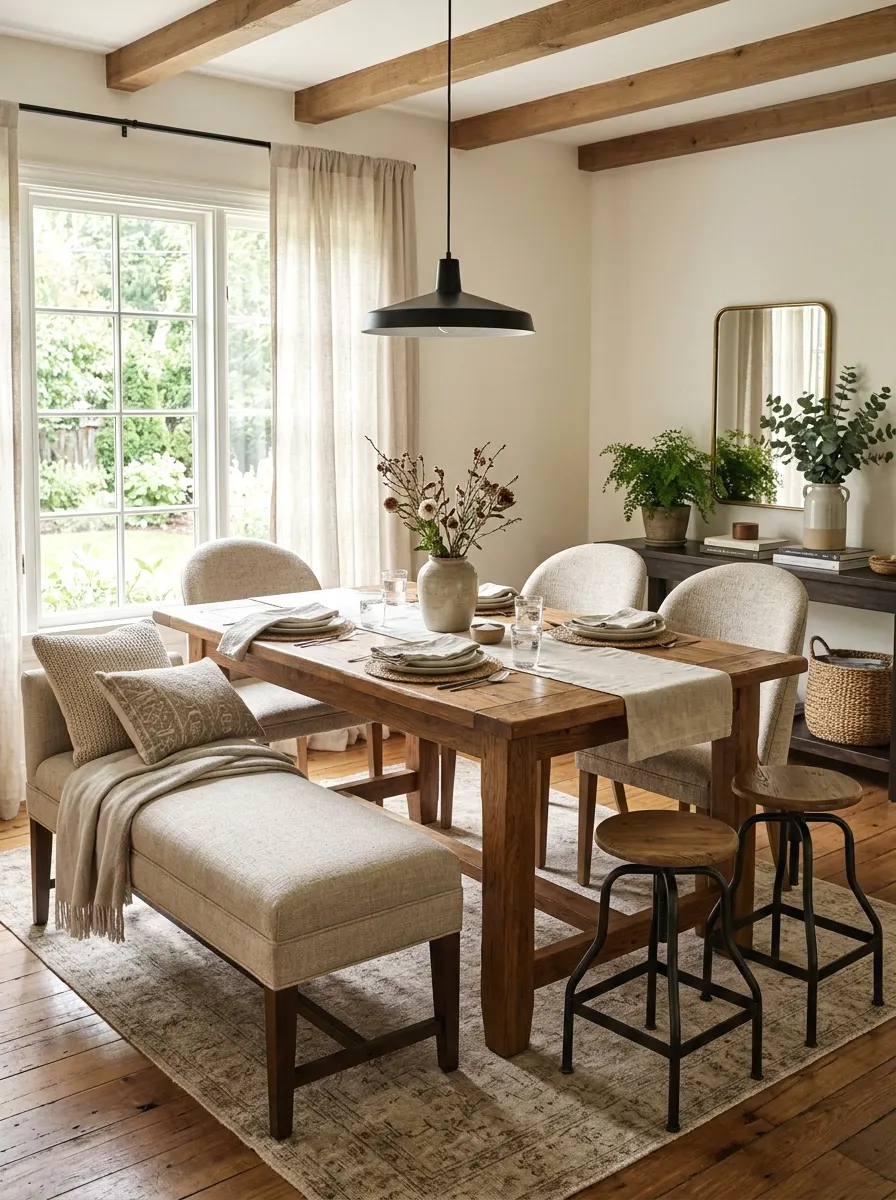
Mixing several different seating types around one table gives a dining room a collected, personal quality while also often increasing total seating capacity compared to a matching set of identical chairs in the same footprint.
Keep mixed seating cohesive by limiting the pieces to a shared color palette or material family, such as all-wood or all-neutral upholstery, so the variety reads as intentional rather than mismatched.
Best suited for: households furnishing gradually rather than buying a full matching set, and anyone wanting a more collected, eclectic look.
8. Rustic Wood Table With Wrought Iron Accents
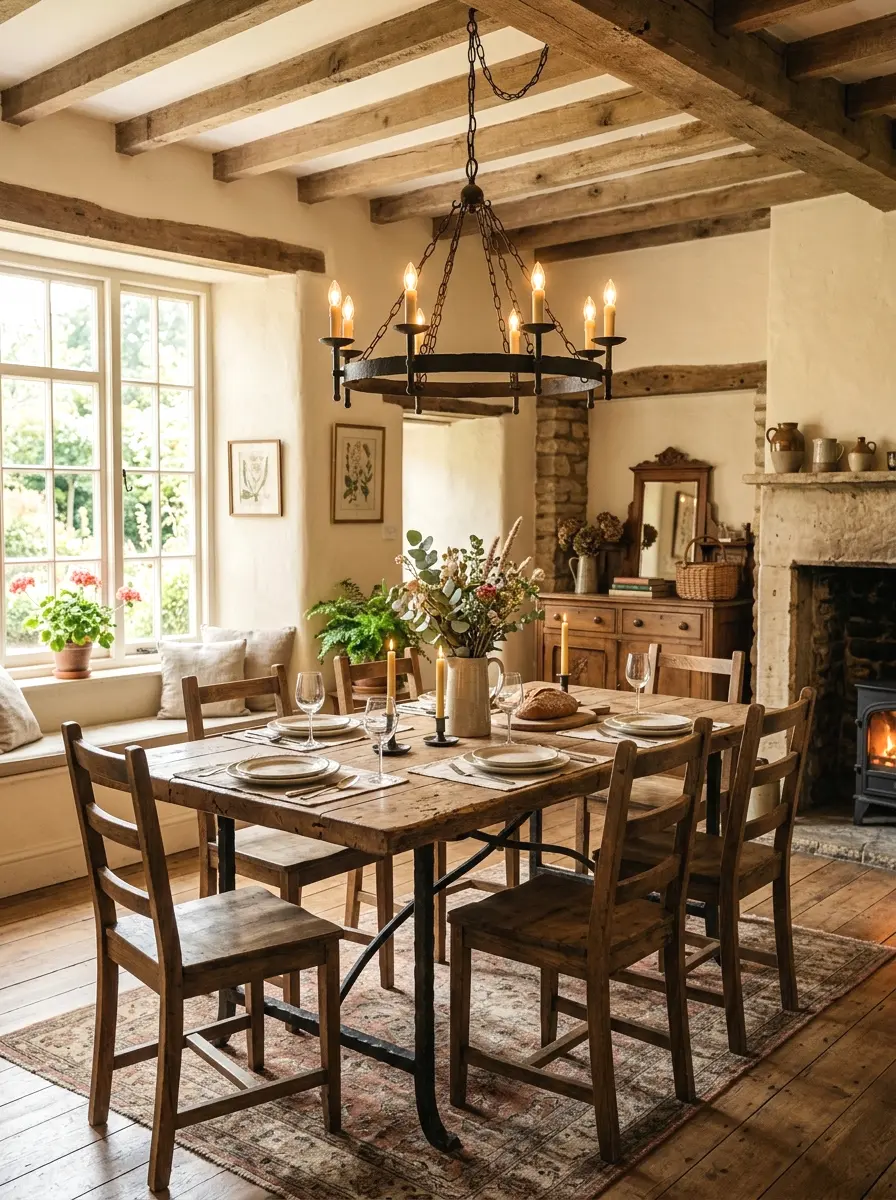
Pairing reclaimed or distressed wood with wrought iron accents brings genuine rustic character to a dining room, and the combination of warm wood grain and dark metal creates natural visual contrast without relying on bold color.
Choose wrought iron accents that appear in at least two places, like the table base and a light fixture, so the material pairing feels intentional throughout the room rather than isolated to a single piece.
Best suited for: rustic and farmhouse-style homes, and households wanting warmth with defined structural contrast.
9. Glam Dining Room With Velvet Chairs
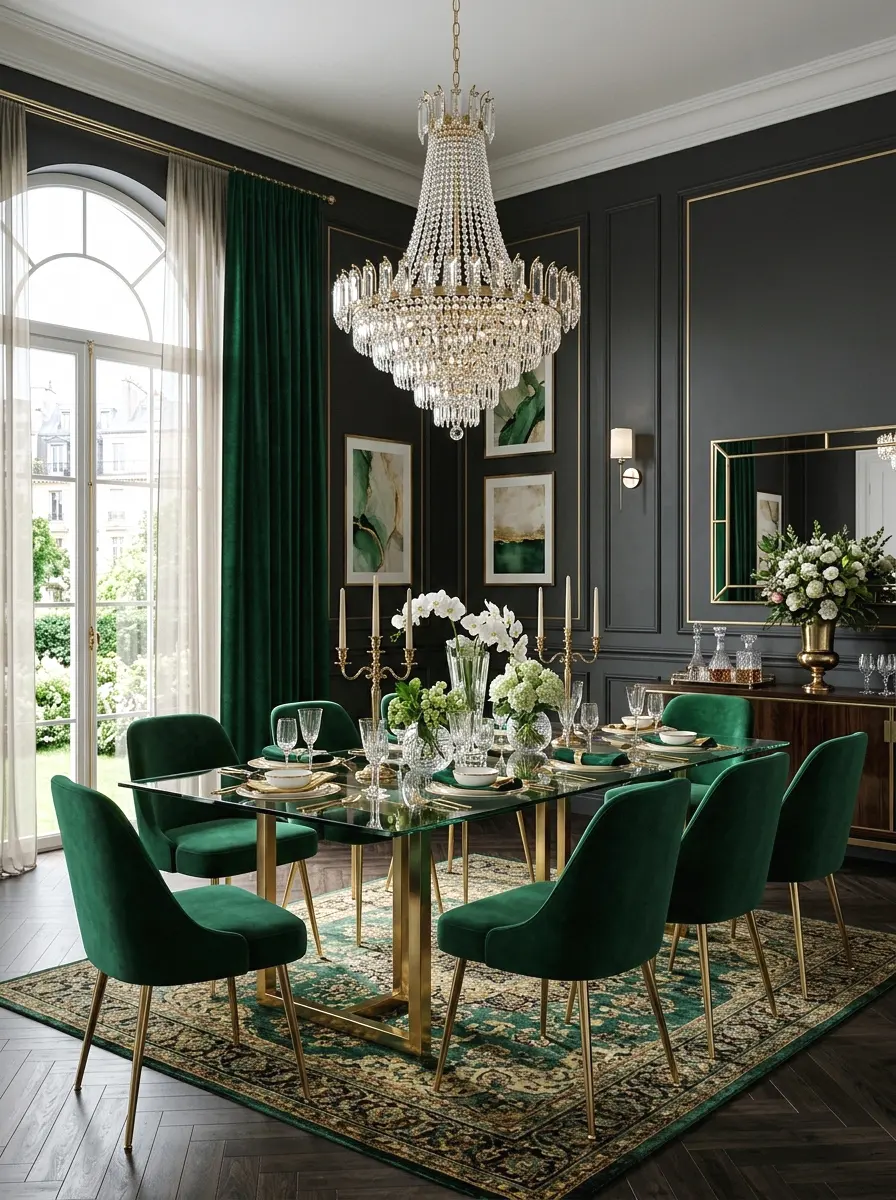
A glam dining room built around velvet upholstered chairs, brass accents, and reflective surfaces like glass or mirrored furniture creates a genuinely luxurious, dramatic dining experience that stands apart from more casual styles.
Choose a rich, saturated velvet color like emerald, sapphire, or deep plum for the chairs, since these jewel tones reinforce the glam aesthetic more effectively than lighter or more muted fabric choices.
Best suited for: households wanting a bold, luxurious entertaining space and formal dining occasions.
10. Scandinavian Minimalist Dining Space
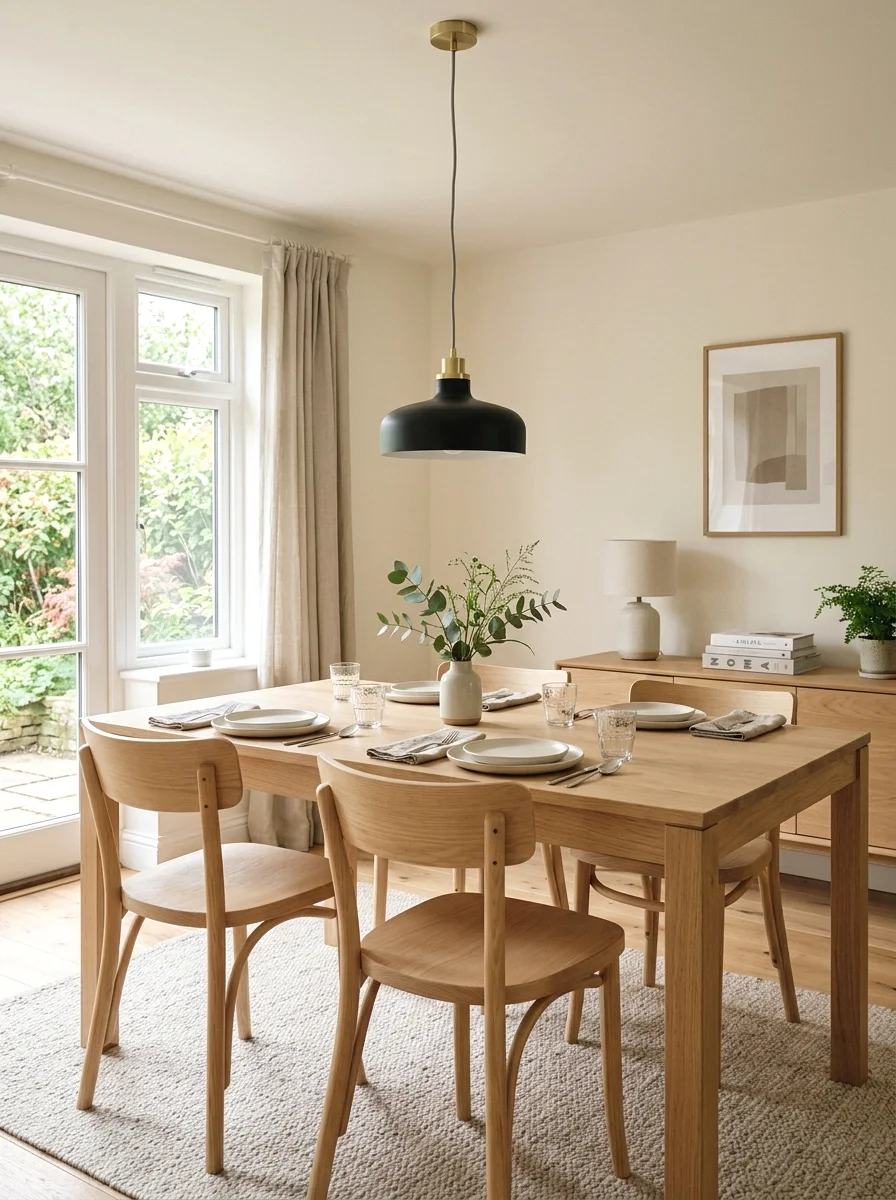
A Scandinavian dining space relies on light wood tones, simple furniture silhouettes, and restrained decor to create a calm, uncluttered room that feels bright and functional rather than heavily styled.
Choose furniture with visible, natural wood grain in a light finish like ash or birch, and limit decor accents to just one or two simple pieces to maintain the style’s characteristic restraint.
Best suited for: households wanting a calm, minimal dining space and smaller rooms that benefit from lighter, airier furniture choices.
11. Coastal Dining Room With Light Textures
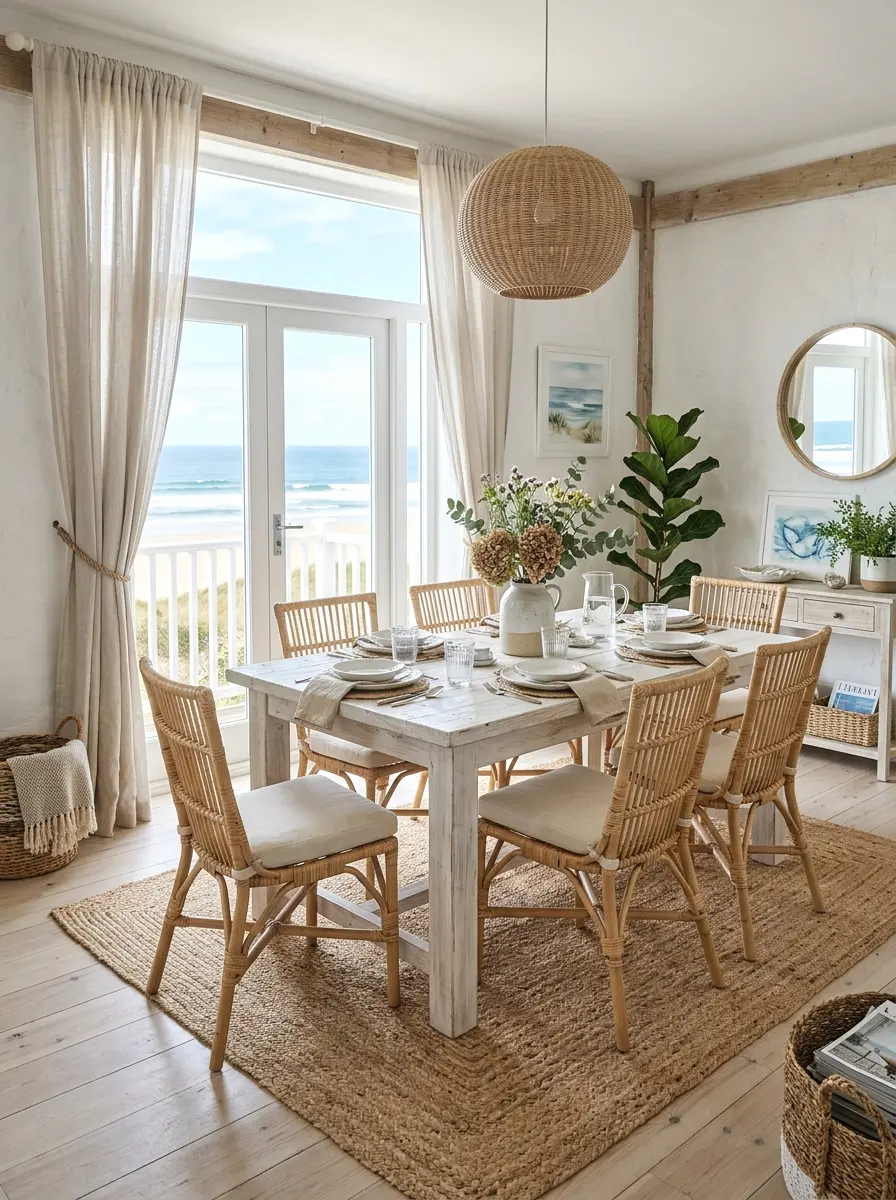
A coastal dining room uses light wood tones, woven natural textures like rattan and jute, and a breezy, relaxed color palette to evoke a beach house feel, regardless of the home’s actual proximity to the coast.
Choose rattan or wicker chairs specifically designed for indoor durability if the room sees regular daily use, since some woven furniture is better suited to occasional or outdoor use than everyday dining.
Best suited for: households wanting a relaxed, airy dining space, particularly in warmer climates or sunlit rooms.
12. Bohemian Dining Room With Eclectic Mix
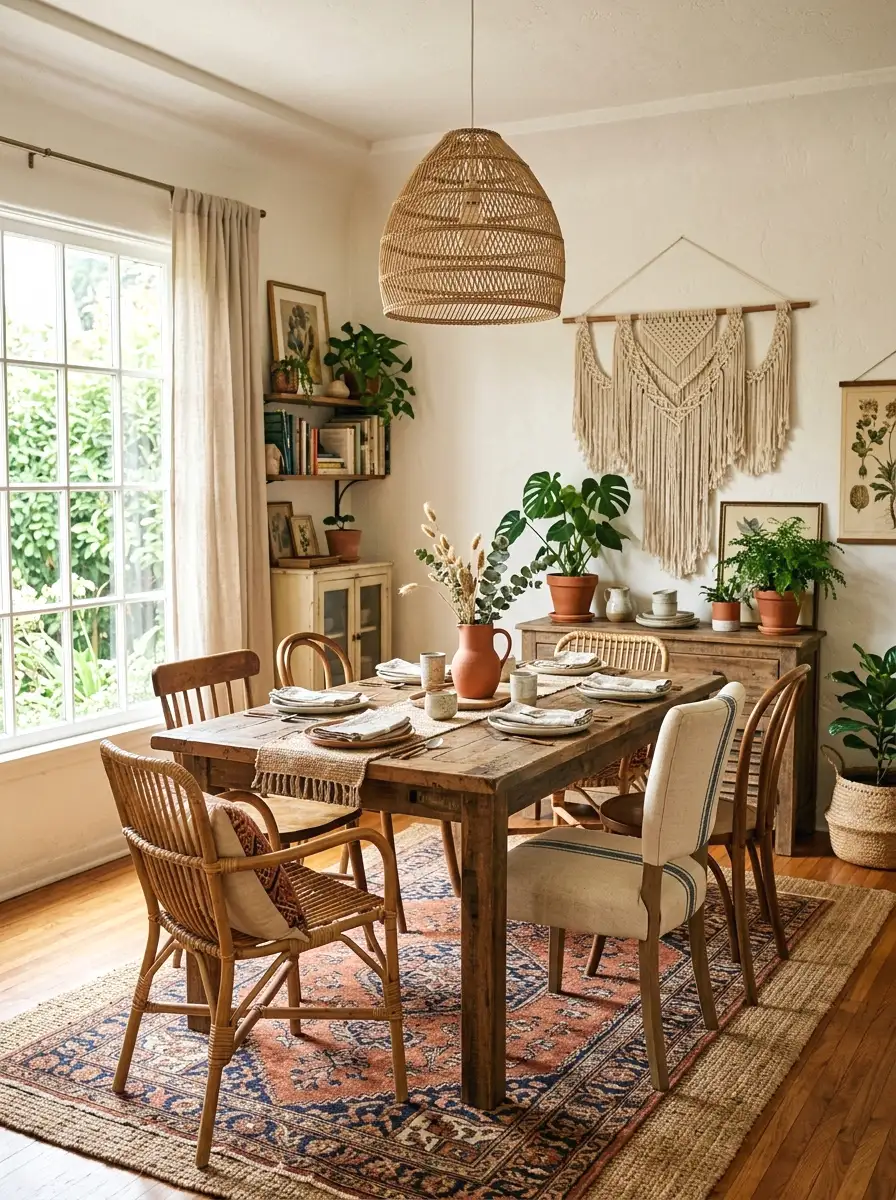
A bohemian dining room embraces an intentionally eclectic mix of furniture, textiles, and decor, layering pattern, texture, and warm materials together in a way that feels collected over time rather than purchased as a single set.
Anchor the eclectic mix with one consistent element, like a repeated color or material across mismatched chairs, so the overall look feels curated rather than simply random.
Best suited for: households drawn to a warm, personal, non-matching aesthetic and homeowners who enjoy collecting unique pieces over time.
13. Dining Room Bar and Wine Storage Nook
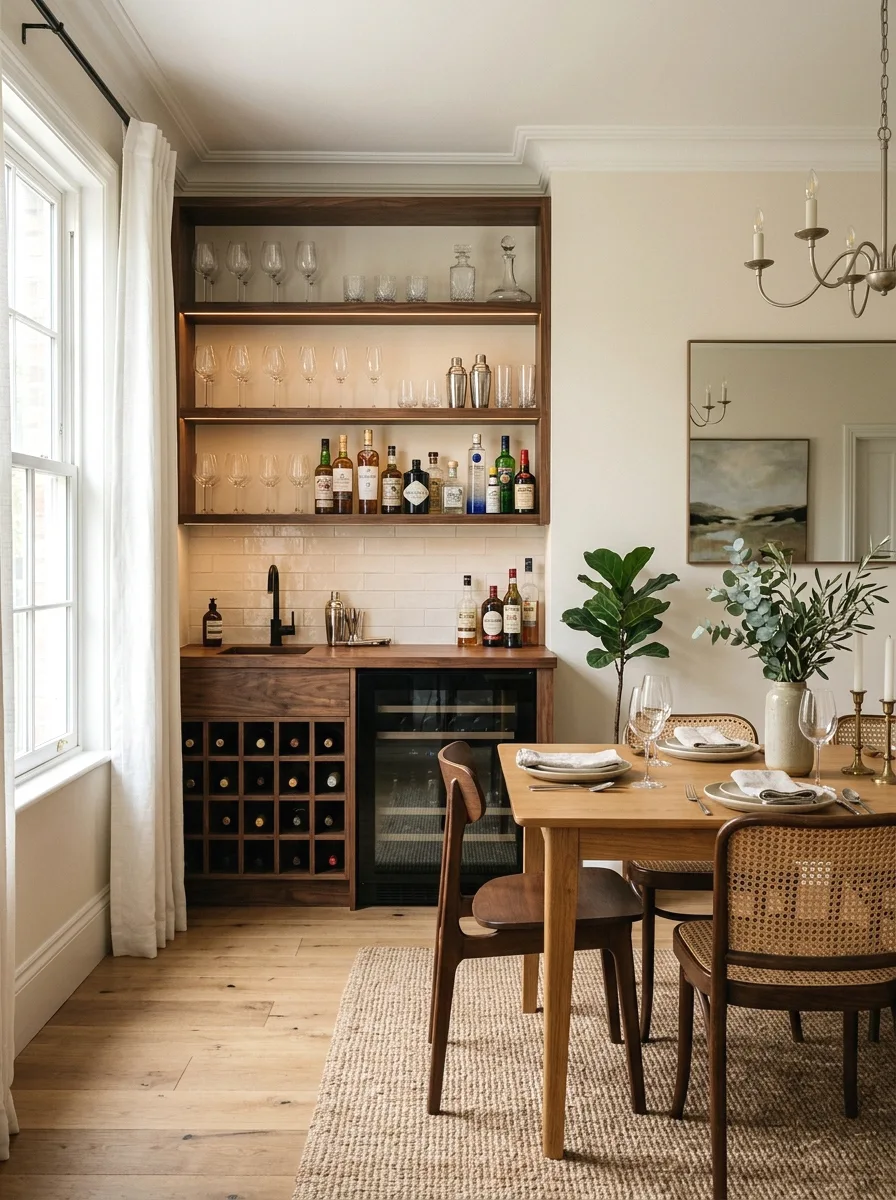
A dedicated bar or wine storage nook within the dining room keeps drinks and glassware close at hand during meals and entertaining, turning an underused wall into genuinely functional space for hosting.
Choose open shelving for glassware to keep it easily accessible, and pair it with enclosed storage or a wine rack specifically sized to your typical collection rather than an oversized unit that will mostly sit empty.
Best suited for: households that entertain regularly and dining rooms with an available wall not occupied by other furniture.
14. Kid-Friendly Durable Dining Setup
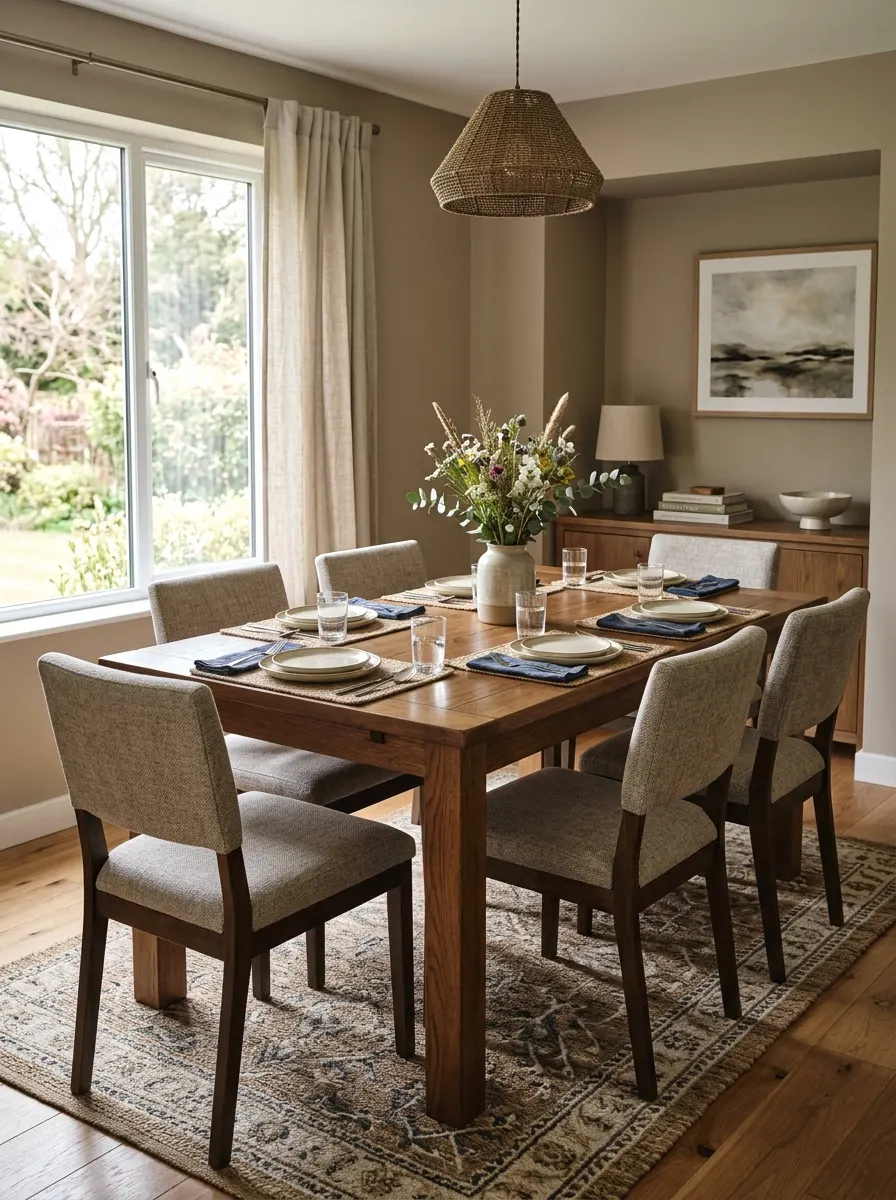
A dining setup built around durable, easy-to-clean materials, like a sealed wood table and performance fabric chairs, lets a family dining room handle daily spills and wear without looking worn down within a year or two.
Choose a table finish rated for daily wear and easy cleaning, and select chair fabric specifically labeled as performance or stain-resistant rather than standard decorative upholstery.
Best suited for: families with young children and households prioritizing durability alongside style.
15. Indoor-Outdoor Dining Flow
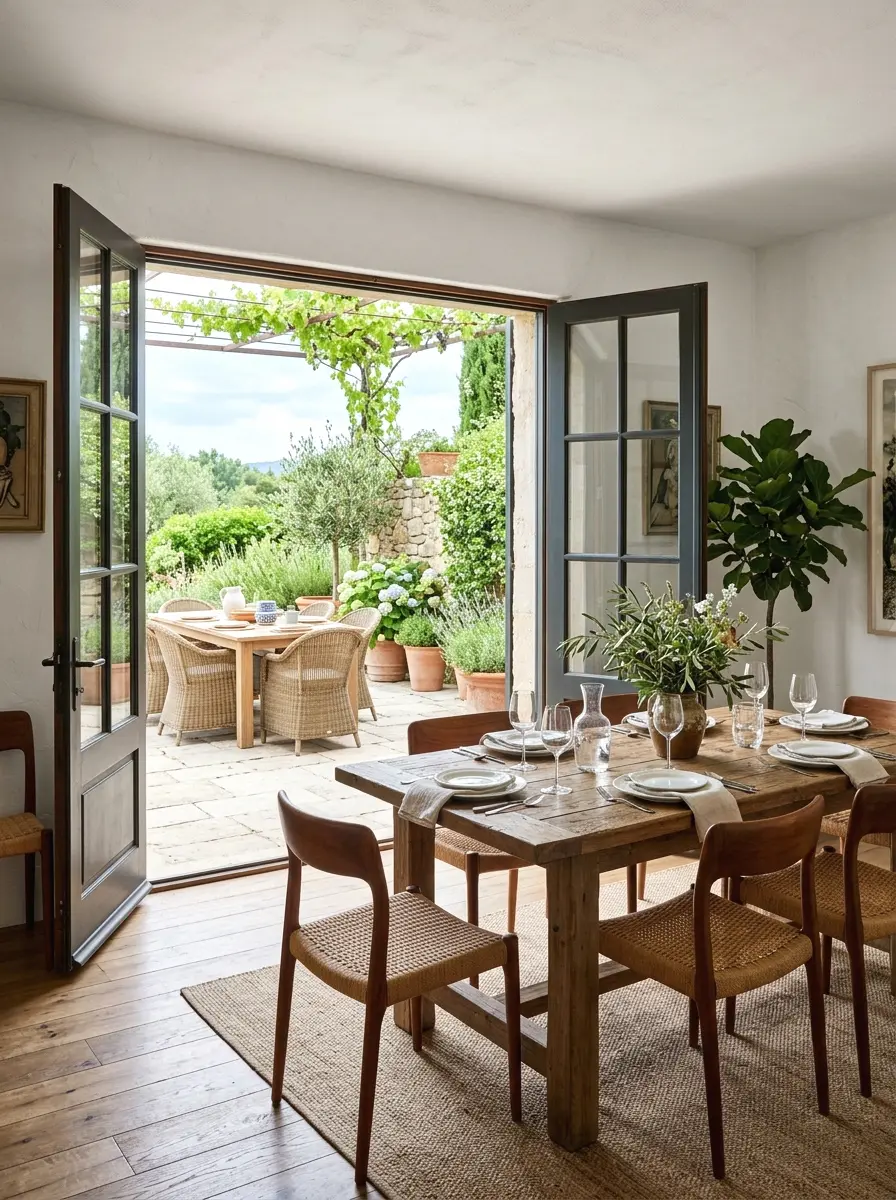
Positioning the dining room near french doors or large windows that open onto a patio creates a genuine indoor-outdoor flow, making it easy to extend a gathering outside or bring in natural light and air during meals.
Choose furniture and rug materials that can handle occasional exposure to outdoor air and humidity if the doors are regularly left open, since rooms with strong indoor-outdoor connection see somewhat different conditions than a fully enclosed dining room.
Best suited for: homes with direct patio or backyard access adjacent to the dining room, and warmer climates with a long outdoor season.
16. Statement Chandelier as Room Centerpiece
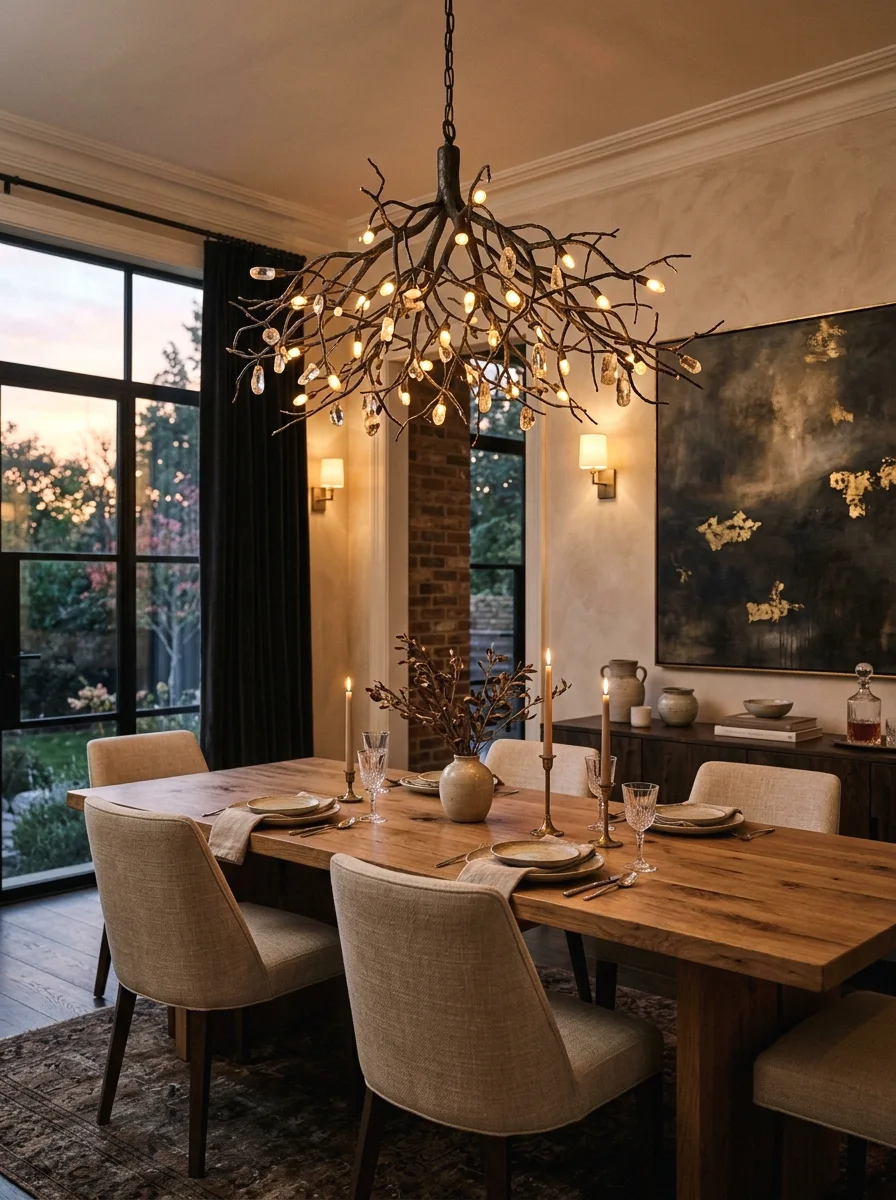
A dramatic chandelier turns the light fixture itself into the room’s primary design statement, which allows the table and chairs underneath to stay simple while the room still makes a strong visual impression.
Size the chandelier to roughly half to two-thirds of the table’s length, and hang it low enough to feel connected to the table without interfering with sightlines across it.
Best suited for: dining rooms wanting a single dramatic focal point rather than several competing design elements.
17. Layered Rug and Ambient Lighting
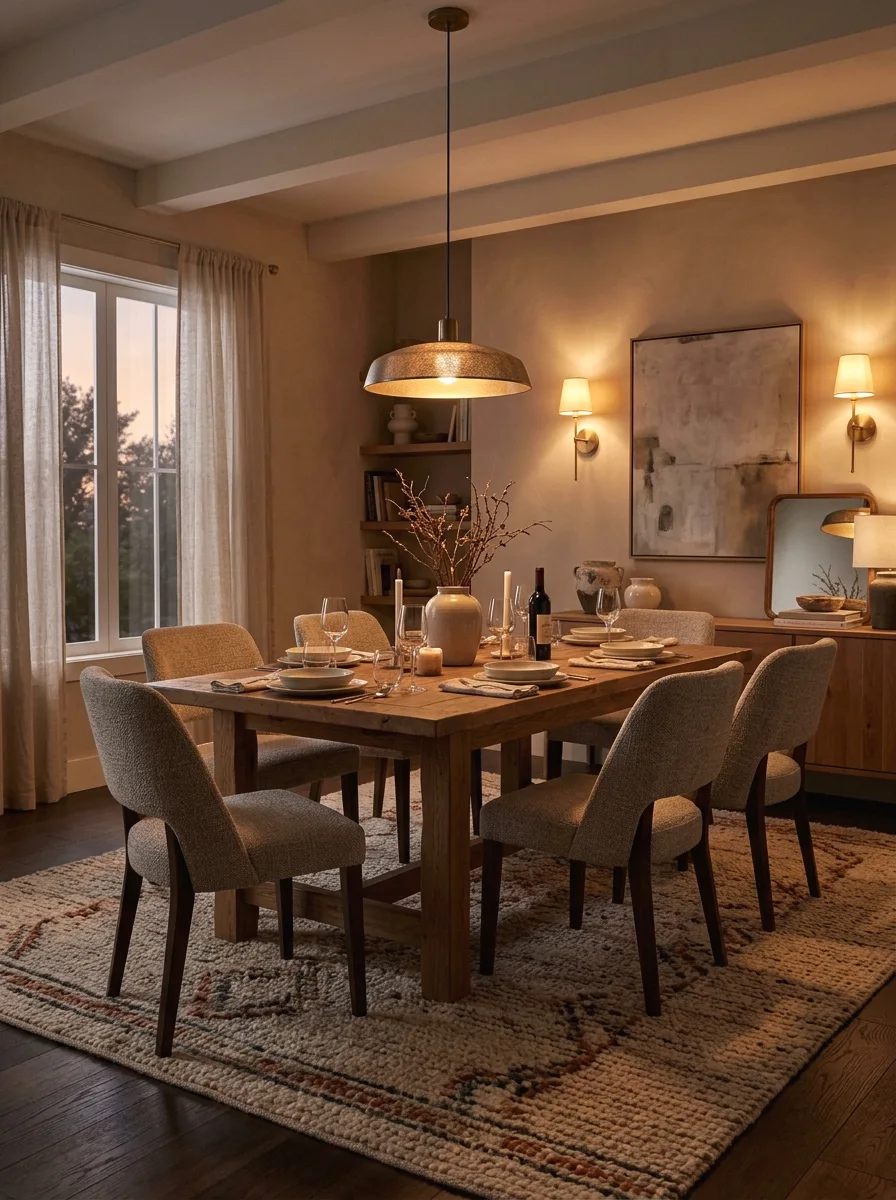
Combining a properly sized area rug with layered lighting, including a dimmable overhead fixture and ambient sconces, transforms how a dining room feels in the evening, adding warmth and atmosphere that a single overhead light cannot achieve alone.
Choose a dimmer switch for the main overhead fixture specifically, since the ability to adjust brightness between a bright family dinner and a softer evening gathering makes a genuine difference in the room’s versatility.
Best suited for: any dining room, and a relatively affordable way to improve both comfort and ambiance.
18. Multi-Purpose Dining and Workspace Room
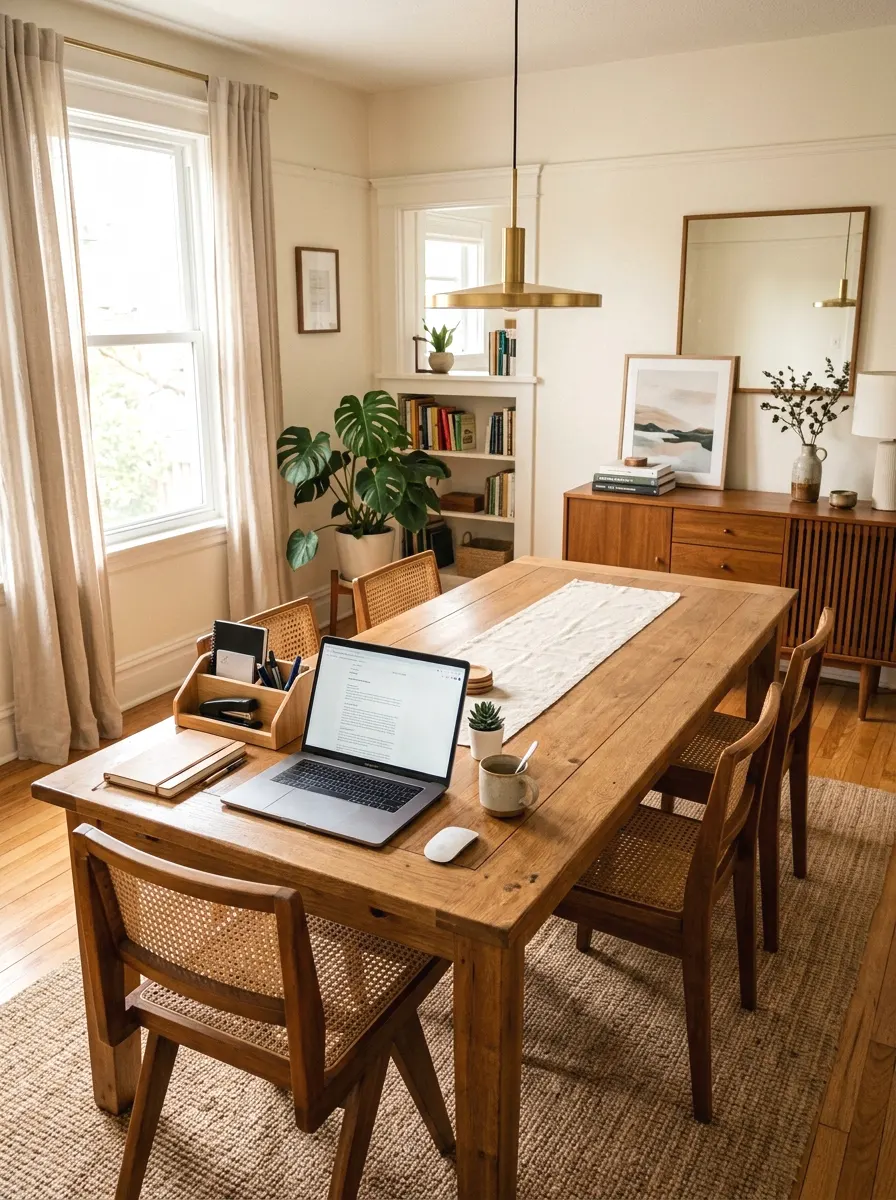
Designing a dining room to double as a workspace makes practical sense in homes without a dedicated office, and a longer table paired with a nearby credenza for supply storage keeps the two functions from visually colliding.
Choose a table long enough that a laptop and work supplies can occupy one end while leaving the rest fully usable for meals, and use a rolling cart or credenza drawer to clear work items away quickly when guests arrive.
Best suited for: smaller homes without a dedicated office and anyone who regularly works from a shared space.
19. Built-In Banquette With Hidden Storage
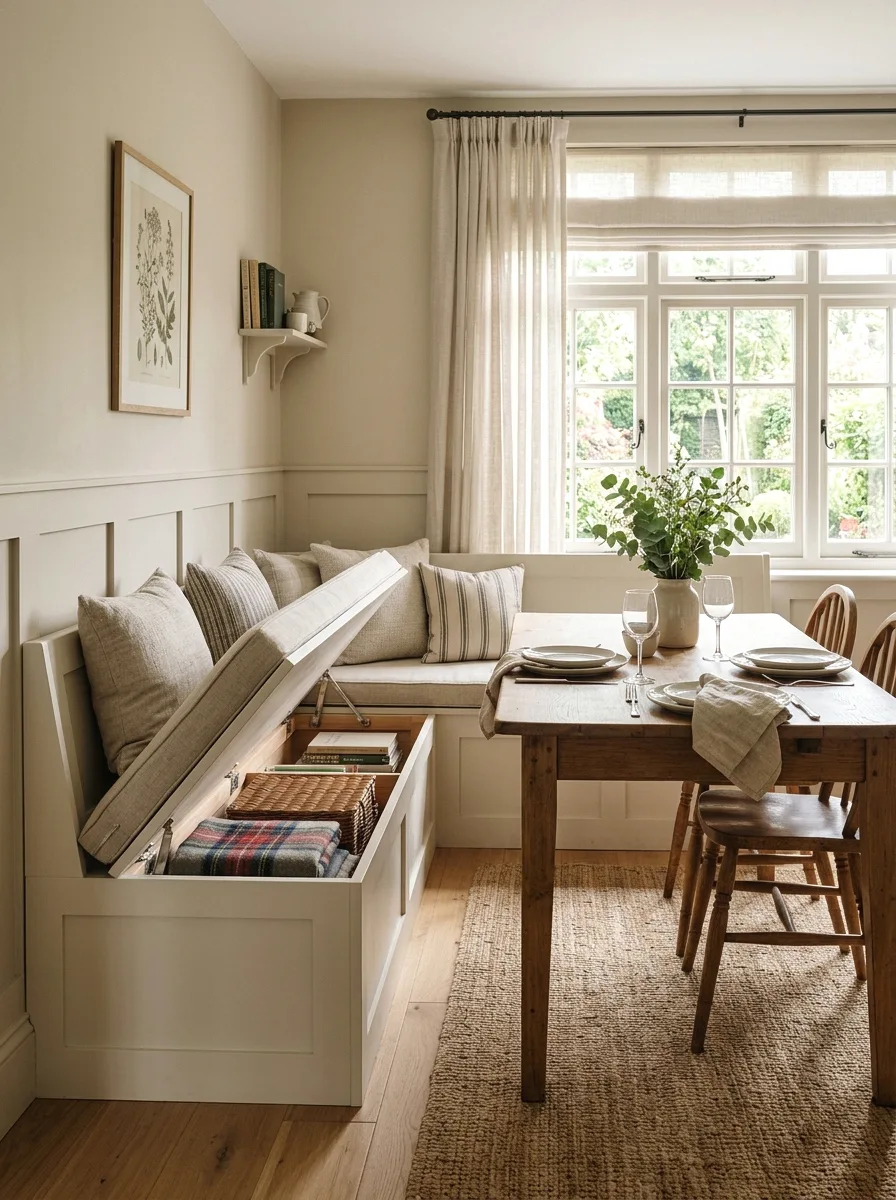
A built-in banquette with hidden storage underneath solves two space problems simultaneously, providing seating in a fixed footprint while also offering somewhere to store table linens, games, or seasonal items out of sight.
Choose a lift-up or drawer-style storage mechanism based on how frequently you will access the contents, since a lift-up lid works well for infrequently used items while drawers suit things you need more regular access to.
Best suited for: smaller dining rooms needing both seating and storage in a single footprint.
Planning and Buying Tips
A few practical decisions up front will help your dining room work as well functionally as it looks, regardless of which style direction you choose.
● Measure clearance around the table before buying — leave at least 36 inches between the table edge and the nearest wall or furniture piece so chairs can be pulled out comfortably, or 42 to 48 inches if the space also functions as a walkway.
● Standard sizing to shop for — most dining tables seat comfortably at 24 inches of table length per person, and standard table height runs 28 to 30 inches to work with most chair heights.
● Choose furniture scale based on your room’s actual size — an oversized table in a small room feels cramped regardless of style, while an undersized table in a large room can feel lost and disconnected from the rest of the space.
● Match durability to your household’s actual use — families with young children or pets benefit from performance fabrics and sealed wood finishes, while households hosting mostly formal, adult gatherings have more flexibility for delicate materials.
● Plan lighting height relative to your ceiling — hang the bottom of a pendant or chandelier 30 to 36 inches above the tabletop for a standard 8-foot ceiling, adjusting upward for taller ceilings.
● Consider how the room needs to flex over time — if you anticipate needing more seating in the future, an extendable table or a bench that can shift to accommodate more people offers more flexibility than a fixed-capacity set.
Cost Breakdown: Budget, Mid-Range, and Luxury Dining Rooms
A dining room can be furnished at nearly any budget, with the biggest cost driver being table and chair quality along with how many pieces need to be purchased new.
Budget ($300–$1,500)
A basic table and chair set, an area rug, and simple lighting fall in this range. Assembly is typically DIY, with delivery being the main added cost for larger furniture pieces.
Mid-Range ($1,500–$6,000)
A quality solid wood table, upholstered chairs, a statement light fixture, and a built-in bar nook sit in this tier. Delivery and basic assembly typically add $50–$200 depending on the retailer and piece size.
Luxury / Premium ($6,000–$20,000+)
A custom-built banquette, designer chairs, a substantial chandelier, and a full room renovation including flooring or millwork fall here. Custom banquette or built-in construction alone typically runs $1,500–$5,000 depending on materials and scope.
Dining Room Style Comparison
| Style | Price Range | Formality Level | Durability for Daily Use | Best For |
| Farmhouse | $800–$4,000 | Casual to semi-formal | High | Family homes wanting warmth and durability |
| Traditional formal | $2,000–$10,000+ | Formal | Moderate | Households hosting regular formal gatherings |
| Scandinavian minimalist | $600–$3,000 | Casual | Moderate to high | Small spaces wanting a calm, light aesthetic |
| Glam | $1,500–$8,000+ | Formal | Low to moderate — delicate materials | Dramatic, luxury-focused entertaining spaces |
| Coastal | $700–$3,500 | Casual | Moderate | Relaxed, airy dining in warm climates |
| Bohemian | $600–$3,500 | Casual | Moderate | Eclectic, personally curated dining spaces |
Maintenance Tips
● Wood tables — wipe up spills immediately, use coasters and placemats for hot dishes, and reseal or refinish the surface every few years depending on use.
● Upholstered chairs — spot clean spills right away with a fabric-appropriate cleaner, and vacuum fabric surfaces regularly to prevent crumbs and dust from settling into the weave.
● Woven and rattan furniture — dust regularly and avoid placing in direct, prolonged sunlight, which can cause natural fibers to dry out and become brittle over time.
● Rugs — vacuum regularly and rotate every six months if in direct sunlight, and consider professional cleaning periodically for rugs in a heavily used dining area.
● Light fixtures — dust pendant and chandelier fixtures every few weeks, and clean any glass or crystal elements with a soft cloth to maintain brightness.
● Common mistake to avoid — choosing a table finish or chair fabric based purely on appearance without considering your household’s actual daily use, which often leads to premature wear regardless of how well-designed the piece is.
Frequently Asked Questions
How do I choose the right dining room style for my home?
The right style typically comes from matching the room’s aesthetic to how your household actually eats and gathers, favoring durable, casual styles like farmhouse or Scandinavian for daily family use, and more formal styles like traditional or glam for spaces used primarily for entertaining.
What size table do I need for my dining room?
Allow roughly 24 inches of table length per person for comfortable seating, and leave at least 36 inches of clearance between the table edge and the nearest wall or furniture so chairs can be pulled out without obstruction.
Is an extendable table worth it for a small household?
For households that host occasionally but do not want a permanently oversized table for daily use, an extendable table offers meaningful flexibility, allowing the table to stay appropriately scaled most of the time while still accommodating larger gatherings when needed.
How can I make a small dining room feel more functional?
A built-in banquette, a round table, and multi-functional furniture like a bench that can shift to accommodate more people are among the most effective ways to maximize seating and function in a small dining space.
What is the best dining room layout for a family with young children?
A durable table finish and performance fabric chairs, paired with a casual style like farmhouse that embraces some visible wear, generally work best for families with young children, prioritizing daily durability over more delicate formal materials.
How to Choose the Right Dining Room Ideas for You
The right combination of ideas depends on three factors: how your household actually uses the space, your available room size and layout, and your budget. Households that eat together daily benefit most from durable, casual styles like farmhouse or Scandinavian, while those focused on occasional formal entertaining have more room to prioritize elegant, less durable materials like a traditional or glam aesthetic.
Space also matters significantly — small or awkward rooms benefit from space-efficient solutions like a round table, a banquette, or an extendable table, while larger open-concept spaces have more flexibility for bigger furniture and bolder style statements.
Finally, think honestly about whether the room needs to serve more than one purpose. If the dining room doubles as a workspace or the household’s main gathering hub, prioritize multi-functional furniture and durable materials over a single-purpose formal setup that only gets used a few times a year.
Start by being honest about how your household actually uses the dining room, then choose a style and furniture scale that matches that reality rather than an idealized version of formal entertaining — the dining rooms that get used and loved the most are the ones built around real daily habits, not just a single aesthetic.



- Be Respectful
- Stay Relevant
- Stay Positive
- True Feedback
- Encourage Discussion
- Avoid Spamming
- No Fake News
- Don't Copy-Paste
- No Personal Attacks
- Be Respectful
- Stay Relevant
- Stay Positive
- True Feedback
- Encourage Discussion
- Avoid Spamming
- No Fake News
- Don't Copy-Paste
- No Personal Attacks
