19 TV Wall Ideas That Make the Screen Look Intentional, Not Just Mounted
Published: 23 Sep 2026
A television is one of the most-used pieces of equipment in a living room, but it is also one of the hardest things to design around, since a large black rectangle rarely fits naturally into a room’s overall aesthetic. TV wall ideas solve that problem by treating the wall behind and around the screen as a genuine design opportunity, using texture, built-ins, or concealment techniques to make the TV feel like part of the room’s intentional design rather than an unavoidable necessity. Many of these ideas also solve the practical problem of visible cords and cluttered media equipment at the same time. This guide covers 19 TV wall ideas for every room and budget, from built-in shelving to concealment techniques and accent wall treatments. Along the way, you will find honest pros and cons, real price ranges, a materials comparison table, maintenance advice, and answers to the questions people search most before designing a TV wall. By the end, you will know exactly which ideas fit your room, your budget, and your TV setup.
Is a TV Wall Upgrade Right for You?
A TV wall project can range from a simple cable management fix to a full built-in renovation, so it is worth weighing the trade-offs honestly before deciding how far to take it.
Pros
● High visual impact for the whole room — since the TV wall is often the room’s main focal point, improvements here have an outsized effect on how the entire space feels.
● Solves real functional problems — cable management, media storage, and speaker placement can all be addressed alongside the visual upgrade.
● Works at almost any budget — a simple floating console and cable management kit can meaningfully improve the look for a low cost, while built-ins represent a bigger investment.
● Can hide or minimize the TV’s visual presence — concealment techniques and thoughtful design can make the screen feel like a much smaller part of the room when not in use.
Cons
● Built-in cabinetry and stone or tile walls carry real cost — custom built-ins and feature wall materials represent a significant investment compared to simpler console and mounting solutions.
● Wall-mounting requires proper planning — stud location, weight capacity, and cable routing all need to be addressed correctly to avoid a wobbly or unsafe installation.
● Concealment solutions add complexity — hidden TV cabinets and art-frame televisions cost more upfront and can complicate ventilation or access for maintenance.
● Some accent wall materials need careful heat consideration — certain wood and textured materials should maintain clearance from a TV’s heat output, particularly with older or larger units.
For most living rooms, investing in the TV wall is worthwhile, starting with proper mounting and cable management, since both address the most common visual complaints, before considering a larger accent wall or built-in investment.
1. Floating Console With Wall-Mounted TV
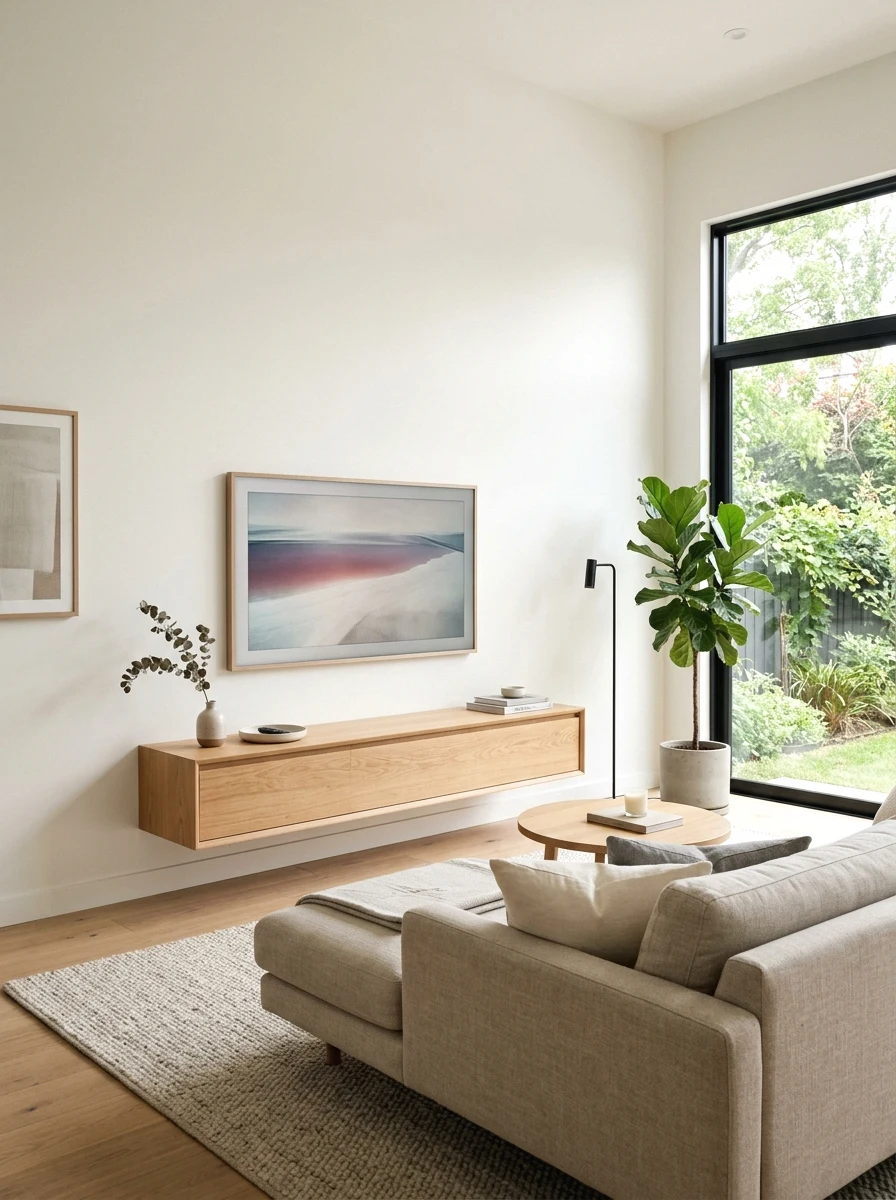
Mounting the TV to the wall and pairing it with a floating console rather than a traditional TV stand creates a cleaner, more modern look, since the floating console visually lightens the wall and keeps the floor space open beneath it.
Choose a console with enough depth for your media equipment, and route cables through the wall or a cable channel so nothing hangs visibly between the TV and the console below.
Best suited for modern, minimalist living rooms and as a relatively straightforward upgrade from a standard freestanding TV stand.
2. Wood Slat Accent Wall
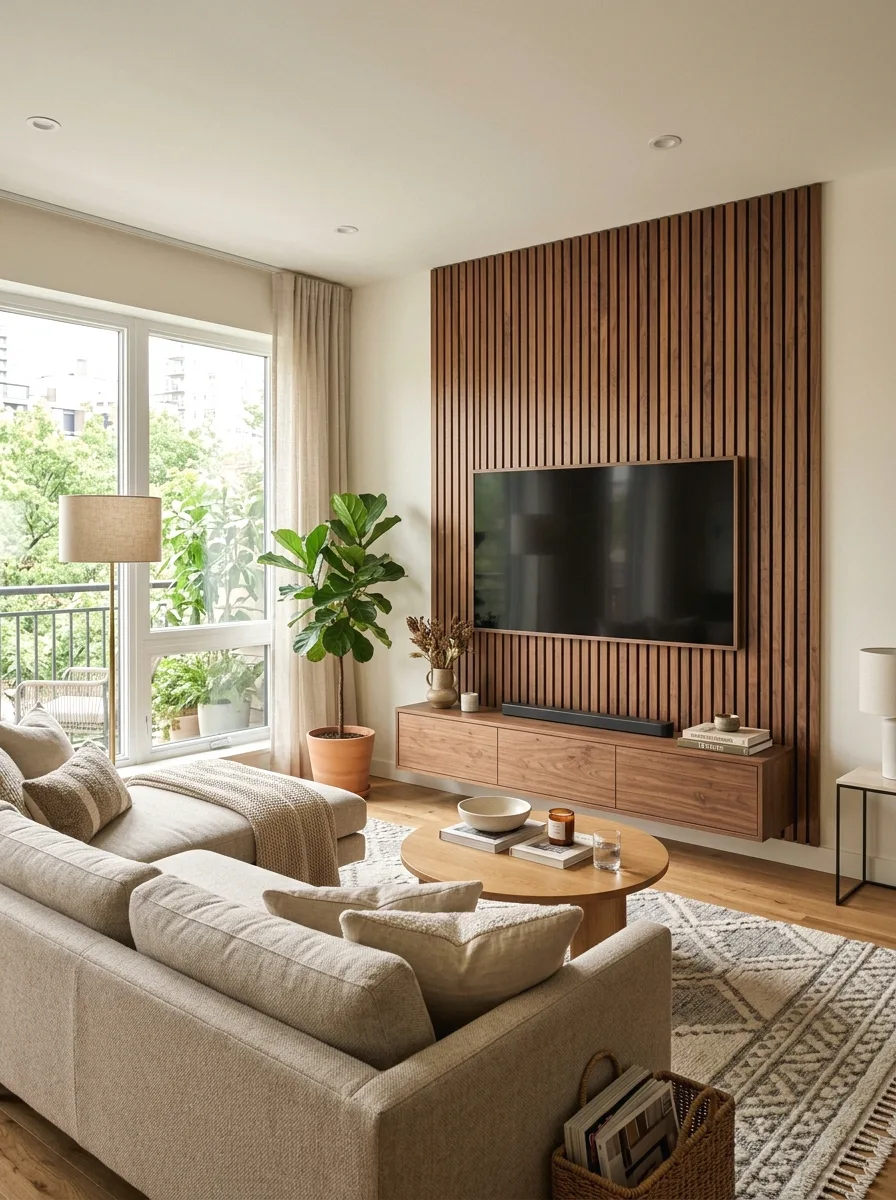
A vertical wood slat wall behind the TV brings genuine texture and warmth to the room’s main focal point, and the material helps the black screen blend more naturally into the wall when the TV is off.
Maintain manufacturer-recommended clearance between the wood slats and the TV itself for proper heat dissipation, and confirm the mounting bracket can be securely anchored through the slat material into the wall studs behind it.
Best suited for: modern and warm-contemporary living rooms wanting texture behind the screen.
3. Built-In Shelving Flanking the TV
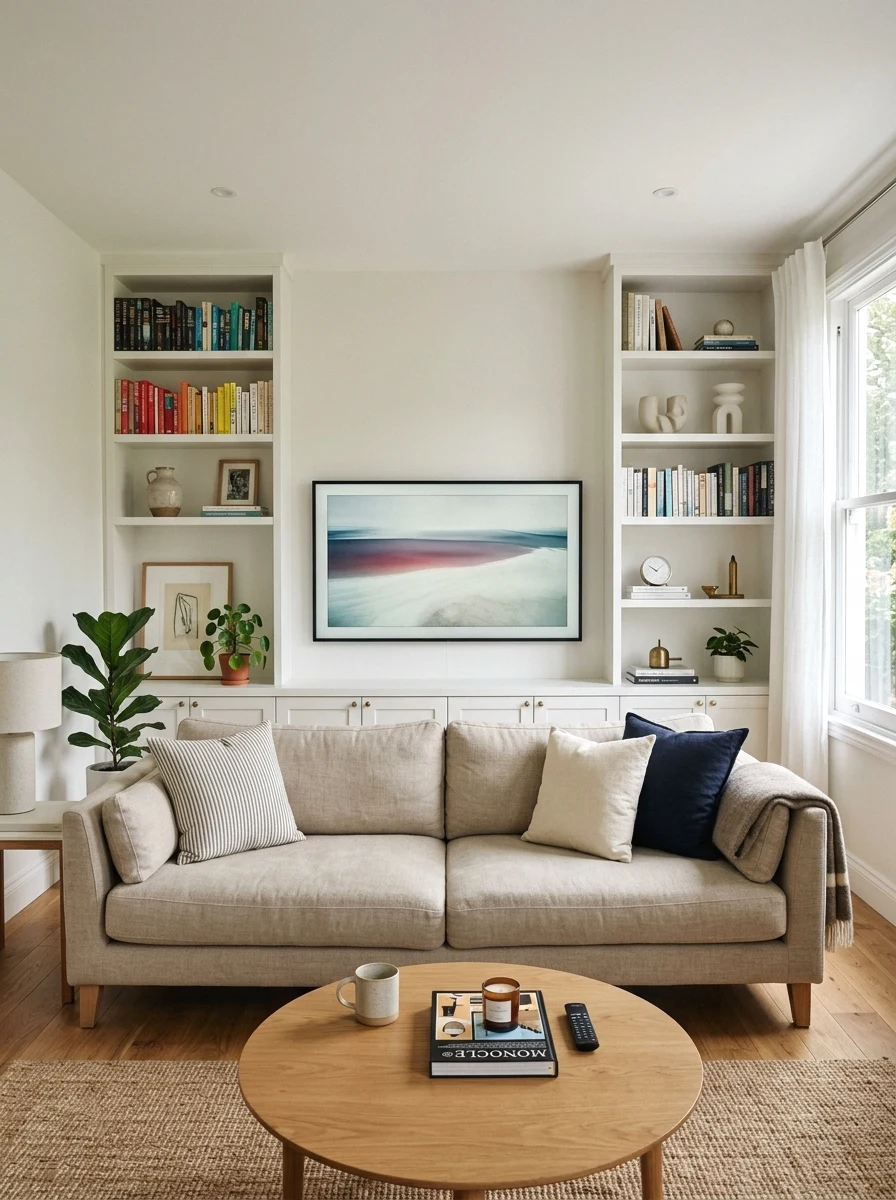
Built-in shelving flanking the TV gives the wall genuine architectural presence and storage function, and the symmetry of matching shelving on either side helps the TV feel like a planned part of the wall’s design rather than an isolated addition.
Style the flanking shelves with a mix of books, decorative objects, and some negative space, since fully packed shelves can visually compete with the TV rather than complementing it.
Best suited for: full living room renovations and homeowners wanting genuine storage alongside the TV display.
4. Gallery Wall Integrated Around the TV
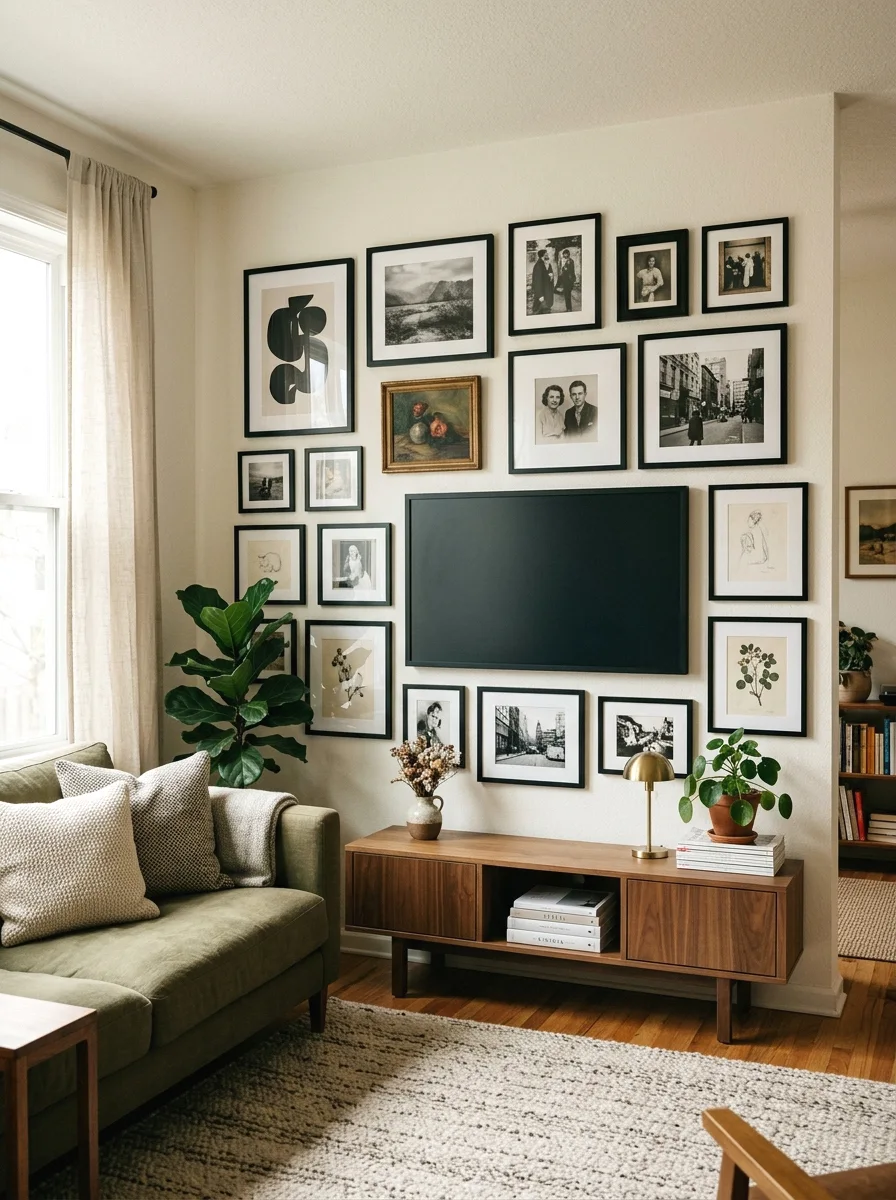
Integrating the TV directly into a gallery wall arrangement, treating the screen as one more rectangle among several framed pieces, helps the television visually disappear into the overall composition rather than standing out as an isolated black rectangle.
Choose frame sizes and a black or dark frame finish that echoes the TV’s own black bezel, and plan the arrangement on the floor first to ensure balanced spacing around the screen.
Best suited for: homeowners wanting to minimize the TV’s visual dominance without hiding it entirely.
5. Stone or Tile Feature Wall
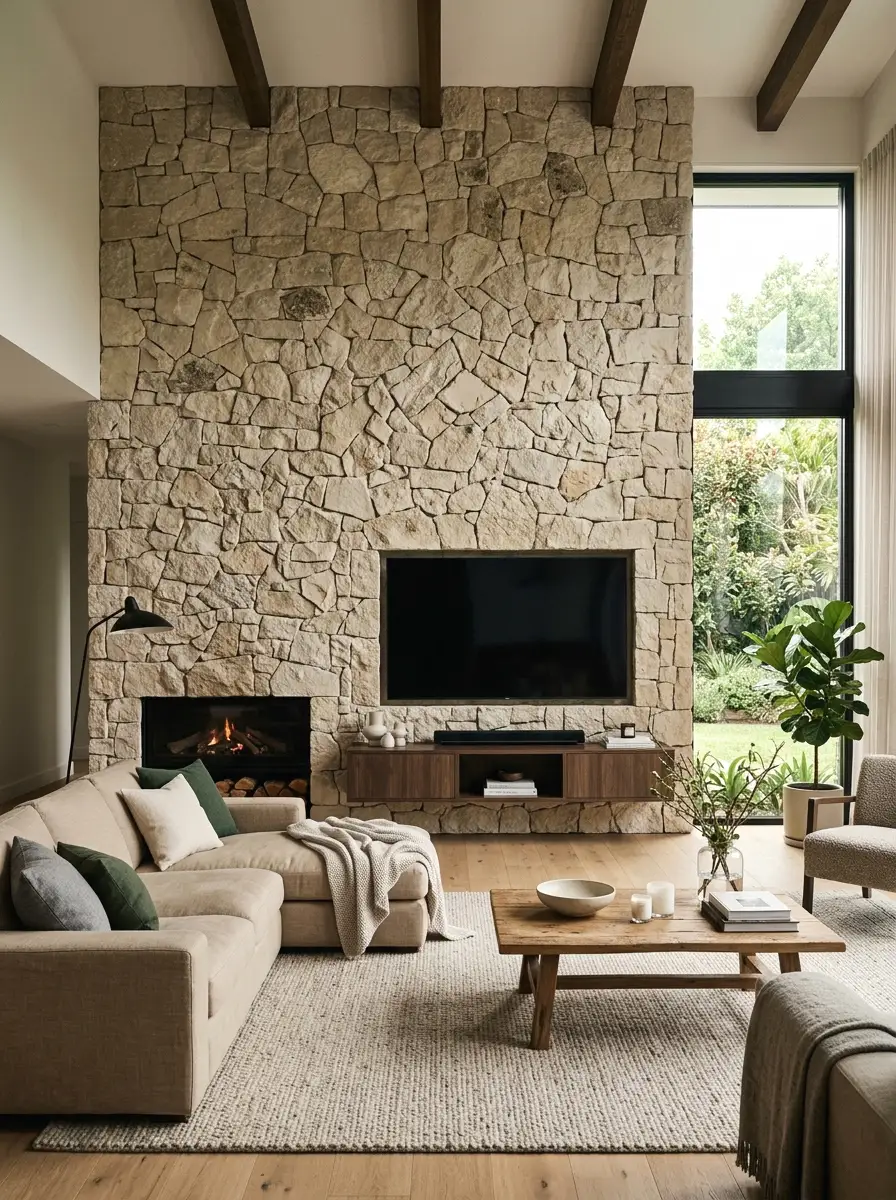
A stone or large-format tile feature wall gives the TV area genuine architectural weight and texture, often serving as the room’s most substantial design statement while the TV itself recedes into the busier surrounding texture.
Confirm the wall structure can support the material’s weight, particularly for natural stone, and plan the TV mount location carefully before installation, since repositioning afterward is significantly more disruptive with a tiled or stone surface.
Best suited for: full living room renovations and homeowners wanting a dramatic, substantial focal wall.
6. Fireplace and TV Combination Wall
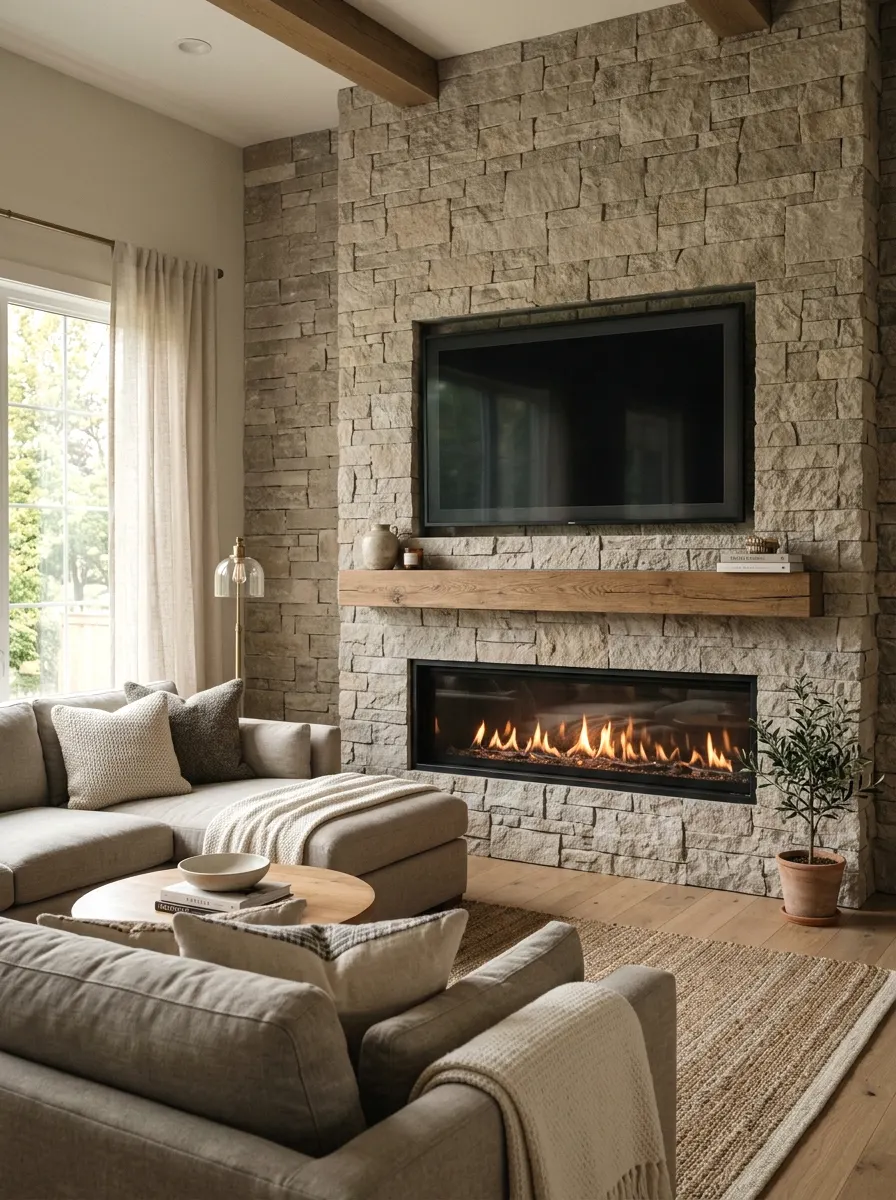
Combining the TV and fireplace on the same wall creates a single, unified focal point rather than splitting the room’s attention between two separate features, and it tends to make more efficient use of the room’s main sightline.
Confirm adequate clearance between the fireplace and TV per manufacturer guidelines, since heat exposure from below can affect electronics over time if the two features are not properly spaced.
Best suited for: living rooms with an existing or planned fireplace, and a genuinely efficient use of the primary focal wall.
7. Concealed TV Behind Art or a Cabinet
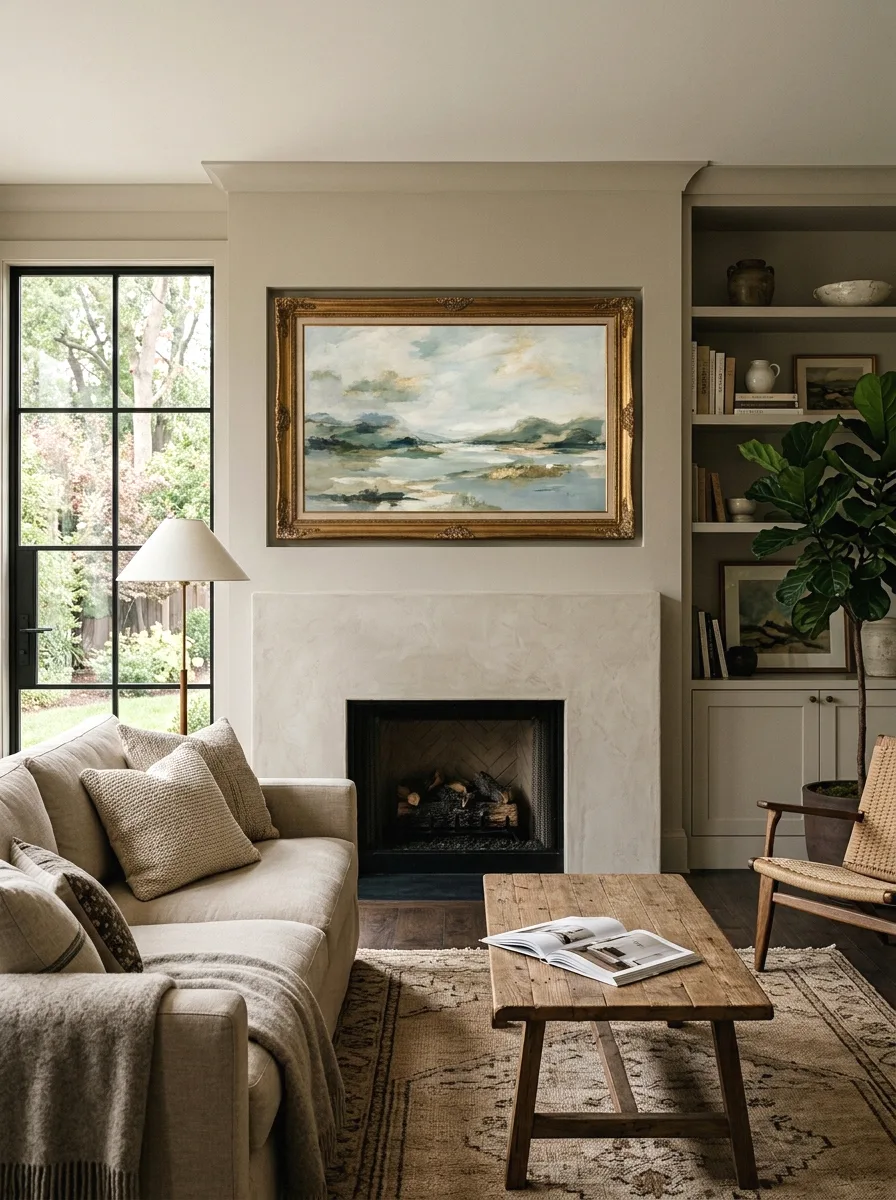
A frame-style TV or a cabinet with pocket doors lets the television disappear entirely from view when not in use, which is especially valuable in more formal living rooms where a visible screen feels at odds with the overall design intent.
Choose a frame-style TV specifically designed to display art convincingly when off, or confirm a concealment cabinet has adequate ventilation, since either solution requires more specific planning than a standard wall mount.
Best suited for: formal living rooms and homeowners wanting the TV to fully disappear when not in use.
8. Floating Shelves for Styling Around the TV
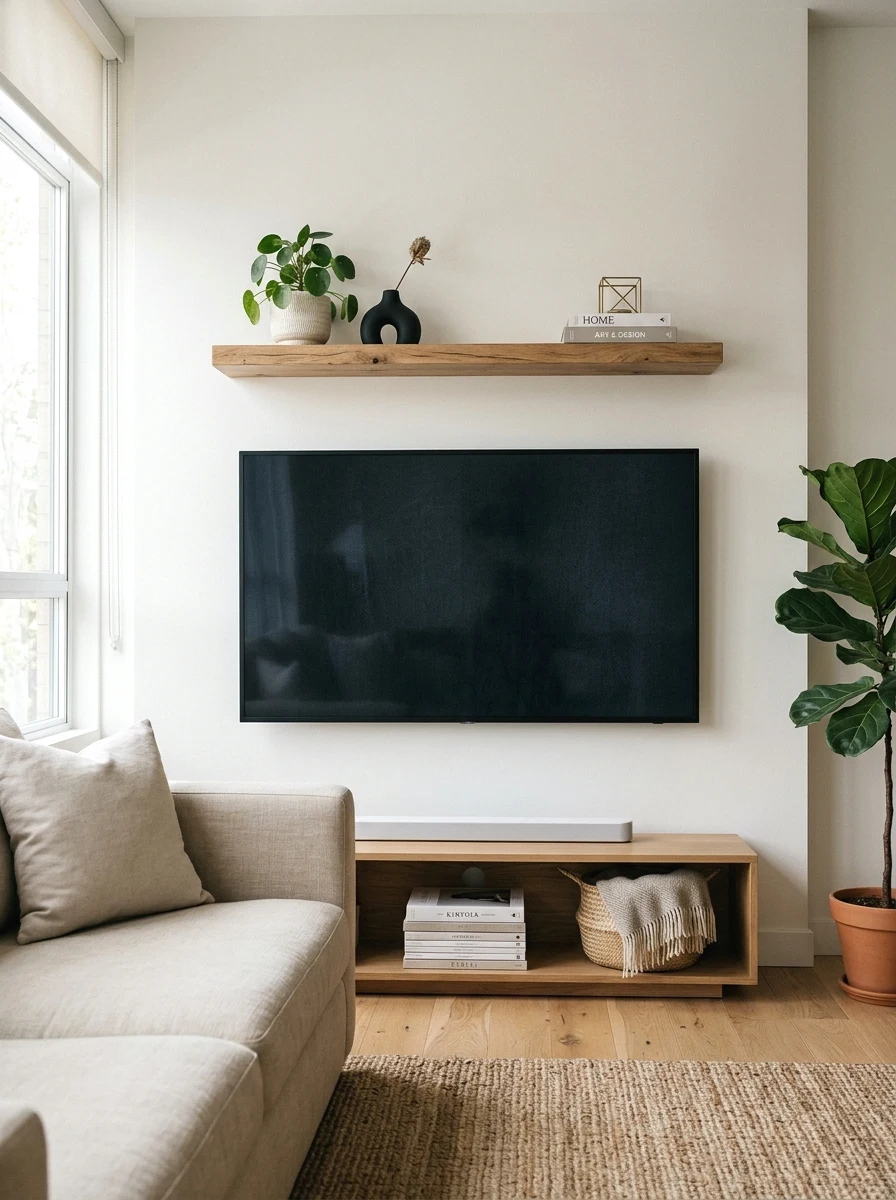
A single floating shelf positioned above or beside the TV gives the wall a styled decor element without the commitment of full built-in shelving, softening the hard edges of the screen with a few curated objects nearby.
Keep styling on the shelf minimal, limiting it to one or two items, since an overly styled shelf directly beside or above the TV can create visual competition rather than a complementary detail.
Best suited for: living rooms wanting a lighter-touch styling addition without a full shelving renovation.
9. Statement Wallpaper Behind the TV
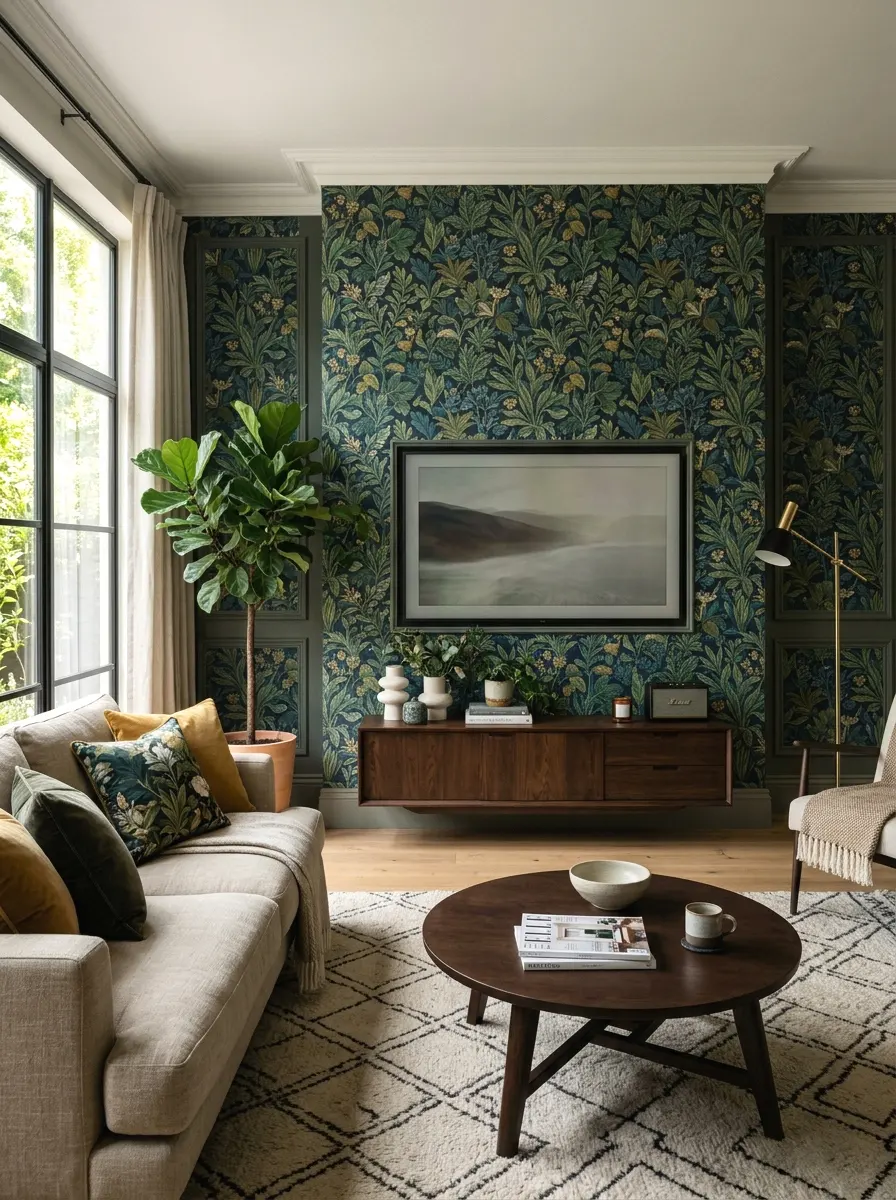
Bold wallpaper behind the TV gives the wall genuine personality and pattern, and a busier print in particular can actually help the black screen blend in more than it would against a plain, flat-painted wall.
Choose a wallpaper pattern with enough visual density to compete favorably with the TV’s black bezel, since a very subtle or light pattern may still leave the screen looking like the wall’s dominant, isolated feature.
Best suited for: living rooms wanting a bold design statement and homeowners comfortable with a stronger pattern commitment.
10. Color-Blocked Accent Wall
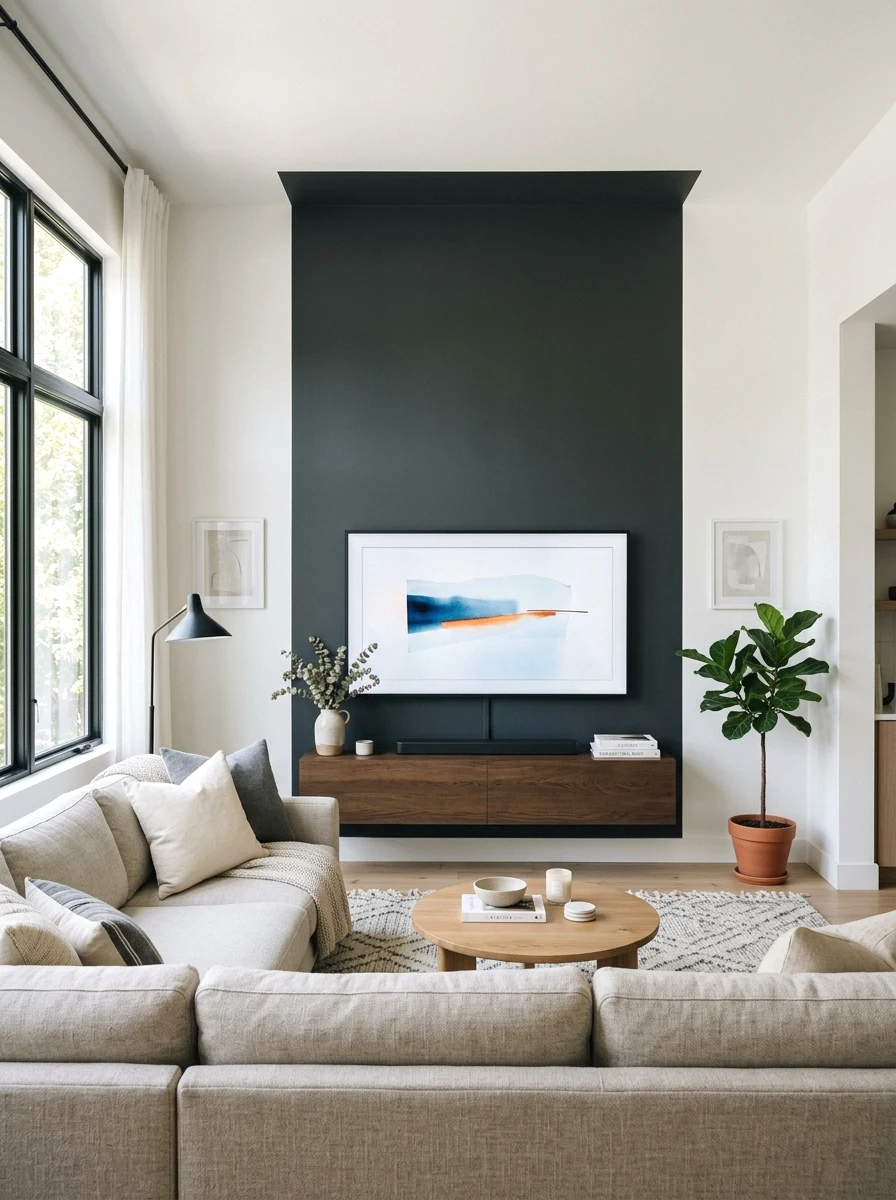
Painting a deep, saturated color block directly behind the TV, rather than the full wall, is one of the most effective tricks for visually minimizing the screen, since a dark color reduces the contrast between the TV’s black bezel and the surrounding wall.
Choose a color block sized slightly larger than the TV itself on all sides, and use painter’s tape for crisp, clean edges when creating the color-blocked shape.
Best suited for: budget-conscious updates and homeowners wanting to visually minimize the TV without a full accent wall material change.
11. Hidden Cable Management System
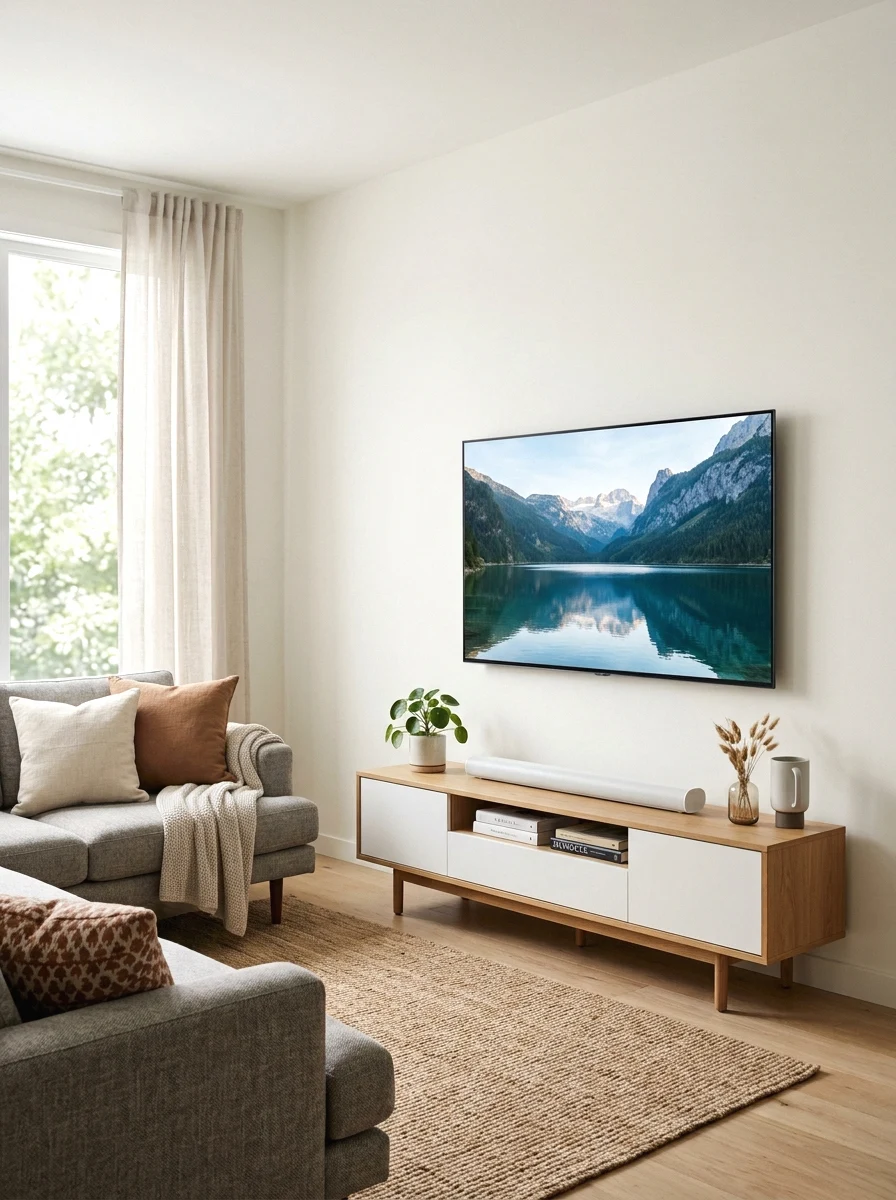
A proper cable management system, routing cords through the wall or a paintable cable channel, addresses one of the most common visual complaints about a mounted TV, since visible cords undermine even a well-designed accent wall.
Use an in-wall rated cable management kit specifically designed for low-voltage wiring if routing cables through the wall itself, and confirm local electrical code compliance for this type of installation.
Best suited for: any wall-mounted TV setup, and one of the highest-impact, most affordable upgrades on this list.
12. Ambient LED Backlighting
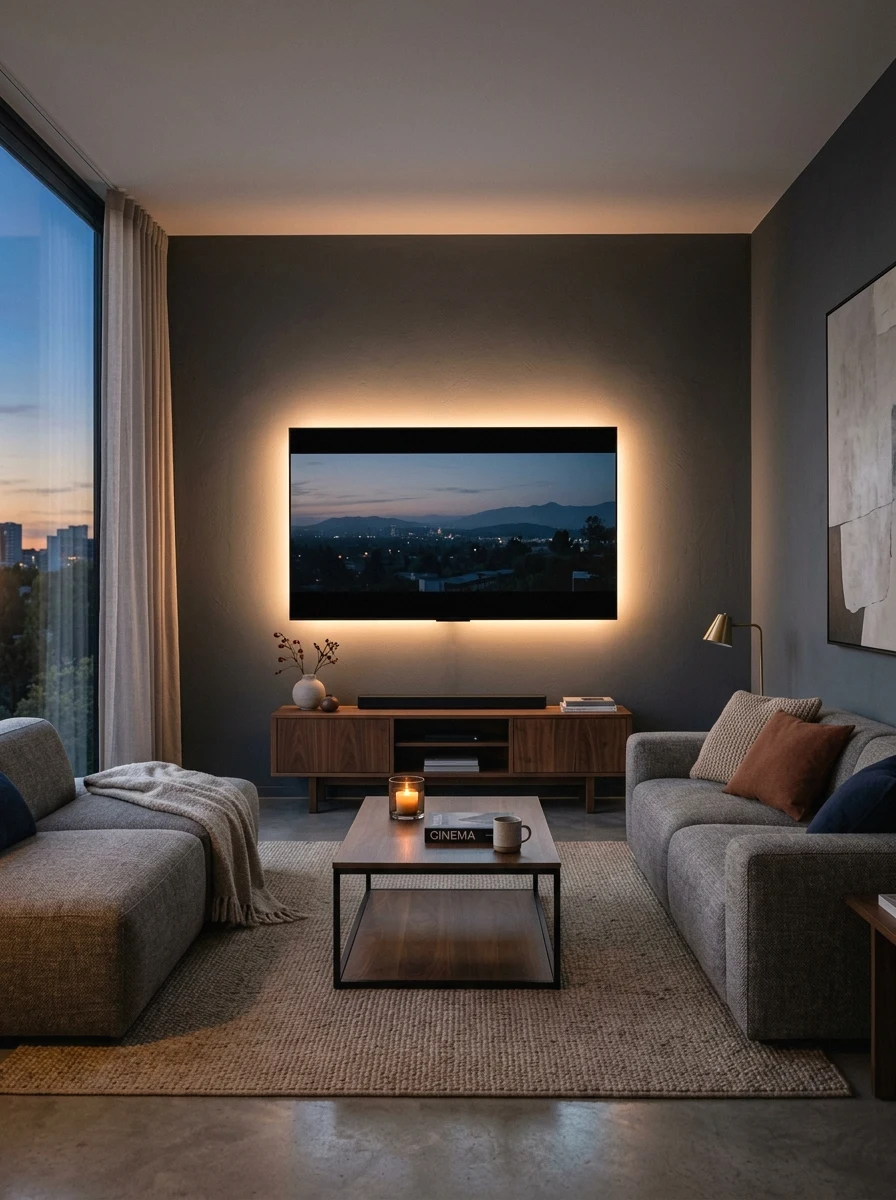
LED bias lighting mounted behind the TV creates a soft ambient glow that reduces eye strain during evening viewing while also giving the wall a subtle, modern lighting effect even when the TV is off.
Choose a bias lighting kit with adjustable color and brightness settings, and position the strip around the TV’s back edges rather than visible from the front for the cleanest look.
Best suited for: home theater and media rooms, and anyone doing significant evening screen time.
13. Media Wall With Built-In Speakers
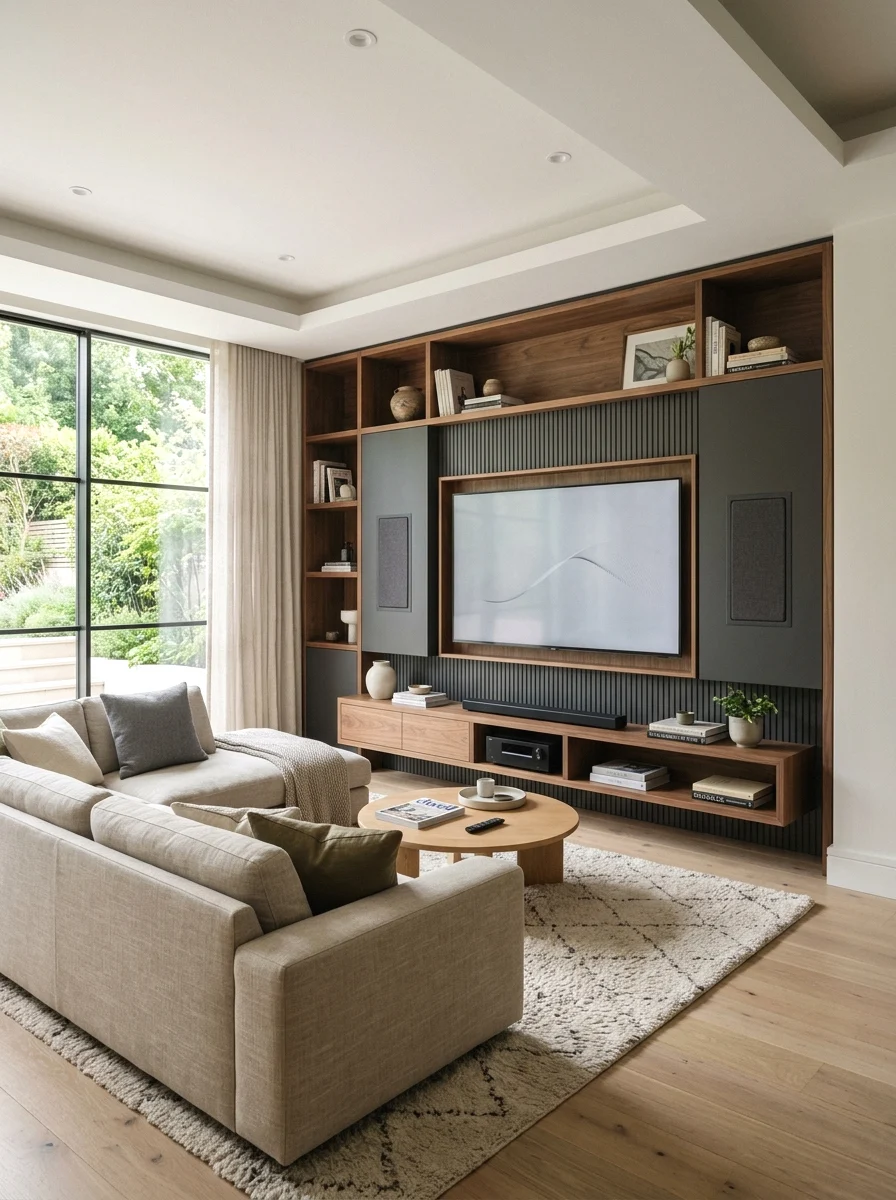
Integrating in-wall speakers directly into the TV wall design eliminates visible speaker boxes and cables, giving the room a cleaner, more custom home-theater quality while improving actual audio placement and performance.
Plan speaker wiring during any wall construction or renovation phase, since running speaker wire through finished walls afterward is significantly more disruptive and costly than during initial construction.
Best suited for: dedicated media rooms and homeowners investing in a genuine home theater setup.
14. Board and Batten Wall Behind the TV
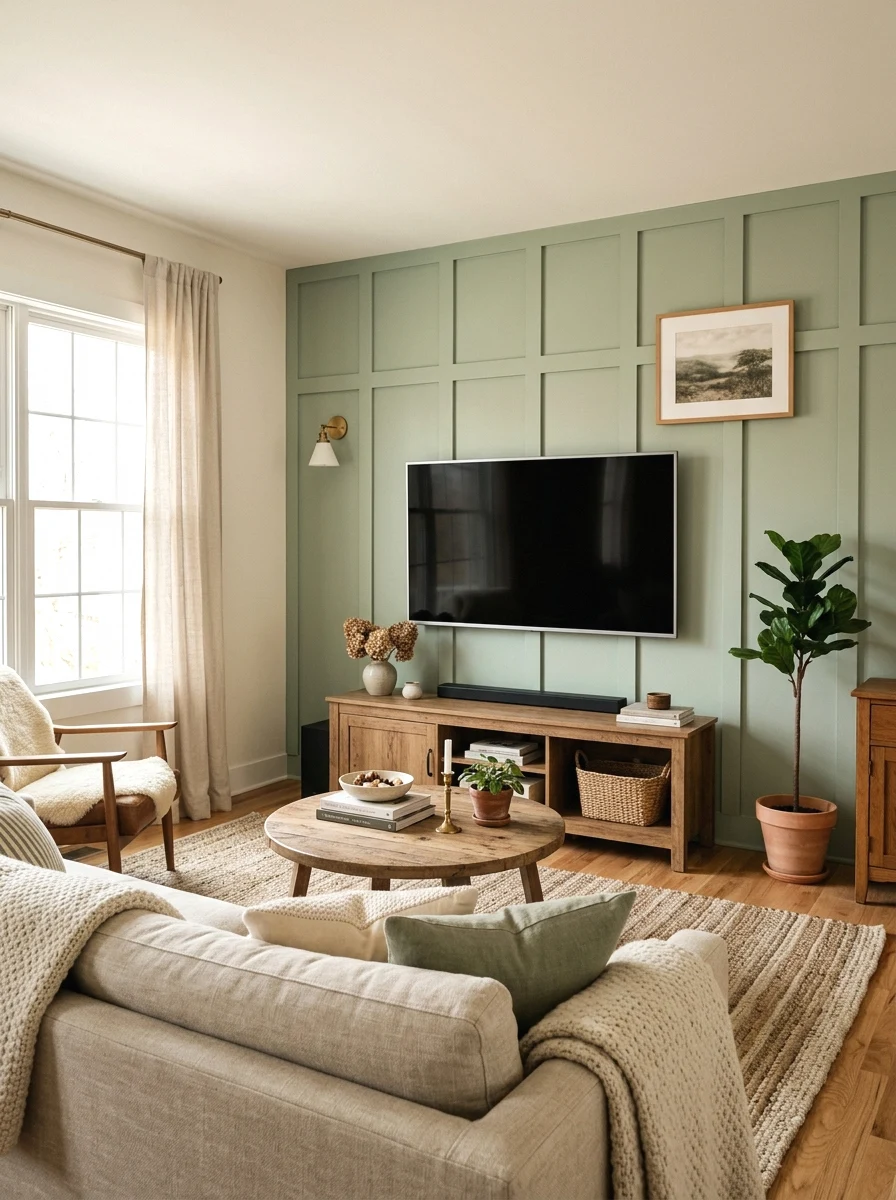
Board and batten molding behind the TV brings a classic, architectural texture to the wall, and the vertical battens create shadow lines that add genuine dimension without requiring a more expensive stone or tile material.
Plan the batten layout so the TV mount lands cleanly on a solid section rather than directly over a seam or gap, and confirm the mounting bracket anchors securely through the added molding depth into the wall studs.
Best suited for: traditional and transitional living rooms wanting texture behind the screen at a moderate cost.
15. Textured Plaster Wall
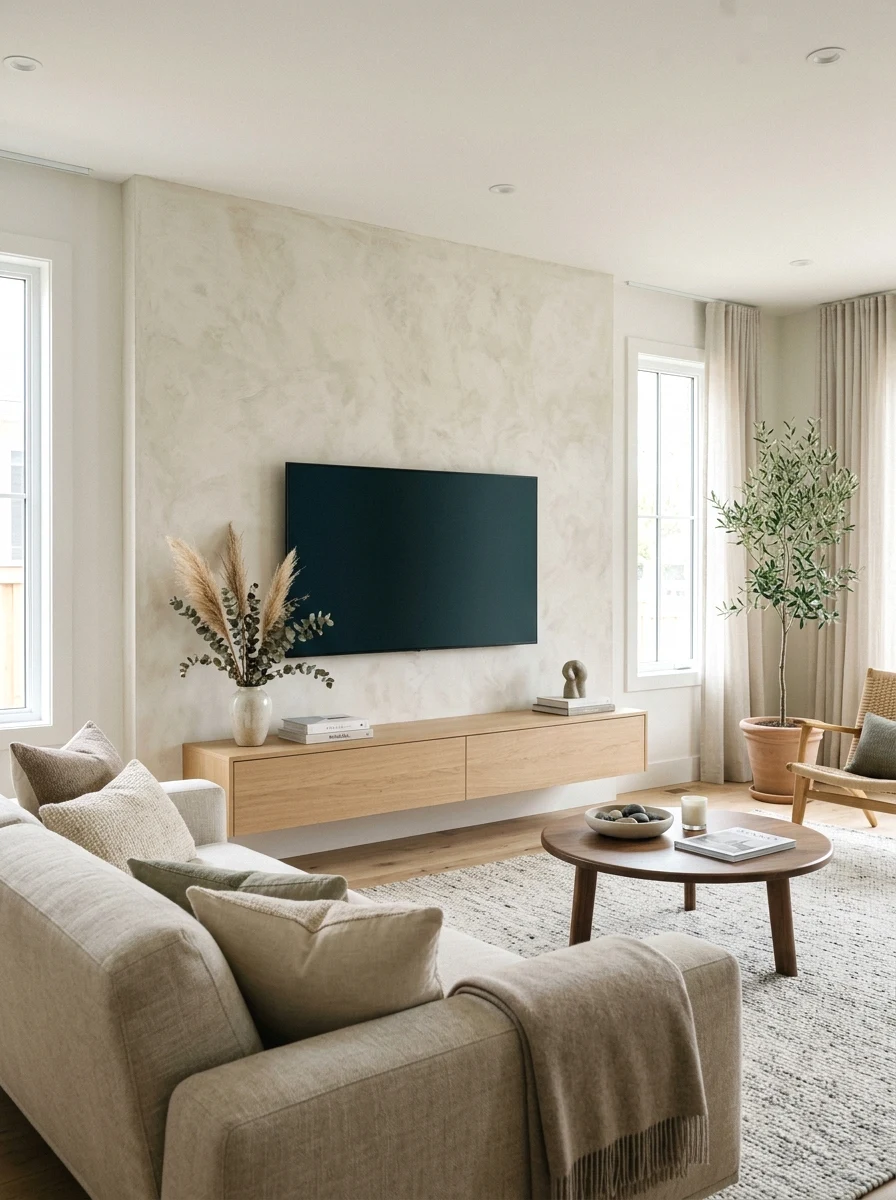
A textured plaster finish behind the TV brings subtle depth and a handcrafted quality to the wall without relying on pattern or bold color, letting shadow and material texture do the visual work instead.
Hire a professional for plaster application if you want a genuinely smooth, consistent texture, since achieving an even hand-applied finish takes real skill and practice to avoid an uneven, amateur appearance.
Best suited for: quiet, neutral living rooms wanting a subtle, high-end texture behind the screen.
16. Symmetrical Console and Lamp Styling
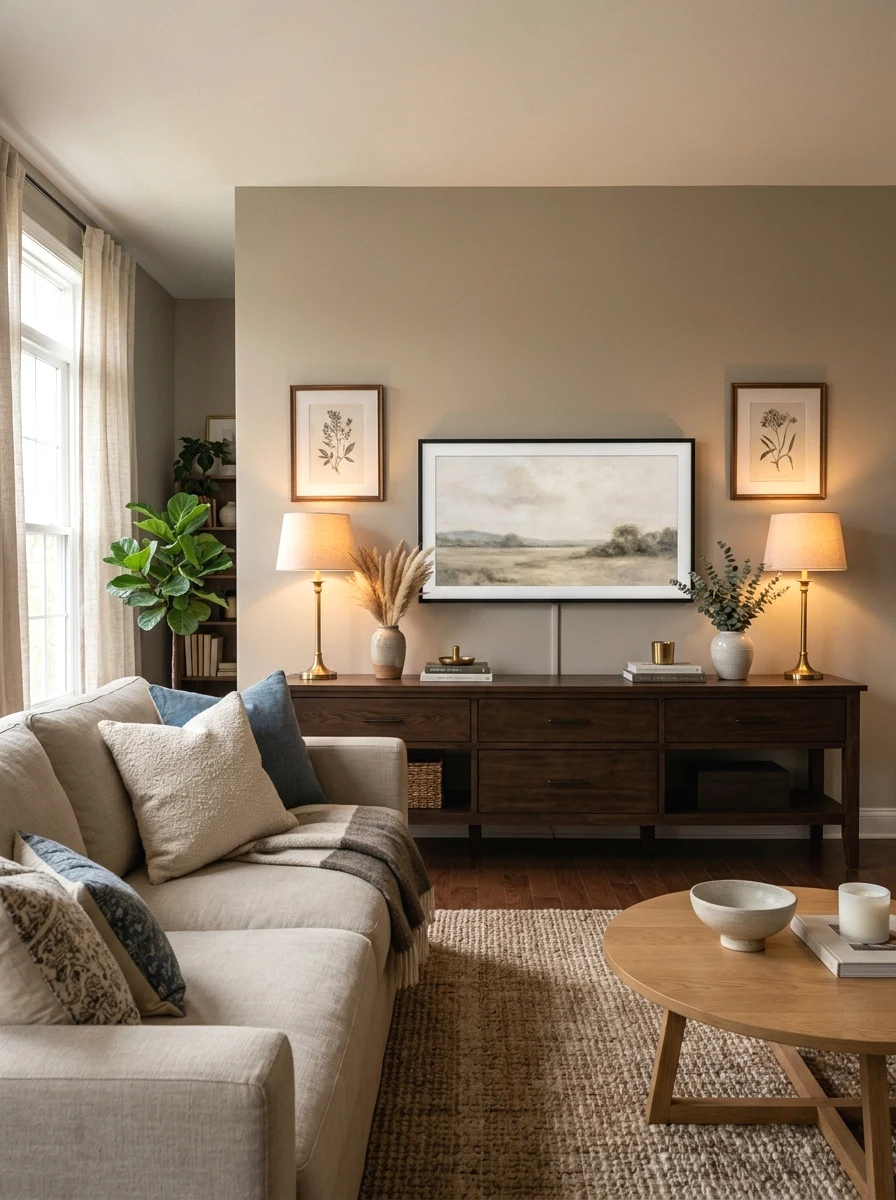
Styling the console beneath the TV with a symmetrical arrangement, matching lamps or decor pieces on either side of the screen, gives the wall a sense of intentional balance that draws the eye across the full width of the space rather than only to the screen.
Choose lamp or decor heights that do not obstruct the lower portion of the TV screen when viewed from typical seated positions in the room.
Best suited for: any TV wall with a console beneath it, and a simple styling technique with real visual payoff.
17. Corner TV Wall Solution
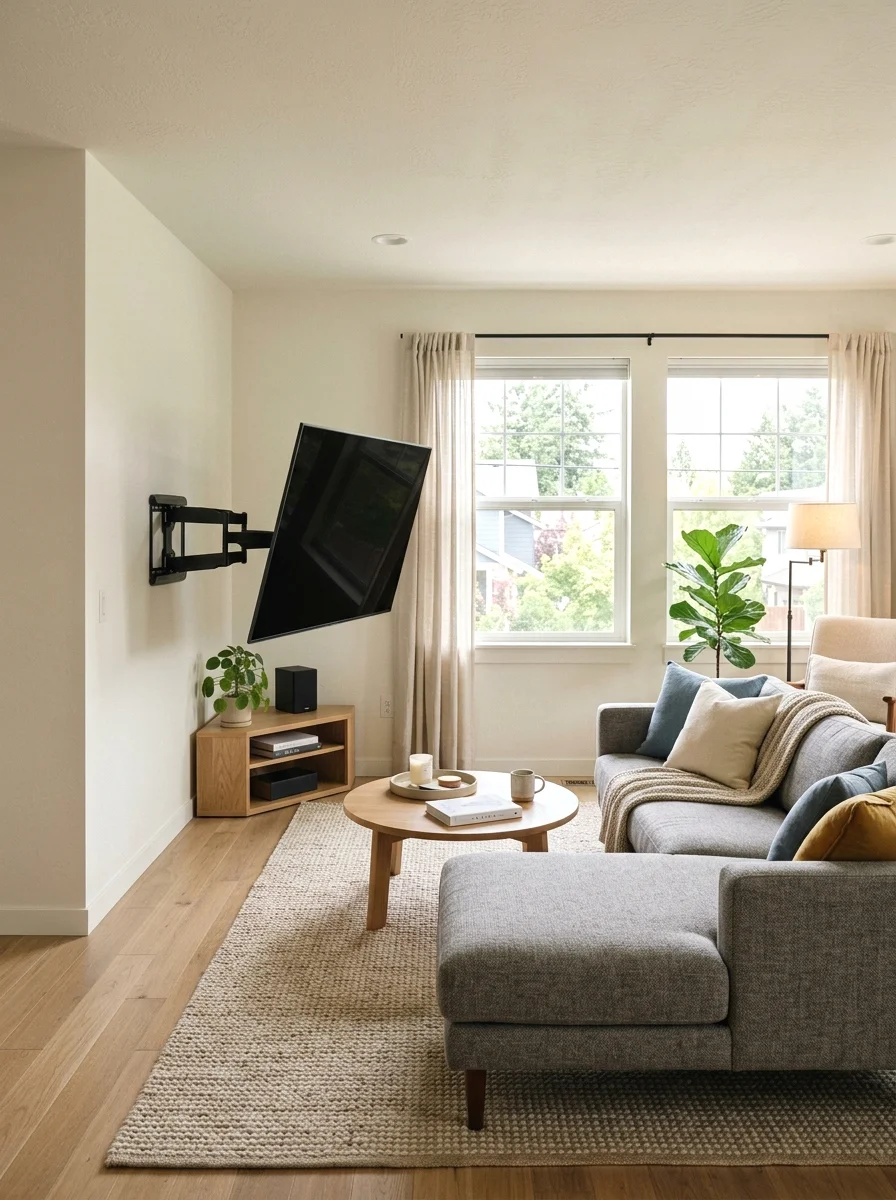
A corner-mounted TV setup makes use of an awkward or underutilized corner, freeing up a full wall elsewhere in the room for other furniture or design elements while still providing a good viewing angle from the main seating area.
Choose a corner-specific mounting bracket designed for angled installation, and confirm the viewing angle works well from your primary seating positions before finalizing the exact corner placement.
Best suited for: rooms with an awkward layout and no single ideal flat wall for the TV.
18. Bedroom TV Wall Above a Dresser
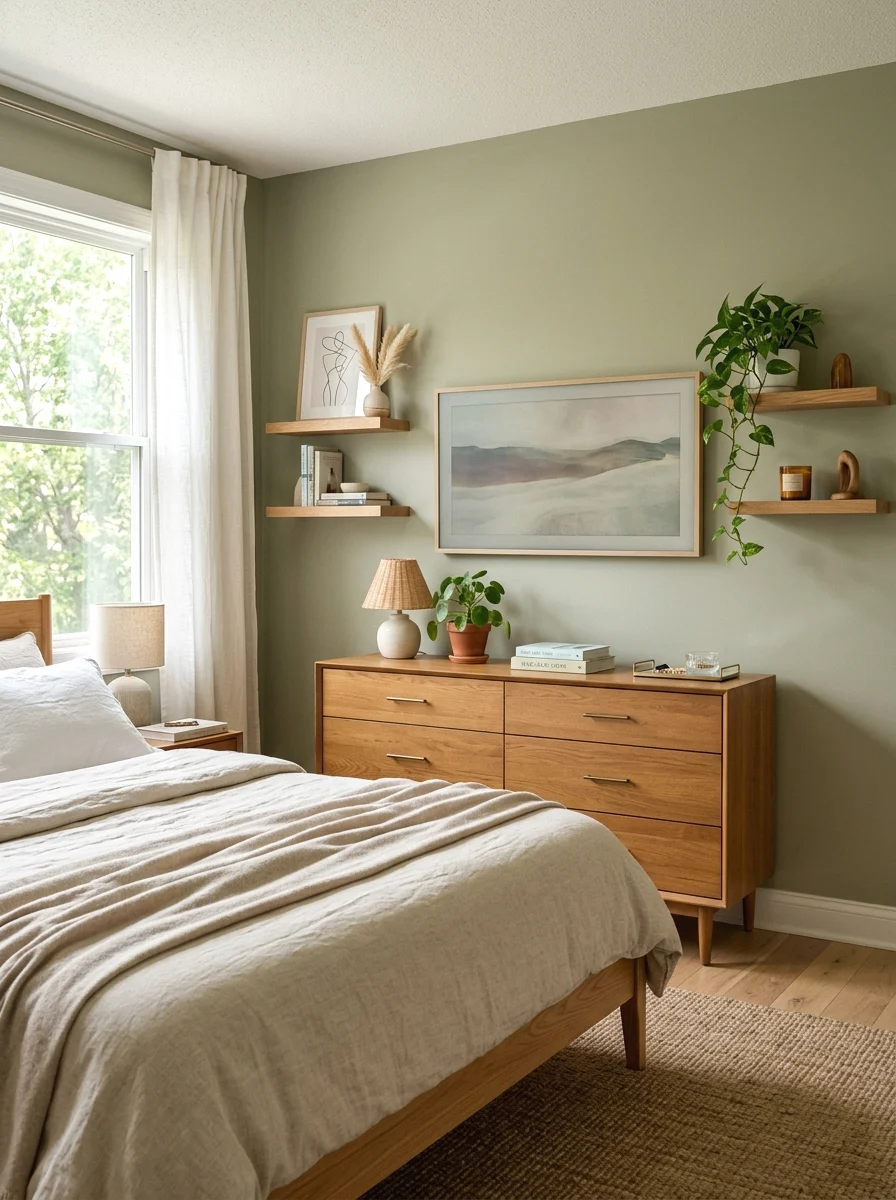
Mounting a bedroom TV above an existing dresser combines two functions in one wall, avoiding the need for a separate media console and keeping the room’s overall furniture footprint smaller.
Confirm the TV height allows for comfortable viewing from the bed without excessive neck strain, generally positioning the screen’s center at or slightly below typical seated eye level when lying in bed.
Best suited for: bedrooms wanting a TV without dedicating additional furniture space to a separate stand.
19. Outdoor or Patio TV Wall Setup
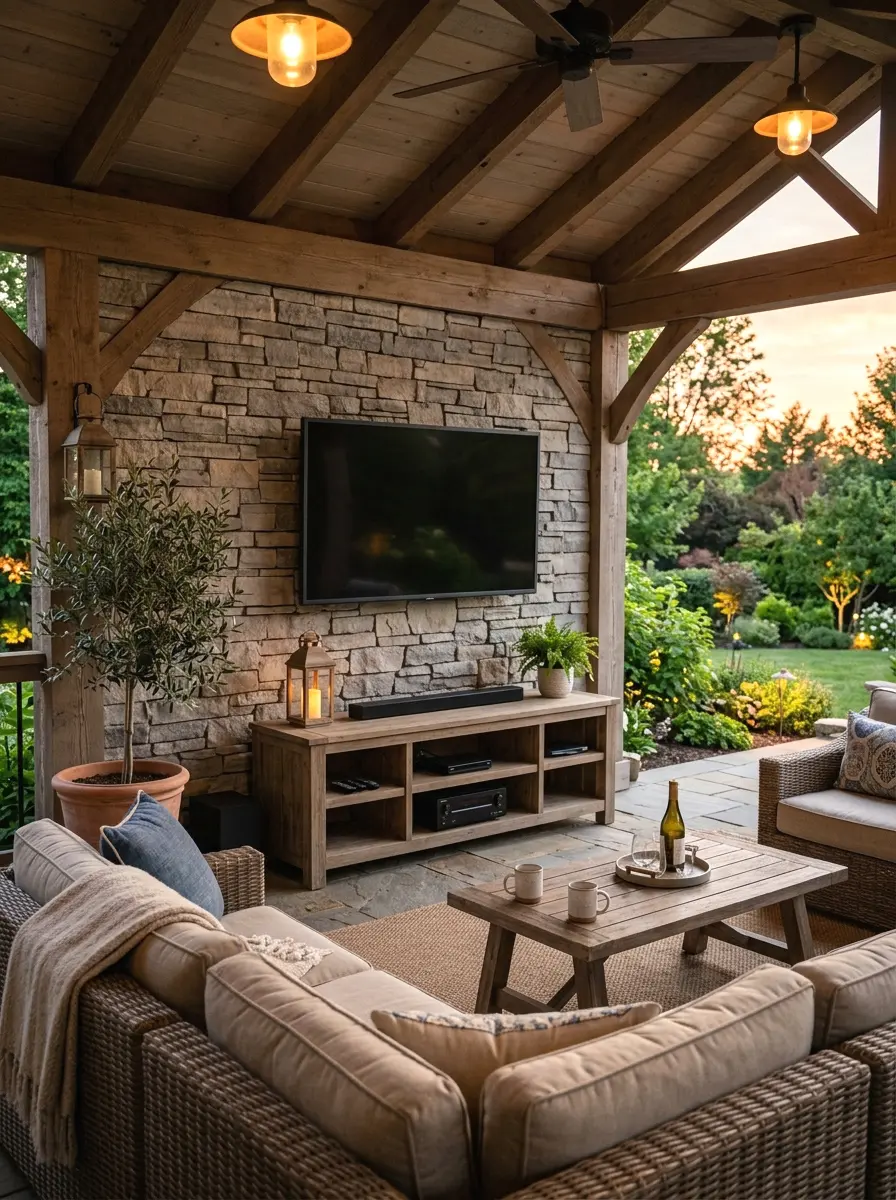
An outdoor TV wall setup extends entertainment space to a covered patio, and pairing a weatherproof-rated television with a durable accent wall material like stone or tile ensures the setup can handle regular outdoor exposure.
Choose a television specifically rated for outdoor use rather than a standard indoor model, since regular temperature and humidity exposure will damage electronics not designed for these conditions.
Best suited for: covered patios and outdoor living spaces used regularly for entertaining.
Planning and Buying Tips
A few practical decisions up front will help your TV wall setup look intentional and function safely and reliably.
● Locate wall studs before mounting — a TV mount should always anchor into studs or use appropriately rated wall anchors for the TV’s specific weight, since drywall alone cannot safely support most televisions.
● Standard sizing to shop for — mount the TV so its center sits at roughly seated eye level, generally 42 to 48 inches from the floor depending on your seating height and typical viewing distance.
● Plan cable routing before finalizing wall treatments — running cables through the wall or behind a permanent accent material is far easier to plan during installation than to retrofit afterward.
● Maintain manufacturer-recommended clearance around the TV — certain accent wall materials and enclosed cabinets need adequate airflow around the television to prevent overheating.
● Consider viewing angle from all seating positions — before finalizing wall placement, confirm the TV height and position work well from every seat in the room, not just the primary sofa.
● Budget for a professional installer for complex mounts — corner mounts, full-motion brackets, and any installation involving in-wall cable routing are often worth hiring out to ensure a safe, clean result.
Cost Breakdown: Budget, Mid-Range, and Luxury TV Walls
A TV wall project can range from a simple mounting kit to a full custom built-in with integrated audio and stone finishes.
Budget ($50–$500)
A basic wall mount, an in-wall cable management kit, and a floating console fall in this range. Installation is typically DIY-friendly, though mounting a heavier TV may benefit from a second set of hands.
Mid-Range ($500–$3,000)
Wood slat or board and batten accent walls, built-in shelving, and ambient LED bias lighting sit in this tier. Professional installation for accent walls typically adds $500–$1,500 depending on the material and wall size.
Luxury / Premium ($3,000–$12,000+)
A full stone or tile feature wall, a fireplace and TV combination build, custom built-in cabinetry with in-wall speakers, and a frame-style concealment TV fall here. Professional installation, including electrical and structural work, typically runs $2,500 to $10,000 or more depending on the scope of materials and integrated technology.
TV Wall Material and Approach Comparison
| Approach | Price Range | Installation Effort | Visual Impact | Best For |
| Basic wall mount and console | $100–$500 | Low to moderate | Moderate | A clean, simple upgrade from a standard TV stand |
| Wood slat accent wall | $300–$2,000 | Moderate | High | Warmth and texture behind the screen |
| Built-in shelving | $1,000–$5,000+ | High — professional install typical | Very high | Storage and architectural presence |
| Stone/tile feature wall | $1,500–$8,000+ | High — professional install required | Very high | A dramatic, substantial focal wall |
| Color-blocked accent | $30–$150 | Low | Moderate | Budget-friendly visual minimizing of the TV |
| Frame-style concealment TV | $1,500–$4,000+ | Moderate to high | Very high when off | Fully disguising the TV when not in use |
Maintenance Tips
● Wall mounts — check mounting hardware periodically for looseness, particularly on full-motion or articulating mounts that see regular movement.
● Wood and textured accent walls — dust regularly, and touch up any chipped paint or finish promptly to prevent moisture or wear from affecting the material underneath.
● Cable management systems — inspect in-wall cable routing periodically, and avoid overloading a single cable channel beyond its rated capacity.
● LED bias lighting — check connections and clean dust from light strips periodically, since dust buildup can reduce brightness and effectiveness over time.
● Stone and tile walls — clean with a material-appropriate cleaner, and reseal natural stone periodically to prevent staining, particularly in rooms with more humidity or dust exposure.
● Common mistake to avoid — mounting a TV without confirming wall stud locations or proper weight-rated hardware, which is one of the most common and preventable safety issues with wall-mounted televisions.
Frequently Asked Questions
How high should a TV be mounted on the wall?
The TV’s center should generally sit at roughly seated eye level, commonly 42 to 48 inches from the floor, though this can vary depending on your specific seating height and the typical viewing distance in the room.
How do I hide TV cables on a mounted television?
An in-wall rated cable management kit routes cords through the wall itself for the cleanest look, while a paintable cable channel offers a simpler, non-invasive alternative that still conceals cords running down the wall’s surface.
What is the best way to make a TV blend into the wall?
A dark color-blocked wall behind the TV, a frame-style television, or integrating the screen into a gallery wall arrangement are all effective ways to visually minimize the TV’s presence when it is turned off.
Can I mount a TV over a fireplace?
Yes, though it is important to maintain manufacturer-recommended clearance from the heat source and confirm the specific fireplace and TV combination meets safety guidelines, since heat exposure over time can affect electronic components.
Do I need a professional to install a TV wall mount?
Simple, lightweight TV mounts on a standard flat wall are often manageable as a DIY project, but heavier televisions, corner mounts, and any installation involving in-wall cable routing are generally worth hiring a professional installer for both safety and a cleaner finished result.
How to Choose the Right TV Wall Idea for You
The right approach depends on three factors: your budget, whether you want the TV to stand out or disappear into the design, and how much of a renovation you are willing to take on. A simple mount with proper cable management addresses the most common complaints for a low cost, while accent walls and built-ins represent bigger investments worth making for a genuine design transformation.
Budget should guide where to start — cable management and a basic console upgrade offer significant visual improvement for a relatively low cost, while accent wall materials, built-in shelving, and concealment solutions are worth pursuing once the fundamentals are addressed.
Finally, think about how much you want the TV to visually recede versus stand out as a design feature in its own right. A dark color block or textured wall helps the screen disappear, while a frame-style TV or gallery wall integration treats the screen itself as part of the room’s intentional design.
Start with proper mounting and cable management, since both address the most common visual complaints about a TV wall, then build toward an accent wall or built-in investment once the fundamentals are solid — a TV wall that looks intentional comes from solving the practical problems first, with the design layer building on top of that foundation.


- Be Respectful
- Stay Relevant
- Stay Positive
- True Feedback
- Encourage Discussion
- Avoid Spamming
- No Fake News
- Don't Copy-Paste
- No Personal Attacks
- Be Respectful
- Stay Relevant
- Stay Positive
- True Feedback
- Encourage Discussion
- Avoid Spamming
- No Fake News
- Don't Copy-Paste
- No Personal Attacks
