18 Modern Boys Room Decor Ideas That Grow Well With Them
Published: 23 Sep 2026
A kids’ bedroom often gets decorated around whatever theme is popular in a given year, which means it can feel dated within a couple of seasons as interests shift. Modern boys’ room decor ideas solve that problem by building the room around a flexible neutral foundation, like clean furniture lines and a considered color palette, then layering in specific interests, like sports or space, through easily swappable accents rather than permanent, theme-locked choices. This approach also tends to cost less over time, since the big-ticket items like furniture and paint do not need to be replaced every time a favorite interest changes. This guide covers 18 modern boys’ room decor ideas for every age and budget, from furniture and storage to lighting and themed accents. Along the way,y you will find honest pros and cons, real price ranges, a materials and furniture comparison table, maintenance advice, and answers to the questions people search most before decorating a kids’ bedroom. By the end, you will know exactly which ideas fit your child’s age, your budget, and how long you want the room to last before a refresh.
Is a Modern Boys Room Update Right for You?
A kids’ bedroom update can range from a few accent pieces to a full furniture overhaul, so it is worth weighing the trade-offs honestly based on your child’s age and how long you expect the room to last.
Pros
● Longer-lasting design with the right approach — a neutral base with swappable accents means the big furniture investments do not need replacing every time interests change.
● Encourages independence and organization — dedicated storage and a functional layout genuinely help kids keep their own space tidy with less parental involvement.
● Scalable to almost any budget — a room can be meaningfully refreshed with new bedding and a few accent pieces, or fully furnished with new furniture and lighting.
● Supports different needs as kids grow — furniture like adjustable desks and storage systems can adapt from early elementary years through the teen years with only minor updates.
Cons
● Kids’ interests change quickly — a heavily themed room built around a specific interest, like a particular show or sport, can feel outdated within a year or two as preferences shift.
● Durability needs differ from adult rooms — furniture, rugs, and paint finishes need to withstand more active daily use than in most adult bedrooms.
● Safety considerations apply to certain furniture choices — bunk beds, loft beds, and wall-mounted shelving all have specific safety guidelines that need to be followed carefully.
● Budget can be tricky to plan around growth — furniture and decor bought for a younger child may need replacing again in just a few years as the child’s needs change significantly.
For most families, investing in a flexible, neutral foundation for a boy’s room pays off over time, layering in specific interests and themes through affordable, easily changed accents rather than large furniture or permanent decor choices tied to a single passing trend.
1. Neutral Base With a Bold Accent Color
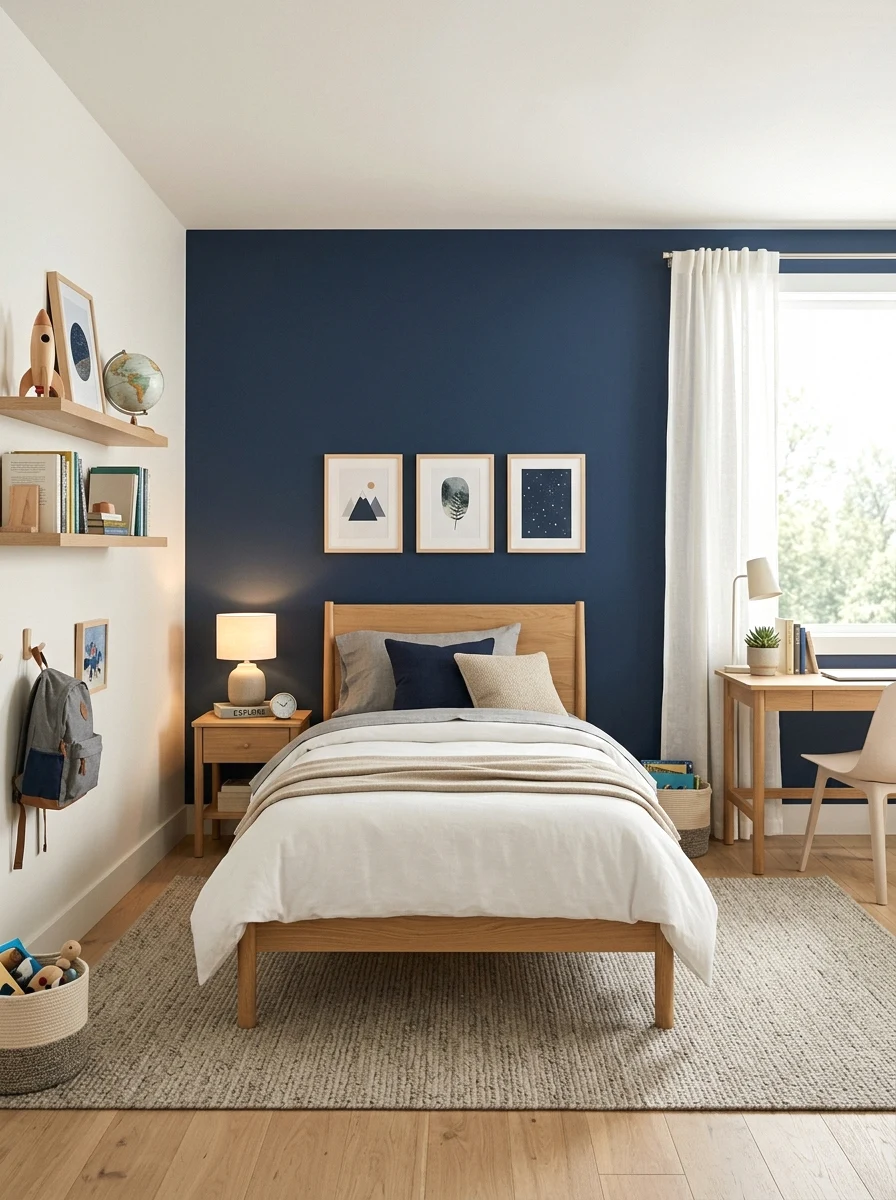
Building the room around a neutral wall and furniture palette, then adding one bold accent color like navy, forest green, or mustard, gives the space a modern foundation that can adapt easily as your child’s interests change over the years.
Choose the accent color for a single wall or a few key textiles rather than throughout the entire room, so updating the room’s look later only requires changing a smaller portion rather than a full repaint.
Best suited for: any age and a strong starting point for a room meant to last through multiple stages of childhood.
2. Geometric Wallpaper Accent Wall
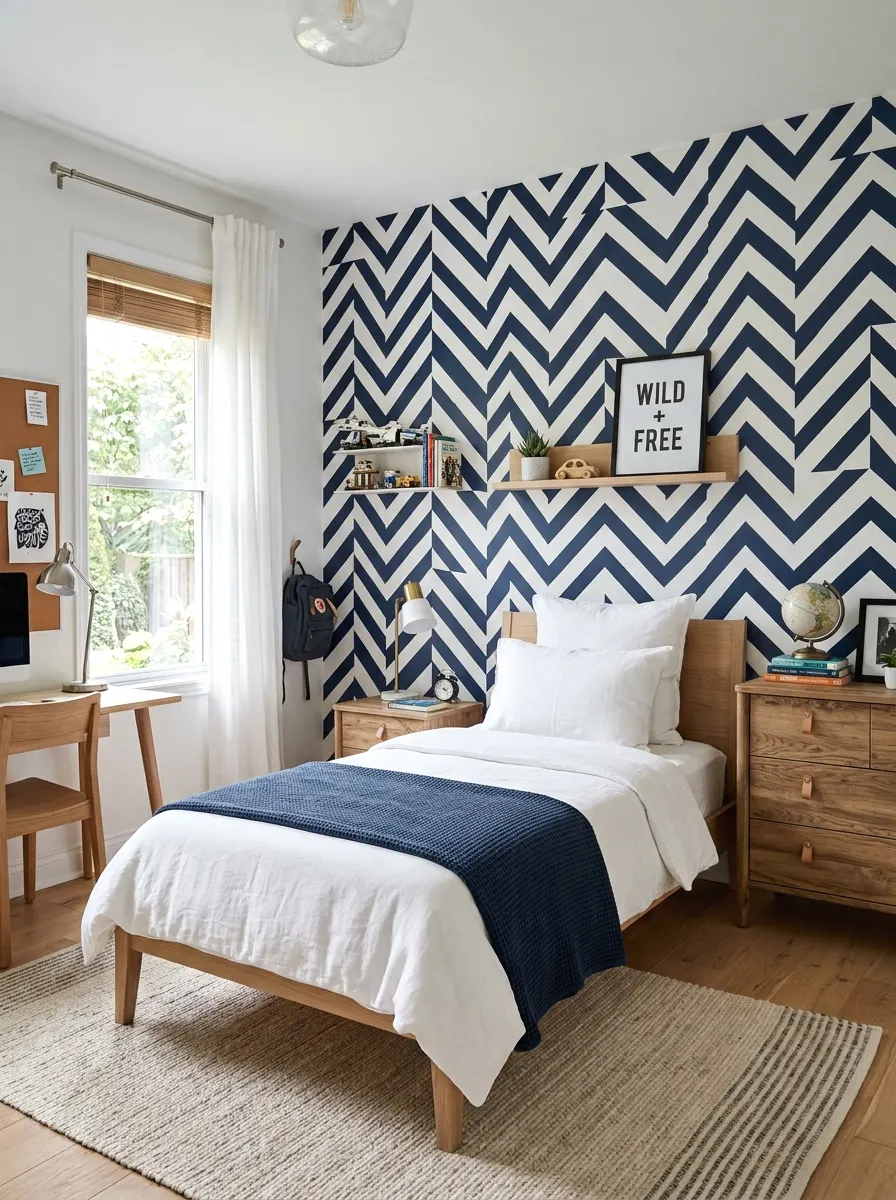
A geometric wallpaper pattern brings genuine visual interest to a boy’s room without relying on a specific character or trend-based theme, which means it tends to hold up stylistically far longer than more literal themed wallpaper.
Choose a removable or peel-and-stick wallpaper option if you anticipate updating the room again within a few years, since this offers the visual impact of wallpaper without the long-term commitment of a traditional application.
Best suited for: any age, and a strong way to add pattern without locking into a specific passing interest.
3. Space-Saving Loft or Bunk Bed
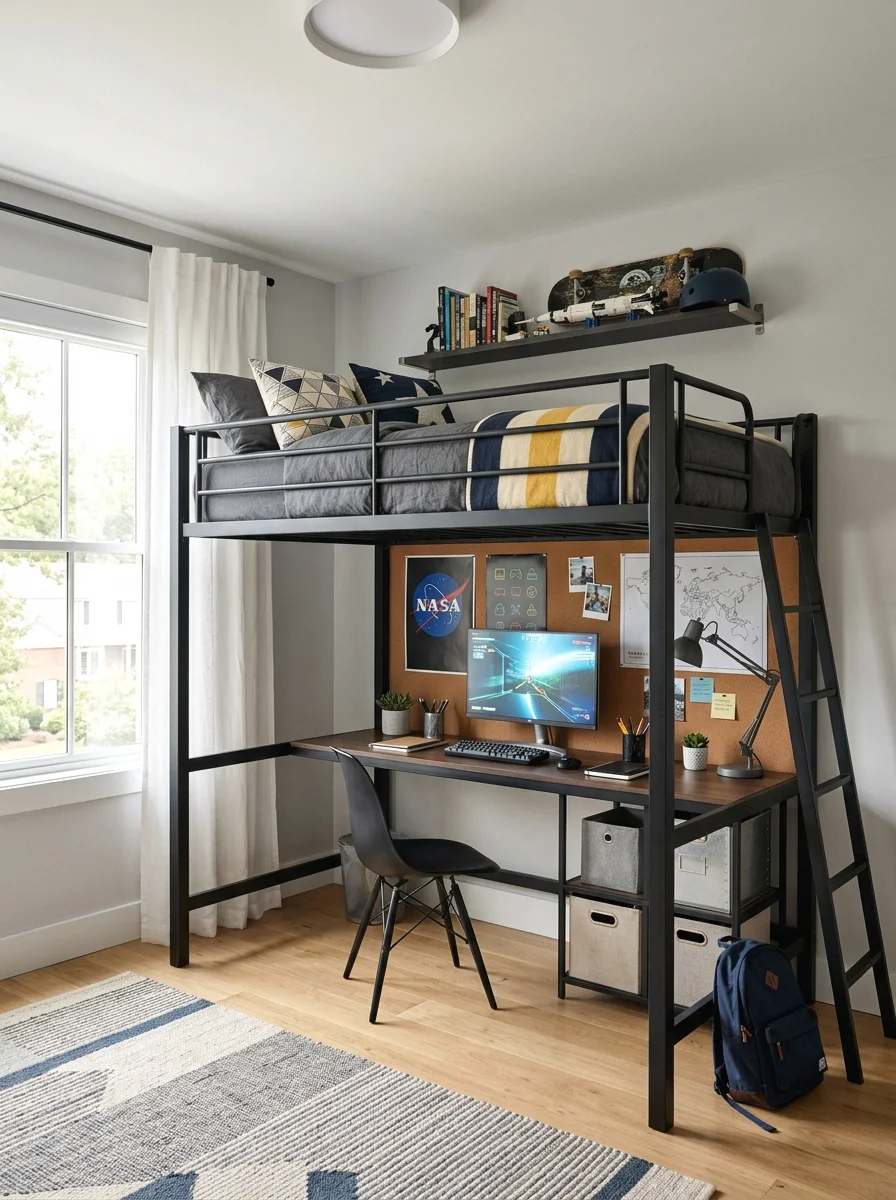
A loft or bunk bed frees up significant floor space in a smaller bedroom, often creating room underneath for a desk, seating area, or additional storage that a standard bed frame would not allow.
Choose a bed with a sturdy guardrail and confirm it meets current safety standards for your child’s specific age, since loft and bunk beds carry more significant safety considerations than a standard low bed frame.
Best suited for: smaller bedrooms and households wanting to maximize floor space for play or study.
4. Sports-Themed Gallery Wall.
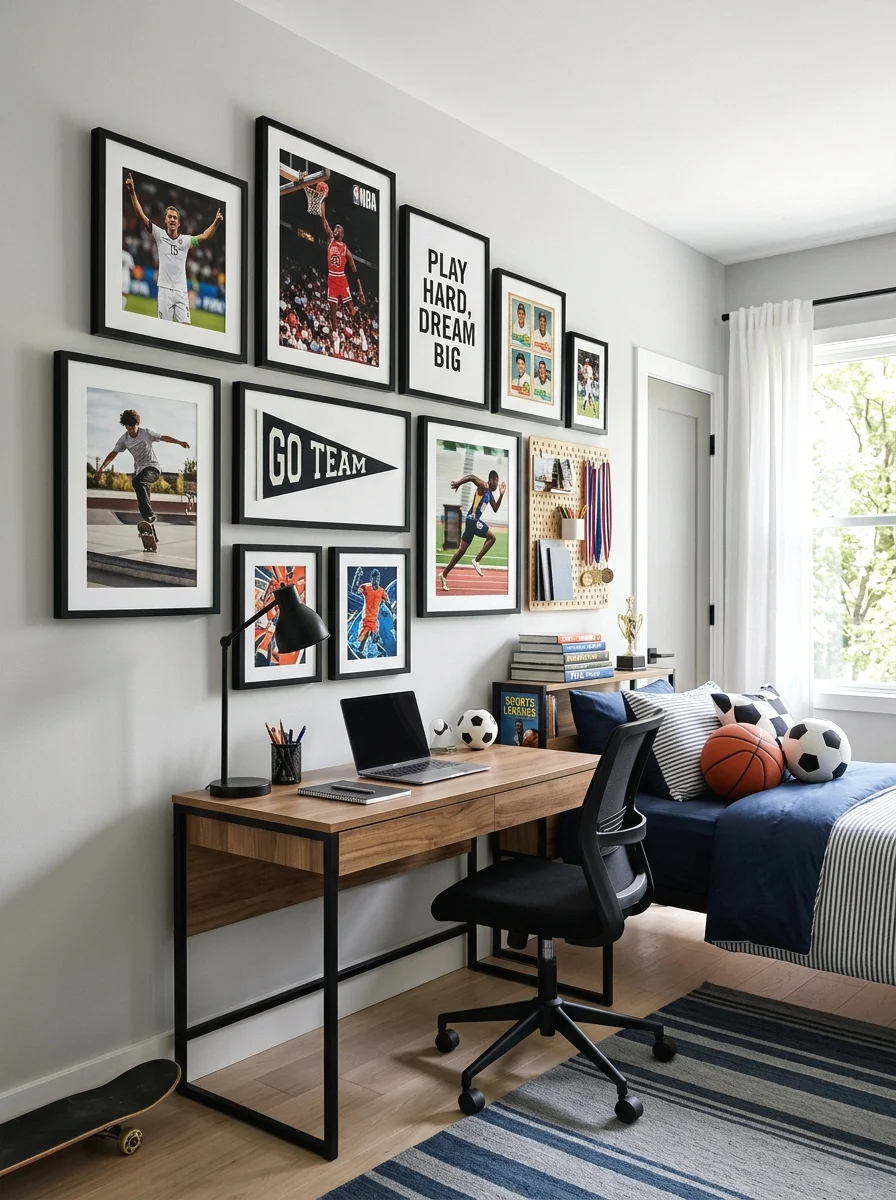
A gallery wall built around a sports interest gives aboy’ss room genuine personality while keeping the theme contained to a single wall rather than the entire room, making it easier to update later as interests shift.
Keep frame styles consistent across the gallery wall, and mix in a few neutral or abstract prints alongside the sports-specific pieces so the wall does not feel entirely tied to one single interest.
Best suited for: kids with a strong sports interest, and a themed approach that stays contained and easy to update.
5. Space and Astronaut Themed Accents
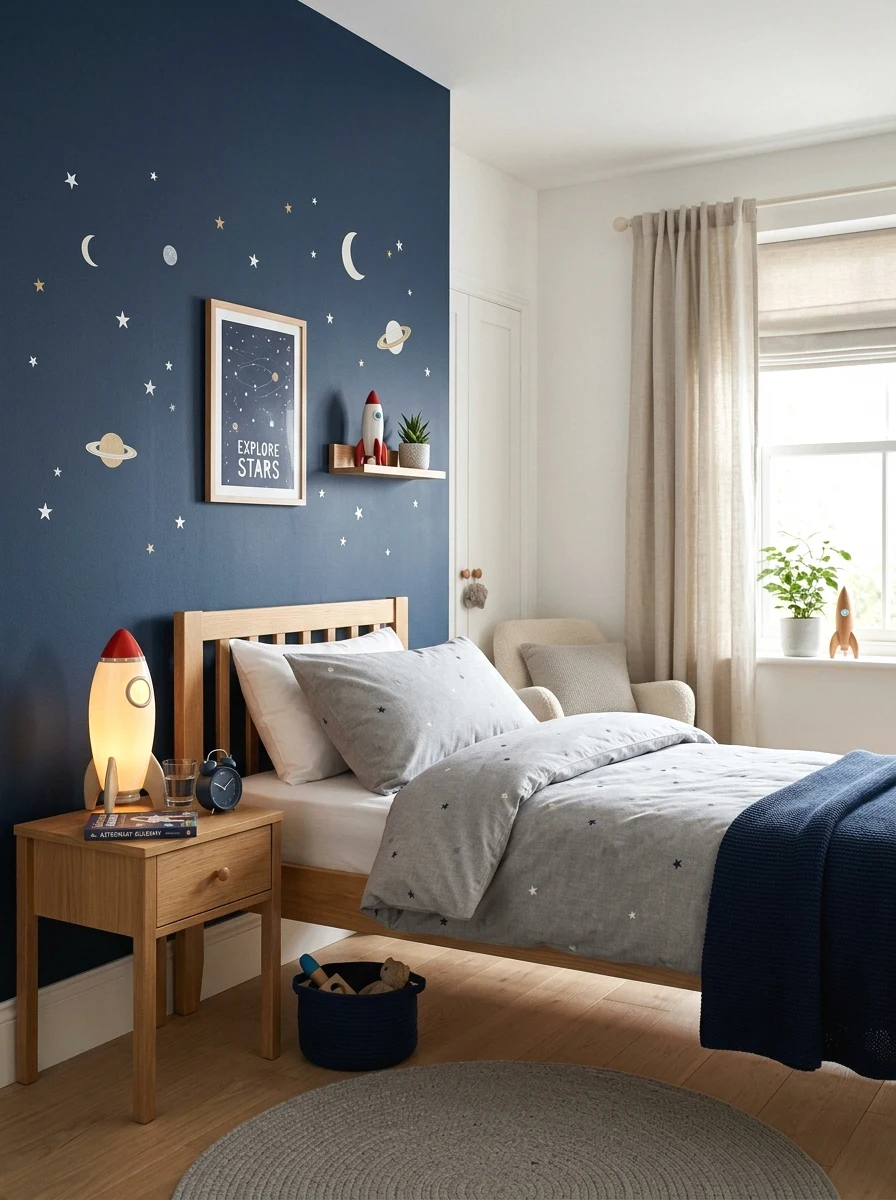
A space theme executed through subtle accents, like a deep navy wall, a few star decals, and a distinctive lamp, rather than an all-out themed room, gives the space genuine imagination and wonder without feeling overly juvenile as the child gets older.
Use removable decals for star or planet patterns rather than a full wallpaper mural, since this makes it significantly easier to update the room as your child’s interests naturally evolve over time.
Best suited for: younger children with an interest in space, and a theme that works well when kept subtle rather than all-encompassing.
6. World Map Wall Art
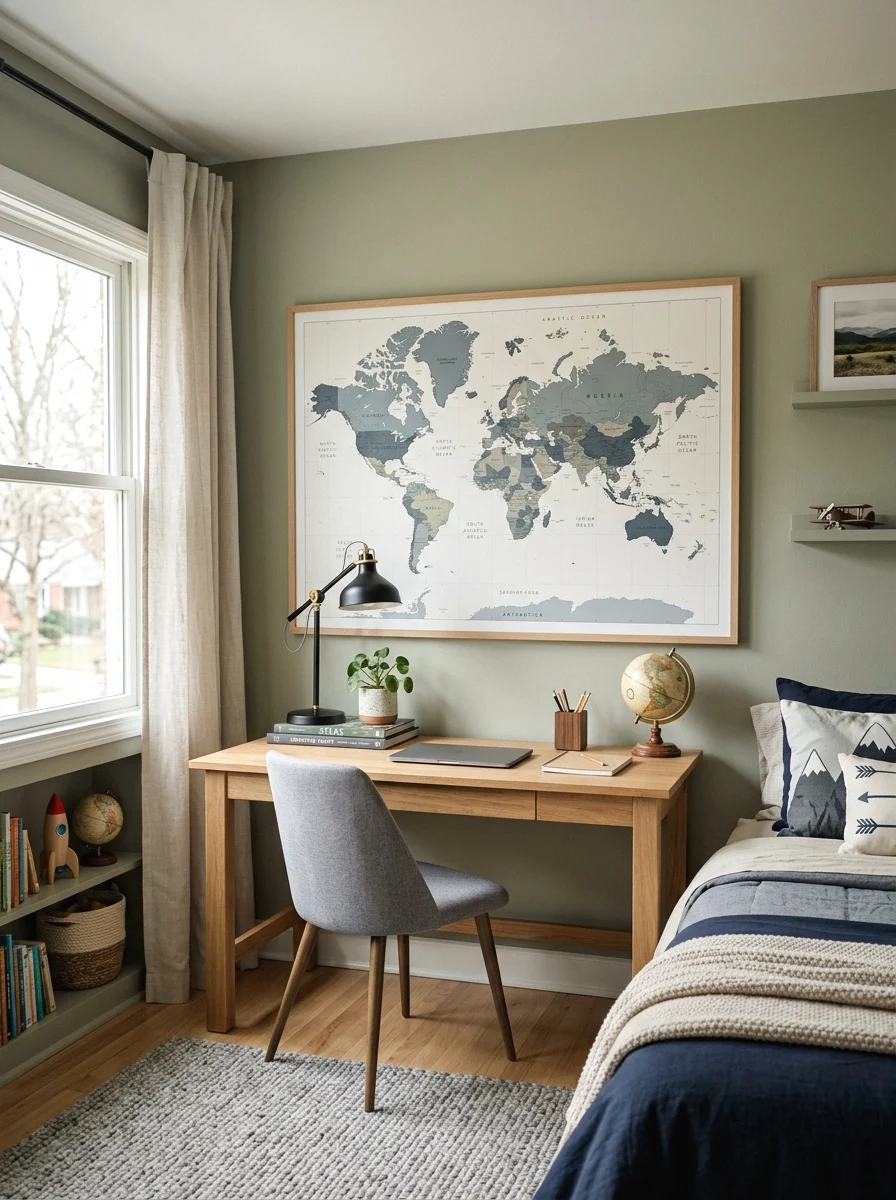
A large world map brings both genuine educational value and a distinctly modern decor element to aboy’ss room, and unlike more narrowly themed art, a map tends to remain relevant and interesting across a wide age range.
Choose a map with a muted, contemporary color palette rather than a bright primary-color children’s version if you want the piece to remain stylistically relevant well into the teen years.
Best suited for: any age, and a themed piece that genuinely grows with the child rather than needing replacement.
7. Functional Homework and Study Nook
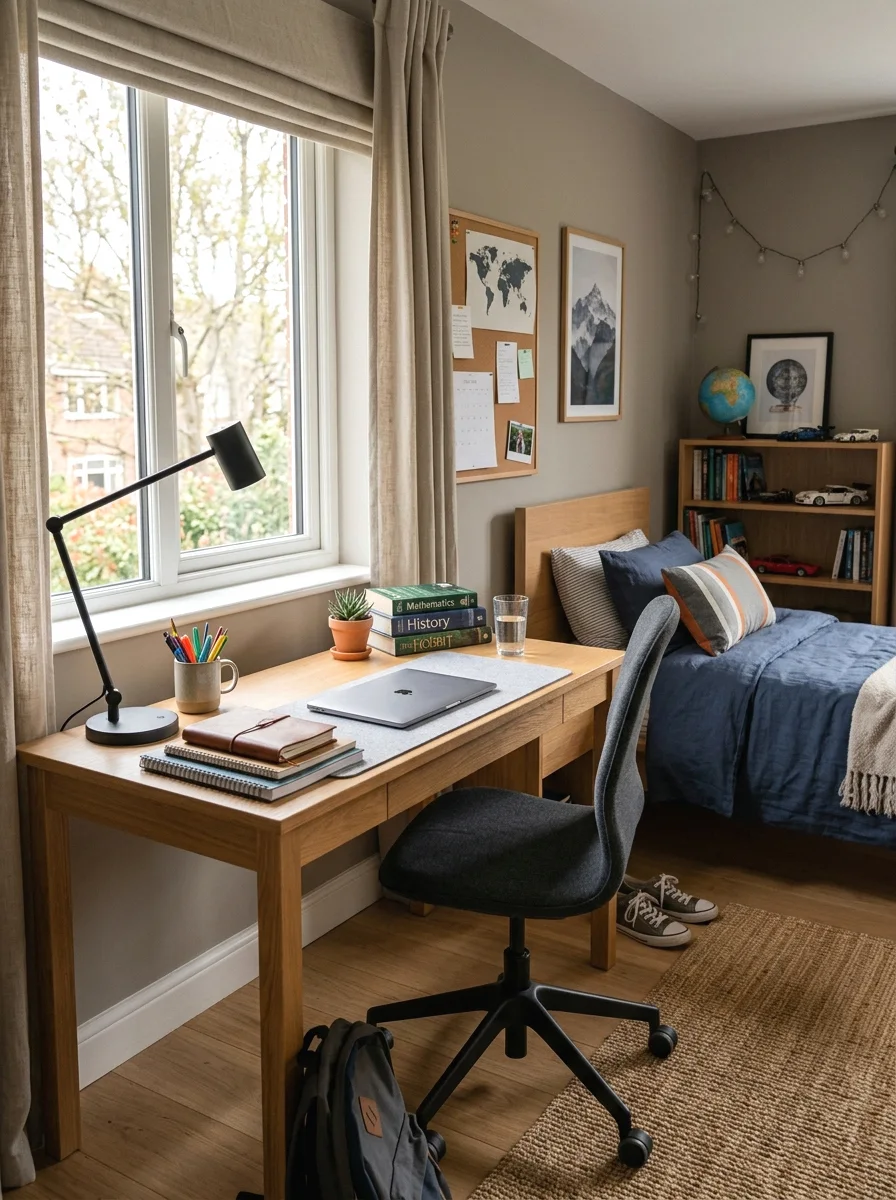
A dedicated study nook gives an older child a genuinely focused space for homework separate from the bed and play area, which can meaningfully improve concentration compared to working from the bed or a shared family space.
Position the desk near natural light if possible, and choose an adjustable-height chair that can grow with your child rather than needing replacement every couple of years.
Best suited for: elementary through teenage boys with regular homework needs.
8. Labeled Toy Storage Bins
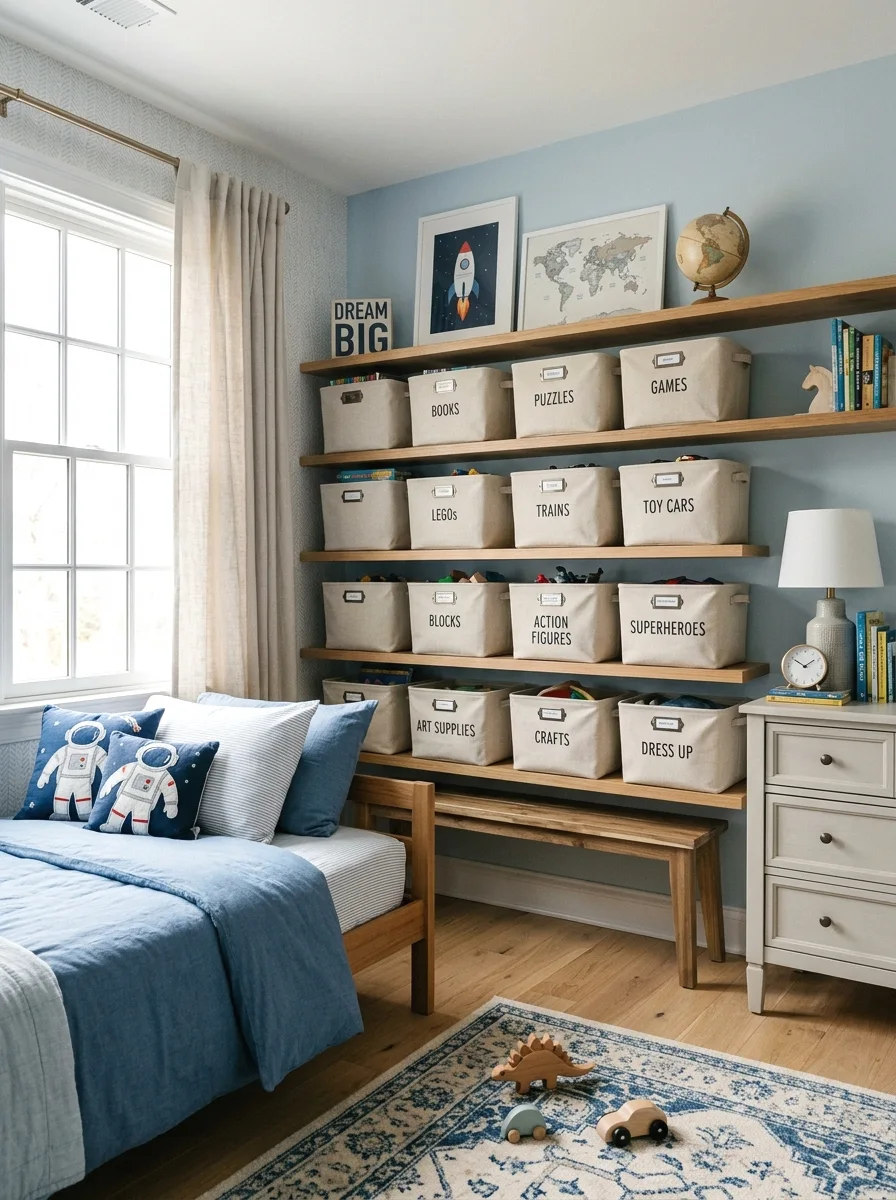
Labeled storage bins give toys and games a designated spot that even younger children can learn to use independently, which significantly reduces daily clutter compared to toys left scattered across the floor.
Choose bins with picture labels for children too young to read, and durable, washable bin materials that can handle regular use and occasional spills or messes.
Best suited for: younger children still developing organizational habits, and any household wanting to reduce daily toy clutter.
9. Statement Pendant Light Fixture
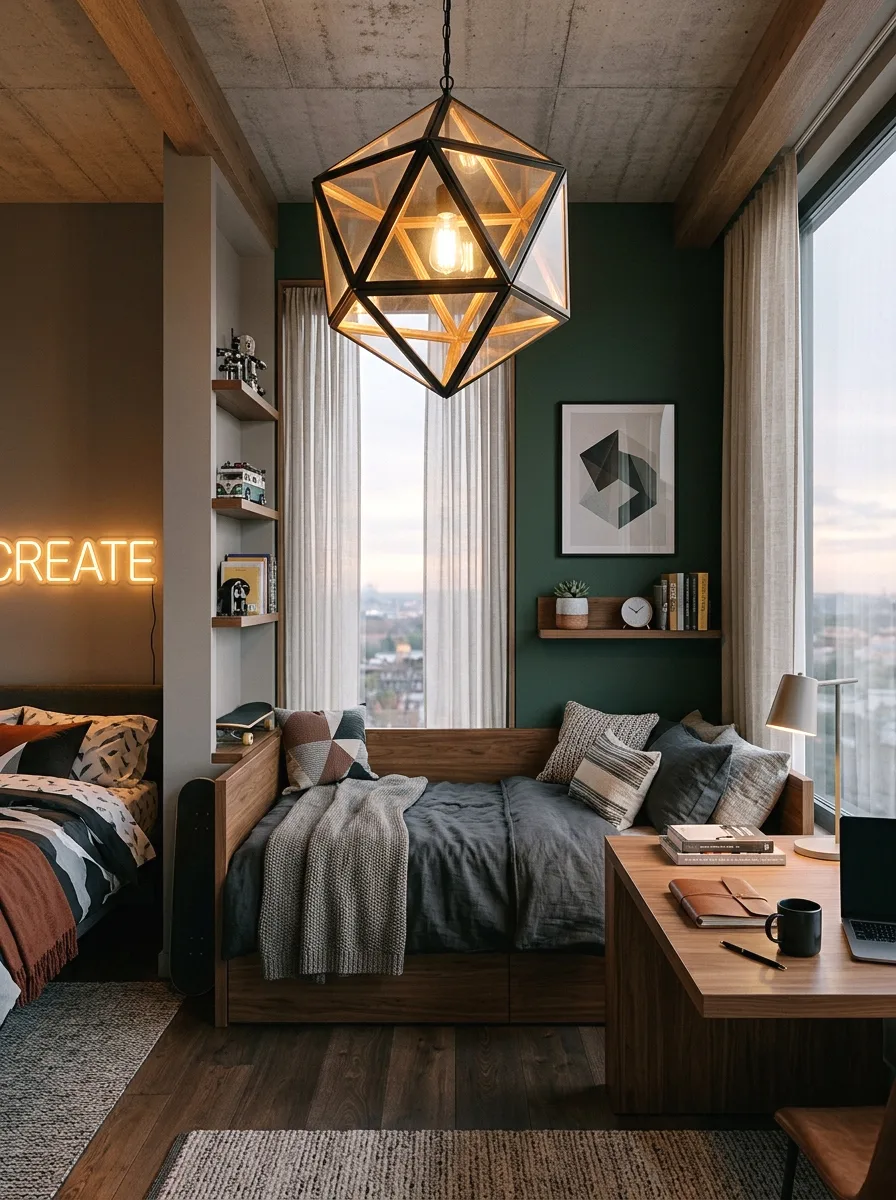
A statement pendant light, whether a simple geometric shade or a distinctive shape, gives your boy’s room a genuine design moment while providing better task lighting than a standard flush-mount overhead fixture.
Choose a fixture height that clears normal activity in the room comfortably, and confirm the style is versatile enough to still feel appropriate as your child moves from elementary years into the teen years.
Best suited for: any age, and a relatively affordable way to add a modern design element to the room.
10. Growth Chart Wall Decor.
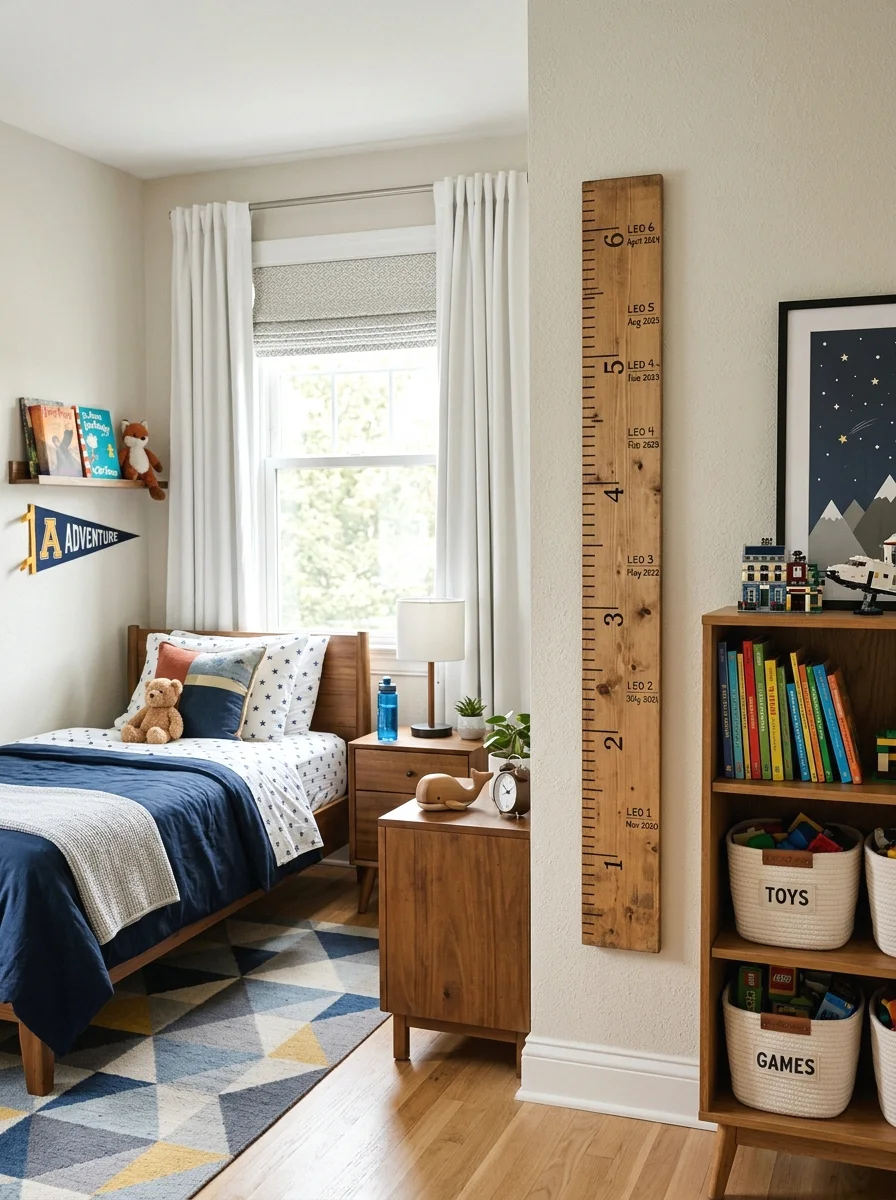
A growth chart combines genuine sentimental value with a decorative wall element, tracking your child’s height over the years in a way that becomes more meaningful, not less, as the room evolves through different stages.
Choose a wood growth chart that can be taken down and moved to a new home if needed, preserving the height history rather than losing it if the family relocates.
Best suited for: any age, and a meaningful decor piece that only grows more special over time.
11. Layered Bedding in a Coordinated Pattern
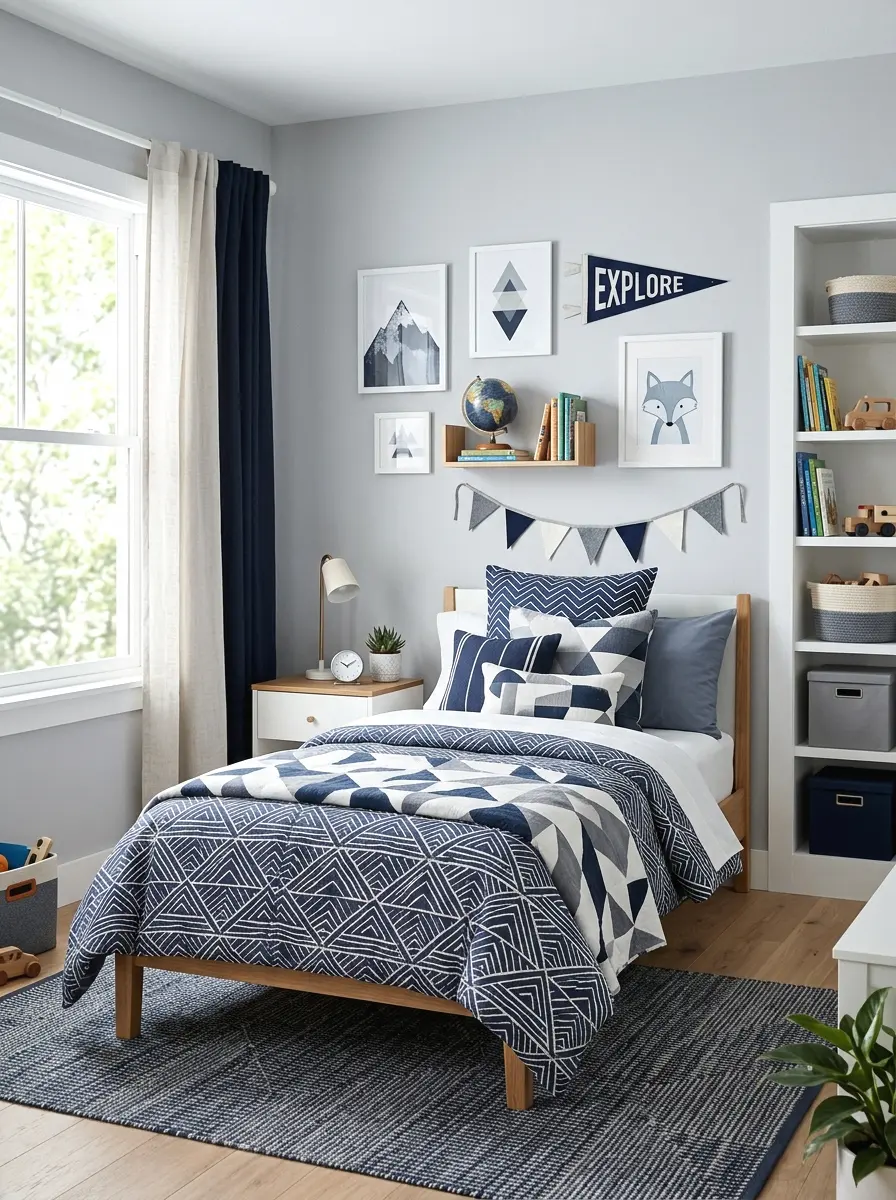
Layering a patterned duvet or quilt with coordinating solid sheets and a throw pillow or two gives the bed genuine visual interest and ties the room’s overall color palette together at its most central furniture piece.
Choose bedding materials that can handle frequent washing, since kids’ bedding generally needs laundering more often than adult bedding, and durability matters as much as pattern choice here.
Best suited for: any age, and one of the easiest, most affordable ways to refresh a room’s overall look.
12. Ambient String or LED Lighting
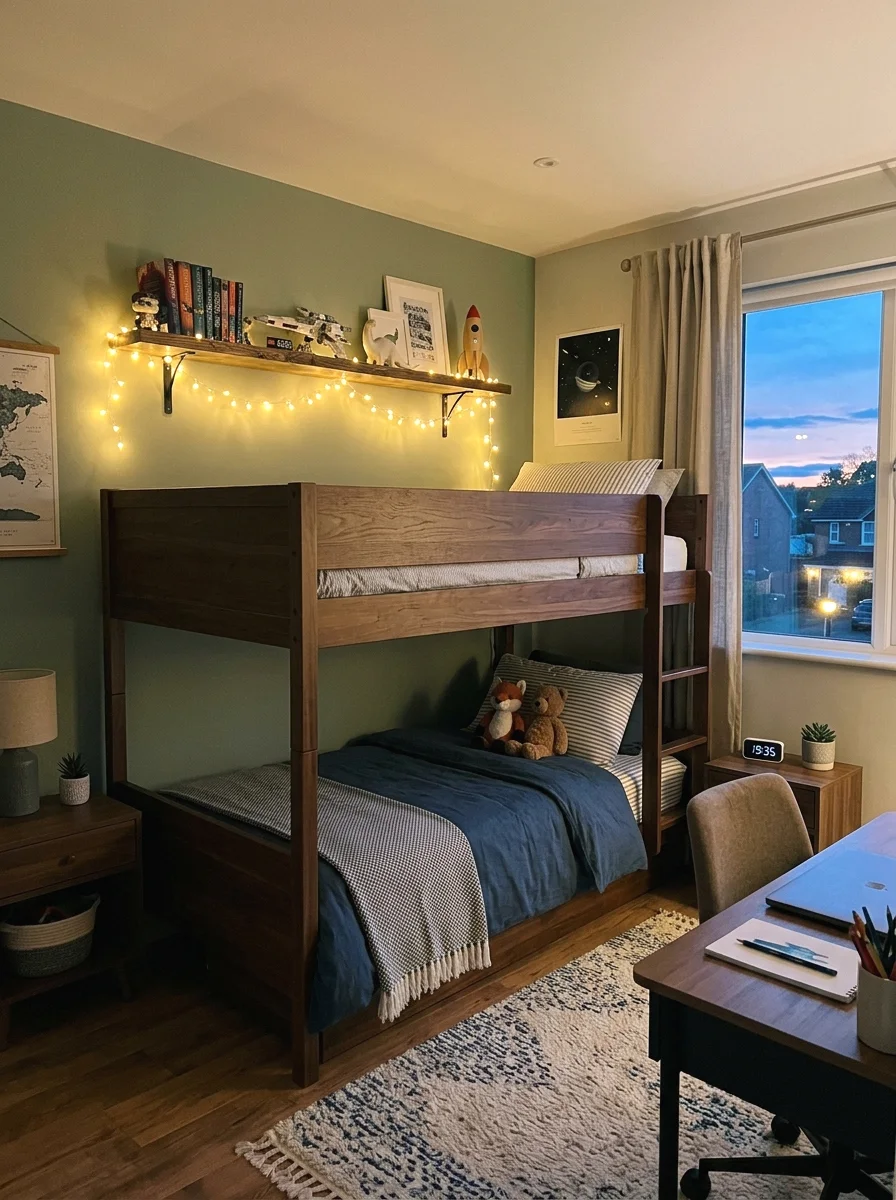
Ambient string or LED lighting gives aboy’ss room a softer, cozier evening atmosphere than overhead lighting alone, and many kids appreciate having a gentler light source for reading or winding down before bed.
Choose lights with a warm color temperature rather than cool white or overly saturated colors for a calming bedtime atmosphere, and consider a dimmable or remote-controlled option for added flexibility.
Best suited for: any age, and a low-cost addition that improves both the room’s look and its evening functionality.
13. Dinosaur or Adventure-Themed Accents
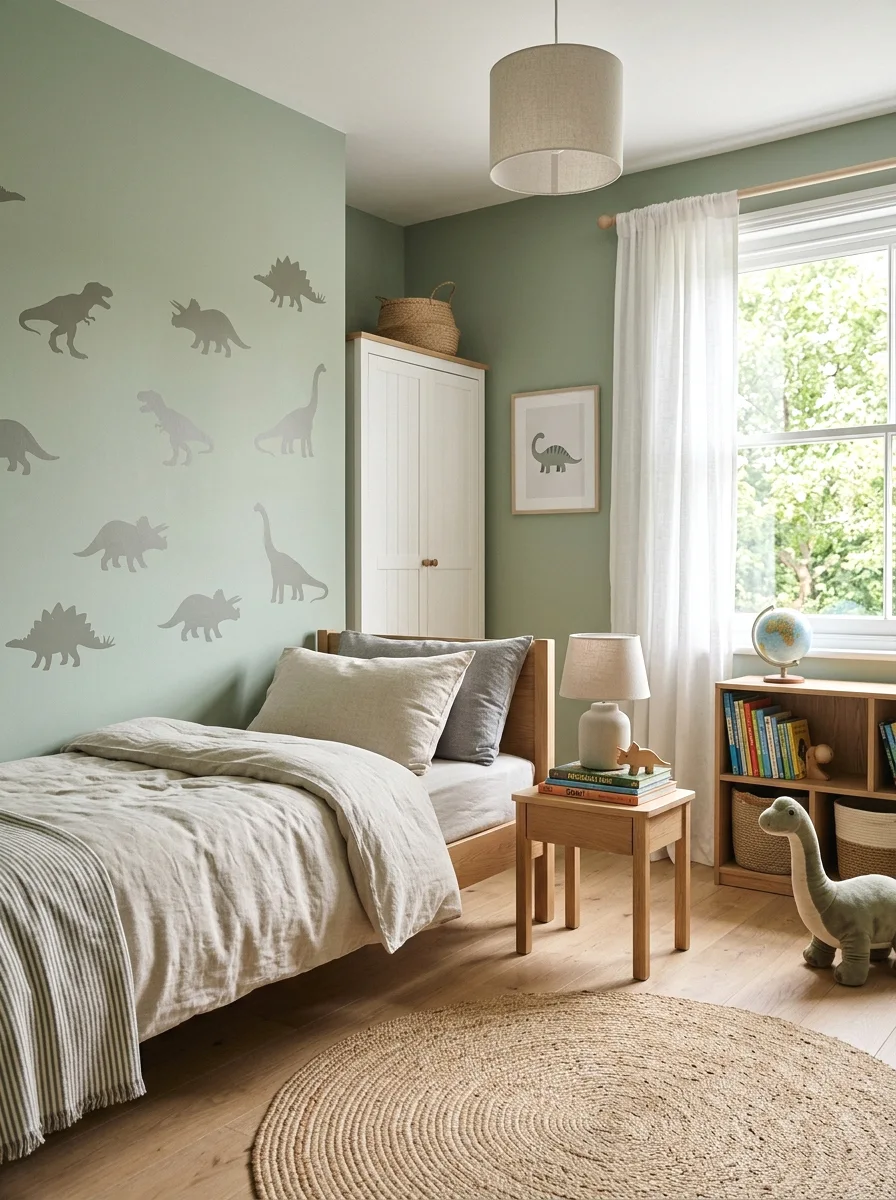
A dinosaur or broader adventure theme executed through subtle silhouette decals or a few key accent pieces, rather than an all-encompassing themed room, brings playful imagination to the space while keeping the overall look easy to update later.
Use removable decals or smaller accent pieces like a lamp or throw pillow for the themed elements, keeping larger investments like furniture and paint in a more neutral, adaptable palette.
Best suited for: younger children with an interest in dinosaurs or adventure themes.
14. Bold Area Rug
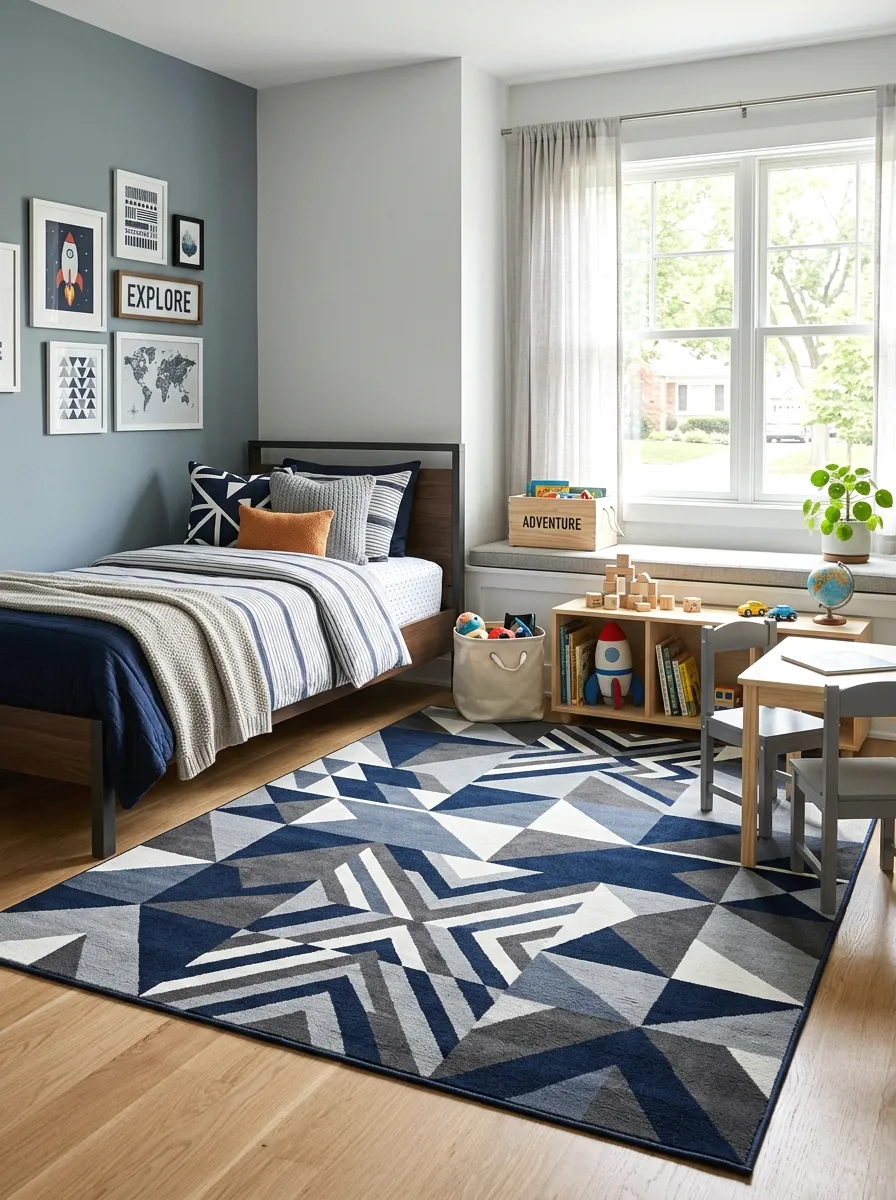
A bold patterned rug adds color and definition to aboy’ss room, and a geometric or abstract pattern tends to have significantly more lasting appeal than a more literal, character-based rug design.
Choose a low-pile, easy-to-clean rug material specifically, since kids’ rooms see more regular spills, crumbs, and general mess than most adult spaces.
Best suited for: any age, and a relatively affordable way to add both color and definition to the room.
15. Wall-Mounted Display Shelving
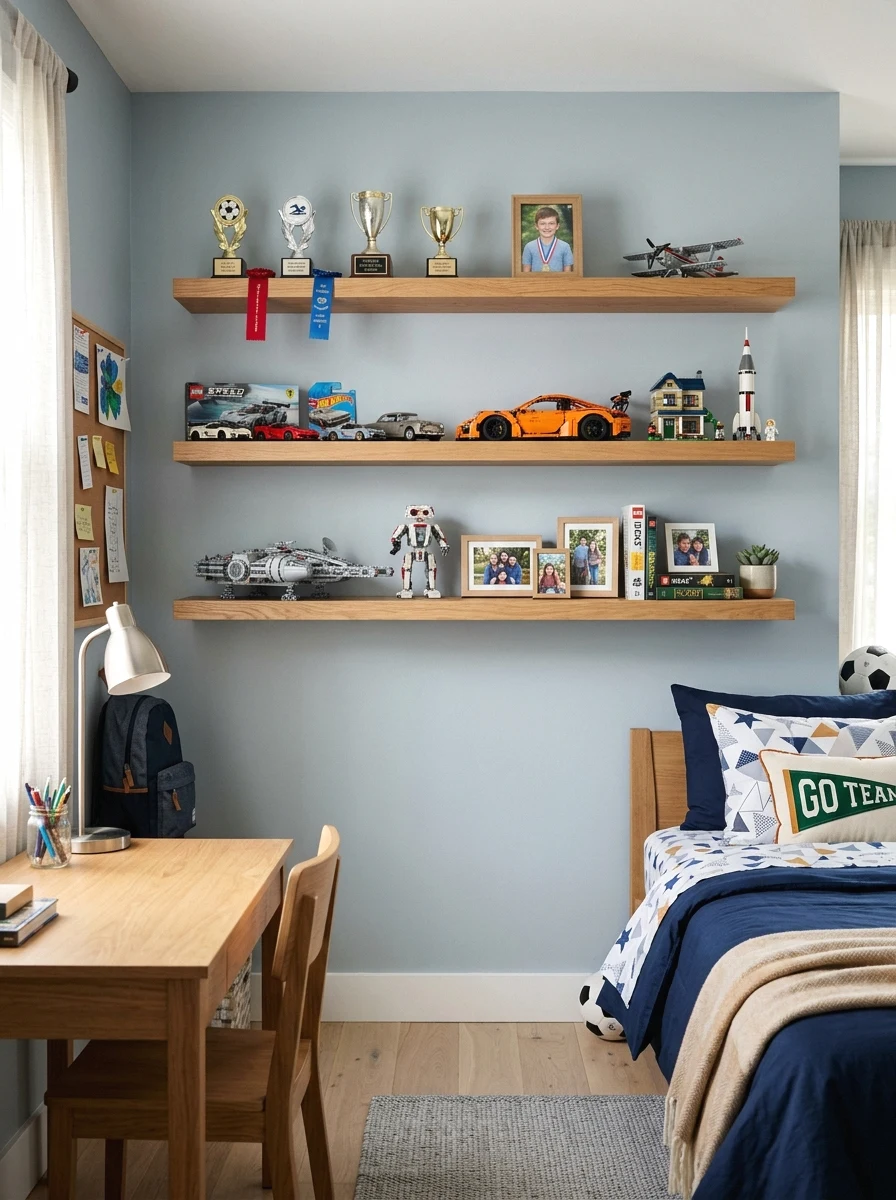
Dedicated display shelving gives kids a genuine spot to showcase trophies, completed building projects, or collections, which both reduces clutter on other surfaces and gives them a sense of pride in displaying their accomplishments.
Mount shelves at a height your child can actually see and reach for younger children, and confirm mounting hardware is rated for the weight of anything displayed, particularly heavier trophies or collectibles.
Best suited for: kids with sports trophies, building sets, or collections worth displaying.
16. Chalkboard or Whiteboard Wall
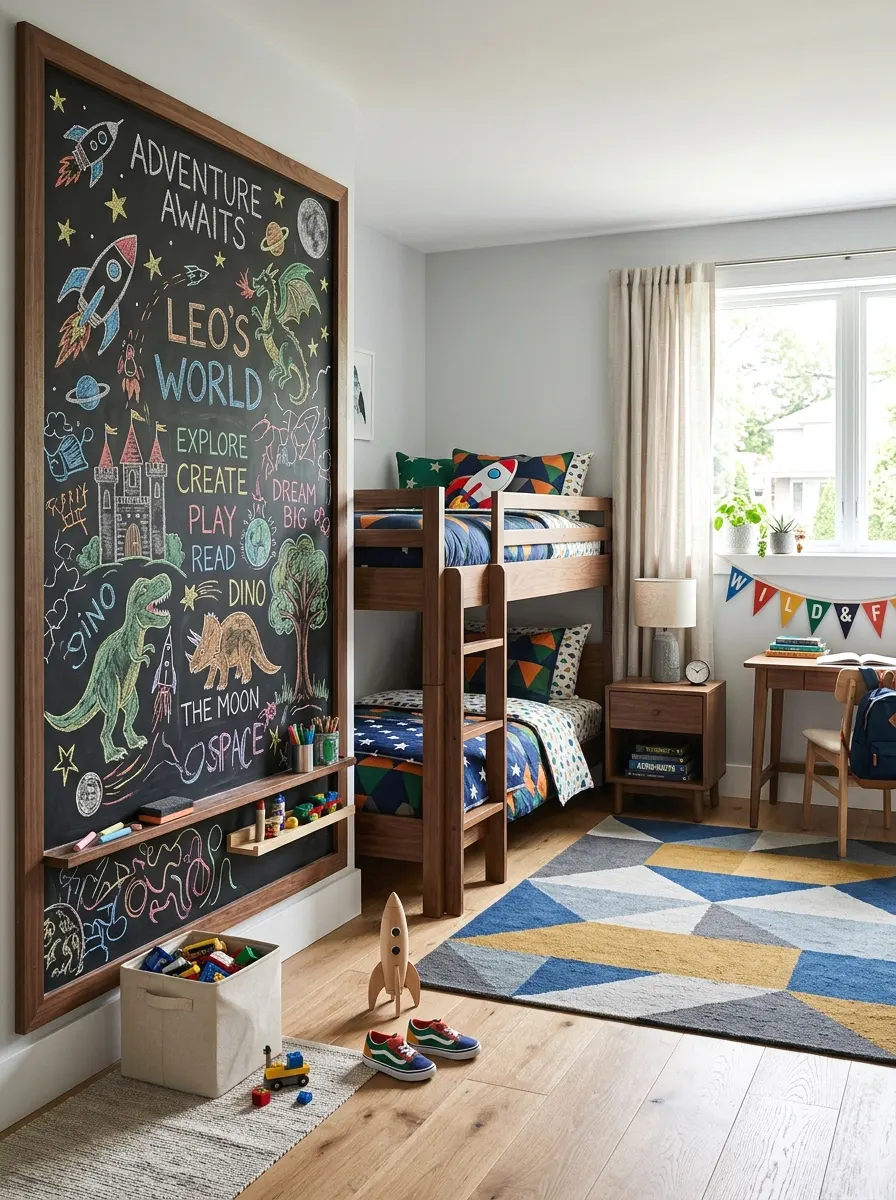
A chalkboard or whiteboard wall gives kids a genuinely functional creative outlet directly in their room, letting them draw, write notes, or track homework assignments in a space that is meant to be changed and erased regularly.
Choose a framed chalkboard or whiteboard panel rather than paint applied directly to the wall for most homes, since a framed version is easier to reposition or remove later.
Best suited for: creative kids and older children wanting a functional homework tracking spot.
17. Contained Superhero or Pop Culture Accents
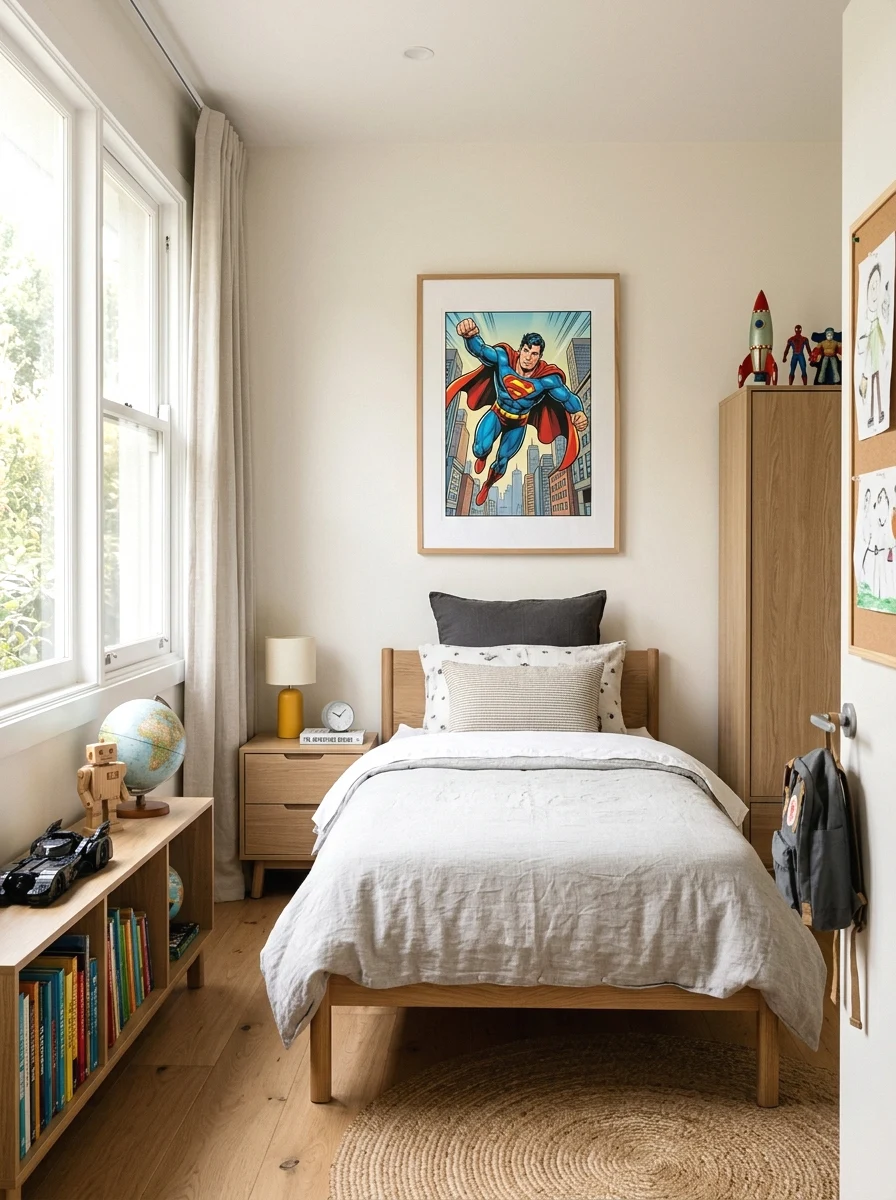
Containing a superhero or pop culture interest in a single framed print or a few small accent pieces, rather than covering the entire room in licensed character decor, lets the interest shine through without dating the room’s overall design.
Choose one or two higher-quality pieces rather than a large quantity of smaller themed items, since a curated approach photographs and reads as more intentional than an overwhelming collection of licensed merchandise.
Best suited for: kids with a strong pop culture interest, and a themed approach that stays easy to update as favorites change.
18. Furniture That Adjusts as Kids Grow
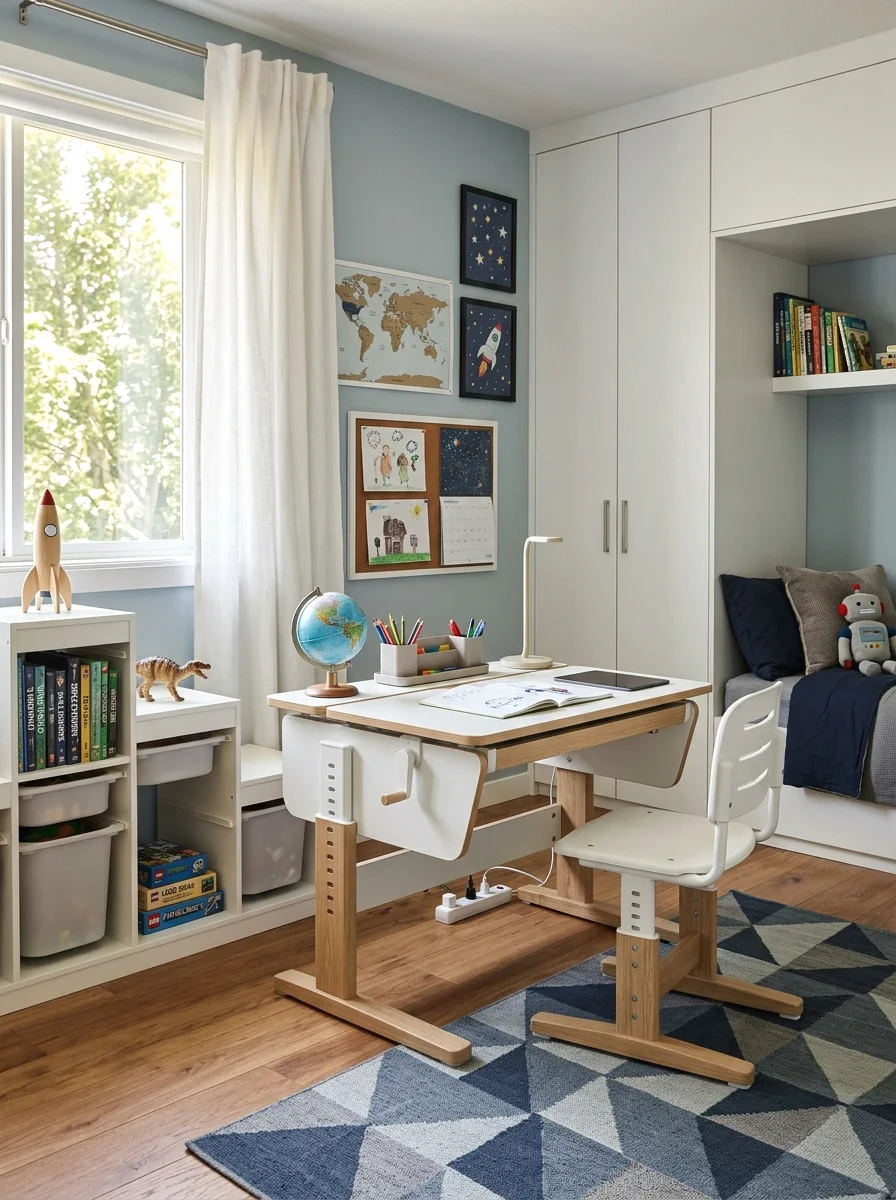
Furniture designed to adjust as your child grows, like height-adjustable desks and chairs or convertible bed frames, represents a genuinely smart long-term investment, reducing how often major furniture needs full replacement.
Choose furniture with a clear adjustment mechanism rated for a wide age and height range, and confirm the maximum extended size will still comfortably fit the room as your child grows into a teenager.
Best suited for: families wanting to minimize furniture turnover and invest in pieces that last through multiple stages of childhood.
Planning and Buying Tips
A few practical decisions up front will help a boy’s room stay functional and appealing for longer, reducing how often a full refresh is needed.
● Prioritize a neutral foundation for big-ticket items — furniture, flooring, and wall paint should lean adaptable, saving bold themes and specific interests for smaller, easily changed accents.
● Standard sizing to shop for — a twin bed frame typically needs a minimum room width of about 8 feet to comfortably fit alongside a dresser and desk, and desk height should be adjustable or appropriately scaled to your child’s current age.
● Check safety standards for bunk beds, loft beds, and wall-mounted furniture — these items have specific age and weight guidelines that should be confirmed before purchase, particularly for younger children.
● Choose durable, washable materials for rugs and bedding — kids’ rooms see more regular spills and mess than most adult spaces, so prioritize function alongside style for these items specifically.
● Involve your child in smaller decor decisions — letting kids choose accent colors, a themed print, or bedding pattern within a curated set of options gives them ownership of the space without sacrificing the room’s overall cohesive look.
● Plan for growth rather than just current age — furniture and storage systems that can adapt to a slightly older child save money and hassle compared to items that need replacing again within just a couple of years.
Cost Breakdown: Budget, Mid-Range, and Luxury Updates
A boy’s room can be meaningfully updated at almost any budget, with furniture representing the largest cost variable between tiers.
Budget ($100–$600)
New bedding, wall decals, a rug, and a few framed prints fall in this range. Installation is fully DIY with no additional cost beyond your own time.
Mid-Range ($600–$2,500)
A new desk and chair, a statement light fixture, removable wallpaper, and storage shelving sit in this tier. Delivery and basic assembly typically add $50–$150 depending on the retailer.
Luxury / Premium ($2,500–$8,000+)
A full bedroom furniture set including a loft or bunk bed, custom built-in storage, and a full room design falls here. Professional installation for custom built-ins typically adds $1,000–$4,000 depending on scope.
Furniture and Decor Comparison
| Item | Price Range | Longevity | Age Range | Best For |
| Loft/bunk bed | $400–$2,500 | High if well-built | 5 years and up, per safety guidelines | Maximizing floor space in smaller rooms |
| Adjustable desk and chair | $150–$600 | Very high — grows with child | 5 years through teens | Long-term homework and study use |
| Removable wallpaper | $30–$120 per roll | Moderate — easy to change | Any age | Adding pattern without long-term commitment |
| Wall decals (space, dinosaur, etc.) | $15–$50 | Low to moderate — easy to remove | Best for younger children | Themed interest without full room commitment |
| Storage bins and shelving | $30–$200 | High | Any age | Organization and independent tidying habits |
| Statement pendant light | $60–$300 | Very high | Any age | A modern design element that lasts through the years |
Maintenance Tips
● Bedding — wash regularly given how often kids’ bedding gets dirty, and choose durable, machine-washable fabrics that can handle frequent laundering without excessive wear.
● Rugs — vacuum frequently, and treat spills and stains promptly, since kids’ rooms typically see more regular spills and mess than adult spaces.
● Furniture — check bunk bed and loft bed hardware periodically for looseness, particularly guardrails and ladder connections, since these components see regular daily stress.
● Wall decals and removable wallpaper — reposition or replace as needed, since adhesive-backed items can lose some stickiness over time, particularly in humid climates or rooms with significant temperature fluctuation.
● Storage systems — reassess bin and shelf contents seasonally, since toys and interests change quickly and storage systems benefit from periodic reorganization to stay genuinely useful.
● Common mistake to avoid — investing heavily in furniture or decor tied to a very specific, narrow interest that is likely to change within a year or two, rather than building the bigger investments around a more adaptable foundation.
Frequently Asked Questions
How do I decorate a boy’s room that will last several years?
Building the room around a neutral color palette and adaptable furniture, then layering in specific interests through smaller, easily changed accents like art, bedding, or decals, is generally the most effective way to create a room that lasts through several stages of childhood.
What age is appropriate for a bunk or loft bed?
Most safety guidelines recommend the upper bunk of a bunk bed for children age 6 and older, and it is worth checking specific manufacturer guidelines and current safety standards for the exact product before purchasing.
How can I make a themed room feel less juvenile as my child gets older?
Containing a theme to smaller, easily changed accents like art, decals, or bedding, rather than a full themed room with matching wallpaper and furniture, makes it significantly easier to update the space as interests mature.
What is the best way to organize toys in a kids’ bedroom?
Labeled storage bins on open shelving, with picture labels for children too young to read, are generally the most effective way to help kids learn to organize and put away toys independently.
How much does it cost to decorate a boy’s bedroom?
A modest refresh with new bedding, a rug, and a few accent pieces can cost $100 to $600, while a full furniture update including a new bed, desk, and storage typically runs $600 to $2,500 or more depending on furniture quality.
How to Choose the Right Modern Boys Room Ideas for You
The right combination of ideas depends on three factors: your child’s current age and interests, your budget, and how long you want the room to last before needing a significant refresh. Younger children often benefit from playful, easily changed accents, while older kids and teens tend to appreciate a more grown-up neutral foundation with fewer overtly themed elements.
Budget should guide where to invest — bedding, decals, and smaller accents offer meaningful personality for a lower cost, while furniture like a bed, desk, and storage system is worth investing in for durability and adaptability since these items are more disruptive and costly to replace frequently.
Finally, involve your child in the process where it makes sense. Letting them choose an accent color or a themed print within curated options gives them a sense of ownership over their space, while the bigger, more permanent decisions stay flexible enough to grow with them.
Start with a neutral, adaptable foundation for the big furniture and paint choices, then let your child’s current interests shine through smaller, swappable accents — a boy’s room built this way stays genuinely functional and appealing far longer than one designed entirely around a single passing trend.


- Be Respectful
- Stay Relevant
- Stay Positive
- True Feedback
- Encourage Discussion
- Avoid Spamming
- No Fake News
- Don't Copy-Paste
- No Personal Attacks
- Be Respectful
- Stay Relevant
- Stay Positive
- True Feedback
- Encourage Discussion
- Avoid Spamming
- No Fake News
- Don't Copy-Paste
- No Personal Attacks
