Garlic Rosemary Roasted Butternut Squash Recipe
Published: 10 Jul 2026
The Crispy-Edge Method
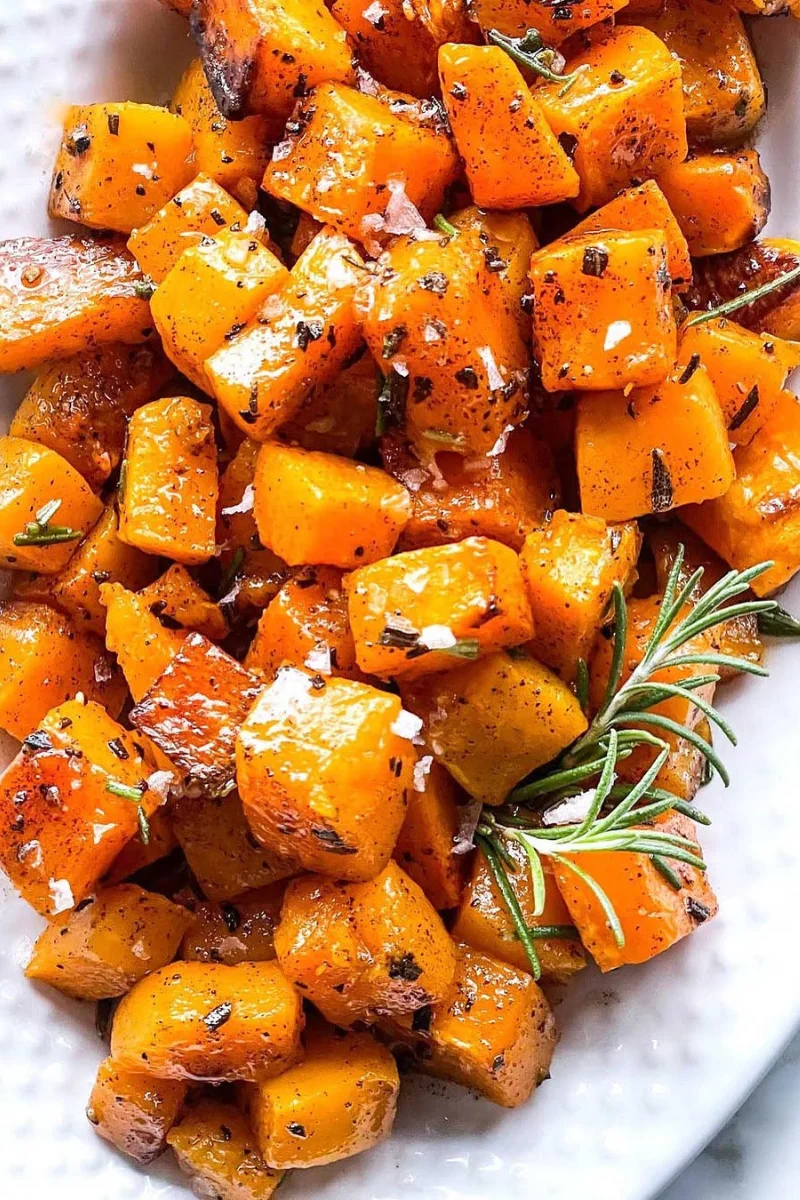
If you’ve ever pulled a tray of butternut squash out of the oven and found soft, watery cubes instead of caramelized, golden edges — this recipe fixes that. The secret isn’t a fancy ingredient. It’s understanding why squash goes mushy in the first place, and roasting around it.
This is my go-to fall and winter side: five pantry staples, one sheet pan, and a technique that guarantees crisp, caramelized edges every single time. It reheats beautifully, which makes it one of the few vegetable sides that’s genuinely better as leftovers.
Why Your Squash Usually Turns Out Mushy (And How This Fixes It)
Here’s the part most recipes skip: butternut squash is roughly 85% water. When cubes are crowded on a pan, that water turns to steam and has nowhere to go — so instead of roasting, the squash essentially poaches in its own moisture. That’s why so many roasted squash recipes come out soft and pale instead of caramelized.
The fix is simple once you know it:
- Give every cube breathing room. Steam needs an escape route.
- Roast hot (400°F+). Lower temperatures give steam time to build up before the surface can brown.
- Don’t stir constantly. Let one side sit undisturbed long enough to actually caramelize before flipping.
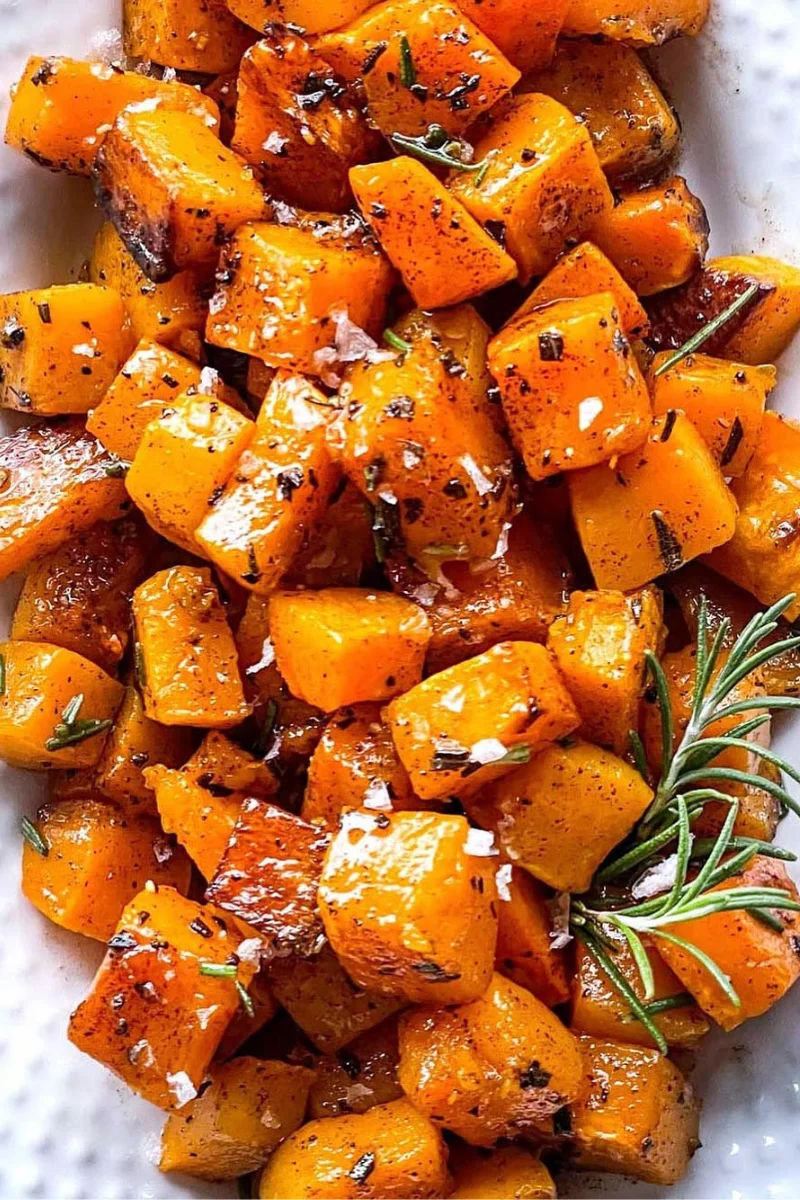
Once you roast with this in mind, you get the crisp, golden edges and tender centers that make this dish worth repeating.
Why You’ll Love This Recipe
- Only 6 ingredients — nothing here requires a special grocery trip.
- 10 minutes of hands-on work — the oven does the rest.
- Naturally gluten-free and vegetarian, and easy to make vegan by swapping the oil.
- Meal-prep friendly — it holds its texture in the fridge better than most roasted vegetables.
- Forgiving — even if your cubes aren’t perfectly uniform, the method below still delivers good results.
Choosing the Right Butternut Squash
Pick a squash that feels heavy for its size with firm, matte skin — no soft spots, no shiny patches (shine usually means it’s starting to break down). A squash with a long, straight neck and a smaller round base gives you more usable flesh with fewer seeds to deal with.
Short on time? Pre-cut squash from the produce section works fine here and saves about 10–15 minutes of peeling and chopping — just pat it dry with a paper towel before seasoning, since packaged cubes often carry excess surface moisture that works against the crisping process described above.
Ingredient Swaps That Actually Work
Squash: Acorn, kabocha, or delicata all roast well here. Delicata has thin, edible skin and cooks faster — start checking at the 20-minute mark.
Herbs: Fresh rosemary (roughly triple the amount of dried) gives a brighter, more fragrant result. Thyme or sage work as substitutes if that’s what you have.
Oil: avocado oil or melted butter both work; butter adds a nuttier, richer finish but browns faster, so watch it in the final minutes.
Garlic: Fresh minced garlic can replace the powder, but add it in the last 15 minutes of roasting rather than at the start — raw minced garlic burns well before the squash is done, turning bitter.
Mistakes That Ruin the Caramelization
Uneven cubes. Cut everything to a consistent 3/4–1 inch. Uneven pieces mean the small ones burn while the big ones are still firm in the center.
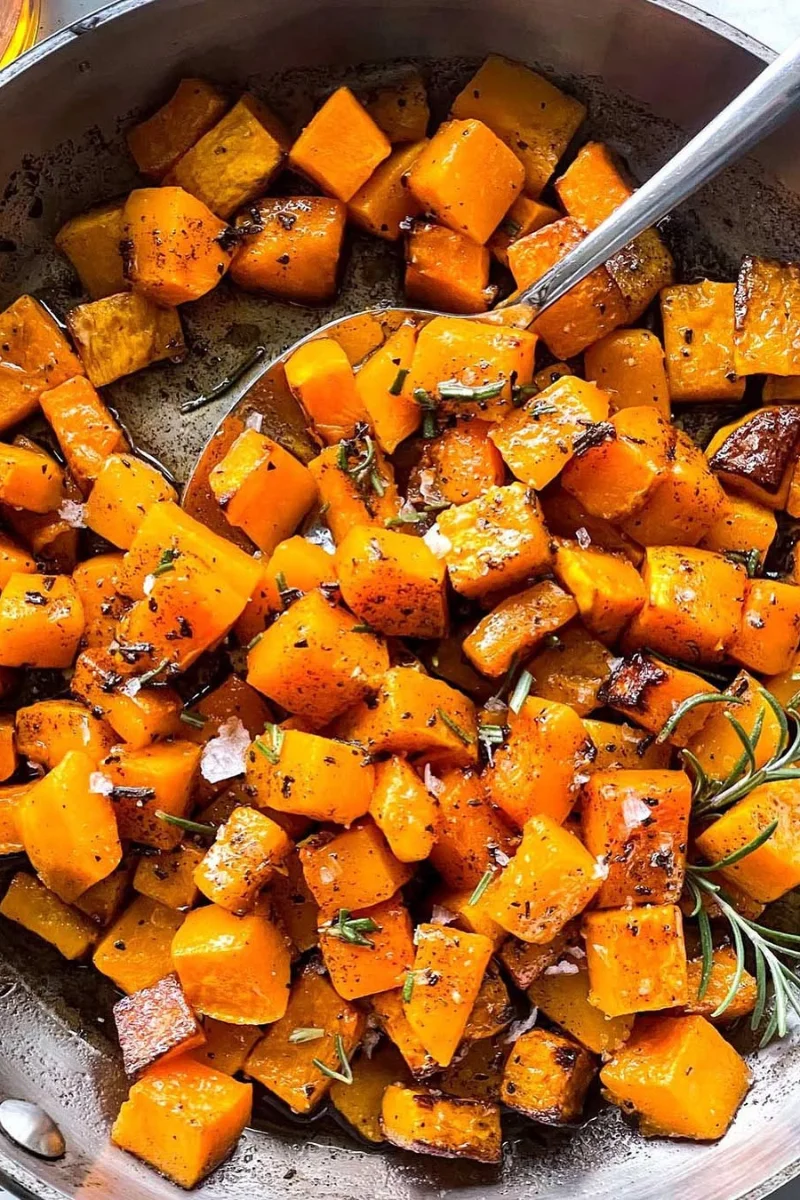
Overcrowding the pan. This is the single biggest reason squash comes out steamed instead of roasted. Use two pans if you need to — it’s worth the extra dish.
Flipping too early or too often. Give the squash a full 20–25 minutes before touching it. Constant flipping never lets any single surface stay in contact with the hot pan long enough to brown.
Salting too early. Salt draws out moisture. Salting right before roasting (not while prepping) helps keep the surface drier, which means better browning.
What to Serve It With
This squash is flexible enough to sit next to almost anything:
Roasted chicken, pork chops, or steak — the natural sweetness balances savory, well-seasoned meat.
A fall grain bowl — layer it over farro or quinoa with arugula, toasted pecans, and a squeeze of lemon.
A vegetarian plate — pair with roasted Brussels sprouts or cauliflower for a full meal, or fold it into a grain salad for lunch.
Storage & Reheating
Refrigerate: Store in an airtight container for up to 5 days.
Freeze: Freeze cooled squash in a single layer on a tray until solid, then transfer to a freezer bag — this keeps the pieces from clumping. Good for up to 3 months.
Reheat: For crisp edges, reheat in a 375°F oven for 8–10 minutes. Microwaving works in a pinch but softens the texture, so it’s better saved for tossing into soups or grain bowls rather than serving as a standalone side.
FAQ
Why is my squash still hard after 30 minutes?
Your oven may run cool, or your cubes may be larger than 1 inch. Give it another 10–15 minutes and check with a fork rather than relying on the clock.
Can I make this ahead for a holiday meal?
Yes — roast it up to 2 days ahead, then reheat uncovered at 375°F for 10–12 minutes to bring back the crisp edges before serving.
My squash browned but didn’t get crispy — what happened?
This usually means the pan was crowded or the squash sat too long before roasting and released moisture. Pat cubes dry and spread them with visible space between pieces.
| Recipe |
|---|
|
Garlic Rosemary Roasted Butternut Squash Prep Time: 15 minutes | Cook Time: 55 minutes | Total: 1 hour 10 minutes Servings: 4 | Calories: ~245 per serving Ingredients
Method
Tip: For an extra layer of flavor, finish with a light drizzle of honey or a squeeze of lemon right before serving. |


- Be Respectful
- Stay Relevant
- Stay Positive
- True Feedback
- Encourage Discussion
- Avoid Spamming
- No Fake News
- Don't Copy-Paste
- No Personal Attacks
- Be Respectful
- Stay Relevant
- Stay Positive
- True Feedback
- Encourage Discussion
- Avoid Spamming
- No Fake News
- Don't Copy-Paste
- No Personal Attacks
