18 Grey Couch Living Room Ideas That Keep the Space From Feeling Cold
Published: 14 Sep 2026
A grey couch is one of the most practical furniture choices a homeowner can make — it hides stains well, matches almost any color scheme, and rarely looks dated. The trade-off is that grey alone can leave a living room feeling flat or sterile if nothing else in the room brings warmth or contrast. Grey couch living room ideas solve that exact problem, using color, texture, and material choices around the sofa to keep the neutral base from reading as cold or unfinished. This guide covers 18 grey couch living room ideas for every style and budget, from warm wood pairings to bold accent colors and layered textures. Along the way, you will find honest pros and cons, real price ranges, a materials and color comparison table, maintenance advice, and answers to the questions people search for most before decorating around a grey sofa. By the end, you will know exactly which pairing fits your room, your budget, and your existing furniture.
Is a Grey Couch Right for You?
A grey sofa is one of the most flexible furniture choices available, but it is worth weighing a few practical factors before committing to it as your living room’s foundation.
Pros
● Extremely versatile — grey works as a neutral base for nearly any color palette, from warm earth tones to cool blues, which makes it easier to update the room’s look over time without replacing the sofa.
● Hides everyday wear well — grey upholstery tends to show dust, pet hair, and minor stains less obviously than very light or very dark solid colors.
● Long-term style relevance — grey has remained a popular, non-trend-dependent choice for over a decade, reducing the risk of the sofa feeling dated within a few years.
● Pairs well with both warm and cool accent colors — unlike some neutrals, grey genuinely works with both warm tones like mustard and rust and cooler tones like navy and emerald.
Cons
● Can read as cold or sterile without the right accents — a grey sofa surrounded by other cool, neutral tones can leave a room feeling flat or uninviting.
● Shade selection matters more than expected — cool-toned charcoal grey and warm-toned greige behave very differently in a room, and choosing the wrong undertone for your space can clash with existing finishes.
● Can look generic if not styled intentionally — grey sofas are common enough that a room can start to feel like every other neutral living room without deliberate color and texture choices.
● Lighter grey shows stains more than darker charcoal — if the sofa will see heavy use from kids or pets, a lighter grey may require more frequent cleaning than initially expected.
For most living rooms, a grey couch is a smart long-term investment, as long as it is paired intentionally with warmth through wood tones, texture, or a bold accent color rather than left to sit against an equally neutral, monochromatic backdrop.
1. Warm Wood Tones to Balance Cool Grey
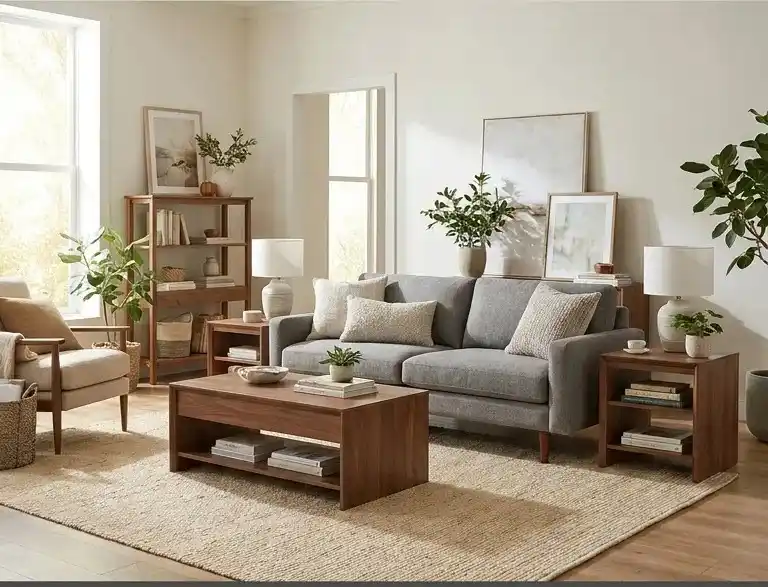
Pairing a grey sofa with warm wood furniture, like a walnut coffee table or oak media console, is one of the most reliable ways to prevent the room from feeling cold, since the wood grain introduces natural warmth and texture that grey alone lacks.
Choose a wood tone with reddish or golden undertones rather than a cooler, grey-washed wood finish, since the contrast between warm wood and cool grey upholstery is what creates the balanced effect.
Best suited for: any grey couch living room, and generally considered the most foundational pairing on this entire list.
2. Mustard and Gold Accent Pillows
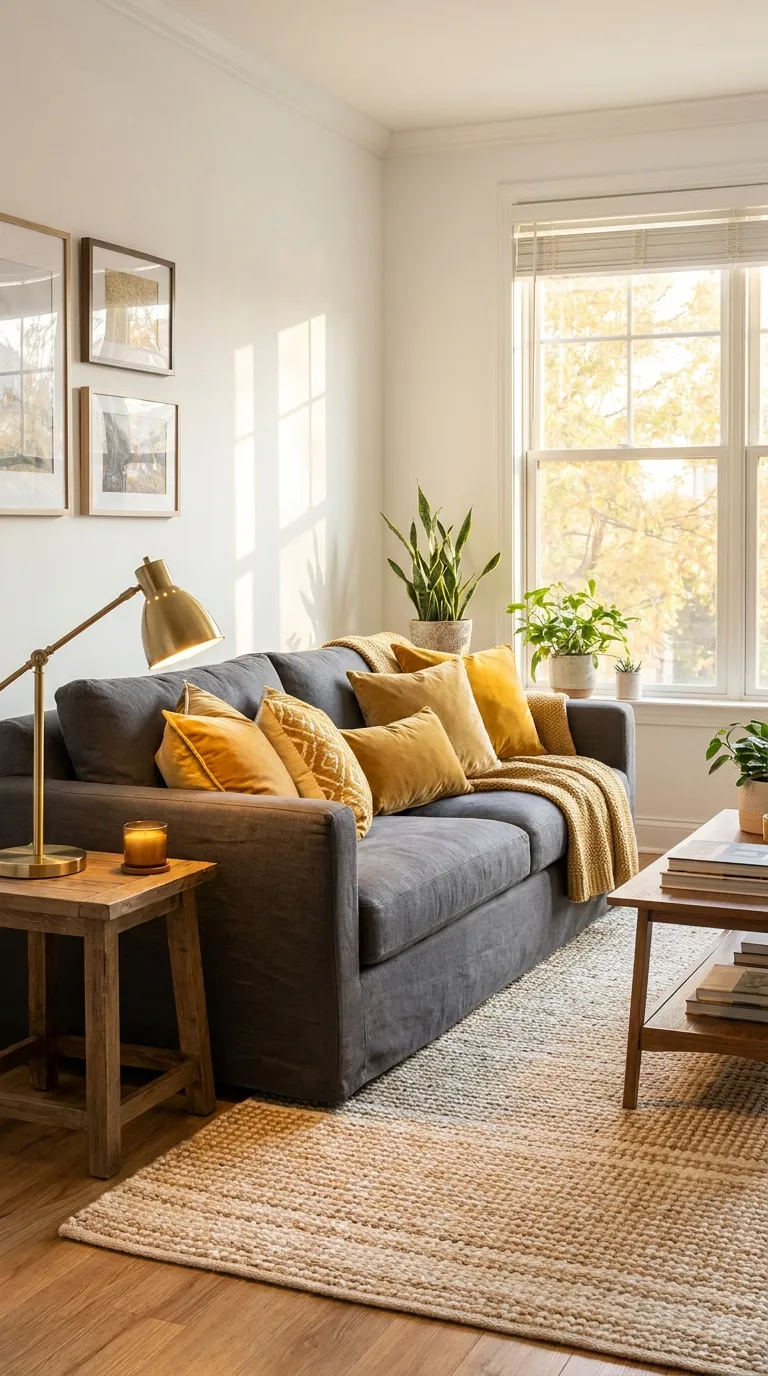
Mustard and gold accents bring genuine warmth and energy to a grey sofa, and the color pairing has become one of the most popular combinations for exactly this reason, since the warm yellow tones directly counterbalance grey’s coolness.
Introduce mustard through pillows, a throw blanket, or a single accent chair rather than large furniture pieces, since a small dose of this saturated color tends to go further than expected.
Best suited for: living rooms wanting a cheerful, energetic contrast to a cool grey sofa.
3. Layered Neutral Textures
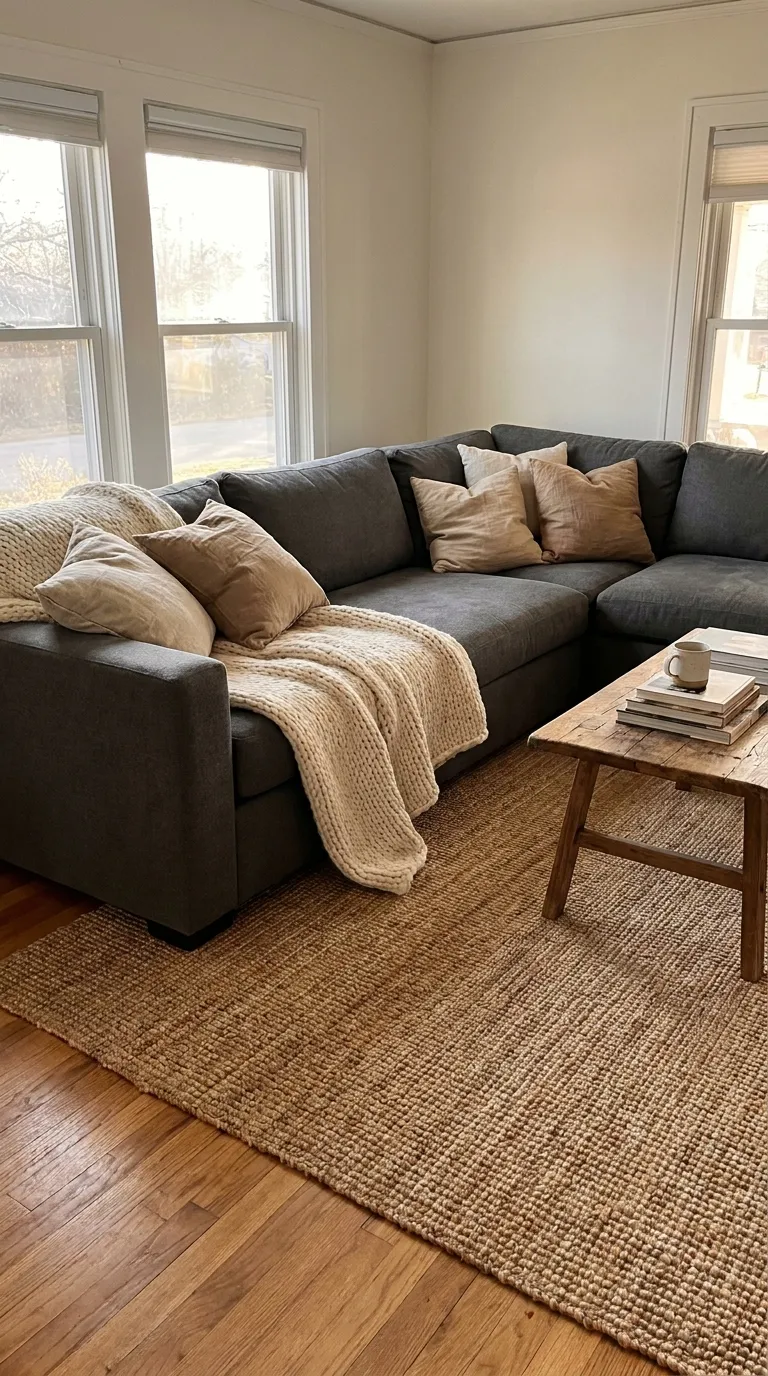
When you want to keep the palette neutral rather than adding bold color, layering different textures, like a chunky knit throw, linen pillows, and a woven jute rug, adds visual depth and warmth to a grey sofa without introducing new color.
Vary the texture scale across items, pairing a chunkier throw with finer-woven pillows, so the layered look reads as intentional rather than simply matching several similar neutral pieces together.
Best suited for: minimalist and Scandinavian-inspired living rooms wanting warmth without color.
4. Blush Pink Accents for Softness
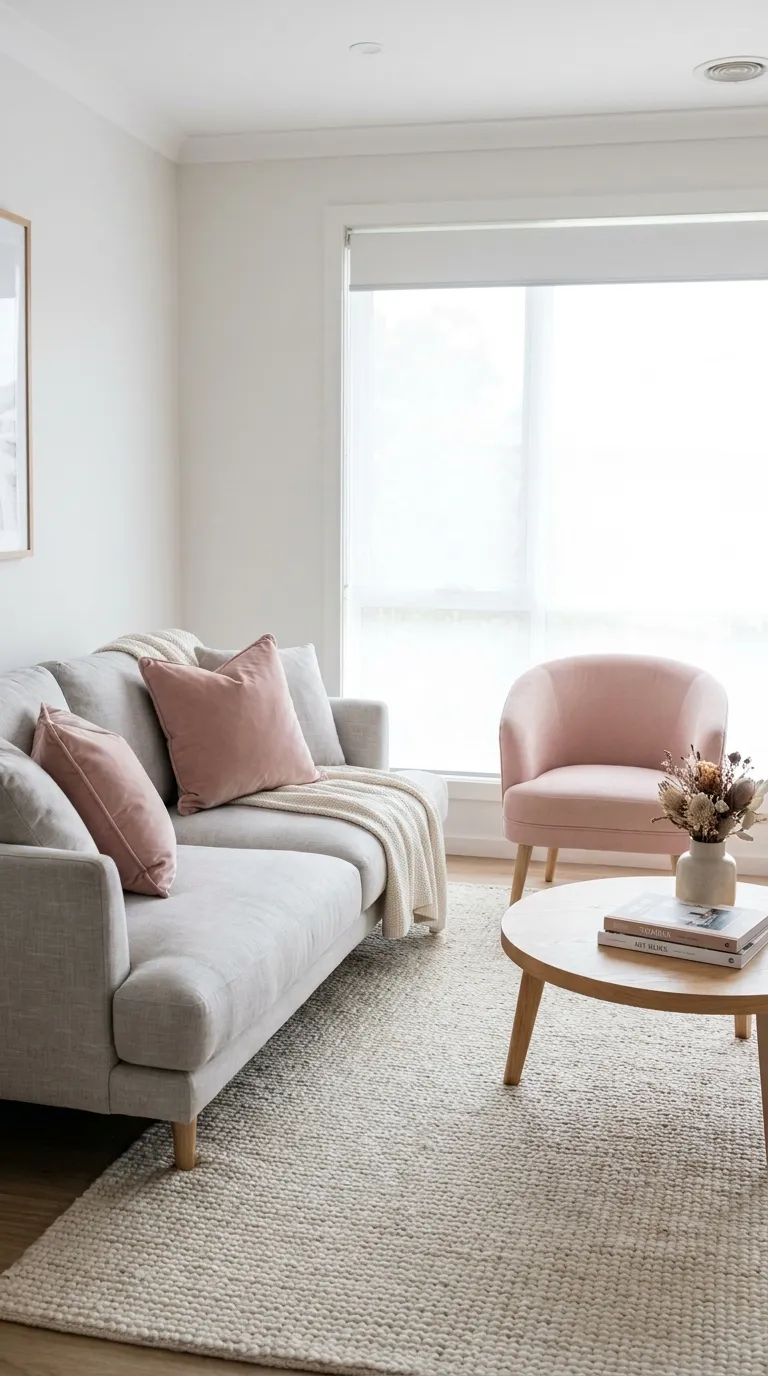
Blush pink softens a grey sofa’s cooler tones without the boldness of a more saturated accent color, making it a popular choice for living rooms wanting a gentle, romantic warmth rather than a dramatic contrast.
Pair blush accents with warm metallic details like brass or rose gold hardware, since the combination reinforces the softer, more feminine-leaning aesthetic this pairing typically aims for.
Best suited for: living rooms wanting a soft, gentle color addition rather than a bold statement pairing.
5. Black Metal Accents for Contrast
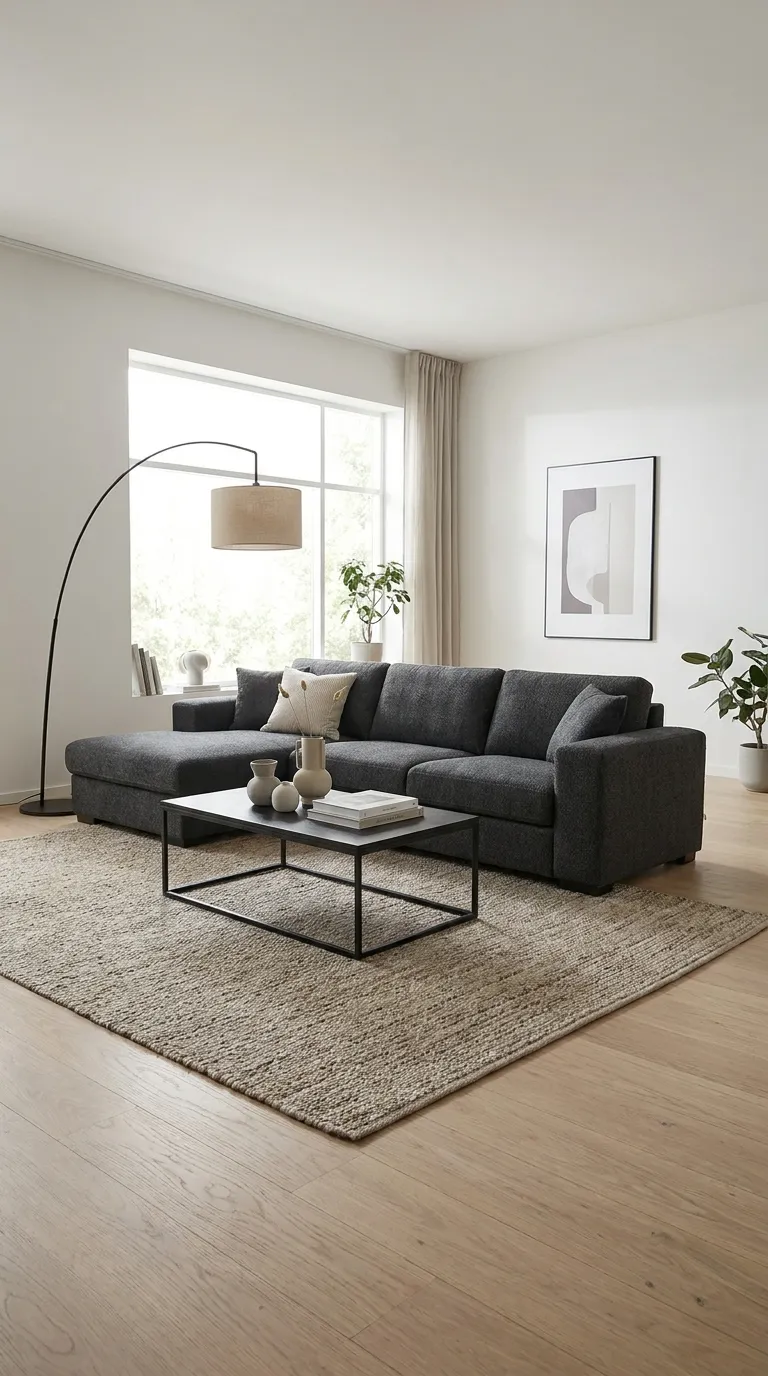
Black metal accents, in furniture frames, lighting, or hardware, add definition and a contemporary edge to a grey sofa, creating contrast through material and finish rather than color alone.
Repeat the black metal finish across at least two or three pieces, such as a lamp, table frame, and picture frames, so the accent feels like a deliberate design choice rather than a single isolated item.
Best suited for: modern and industrial-leaning living rooms wanting a grounded, contemporary look.
6. Navy Blue Accent Chair Pairing
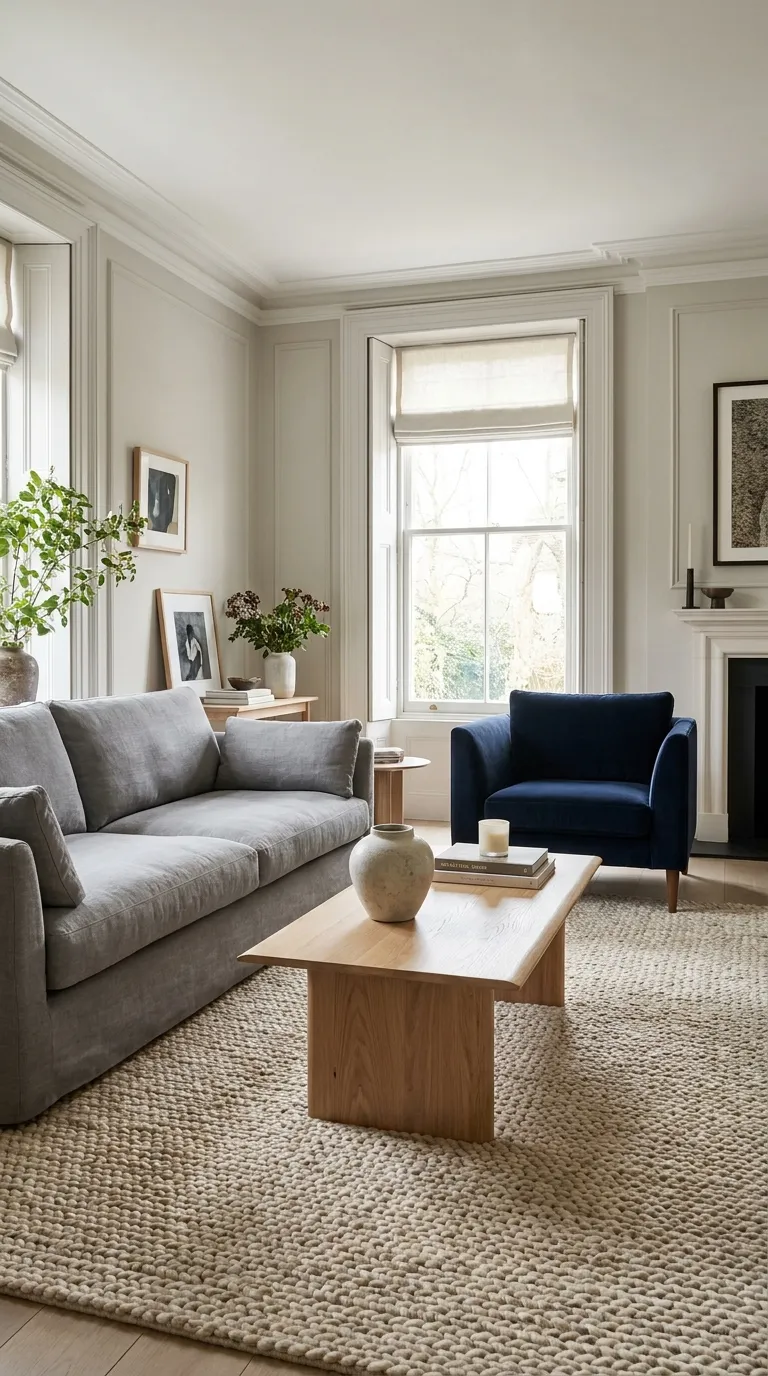
A navy blue accent chair pairs naturally with grey, since both are cool-toned colors that work together without clashing, creating a sophisticated, tonal color scheme rather than a high-contrast pairing.
Balance the darker navy chair with lighter accessories elsewhere in the room, like cream pillows or a light rug, so the two darker tones do not make the seating area feel visually heavy.
Best suited for: living rooms wanting a cohesive, tonal cool-color palette rather than a warm contrast.
7. Emerald Green Accent Pairing
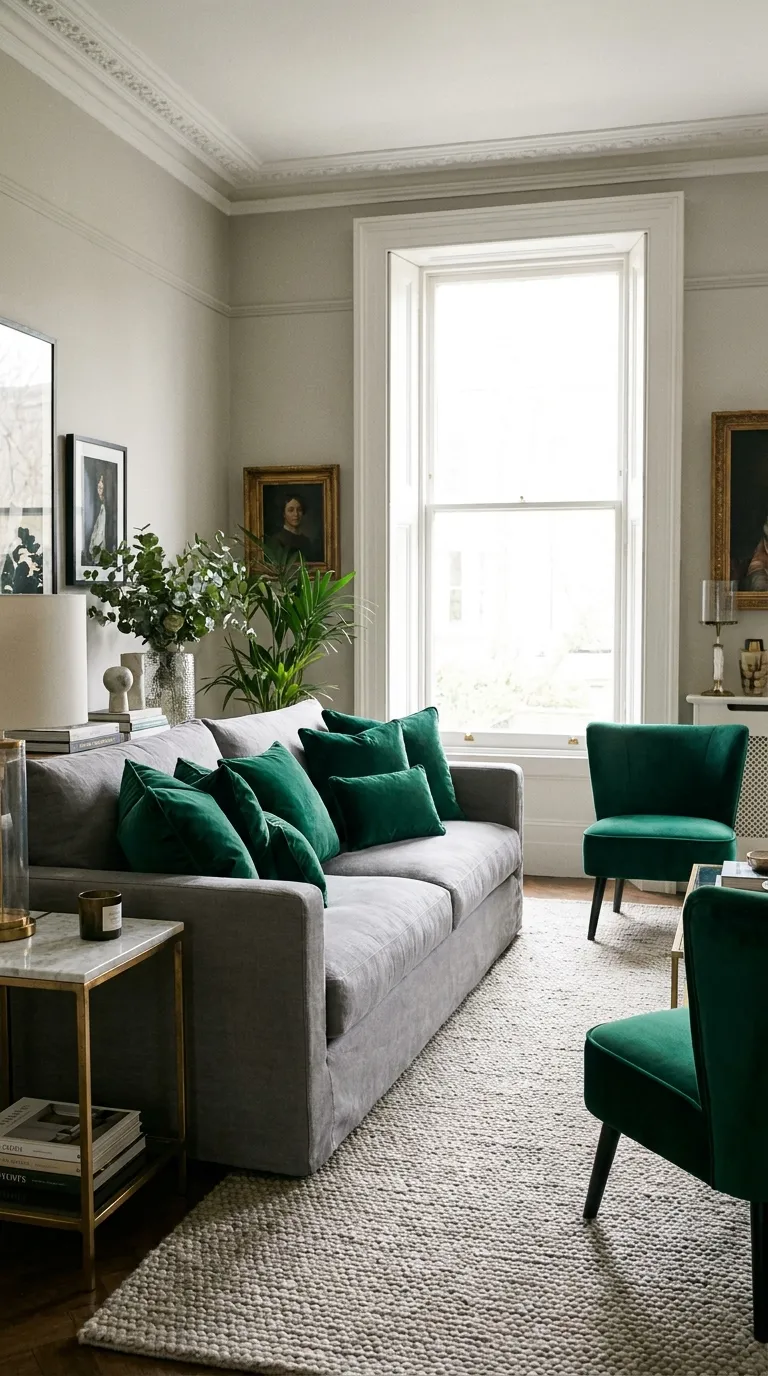
Emerald green brings a rich, jewel-toned contrast to a grey sofa, and the pairing has become especially popular alongside brass or gold accents, which further enhance the color’s depth and warmth.
Introduce emerald through velvet or another textured fabric rather than a flat matte finish, since the material’s sheen helps the color read as luxurious rather than simply bold.
Best suited for: living rooms wanting a rich, more dramatic color statement alongside the neutral sofa base.
8. Rust and Terracotta Accent Pairing
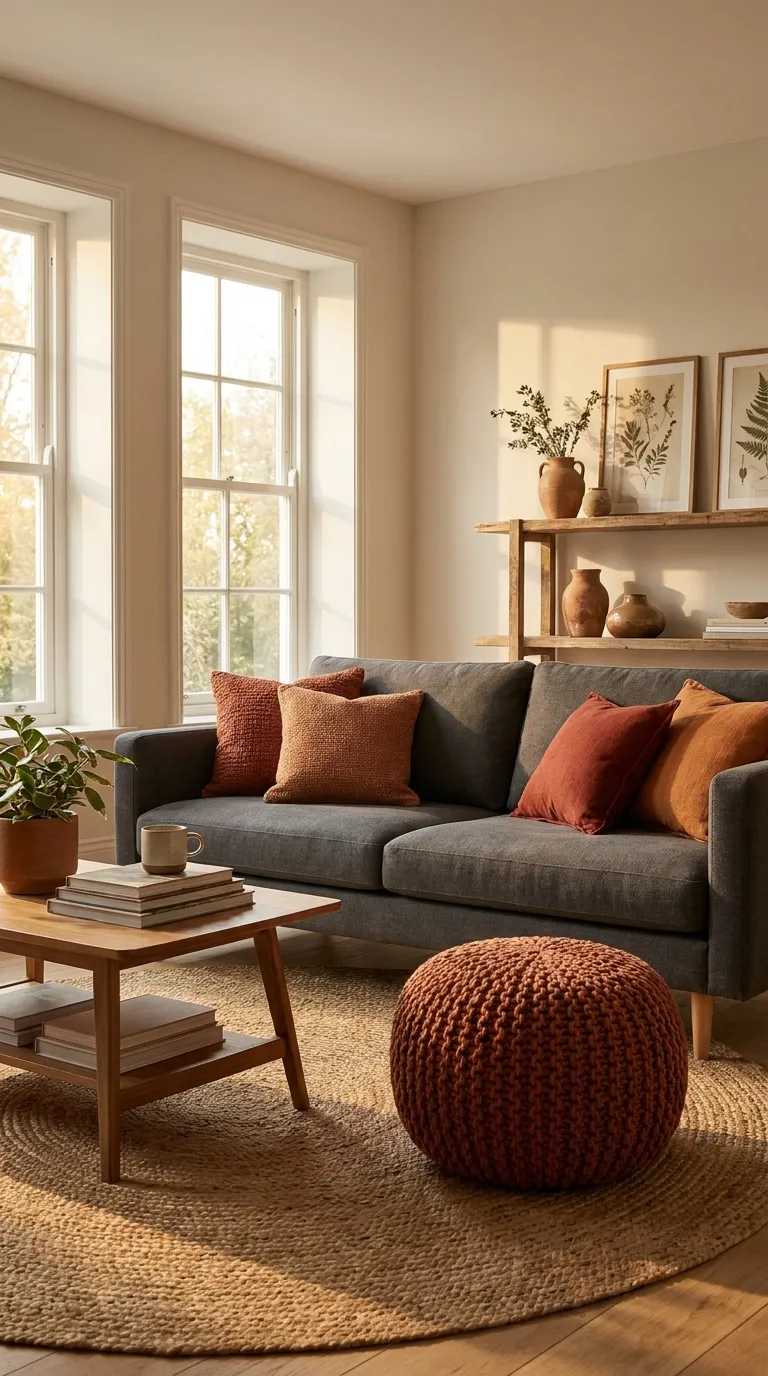
Rust and terracotta tones bring an earthy warmth to a grey sofa that pairs especially well with natural materials like jute, rattan, and warm wood, reinforcing an overall organic, grounded aesthetic.
Layer rust tones through pillows, a pouf, or a piece of art rather than a large upholstered item, since this warm, saturated color works best as an accent rather than the room’s dominant tone.
Best suited for: organic-modern and boho living rooms wanting warmth through an earthy color palette.
9. Statement Gallery Wall Behind the Sofa
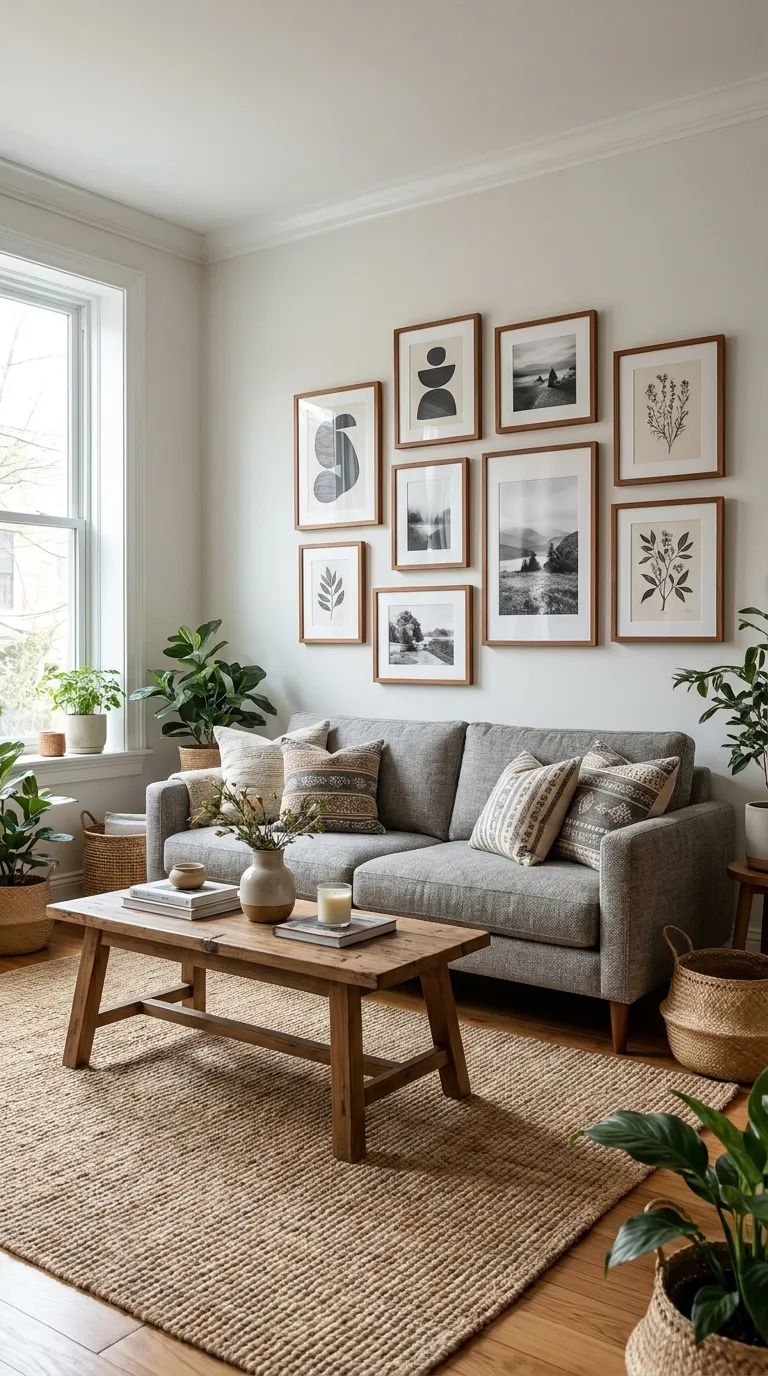
A gallery wall behind a grey sofa gives the room a focal point and a personal, collected quality, and it is one of the most effective ways to introduce color and warmth through art rather than furniture or textiles.
Choose art with warm tones or wood frames if the goal is to counterbalance the sofa’s coolness, keeping frame colors consistent across the gallery wall so the display reads as curated rather than random.
Best suited for: living rooms with a clear wall behind the sofa and homeowners wanting a personal design statement.
10. Layered Rugs for Warmth Underfoot
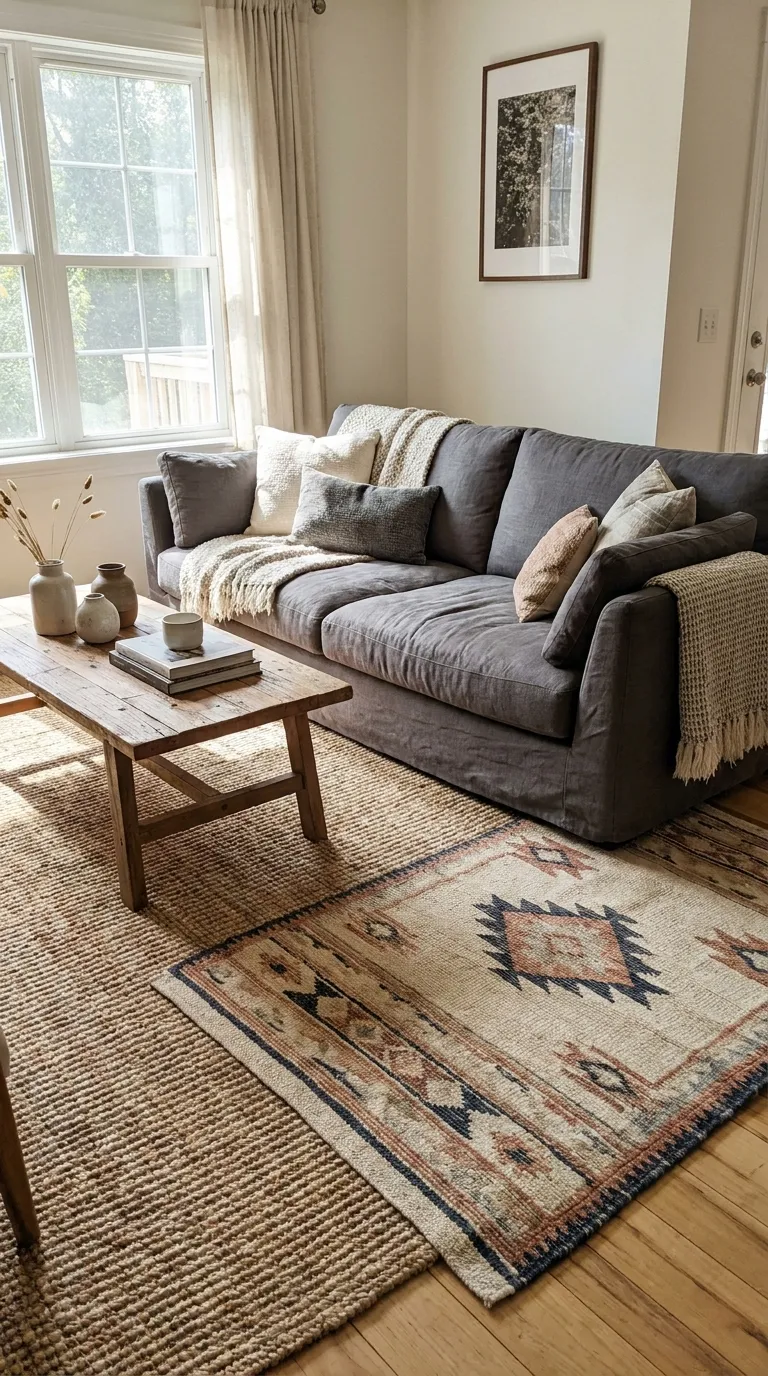
Layering a smaller patterned or textured rug over a larger neutral base rug adds warmth and visual interest underfoot, which helps ground a grey sofa the same way a bold accent color would, but through texture instead.
Choose a top rug pattern or color that pulls from other warm accents already in the room, such as pillows or wood tones, so the layered rugs feel connected to the rest of the space rather than randomly placed.
Best suited for: living rooms wanting added texture and warmth without introducing a bold new furniture color.
11. Brass and Gold Lighting Fixtures
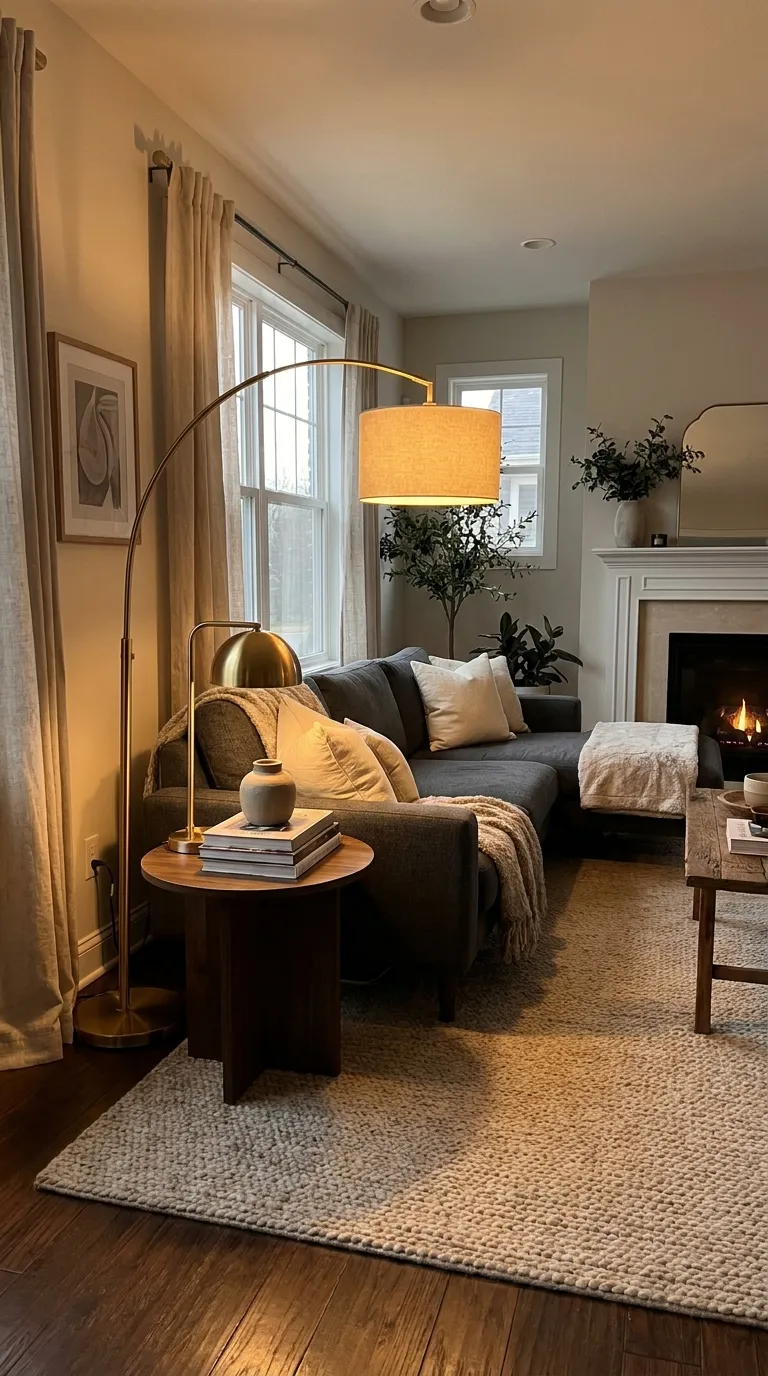
Brass and gold lighting fixtures introduce warm metallic tones that counterbalance a grey sofa’s coolness, and lighting is often one of the easiest elements to update without committing to a larger furniture or color change.
Choose a consistent brass or gold finish across at least two light sources in the room, such as a floor lamp and table lamp, so the warm metal reads as a deliberate design choice throughout the space.
Best suited for: living rooms wanting warmth through metallic finishes rather than bold color or pattern.
12. Textured Knit Throw Blankets
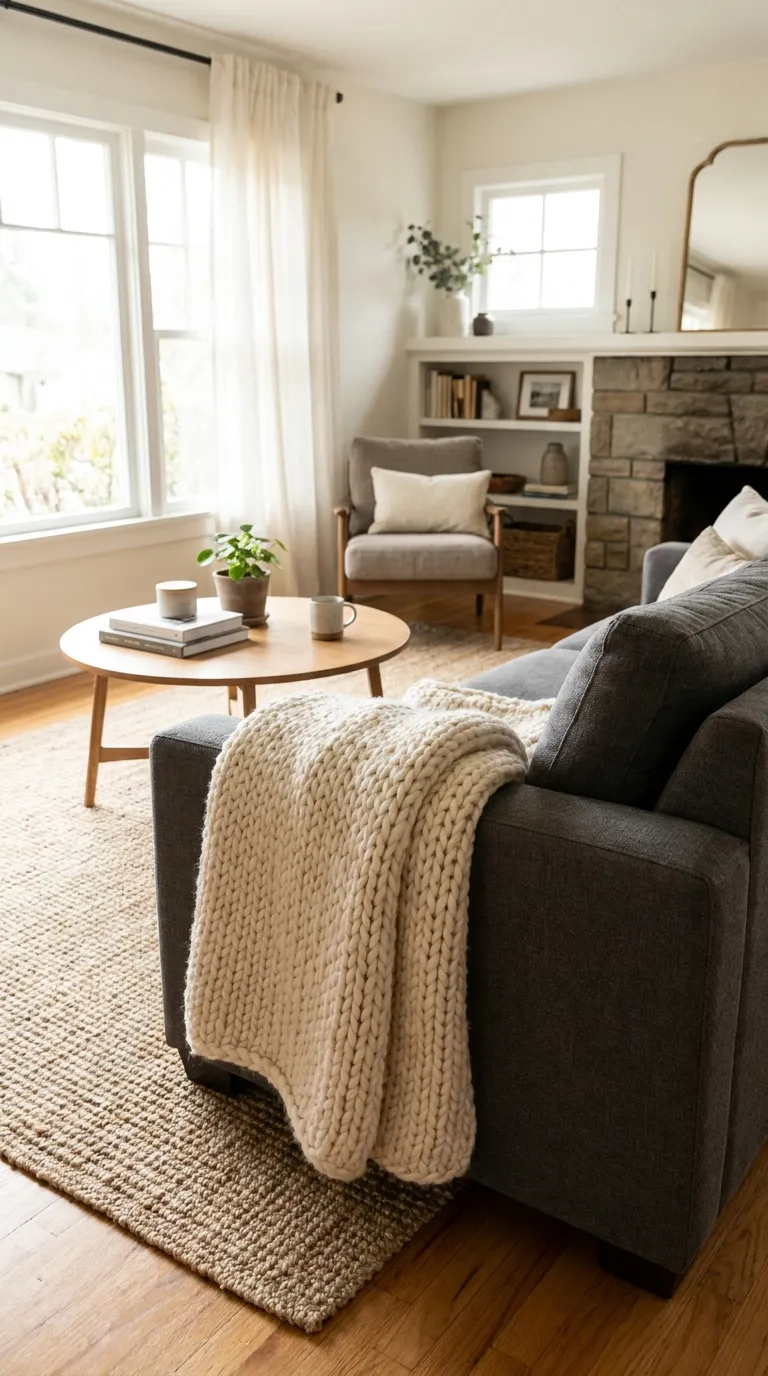
A chunky knit throw blanket is one of the simplest and most affordable ways to add texture and a cozy, lived-in feel to a grey sofa, and it can be swapped seasonally without any real commitment.
Choose a throw in a warm cream or ivory tone rather than another shade of grey, since the tonal contrast against the sofa is part of what makes the throw stand out as a deliberate styling choice.
Best suited for: any grey couch living room, and one of the lowest-cost updates on this entire list.
13. Contrasting Ottoman or Coffee Table Color
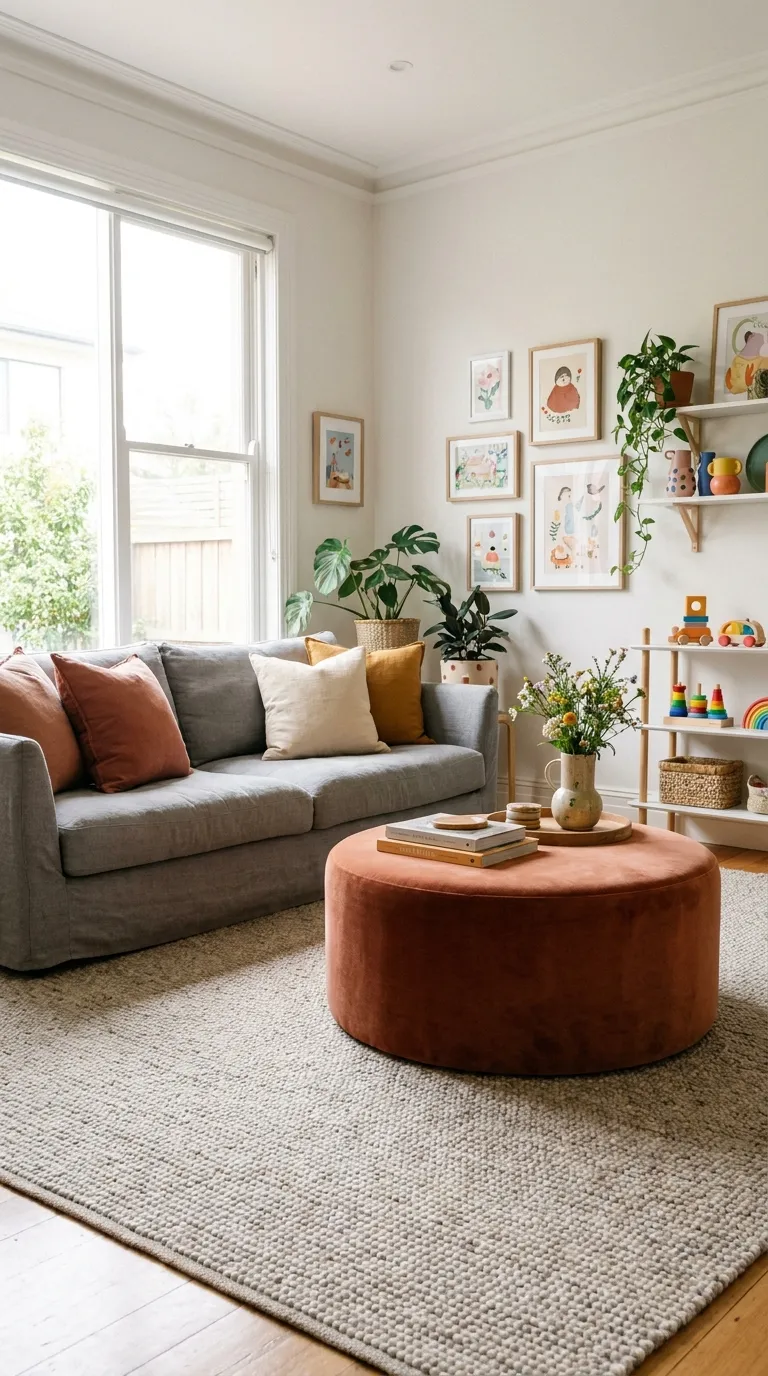
Choosing a coffee table or ottoman in a contrasting warm color, rather than another neutral, gives the seating area a clear focal point and injects color into the room’s most central, high-visibility furniture piece.
An upholstered ottoman offers the added benefit of soft, functional seating or a footrest, making it a practical choice alongside its role as a color statement.
Best suited for: living rooms wanting a single bold furniture choice rather than spreading color across multiple smaller accents.
14. Greenery and Plants to Soften the Grey
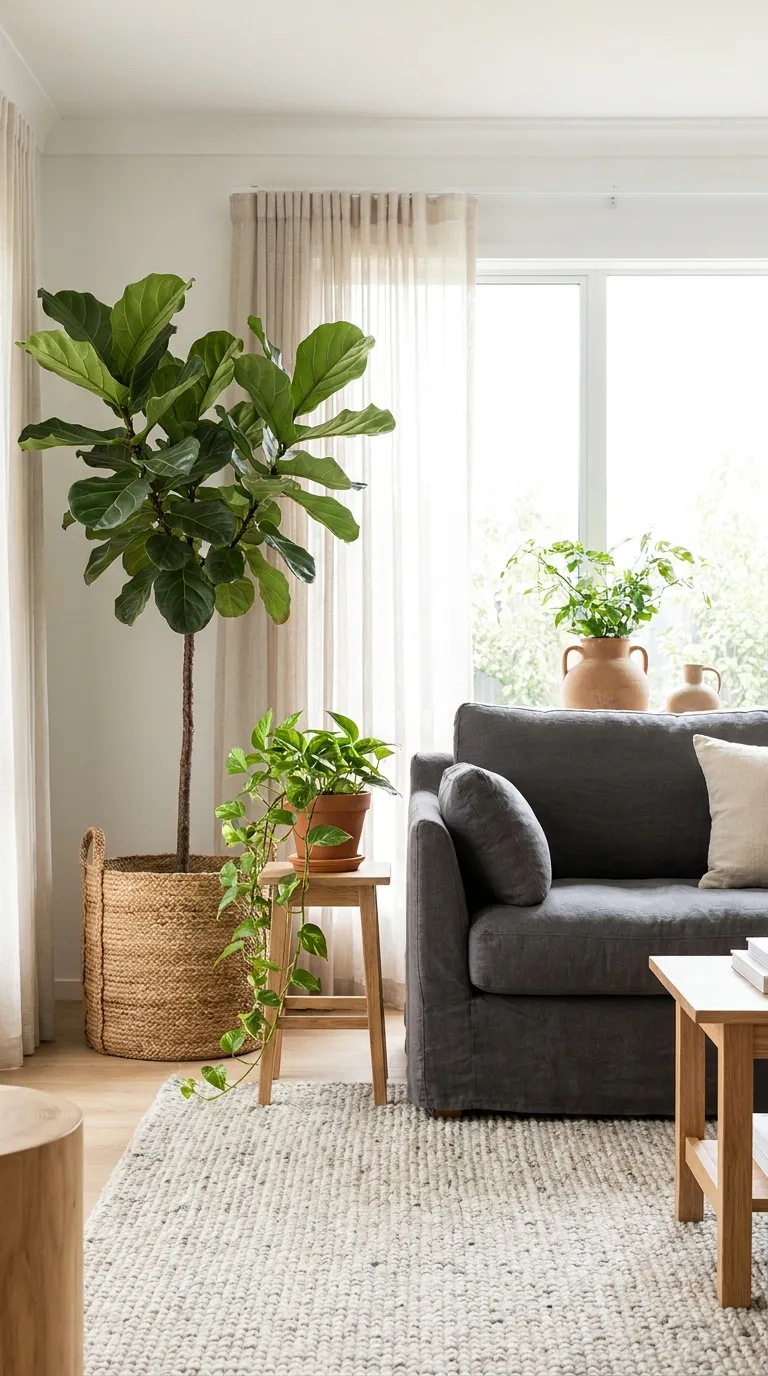
Indoor plants bring natural color and life to a grey sofa without requiring any commitment to a new furniture color or fabric, and the organic green tones soften the room’s overall palette effectively.
Choose a larger floor plant near the sofa for visual impact, and add one or two smaller plants on nearby surfaces to reinforce the greenery throughout the space rather than isolating it to a single corner.
Best suited for: any grey couch living room, especially rooms with good natural light to support larger plants.
15. Two-Tone Grey Mix
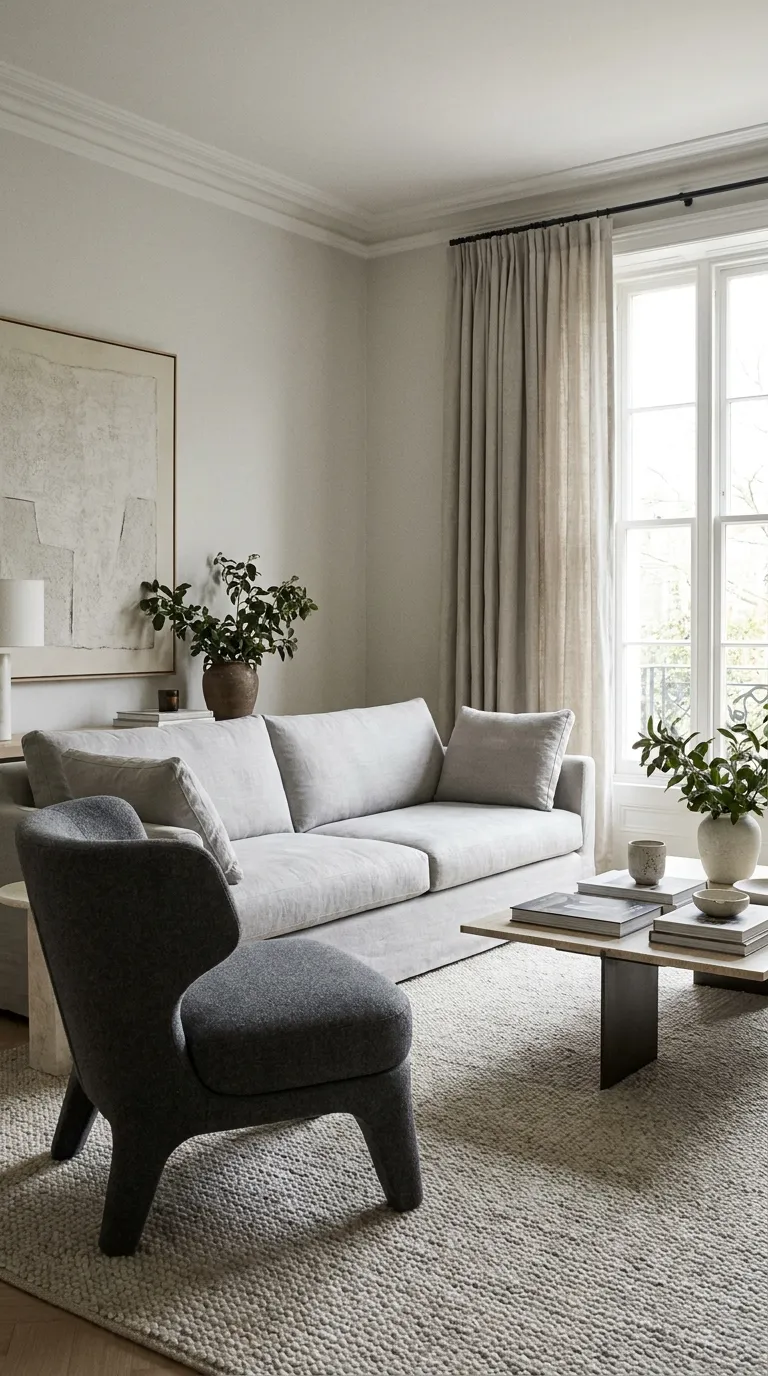
Mixing two different shades of grey, a lighter dove grey sofa with a darker charcoal accent chair, for example, creates depth and interest while staying within a cohesive, monochromatic palette rather than introducing an entirely new color.
Keep at least a noticeable value difference between the two grey tones, since shades too close together can look like a mismatched attempt at matching rather than an intentional tonal pairing.
Best suited for: living rooms committed to a neutral palette but wanting more depth than a single grey tone alone.
16. Bold Patterned Area Rug
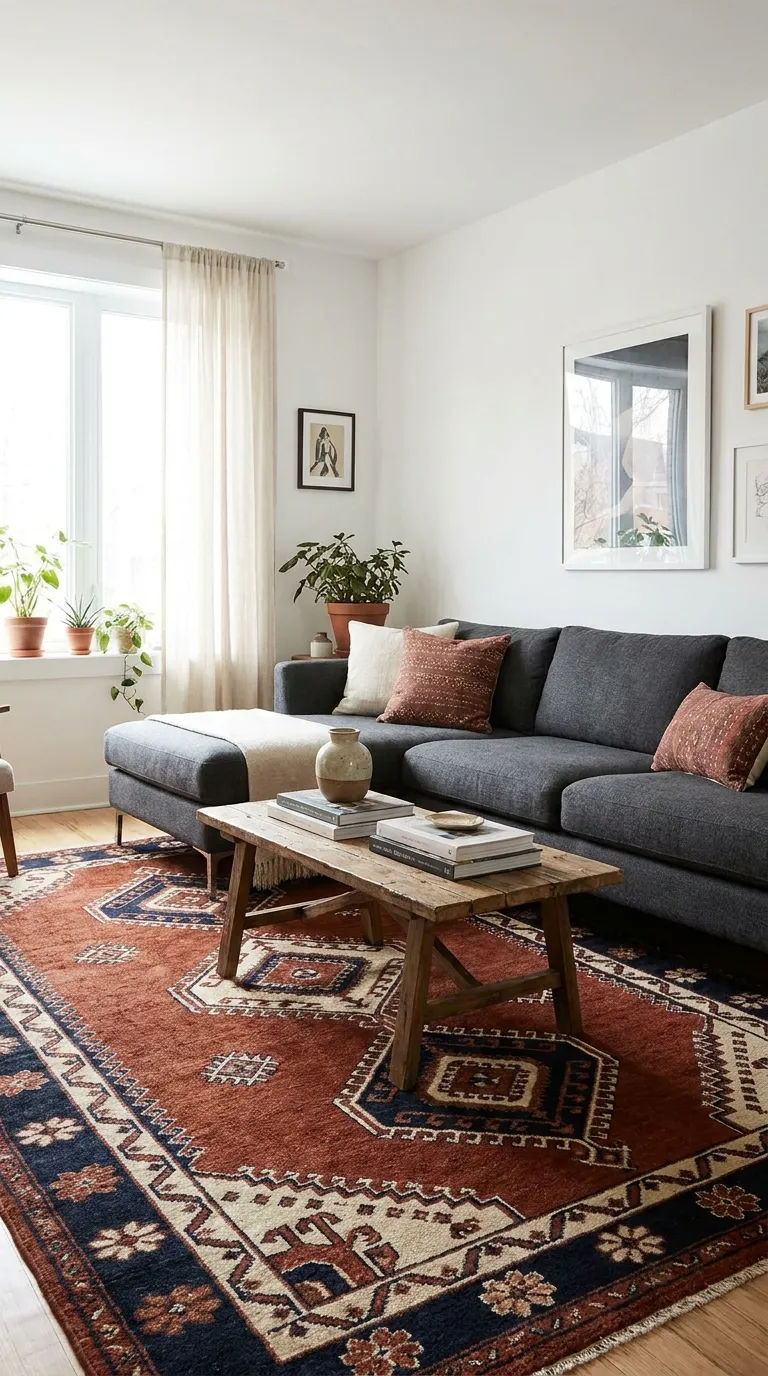
A bold patterned rug gives a grey couch living room a strong dose of color and visual interest right at the room’s center, without requiring any furniture replacement or major commitment beyond the rug itself.
Choose a rug pattern with colors that can extend into pillows or other smaller accents elsewhere in the room, tying the bold floor statement into the rest of the space rather than leaving it isolated.
Best suited for: living rooms wanting a strong color and pattern statement while keeping the sofa itself neutral.
17. Warm-Toned Wall Paint Pairing
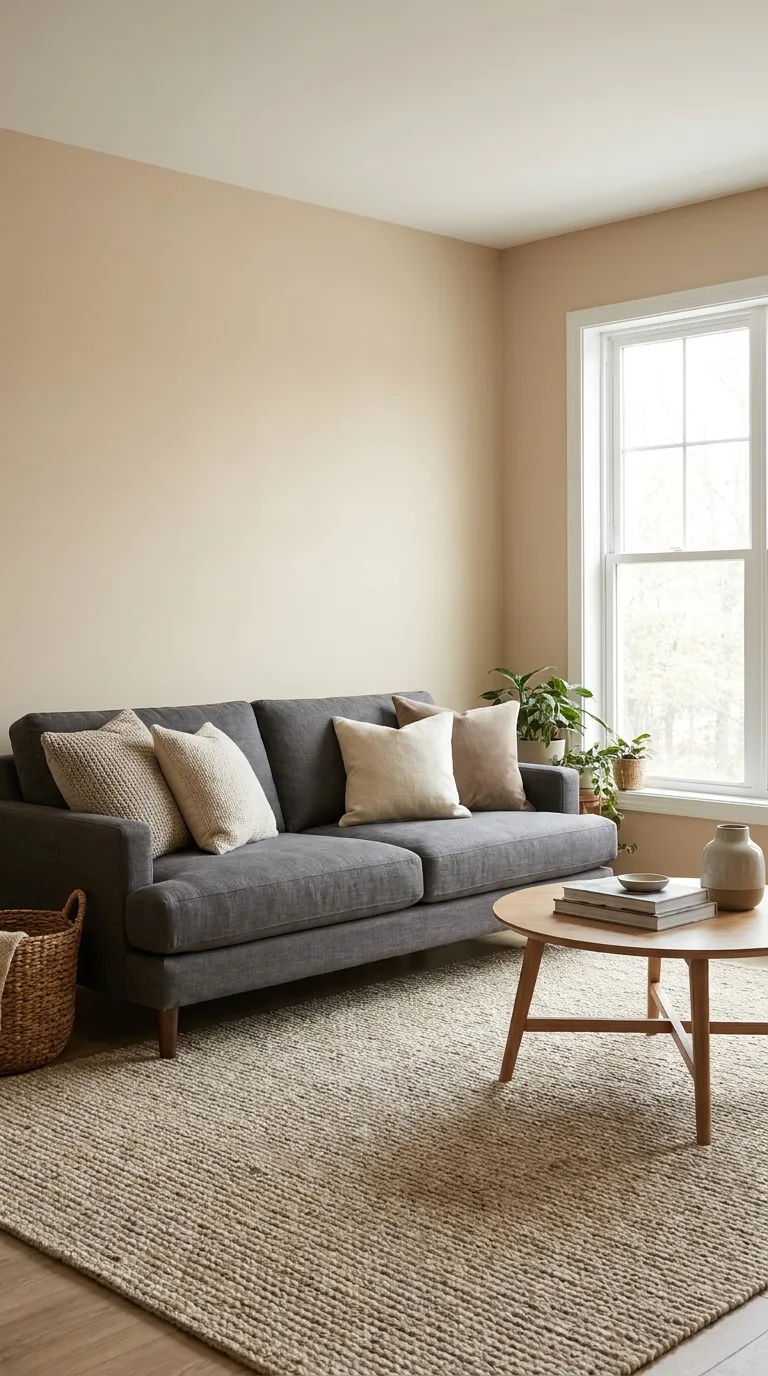
Pairing a grey sofa with a warm-toned wall color, like a soft cream or warm beige, rather than another cool grey or stark white, gives the whole room a warmer backdrop that counteracts the sofa’s coolness at the largest visual scale in the room.
Test paint samples directly against your specific sofa fabric and in your room’s actual lighting before committing, since warm and cool undertones can shift noticeably depending on the light source.
Best suited for: living rooms undergoing a paint refresh and wanting the wall color itself to do some of the warming work.
18. Mixed Metal Accents
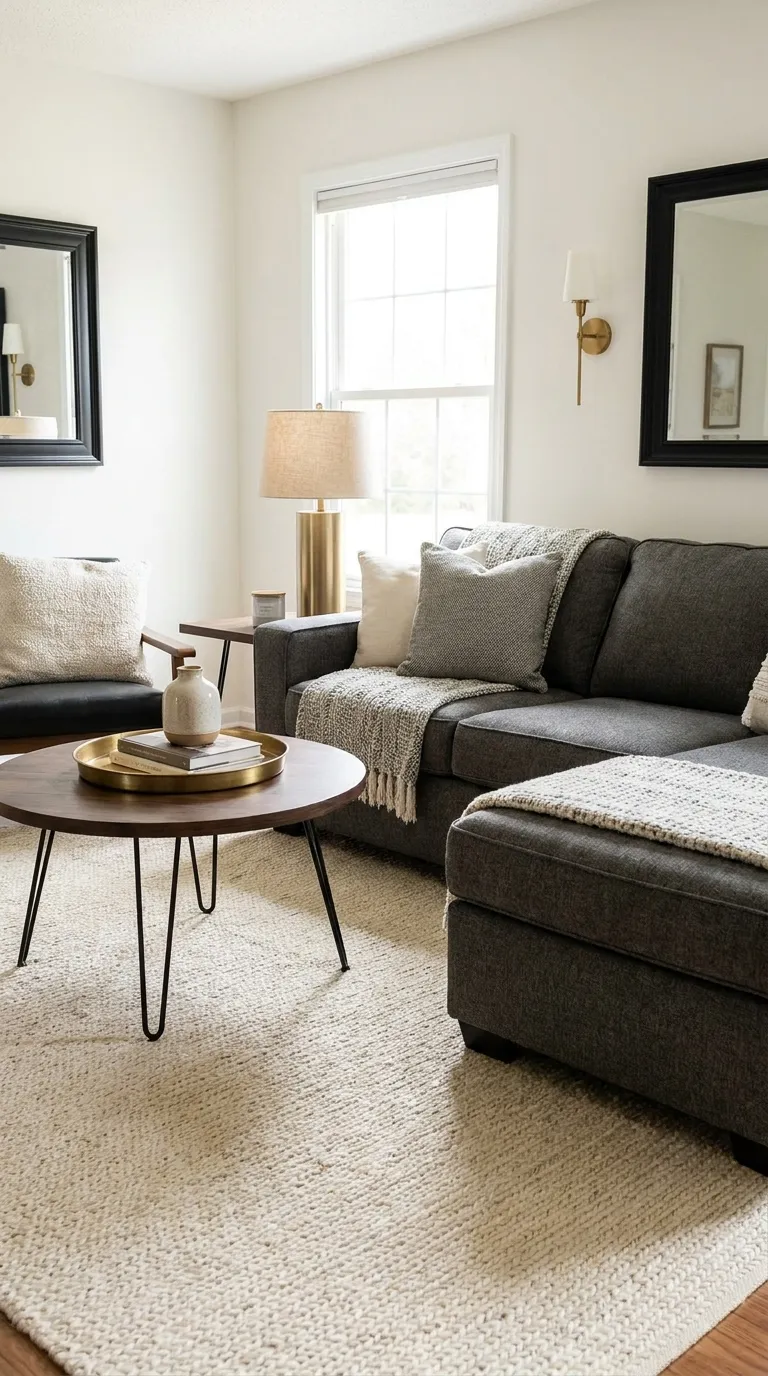
Intentionally mixing warm brass and cooler black metal finishes throughout a grey couch living room adds layered visual interest, offering both the warmth of brass and the grounded contrast of black in the same space.
Anchor the mix with one dominant metal finish, using it more frequently than the second, so the combination reads as a deliberate layered choice rather than an inconsistent mismatch of hardware and fixtures.
Best suited for: eclectic and collected-modern living rooms comfortable mixing more than one finish throughout the space.
Planning and Buying Tips
A few practical decisions up front will help your grey couch pairing look intentional rather than assembled from mismatched neutral pieces.
● Identify your sofa’s undertone before choosing accent colors — cool-toned charcoal grey and warm-toned greige pair differently with certain colors, so bring a fabric swatch when shopping for paint or accessories.
● Standard sizing to shop for — a living room rug should extend at least 6 to 12 inches beyond the sofa’s footprint on the front legs, with most standard living room rugs running 8 by 10 feet or larger.
● Balance warm and cool tones deliberately — decide early whether you are pairing the grey sofa with warm accents, cool accents, or a tonal grey palette, since mixing all three approaches without a plan tends to look unintentional.
● Test fabric swatches under your room’s actual lighting — grey upholstery can look noticeably warmer or cooler depending on natural versus artificial light, so confirm the tone before purchasing large accent pieces.
● Layer at least three textures into the space — combining smooth, woven, and knit textures, such as leather, jute, and a chunky throw, keeps a neutral-based room from feeling flat even without bold color.
● Choose performance fabric for high-traffic households — a grey sofa in a home with kids or pets benefits from a stain-resistant or performance fabric to maintain its practical, easy-care appeal over time.
Cost Breakdown: Budget, Mid-Range, and Luxury Updates
Styling around a grey couch can range from a simple throw pillow refresh to a full room update involving new furniture and paint.
Budget ($50–$400)
Throw pillows, a knit throw blanket, plants, and a paint refresh fall in this range. Installation is fully DIY, with paint being the main time investment rather than an added cost.
Mid-Range ($400–$2,000)
An accent chair, a patterned area rug, new lighting fixtures, and a gallery wall of framed art sit in this tier. Delivery and basic assembly typically add $50–$150 depending on the retailer.
Luxury / Premium ($2,000–$8,000+)
A full furniture update, including a new coffee table, accent chairs, custom art, and layered rugs, falls here. Interior design consultation, if hired, typically adds $500–$3,000 depending on scope.
Accent Color and Material Comparison
| Accent Approach | Price Range | Warmth Added | Commitment Level | Best For |
| Warm wood furniture | $150–$1,500 | High | Moderate — furniture-level commitment | Foundational warmth in any grey couch room |
| Mustard/rust pillows and throws | $30–$150 | High | Low — easy to swap | Quick, low-cost warmth and color |
| Navy or emerald accent chair | $300–$1,500 | Moderate | Moderate to high | Sophisticated tonal or jewel-tone contrast |
| Brass/gold lighting | $100–$600 | Moderate | Low to moderate | Warmth through metal finish rather than color |
| Patterned area rug | $150–$1,200 | Moderate to high | Moderate | Anchoring color and pattern underfoot |
| Indoor plants | $15–$150 | Low to moderate | Low | Low-cost, low-commitment natural warmth |
Maintenance Tips
● Grey upholstery — vacuum the sofa weekly with an upholstery attachment to prevent dust and pet hair buildup, which shows more visibly on grey fabric than on patterned upholstery.
● Performance fabric sofas — spot-clean spills immediately with a fabric-appropriate cleaner, and check the manufacturer’s care instructions before using any cleaning product not specifically recommended.
● Throw pillows and blankets — rotate and fluff pillows regularly to maintain shape, and wash removable covers or throws periodically to keep colors looking fresh rather than dulled by dust.
● Wood furniture accents — dust regularly and use furniture polish or oil suited to the specific wood type every few months to maintain their natural warmth and grain.
● Rugs — vacuum regularly and rotate every six months if in direct sunlight, since bold patterned rugs can show uneven fading more noticeably than solid neutral rugs.
● Common mistake to avoid — choosing all accent pieces in the same cool color family as the grey sofa, which reinforces the flat, cold feeling rather than correcting it.
Frequently Asked Questions
What colors go best with a grey couch?
Warm colors like mustard, rust, and terracotta tend to work especially well with a grey couch by directly counterbalancing its coolness, while navy and emerald offer a more tonal, sophisticated pairing for those who prefer to stay within cooler tones.
How do I keep a grey living room from feeling cold?
Layering in warm wood tones, textured throws, warm metallic lighting, and at least one bold accent color are the most effective ways to prevent a grey-based living room from feeling flat or sterile.
What wood tone pairs best with a grey sofa?
Warm wood tones with golden or reddish undertones, such as walnut or oak, generally pair best with a grey sofa, since the contrast between warm wood and cool grey upholstery is what creates the room’s overall balance.
Should I choose a light grey or dark grey couch?
Light grey tends to show less heat absorption and pairs well with airy, bright rooms, while dark charcoal grey hides stains more effectively and creates a more dramatic, grounded look, so the choice often comes down to household use and desired mood.
Is a grey couch a good long-term investment?
Yes, grey has remained a popular, adaptable neutral for over a decade, making it a lower-risk long-term choice compared to more trend-dependent colors, as long as it is paired with intentional accent choices to keep the room feeling current.
How to Choose the Right Grey Couch Pairing for You
The right pairing depends on three factors: whether you prefer warm or cool accent tones, how bold you want the contrast to be, and your budget for furniture versus smaller accessories. A warmer approach through wood, mustard, or rust tends to feel cozier and more approachable, while a cooler tonal grey-and-navy palette feels more sophisticated and restrained.
Budget should guide where to start — throw pillows, a rug, and plants offer the highest visual impact for the lowest cost, while a new accent chair or coffee table represents a bigger investment worth making once you are confident in the overall direction.
Finally, consider your household’s daily use. If the sofa sees heavy traffic from kids or pets, prioritize warmth through easier-to-maintain elements like wood furniture and metal lighting over more delicate textiles that require frequent care.
Start with one or two low-cost changes, like pillows and a throw, to test whether you prefer a warm or cool accent direction, then build toward larger investments like an accent chair or new rug once you know the palette works — a grey couch living room comes together fastest when the color direction is decided early and applied consistently.


- Be Respectful
- Stay Relevant
- Stay Positive
- True Feedback
- Encourage Discussion
- Avoid Spamming
- No Fake News
- Don't Copy-Paste
- No Personal Attacks
- Be Respectful
- Stay Relevant
- Stay Positive
- True Feedback
- Encourage Discussion
- Avoid Spamming
- No Fake News
- Don't Copy-Paste
- No Personal Attacks
