17 Cubicle Decor Ideas That Make a Beige Box Feel Like Your Space
Published: 7 Sep 2026
A cubicle is one of the most restrictive spaces to decorate — no paint, no permanent fixtures, and usually a strict limit on what can go up on the walls. Cubicle decor ideas work well for exactly this problem: they focus on small, removable, and often reusable updates that add personality and function without violating office policy or requiring a security deposit’s worth of caution. Done well, a decorated cubicle can genuinely improve focus and mood during the workday, not just look nicer to coworkers walking by. This guide covers 17 cubicle decor ideas for every budget and office policy, from magnetic organizers to fabric wall coverings and desk lighting. Along the way, you will find honest pros and cons, real price ranges, a materials comparison table, maintenance advice, and answers to the questions people search for most before decorating their workspace. By the end, you will know exactly which ideas fit your cubicle, your budget, and your office’s rules.
Is Decorating Your Cubicle Right for You?
Cubicle decor is generally low-risk and low-cost, but it is worth weighing a few practical factors before you start pinning things to the walls.
Pros
● Very low cost — most cubicle decor ideas cost under $50 total, since the scale of the space naturally limits how much you can spend even if you wanted to.
● Fully portable — almost everything used to decorate a cubicle can come with you if you change desks or jobs, unlike built-in home decor.
● Improves daily mood and focus — a personalized, organized workspace has been linked to better focus and lower stress during long workdays.
● No permanent commitment — most ideas use magnetic, adhesive, or freestanding solutions that leave no damage and can be swapped out anytime.
Cons
● Office policy limits options — many workplaces restrict what can be attached to cubicle walls or hung from the ceiling grid, so it is worth checking policy before buying.
● Very limited space — a standard cubicle offers little room for anything beyond small, functional items, which rules out larger decor pieces entirely.
● Shared visibility — unlike a home office, cubicle decor is visible to coworkers and sometimes clients, so overly personal or cluttered choices can affect how the space is perceived.
● Cleaning and moving requirements — some offices require desks to be cleared periodically for cleaning or reassignment, so decor that is quick to pack up is more practical long-term.
For most office workers, decorating a cubicle is worth doing, as long as you check your workplace’s policy on wall attachments first and prioritize items that are genuinely quick to remove and reset if your desk situation changes.
1. Magnetic Board and Whiteboard Organizer
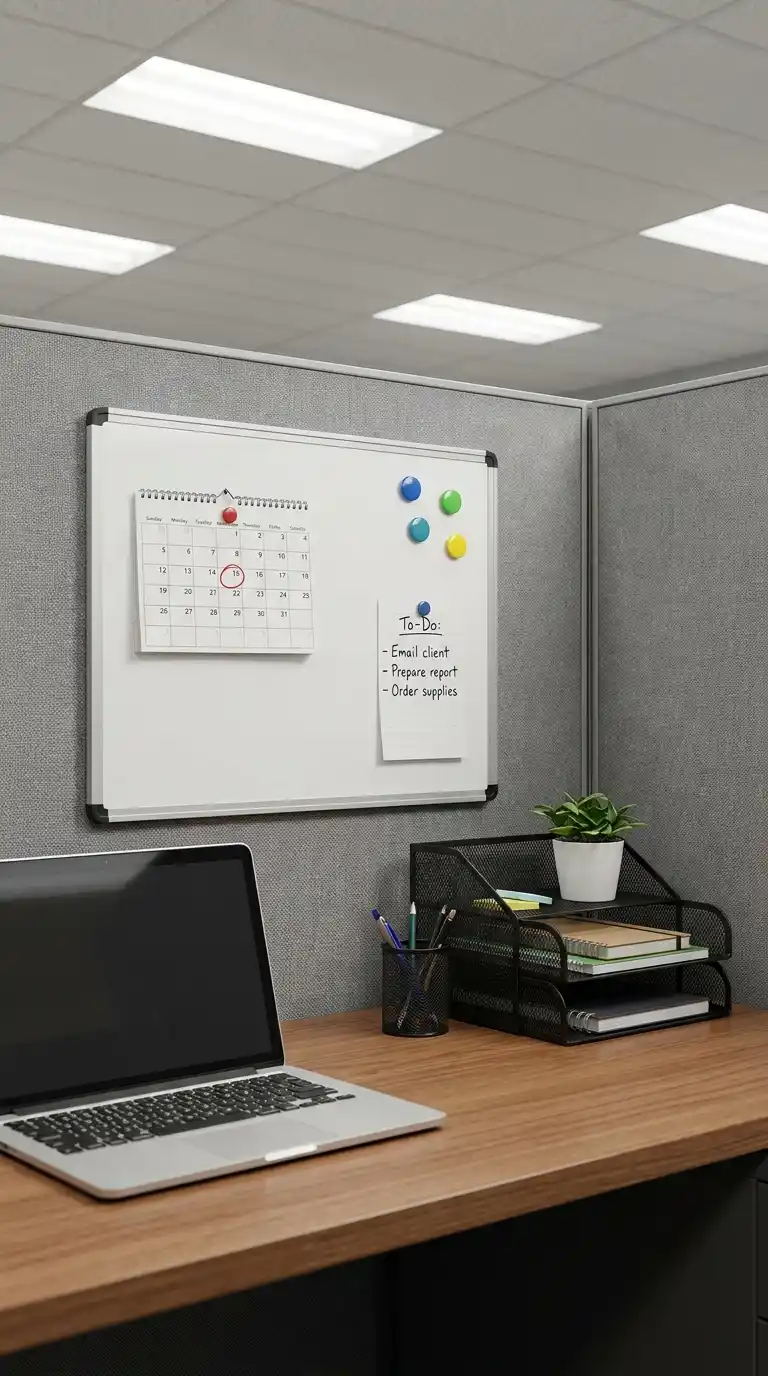
A magnetic whiteboard mounted on the cubicle wall gives you a reusable space for notes, reminders, and a running to-do list without causing permanent damage or adding clutter to the desk surface.
Choose a slim, frameless magnetic board rather than a bulky one, since standard cubicle walls have limited depth and a thick board can interfere with nearby shelving or overhead bins.
Best suited for: anyone juggling frequent notes or reminders and workplaces that restrict adhesive wall items.
2. Low-Maintenance Desk Plants
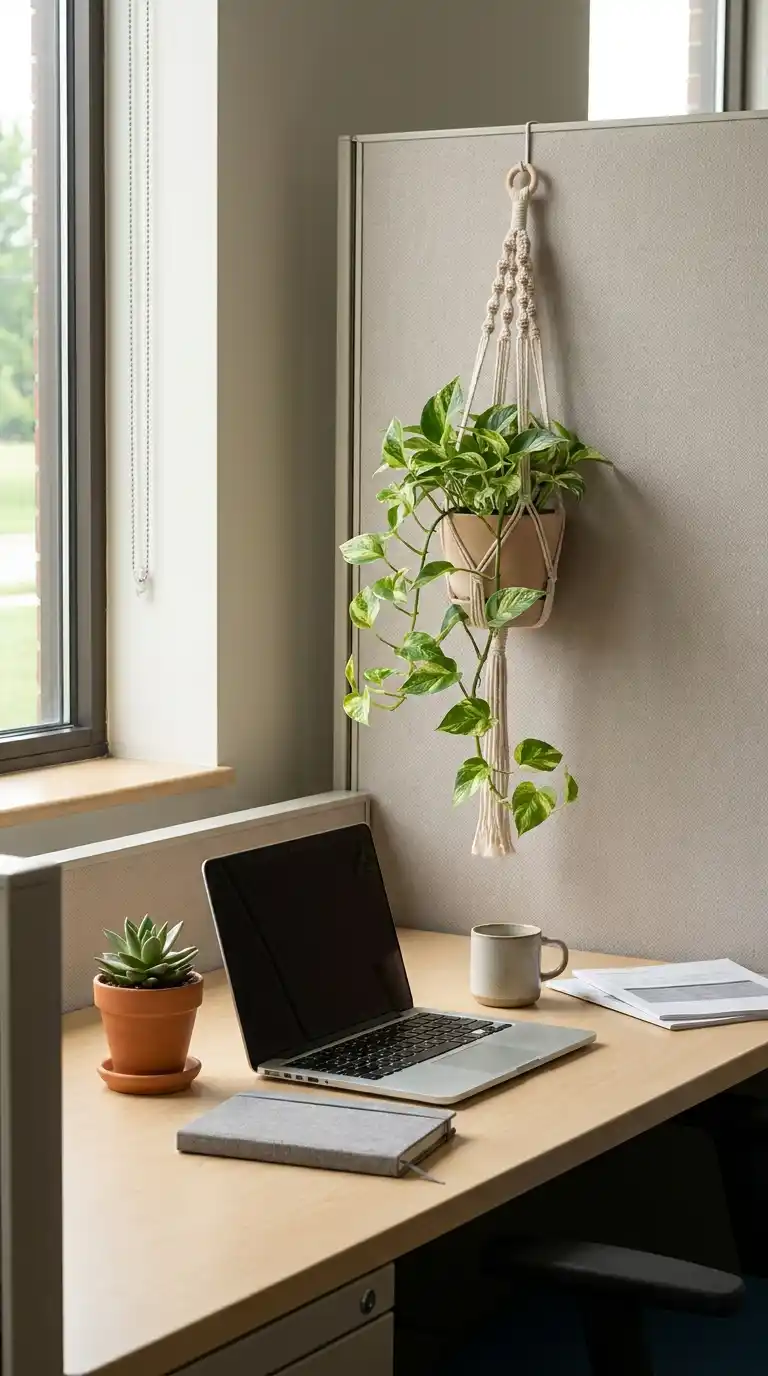
A small plant or two brings life and color to an otherwise beige, static space, and low-maintenance varieties like succulents or pothos tolerate the inconsistent light and forgetfulness that come with a busy workday.
Choose a plant sized to fit comfortably in a small corner of the desk without crowding your keyboard or monitor, and pick a pot with a drip tray if your desk sits near carpet or shared equipment.
Best suited for: any cubicle with at least some natural or consistent artificial light, and anyone wanting a low-effort mood boost.
3. Personal Photo Clip Strip
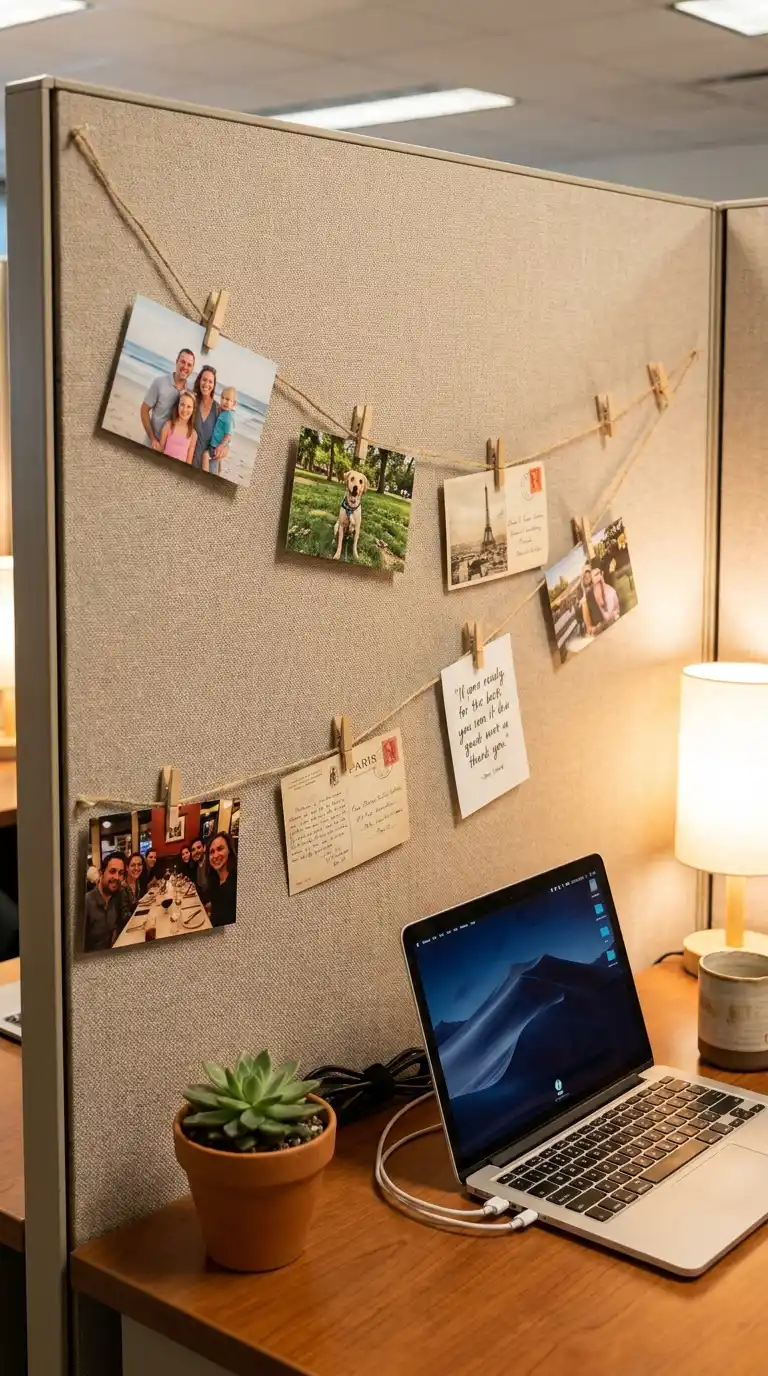
A simple clip strip made from twine and small clothespins gives you a rotating photo display that takes up almost no space and can be updated in seconds without any tools or tape.
Keep the strip to five or six photos maximum in a standard cubicle, since a longer display can start to look cluttered rather than personal in such a small footprint.
Best suited for: anyone wanting a quick, low-cost way to personalize their space with photos of family, friends, or travel.
4. Fabric Wall Covering for Extra Pinning Space
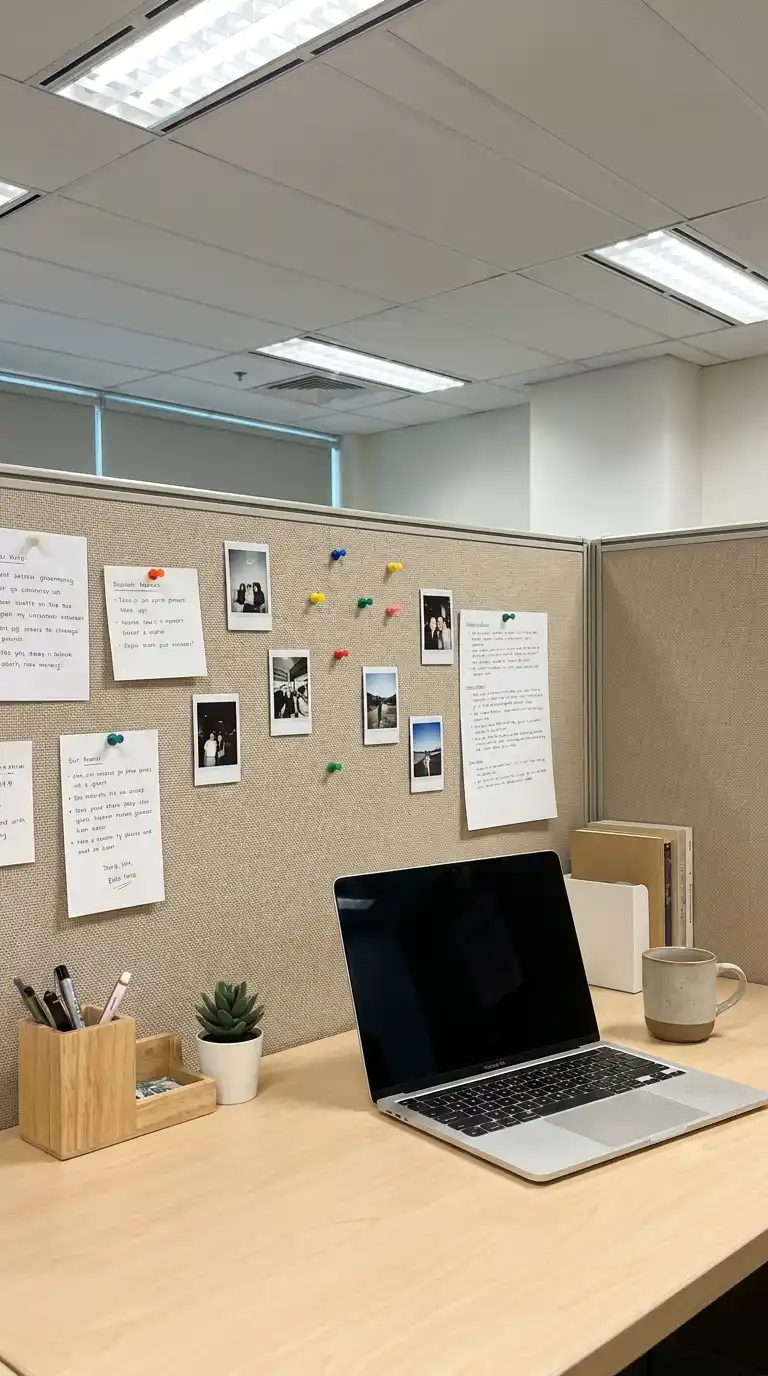
Adding a fabric-covered panel over the existing cubicle wall gives you a genuinely pinnable surface, since many standard cubicle walls are either too hard to hold pins well or already worn from years of use.
Choose a neutral or subtly textured fabric rather than a bold pattern, since the panel is meant to be a functional backdrop for your other decor items, not a statement piece itself.
Best suited for: cubicles with worn or non-pinnable wall surfaces and anyone who relies on pinned notes and reminders.
5. Warm String Lights for Ambient Lighting
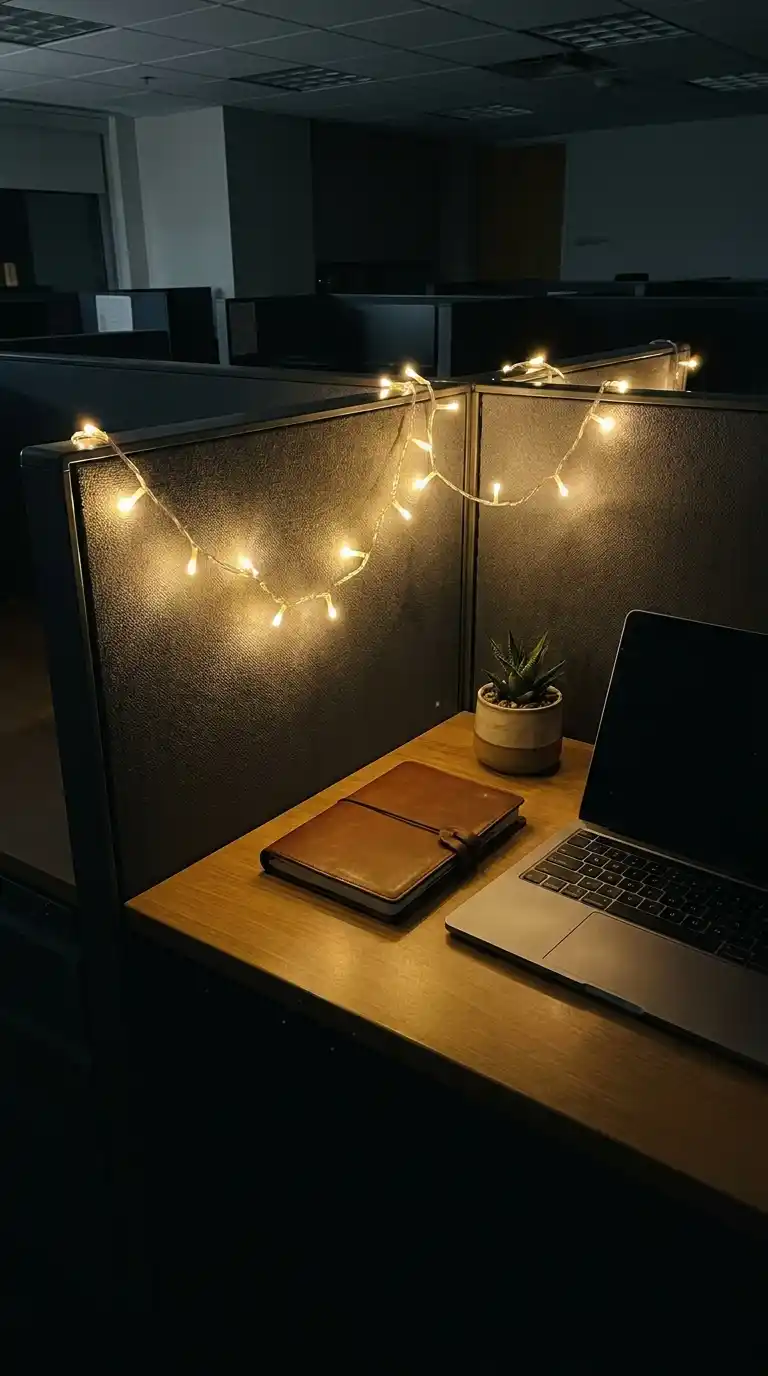
A short strand of warm white string lights along the top of the cubicle wall softens the harsh overhead fluorescent lighting that most offices default to, and it adds a subtle, cozy glow without requiring any electrical changes.
Choose battery-powered or USB-powered lights rather than ones requiring a wall outlet, since cubicle outlet access is often limited and already occupied by work equipment.
Best suited for: offices with harsh overhead lighting and anyone sensitive to bright fluorescent light during long work sessions.
6. Desk Organizer Caddy
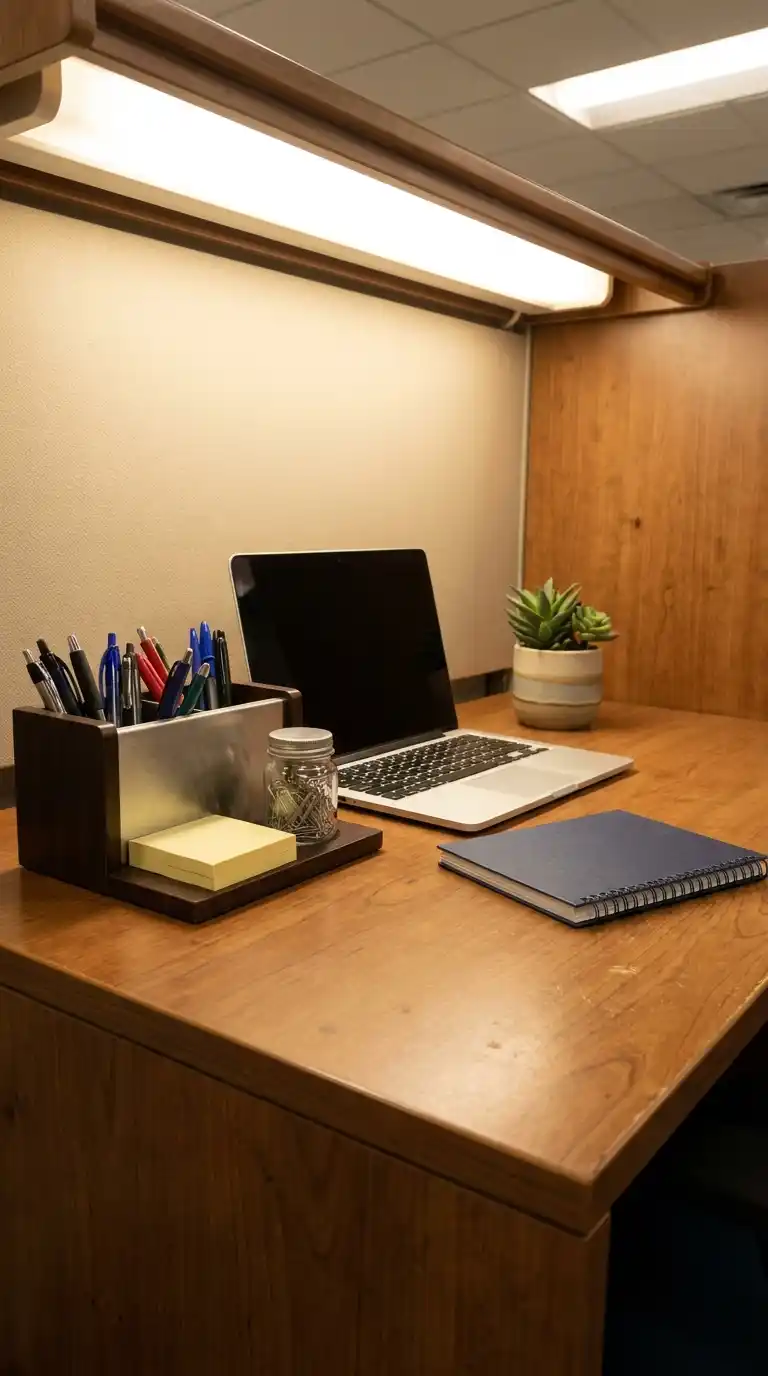
A dedicated desk organizer keeps pens, sticky notes, and small supplies contained in one spot, which both reduces visual clutter and makes daily tasks faster since you are not digging through a drawer for a pen.
Choose an organizer with a mix of compartment sizes so you can separate frequently used items, like pens, from less frequent ones, like extra paper clips or spare charging cables.
Best suited for: anyone whose desk surface tends to accumulate loose supplies throughout the day.
7. Compact Shelf Riser for Vertical Storage
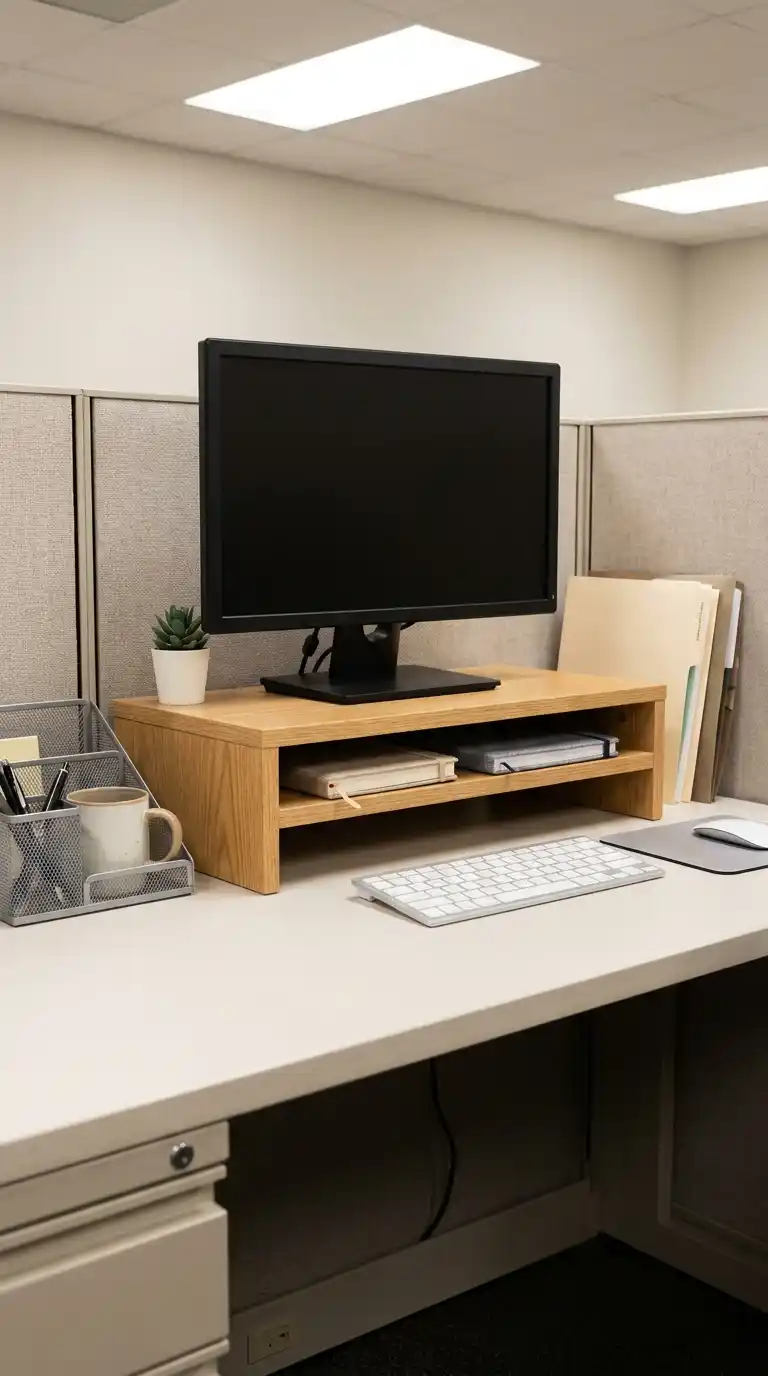
A shelf riser adds vertical storage in a footprint that would otherwise sit empty, and elevating a monitor to eye level has the added benefit of improving posture during long screen sessions.
Choose a riser with a weight capacity that comfortably exceeds your monitor’s weight, and confirm the underneath clearance is tall enough for the notebooks or folders you actually plan to store there.
Best suited for: cubicles with limited desk surface area and anyone needing better monitor height for ergonomics.
8. Removable Wallpaper Accent Panel
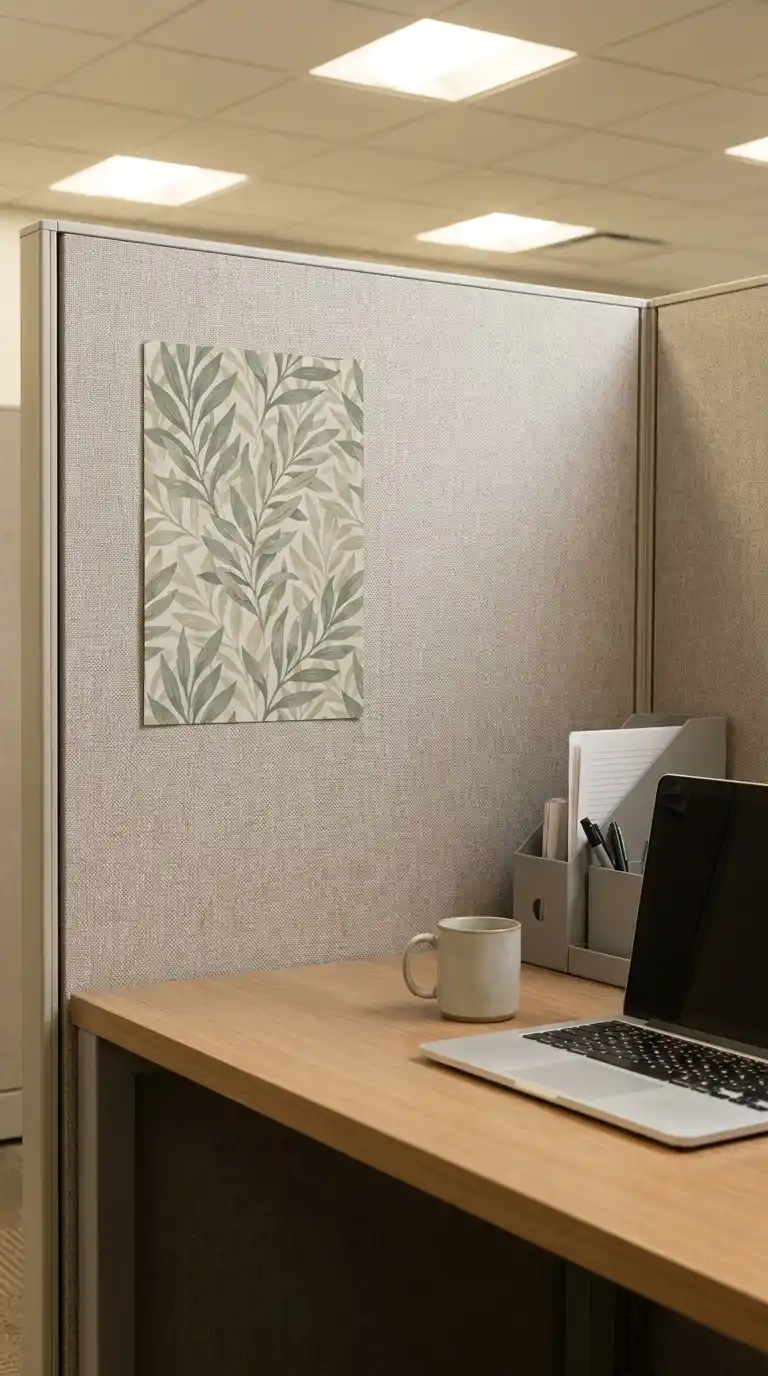
A small section of removable wallpaper applied to a portion of the cubicle wall introduces pattern and color in a way that standard decor items cannot, and it comes down cleanly if your office policy changes or you switch desks.
Test the adhesive on a small, inconspicuous section of the cubicle wall first, since fabric-covered cubicle walls do not always hold removable wallpaper as reliably as painted drywall.
Best suited for: cubicles with a hard or painted wall surface and anyone wanting a bolder decor statement within office policy limits.
9. Small Framed Art or Motivational Print
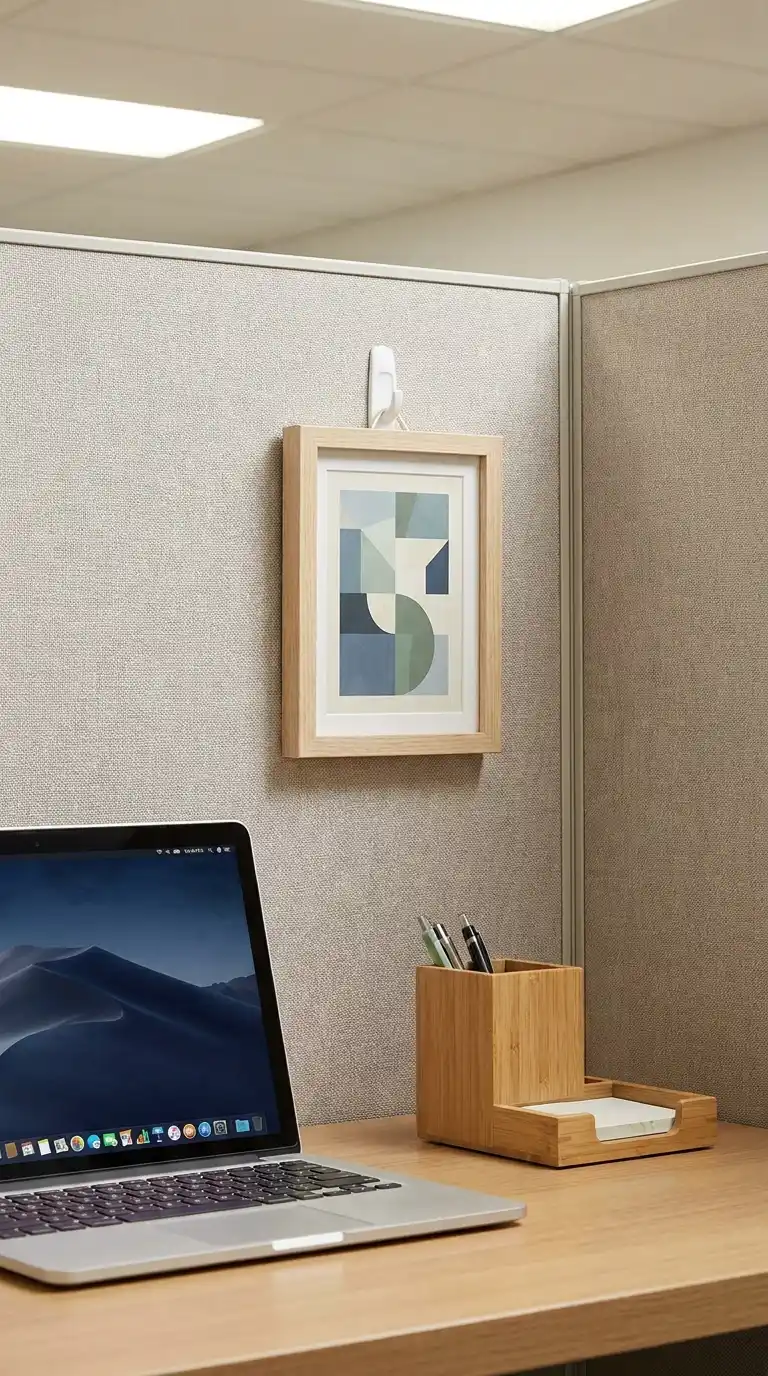
A single small framed print gives your cubicle a genuine piece of art rather than a printed motivational poster, and choosing an abstract or minimal design keeps it appropriate for a professional shared space.
Keep the frame small, no larger than roughly 8 by 10 inches, so it fits comfortably within the limited wall space without crowding other decor items nearby.
Best suited for: anyone wanting a single polished decor moment rather than several smaller scattered items.
10. Coordinated Desk Mat and Accessories
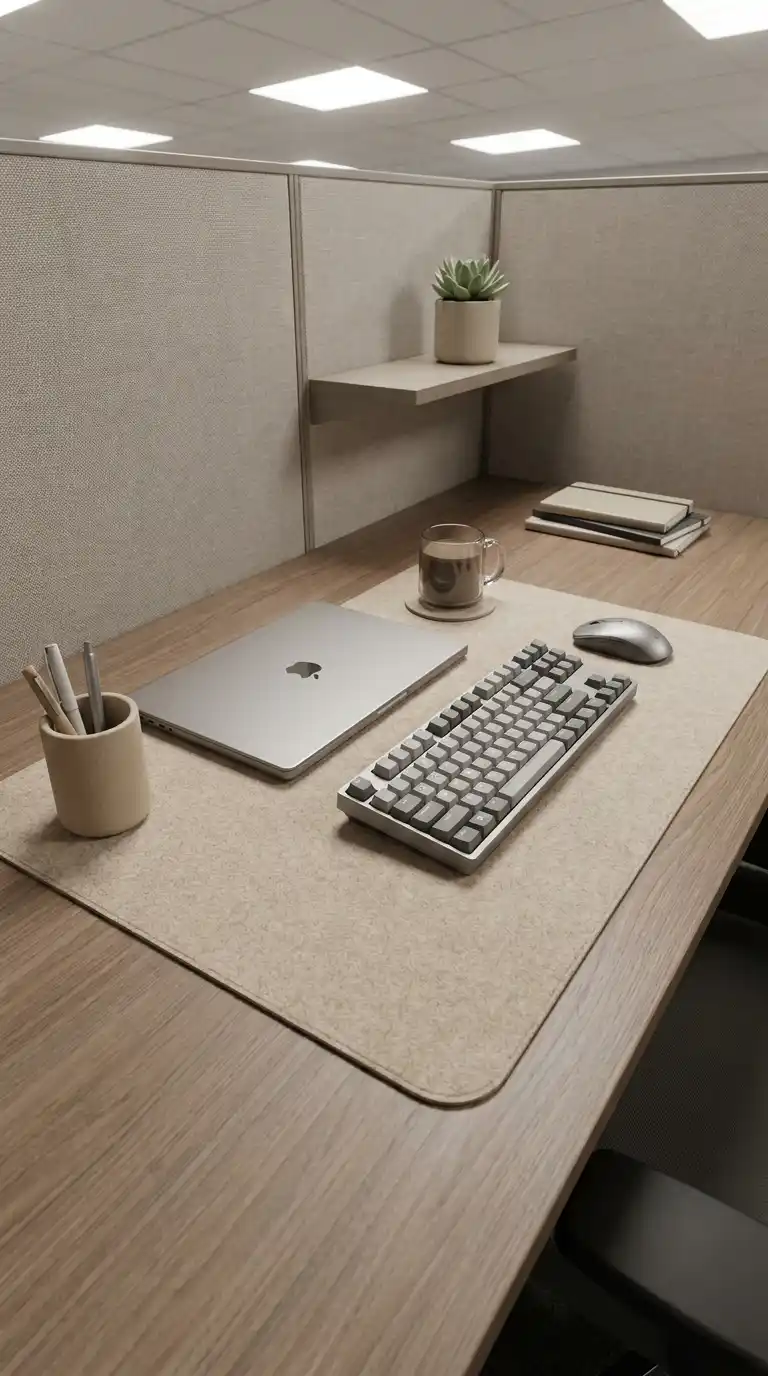
A desk mat instantly makes a cubicle desk look more intentional by covering the often-worn or mismatched desk surface underneath, while also protecting the surface from scratches and spills.
Choose a mat in a neutral tone that coordinates with a few other desk accessories, like a pen cup or coaster, so the small items on your desk read as a set rather than randomly assembled.
Best suited for: anyone wanting a fast, high-impact desk update with minimal effort.
11. Cork Board for Pinned Notes and Reminders
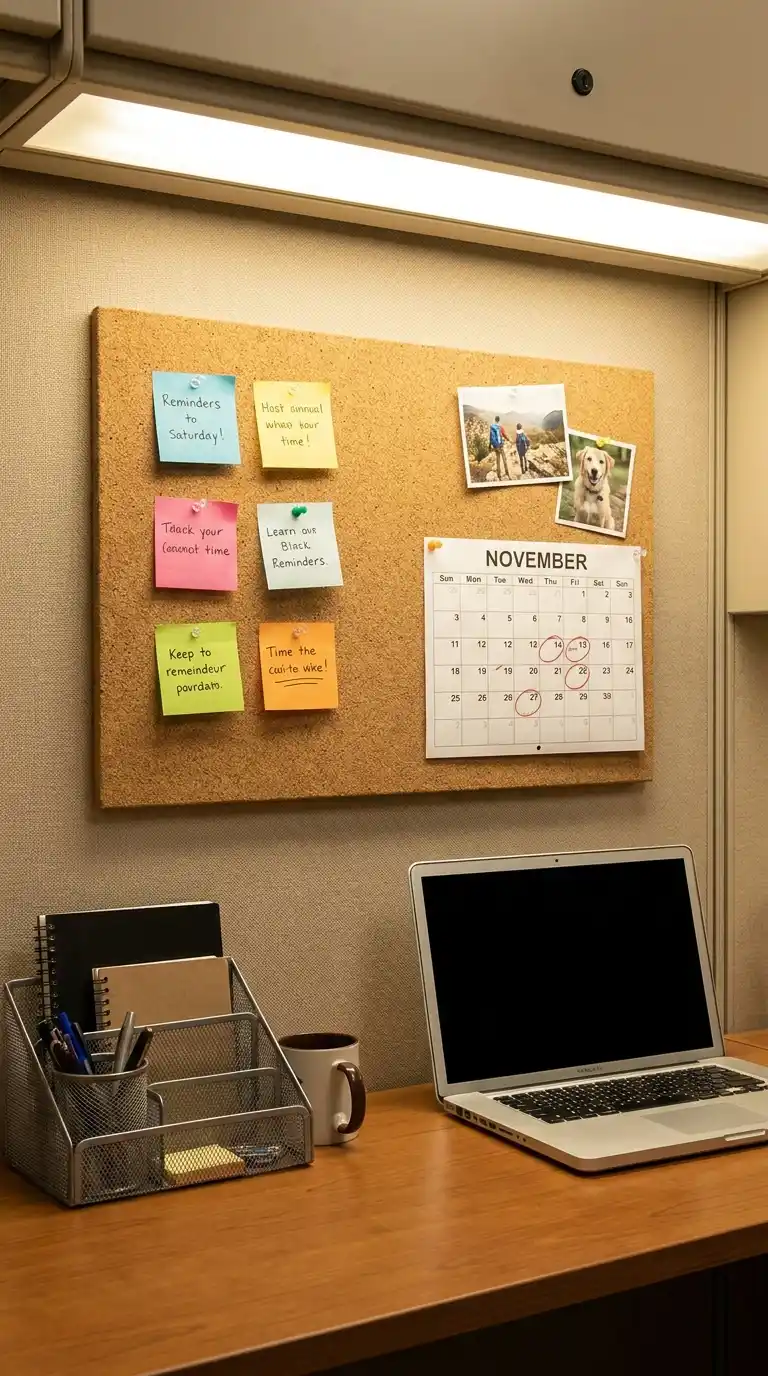
A cork board gives you a dedicated space for pinned notes, reminders, and small mementos separate from your desk surface, keeping loose papers from piling up where you actually work.
Choose a cork board with a slim frame that will not stick out too far from the cubicle wall, and group pinned items loosely by category, such as work reminders on one side and personal items on the other.
Best suited for: visual thinkers who rely on physical reminders rather than digital to-do lists.
12. Small Desk Lamp With Warm Light
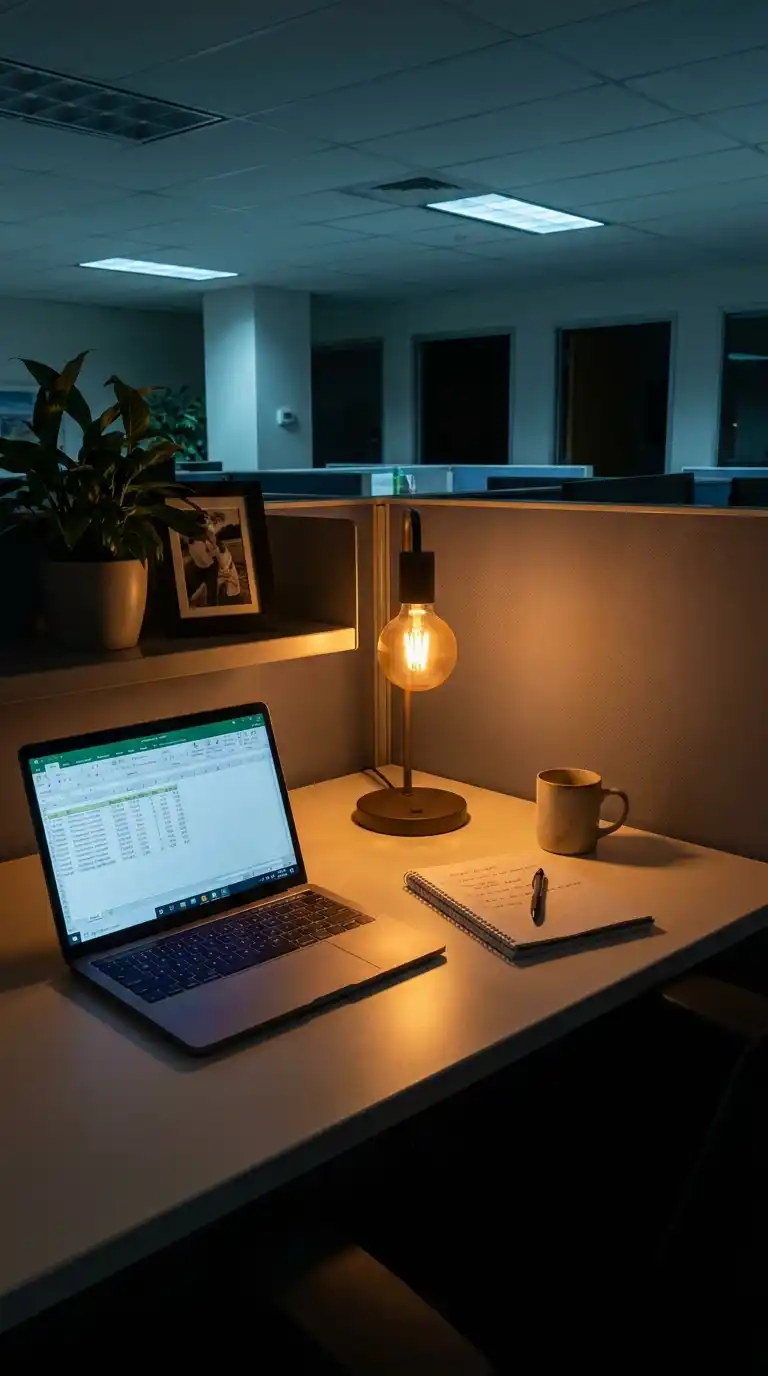
A small desk lamp with a warm-toned bulb softens the typically harsh, cool-toned overhead lighting found in most offices, and it can reduce eye strain during long stretches of screen work.
Choose a lamp with an adjustable arm or head so you can direct the light exactly where you need it, whether that is toward paperwork or angled away from your monitor to reduce glare.
Best suited for: anyone working long hours under fluorescent lighting and those sensitive to overly bright or cool-toned light.
13. Cable Management for a Cleaner Look
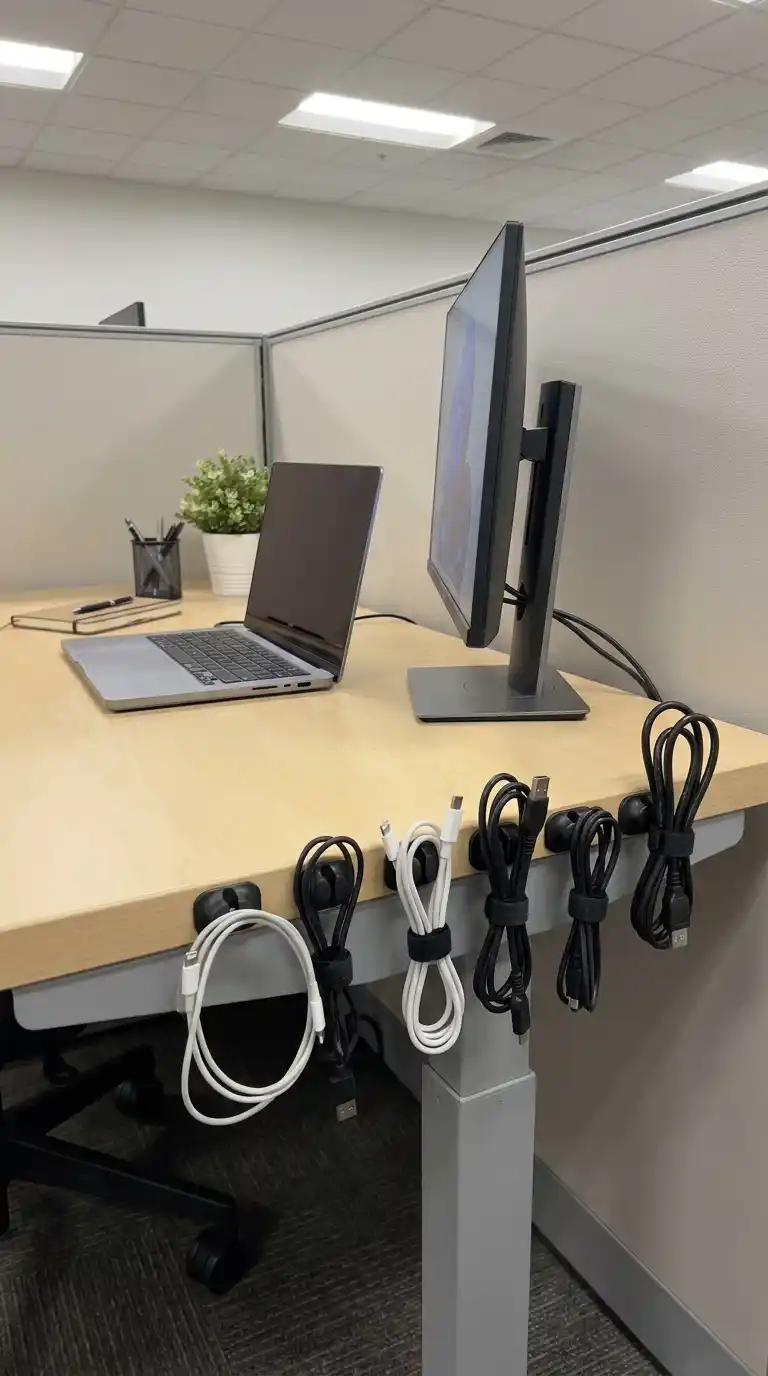
Cable management is one of the most overlooked cubicle updates, but a tangle of visible cords undermines even the most carefully chosen decor items sitting right next to them.
Use adhesive cable clips along the back or underside of the desk to route cords out of sight, and label charging cables if you regularly switch between multiple devices throughout the day.
Best suited for: anyone with multiple devices and cords on their desk, which is most modern office setups.
14. Personal Coffee or Tea Station Corner
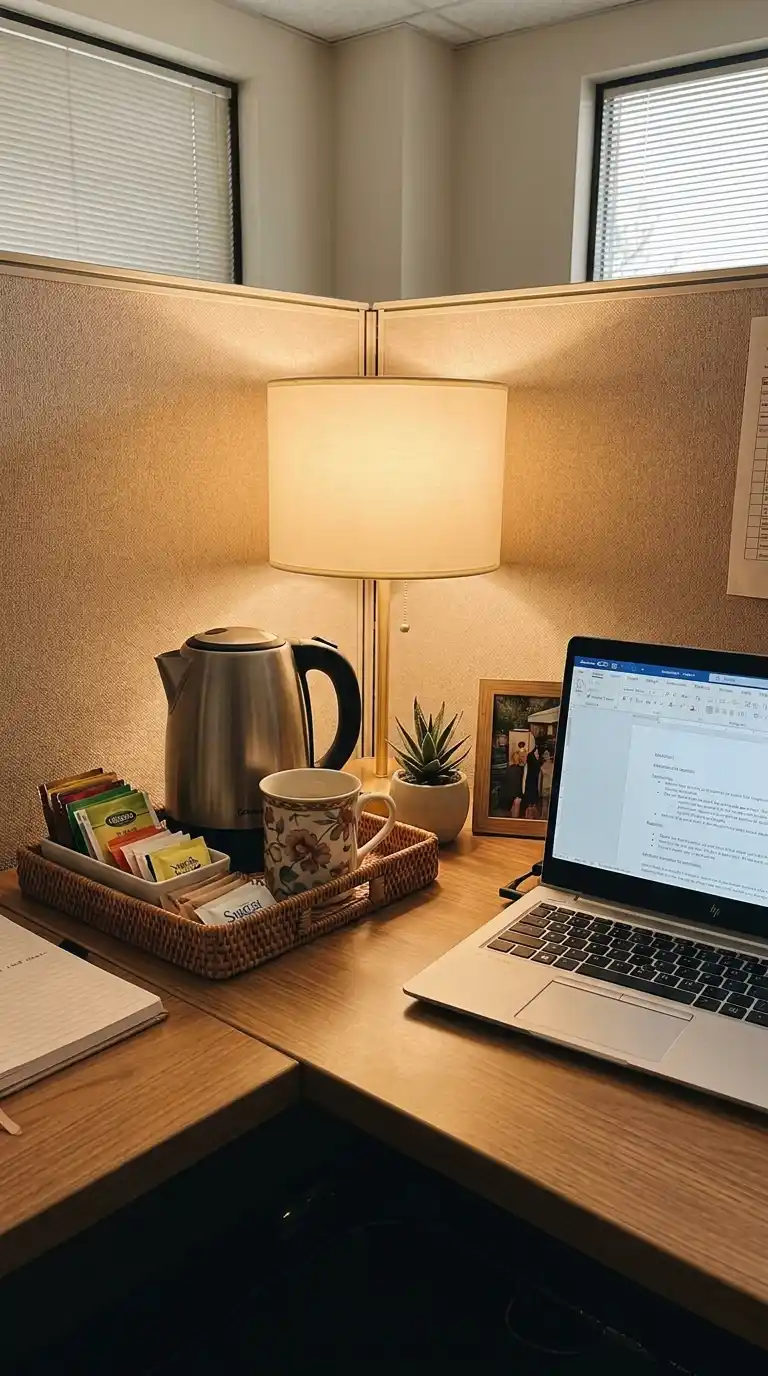
A small dedicated corner for coffee or tea supplies saves repeated trips to a shared break room and gives your cubicle a genuinely personal, homey touch that most decor items alone cannot provide.
Keep the station contained to a small tray so it does not spread across the desk, and confirm your office allows small personal appliances like electric kettles before setting one up.
Best suited for: anyone who drinks coffee or tea throughout the day and wants to minimize break room trips.
15. Textile Touches: Chair Cushion and Small Rug
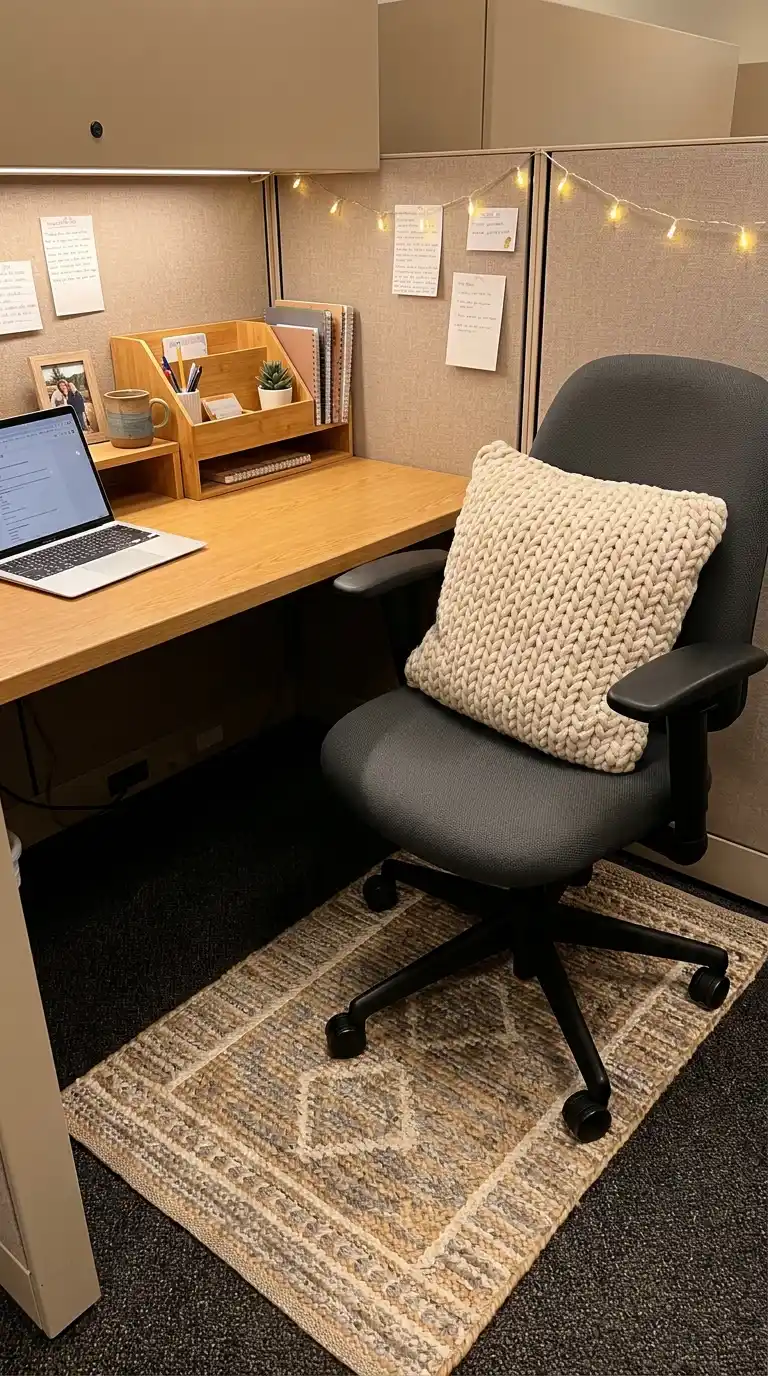
A cushion on your office chair and a small rug underfoot add comfort and warmth to a space that is otherwise mostly hard surfaces and neutral fabric panels, while also genuinely improving comfort during long seated hours.
Choose a low-pile or flat-weave rug that will not catch on chair wheels, and confirm the cushion fits securely on your specific chair model before relying on it for daily use.
Best suited for: anyone spending long hours seated and wanting more physical comfort, not just visual decor.
16. Removable Command Hooks for Accessories
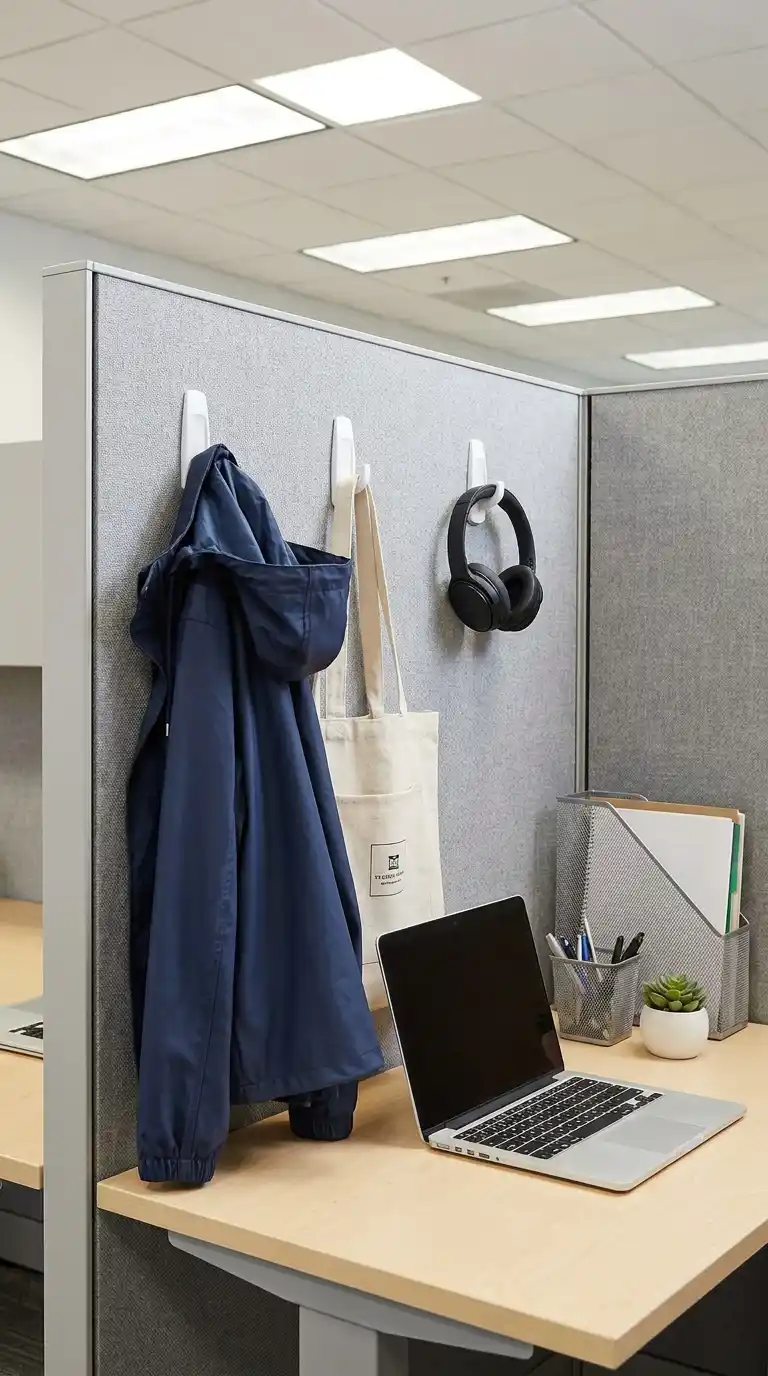
A few small removable hooks give you a place to hang a jacket, bag, or headphones instead of piling them on the desk or floor, which keeps the cubicle both tidier and more functional day-to-day
Choose hooks rated for the actual weight of what you plan to hang, since lightweight hooks can fail under a heavier bag or coat and leave adhesive residue behind on removal.
Best suited for: anyone who commutes with a bag, jacket, or headphones and needs somewhere other than the desk or floor to put them.
17. Rotating Seasonal Decor Touches
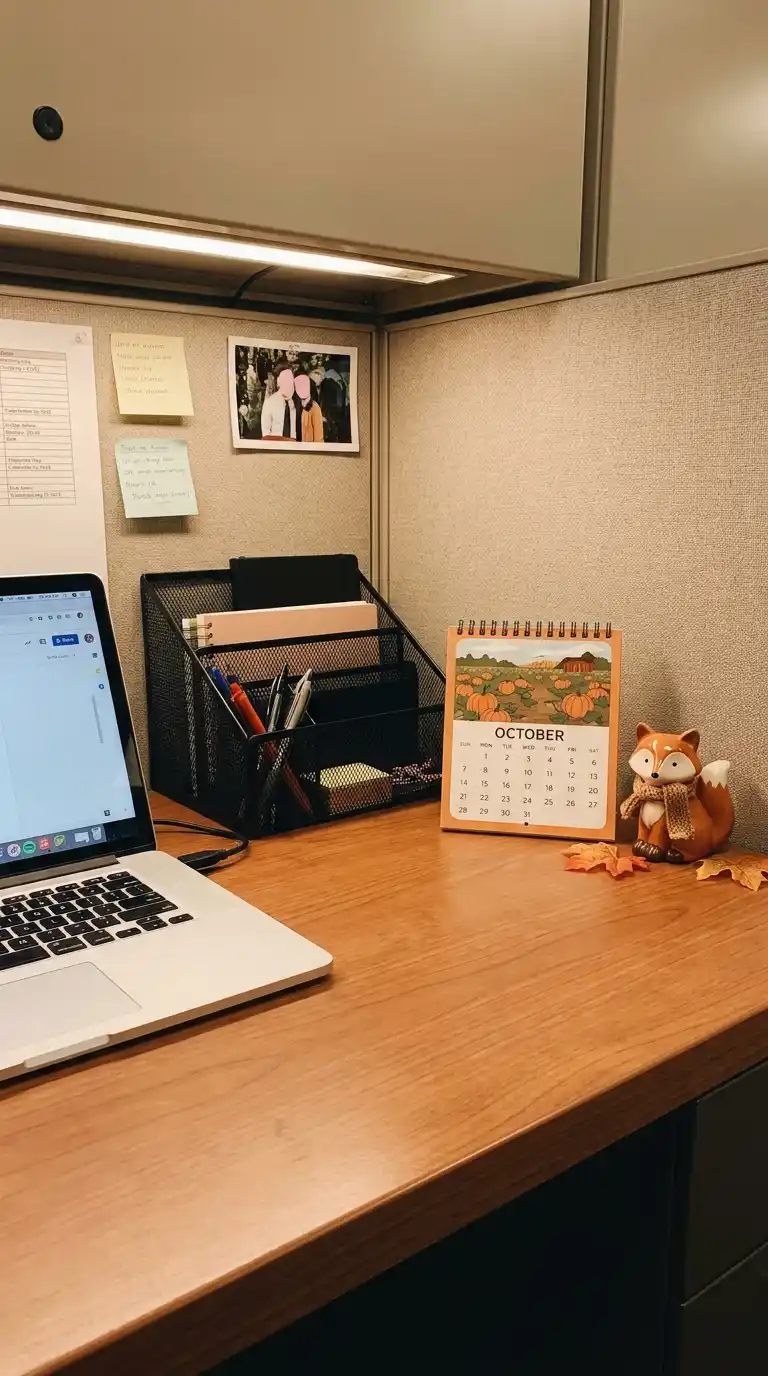
Rotating a small seasonal item every few months, such as a desk calendar page, a small seasonal object, or a swapped-out photo, keeps a cubicle feeling fresh without requiring a full redecorating effort each time.
Keep seasonal additions small and limited to one or two items at a time, since a cubicle’s limited space means seasonal decor can quickly overwhelm the space if not kept minimal.
Best suited for: anyone who enjoys small periodic refreshes rather than a single static setup.
Planning and Buying Tips
A few practical checks before you buy anything will keep your cubicle decor within office policy and actually usable long-term.
● Check your office’s decor policy first — many workplaces have specific rules about wall attachments, personal appliances, or fire code restrictions on items like string lights, so confirm before purchasing anything.
● Standard sizing to shop for — most cubicle walls are fabric-covered panels roughly 5 to 6 feet tall, so keep hanging items under about 12 by 16 inches to avoid overwhelming the limited space.
● Favor magnetic and adhesive-removable solutions over anything requiring nails or screws, since cubicle walls are rarely built to support permanent hardware.
● Measure your actual desk surface before buying organizers or a desk mat — cubicle desks vary more in size than most people expect, and an oversized item can eliminate your usable workspace.
● Consider portability if your desk assignment could change — choose decor that packs up quickly in a single box or bag rather than items that are time-consuming to remove and reset elsewhere.
● Keep power needs in mind — confirm outlet availability before buying a lamp, string lights, or a personal appliance, since cubicle outlets are often limited and already used for work equipment.
Cost Breakdown: Budget, Mid-Range, and Luxury Setups
Cubicle decor is naturally one of the most affordable categories of decorating, since the space itself limits how much you can realistically add.
Budget ($10–$50)
A cork board, a small plant, a photo clip strip, and command hooks fall in this range. No installation cost beyond your own time, since everything is designed for quick, tool-free setup.
Mid-Range ($50–$150)
A quality desk organizer, a small desk lamp, a coordinated desk mat set, and a shelf riser sit in this tier. Still fully DIY with no professional installation required.
Luxury / Premium ($150–$400+)
A personal coffee station with a quality electric kettle, a full fabric wall covering, and premium framed art is here. Even at this tier, installation remains DIY, so the added cost comes entirely from item quality rather than labor.
Decor Item Comparison
| Item | Price Range | Office Policy Risk | Portability | Best For |
| Magnetic whiteboard | $10–$40 | Low | High | Note-taking and reminders |
| Desk plant | $10–$35 | Low | Moderate | Mood and air quality |
| String lights | $10–$25 | Moderate — check fire code policy | High | Softening harsh overhead lighting |
| Removable wallpaper panel | $15–$50 | Moderate — check wall attachment policy | Low once applied | Pattern and color on hard-surface walls |
| Desk lamp | $20–$60 | Low | High | Reducing eye strain, warmer light |
| Personal coffee station | $30–$120 | Moderate — check appliance policy | Moderate | Reducing break room trips |
Maintenance Tips
● Plants — wipe dust off leaves every few weeks and water according to the specific plant’s needs, since office lighting is often more inconsistent than home lighting.
● Magnetic and cork boards — remove outdated notes regularly to prevent the boards from becoming visually cluttered and losing their usefulness as quick-reference tools.
● Fabric wall coverings and desk mats — vacuum or lint-roll periodically to remove dust, and spot-clean any spills immediately to prevent staining.
● String lights and lamps — dust bulbs and fixtures periodically, and check cords regularly for fraying, especially if the lights are moved or repositioned often.
● Cable management clips — reposition or replace clips if cords start pulling loose, since a cluttered cord situation tends to return quickly once the first clip fails.
● Common mistake to avoid — overcrowding the small wall and desk space with too many decor items at once, which can make even well-chosen pieces look cluttered rather than personalized.
Frequently Asked Questions
What can I hang on a cubicle wall without damaging it?
Magnetic boards, removable adhesive hooks, and fabric-safe push pins are generally the safest options for standard fabric-covered cubicle walls, since they avoid nails or screws and can be removed without leaving lasting marks.
Are string lights allowed in office cubicles?
It depends on the workplace — some offices allow battery-powered string lights but restrict plug-in versions due to fire code concerns, so it is worth checking your specific office policy before purchasing any lighting.
How do I make a small cubicle feel less sterile?
Adding a mix of a plant, warm lighting, a few personal photos, and a coordinated desk mat tends to have the biggest impact for the least effort, since these items introduce color, texture, and personality without requiring much space.
What is the best budget-friendly cubicle decor idea?
A small desk plant and a photo clip strip are typically the most affordable options, often costing under $20 combined, while still making a noticeable difference in how personalized the space feels.
How much can I personalize my cubicle without it looking unprofessional?
A good general rule is to keep decor limited to a handful of intentional items rather than covering every available surface, and to favor clean, cohesive choices like coordinated colors over a mix of unrelated novelty items.
How to Choose the Right Cubicle Decor Ideas for You
The right combination of ideas depends on three factors: your office’s specific policies, how much desk and wall space you actually have, and what would genuinely improve your workday, whether that is better lighting, more storage, or simply a few personal touches.
Budget rarely needs to be a limiting factor here, since some of the highest-impact ideas, like a plant, a photo strip, or better cable management, cost very little. Save any bigger spending for items you will use daily, like a proper desk lamp or an ergonomic shelf riser.
Finally, prioritize function alongside personality. A cubicle you enjoy working in day to day comes from a combination of comfort, organization, and a few meaningful personal touches, not decor alone.


- Be Respectful
- Stay Relevant
- Stay Positive
- True Feedback
- Encourage Discussion
- Avoid Spamming
- No Fake News
- Don't Copy-Paste
- No Personal Attacks
- Be Respectful
- Stay Relevant
- Stay Positive
- True Feedback
- Encourage Discussion
- Avoid Spamming
- No Fake News
- Don't Copy-Paste
- No Personal Attacks
