19 Living Room Wall Molding Ideas That Instantly Add Architectural Character
Published: 4 Sep 2026
A living room with plain, flat walls can feel unfinished no matter how nice the furniture is. Wall molding solves that problem by adding architectural depth and shadow line without a full renovation — it works in rentals, starter homes, and high-end builds alike, and it is one of the few upgrades that reliably increases a home’s perceived value. The right molding style can make a builder-grade room feel custom, and it does this using paint, trim, and a weekend of installation rather than a contractor’s full schedule. This guide covers 19 living room wall molding ideas for every budget and style, from classic picture frame molding to bold geometric accent walls. Along the way, you will find honest pros and cons, real price ranges, a materials comparison table, maintenance advice, and answers to the questions people search for most before starting a molding project. By the end, you will know exactly which style fits your walls, your budget, and your skill level.
Is Wall Molding Right for You?
Wall molding is one of the highest-return updates you can make to a living room, but it is worth weighing the real trade-offs before committing to a full wall or room.
Pros
● Strong return on investment — molding consistently ranks among the upgrades most likely to increase a home’s perceived and appraised value relative to its cost.
● Works with almost any style — from traditional wainscoting to modern geometric grids, there is a molding style suited to nearly every design aesthetic.
● Adds depth without color — molding creates shadow lines and dimension using paint and trim alone, which is useful if you want texture without committing to a bold wall color.
● Can be done in stages — many molding styles can be tackled one wall at a time, so the cost and effort spread out rather than hitting all at once.
Cons
● Labor-intensive for full rooms — even simple picture-frame molding takes real time to measure, cut, and install cleanly across an entire room.
● Permanent in rentals — most molding is glued and nailed to the wall, which makes it a poor fit for renters who cannot make structural changes.
● Mistakes are visible — uneven spacing or crooked cuts are far more noticeable in molding than in most other wall treatments, since the eye is drawn to straight lines.
● Can feel busy in small rooms — bold geometric or grid patterns can visually shrink a small living room if not scaled carefully to the wall size.
For most living rooms, wall molding is worth the effort as long as the style is scaled to the room size and skill level is honestly assessed — simpler styles like a single picture-frame accent wall are very achievable as a first DIY molding project, while full-room grid paneling is better left to those with some trim experience or a hired installer.
1. Board and Batten Accent Wall
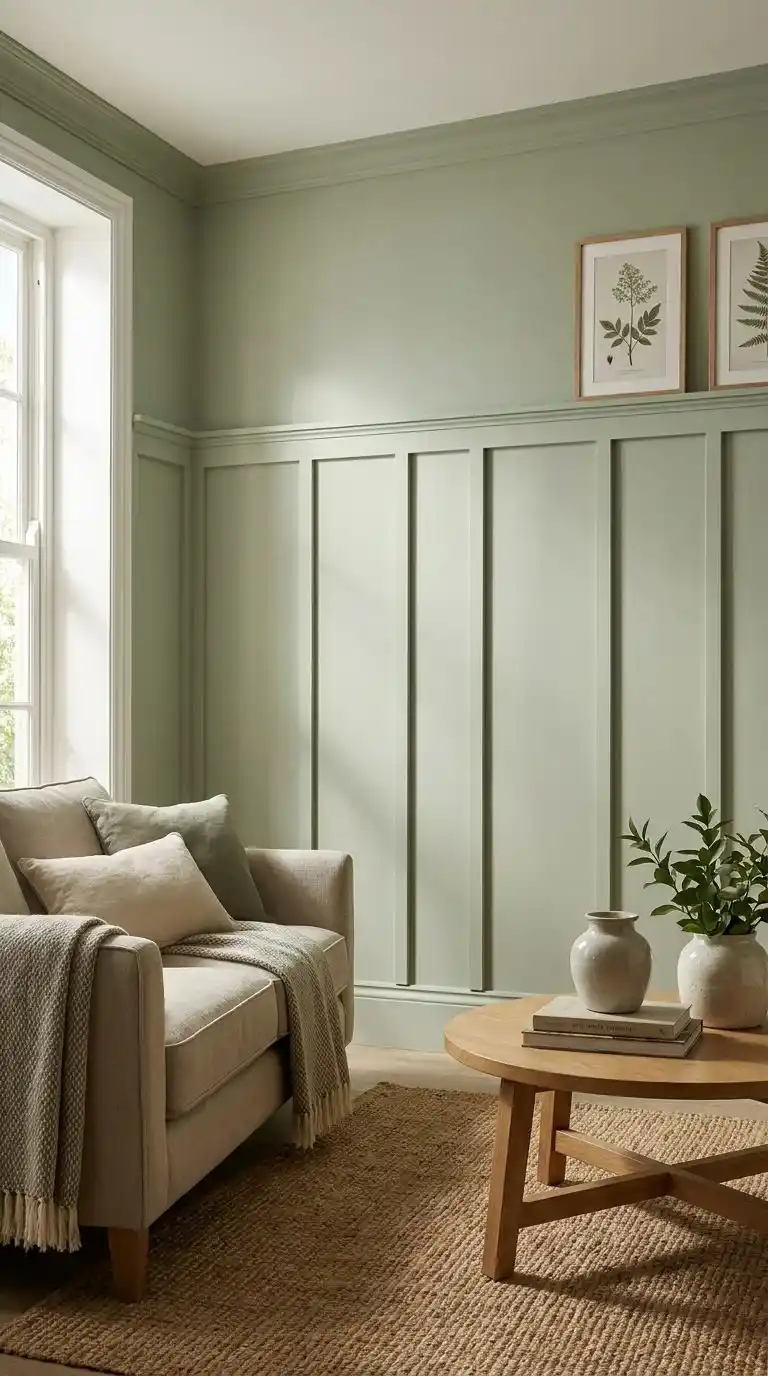
Board and batten is one of the most approachable molding styles for a first project — vertical battens spaced evenly across the lower portion of the wall create texture and a classic, cottage-inspired look without requiring complex angle cuts.
Paint the battens and the wall behind them the same color for a subtle, tone-on-tone texture, or use a contrasting color above the batten line to visually divide the wall and add depth.
Best suited for: traditional, farmhouse, and transitional living rooms, and anyone new to molding installation.
2. Picture Frame Moulding Grid Wall
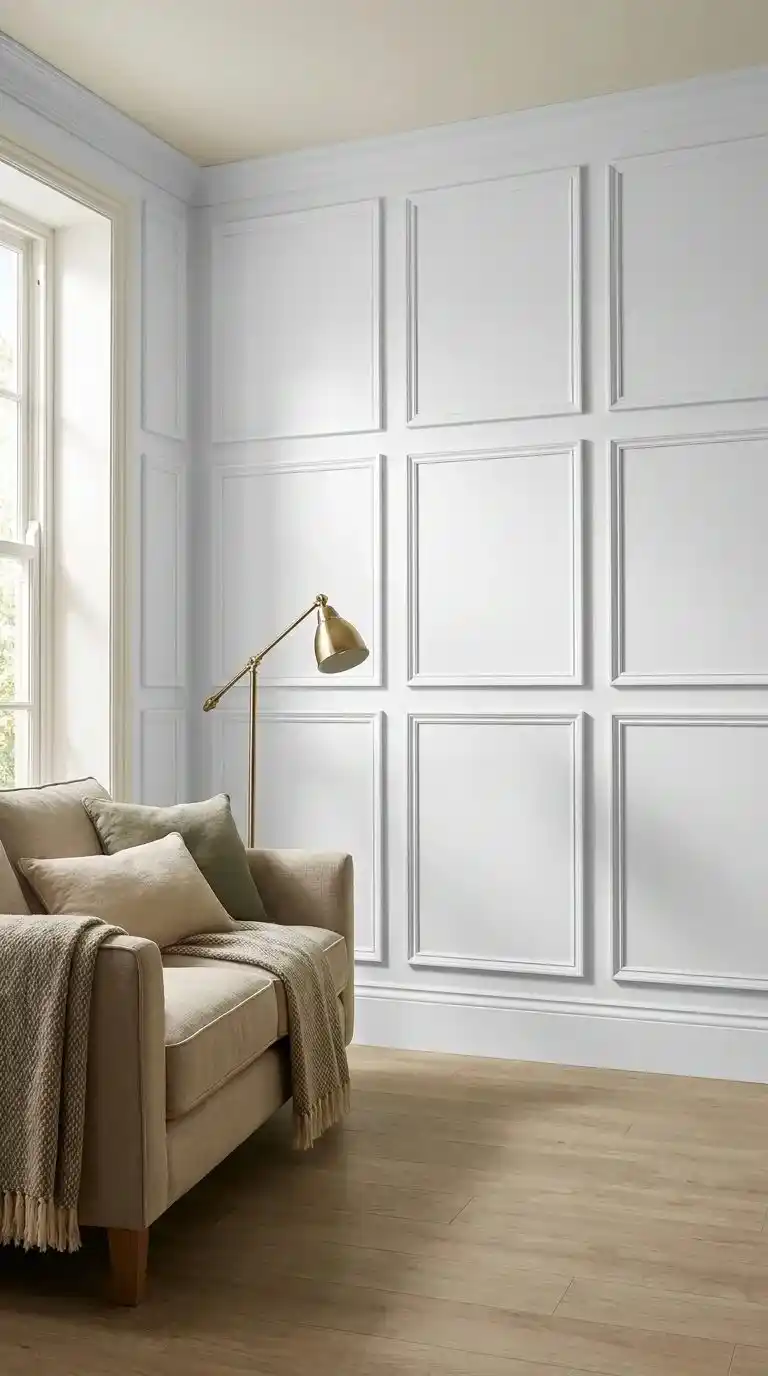
Picture frame moulding uses simple rectangular trim pieces arranged in a grid to bring traditional architectural detail to an otherwise flat wall, and it reads as custom millwork even though the individual pieces are inexpensive.
Keep the spacing between frames consistent across the entire wall — even a small variation in gap width is one of the fastest ways to make the finished project look uneven.
Best suited for: formal and traditional living rooms and full-wall or full-room projects where a polished, cohesive look matters.
3. Classic Wainscoting
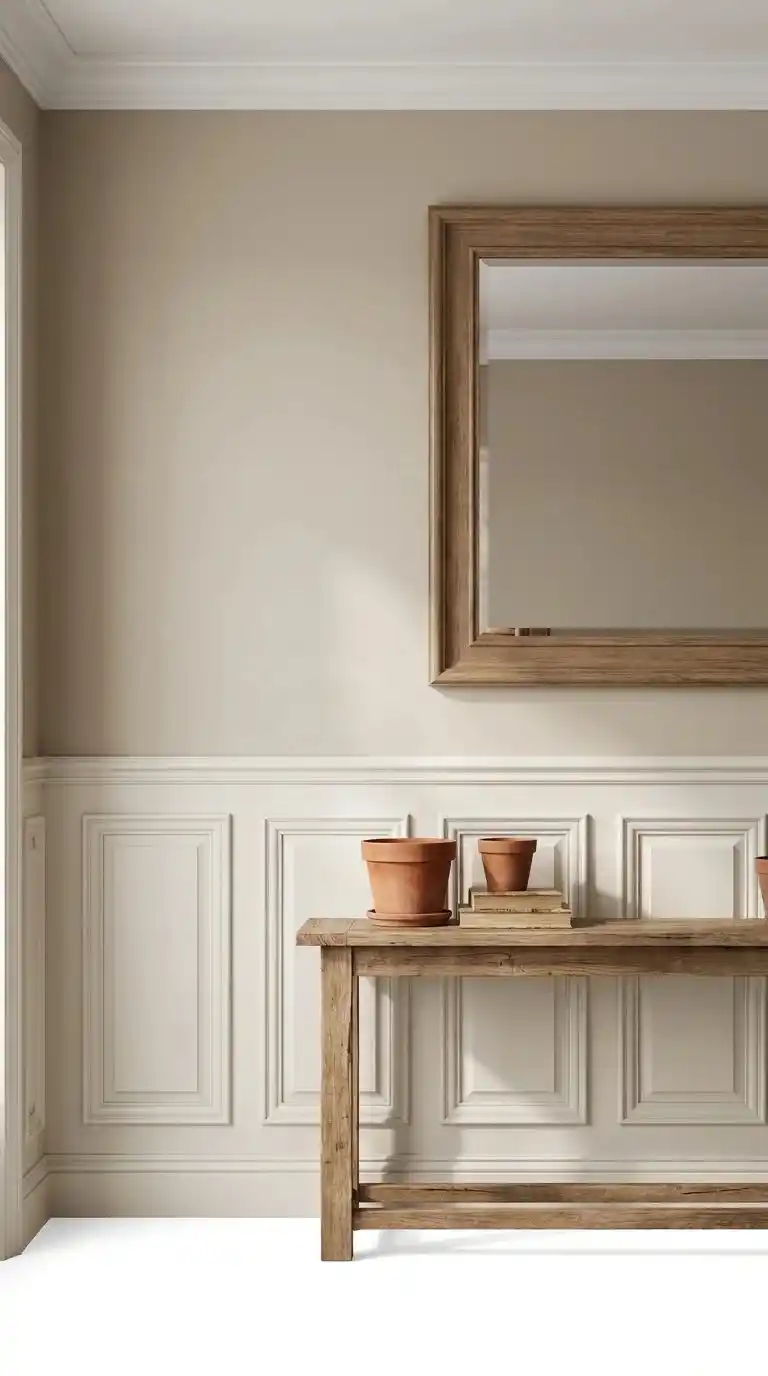
Wainscoting brings a timeless, formal quality to a living room and works especially well on lower walls that see regular contact, such as near seating areas, since the panel material is more durable than painted drywall alone.
Choose a wainscoting height that aligns with existing trim like door casings or window sills for a cohesive, intentional look rather than an arbitrary cutoff point.
Best suited for: traditional and classic living rooms and homes where durability near furniture and foot traffic matters.
4. Shiplap Paired With Crown Molding
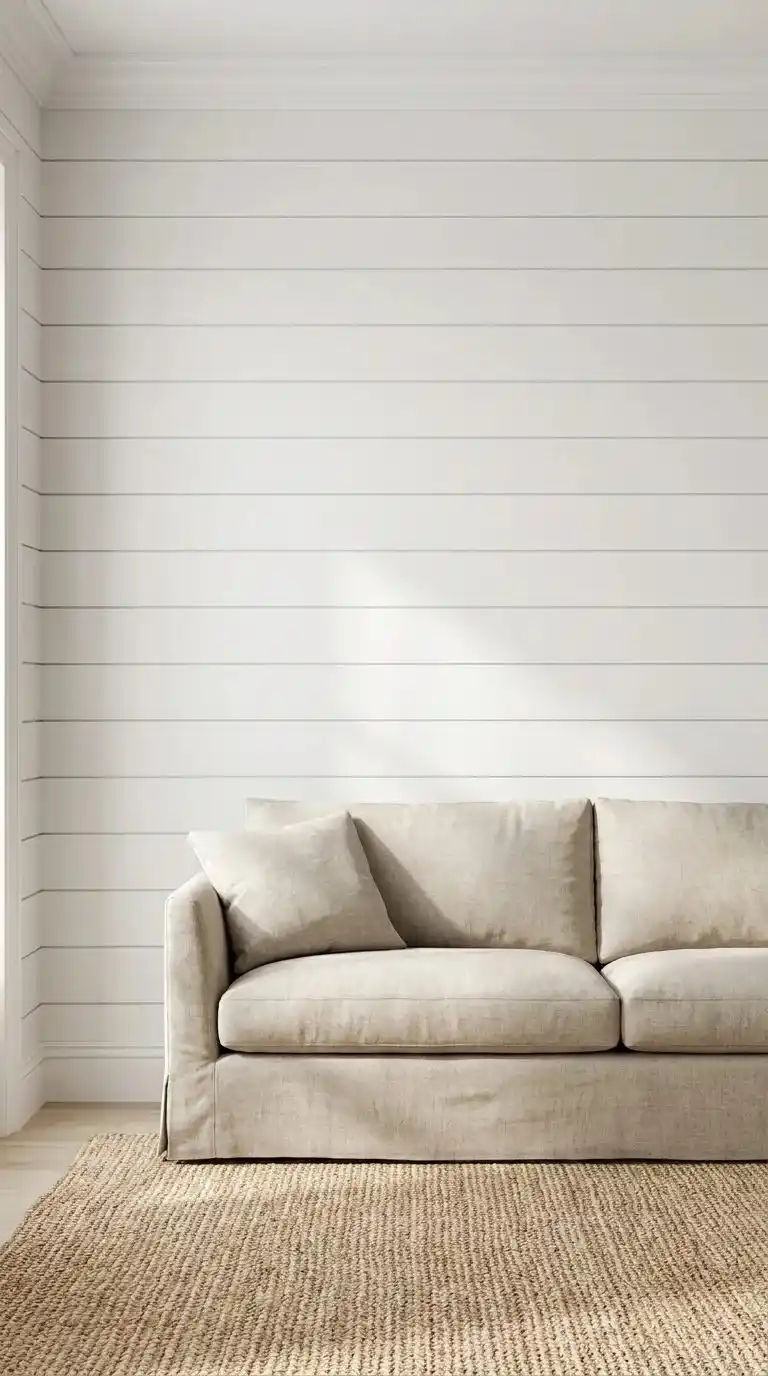
Shiplap brings horizontal texture to a wall, and adding a crown molding detail where it meets the ceiling gives the finished look a more custom, architectural quality than shiplap alone.
Keep gaps between the shiplap boards small and consistent, since wider gaps read as more rustic while tighter gaps read as more refined and modern-farmhouse.
Best suited for: coastal, farmhouse, and relaxed transitional living rooms.
5. Geometric Molding Accent Wall
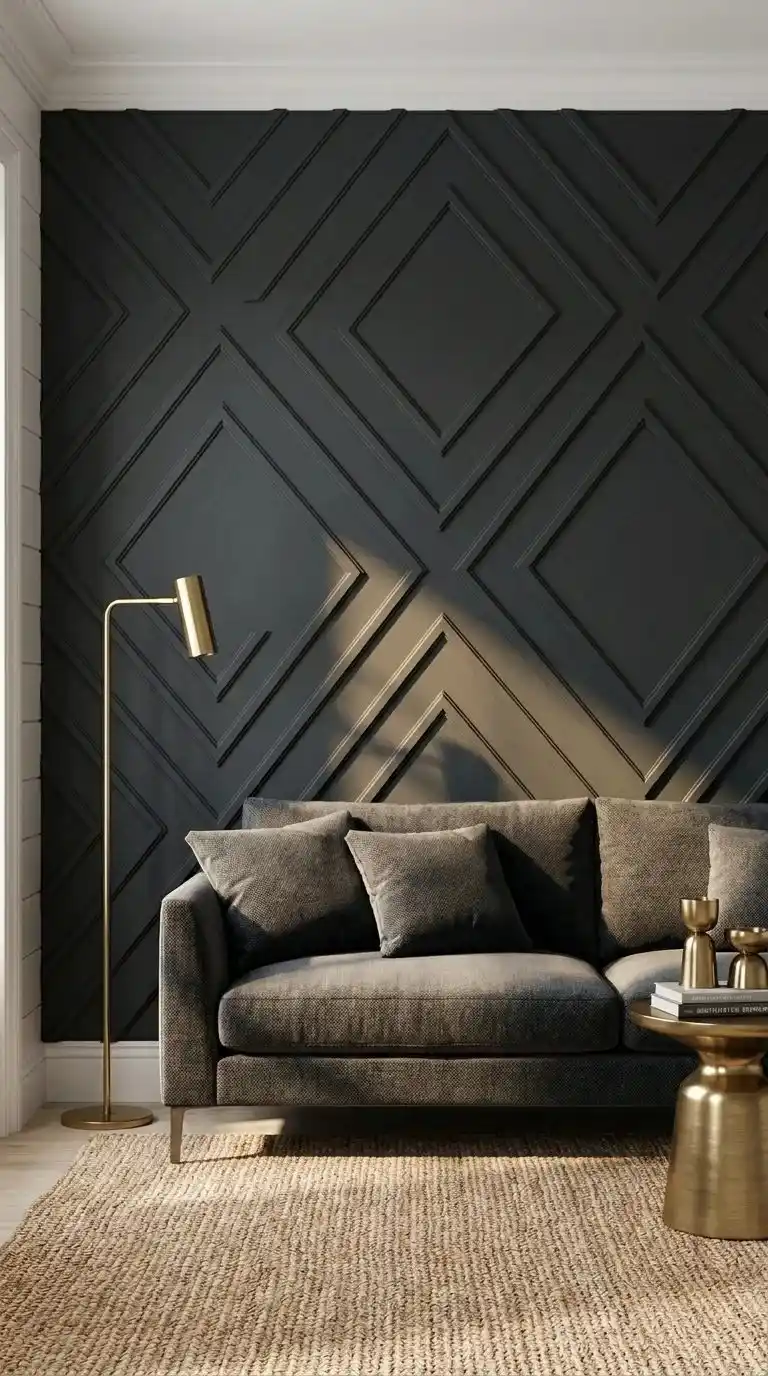
A geometric molding pattern — diamonds, chevrons, or angular grids — turns a wall into a genuine art piece, especially when painted a deep, saturated color that emphasizes the shadow lines created by the trim.
This style requires more precise angle cuts than a simple grid, so it is worth planning the full layout on paper or with painter’s tape before cutting any wood.
Best suited for: modern and contemporary living rooms looking for a bold single-wall statement.
6. Ceiling Medallion With Crown Molding
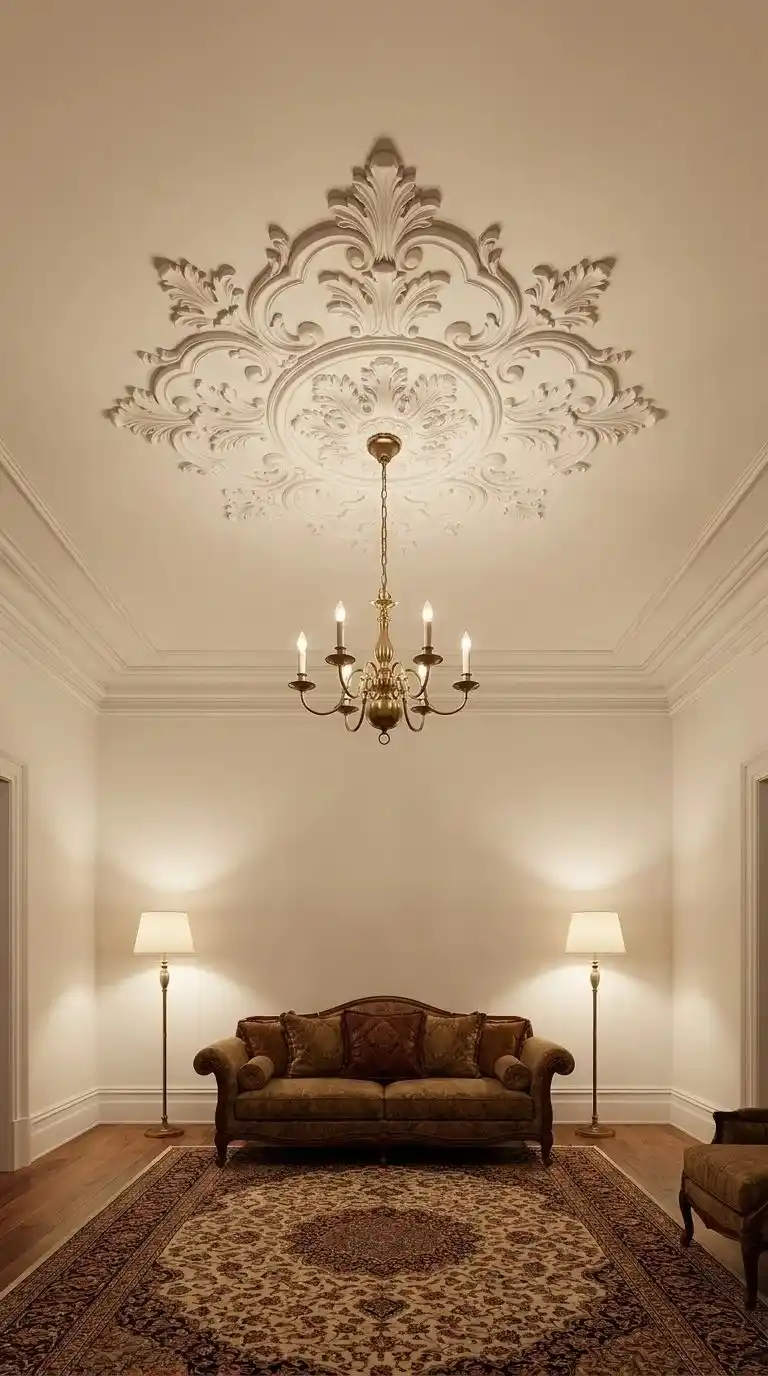
A ceiling medallion paired with crown molding draws the eye upward and adds a formal, finished quality to a room, particularly when centered beneath a chandelier or pendant light.
Choose a medallion size proportional to your light fixture and ceiling height — an oversized medallion in a room with standard eight-foot ceilings can look disproportionate rather than elegant.
Best suited for: formal living rooms and dining-adjacent spaces with a central overhead light fixture.
7. Two-Tone Painted Panel Molding
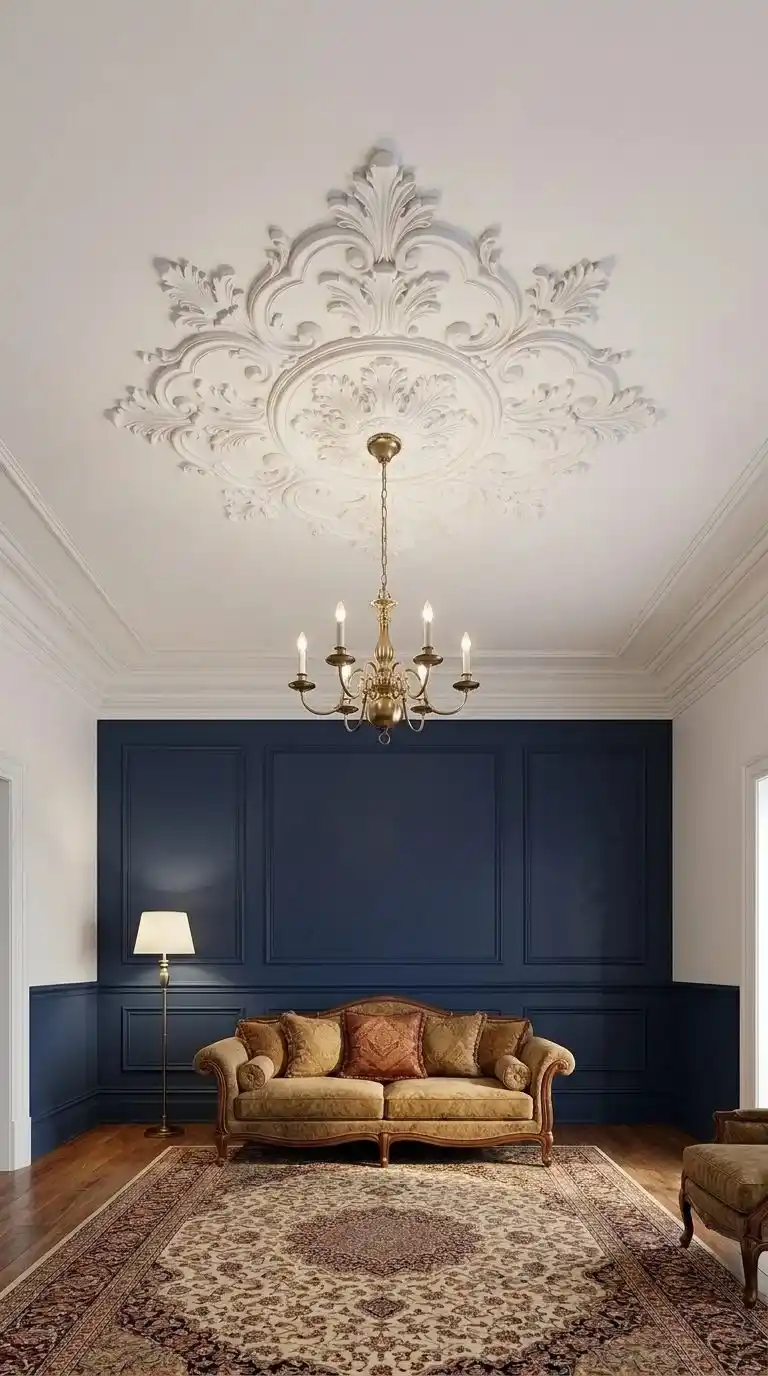
Pairing simple panel molding with a two-tone paint job — a bold color below the chair rail, a lighter color above — adds visual interest and makes a room feel taller by drawing a clear horizontal line partway up the wall.
Choose a bolder, deeper color for the lower panel section, since darker tones lower on the wall create a grounded, intentional look rather than an unbalanced one.
Best suited for: living rooms that want color and molding in a single project, and anyone drawn to a more traditional-meets-modern aesthetic.
8. Fireplace Surround Molding Upgrade
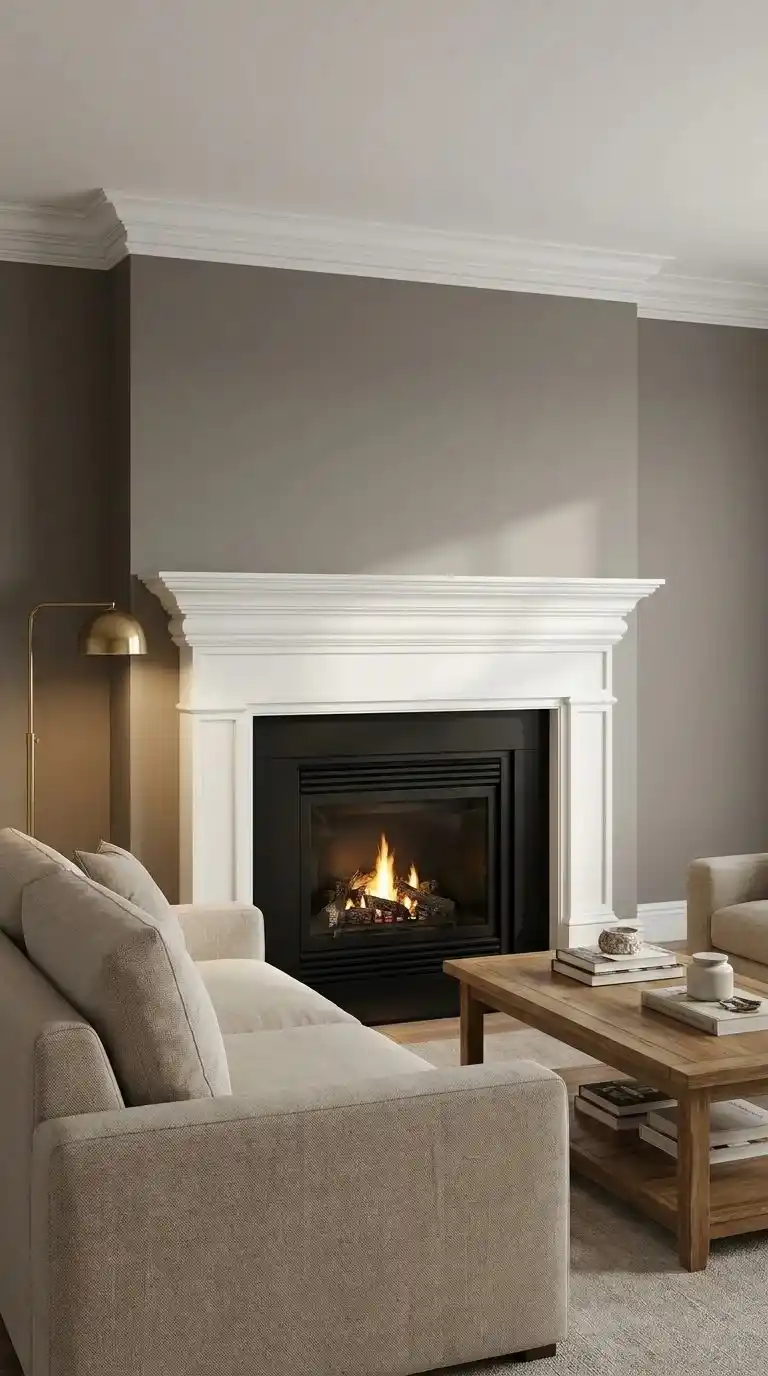
A fireplace is often the visual anchor of a living room, and upgrading the surrounding mantel and trim with proper molding detail can transform a plain fireplace into the room’s clear focal point.
Match the molding profile to the era or style of your home — simple, clean lines for modern homes, and more detailed classical profiles for traditional ones — so the upgrade feels original to the house rather than added on.
Best suited for: living rooms where the fireplace is the primary focal point and centerpiece of the seating arrangement.
9. Full-Wall Grid Paneling
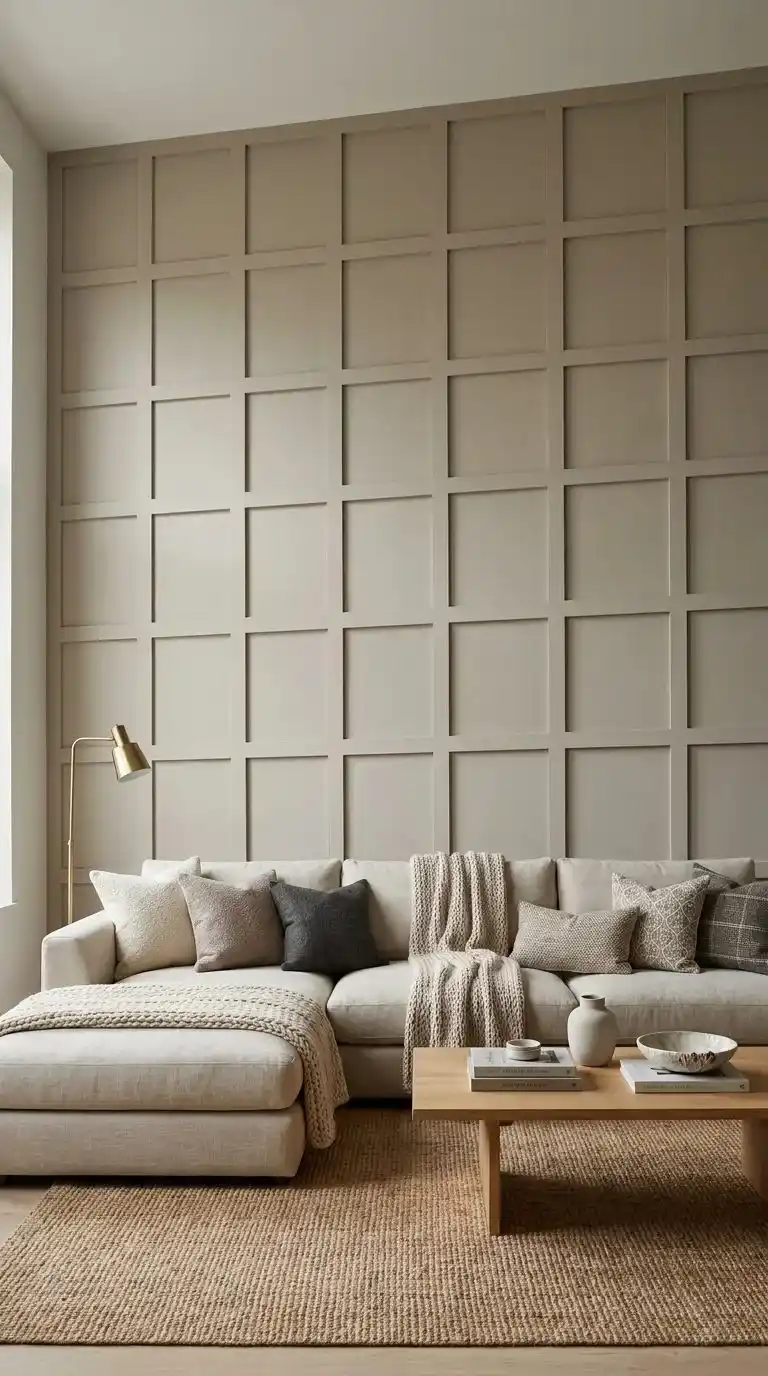
Extending simple grid paneling from floor to ceiling across an entire wall creates a more dramatic, cohesive effect than a partial-height treatment, and it reads as a significant architectural investment even when built with basic trim.
Plan the grid spacing based on the wall’s total width and height so the pattern divides evenly without an awkward partial panel at either end.
Best suited for: larger accent walls without windows or doors interrupting the surface, and rooms that can support a bolder architectural statement.
10. Cove Crown Molding for a Soft Ceiling Transition
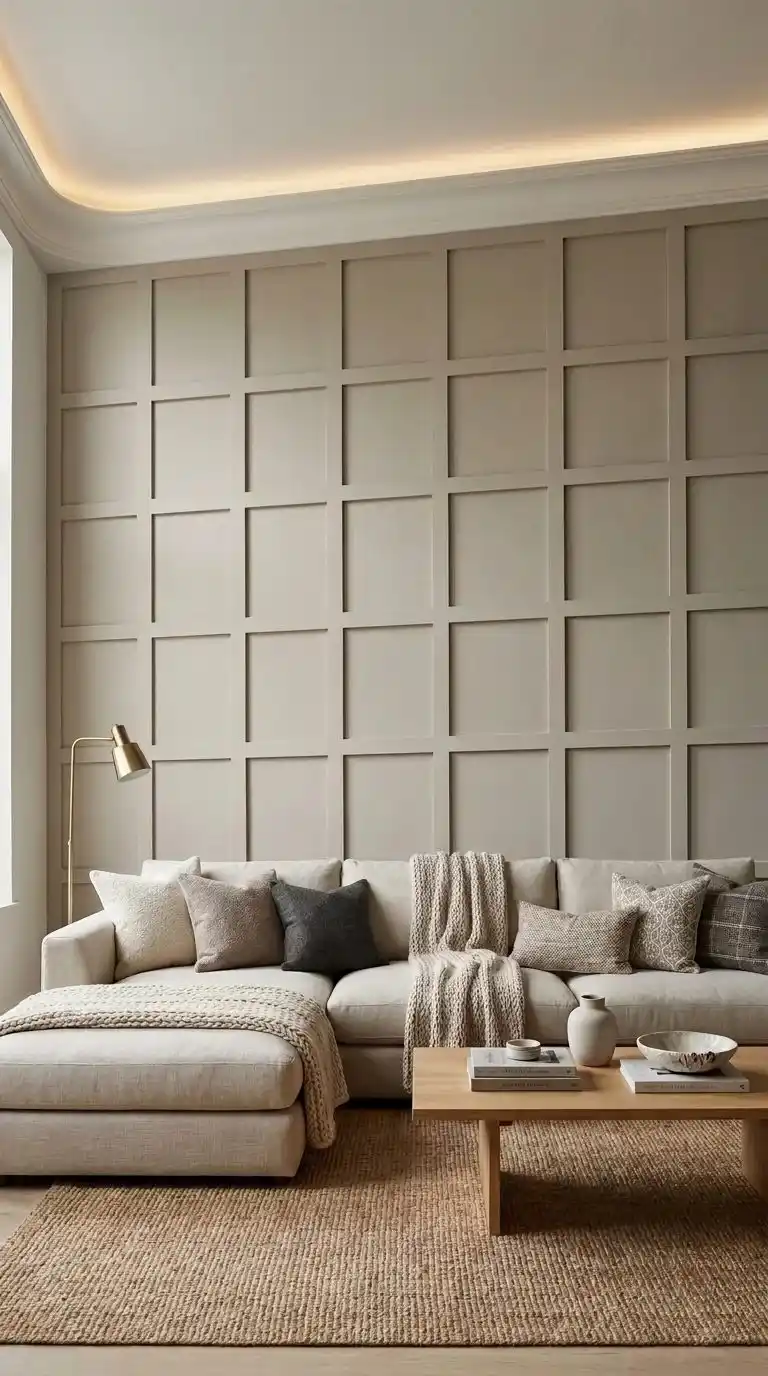
Cove molding uses a curved profile rather than a sharp angle to transition between wall and ceiling, which softens the overall look of a room and works well when you want an upgrade that feels subtle rather than bold.
This style pairs especially well with rooms that already have some architectural detail, since the soft curve complements existing trim rather than competing with a busier molding pattern elsewhere.
Best suited for: transitional and traditional living rooms seeking a refined, understated finish.
11. Vertical Slat and Fluted Wall Paneling
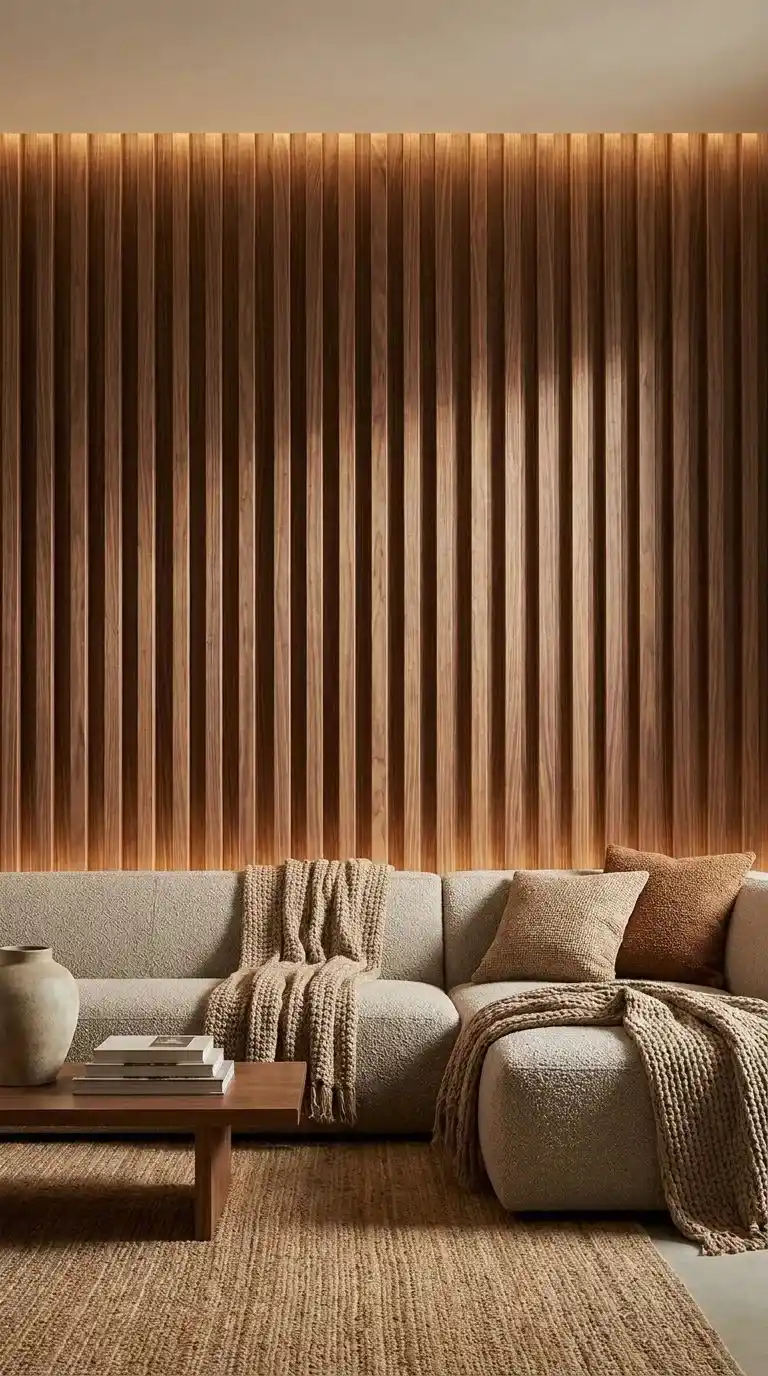
Vertical slat or fluted paneling has become one of the most popular modern molding styles, bringing warmth and texture through evenly spaced wood strips rather than painted trim, and it pairs especially well with warm wood furniture.
Leave consistent spacing between each slat, and consider running the panels floor to ceiling rather than stopping partway up, since a full-height application reads as more intentional and current.
Best suited for: modern and Scandinavian-inspired living rooms wanting texture without a painted pattern.
12. Upgraded Window and Door Trim Molding
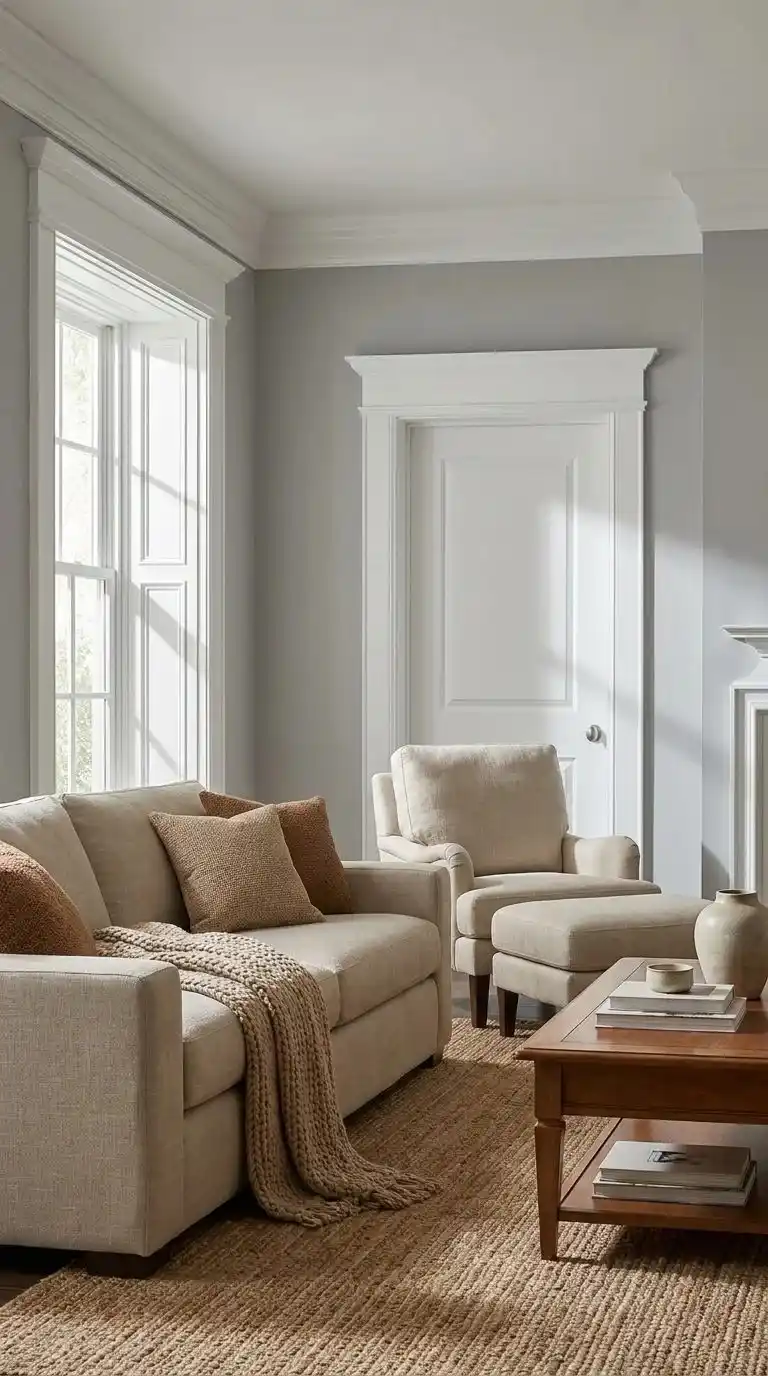
Swapping thin, builder-grade window and door casing for a wider, more substantial trim profile is a smaller-scale molding project that still makes a noticeable difference in how finished a room feels.
Increase the trim width gradually rather than jumping to the widest option available — a profile that is too large relative to the window or door size can look out of proportion with the rest of the room.
Best suited for: living rooms with multiple windows or doors and homeowners wanting a subtler, lower-cost molding upgrade.
13. Herringbone Wood Panel Wall
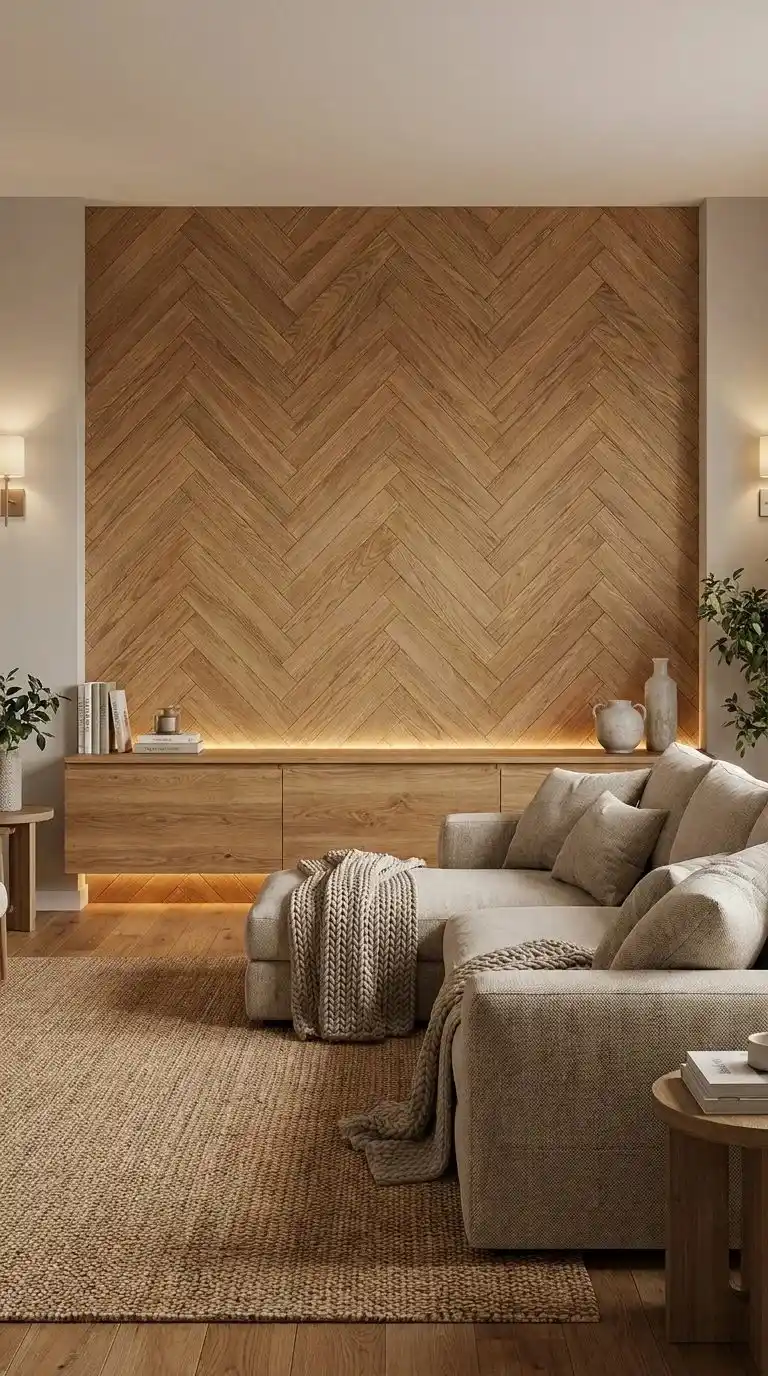
A herringbone wood panel wall brings a more intricate, statement-making pattern than standard slat paneling, and it works especially well as a backdrop behind a television or media console where the pattern becomes the room’s visual anchor.
This style requires more precise angle cuts than most other options on this list, so it is one of the better molding projects to hire out unless you already have some carpentry experience.
Best suited for: contemporary living rooms wanting a bold, textured focal wall behind a TV or seating area.
14. Tall Baseboard Molding Upgrade
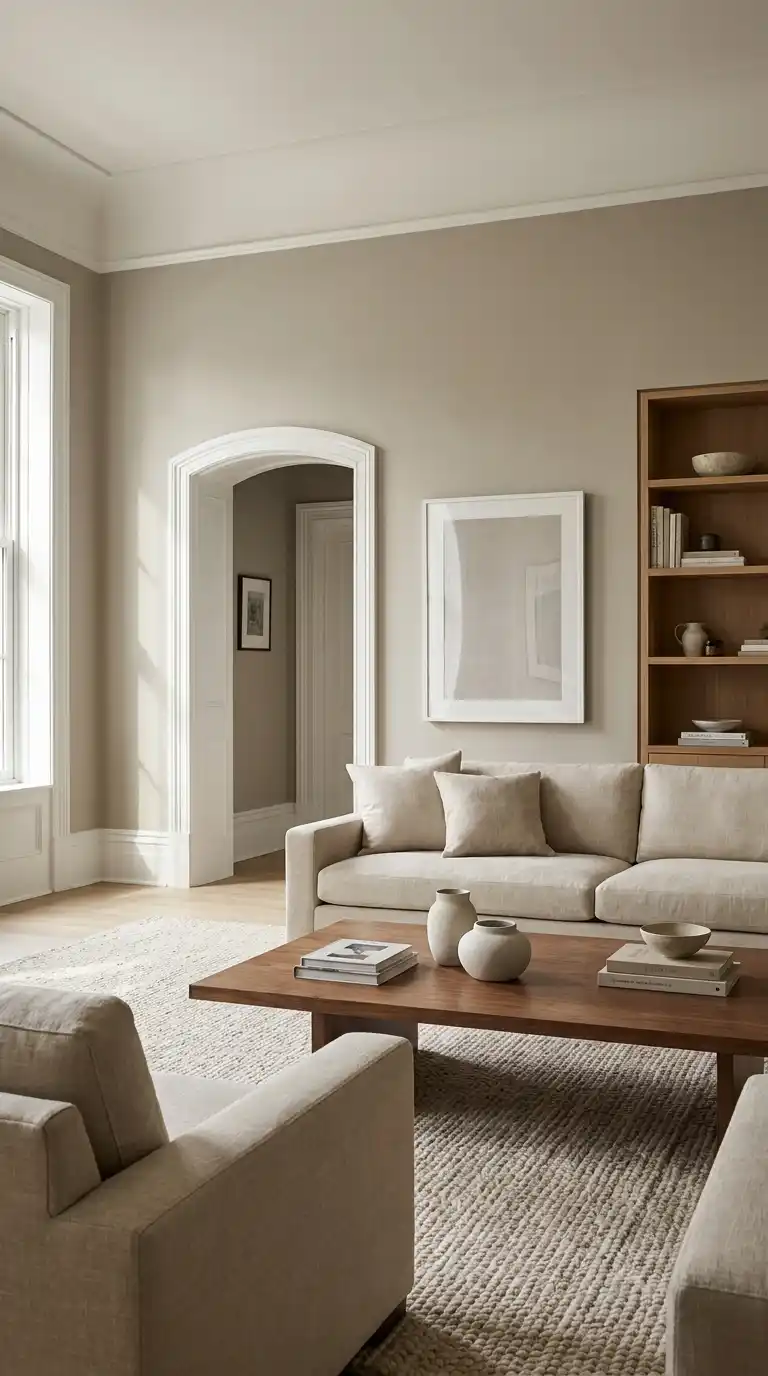
Increasing baseboard height from a standard three or four inches to six inches or taller is one of the simplest molding upgrades, and it grounds a room visually without requiring any wall-pattern planning at all.
Match the baseboard profile to your existing door and window casings so the upgrade reads as part of a cohesive trim package rather than an isolated change.
Best suited for: any living room as a starting molding project, especially rooms with taller ceilings that can support a more substantial base.
15. Chair Rail Molding With Two-Tone Paint
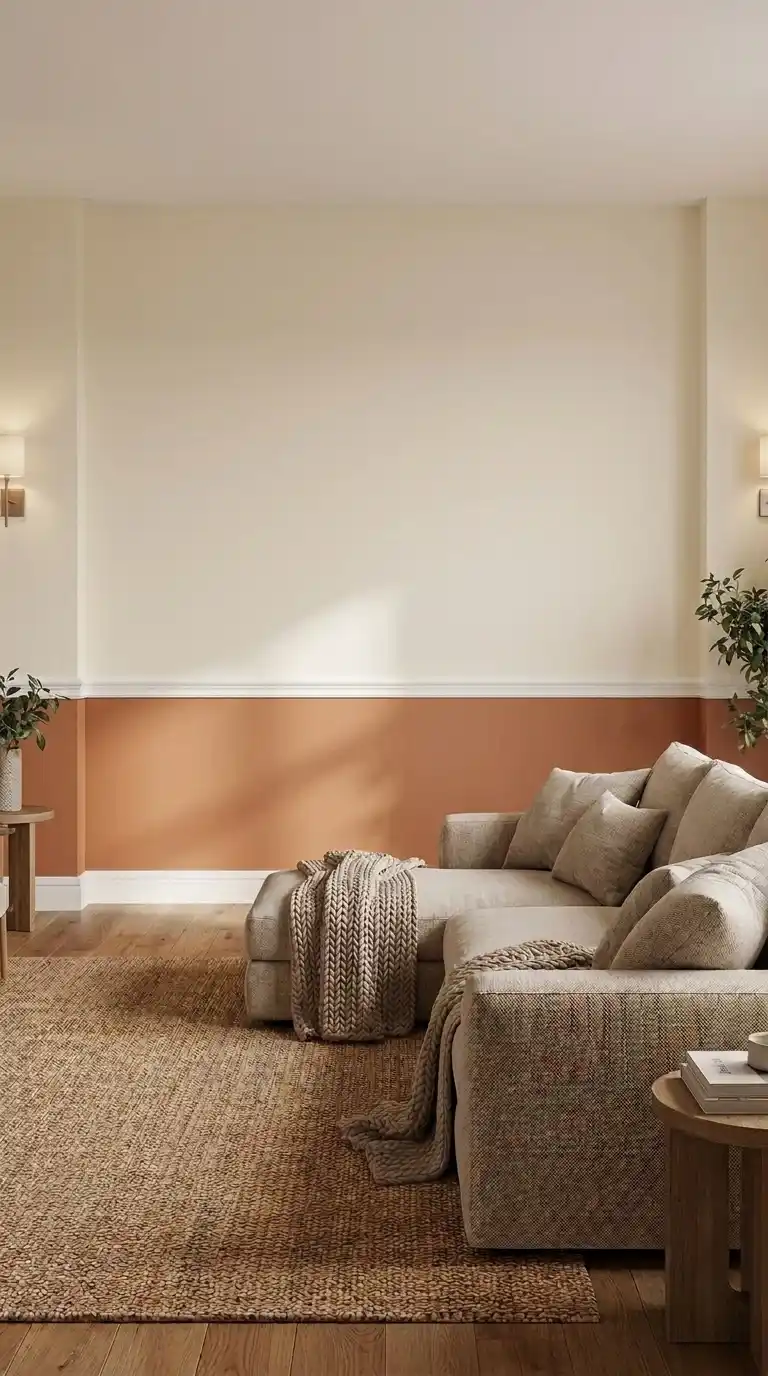
A single chair rail with a two-tone paint treatment is one of the simplest ways to add a molding detail and a color statement in the same project, without the labor of a full panel or grid system.
Position the rail at roughly one-third of the total wall height from the floor for the most classically proportioned look, rather than centering it at the true halfway point.
Best suited for: first-time molding projects and living rooms wanting a quick, high-impact update.
16. Arched Panel Molding Detail
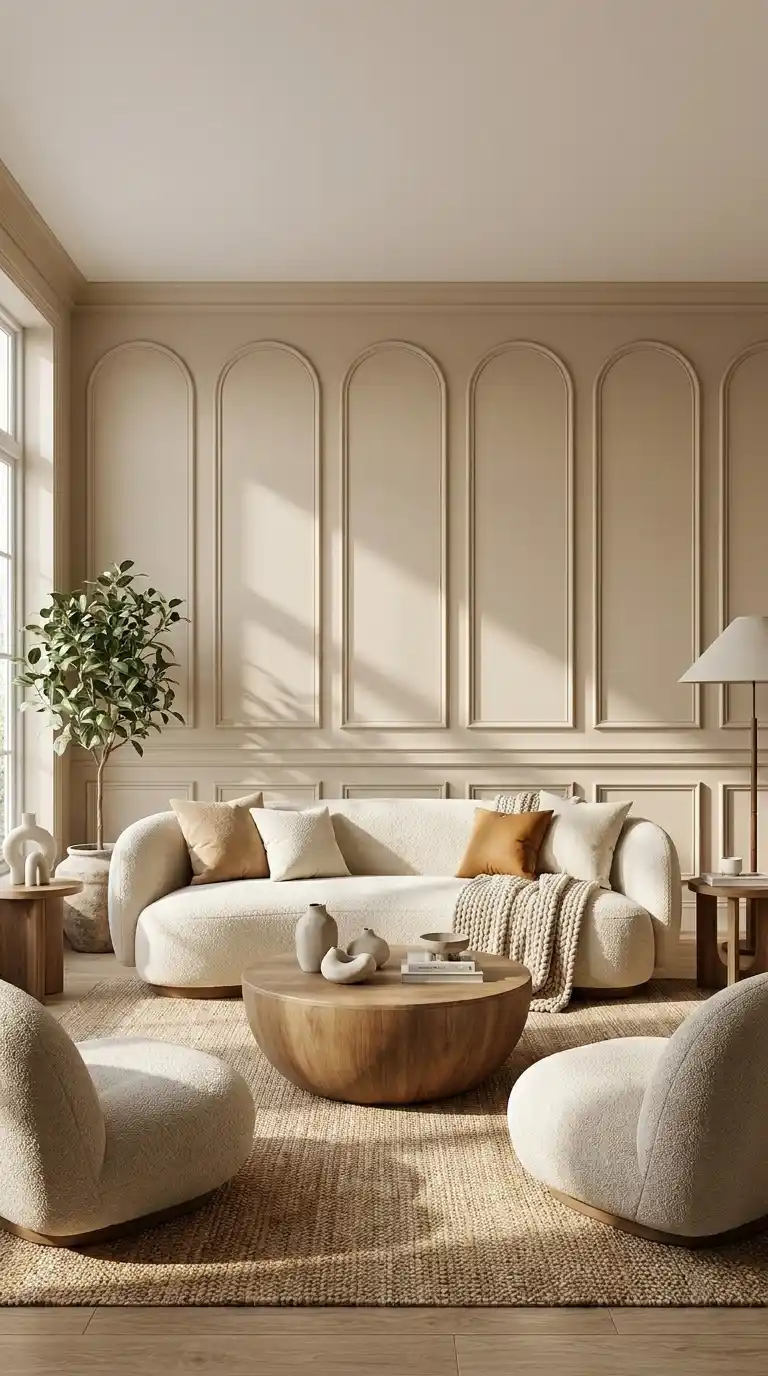
Arched panel molding swaps the standard rectangular frame for a rounded top, softening the overall look of the wall and pairing especially well with curved furniture silhouettes that have become popular in recent years.
Arch cuts require more precision than straight cuts, so consider using a template or pre-cut arched trim pieces rather than freehand cutting each curve individually.
Best suited for: living rooms with curved or organic-shaped furniture and anyone wanting a softer alternative to standard grid molding.
17. Built-In Shelving With Molding Surround
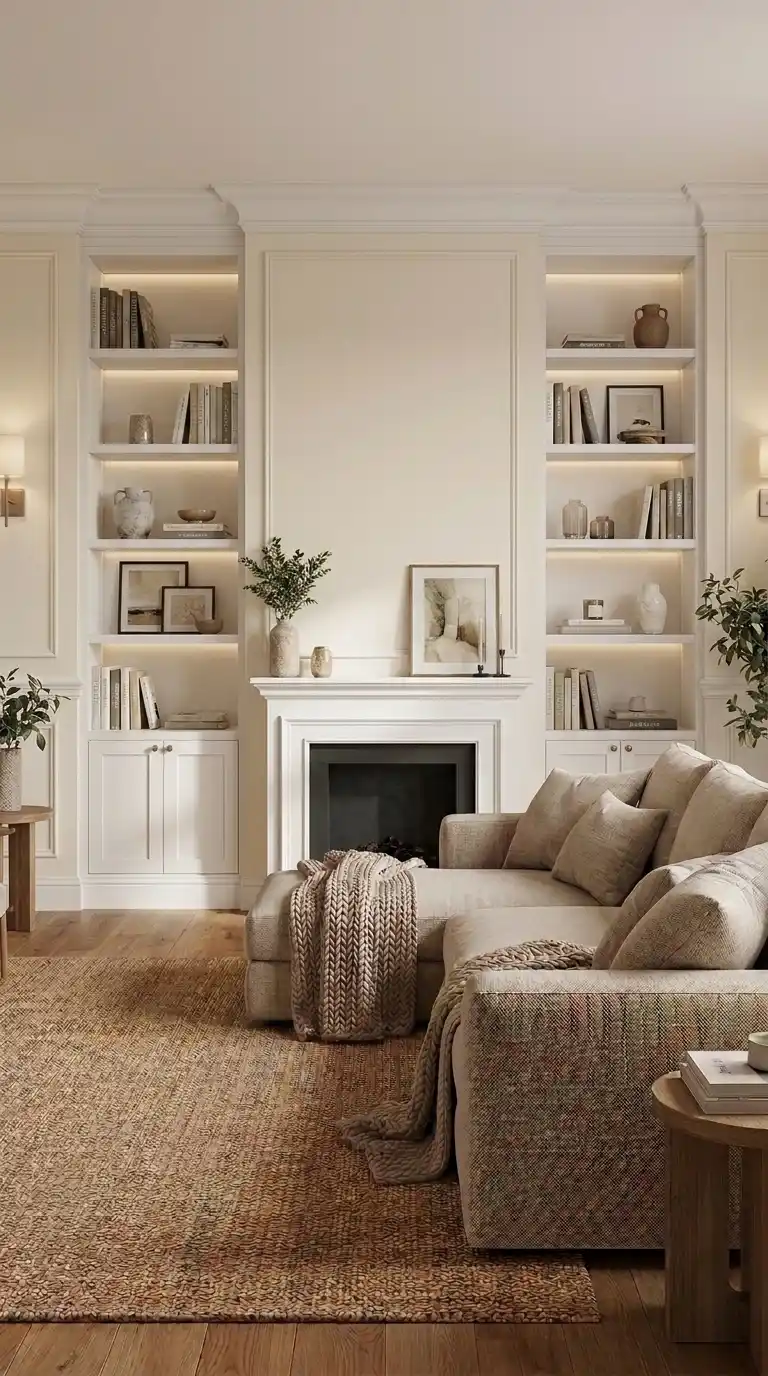
Adding proper molding detail — crown at the top, baseboard at the bottom, casing around the edges — to built-in shelving is what separates a shelving unit that looks custom-built from one that looks like it was added on afterward.
Match every molding profile used on the built-ins to the profiles already in the room, since consistency across the whole space is what makes built-ins look original to the house.
Best suited for: living rooms with existing or planned built-in shelving, especially flanking a fireplace.
18. Textured 3D Panel Wall
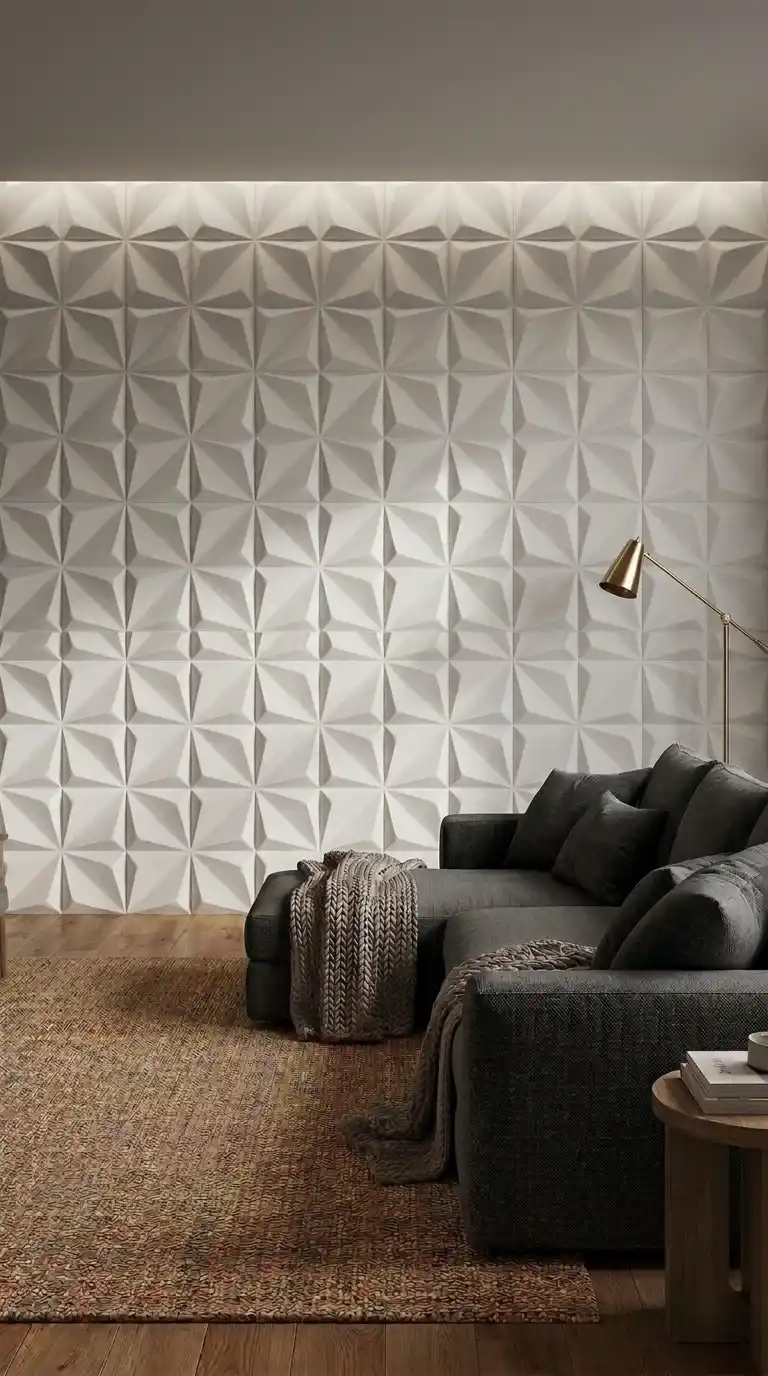
Textured 3D wall panels use a repeating raised geometric pattern to create depth without relying on traditional wood trim, and the pre-formed panels are often faster to install than custom-cut molding.
Keep the wall color monochromatic with the panels themselves so the shadow pattern created by the light does the visual work, rather than adding a competing paint color on top.
Best suited for: modern living rooms wanting a sculptural, gallery-like accent wall with a faster installation timeline.
19. Statement Ceiling Beams With Molding Trim
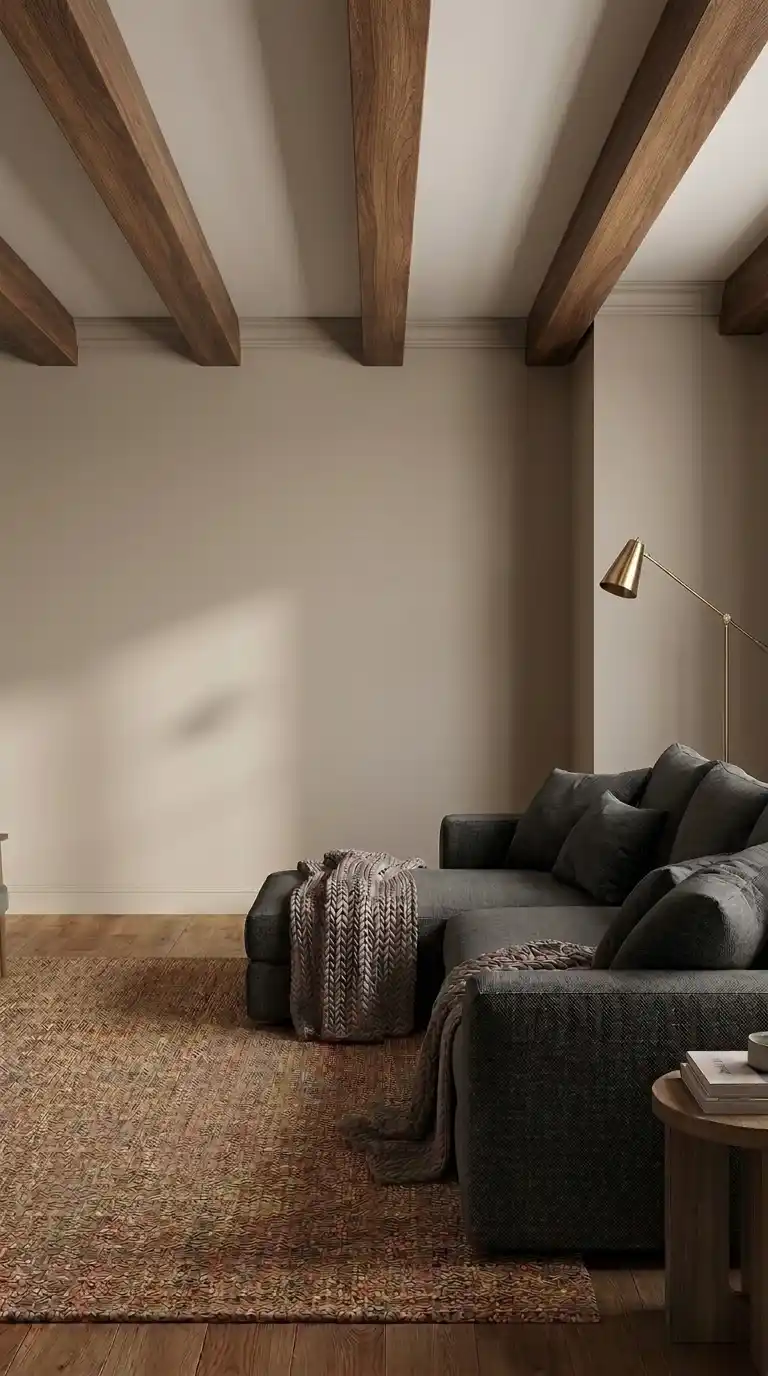
Decorative ceiling beams paired with a simple molding detail where they meet the wall bring architectural interest to the fifth wall of the room — the ceiling — which is often the most overlooked surface in a living room.
Space beams evenly across the ceiling and align them with existing architectural features like windows or a fireplace centerline for the most intentional, balanced look.
Best suited for: living rooms with higher ceilings that can visually support the added weight of beam detailing without feeling lower or more closed in.
Planning and Buying Tips
A few practical decisions up front will determine whether your molding project looks custom and intentional or uneven and DIY in the wrong way.
● Measure and map the full layout before cutting anything — sketch the wall to scale and plan panel or slat spacing on paper first, since adjusting a drawing is far easier than adjusting installed trim.
● Standard sizing to shop for — chair rail typically sits 32 to 36 inches from the floor, standard picture-frame panels run 2 to 4 inches wide, and baseboard upgrades commonly range from 5 to 7 inches tall.
● Check your wall surface before starting — uneven or textured walls may need a skim coat before molding installation, since trim applied over bumps or texture will not sit flush.
● Account for outlets and switches in your layout — plan panel or slat spacing around existing outlets and switches rather than cutting trim around them as an afterthought.
● Choose primed MDF for painted projects — it is more affordable than solid wood and takes paint more evenly, making it the standard choice for most painted molding styles on this list.
● Budget extra time for caulking and filling — the finish quality of a molding project depends heavily on properly caulked seams and filled nail holes before painting, which often takes as long as the installation itself.
Cost Breakdown: Budget, Mid-Range, and Luxury Projects
Wall molding costs vary widely based on wall coverage, material choice, and whether the work is DIY or professionally installed.
Budget ($100–$500)
A single accent wall using primed MDF trim, board and batten, or a simple chair rail falls in this range. Installation is typically DIY with a miter saw and nail gun, keeping labor costs at zero beyond tool rental if needed.
Mid-Range ($500–$2,500)
Full-wall picture frame grids, wainscoting, geometric accent walls, and vertical slat paneling sit in this tier. Hiring a professional installer for a single wall typically adds $300–$1,000 depending on pattern complexity.
Luxury / Premium ($2,500–$10,000+)
Full-room molding packages, custom built-in shelving with matching trim, ceiling beams, and herringbone panel walls fall here, especially when solid wood is used instead of MDF. Professional installation for a full room typically runs $2,000–$6,000 depending on square footage and pattern complexity.
Molding Style and Material Comparison
| Style/Material | Price Range | Durability | Installation Difficulty | Best For |
| Primed MDF trim | $1–$3 per linear ft | Moderate — sensitive to moisture | Easy to moderate | Painted molding projects, budget-friendly rooms |
| Solid wood trim | $4–$10 per linear ft | Very high | Moderate to difficult | Stained or natural-finish projects, higher-end rooms |
| PVC/composite trim | $3–$7 per linear ft | Very high, moisture resistant | Easy to moderate | Bathrooms-adjacent living spaces, humid climates |
| Pre-formed 3D wall panels | $5–$15 per sq ft | High | Easy | Faster installs, modern sculptural accent walls |
| Ceiling medallions | $20–$300 each | Very high | Moderate | Formal rooms with a central light fixture |
| Decorative wood beams | $50–$300 per beam | Very high | Difficult — often professional install | High-ceiling rooms, architectural statement pieces |
Maintenance Tips
● Painted molding — dust with a soft cloth or vacuum brush attachment monthly, and touch up chipped paint promptly to prevent moisture from reaching the MDF underneath.
● Solid wood trim — wipe with a slightly damp cloth and dry immediately; avoid harsh chemical cleaners that can strip stain or finish over time.
● Seams and joints — recaulk any cracked seams as soon as they appear, since gaps let moisture and dust behind the trim and are far easier to fix early than after paint has failed around them.
● 3D panels and textured surfaces — dust with a soft brush attachment, since crevices in raised patterns collect more dust than flat walls and are harder to wipe clean by hand.
● Ceiling beams and medallions — check for dust buildup seasonally, since these often sit above eye level and get overlooked during regular cleaning.
● Common mistake to avoid — painting over unfilled nail holes or uncaulked seams, which become far more visible and harder to fix once multiple paint layers are involved.
Frequently Asked Questions
How much does it cost to add wall molding to a living room?
A single DIY accent wall using primed MDF typically costs $100 to $500 in materials, while a full-room professionally installed molding package can range from $2,000 to $6,000 or more depending on style complexity and square footage.
What is the easiest wall molding style for beginners?
Board and batten and simple chair rail molding are generally the most beginner-friendly styles, since both rely on straight cuts and simple, forgiving layouts rather than the precise angle cuts required for geometric or herringbone patterns.
Should wall molding match the trim throughout the rest of the house?
In most cases, yes — matching molding profiles and paint colors across window casings, doors, and new wall molding creates a cohesive look that reads as original to the home rather than an isolated accent wall.
Can you install wall molding over textured walls?
It is possible but not ideal — heavily textured walls often need a skim coat of joint compound to create a flat surface first, since molding installed directly over texture can leave visible gaps behind the trim.
What paint finish works best for wall molding?
A satin or semi-gloss finish is generally recommended for molding, since it holds up better to cleaning and handling than flat paint, and the slight sheen helps emphasize the shadow lines created by the trim profile.
How to Choose the Right Wall Molding for Your Living Room
The right molding style depends on three factors working together: your skill level and available time, your budget, and the architectural style of your home. Beginners with limited time are best served by simpler projects like board and batten or a single chair rail, while those with more carpentry experience or a bigger budget can take on grid paneling, geometric patterns, or full-room packages.
Budget should guide material choice as much as style — primed MDF covers most painted molding styles affordably, while solid wood and pre-formed 3D panels are worth the added cost mainly when durability or a faster installation timeline matters more than upfront price.
Finally, match the molding style to your home’s existing architecture. A modern home with clean lines suits vertical slats or geometric grids, while a traditional home with existing trim details is better served by classic wainscoting, picture-frame moulding, or a ceiling medallion that complements what is already there.


- Be Respectful
- Stay Relevant
- Stay Positive
- True Feedback
- Encourage Discussion
- Avoid Spamming
- No Fake News
- Don't Copy-Paste
- No Personal Attacks
- Be Respectful
- Stay Relevant
- Stay Positive
- True Feedback
- Encourage Discussion
- Avoid Spamming
- No Fake News
- Don't Copy-Paste
- No Personal Attacks
