16 Staircase Paneling Ideas That Transform a Boring Hallway
Published: 29 Aug 2026
A staircase wall is one of the most visible spots in any home, yet it’s often left as a plain, painted stretch of drywall that never gets a second thought. Staircase paneling ideas work so well for boring or dated stairways because they add architectural texture and depth to a large vertical surface that’s otherwise hard to decorate with art or furniture. Whether you’re dealing with a narrow entry staircase or a wide open-concept stairwell, paneling turns wasted wall space into one of the most eye-catching features in the house.
This guide covers 16 staircase paneling ideas, from classic board and batten to bold black accent walls and modern slat designs, along with planning tips, real cost ranges, a materials comparison, and answers to the most common paneling questions so you can choose the right style for your stairs.
Is Staircase Paneling Right for You?
Staircase paneling is a rewarding upgrade, but it’s worth weighing the cost, labor, and long-term commitment before you start measuring your wall.
Pros
● Adds architectural character to an otherwise plain, hard-to-decorate wall
● Works with almost any style, from traditional wainscoting to modern slats
● MDF and lightweight panel kits are budget-friendly and DIY-approachable
● Increases perceived home value, especially in entryways and stairwells
● Can be painted or refreshed later without removing the underlying structure
Cons
● Angled staircase walls require custom-cut panels, which add labor and cost
● Solid wood paneling costs significantly more than MDF or paint-grade options
● Removing paneling later means patching and refinishing the wall underneath
● Textured paneling can collect dust in grooves and seams over time
● A tall stairwell may require scaffolding or lift equipment for safe installation
If you’re comfortable with basic trim carpentry or hiring a finish carpenter for the angled cuts, staircase paneling is one of the highest-impact upgrades you can make to an entryway. Budget accordingly if your stairwell is tall or steeply angled, since that adds both material waste and labor time.
1. Board and Batten Paneling Along the Staircase Wall
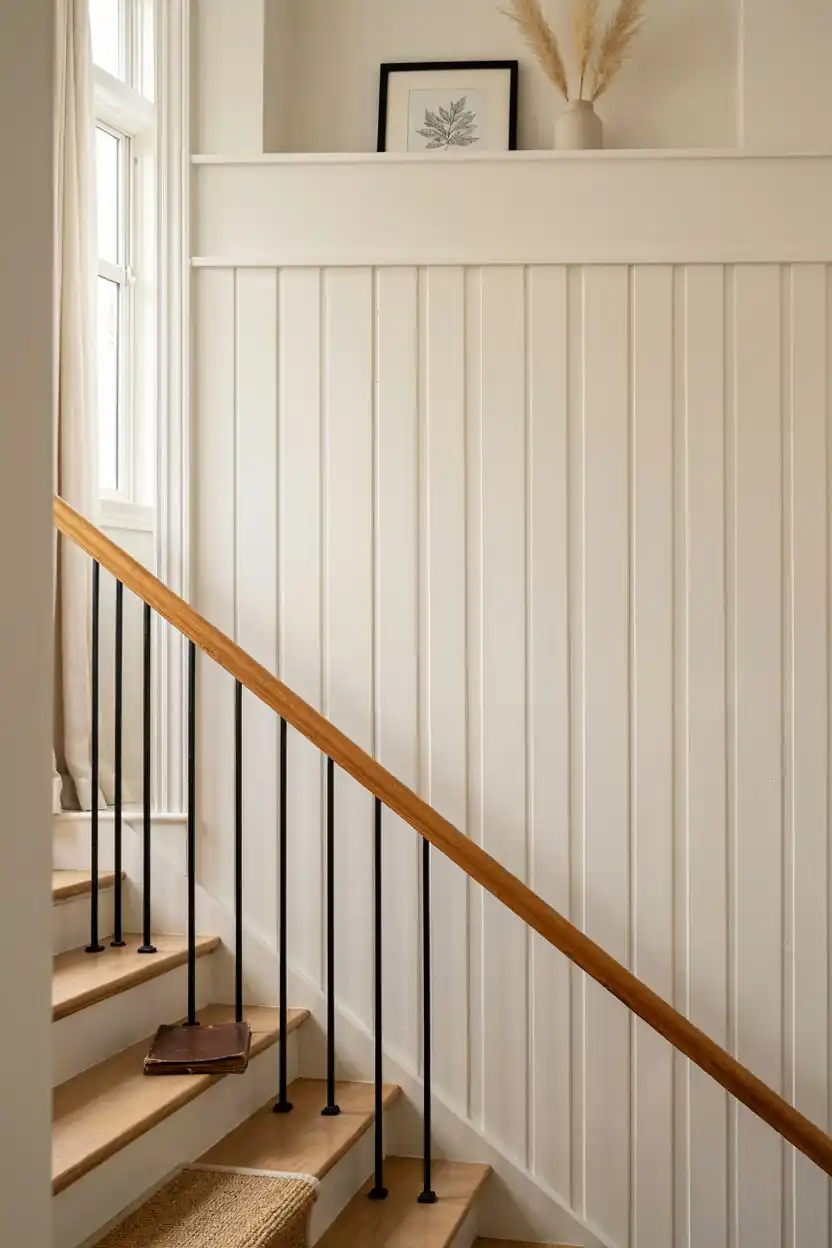
Board and batten paneling uses vertical strips of wood trim over a flat base, creating a classic, textured look that reads as timeless rather than trendy. Following the stair incline with angled battens is a hallmark of this style.
This is one of the most popular staircase paneling choices because it works in nearly any home style, from farmhouse to traditional to transitional. It’s best suited for staircases with a straight run and a consistent angle.
2. Shiplap Staircase Wall
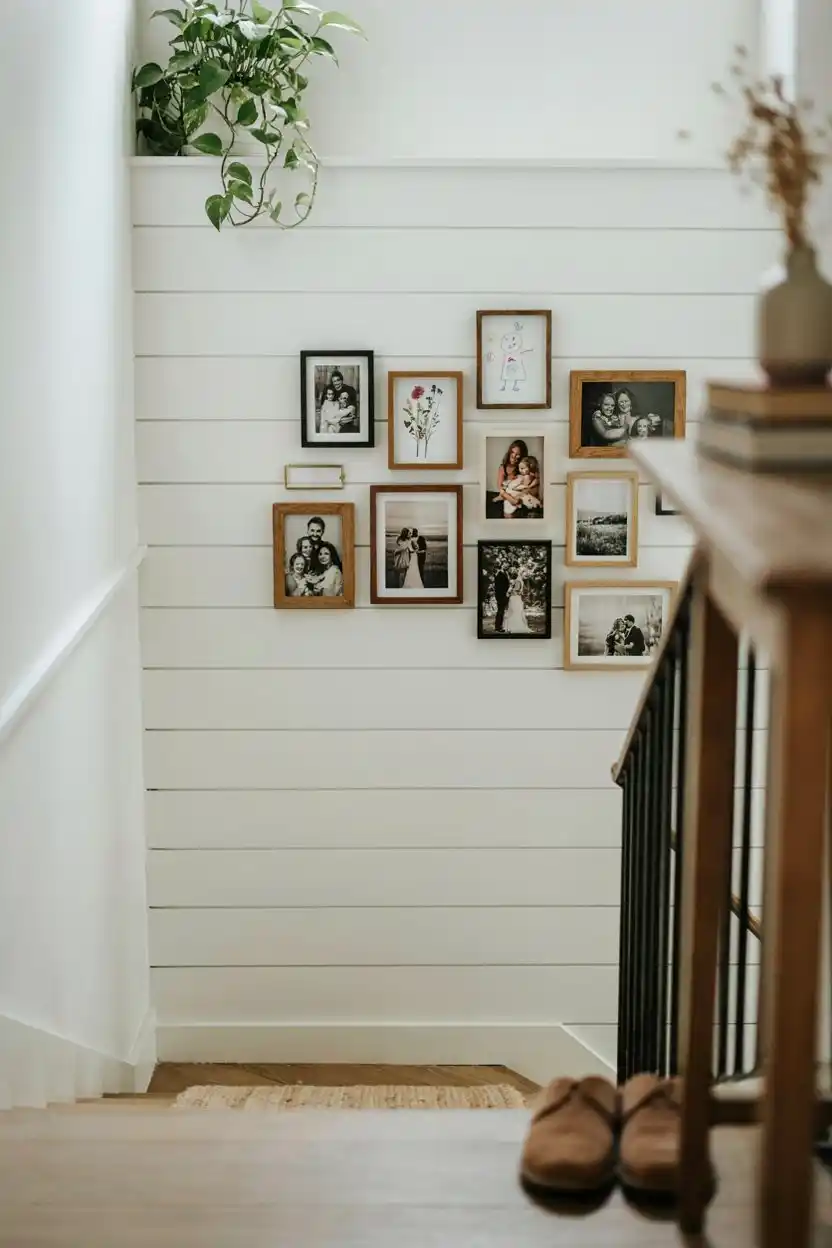
Shiplap brings a horizontal texture to the staircase wall that contrasts nicely with the vertical climb of the stairs themselves, adding subtle dimension without overwhelming the space.
This style is especially popular in farmhouse and coastal interiors and pairs well with gallery walls or simple hook rails. It suits homeowners who want texture without a heavy, formal look.
3. Wainscoting with Chair Rail Trim
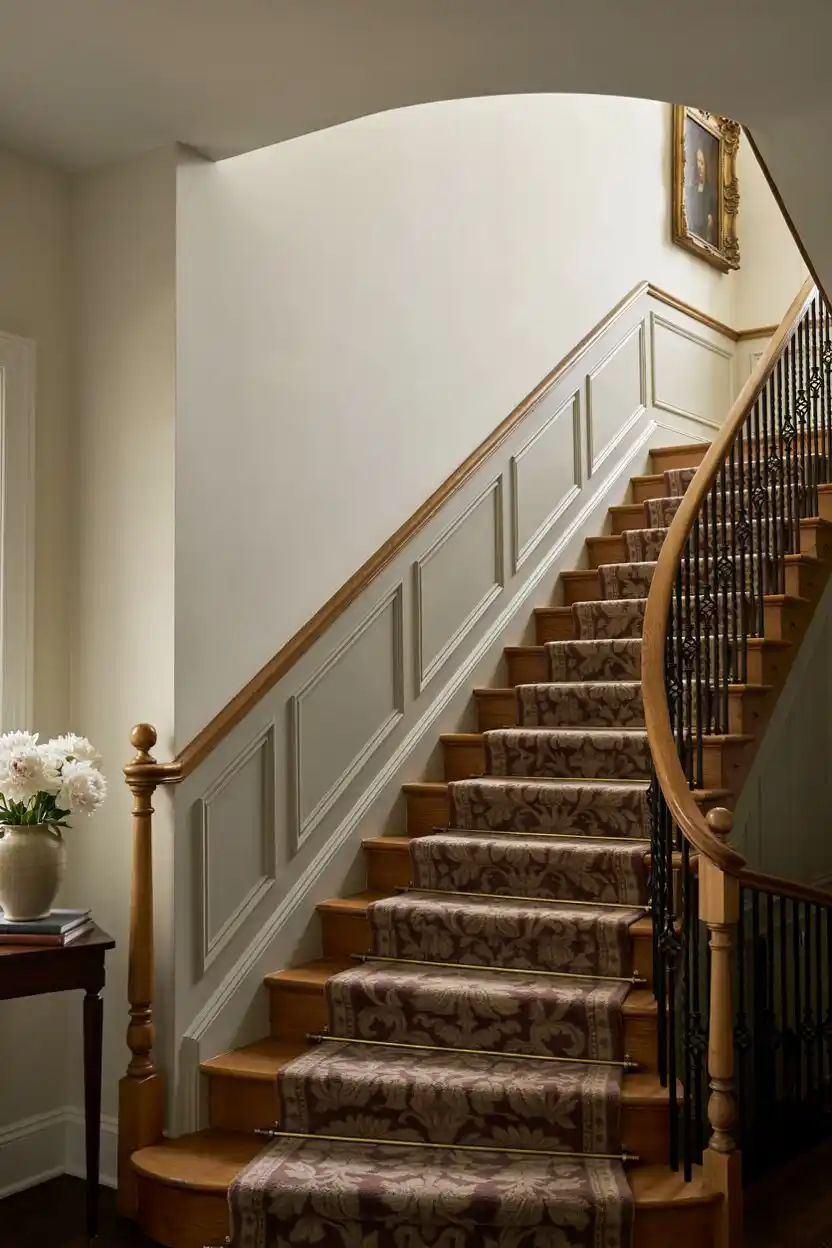
Traditional raised-panel wainscoting topped with a chair rail is one of the more formal staircase paneling options, often finished in a two-tone paint scheme that separates the lower wainscot from the upper wall color.
This style suits traditional and colonial-style homes, particularly those with existing millwork elsewhere in the house. It’s best executed by a finish carpenter given the precision required on an angled wall.
4. Painted Two-Tone Paneling for Contrast
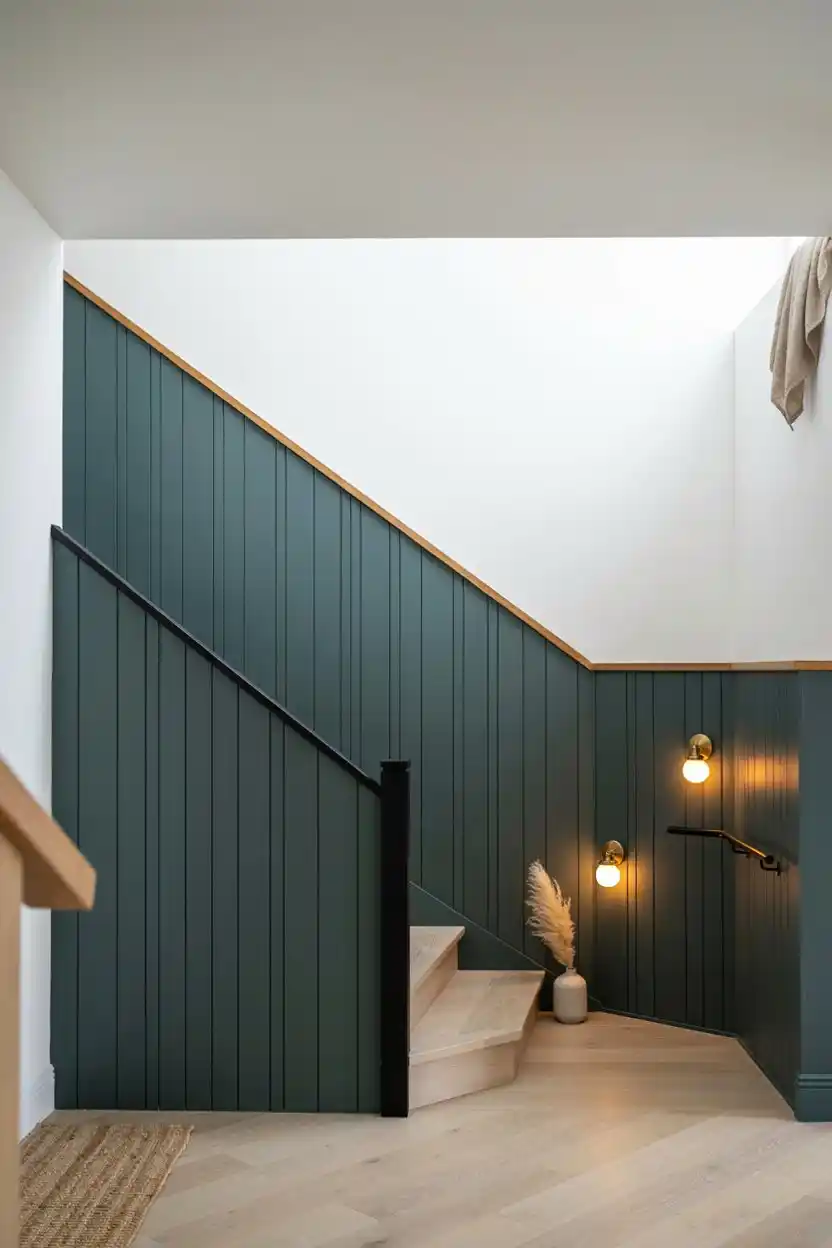
Painting the paneling a bold contrasting color against a lighter upper wall creates a strong visual anchor in the stairwell, turning a plain hallway into a designed moment.
This works especially well with deep greens, navy, or black paired with white trim. It suits homeowners who want a bold, editorial look and already have confidence with color in their home.
5. Vertical Slat Wood Paneling for a Modern Look
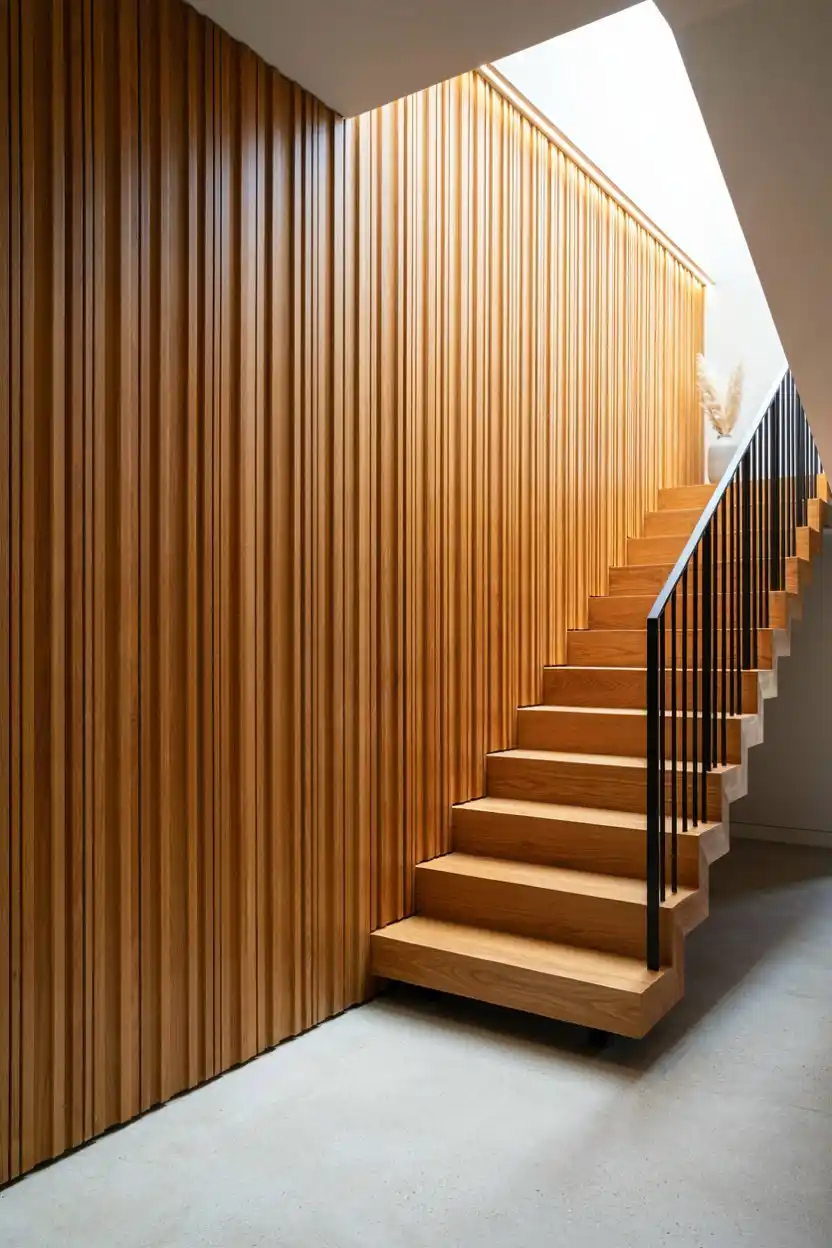
Vertical slat paneling, sometimes called a slat wall or batten wall, brings a modern, almost sculptural texture to a staircase, using evenly spaced wood strips over a contrasting or matching backing.
This look is a favorite in contemporary and Scandinavian-inspired homes. It suits homeowners with modern staircases, floating treads, or minimalist railings who want a matching architectural statement on the wall.
6. Picture Frame Molding Panels
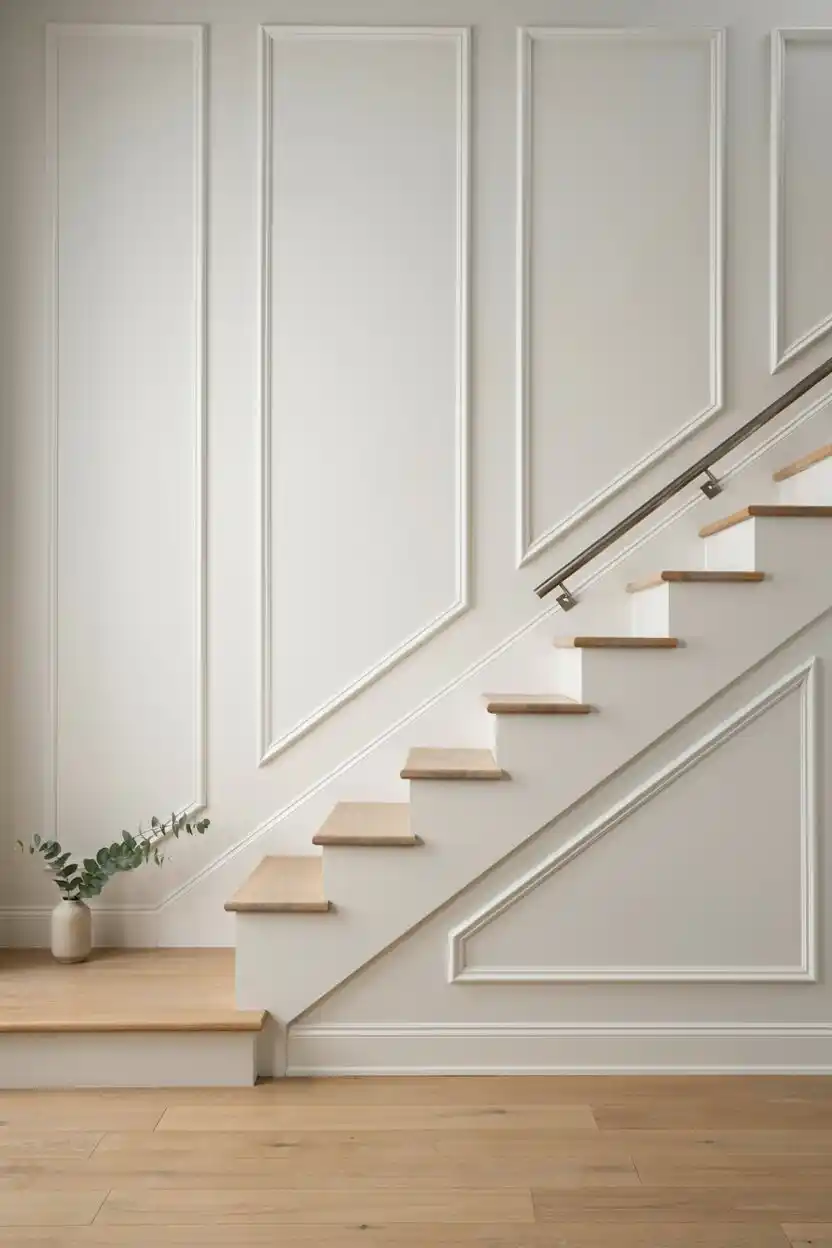
Picture frame molding creates dimensional rectangles directly on the existing wall using simple trim boards, offering a subtle, tailored look without the bulk of full wainscoting.
This is one of the more budget-friendly paneling options since it uses thin trim rather than full panels. It suits traditional and transitional homes looking for understated architectural detail.
7. Reclaimed Wood Accent Paneling
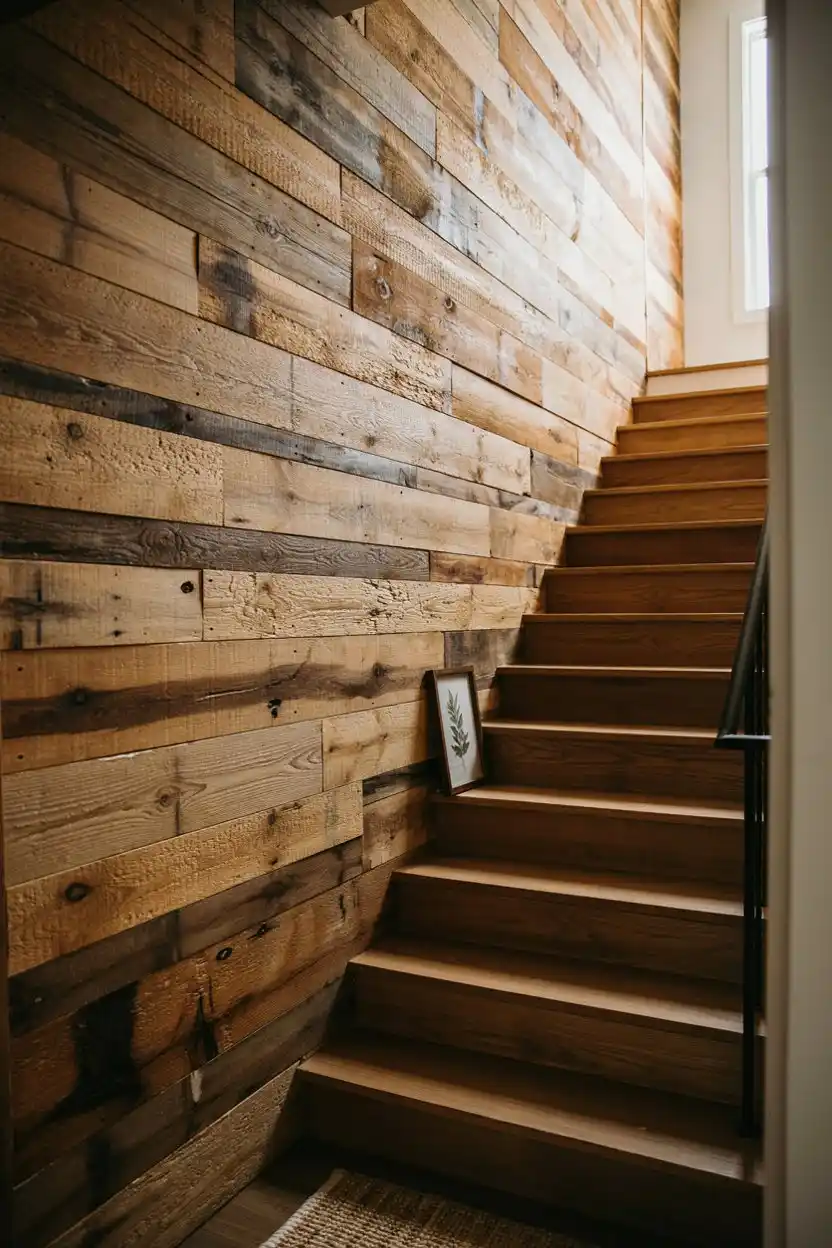
Reclaimed wood paneling brings warmth and history to a staircase wall, with each board carrying unique grain, knots, and weathering that new lumber can’t replicate.
This look pairs beautifully with wood stair treads and natural stone. It’s best suited for farmhouse, rustic, and mountain-style homes where a lived-in, textured feel is the goal.
8. Herringbone Wood Paneling
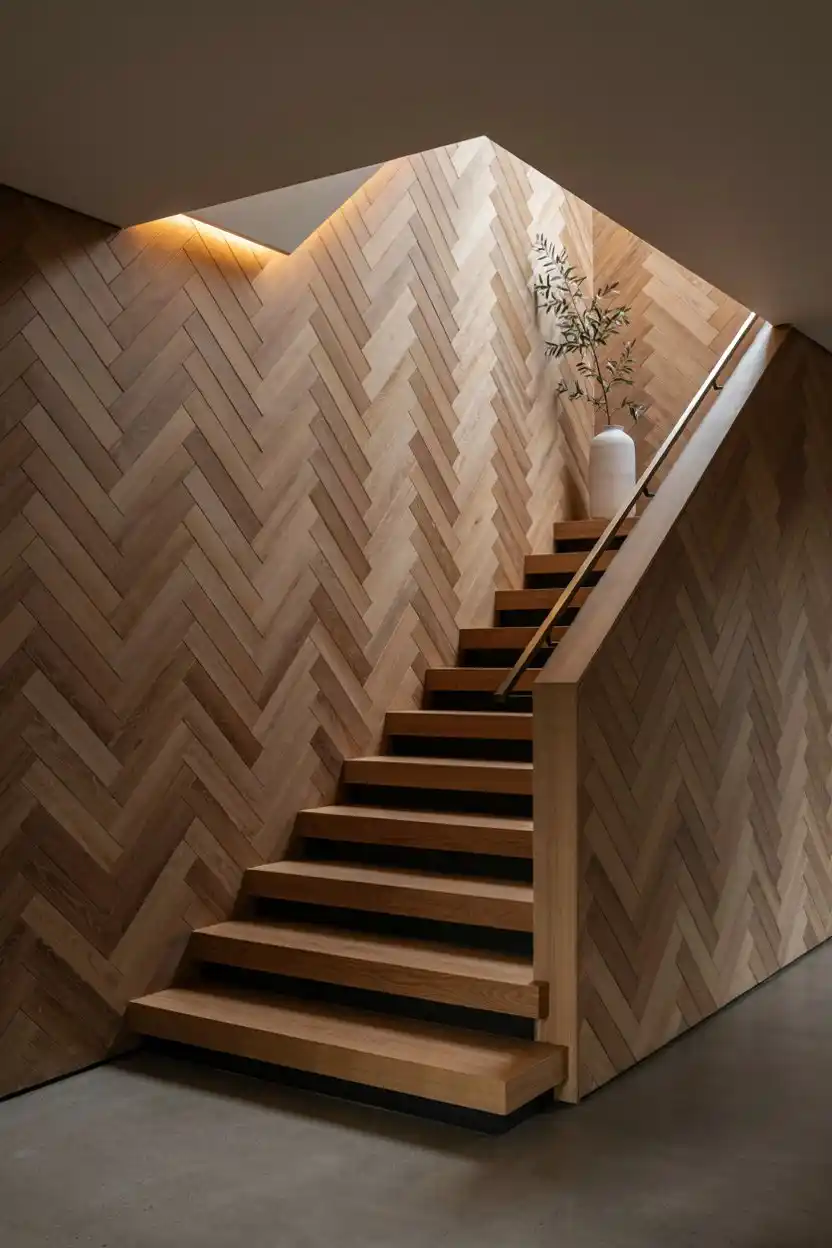
Herringbone paneling arranges wood strips in a classic zigzag pattern, turning the staircase wall into a genuine focal point that requires precise, skilled installation to execute well.
This is one of the more premium and labor-intensive paneling styles on this list. It suits homeowners with a generous budget who want a true design statement in their entryway.
9. Black Painted Paneling for Drama
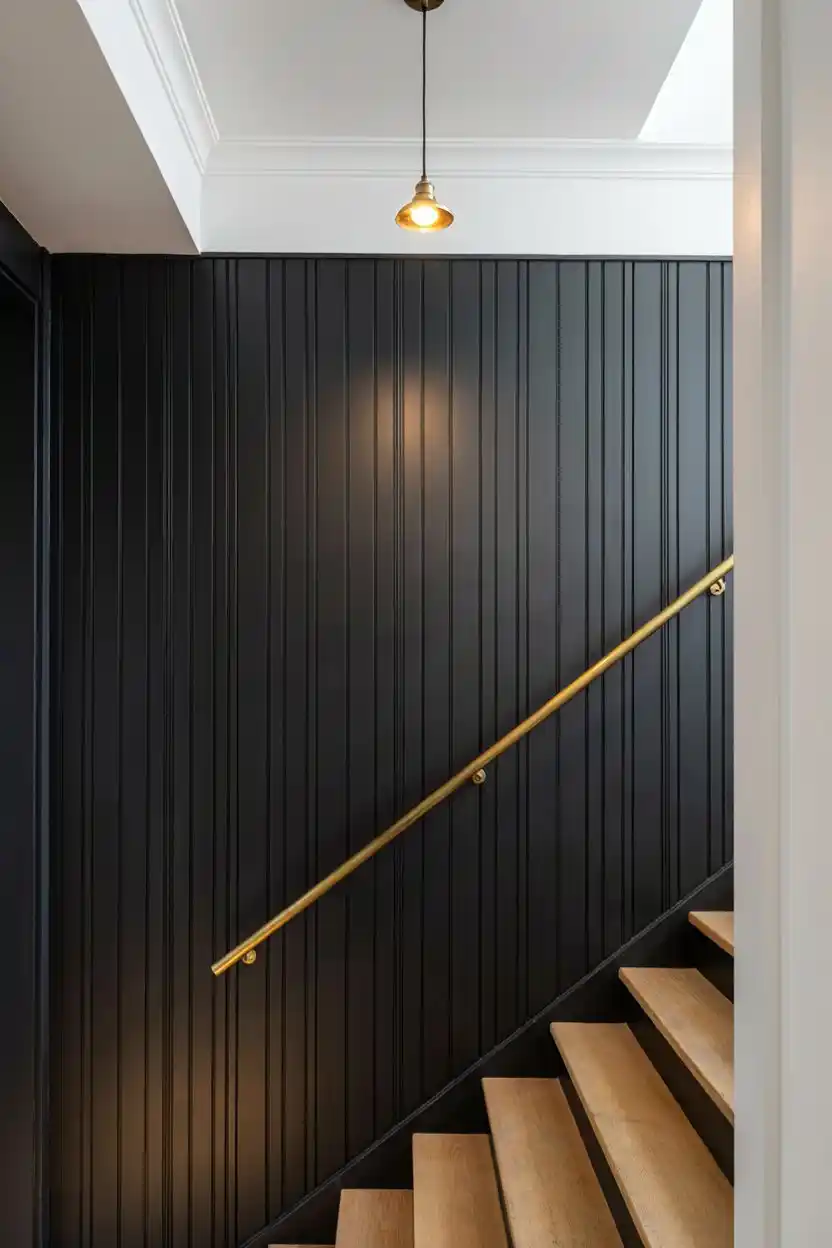
Painting the entire panel wall matte black creates a bold, gallery-like backdrop that makes artwork, brass fixtures, and stair details stand out dramatically against the dark surface.
This treatment suits modern, moody, and eclectic interiors where the staircase is meant to be a statement rather than a background element. It pairs well with brass or black hardware.
10. Beadboard Paneling
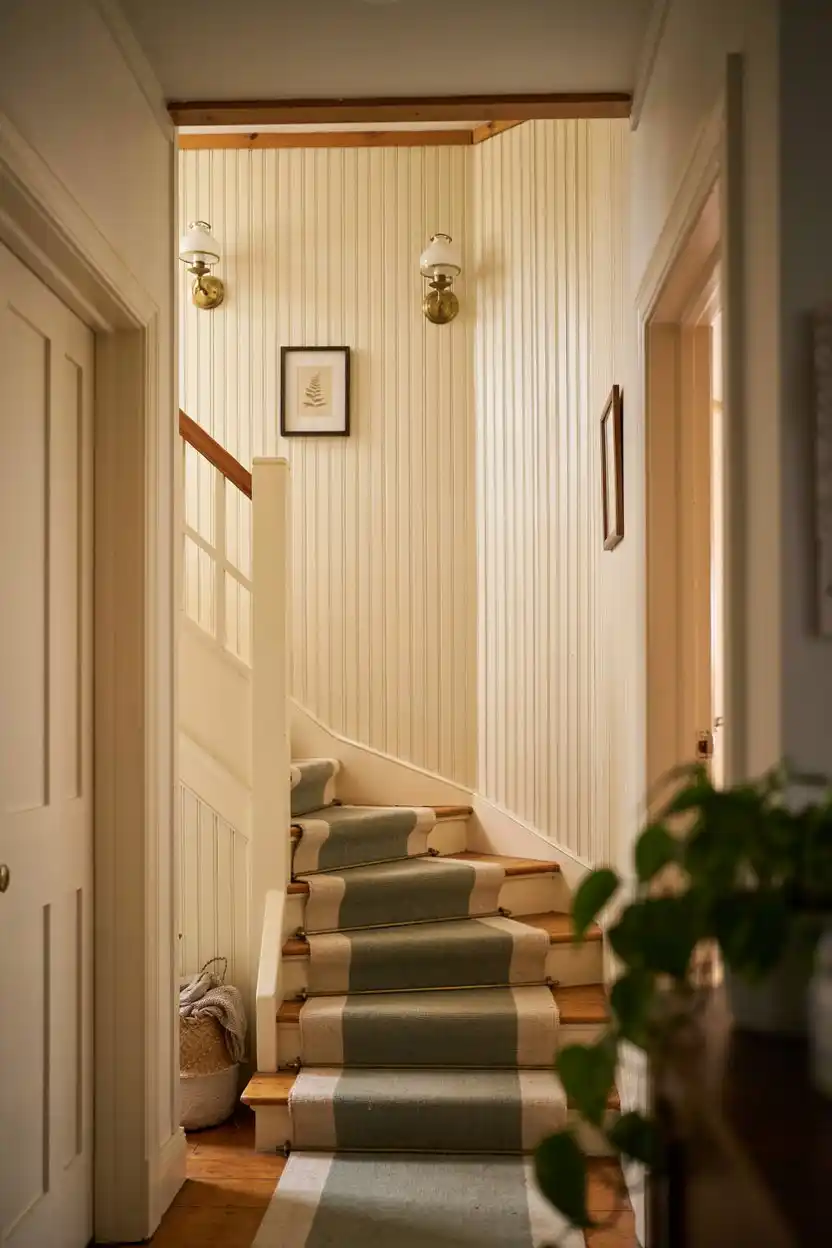
Beadboard paneling offers fine, closely spaced vertical grooves for subtle texture, a softer and more traditional look than wider board-and-batten planks.
This is a classic choice for cottage, coastal, and traditional homes, often paired with a painted finish rather than stained wood. It suits homeowners wanting a charming, timeless look.
11. Geometric Angled Paneling Following the Stair Stringer
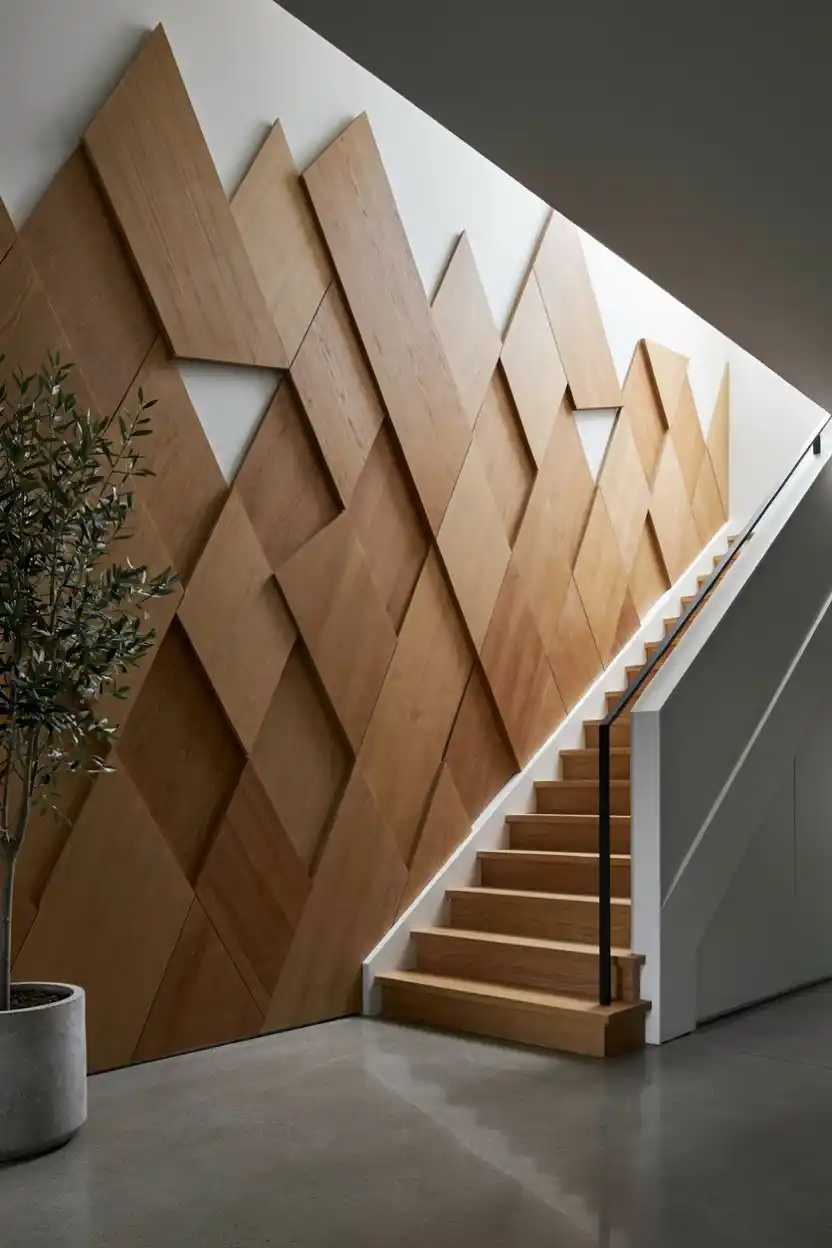
This design intentionally echoes the zigzag line of the stair stringer itself, using angled panel segments that rise and fall with each step rather than running as one continuous diagonal.
It’s a more advanced, custom carpentry project that makes the staircase feel like a cohesive architectural element from floor to ceiling. It suits modern homes with an exposed, visible stringer.
12. Paneled Half Wall with Open Balusters Above
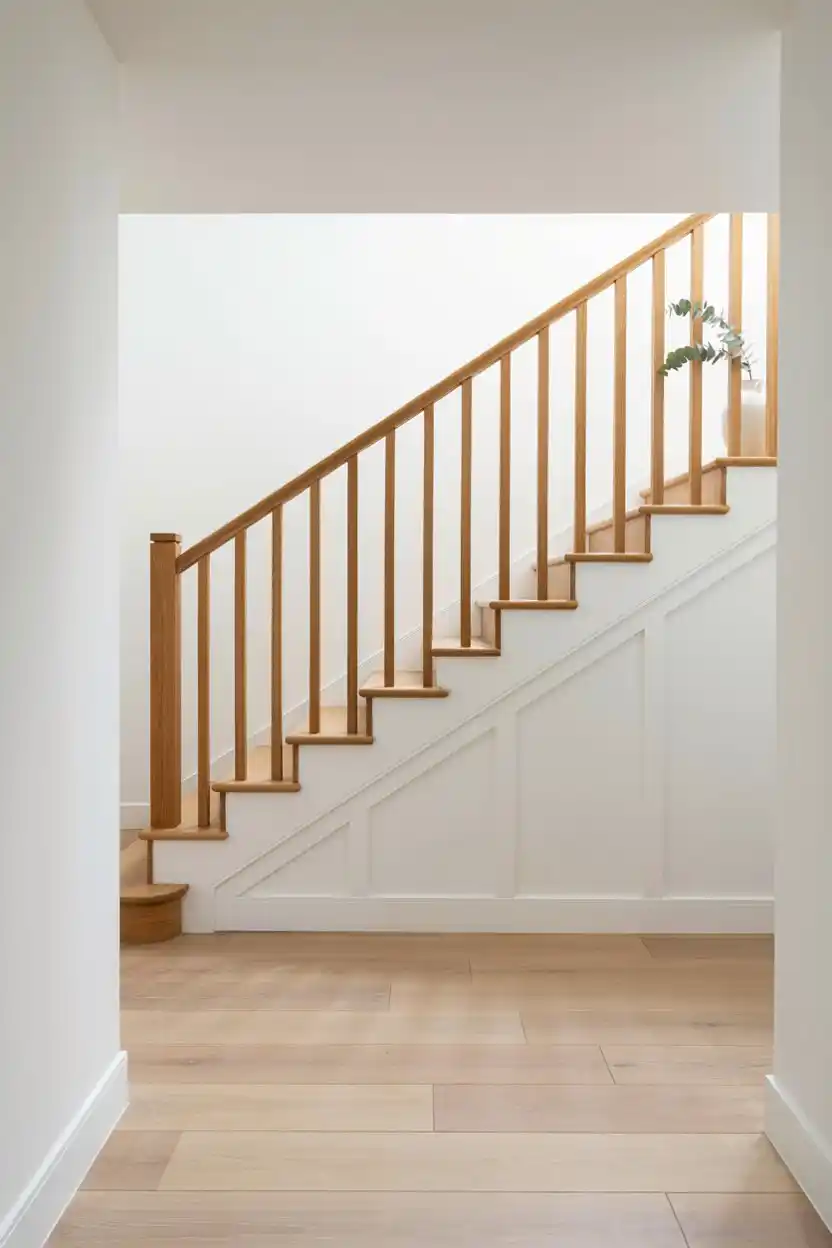
Combining a paneled half wall with open balusters above keeps sightlines open between floors while still adding texture and detail to the solid portion of the staircase wall.
This works well for open-concept homes where full paneling might feel too enclosed. It suits staircases that are open on one side, offering detail without blocking light or views.
13. Textured 3D Wall Panels
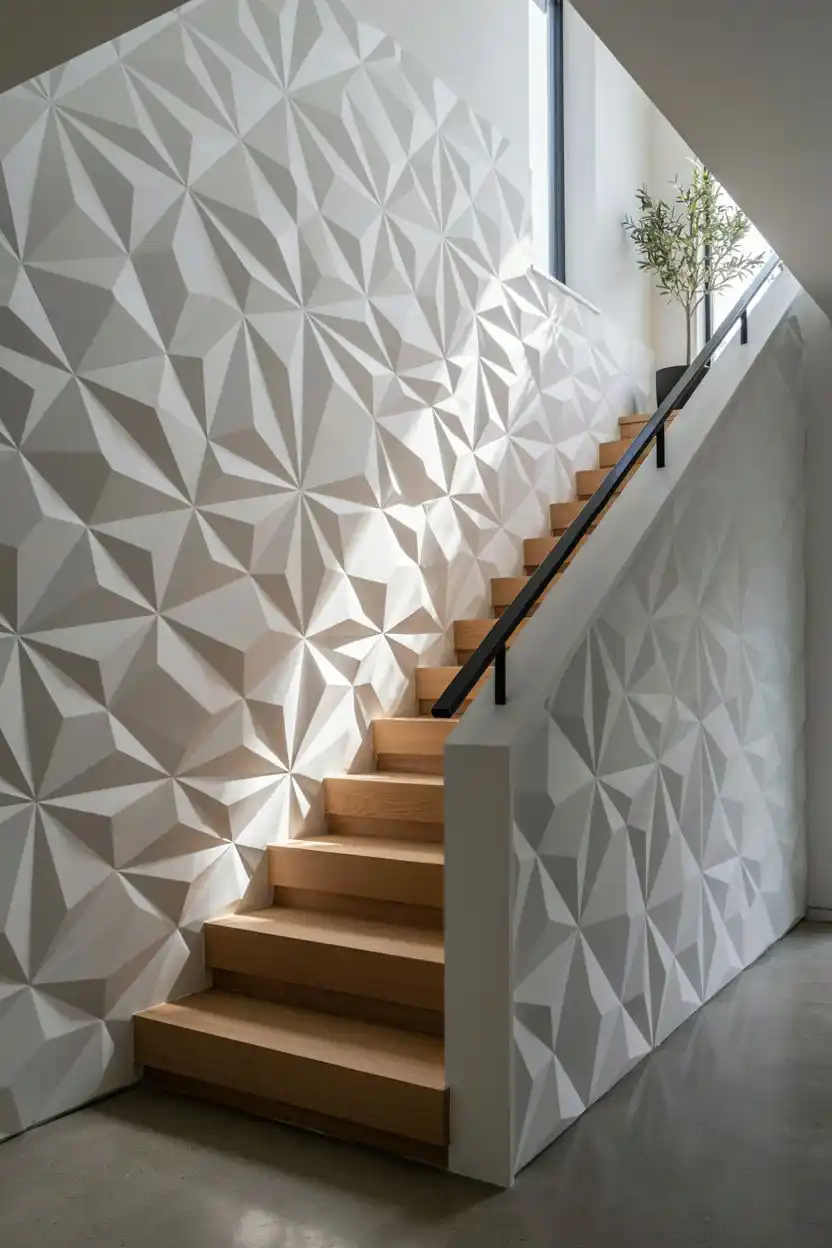
3D textured panels use raised geometric or organic shapes to create depth and shadow play across the wall, a striking, sculptural alternative to traditional flat paneling styles.
This look is best suited for modern and contemporary homes with strong architectural lighting to highlight the texture. It’s a bold choice for homeowners wanting something distinctly different.
14. Gallery Wall Paneling Combined with Molding Grid
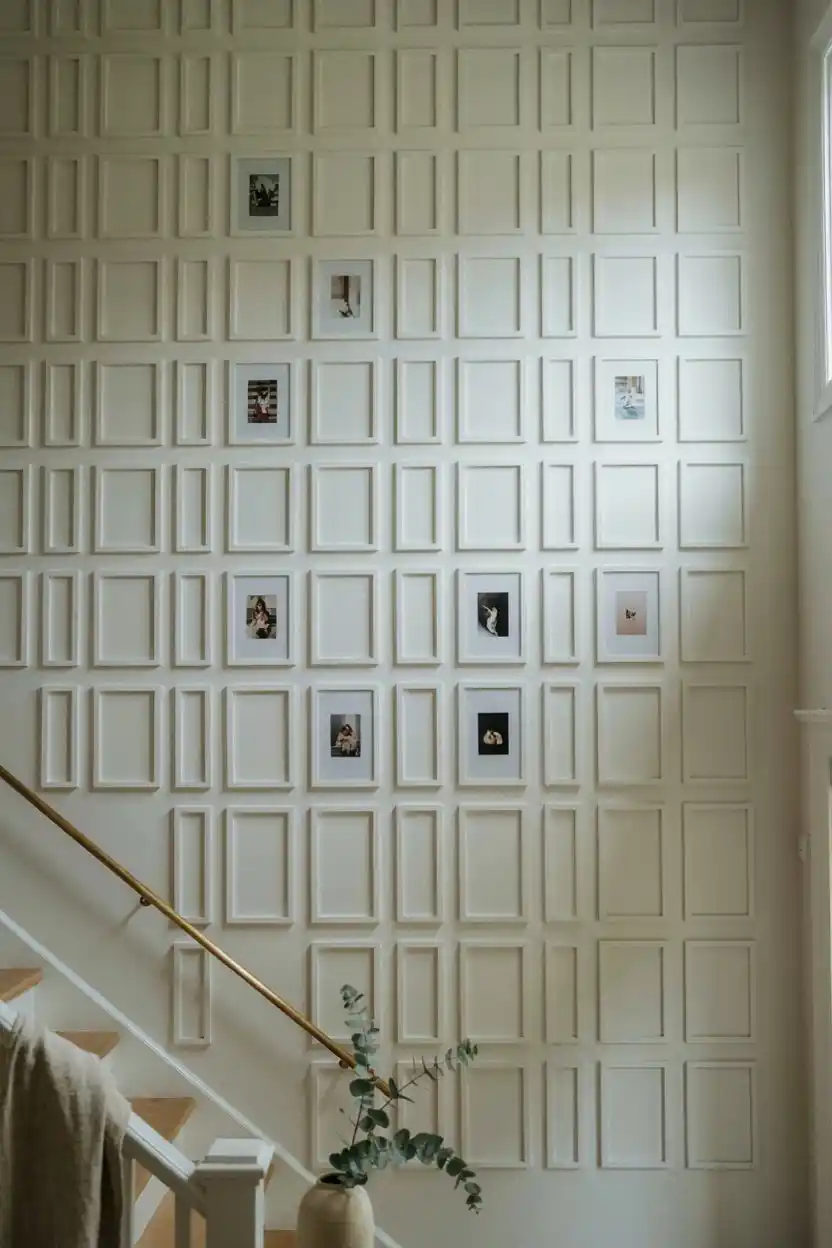
Pairing molding panels with framed art inside each section combines two popular staircase treatments into one, giving the wall architectural structure while also serving as a family gallery wall.
This is a great option for homeowners who love displaying photos but want a more organized, intentional layout than a freeform gallery wall. It suits traditional and transitional homes.
15. Whitewashed Wood Paneling
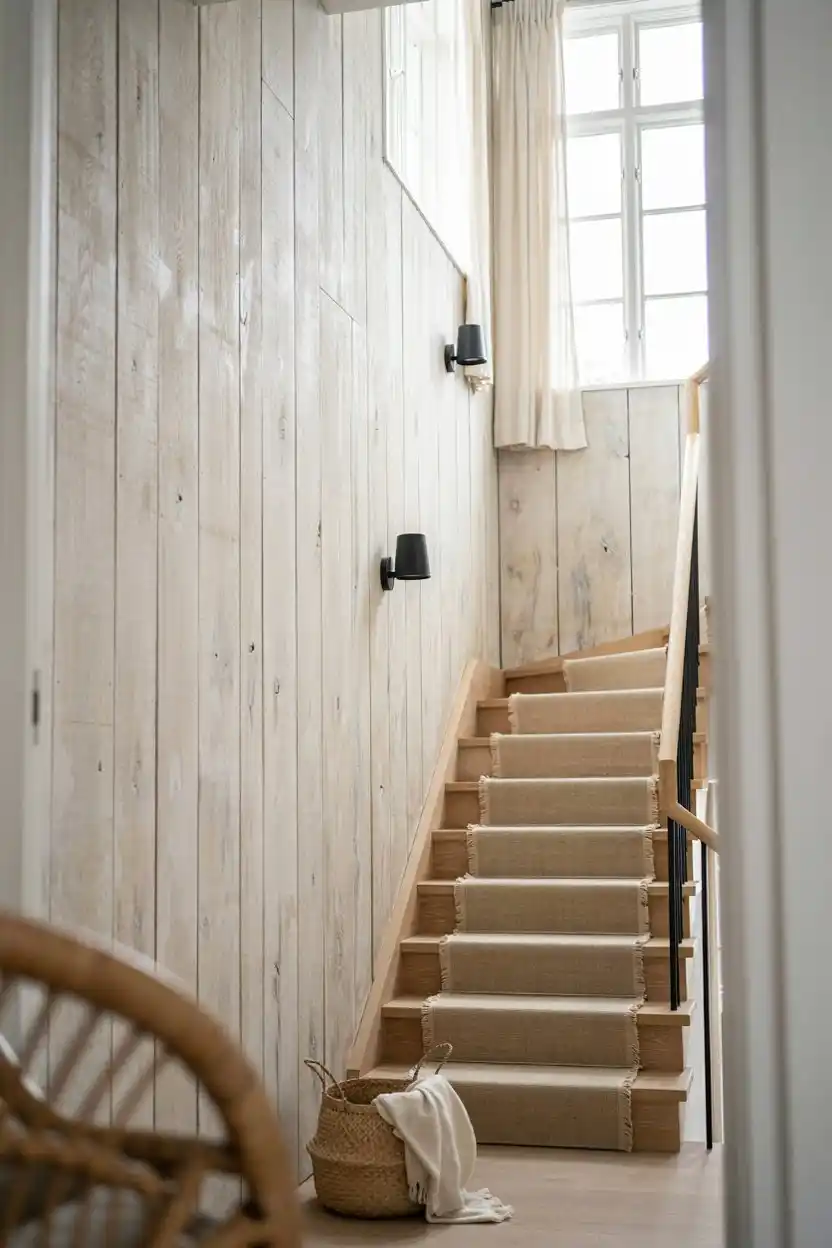
Whitewashing softens the look of wood paneling while keeping its natural texture visible, creating a bright, airy stairwell rather than a heavy or dark one.
This finish suits coastal, Scandinavian, and modern farmhouse homes especially well. It’s a good middle ground for anyone who wants texture and warmth without a solid paint color.
16. Curved or Wrapped Paneling on a Spiral or Curved Staircase
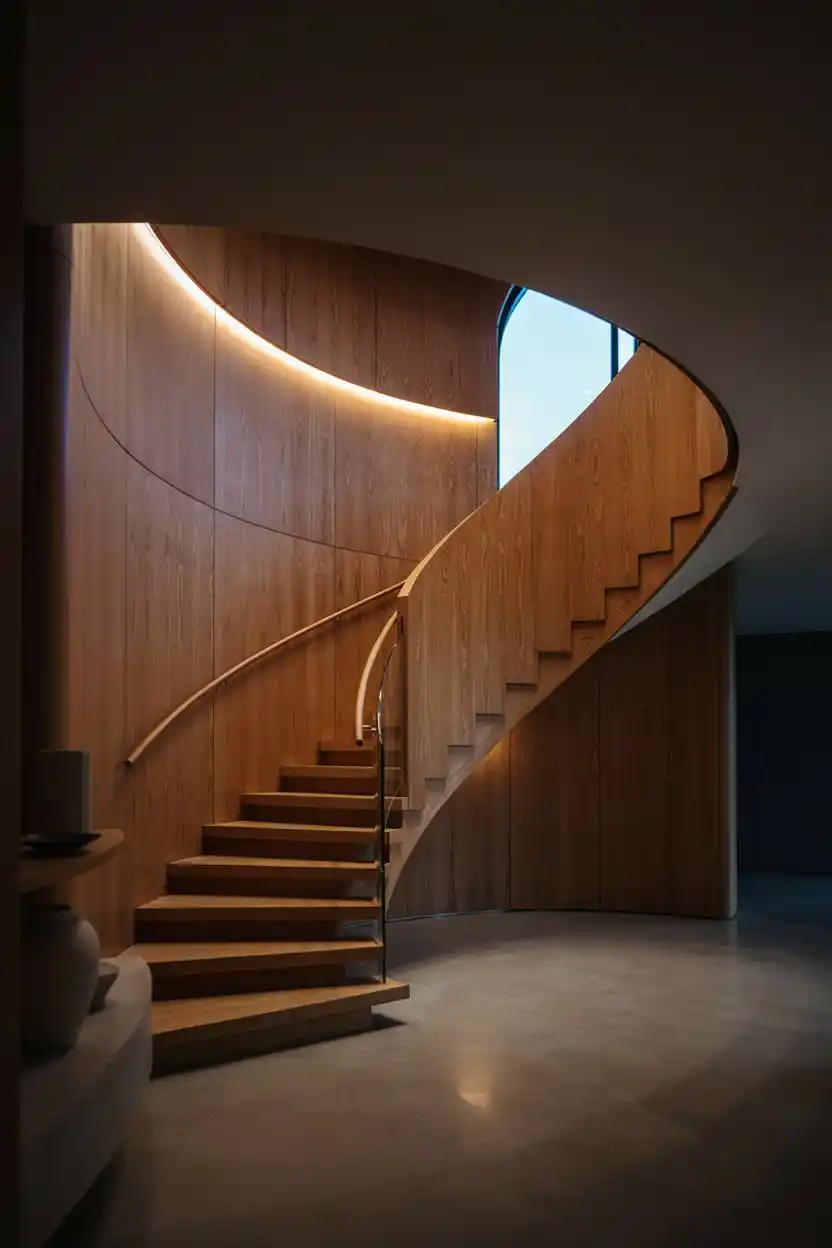
Wrapping paneling around a curved or spiral staircase requires flexible or custom-milled materials that can follow the sweep of the wall, a technically demanding but visually stunning result.
This is one of the most premium and specialized paneling projects, typically requiring a skilled contractor or millwork specialist. It suits homeowners with a curved staircase and a generous renovation budget.
Planning and Buying Tips
Measure the exact angle of your staircase
Most staircases follow a consistent incline, but always measure the angle at multiple points before ordering panels or trim, since older homes can have slight inconsistencies that affect custom cuts.
Decide between full-height and half-wall paneling
Full-height paneling makes a bigger visual statement but costs more in materials; a half wall with a cap rail is a more budget-friendly way to add detail while leaving the upper wall for paint or wallpaper.
Choose the right material for your budget and durability needs
MDF is affordable and paint-ready but less moisture-resistant than solid wood or PVC-based panel products, which hold up better in humid climates or high-traffic entryways.
Plan for outlets, switches, and thermostats on the wall
Staircase walls often have light switches or outlets that need to be worked around; measure their locations before finalizing your panel layout to avoid awkward cuts.
Account for the stair stringer and baseboard transition
Paneling that follows the stair angle needs to transition cleanly into the baseboard and stringer trim at the bottom, which is one of the more technically demanding parts of the installation.
Get a firm quote if the staircase is tall or angled
Two-story stairwells or unusually steep staircases often require scaffolding, lifts, or extra labor time, so get an in-person quote rather than estimating based on square footage alone.
Cost Breakdown
Costs vary widely based on material, room size, and whether the project is DIY or professionally installed. Here’s a general breakdown to help you budget.
Budget ($300–$1,200)
MDF board and batten or picture frame molding kits, DIY installation with basic tools, paint-grade finish. Covers a single flight of stairs in an average-sized home.
Mid-Range ($1,200–$4,500)
Professionally installed wainscoting, shiplap, or slat paneling with a paint or stain finish, including precise angled cuts for the stair incline and baseboard transitions.
Luxury/Premium ($4,500–$15,000+)
Solid wood, herringbone, curved/custom-milled paneling, or full two-story stairwell installations require scaffolding, a finish carpenter, or a millwork specialist.
Staircase Paneling Materials Comparison
Use this comparison to weigh cost, durability, and best use case across the most common staircase paneling materials and styles.
| Material/Style | Avg. Cost per Sq Ft | Durability | Best For |
| MDF Board and Batten | $4–$10 | Moderate (paint-grade only) | Budget projects, DIY installs |
| Solid Wood Paneling | $10–$25 | High | Custom stain finishes, premium looks |
| Shiplap/Beadboard | $5–$12 | Moderate to high | Farmhouse, cottage, coastal styles |
| PVC/Composite Panels | $6–$14 | Very high, moisture-resistant | Humid climates, high-traffic entries |
| Reclaimed Wood | $12–$30 | High, shows natural wear | Rustic, character-driven homes |
| 3D Textured Panels | $8–$20 | Moderate | Modern, statement-making walls |
Maintenance Tips
● Dust paneling regularly with a microfiber cloth or vacuum brush attachment, since grooves and seams in textured paneling collect more dust than a flat wall.
● Wipe painted paneling with a slightly damp cloth for deeper cleaning, avoiding excess water that can seep into seams and cause swelling over time.
● Touch up paint or stain in high-traffic areas near the base of the stairs, where scuffs and bag marks are most common.
● Check for gaps or separation at seams and corners periodically, especially in the first year after installation as materials settle.
● Keep humidity levels stable in the home to prevent wood or MDF paneling from expanding, contracting, or warping over time.
Frequently Asked Questions
How much does it cost to panel a staircase wall?
Staircase paneling typically costs between $300 for a small DIY MDF project and $15,000 or more for a full custom wood installation on a tall or curved stairwell, with most mid-range projects falling between $1,200 and $4,500.
Can you install paneling on an angled staircase wall yourself?
Yes, straightforward styles like board and batten or picture frame molding can be DIY-installed on an angled wall with a miter saw and careful measuring, though complex patterns like herringbone are best left to a professional.
What is the best material for staircase paneling?
MDF is the most budget-friendly and popular choice for painted staircase paneling, while solid wood or PVC composite panels offer better durability and moisture resistance for high-traffic or humid entryways.
Does staircase paneling increase home value?
Staircase paneling is generally considered a value-adding upgrade since it improves the appearance of a highly visible entry space, though the return depends on the quality of installation and how well it matches the rest of the home’s style.
How long does it take to panel a staircase?
A straightforward DIY board and batten project on a single flight of stairs typically takes a weekend, while professional installations with custom angled cuts or premium materials can take one to two weeks.
How to Choose the Right Staircase Paneling for You
The right staircase paneling style comes down to your home’s overall character, your budget, and how much of a statement you want the stairwell to make. A busy family entryway might benefit from durable, low-maintenance MDF board and batten in a classic white, while a formal or design-forward home could support something bolder like herringbone or a dramatic black accent wall. If your staircase is curved or unusually tall, budget extra for the custom labor those layouts require.
Let the rest of your home guide the finish: whitewashed and shiplap for coastal or farmhouse interiors, slats or 3D panels for modern homes, and wainscoting or picture frame molding for traditional spaces. However you approach it, staircase paneling is one of the most effective ways to turn a wasted wall into the most memorable feature in your entryway.
Ready to transform your staircase? Start by measuring your wall and stair angle, then reach out to a local contractor or finish carpenter to get a firm quote for the style that fits your home and budget.


- Be Respectful
- Stay Relevant
- Stay Positive
- True Feedback
- Encourage Discussion
- Avoid Spamming
- No Fake News
- Don't Copy-Paste
- No Personal Attacks
- Be Respectful
- Stay Relevant
- Stay Positive
- True Feedback
- Encourage Discussion
- Avoid Spamming
- No Fake News
- Don't Copy-Paste
- No Personal Attacks
