16 Open Shelving vs Closed Cabinets Ideas to Find Your Kitchen’s Perfect Balance
Published: 29 Aug 2026
Choosing between open shelving and closed cabinets is one of the biggest decisions in any kitchen remodel, and it’s rarely an all-or-nothing choice. Open shelving vs closed cabinets works so well as a starting point because most kitchens actually benefit from a mix of both, giving you the display-worthy openness of shelving alongside the clutter-hiding practicality of cabinet doors. Whether you’re renovating a small galley kitchen or designing a large open-concept space, getting this balance right affects everything from daily function to resale value.
This guide breaks down 17 ways real kitchens combine open shelving and closed cabinets, from fully open farmhouse looks to sleek, all-closed minimalist designs and everything in between. You’ll also find cost breakdowns, planning tips, a side-by-side comparison table, and answers to the most common questions so you can decide what’s right for your space.
Is Open Shelving or Closed Cabinets Right for You?
Before you commit to ripping out upper cabinets or going fully closed, it helps to weigh what each option actually costs you in daily life, not just in dollars.
Pros
● Open shelving costs less to install than full cabinetry, especially in a renovation
● Open shelves make a small kitchen feel larger and more visually open
● Closed cabinets hide clutter, mismatched dishware, and everyday mess instantly
● A mix of both adds visual interest without sacrificing storage capacity
● Closed cabinets offer better protection from dust, grease, and kitchen humidity
Cons
● Open shelves require constant tidiness and styling to look intentional, not messy
● Dishes and cookware on open shelves collect dust and kitchen grease faster
● Closed cabinets cost more upfront, especially custom or full-height options
● Fully open kitchens offer less concealed storage for bulky or unattractive items
● Swapping cabinets for shelving later can leave visible wall damage or gaps to patch
If you enjoy styling and don’t mind wiping shelves down weekly, open shelving pays off visually. If you’d rather close a door on clutter, lean closed, or better yet, plan for a deliberate mix of both.
1. Full Open Shelving for an Airy Farmhouse Kitchen
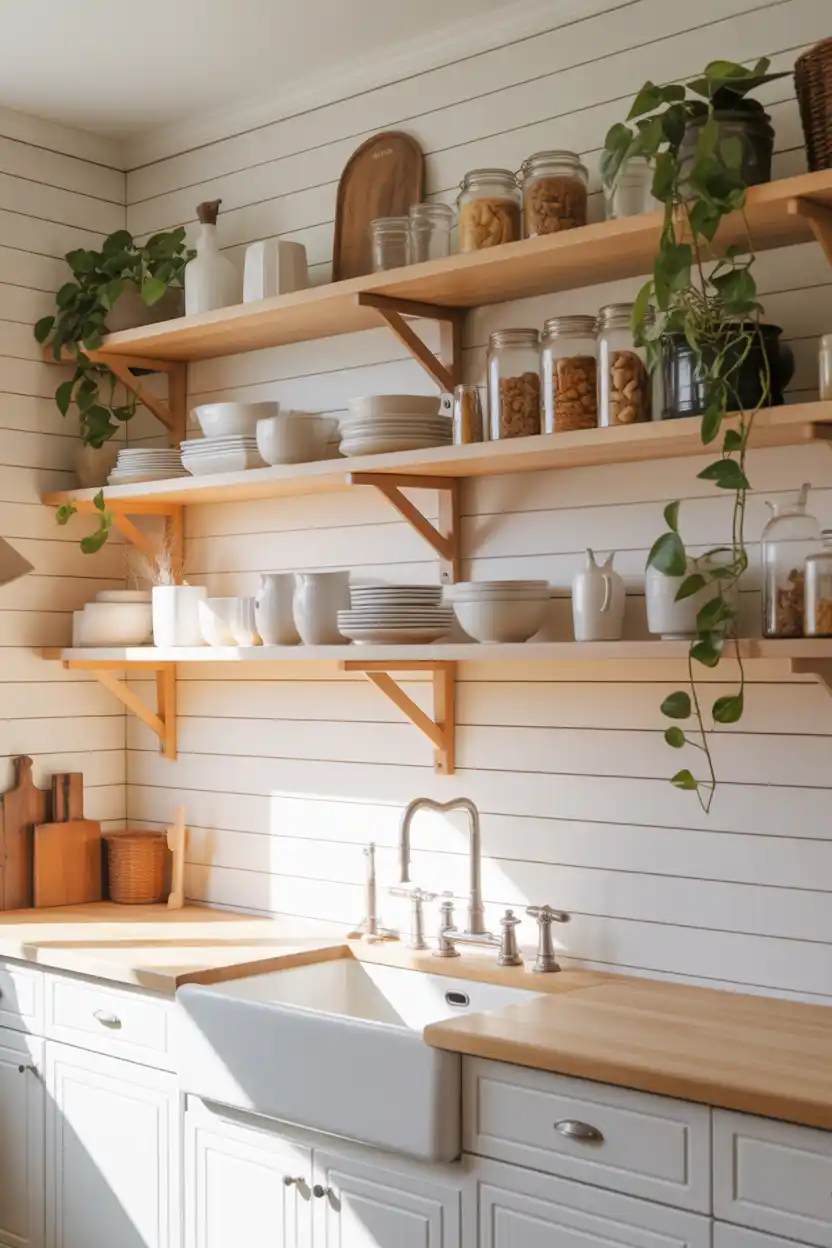
Removing upper cabinets entirely in favor of open shelving is the boldest version of this trend, and it works best in kitchens with good natural light and a homeowner willing to keep dishware curated and tidy.
This look pairs naturally with shiplap, white subway tile, and farmhouse sinks. It’s best suited for anyone who genuinely enjoys styling open shelves and doesn’t mind daily upkeep in exchange for a bright, open feel.
2. Fully Closed Cabinetry for a Sleek Minimalist Kitchen
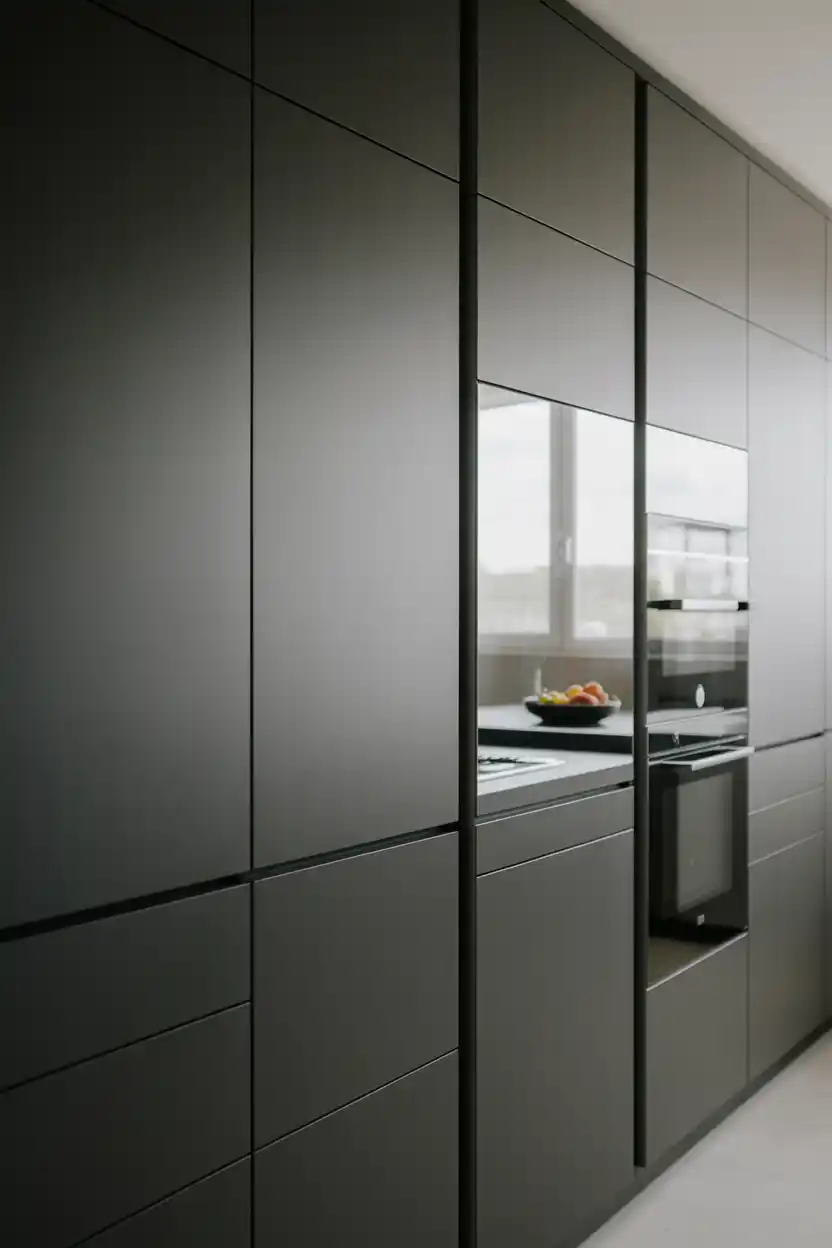
Going fully closed with flat-panel, handleless cabinetry creates a streamlined, gallery-like kitchen where every item has a hidden home. It’s the lowest-maintenance option since nothing is left out to collect dust or grease.
This style suits modern and minimalist homeowners who prioritize a clean, distraction-free look over display opportunities. It’s also the most practical choice for households with young kids or anyone who prefers a low-fuss kitchen.
3. Open Shelves Above, Closed Cabinets Below
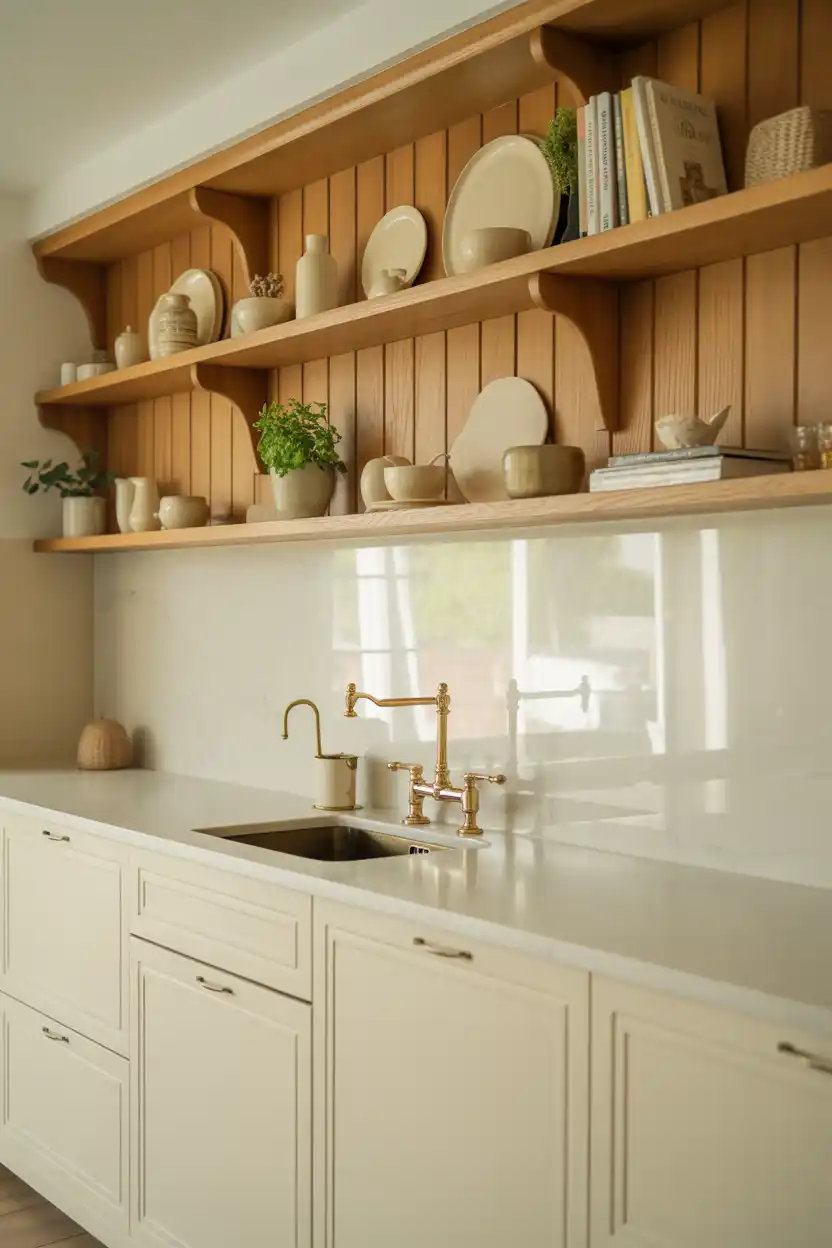
This is the most popular hybrid layout, keeping everyday cookware and less attractive items hidden in base cabinets while reserving open shelves above for display-worthy dishware, glassware, and cookbooks.
It offers the visual lightness of open shelving without sacrificing the bulk of your storage, since base cabinets typically hold more than uppers anyway. It suits nearly any kitchen style and budget.
4. Glass-Front Cabinets as a Middle Ground
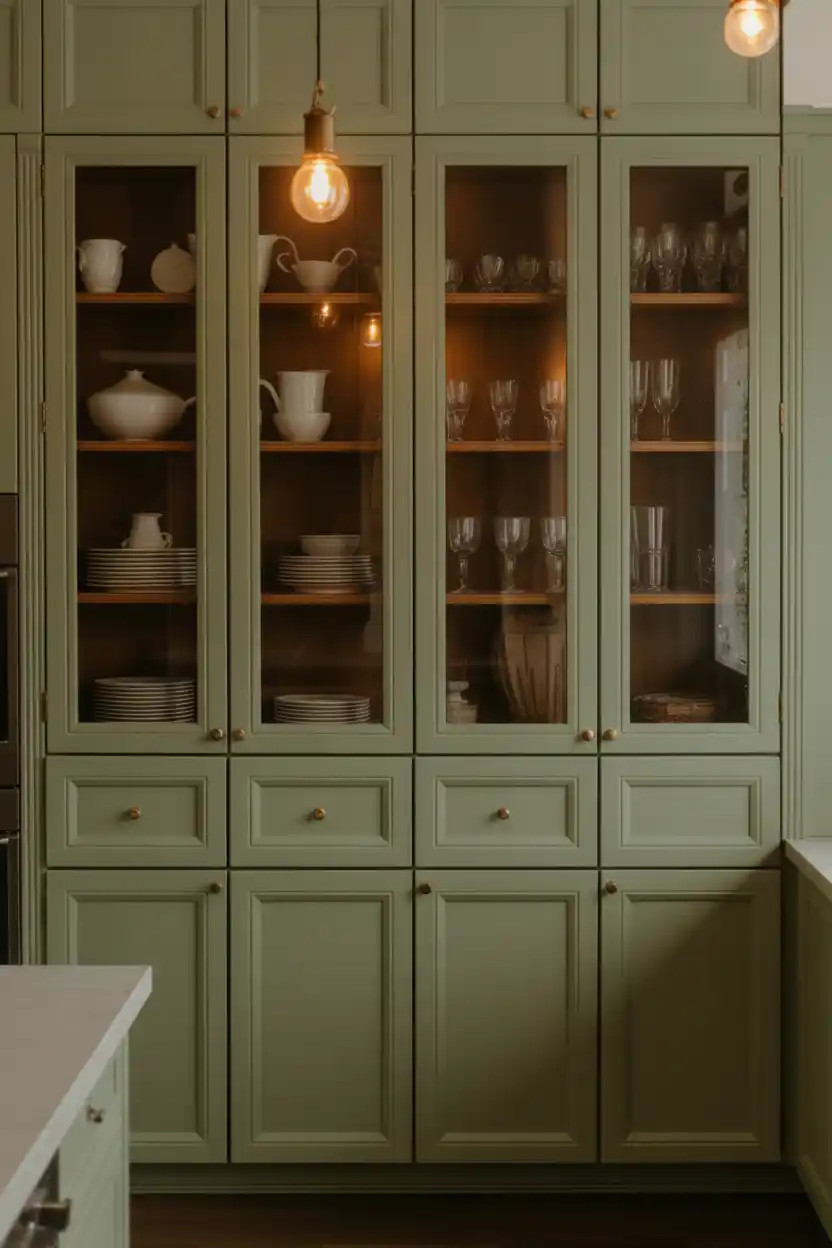
Glass-front cabinets offer a visual compromise, letting you display dishware behind a protective door that still keeps out dust and grease. It reads as more polished and formal than fully open shelving.
This works especially well in kitchens where you want a curated, display-case feel without the daily upkeep open shelves demand. It suits traditional, transitional, and cottage-style kitchens.
5. Open Shelving Only Above the Sink
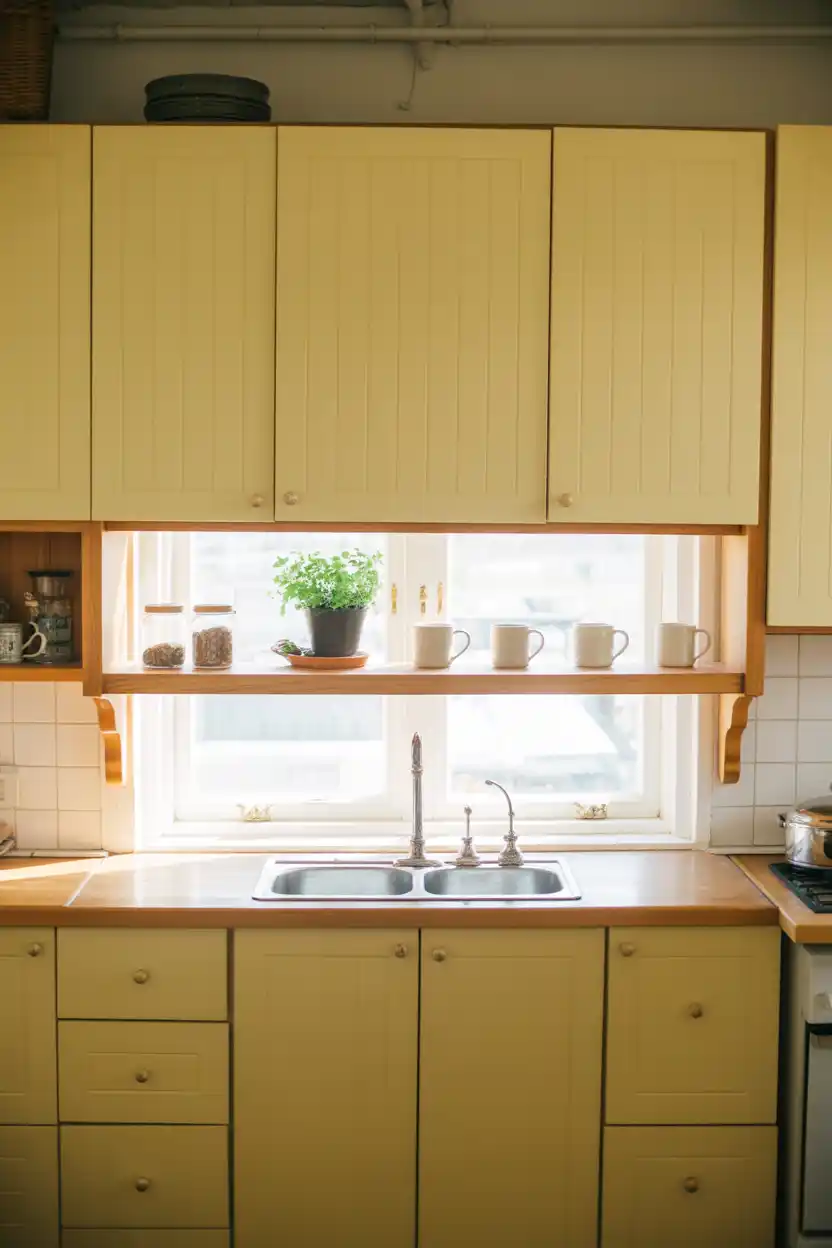
Limiting open shelving to just the space above the sink, often where a cabinet would otherwise block a window, is a low-commitment way to add the open-shelf look without redesigning the whole kitchen.
This approach is especially practical in kitchens where a window sits above the sink, since it avoids blocking natural light with a cabinet door. It suits nearly any kitchen style as a small accent.
6. Closed Cabinets to the Ceiling for Maximum Storage
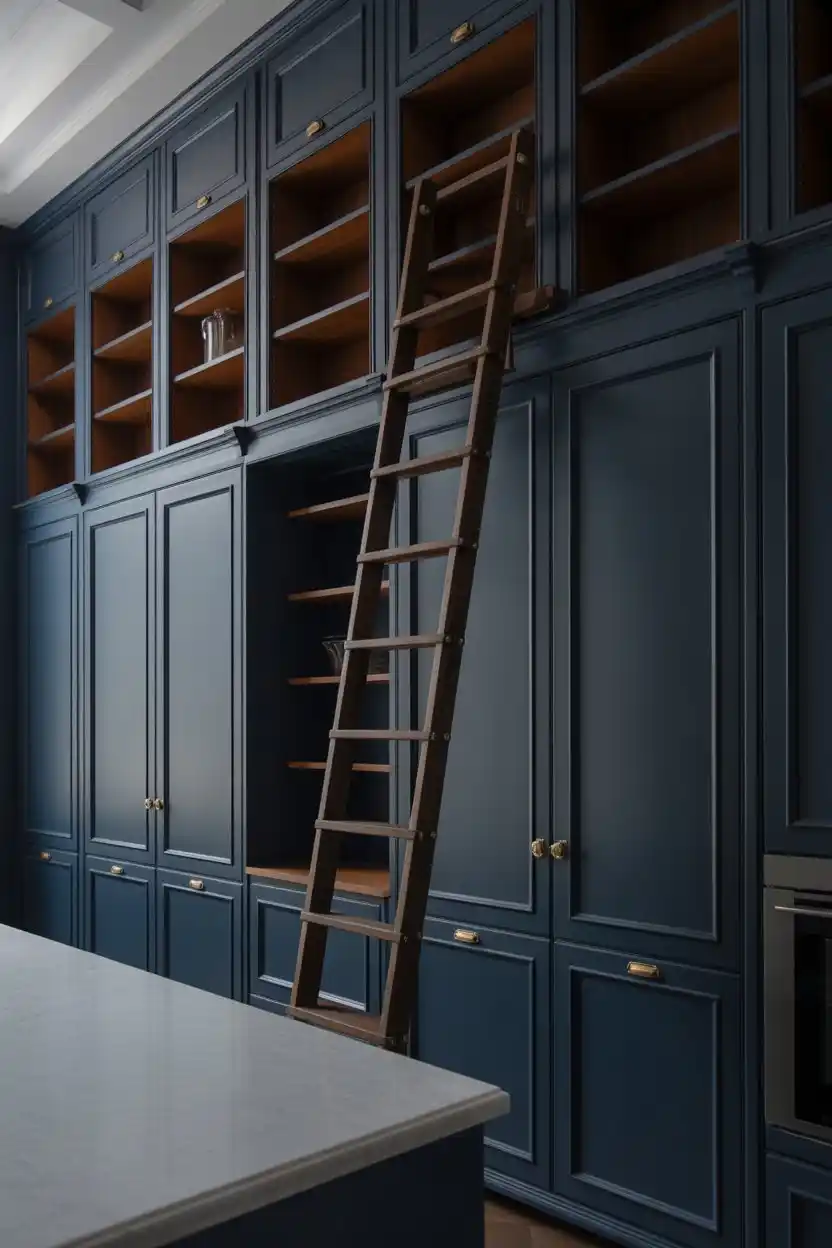
Extending closed cabinets all the way to the ceiling maximizes storage capacity and eliminates the dust-collecting gap often left above standard-height cabinets, though top shelves usually require a step stool or ladder.
This approach suits kitchens with 9-foot ceilings or higher and homeowners who prioritize storage capacity above all else. It’s a strong fit for larger households or anyone who entertains frequently.
7. Open Corner Shelving Nook
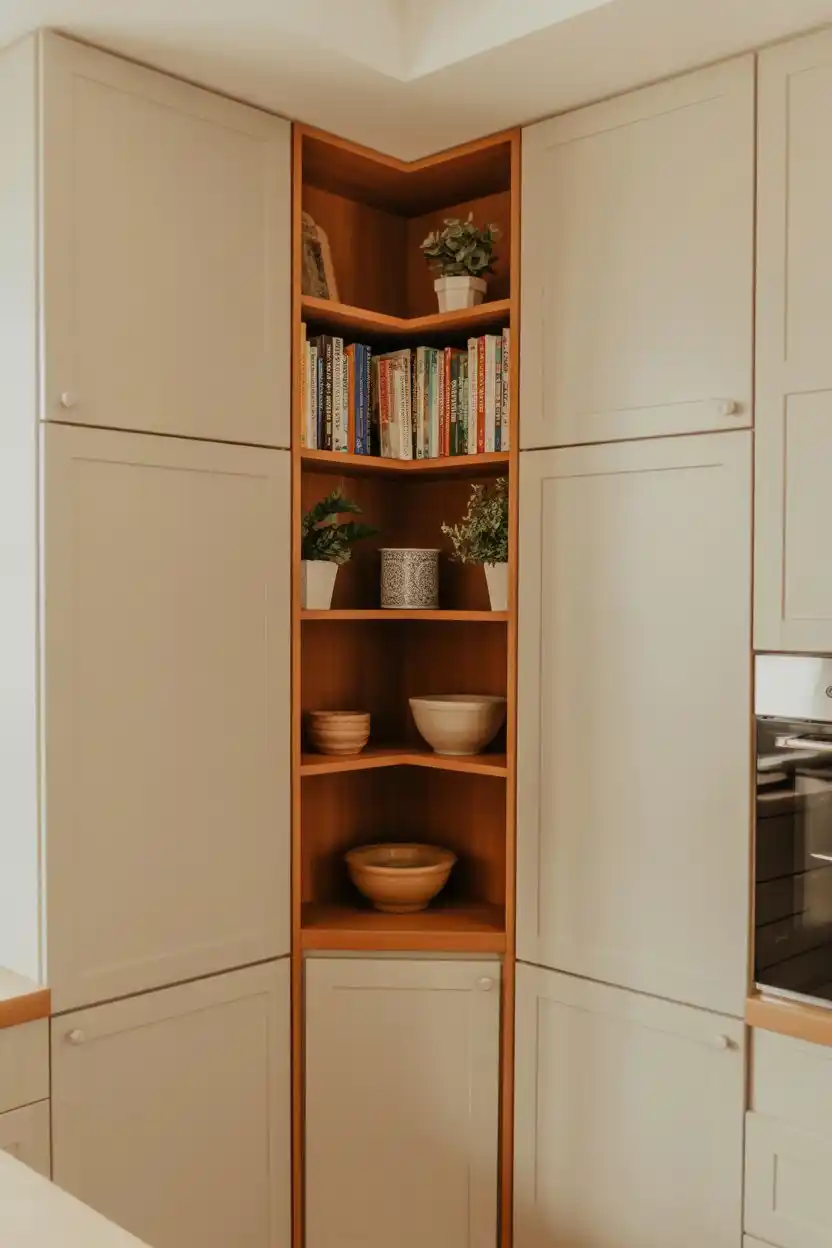
Corner spaces are notoriously hard to fit with functional closed cabinetry, making them a natural spot for open shelving instead. This turns an awkward layout challenge into an intentional design feature.
It’s a smart, low-cost way to add character to a kitchen without committing to open shelving throughout. This idea suits kitchens with tricky corner layouts or anyone wanting a small display area.
8. Floating Wood Shelves Against a Tile Backsplash
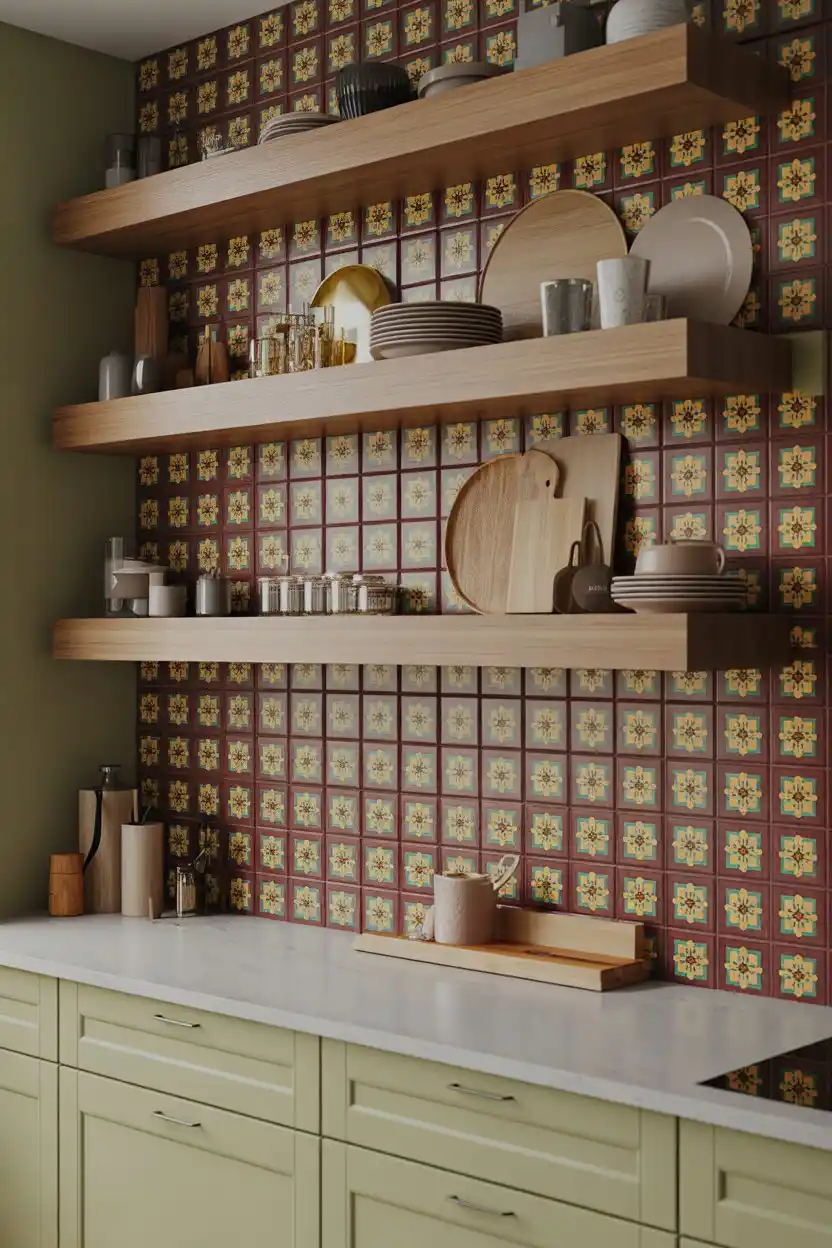
Mounting floating shelves against a statement tile backsplash lets both elements shine, using the shelving as a frame for the tile pattern rather than competing with it. This works best with thick, substantial wood shelves.
This idea suits homeowners who want a bold, personality-driven kitchen and already have (or are planning) an eye-catching backsplash. It pairs well with eclectic, Mediterranean, or maximalist kitchen styles.
9. Closed Cabinets with a Single Open Shelf Accent
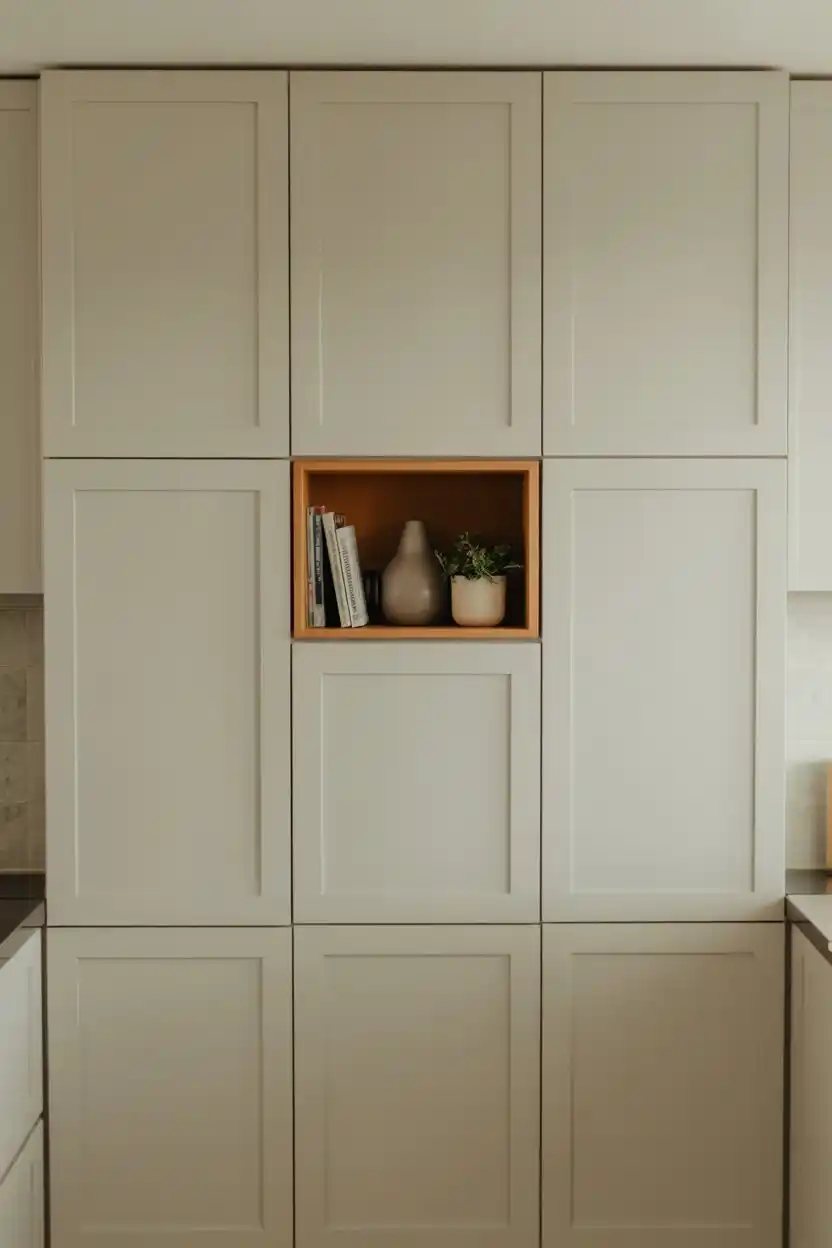
For homeowners who want the closed-cabinet look but crave one spot for personality, a single open shelf inserted into an otherwise closed cabinet run offers just enough display space without full commitment.
This is one of the easiest ways to test whether you’d enjoy open shelving before converting more cabinetry. It suits minimalist kitchens that want just a touch of warmth or personal styling.
10. Two-Tone Cabinets with Open Display Shelving
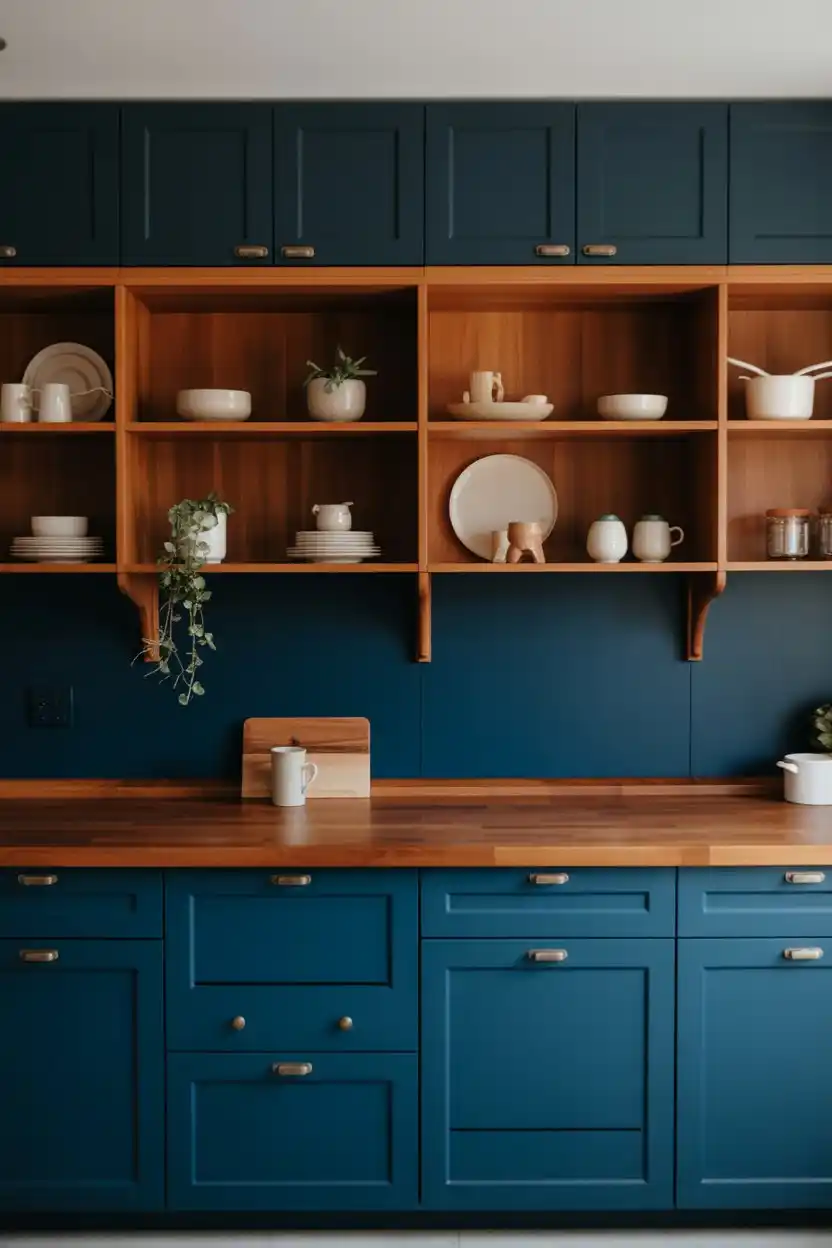
Pairing bold, colorful closed base cabinets with warm wood open shelving on top creates a layered, two-tone look that feels current without being overly trendy. The contrast keeps the eye moving through the space.
This combination suits homeowners who want color and personality in their kitchen but still prefer visible surfaces to stay uncluttered up top. It works well in transitional and modern farmhouse kitchens.
11. Closed Upper Cabinets, Open Lower Shelving
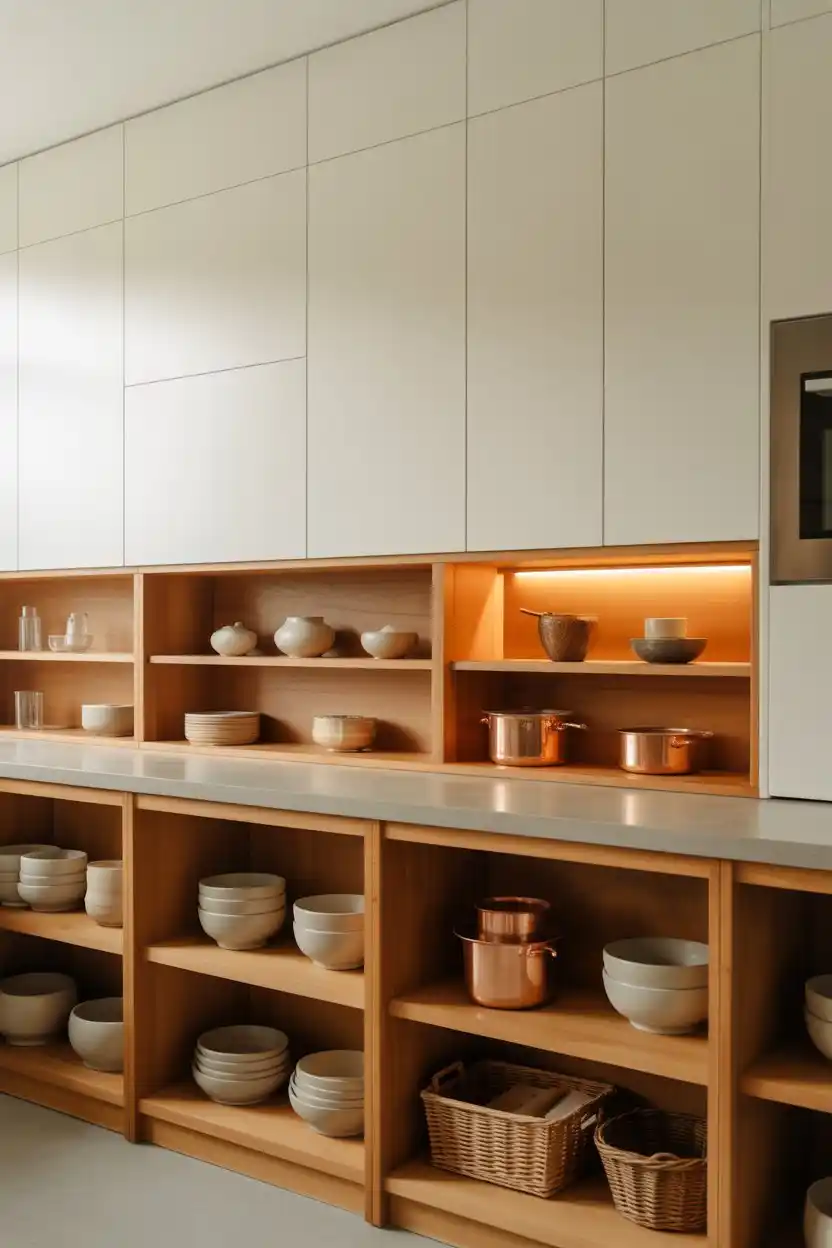
Flipping the typical layout, closed storage up top and open shelving below, is less common but creates a fresh, grounded look, often using woven baskets to keep the open lower area tidy and textural.
This suits design-forward homeowners who want a kitchen that feels distinctive and are comfortable keeping lower shelving neatly organized, since it sits at eye level and is harder to keep hidden.
12. Open Shelving Flanking a Range Hood
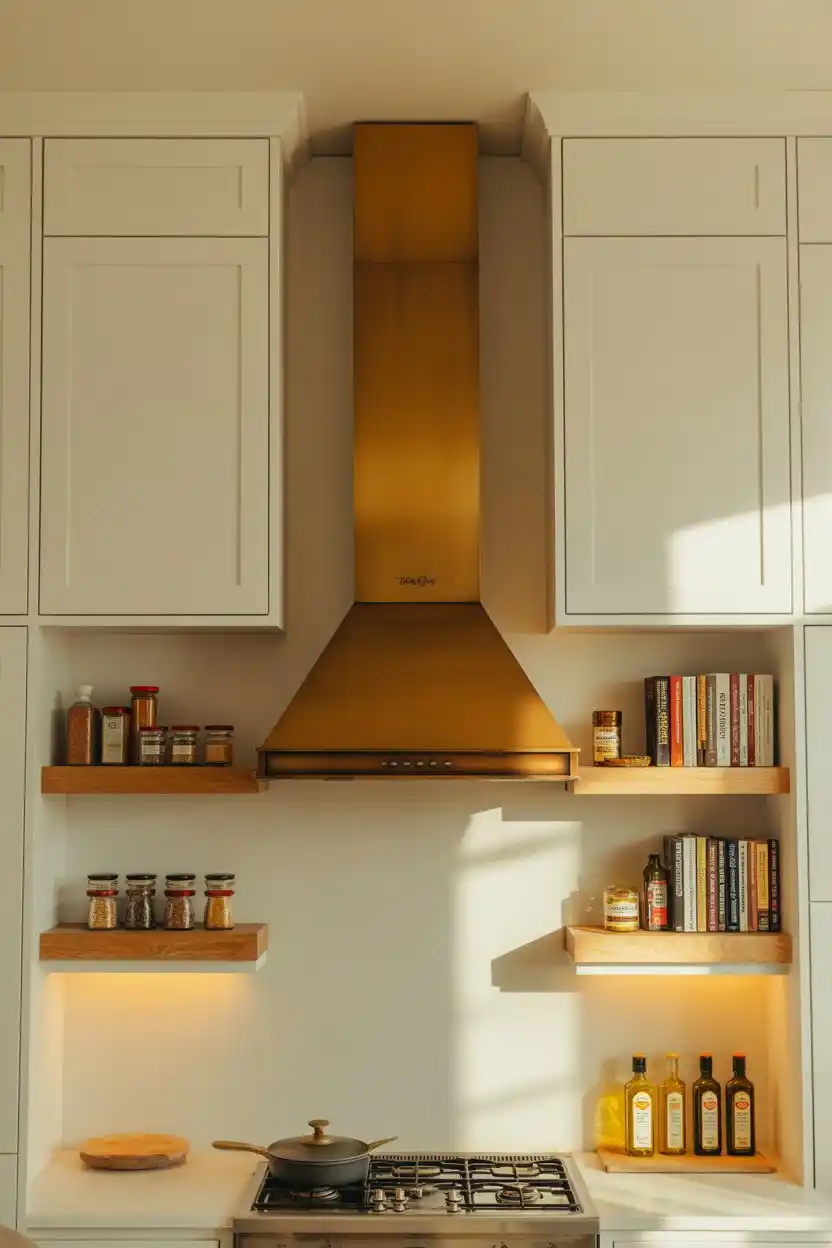
Framing a statement range hood with open shelves on either side puts frequently used cooking items, oils, spices, and utensils within arm’s reach while making the hood the visual centerpiece of the kitchen.
This layout is both decorative and highly functional, ideal for home cooks who want their most-used items visible and accessible. It suits kitchens built around a bold hood or range as a focal point.
13. Fully Closed Cabinets with a Hidden Appliance Garage
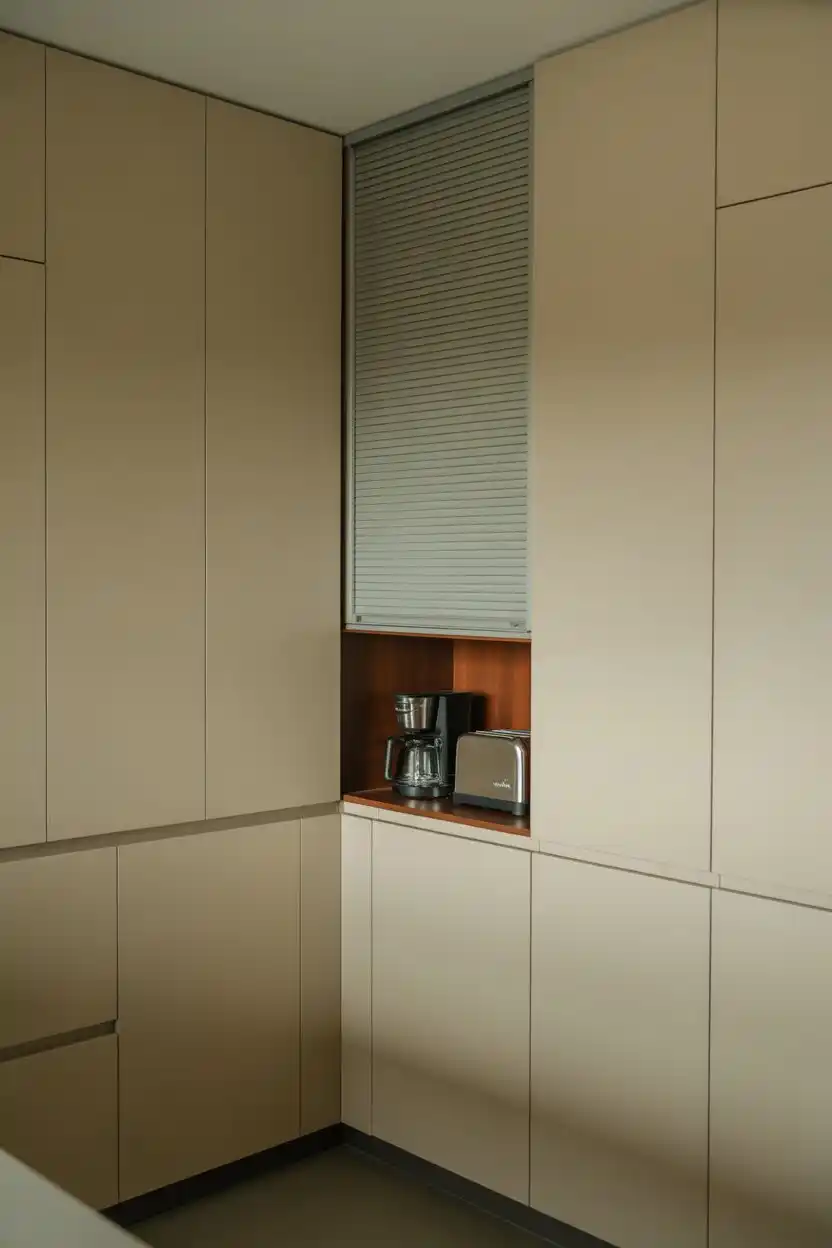
An appliance garage, a cabinet with a roll-up or lift-up door, hides small appliances like coffee makers and toasters while keeping them plugged in and ready to use, all without cluttering the countertop.
This fully closed approach suits homeowners who want a completely streamlined look but still need everyday small appliances accessible. It’s especially popular in modern and transitional kitchens.
14. Open Shelving for Display, Closed Cabinets for Everyday Use
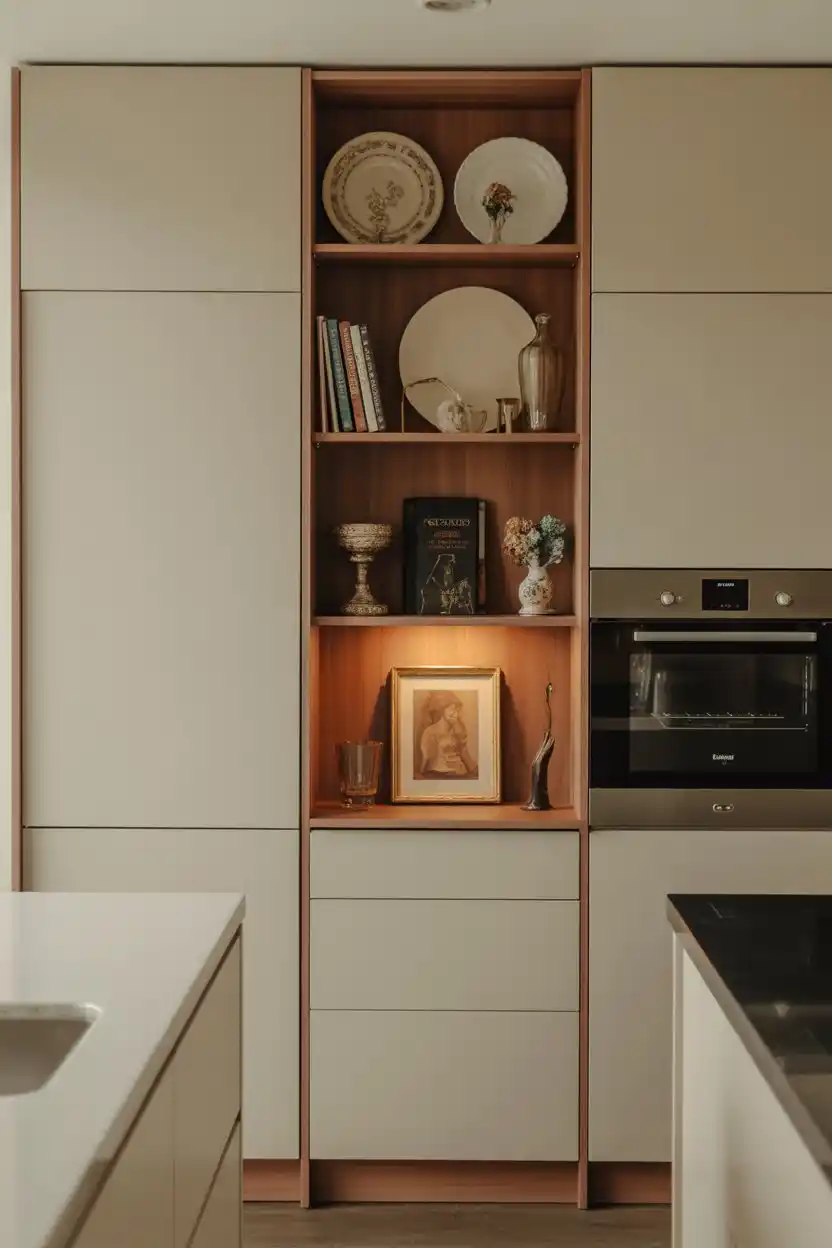
Dedicating one shelving section purely to display treasured dishware, cookbooks, and art, while keeping all functional, everyday storage behind closed doors, lets you enjoy open shelving’s charm without daily upkeep pressure.
This approach works well for collectors or anyone with a few standout pieces worth showing off. It suits kitchens where the open shelving is more decorative than load-bearing for daily use.
15. Black Metal Open Shelving in an Industrial Kitchen
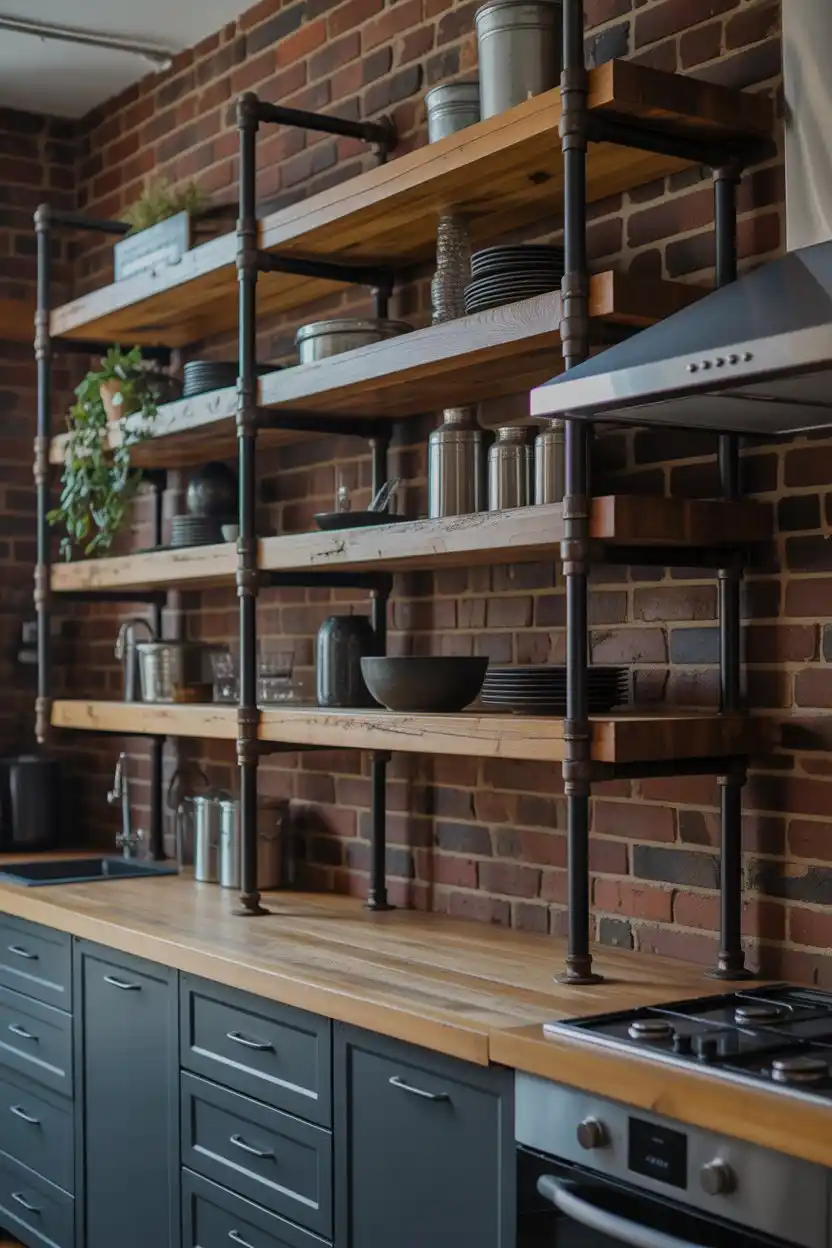
Black metal shelving brackets paired with reclaimed wood planks bring an industrial edge to open shelving, standing up visually against brick, concrete, or dark cabinetry in a way that light wood shelves can’t.
This style suits urban lofts, industrial-modern kitchens, and homeowners drawn to a raw, edgy aesthetic. It pairs naturally with matte black hardware and stainless steel appliances.
16. Closed Cabinets with Glass Uppers and Open Lowers
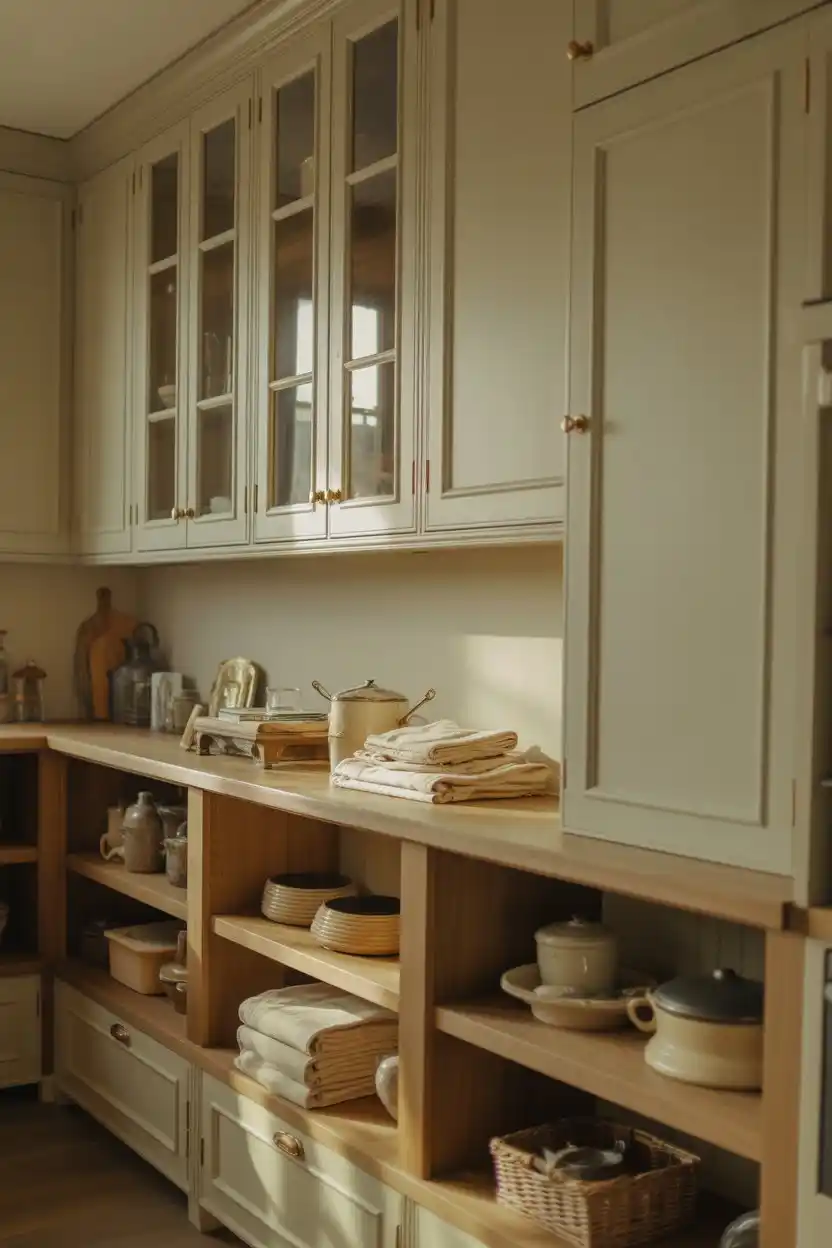
Combining glass-front closed uppers with open lower shelving flips convention while keeping both storage types intentional; the glass protects display items up top, while the open lower shelves keep frequently used items within easy reach.
This hybrid suits cottage, french country, and traditional kitchens where a soft, layered look is the goal. It works especially well when the open lower shelving stays neatly organized with baskets or matched dishware.
Planning and Buying Tips
Audit what you actually own before deciding
Count your everyday dishware, glassware, and cookware, then decide how much of it you’d genuinely want on display versus hidden away. This single step often makes the open-vs-closed decision much clearer.
Consider your kitchen’s light and ventilation
Open shelving works best near natural light and away from heavy grease zones like directly above the stove, since grease residue builds up faster on exposed surfaces than inside closed cabinets.
Plan wall support for open shelves in advance
Floating shelves need to be anchored into studs or fitted with heavy-duty wall anchors, especially if they’ll hold stacked dishware or cast iron cookware, so confirm wall structure before installation.
Match shelf depth to your cabinetry
Standard upper cabinets run about 12 inches deep; keeping open shelves at a similar depth maintains a clean, aligned look next to any remaining closed cabinets.
Think about long-term flexibility
If you’re not fully sure open shelving is right for you, consider glass-front cabinets or a small accent shelf first; both are easier to convert back to fully closed storage later than a large open run.
Factor in resale expectations for your market
In some markets, buyers strongly prefer full closed-cabinet storage; check with a local real estate agent or recent listings if resale value is a priority alongside your personal preference.
Cost Breakdown
Costs vary widely based on material, room size, and whether the project is DIY or professionally installed. Here’s a general breakdown to help you budget.
Budget ($100–$600)
DIY floating wood shelves or simple bracket shelving installed in place of existing upper cabinets, using basic materials and no professional labor. Covers a single wall or accent area.
Mid-Range ($600–$3,000)
Professionally installed open shelving in stained or painted wood, or a partial cabinet swap combining open and closed sections with matching hardware and finishes.
Luxury/Premium ($3,000–$10,000+)
Custom cabinetry combining glass-front doors, built-in appliance garages, floor-to-ceiling closed storage, and designer open shelving in stone, metal, or specialty wood finishes.
Open Shelving vs Closed Cabinets: Side-by-Side Comparison
Use this comparison to weigh cost, maintenance, and best use case between open shelving and closed cabinets.
| Factor | Open Shelving | Closed Cabinets |
| Average Cost | $50–$150 per linear foot | $150–$500+ per linear foot |
| Maintenance | Weekly dusting/wiping needed | Occasional wipe-down only |
| Visual Effect | Makes the room feel open and larger | Creates a streamlined, tidy look |
| Storage Concealment | None, everything is visible | Full, items stay hidden |
| Installation Time | Hours to a day (DIY-friendly) | Days to weeks (often professional) |
| Best For | Curated dishware, small kitchens | Households prioritizing tidiness |
Maintenance Tips
● Wipe open shelves down weekly with a damp cloth to remove dust and airborne kitchen grease before it builds up on dishware and wood surfaces.
● Group items by use and color on open shelves to keep the display looking intentional, since a cluttered mix of styles reads as messy rather than curated.
● Wash dishware stored on open shelves before use, even if it looks clean, since dust settles invisibly on exposed surfaces over time.
● Check cabinet hinges and soft-close mechanisms on closed cabinets every year or two, tightening screws as needed to prevent sagging doors.
● Avoid placing open shelving directly above the stove or fryer, where grease splatter accumulates fastest and is hardest to clean off porous wood.
Frequently Asked Questions
Is open shelving cheaper than closed cabinets?
Yes, open shelving is generally significantly cheaper than closed cabinets, often costing $50 to $150 per linear foot compared to $150 to $500 or more for closed cabinetry, since it requires less material and labor to install.
Does open shelving make a kitchen harder to sell?
It depends on the local market and how much of the kitchen is open versus closed; a small accent of open shelving alongside ample closed storage is generally well received, while an entirely open kitchen may appeal to a narrower pool of buyers.
How do you keep open shelves from looking cluttered?
Limit what you display to a curated, color-coordinated selection of dishware and decor, leave some negative space on each shelf, and store less attractive everyday items in closed cabinets or drawers instead.
Can you mix open shelving and closed cabinets in the same kitchen?
Yes, mixing both is actually the most common and practical approach, typically using open shelves for display and closed cabinets for the bulk of everyday storage, which balances style with function.
Does open shelving get dusty and greasy quickly?
Open shelves do collect more dust and grease than closed cabinets since items are constantly exposed to the air, so they generally need wiping down weekly, especially if positioned near the stove.
How to Choose the Right Storage Mix for You
The right balance of open shelving and closed cabinets comes down to your space, your habits, and how much daily upkeep you’re realistically willing to do. Small kitchens often benefit from at least some open shelving to create a sense of openness, while larger kitchens have more room to keep everything closed without feeling cramped. If you already keep a tidy, minimal collection of dishware, open shelving will likely feel effortless; if your cabinets tend to be a catch-all, lean toward closed storage or a mostly closed hybrid.
Budget matters too; open shelving is the more affordable option for adding visual interest, while closed cabinets, especially custom or floor-to-ceiling ones, represent a bigger investment with a more universally marketable payoff. For most homeowners, a thoughtful mix of closed cabinets for the bulk of storage and open shelving as a curated accent delivers the best of both worlds.
Ready to plan your kitchen storage? Start by sketching your layout with both options in mind, then talk to a kitchen designer or contractor to get a realistic quote for the mix that fits your space and budget.


- Be Respectful
- Stay Relevant
- Stay Positive
- True Feedback
- Encourage Discussion
- Avoid Spamming
- No Fake News
- Don't Copy-Paste
- No Personal Attacks
- Be Respectful
- Stay Relevant
- Stay Positive
- True Feedback
- Encourage Discussion
- Avoid Spamming
- No Fake News
- Don't Copy-Paste
- No Personal Attacks
