17 Calming Boho Zen Meditation Room Ideas For a Truly Peaceful Retreat
Published: 24 Sep 2026
Carving out a dedicated space to sit, breathe, and reset can make an enormous difference in how consistently you actually practice, and boho zen meditation room ideas make that space feel inviting rather than austere. This style works especially well for a meditation corner because it blends the grounded simplicity of zen design with the warmth, texture, and natural materials of boho decor, creating a room that feels calm without feeling cold or empty. It also adapts easily to almost any footprint, whether you have a full spare room, a quiet corner of the bedroom, or just a few feet beside a window. This guide walks through 17 boho zen meditation room ideas covering seating, color, lighting, and finishing touches, so you can build a space that genuinely draws you in and supports a regular practice rather than sitting unused.
1. Low Floor Cushions and a Dedicated Meditation Pillow
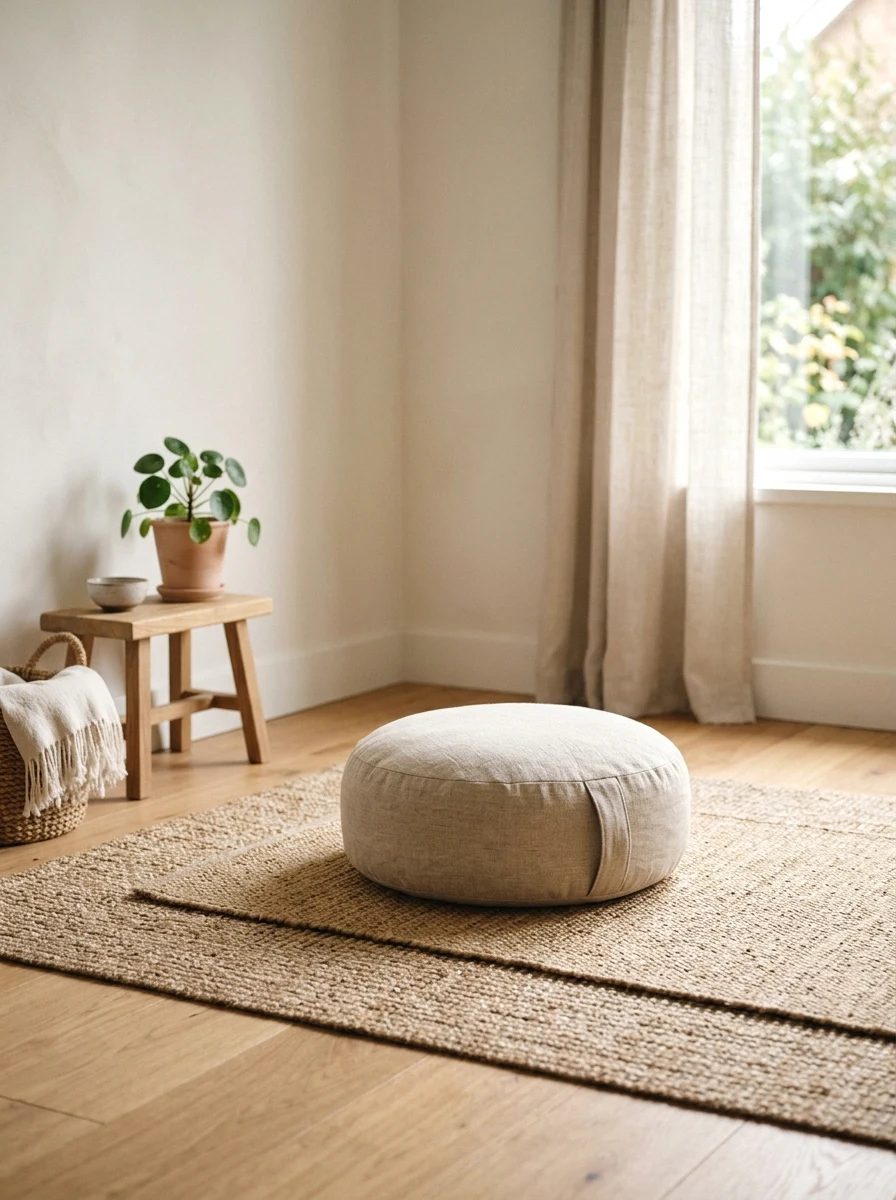
A round meditation cushion, or zafu, paired with a flat floor mat beneath it forms the true foundation of any meditation room, and choosing one in a natural cotton or linen cover keeps the look grounded rather than sporty or gym-like. Sitting low to the floor also reinforces the sense of stillness the room is meant to support.
Position the cushion facing a window or a simple focal point, such as a small altar or plant, rather than a blank wall, which gives the eyes somewhere calm to rest during practice. This idea is the essential starting point for anyone building a meditation space from scratch, since everything else in the room is really built around this single seat.
2. Neutral Earth Tone Color Palette
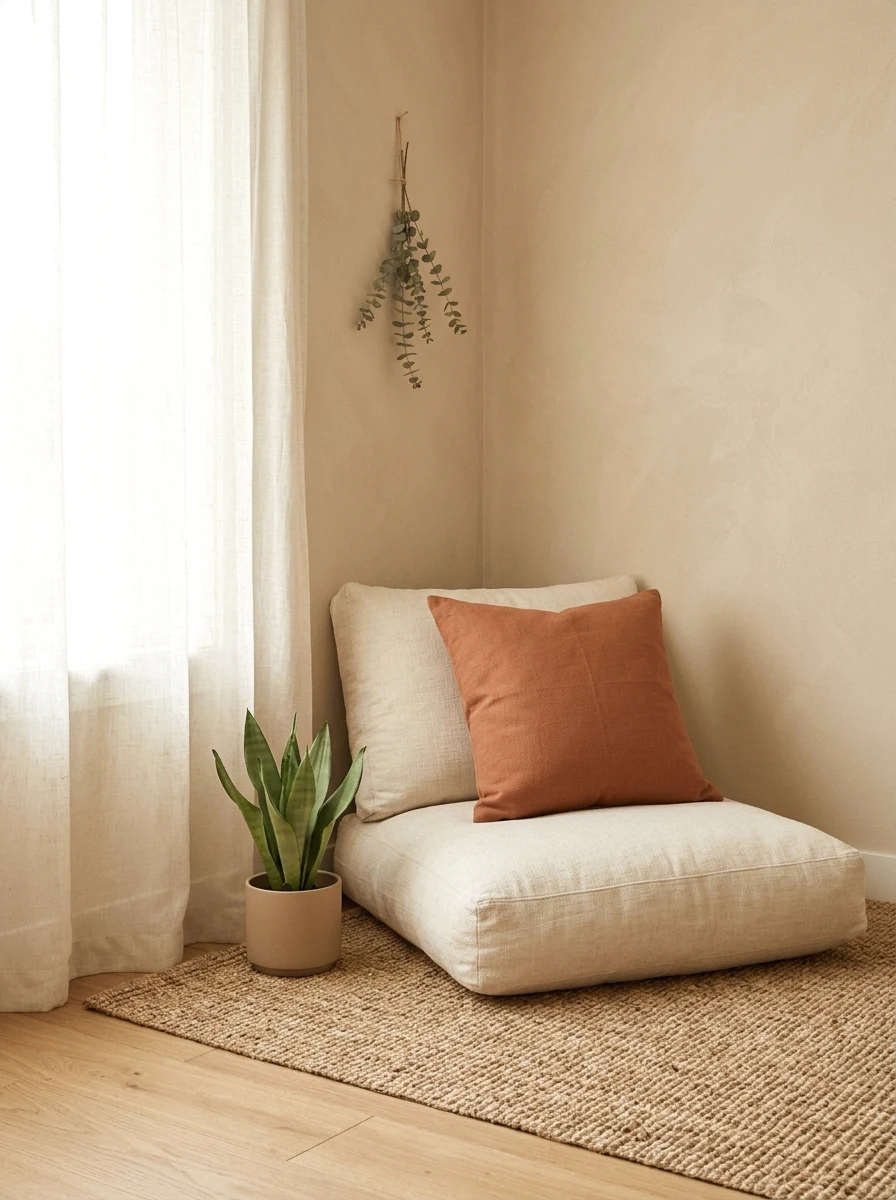
A palette of warm sand, clay, and soft ivory tones keeps a meditation room visually quiet, avoiding the sensory stimulation that brighter colors or high-contrast patterns can create. These earthy tones also read as grounding, echoing the natural materials, like wood and rattan, commonly used throughout boho zen spaces.
If you want a touch of color, introduce it through a single element, such as a terracotta cushion or a sage green plant, rather than spreading multiple accent colors around the room. This approach suits anyone who wants the space to feel instantly calming the moment they walk in, without needing to close their eyes to filter out visual noise.
3. Natural Jute or Sisal Rug
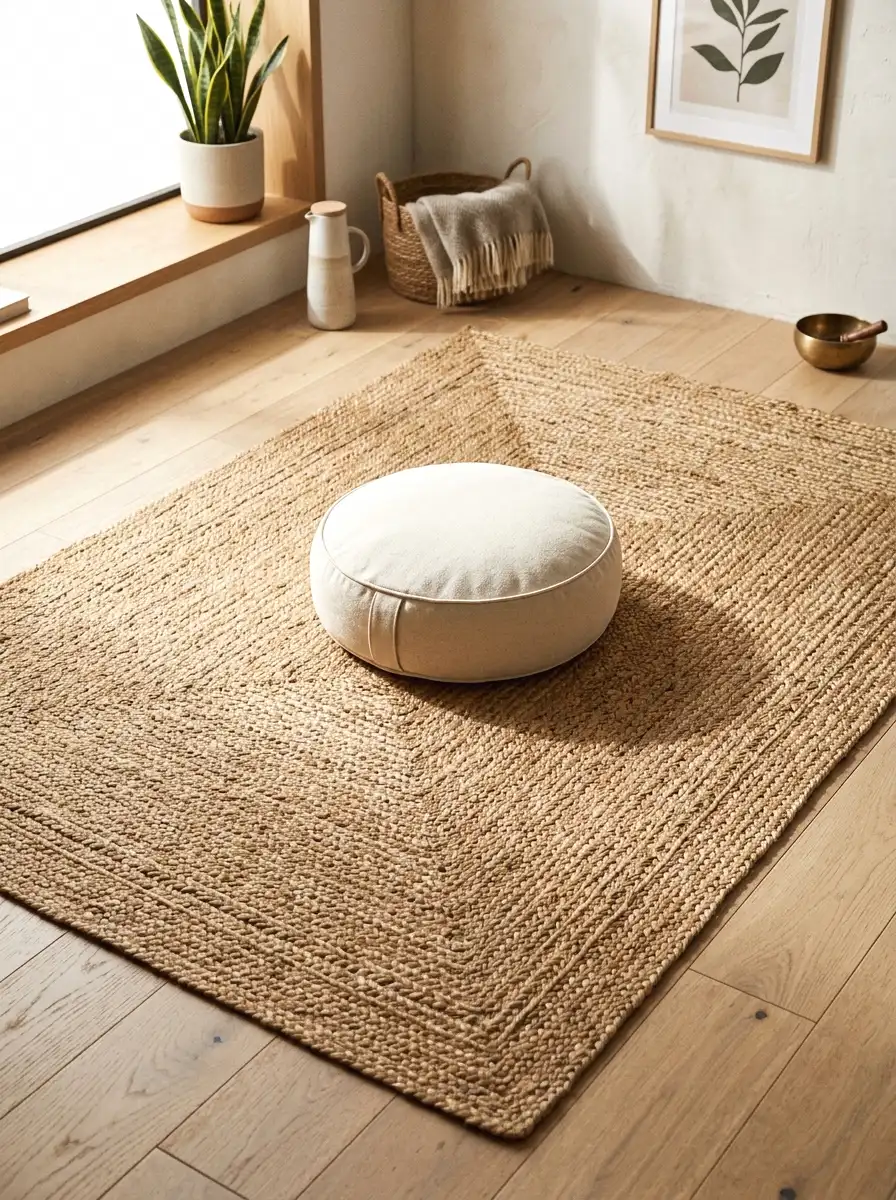
A jute or sisal rug anchors the meditation area and adds warmth underfoot, which matters if you are sitting directly on the floor for extended periods. The neutral, undyed tone works with almost any accent color you introduce later, making it a flexible first purchase when building the room.
Choose a rug large enough to fully contain your cushion and a little surrounding space, so the seating area feels contained rather than floating awkwardly on bare flooring. This idea is particularly useful for meditation corners set up on hardwood or tile, where a rug adds both comfort and a clear visual boundary for the practice space.
4. Rattan Room Divider for Privacy
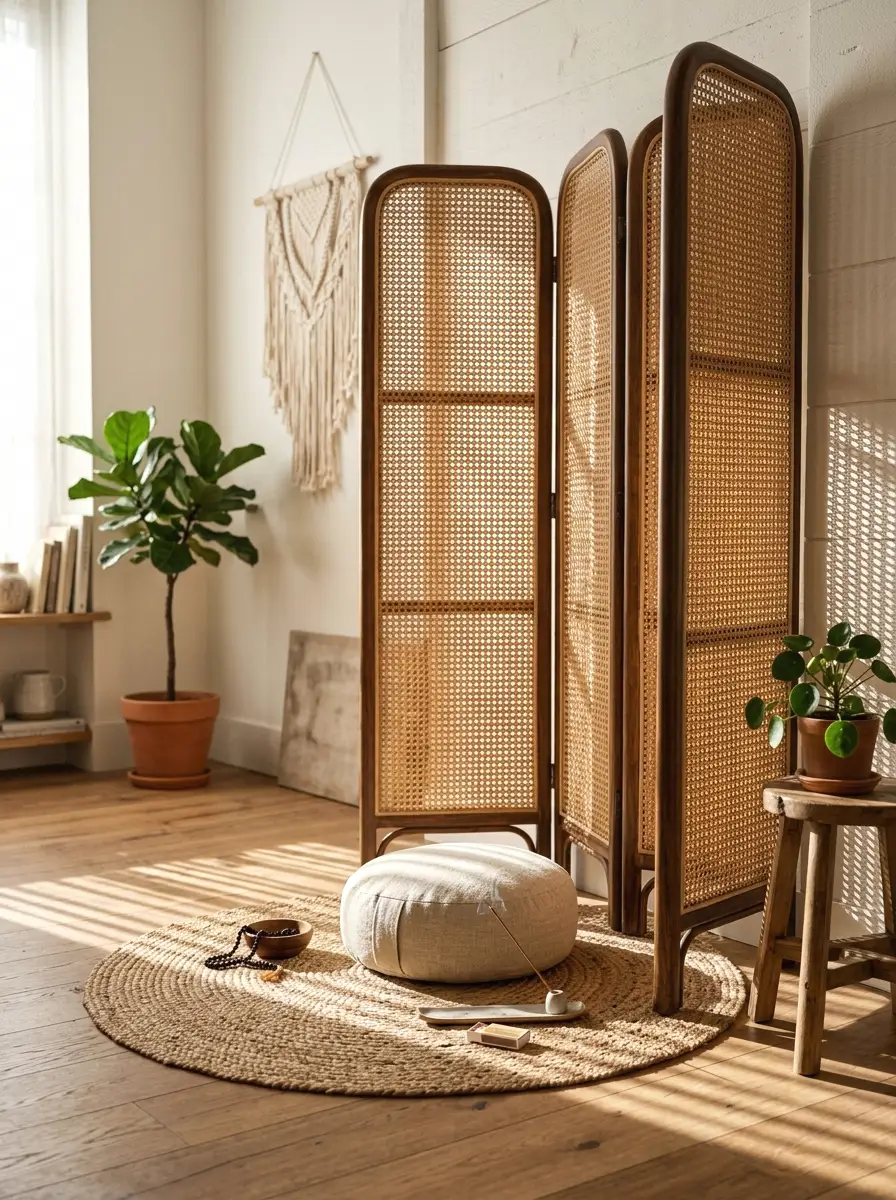
A folding rattan or bamboo screen is one of the most effective ways to carve a meditation nook out of a shared bedroom, office, or living room without a full renovation. Beyond privacy, the woven texture immediately reinforces the natural, boho material palette even in a repurposed corner of a busy room.
Position the screen so it blocks sightlines to clutter, screens, or anything visually distracting, giving you a contained, calm view once you sit down. This idea is especially valuable for anyone in a smaller home or apartment who still wants a meaningful sense of separation between their meditation space and everyday household activity.
5. Singing Bowl and Incense Corner
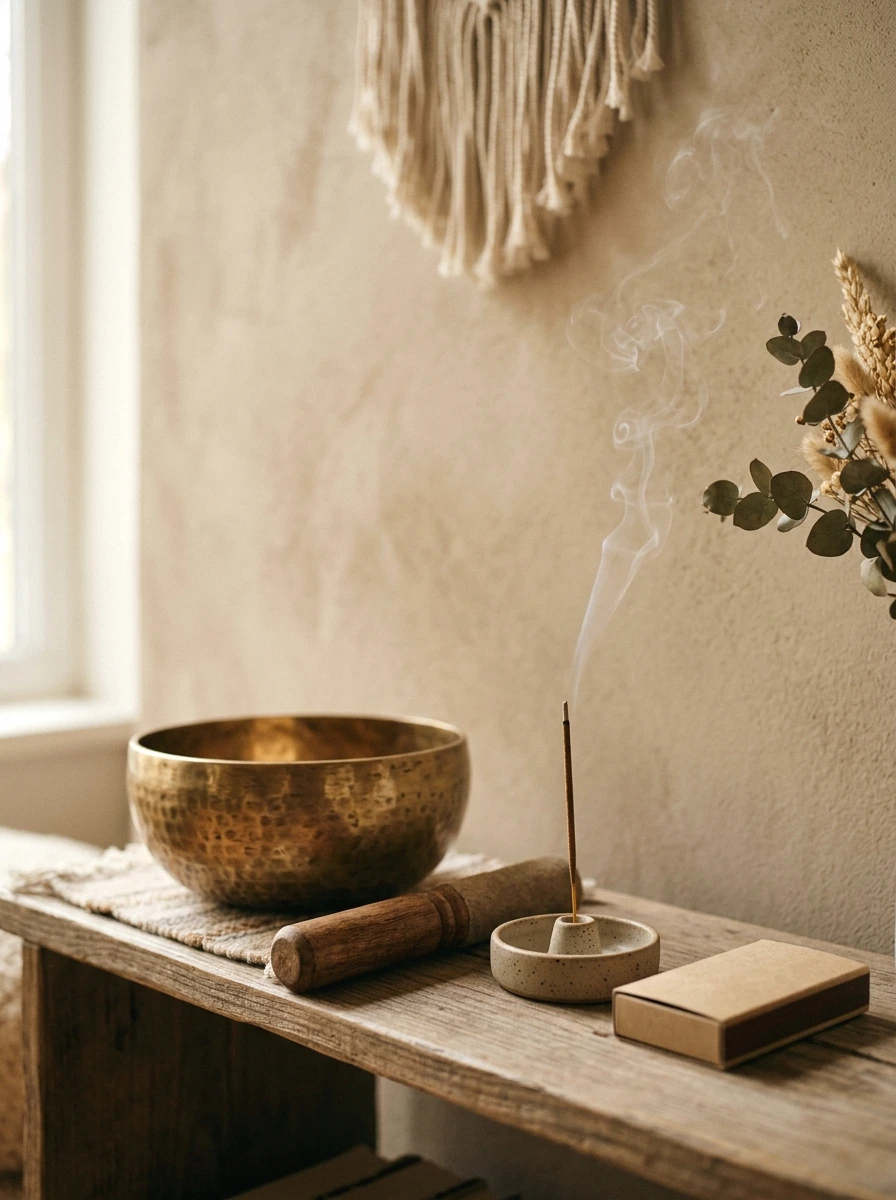
A small dedicated corner or low shelf holding a brass or crystal singing bowl, a bundle of incense, and a simple matchbox turns a practical ritual into a visual and sensory part of the room. The sound and scent become part of the transition into practice, signaling to your mind that it is time to slow down.
Keep the arrangement simple, just the bowl, incense holder, and one or two small natural objects, so the corner feels intentional rather than cluttered with too many spiritual accessories at once. This idea suits anyone who already incorporates sound or scent into their practice and wants a proper, dedicated spot for those tools rather than storing them elsewhere.
6. Macrame Wall Hanging Backdrop
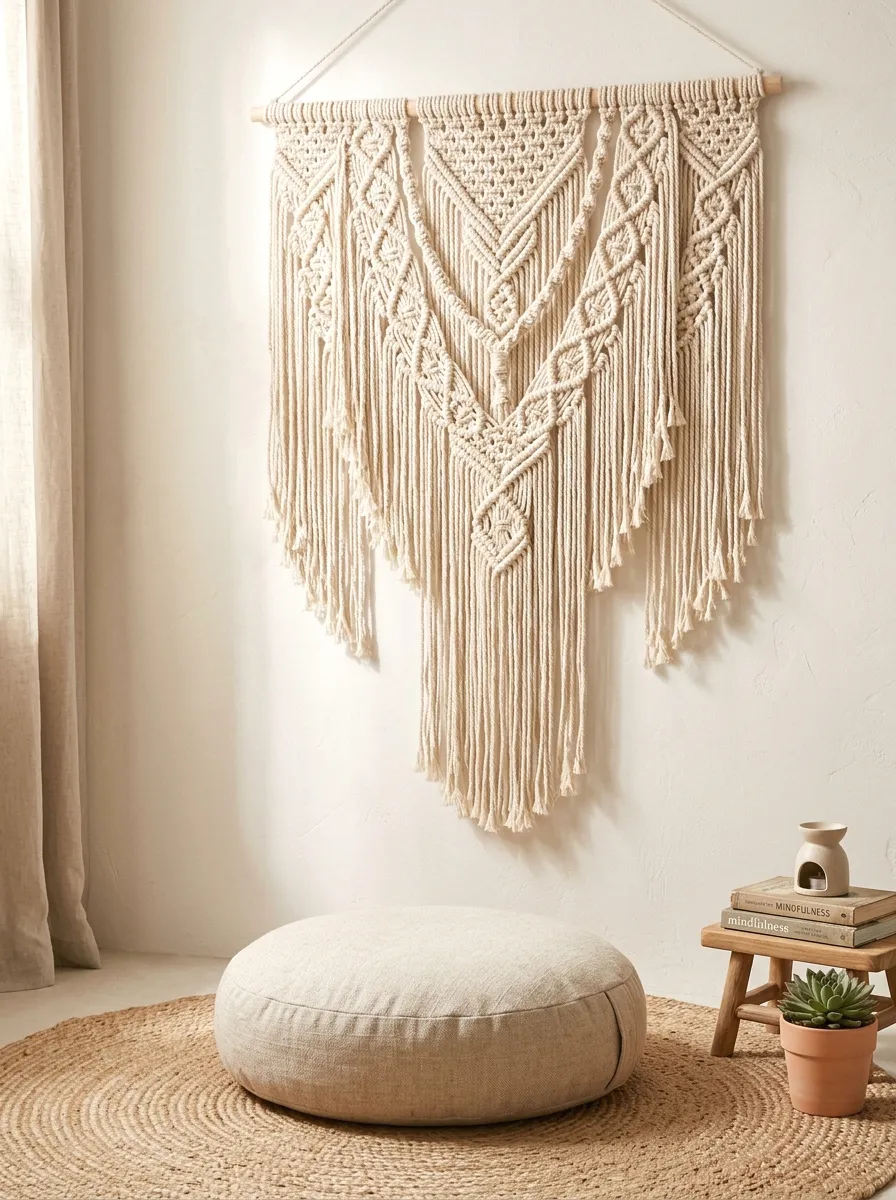
A large macrame wall hanging positioned behind or facing the meditation cushion softens the room and gives the eyes a gentle, textured focal point that is far calmer than a bare wall or busy artwork. The natural fiber and open knotwork also add subtle movement and shadow as light shifts through the day.
Choose a piece in simple, undyed cotton or jute rather than anything with bright dyed sections, keeping the visual tone consistent with the rest of the room. This idea works particularly well as the main design statement in an otherwise minimal space, since one well-chosen wall hanging can carry the whole room’s aesthetic on its own.
7. Low Wooden Altar Table
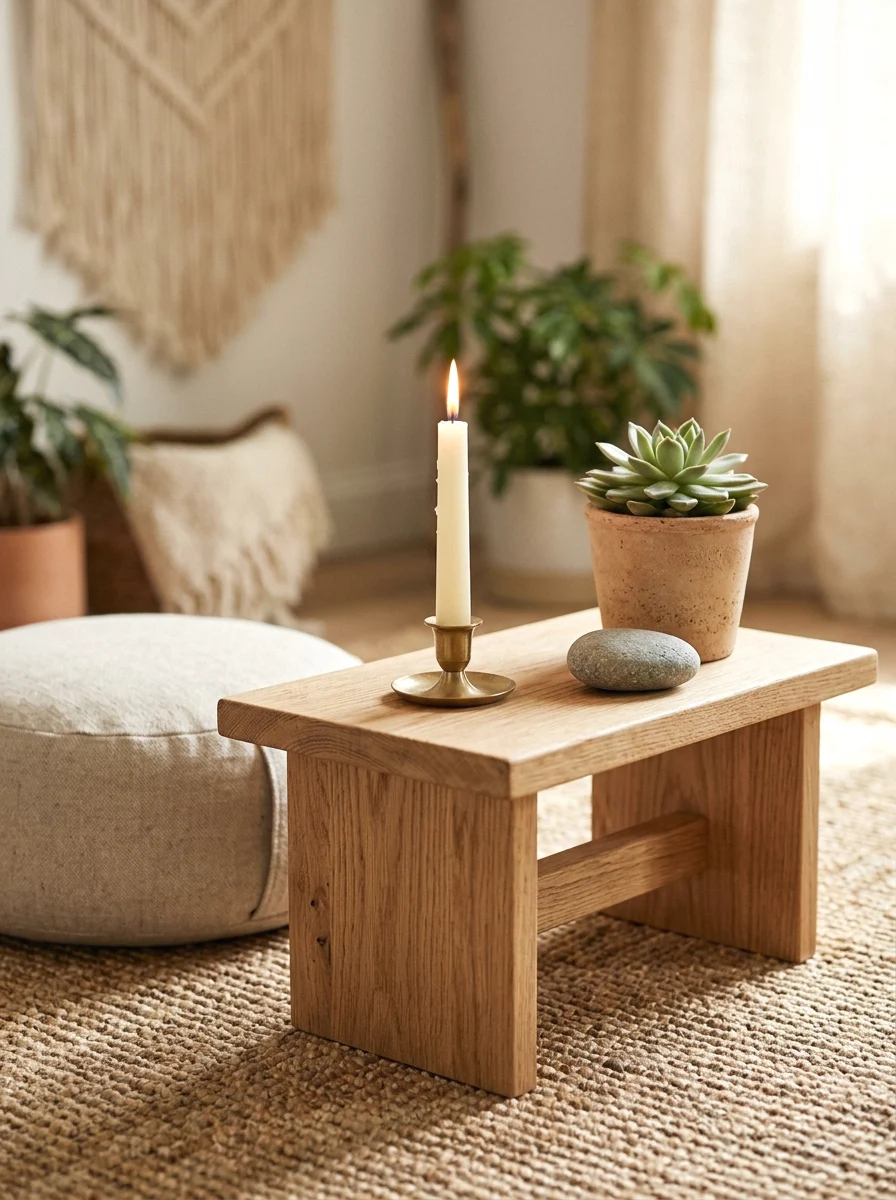
A small, low wooden table placed in front of or beside the meditation cushion creates a natural surface for candles, a plant, or meaningful objects without requiring a full shelving unit. Its low height keeps the room’s overall visual line close to the floor, reinforcing the grounded feel central to zen design.
Style the table minimally with two or three items rather than filling the surface, leaving enough negative space that the table still feels calm rather than like a display shelf. This idea suits anyone who wants a physical focal point for their practice, whether that means a candle for evening sessions or a small plant for a natural touch.
8. Dried Florals or Pampas Grass
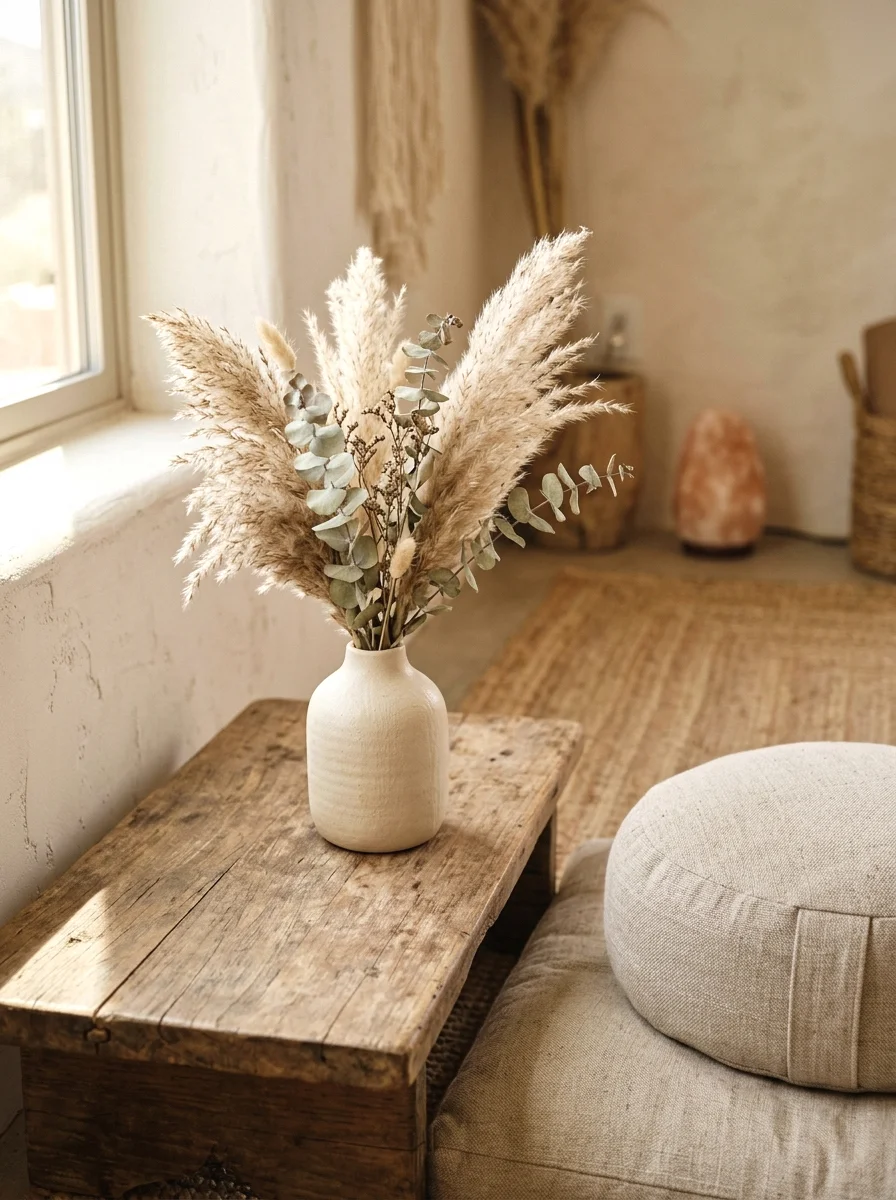
A single stem or small bundle of dried pampas grass, lunaria, or eucalyptus in a simple ceramic vase brings a soft, organic element into the room without requiring any regular care, which matters in a space meant to be low-maintenance and always ready for use. The muted, faded tones also fit naturally into an earthy palette.
Place the arrangement beside the altar table or on a low shelf rather than directly in the sightline of the cushion, so it adds atmosphere without becoming a distraction during practice. This idea is a simple, affordable way to bring a bit of nature into the room, especially in a space without much natural daylight for live plants.
9. Soft Ambient String Lights
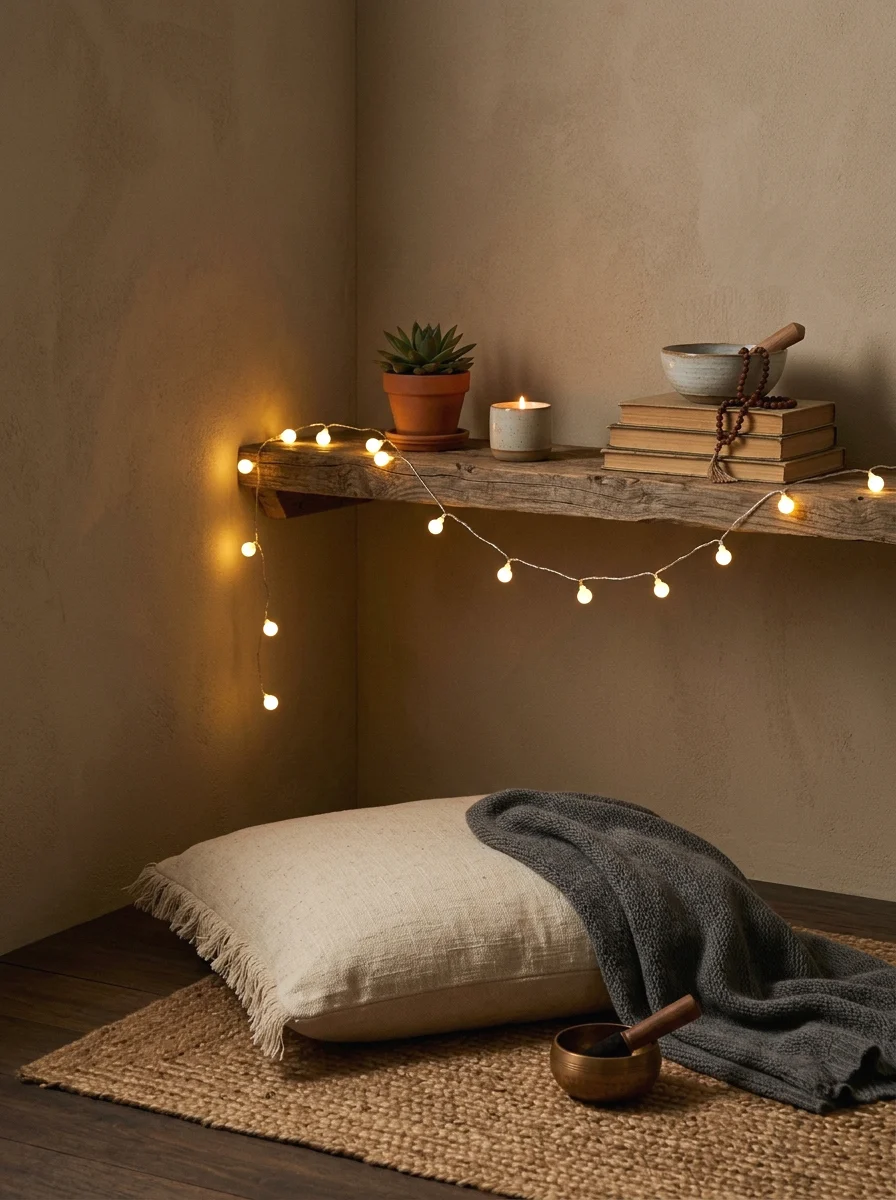
Warm white string lights tucked along a shelf edge, window frame, or wall hanging provide gentle, indirect lighting that is far more calming than a harsh overhead fixture, especially for evening practice. The soft glow also helps signal a shift in mood as you transition from the rest of the day into stillness.
Choose a warm rather than cool white tone, and keep the brightness low enough that the room still feels dim and restful rather than lit for tasks. This idea is one of the easiest and most affordable upgrades on this list, and it works particularly well for anyone who meditates in the early morning or evening when natural light is limited.
10. Woven Floor Poufs for Extra Seating
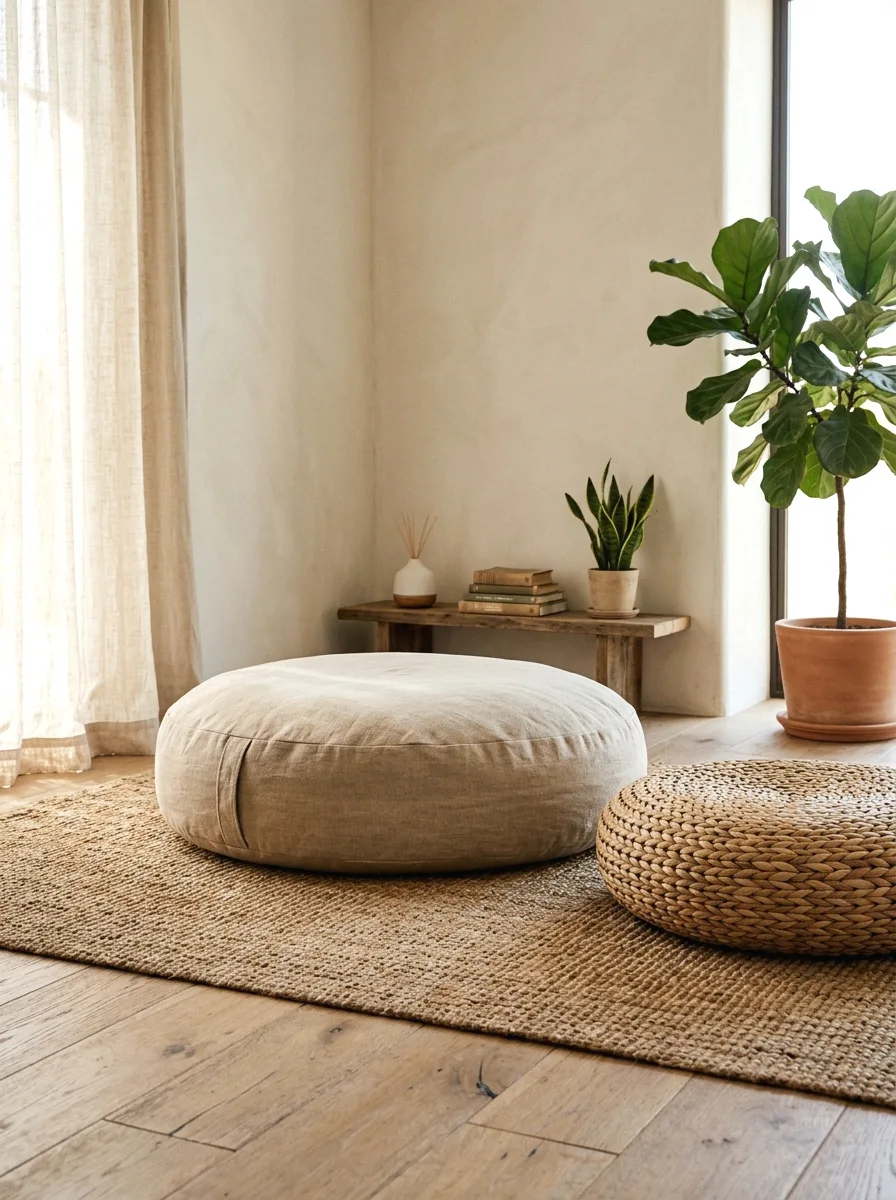
If the meditation room occasionally hosts a partner, friend, or small group session, a woven jute or rattan pouf offers additional low seating that still fits the room’s aesthetic and low-to-the-ground feel. Unlike a chair, a pouf keeps everyone at the same eye level as the main cushion, supporting a more equal, grounded group dynamic.
Choose a pouf in a natural fiber tone so it blends with the rest of the room rather than standing out as an obvious extra seat. This idea is especially useful for anyone who teaches, hosts, or shares their practice with others, since it allows the room to flex between solo and shared use without feeling improvised.
11. Himalayan Salt Lamp Accent
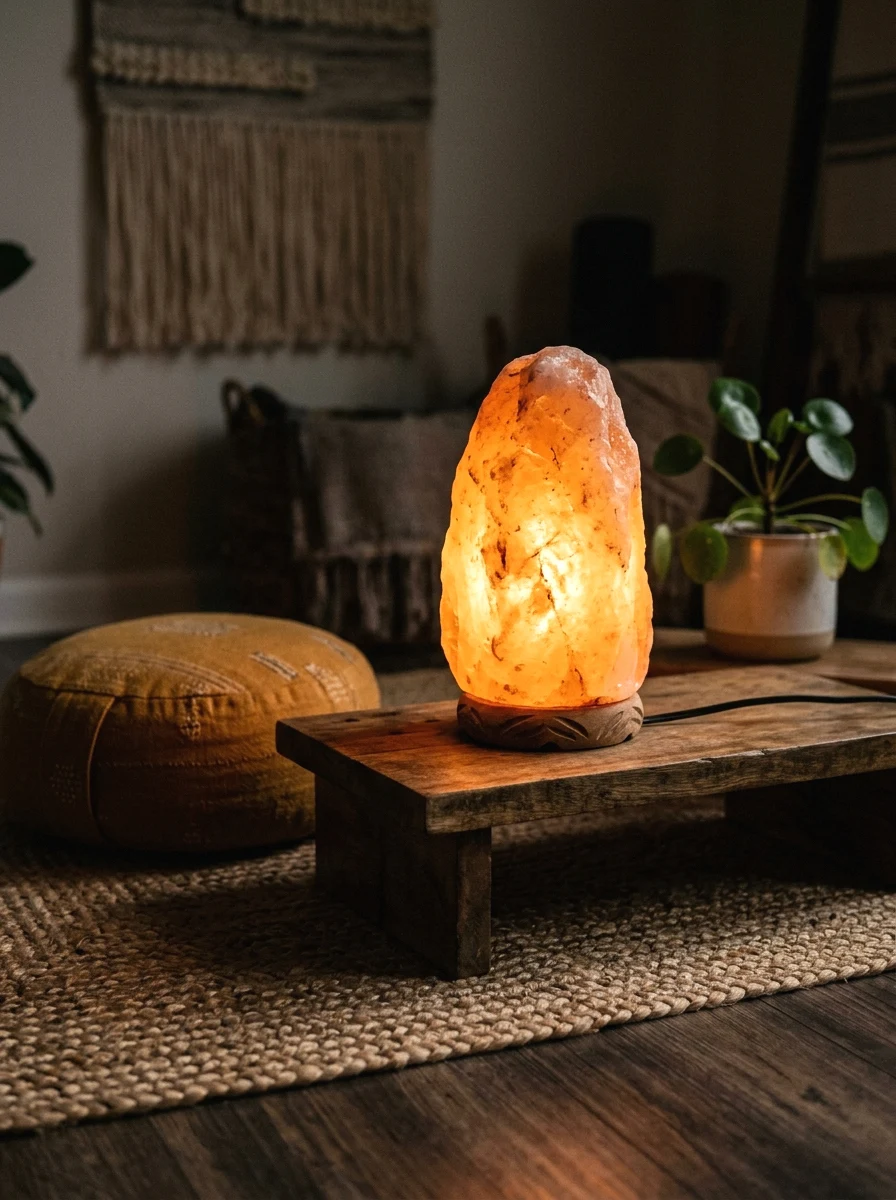
A Himalayan salt lamp on a low shelf or side table adds a warm, amber glow and a naturally textured, organic shape that fits well within a boho zen palette. Many people also use it for the ambient lighting alone, since the soft warm light is gentle enough for a dim room during evening practice.
Position it away from the direct sightline of the cushion so its brightness does not become distracting, using it more as background ambiance than a focal point. This idea suits anyone who wants a warm, low-light option that also adds a natural, sculptural element to the room’s decor.
12. Bamboo or Woven Window Shades
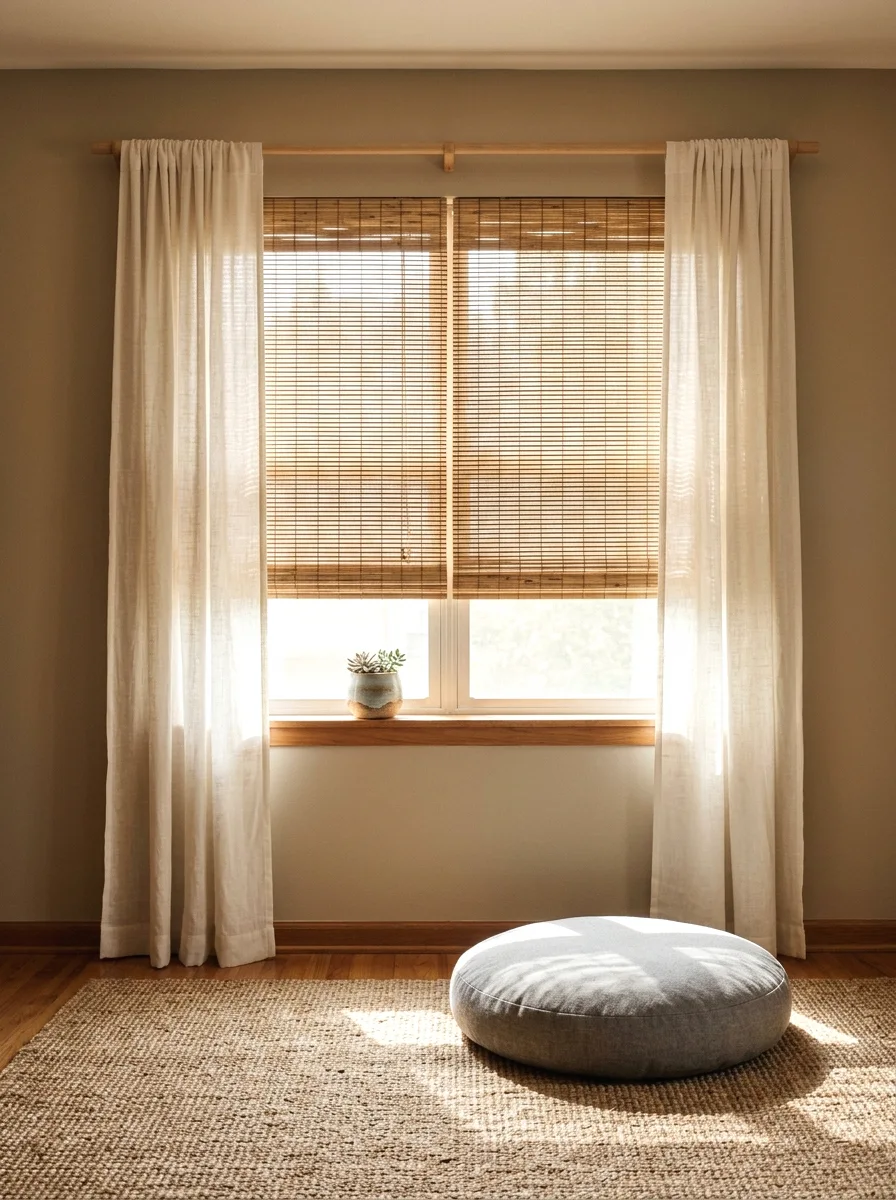
Natural bamboo or woven wood shades filter incoming daylight into a soft, diffused glow rather than harsh direct sun, which helps maintain a calm atmosphere throughout the day. The material also reinforces the room’s natural, woven texture story alongside rattan furniture or a jute rug.
Pair the shades with a simple linen curtain panel if you want the option of a softer, fully blackout-adjacent look for evening practice or a short nap after a session. This idea is especially useful for meditation rooms with bright, direct-light windows, where light control is just as important as the room’s overall aesthetic.
13. Meditation Cushion Set With a Bolster
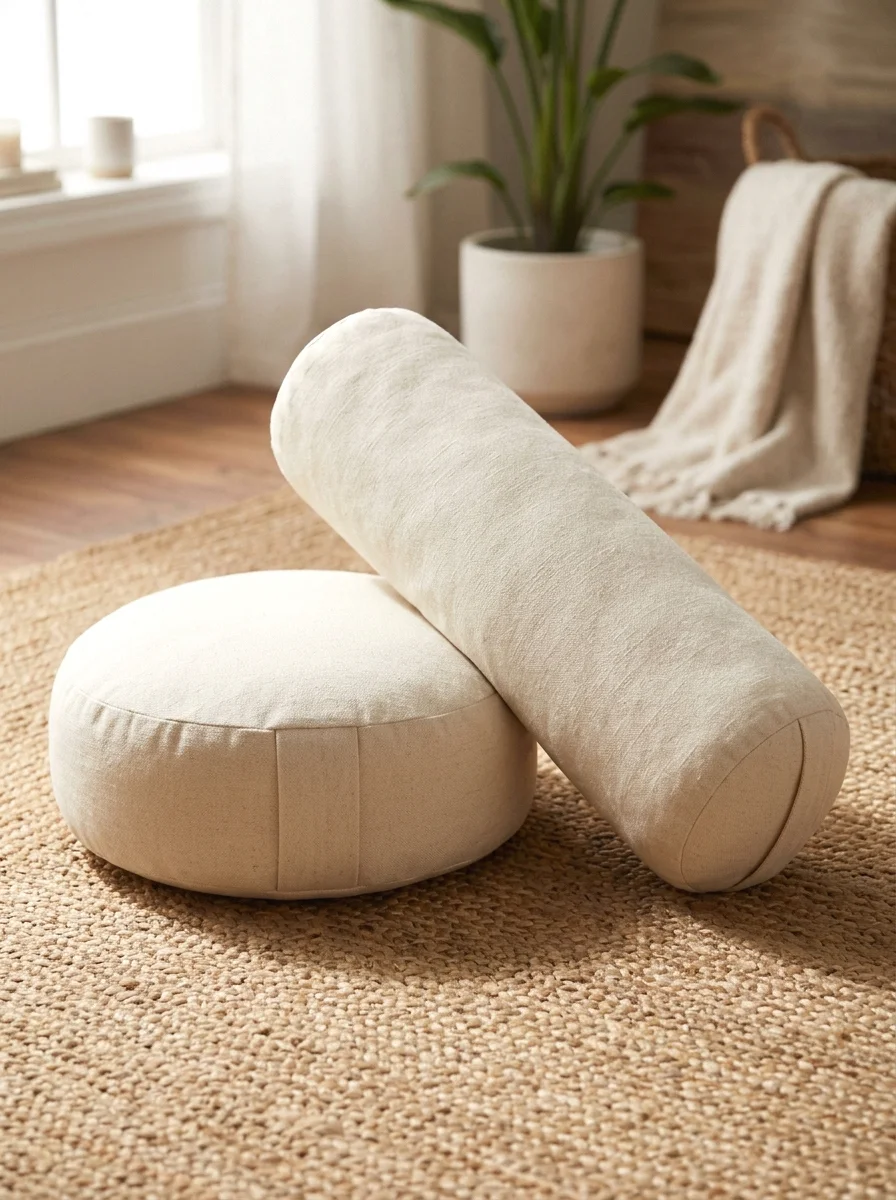
Beyond the primary zafu cushion, adding a bolster pillow gives you more support options for different seated positions or restorative stretches before and after practice. Choosing both pieces in matching or complementary natural tones keeps the seating area looking coordinated rather than mismatched.
Store the bolster neatly beside the main cushion when not in use, either leaning against the wall or resting on the altar table, so it stays part of the room’s intentional styling rather than looking like stray gym equipment. This idea suits anyone whose practice includes gentle stretching or restorative poses alongside seated meditation.
14. Wall-Mounted Wood Shelf for Crystals or Small Objects
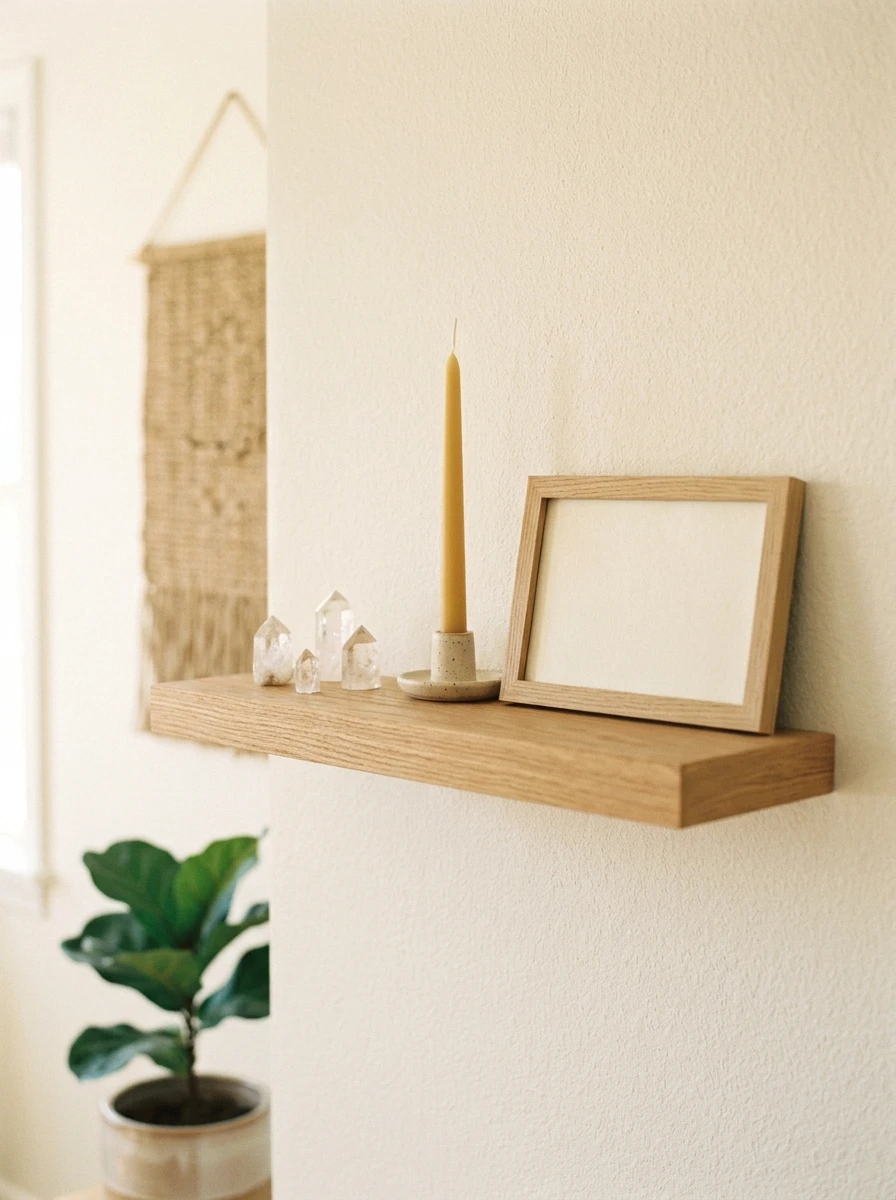
A single floating wood shelf mounted at eye level while seated gives you a spot to display a few meaningful objects, such as crystals, a small candle, or a photo, without cluttering the floor or altar table. Keeping the shelf narrow and simple prevents it from becoming a catch-all for unrelated items over time.
Limit the display to three or four pieces maximum, leaving visible negative space around each one so the shelf still reads as calm rather than busy. This idea works well for anyone who wants a personal, meaningful visual element in the room without taking up any additional floor space.
15. Indoor Plants for Air and Calm
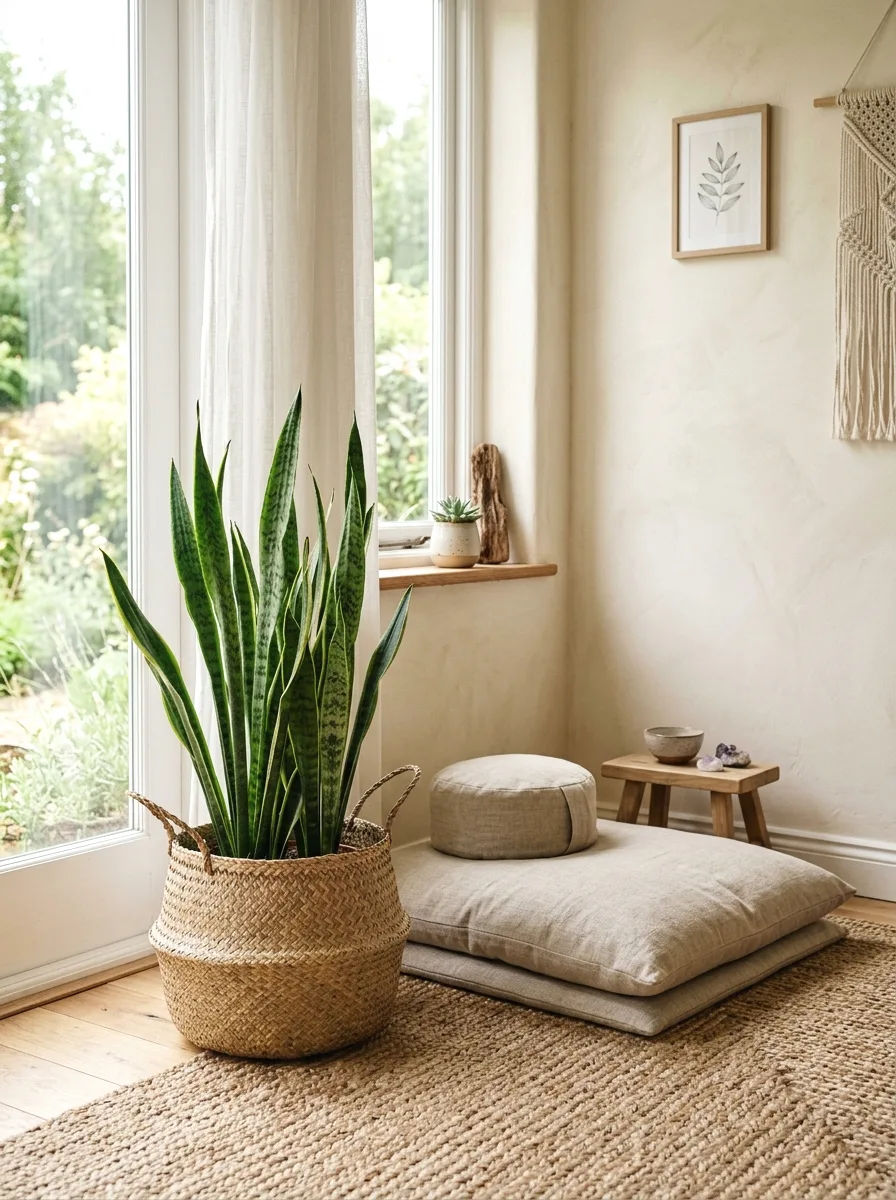
A potted snake plant, peace lily, or small fiddle leaf fig brings life and improved air quality into the meditation room while reinforcing the natural, boho material palette. Plants also soften hard corners and add a sense of organic growth to a room otherwise focused on stillness.
Choose a variety suited to the room’s actual light levels, since a struggling or dying plant works against the calm, cared-for feeling you are trying to create. This idea suits anyone who finds a living, growing element genuinely calming, and it pairs especially well with a window seat or a corner near natural light.
16. Essential Oil Diffuser Nook
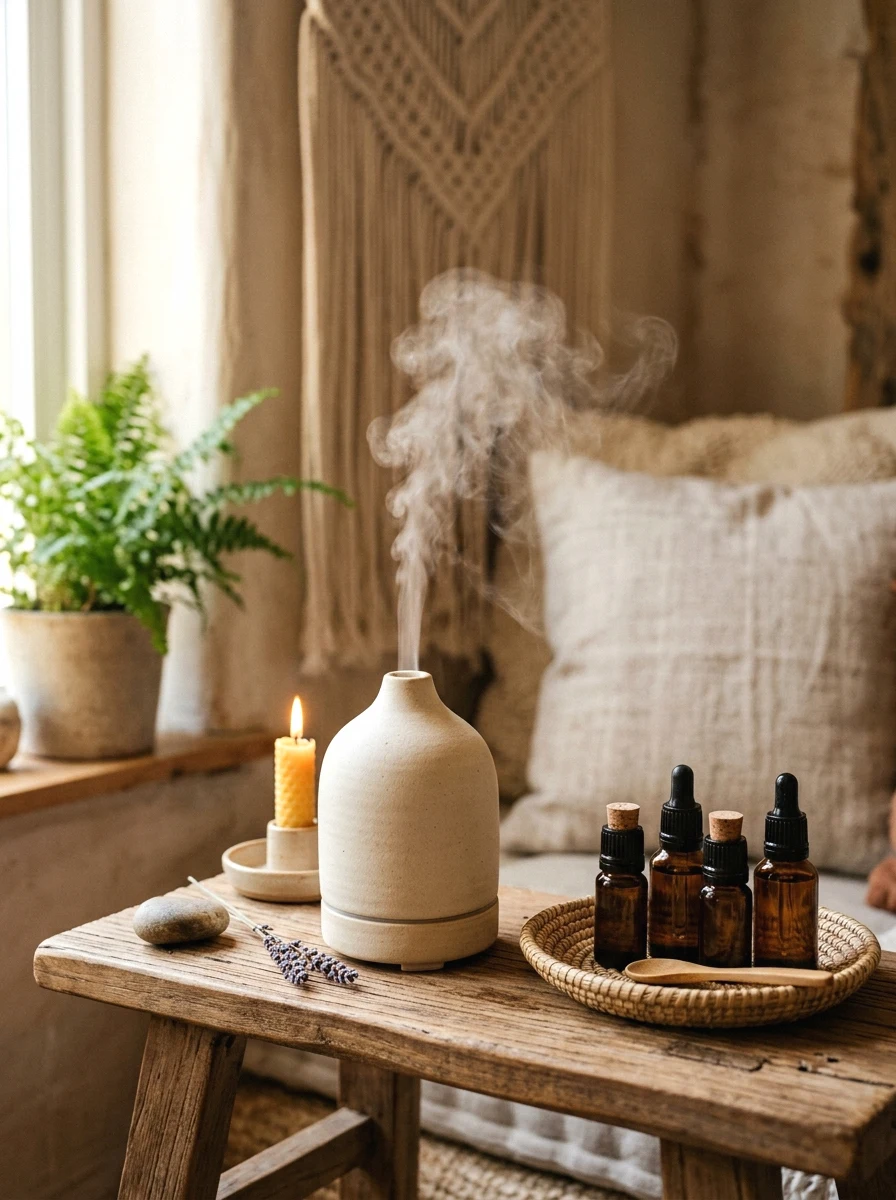
A small designated spot on the altar table or a nearby shelf for an essential oil diffuser turns scent into a consistent, repeatable cue that helps signal the start of practice. Choose a diffuser with a simple ceramic or wood-toned housing rather than a plastic, brightly lit model, so it fits the room’s material palette even when not in use.
Keep a small basket or dish nearby to hold your favorite oil bottles, so the setup stays tidy and ready to use rather than scattered. This idea is a good fit for anyone who already uses aromatherapy as part of their wind-down routine and wants that ritual to have a proper, intentional home in the room.
17. Floor-Level Low Lighting and Lanterns
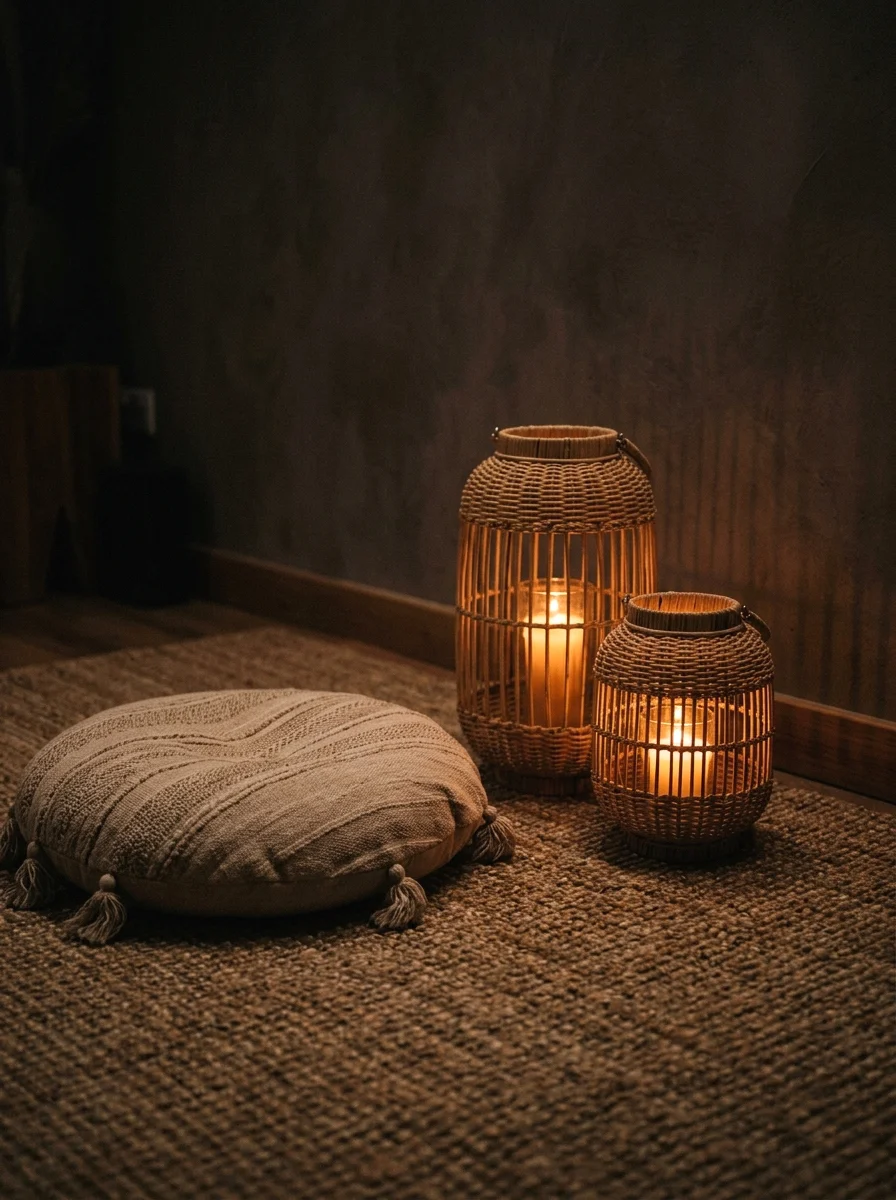
A small rattan or woven lantern placed directly on the floor near the cushion, holding either a candle or a battery-operated flame, keeps the light source low and soft rather than overhead and bright. This kind of ground-level lighting reinforces the room’s grounded, floor-focused layout and feels especially calming during evening sessions.
Group two or three lanterns of varying heights near the altar table for a softly layered glow rather than a single bright point of light. This idea is one of the simplest finishing touches on this list, and it works well as a final addition once the main furniture and layout of the room are already in place.
Frequently Asked Questions
What colors are best for a boho zen meditation room?
Warm, muted earth tones such as sand, clay, ivory, and soft terracotta work best for a boho zen meditation room, since they feel grounding and avoid the visual stimulation that bright or high-contrast colors can create. A single accent color, like sage green or dusty rose, is usually enough if you want a bit of variety.
How much space do you need for a meditation room?
A meditation space can work in as little as a small corner, roughly four by four feet, as long as it fits a cushion, a rug, and a bit of breathing room around it. A full spare room is not required, and many boho zen meditation setups are built in a bedroom corner or a section of a living room using a rattan divider for separation.
What items are essential for a boho zen meditation space?
The essentials are a comfortable floor cushion, a natural fiber rug, and soft, low lighting. Everything else, such as a singing bowl, dried florals, or a small altar table, is an optional layer that adds atmosphere but is not required to start a consistent practice in the space.
Can you create a meditation room in a small apartment?
Yes, a meditation corner works well in a small apartment when set up in an underused nook, such as beside a window or in a bedroom corner, often defined with a folding rattan screen for visual separation. The key elements, a cushion, rug, and calming decor, all scale down easily to fit a compact footprint.
How do you keep a meditation room feeling calm and clutter-free?
Limit each surface, such as the altar table or wall shelf, to two or three meaningful objects, and choose a consistent, muted color palette throughout the room. Storing extra supplies like blankets or spare cushions out of sight, such as in a woven basket, also helps the space stay visually quiet and ready for practice at any time.
Final Thoughts
The best boho zen meditation room is one shaped around your actual practice, space, and pace rather than a single fixed formula. If your space is limited, focus first on the cushion and rug, since those two elements alone create a usable practice spot, and add layers like a wall hanging or altar table as your budget allows. If you are working with a generous budget, invest in quality lighting and a well-made room divider, since both have an outsized effect on how calm the space feels day to day. And if your practice is more about ritual than minimalism, lean into the singing bowl corner, diffuser nook, and layered lanterns to make the room feel personal and complete. However you build it, the goal is a space you actually want to return to, so start small, adjust as you go, and let the room evolve alongside your practice. Ready to create your own calming corner? Choose the one or two ideas that spoke to you most and begin there.


- Be Respectful
- Stay Relevant
- Stay Positive
- True Feedback
- Encourage Discussion
- Avoid Spamming
- No Fake News
- Don't Copy-Paste
- No Personal Attacks
- Be Respectful
- Stay Relevant
- Stay Positive
- True Feedback
- Encourage Discussion
- Avoid Spamming
- No Fake News
- Don't Copy-Paste
- No Personal Attacks
