19 Stunning Afrohemian Decor Ideas for Warm, Expressive Interiors
Published: 20 Sep 2026
Does your home feel flat, beige, or missing a story? Afrohemian decor ideas bring the fix. This style blends the free-spirited layering of bohemian design with African-inspired textiles, handcrafted objects, deep earthy colors, and bold pattern, creating rooms that feel warm, personal, and full of life. It works especially well for anyone who wants a space that expresses culture and creativity instead of following a showroom formula, whether in a rental, a small apartment, or a family home. In this article, you will find 19 practical Afrohemian decor ideas covering color, textiles, art, furniture, lighting, and plants, plus answers to common questions and tips for sourcing pieces with care.
1. Start With a Statement Mudcloth Throw and Pillows
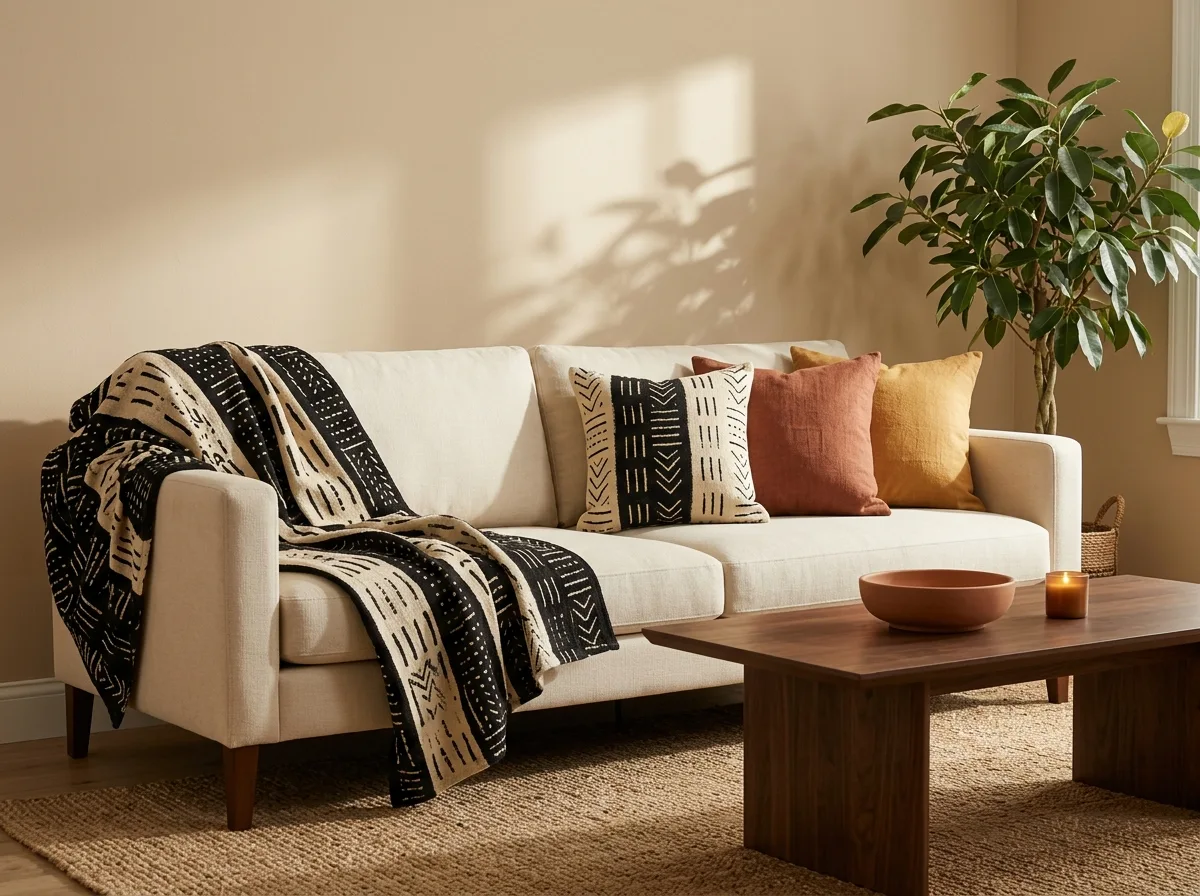
Mudcloth, known as bògòlanfini in Mali, is a handwoven cotton cloth traditionally dyed with fermented mud, and its graphic black and cream patterns are a signature of Afrohemian style. A throw draped over a sofa or a few pillows on a neutral couch gives the room instant depth and a sense of heritage.
Pair mudcloth with warmer tones like rust, ochre, and terracotta so the strong contrast feels balanced rather than stark. Choose two or three pieces instead of covering every surface, and look for handmade cloth from African makers or reputable fair-trade sellers when you can.
Best for anyone starting out with Afrohemian style, neutral living rooms that need personality, and renters who want easy, removable impact.
2. Layer Handwoven Baskets on the Wall
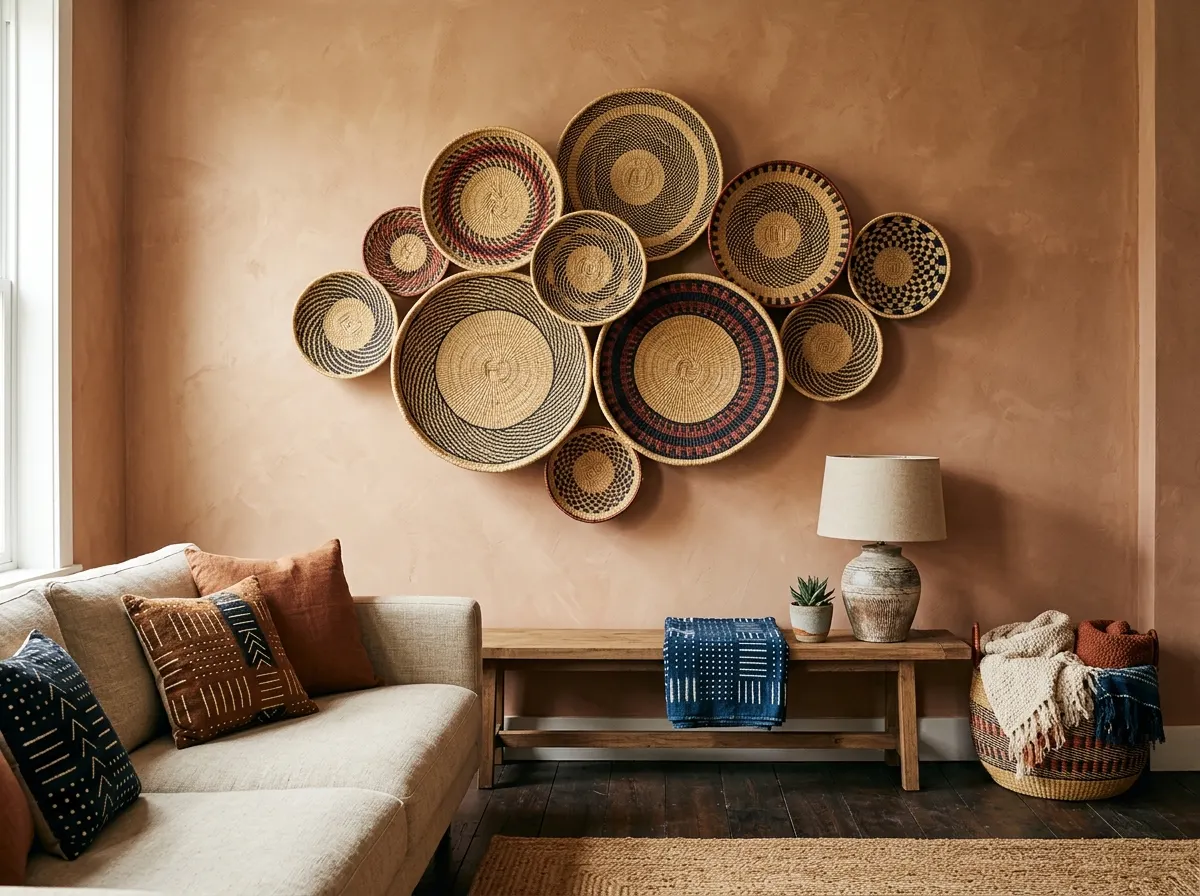
Handwoven baskets make beautiful wall art, and Bolga baskets from northern Ghana, woven from grasses in bright and natural patterns, are a favorite for good reason. Grouped in different sizes above a sofa or console, they bring texture, color, and handcrafted character in one move.
Arrange them in a loose cluster with a few larger baskets and several small ones, and mix natural tones with those featuring black, red, or indigo accents. Baskets can also do real work, holding throws, magazines, or plants on shelves and floors.
Best for blank walls, budget decorators, and anyone who wants art and storage in the same piece.
3. Use Carved Wooden Stools as Side Tables
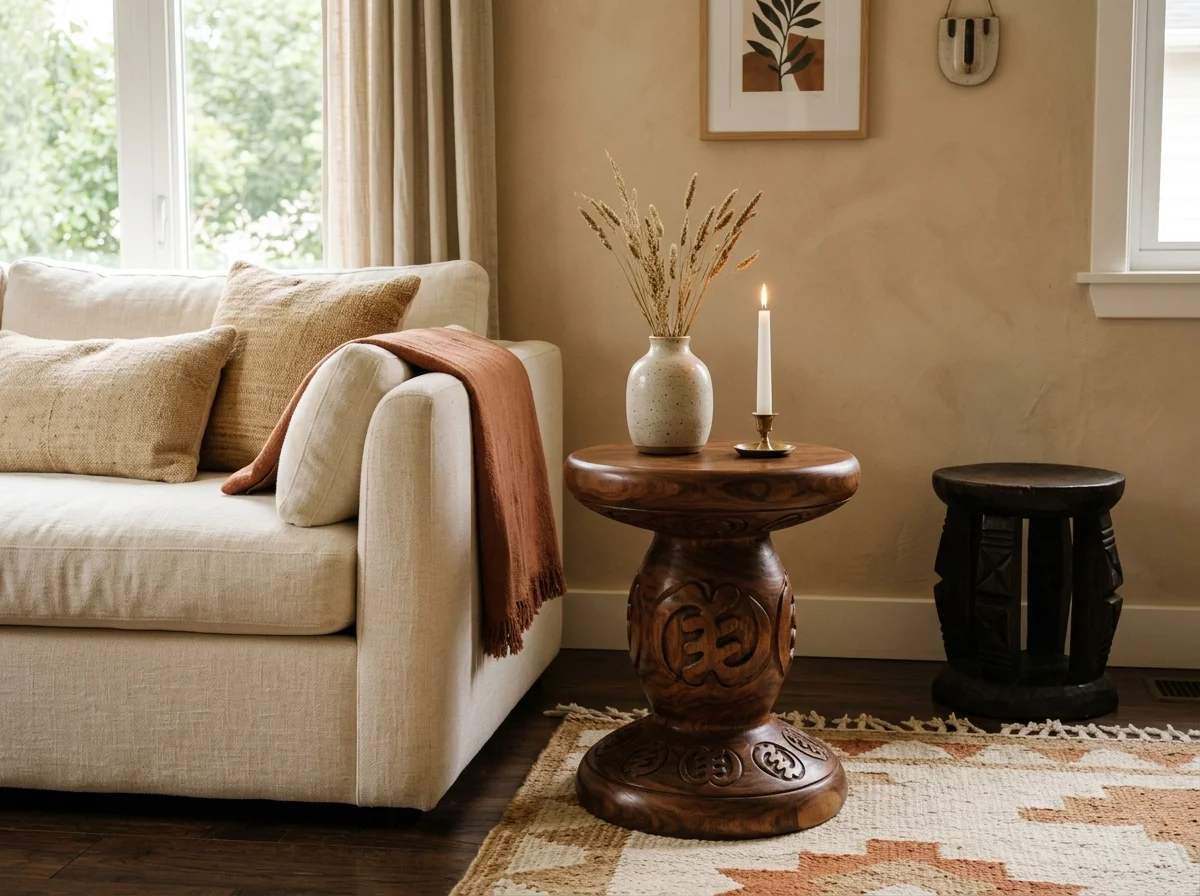
Carved wooden stools inspired by Akan and Ashanti traditions from Ghana are sculptural, useful, and full of presence. Used as a side table beside a sofa or as extra seating near a fireplace, one strong stool becomes a piece of functional art.
Choose stools with solid, smooth forms and rich wood tones, and pair them with simple ceramics or a candle on top so the shape stays the focus. If you buy new, look for makers who credit their craft and pay fairly, and learn the story behind the design.
Best for small spaces that need flexible seating, living rooms with plain furniture, and people who love sculptural objects.
4. Build a Palette of Terracotta, Ochre, and Deep Green
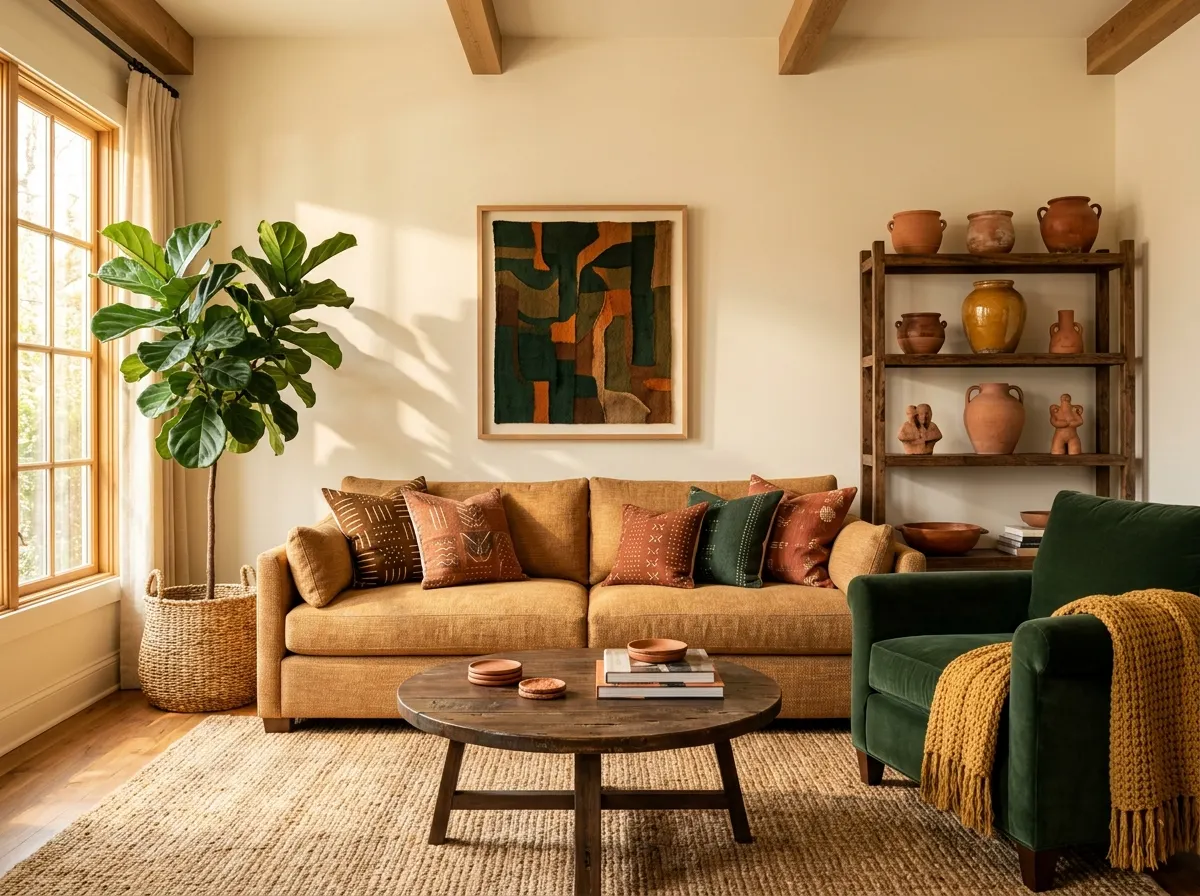
Afrohemian interiors thrive on warm, saturated color inspired by earth, sun, and vegetation. Terracotta, ochre, burnt orange, and mustard bring heat, while deep forest green and dark brown add richness and depth so the palette never feels flat.
Use a neutral base like warm cream, sand, or soft white on large surfaces, then repeat your accent colors in pillows, art, pottery, and plants. Three or four main tones is plenty, and it keeps the room feeling expressive without becoming chaotic.
Best for people who want warmth and drama, rooms with lots of natural light, and anyone repainting a plain space.
5. Add Indigo Adire Textiles
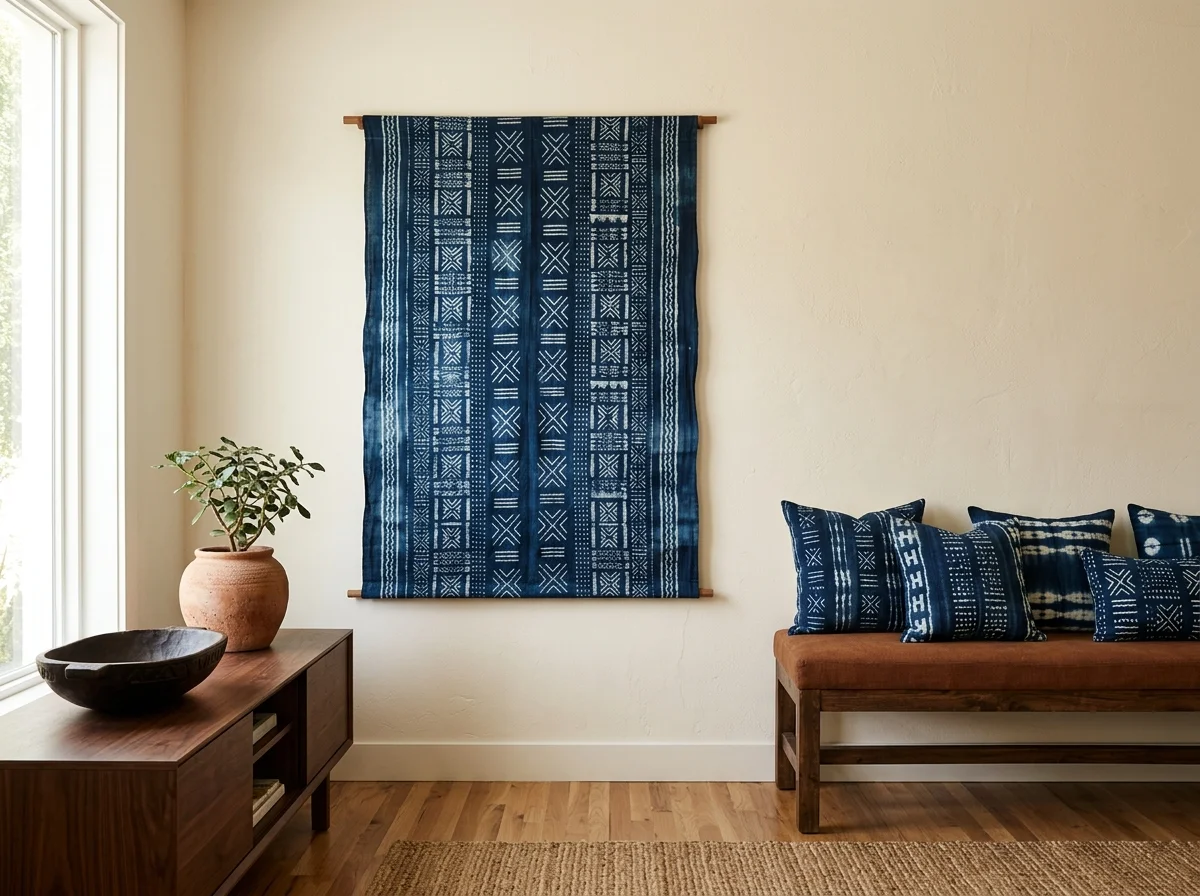
Adire is a resist-dyed indigo cloth with roots in Yoruba communities in Nigeria, made with techniques like tying, stitching, and painting patterns with starch before dyeing. Its blue and white patterns bring a cool contrast to a warm room and look striking as pillows, curtains, or a wall hanging.
Use indigo sparingly against terracotta, wood, and cream so it stands out as a deliberate accent. A single large piece hung on a wall or draped over a bench often works better than many small scraps.
Best for people who want a cooler accent in a warm space and those who love handmade, dyed fabric.
6. Bring in Kente-Inspired Accents
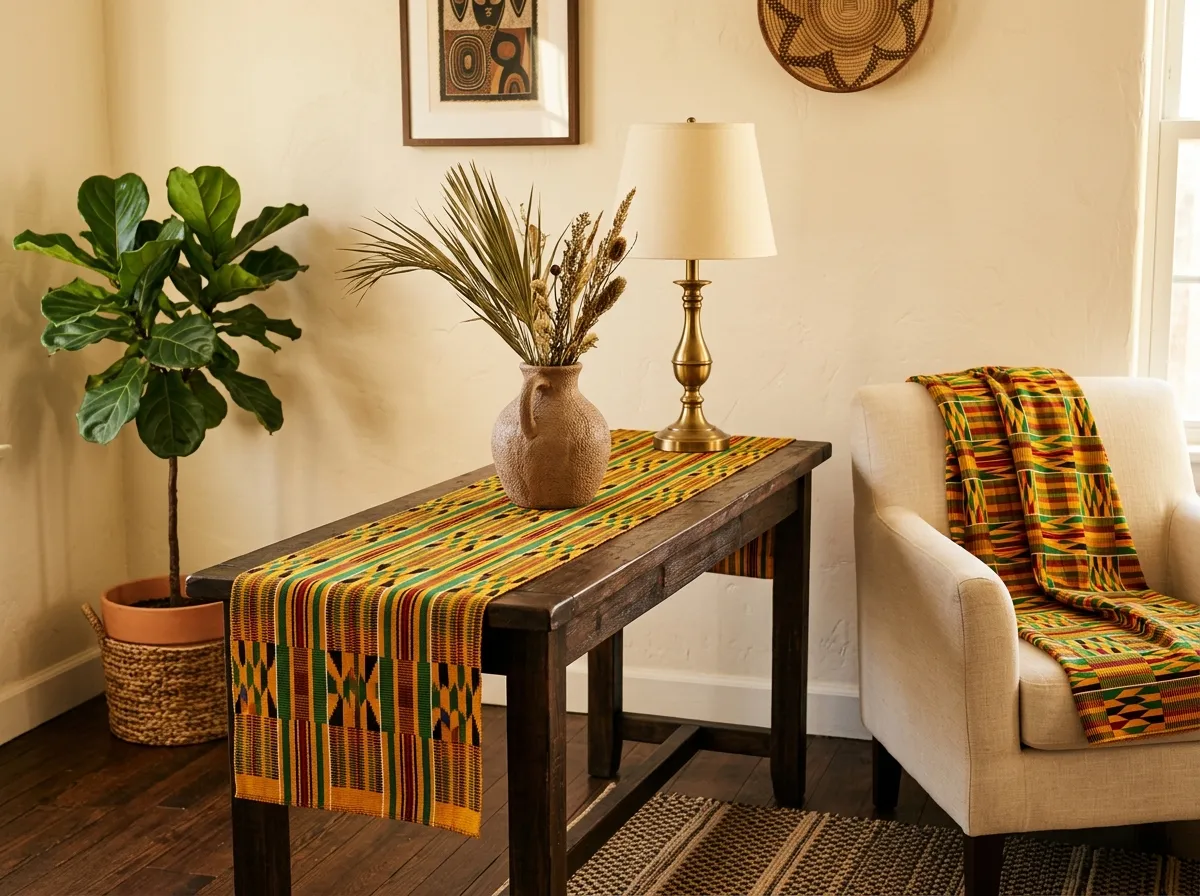
Kente is a handwoven strip cloth from Ghana, historically associated with the Akan (Asante) and Ewe peoples, and it holds deep cultural meaning. Kente-inspired throws, table runners, or cushions in gold, green, and red bring a lively, bright energy to a room.
Because kente carries meaning, buy from makers who respect its tradition and use it thoughtfully rather than as random decoration. A runner across a console or a single throw over a chair is often enough to make the impact.
Best for rooms that need a burst of color, people who appreciate craft and heritage, and gift-worthy touches for a special space.
7. Anchor the Room With a Berber-Style Rug
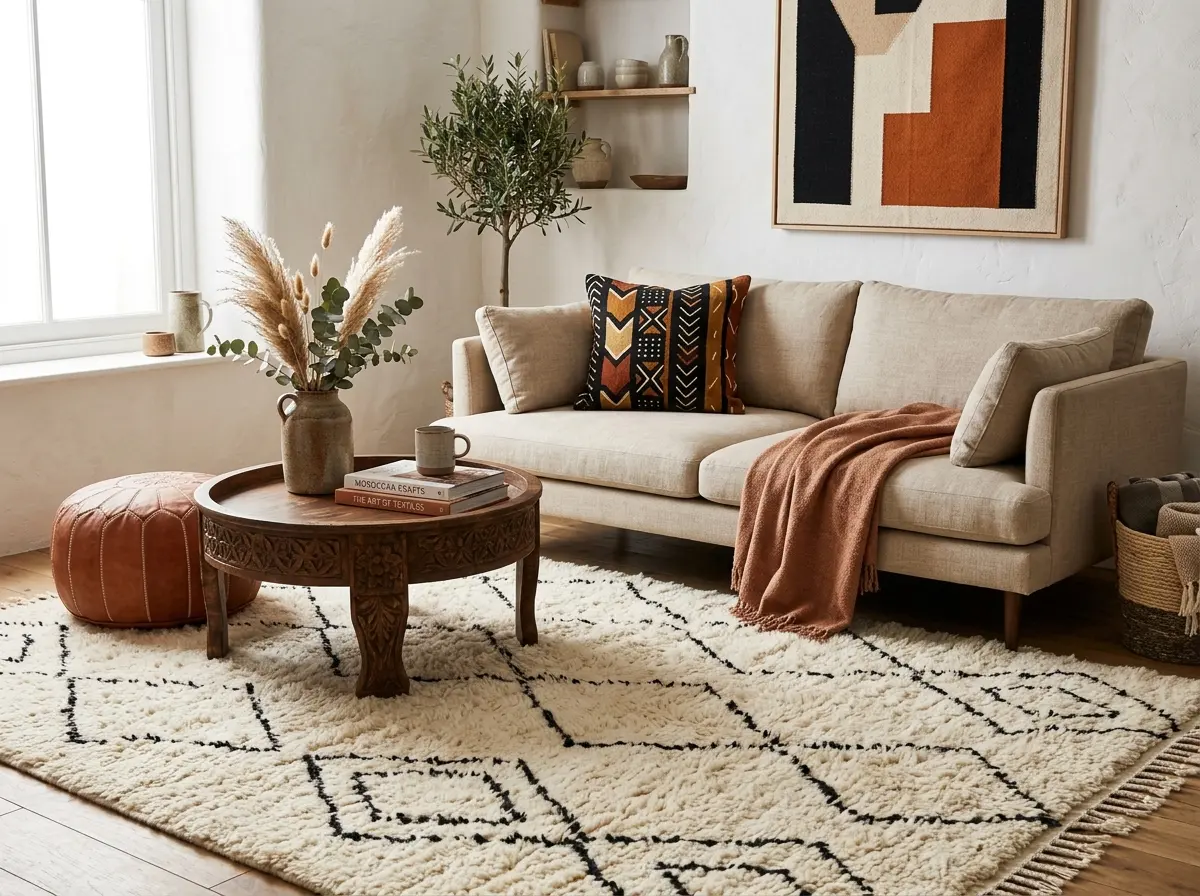
A soft cream rug with bold diamond or line patterns, inspired by Moroccan Beni Ourain weaving from the Middle Atlas region, works as a comforting base for Afrohemian rooms. It brings a calm neutral field that lets your colorful textiles and art stand out.
Layer it under a low sofa or in front of a bed, and let the texture speak. If you prefer more color, choose a vintage-style rug in warm rust and deep blue instead, and keep the rest of the palette soft.
Best for living rooms and bedrooms, people who want a neutral foundation, and homes where comfort underfoot matters.
8. Create a Gallery Wall of African Art and Photography
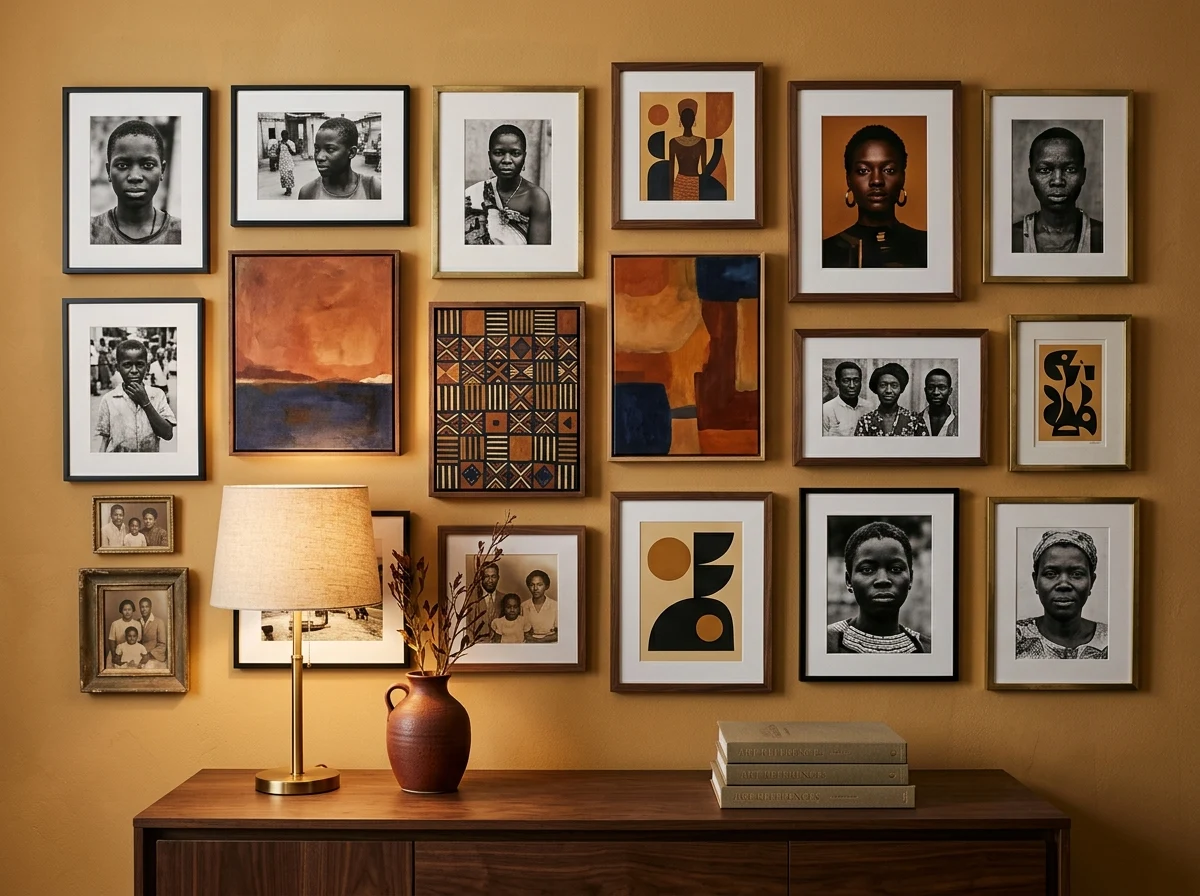
Art is where Afrohemian style tells its most personal story. Mix framed prints, paintings, and photography by African and Black artists with vintage finds and family photos to build a wall that feels curated and meaningful.
Use consistent frames in black, wood, or brass so the mix of subjects feels unified, and lay everything out on the floor before hanging. Buying prints directly from artists and galleries supports the creators whose work shapes the room.
Best for people who love art, rooms with large empty walls, and homes that want to reflect personal history.
9. Mix in African Wax Print Cushions and Curtains
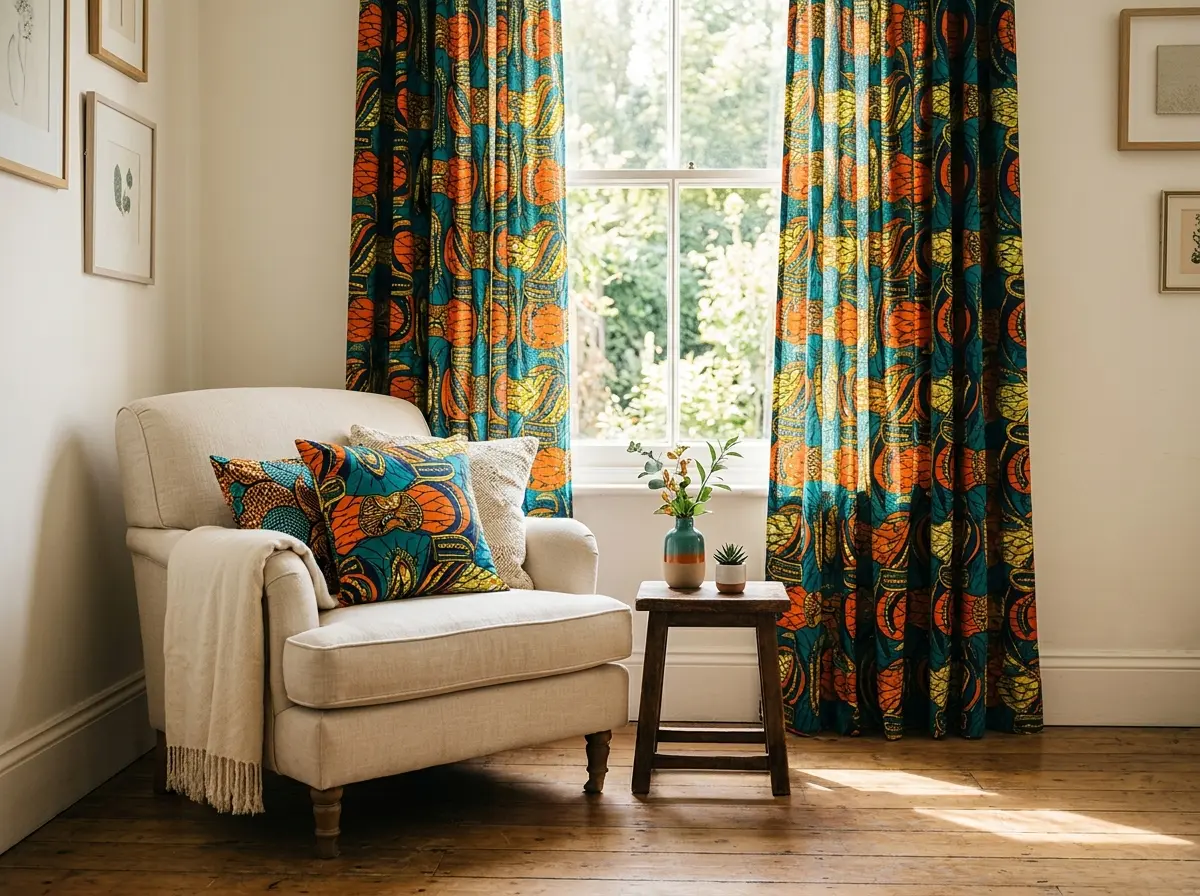
African wax print, often called Ankara, is loved across West and Central Africa for its bright colors and bold graphic patterns. Cushions, curtains, or a table cloth in these prints bring joyful color and movement to a room.
Choose one dominant print and repeat a color from it in nearby accessories, then balance it with plain linen or cotton so the pattern does not overwhelm. If you can, buy from African designers and tailors who work with these fabrics locally.
Best for color lovers, small rooms needing a lively accent, and anyone who wants to support independent makers.
10. Choose Dark Wood and Natural Fiber Furniture
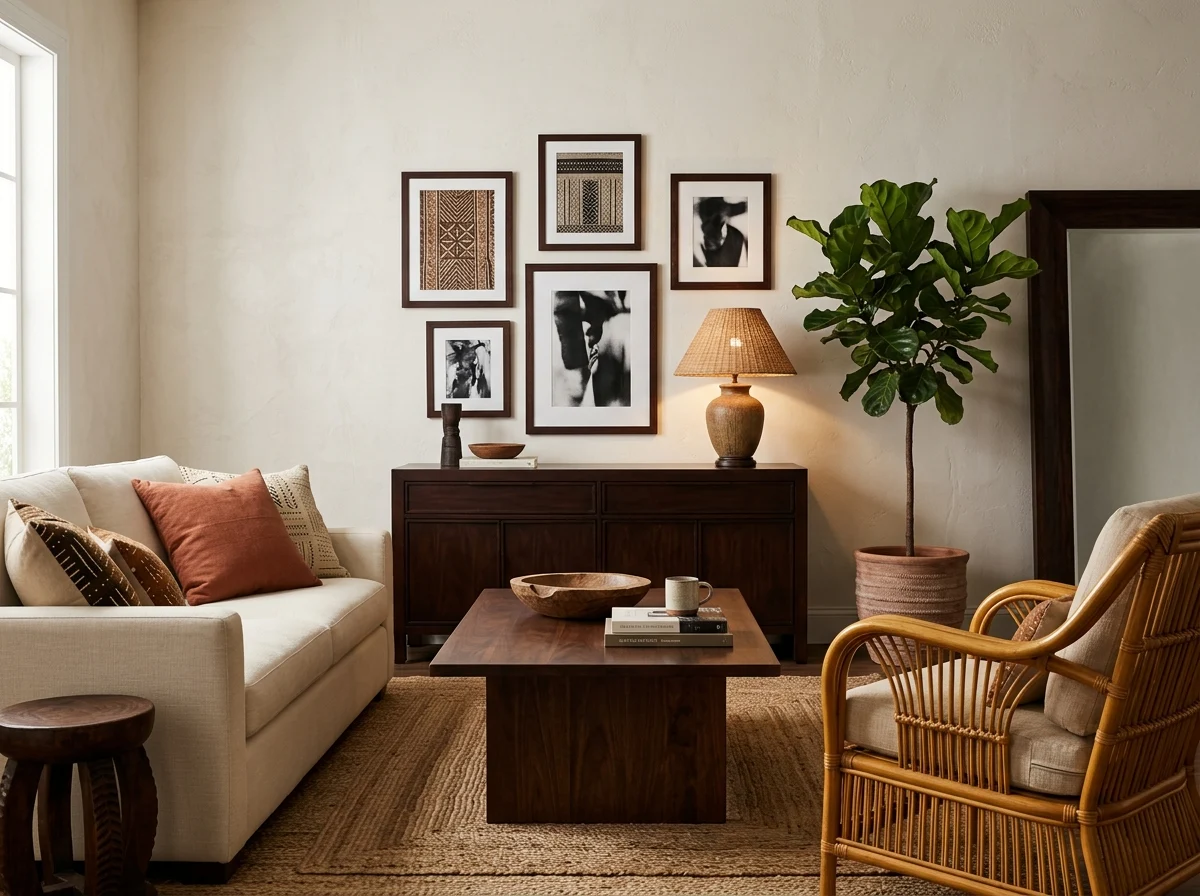
Deep walnut, mahogany, or ebony-stained wood gives Afrohemian rooms a grounded, sophisticated base. Pair it with rattan, cane, or raffia textures to keep the space warm and lightweight rather than heavy.
Mix a dark wood console or coffee table with a woven armchair and a soft upholstered sofa. Repeat the wood tone in frames, bowls, and stools so the room feels cohesive, and look for solid or well-made secondhand pieces that will last.
Best for living rooms and dining spaces, people who like a richer, moodier look, and anyone who prefers investment furniture.
11. Fill Corners With Statement Plants in Handmade Clay Pots
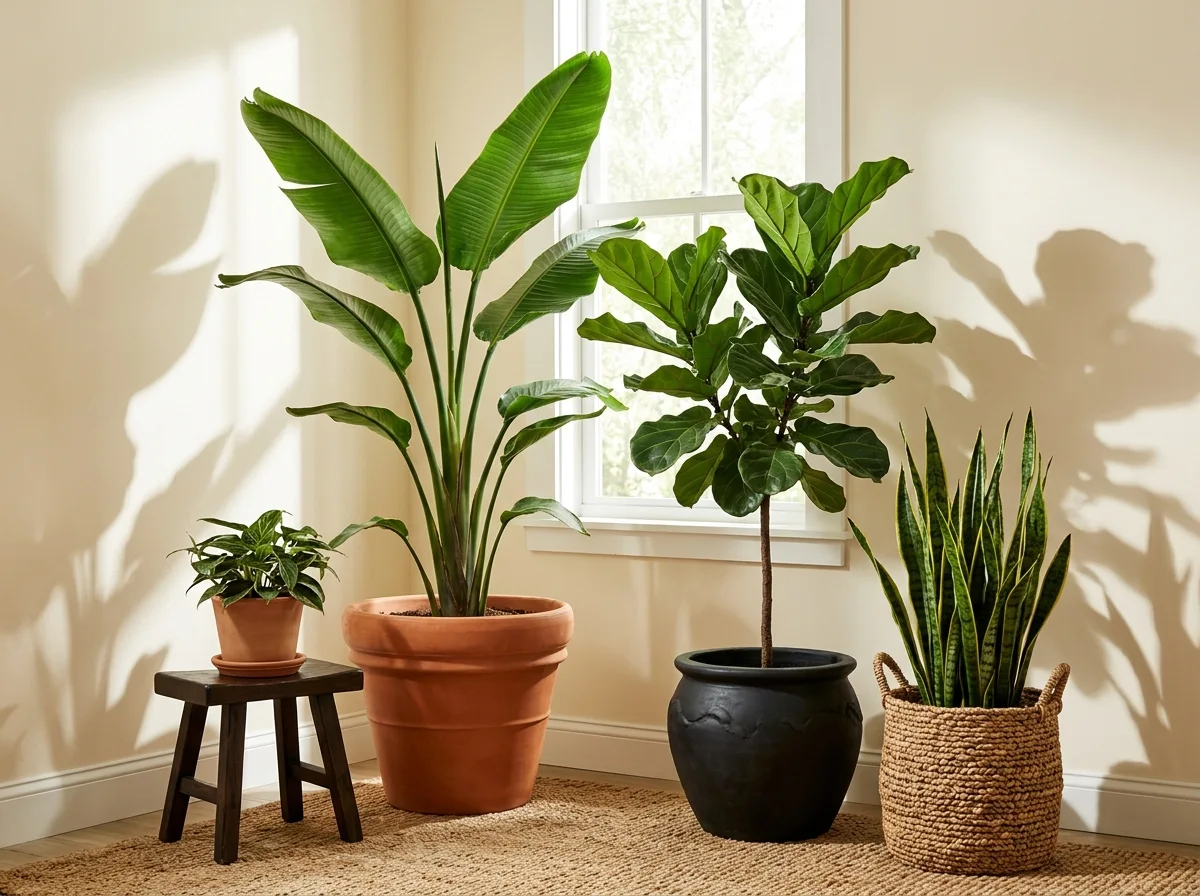
Big leafy plants are essential to Afrohemian style, bringing life and color that complements warm textiles. banana plants, fiddle leaf figs, palms, and snake plants in handmade clay or woven pots give height and drama to empty corners.
Vary heights, group plants in threes, and use terracotta, black clay, or woven baskets to keep the look earthy. Match each plant to the light in your room so they stay healthy and full all year.
Best for bright rooms, plant lovers, and anyone who wants natural drama without changing furniture.
12. Hang Raffia and Rope Pendant Lights
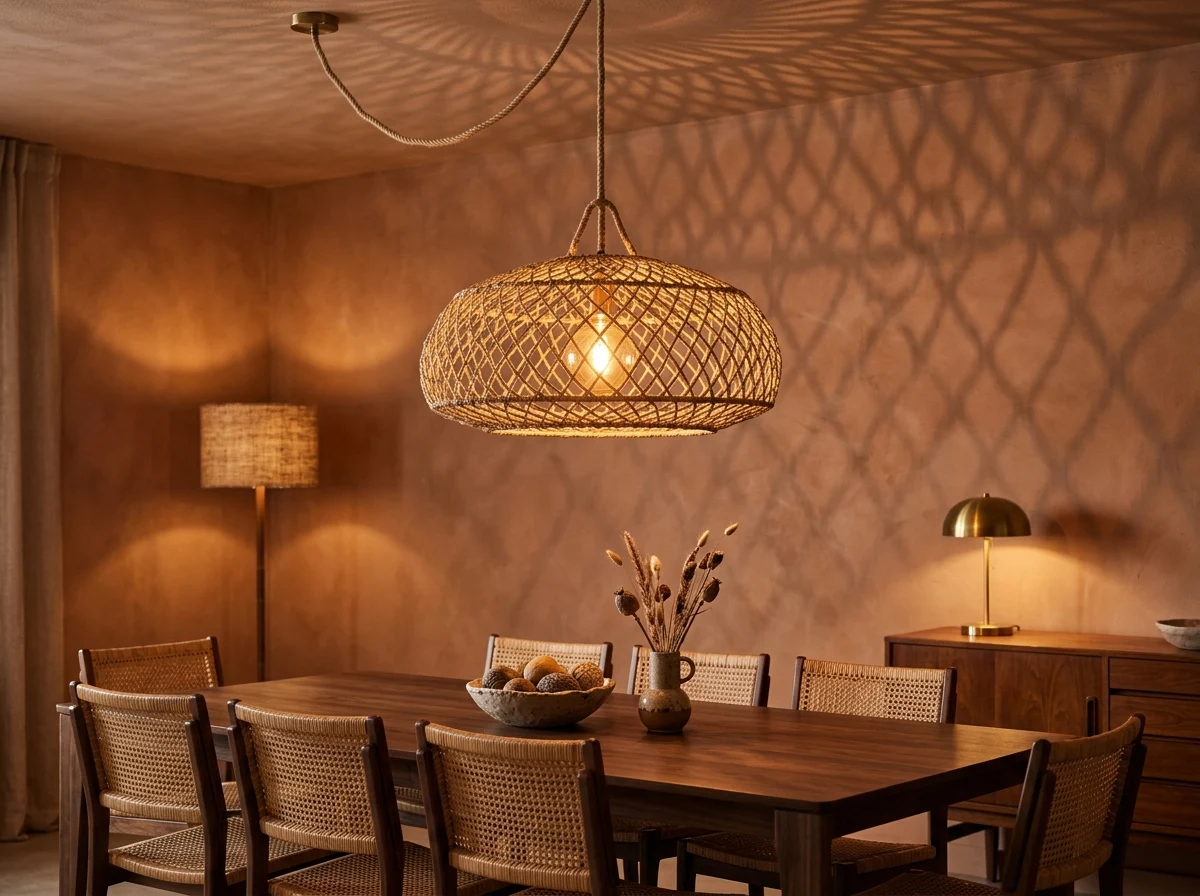
Woven raffia, rope, and rattan pendant lights cast beautiful patterned shadows and bring handcrafted texture overhead. A large woven shade above a dining table or seating area becomes a natural sculpture.
Choose a big diameter for impact, use warm bulbs, and pair it with table and floor lamps for layers of light. In rentals, look for plug-in pendant kits or shade covers that fit existing fixtures.
Best for dining areas, high ceilings, and anyone wanting a strong focal point above the room.
13. Lay a Kuba-Inspired Geometric Rug or Wall Textile
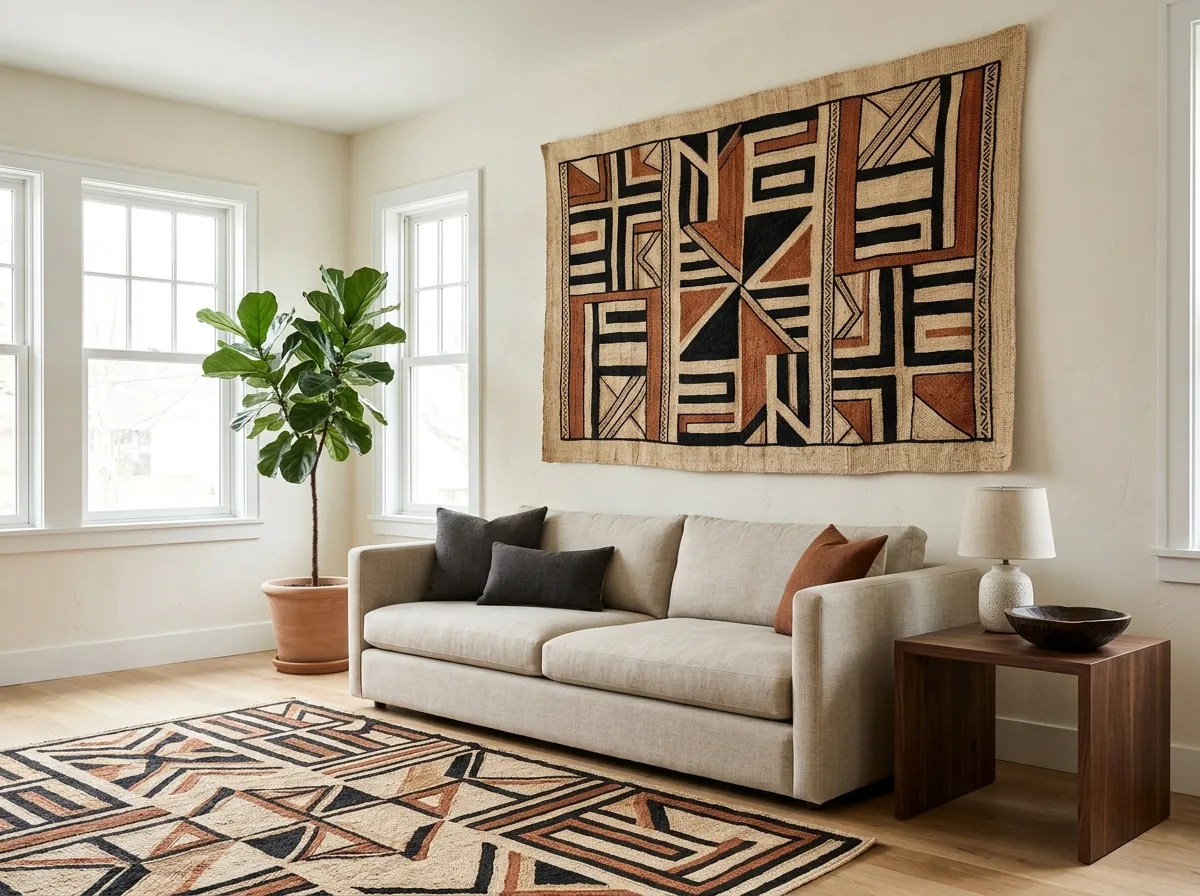
Kuba cloth from the Kuba people of the Democratic Republic of the Congo is made from raffia fibers, woven and embroidered with striking geometric patterns. Rugs, pillows, or wall pieces inspired by these patterns bring an abstract, modern feel that suits Afrohemian rooms.
Use it as a graphic anchor with a neutral sofa and simple wood furniture, and let the pattern be the star. If you want an authentic piece, buy from reputable dealers who can share its origin and how it was made.
Best for modern spaces that want heritage and graphic pattern, and for those who love abstract design.
14. Display Handmade Ceramics on Open Shelving
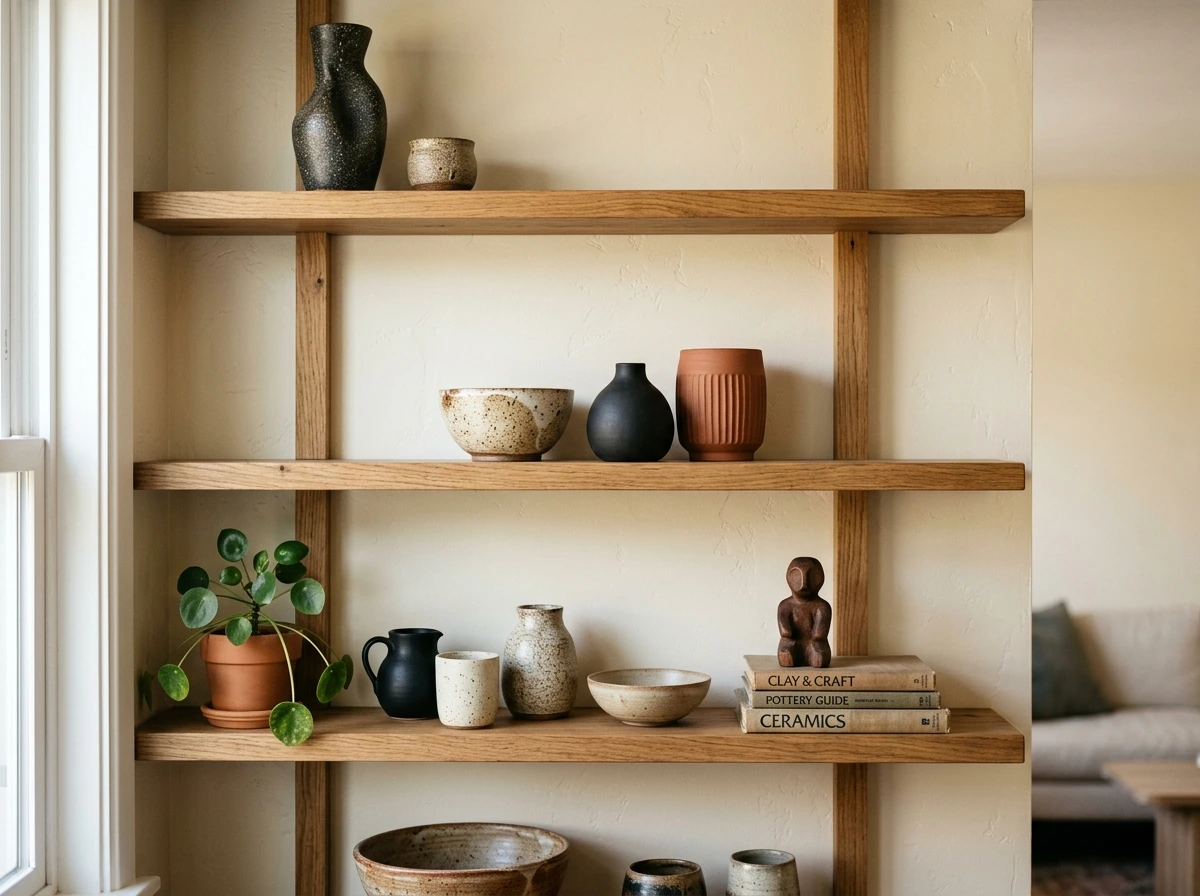
Handmade ceramics in earthy glazes, black clay, and speckled finishes bring quiet elegance to open shelves. Vases, bowls, and sculptural pieces create a display that feels collected and personal.
Group items in odd numbers, mix heights, and leave empty space so each piece can breathe. Add a plant, a stack of books, or a small carved figure to break up the ceramics and make the shelf feel lived in.
Best for kitchens, living rooms, and people who love to collect and display crafted objects.
15. Create a Cozy Reading Corner With Leather and Patterned Throws
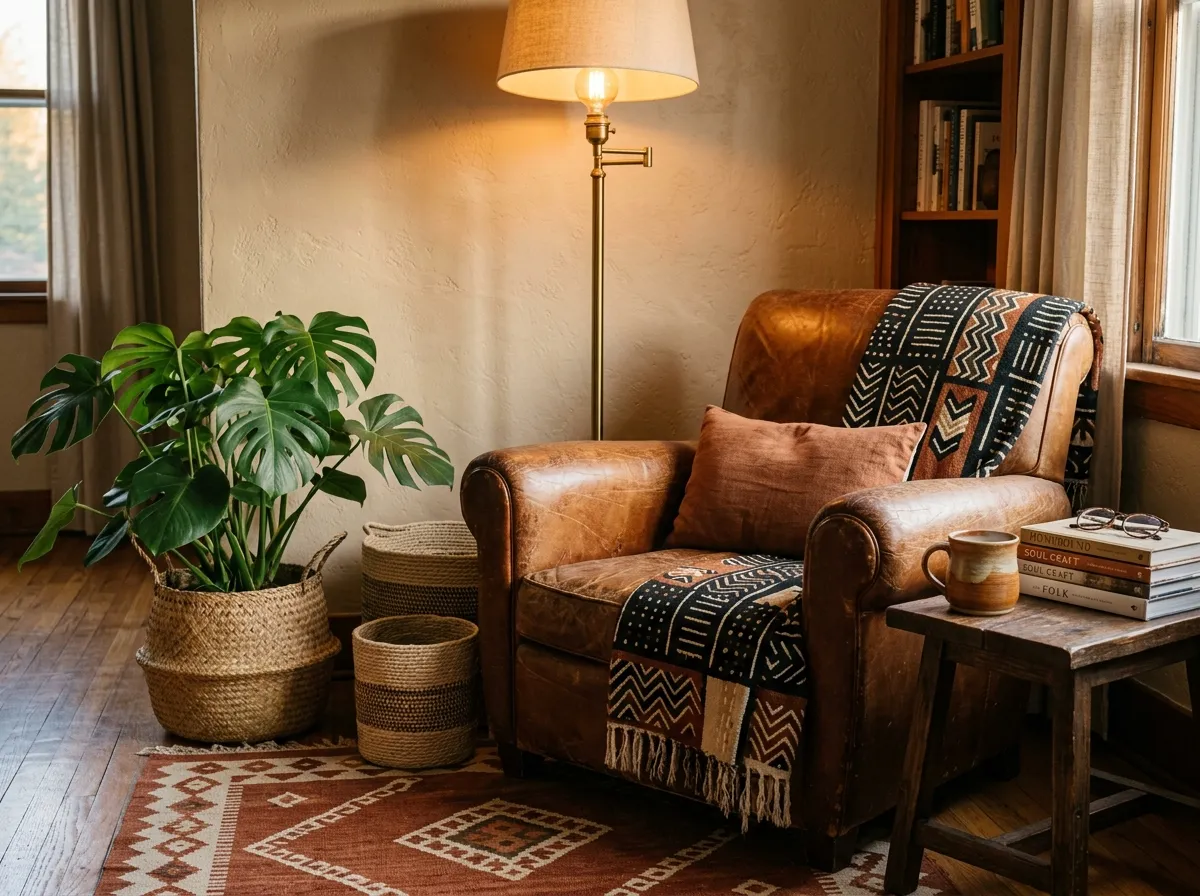
A worn leather armchair in cognac or tan, layered with a patterned throw, makes an inviting reading corner. The leather ages beautifully and pairs naturally with dark wood, woven baskets, and warm textiles.
Add a small side table, a floor lamp, and a plant to complete the nook, and place a rug beneath it to define the space. A mudcloth or wax print throw over the arm ties the corner into the rest of the room.
Best for bookworms, small corners, and anyone who wants a personal retreat inside a shared space.
16. Layer Warm Lighting With Brass and Candles
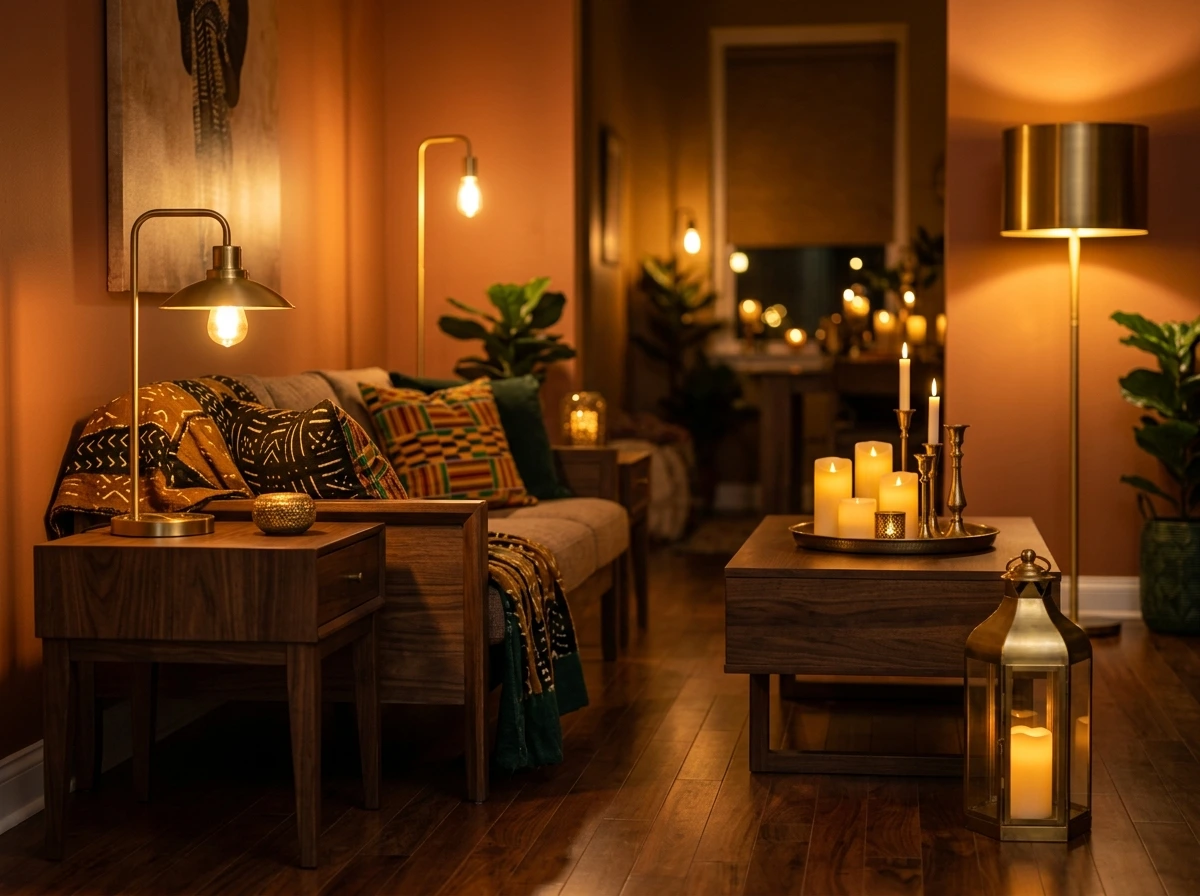
Warm lighting is what makes Afrohemian rooms feel intimate after dark. Brass lamps, candle holders, and lanterns cast a golden glow that flatters wood, terracotta, and rich fabrics.
Layer several light sources at different heights, such as a table lamp, floor lamp, and candles on a tray, and use warm bulbs. Keep open flames away from fabrics and dried plants, and use flameless candles if you have kids or pets.
Best for evening entertaining, cozy living rooms, and anyone who wants their space to feel welcoming after sunset.
17. Paint a Bold Ndebele-Inspired Geometric Accent Wall
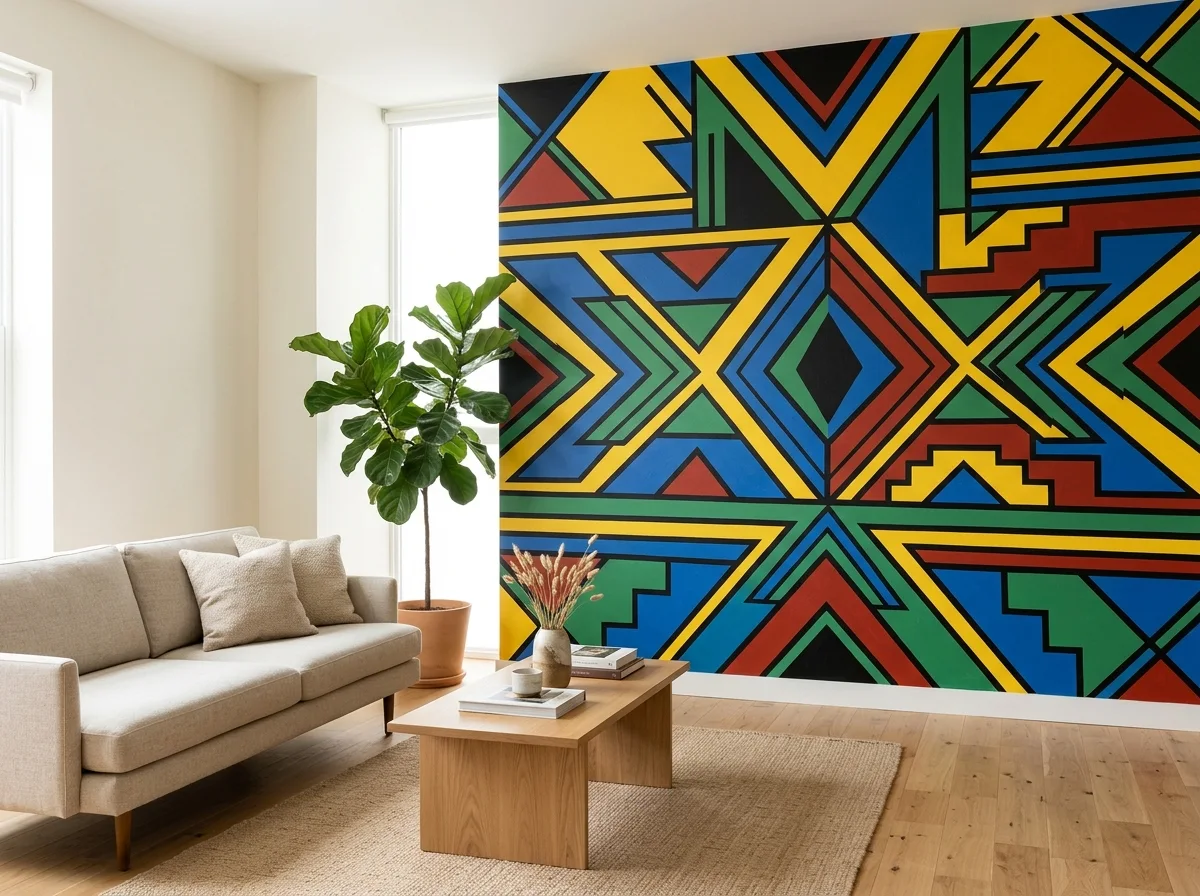
Ndebele house painting from South Africa is known for bold geometric patterns in bright colors and strong black outlines, traditionally created by Ndebele women. A single accent wall or painted panel inspired by these forms can give a room striking graphic energy.
Keep it simple: choose two or three colors, use painter’s tape for clean lines, and let the rest of the room stay quiet. Treat it as inspiration, not imitation, and consider learning about the tradition and supporting Ndebele artists and makers.
Best for confident decorators, homeowners open to painting, and rooms that need a dramatic focal wall.
18. Bring the Look to the Bedroom With Layered Earthy Linens
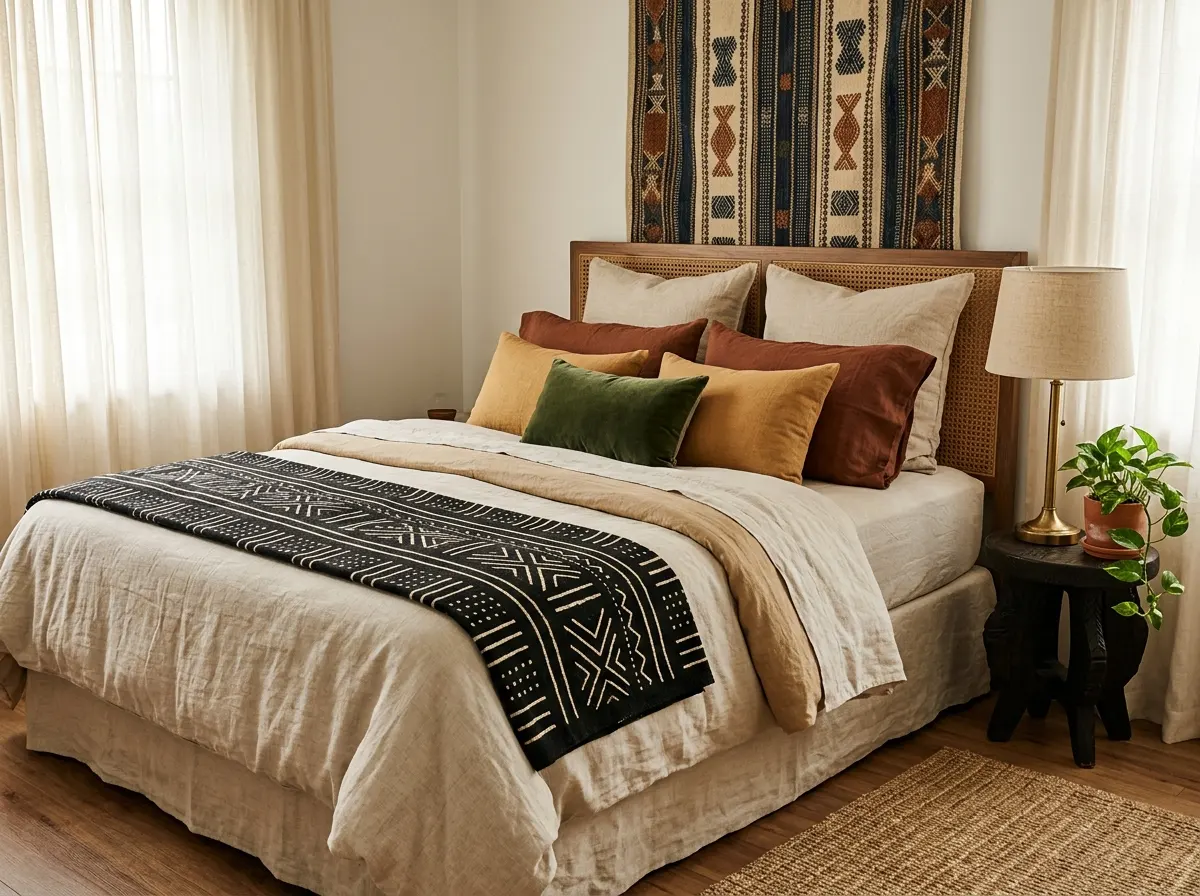
Afrohemian style works just as well in a bedroom, where warmth and comfort matter most. Start with natural linen or cotton bedding in cream or sand, then layer a mudcloth or wax print throw across the foot of the bed and add pillows in rust, ochre, and deep green.
Keep the bed area soft and calm, and let one strong element carry the pattern, such as a woven headboard, a large textile on the wall, or a carved wooden stool beside the bed. Warm bedside lamps and a small plant complete the retreat.
Best for people who want a restful yet expressive bedroom, renters who can add layers without painting, and anyone who loves a hotel-style bed with personality.
19. Mix Vintage Finds and Personal Heirlooms
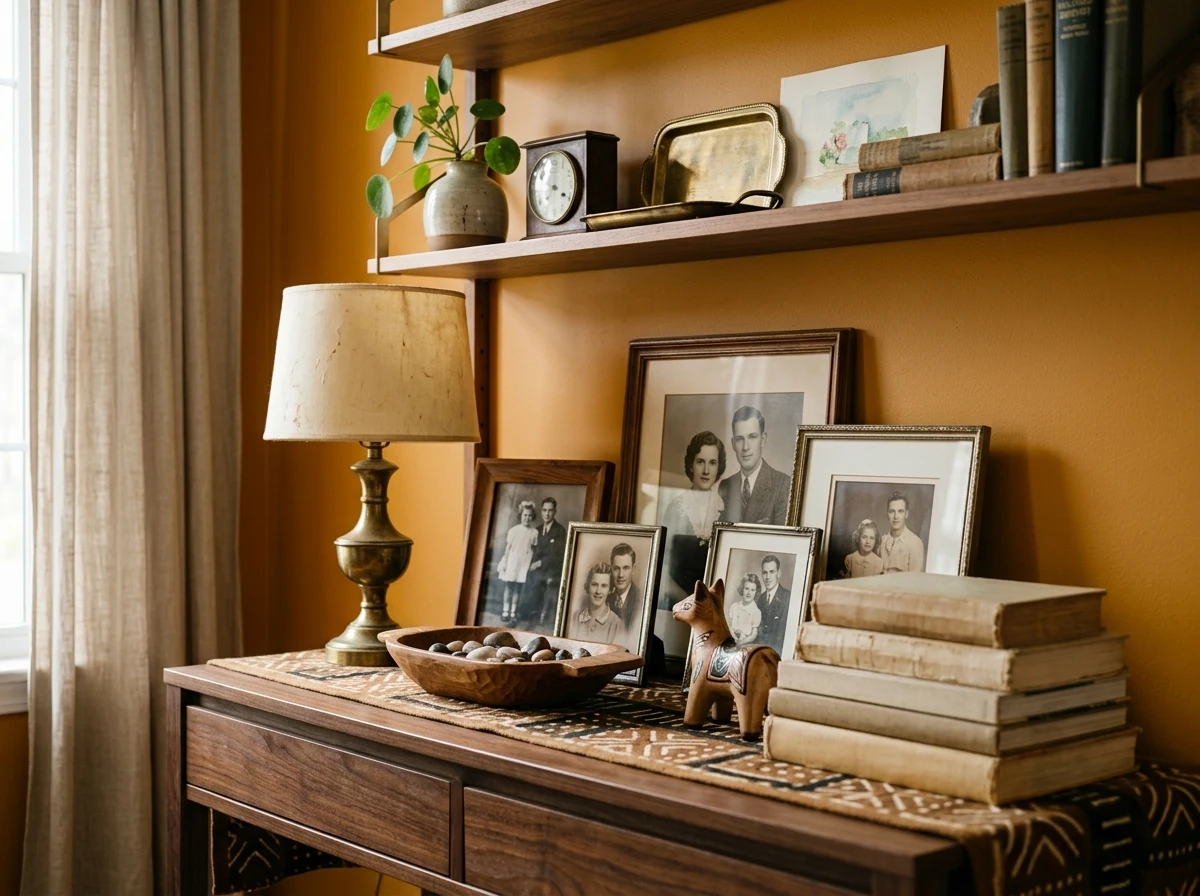
The heart of Afrohemian style is storytelling, and nothing tells a story like a vintage find or a family heirloom. A grandmother’s carved bowl, a travel souvenir, or a flea market lamp adds meaning that no new purchase can match.
Display treasures on shelves, consoles, and side tables, and group them with plants and books so they feel intentional. Mixing old and new keeps the room from looking like a themed set and makes it feel genuinely yours.
Best for people who love secondhand shopping, homes with meaningful objects, and anyone who wants a personal, layered look.
Frequently Asked Questions About Boho Living Room Ideas
What is Afrohemian decor?
Afrohemian decor is an interior style that blends bohemian layering and comfort with African-inspired textiles, art, handcrafted objects, and earthy colors. It usually features materials like wood, clay, and woven fibers, plus bold pattern, plants, and personal collected pieces.
What colors work best for Afrohemian interiors?
Warm earthy tones like terracotta, ochre, burnt orange, and mustard work best, balanced with deep green, indigo, brown, and cream. Use a neutral base on walls and large furniture, then repeat two or three accent colors in textiles, art, and pottery for a cohesive look.
How do I start an Afrohemian look on a budget?
Begin with small, affordable layers such as pillows, throws, baskets, and plants. Shop secondhand and vintage stores for wood, brass, and ceramics, and add one larger statement piece, like a mudcloth throw or a gallery wall, over time. Building slowly keeps costs down and the look personal.
How can I choose African-inspired pieces respectfully?
Learn where a pattern, cloth, or object comes from and what it means, and buy from African makers, fair-trade sellers, or reputable dealers when possible. Avoid treating sacred or ceremonial items as casual decor, and prefer pieces whose makers are credited and paid fairly.
What is the difference between Afrohemian and boho style?
Boho style is a broad, eclectic look that mixes global influences, natural textures, and relaxed layering. Afrohemian style is a specific take that centers African-inspired art, textiles, and craft, often with deeper earth tones and more graphic pattern alongside the same comfortable, collected feel.
Final Thoughts
Afrohemian style is flexible enough to suit almost any home. In a small apartment, start with a mudcloth pillow, a few baskets, and a couple of plants, then build outward slowly. In a larger space, you can layer a rich color palette, dark wood furniture, and a full gallery wall to create a home that feels deeply personal.
On a tight budget, focus on textiles, secondhand finds, and plants before investing in larger pieces. If you have more to spend, choose one handcrafted statement item from an African maker and let it anchor the room. Whether you prefer a bright, joyful look or a moody, earthy one, the best Afrohemian space is the one that tells your story and honors the traditions that inspired it.
Pick two or three ideas from this list to try this weekend, and save this article so you can return for more inspiration as your space grows and changes.


- Be Respectful
- Stay Relevant
- Stay Positive
- True Feedback
- Encourage Discussion
- Avoid Spamming
- No Fake News
- Don't Copy-Paste
- No Personal Attacks
- Be Respectful
- Stay Relevant
- Stay Positive
- True Feedback
- Encourage Discussion
- Avoid Spamming
- No Fake News
- Don't Copy-Paste
- No Personal Attacks
