18 Smart Entrance Hall Ideas That Make Coming Home Easier
Published: 16 Sep 2026
An entrance hall sets the tone for the rest of the home, but it is also one of the hardest-working spaces in the house, absorbing shoes, bags, mail, and coats every single day. Smart entrance hall ideas solve both problems at once, combining genuine organizational function with a first impression that actually looks intentional rather than like a pile of shoes by the door. Some of these ideas also incorporate real smart home technology, like video doorbells and app-controlled lighting, while others use smarter layout and storage choices to keep daily chaos contained. This guide covers 18 smart entrance hall ideas for every space and budget, from storage and lighting to genuine smart home technology. Along the way, you will find honest pros and cons, real price ranges, a furniture and storage comparison table, maintenance advice, and answers to the questions people most often search for before upgrading their entryway. By the end, you will know exactly which ideas fit your space, your budget, and your household’s daily routine.
Is an Entrance Hall Upgrade Right for You?
An entrance hall upgrade is one of the more practical home investments available, but it is worth weighing a few factors specific to how your household actually uses the space.
Pros
● High daily functional impact — because the entryway is used multiple times a day by everyone in the household, improvements here have an outsized effect on daily routine compared to less-trafficked rooms.
● Creates a strong first impression — the entrance hall is the first space guests see, making it a high-value area to invest in relative to its typically small square footage.
● Reduces daily clutter significantly — dedicated storage for shoes, coats, and mail keeps this clutter from migrating into other rooms of the house.
● Smart technology adds genuine convenience — video doorbells, smart locks, and motion-sensor lighting offer real security and convenience benefits beyond aesthetics alone.
Cons
● Small entryways limit furniture options — a narrow hall or small foyer may not have room for a full bench and storage system, requiring more creative, space-conscious solutions.
● Smart devices require ongoing setup and maintenance — video doorbells and smart locks need app updates, battery changes, and occasional troubleshooting that traditional hardware does not.
● Built-in storage carries real renovation costs — a custom mudroom-style built-in with cubbies and a bench represents a significant investment compared to freestanding furniture alternatives.
● High-traffic wear requires durable material choices — flooring, benches, and rugs near the entry need to withstand more daily wear than furniture in most other rooms.
For most households, an entrance hall upgrade is worth prioritizing, starting with dedicated storage for shoes, coats, and daily essentials, before adding smart technology and decorative finishing touches as budget allows.
1. Built-In Bench With Shoe Storage
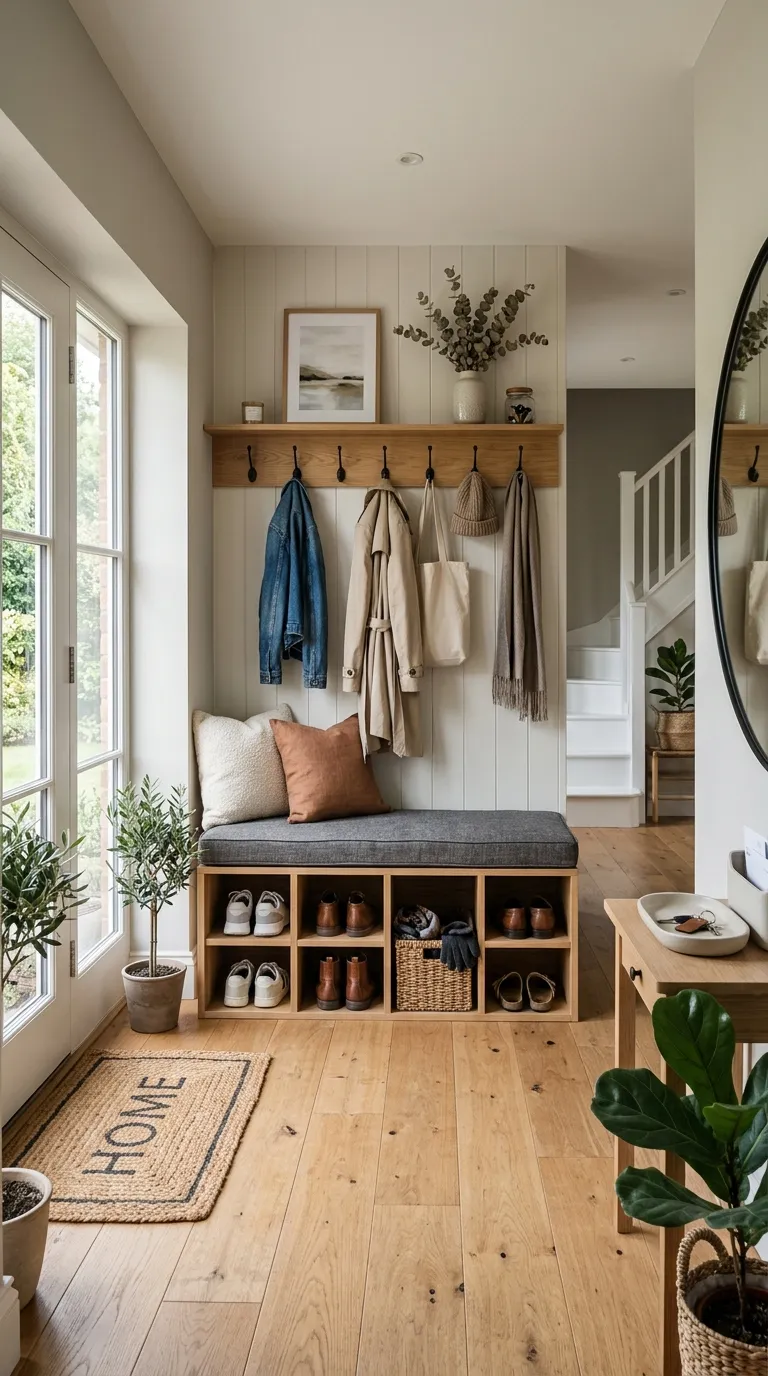
A built-in bench with shoe storage underneath solves two entryway problems simultaneously, providing a place to sit while putting on shoes and a dedicated spot to keep them off the floor and out of the main walking path.
Choose open cubbies rather than closed doors for daily shoe storage, since open access is significantly faster and more likely to actually get used consistently than a bench with doors that need opening each time.
Best suited for: entryways with at least a few feet of wall space and households with multiple family members needing shoe storage.
2. Wall-Mounted Key and Mail Organizer
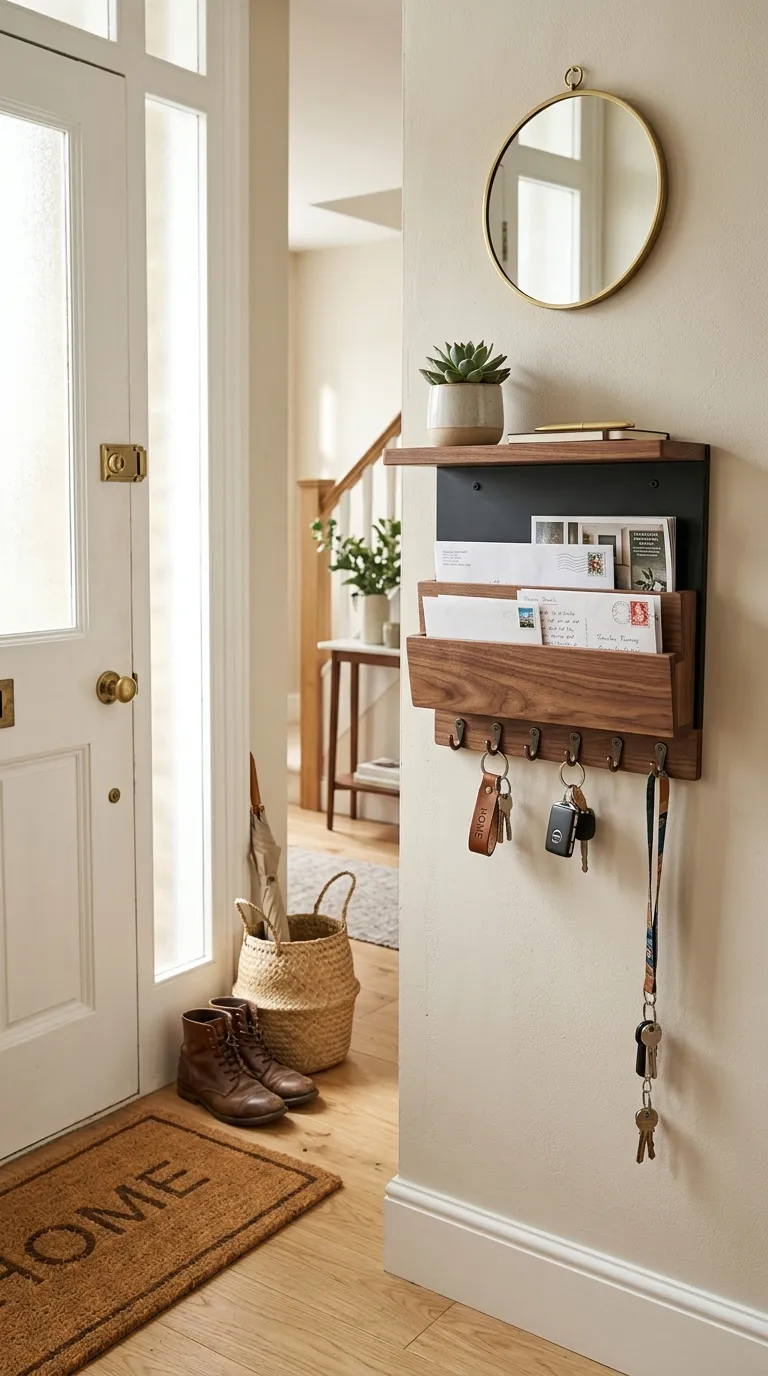
A dedicated key and mail organizer gives these small, easily misplaced items a consistent home right at the entry, which meaningfully reduces the daily search for keys or missed mail buried elsewhere in the house.
Position the organizer at a height reachable by everyone in the household who needs to use it, and include enough hooks for each household member’s keys to avoid a single overcrowded hook.
Best suited for: any entryway, and one of the highest-impact, lowest-cost organizational upgrades available.
3. Smart Video Doorbell
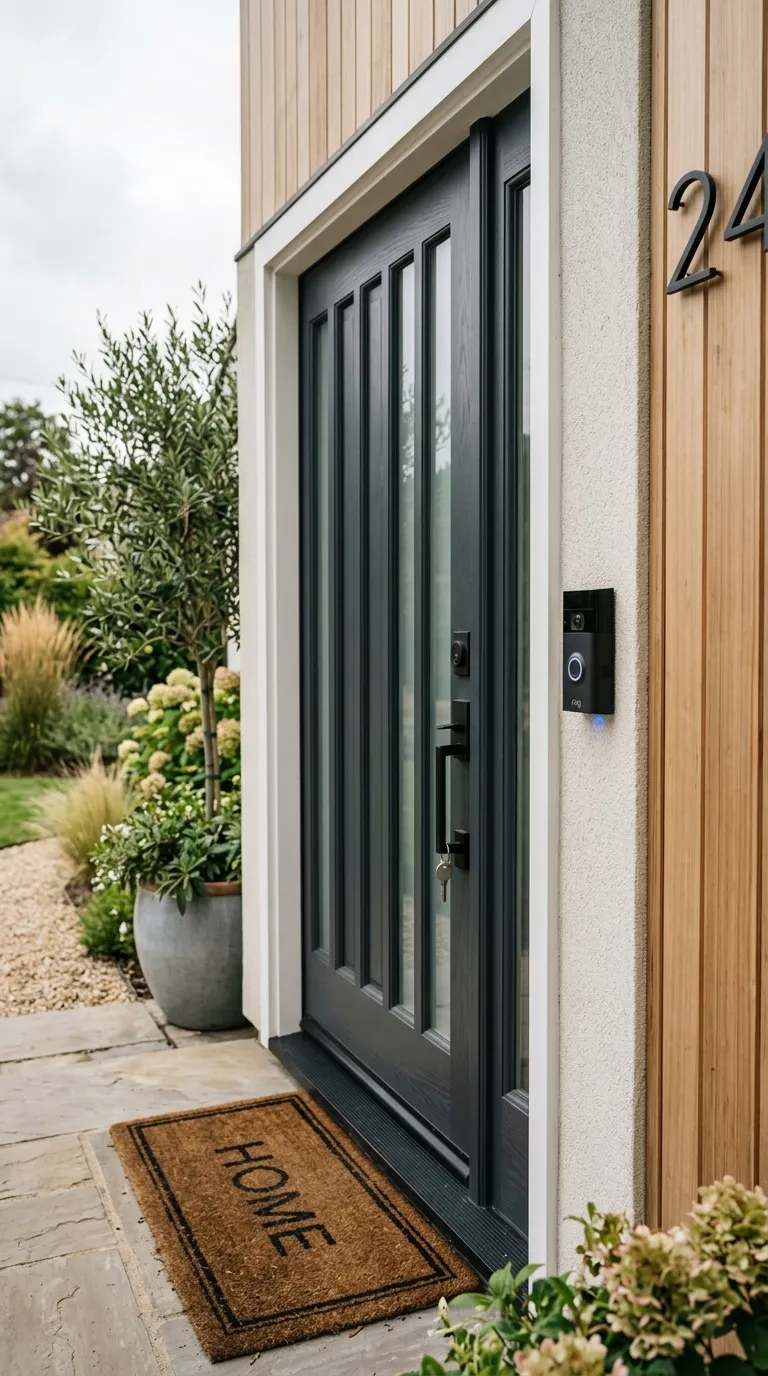
A smart video doorbell lets you see and speak with visitors from anywhere via a smartphone app, adding genuine security and convenience beyond what a traditional doorbell or peephole alone can provide.
Choose a model with reliable Wi-Fi connectivity at your specific door location, and confirm battery life or wiring compatibility before installation, since connectivity issues are the most common source of user frustration with these devices.
Best suited for: any front entrance and a genuinely functional smart home upgrade rather than a purely decorative one.
4. Console Table With Drawers
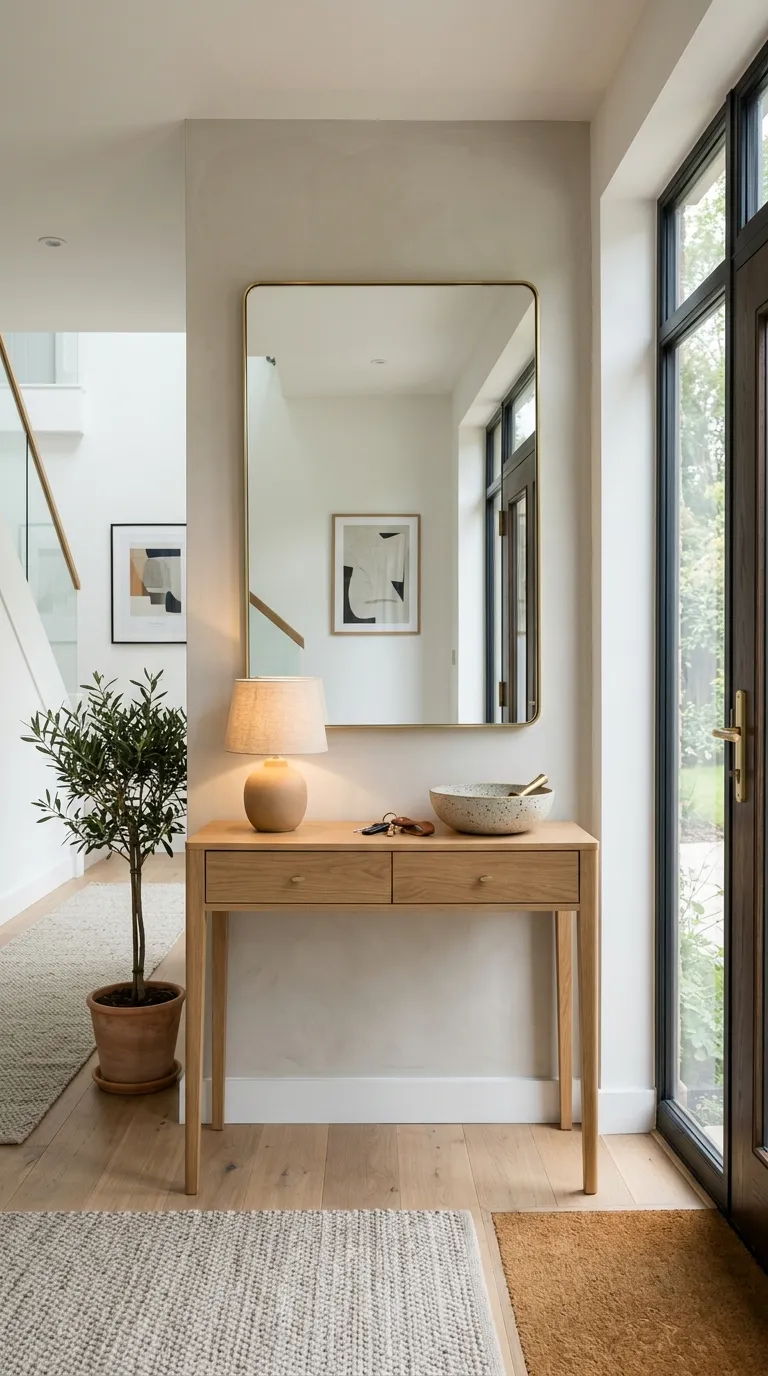
A console table with drawers gives an entryway both a styled surface for keys or mail and hidden storage for smaller items you want accessible but out of sight, like sunglasses, pet leashes, or spare chargers.
Choose a table depth of around 12 to 16 inches for a narrow hallway, which provides functional surface space without significantly narrowing the walking path.
Best suited for: entryways with at least a narrow stretch of open wall and anyone wanting a styled, functional focal piece.
5. Vertical Coat Hook Rail
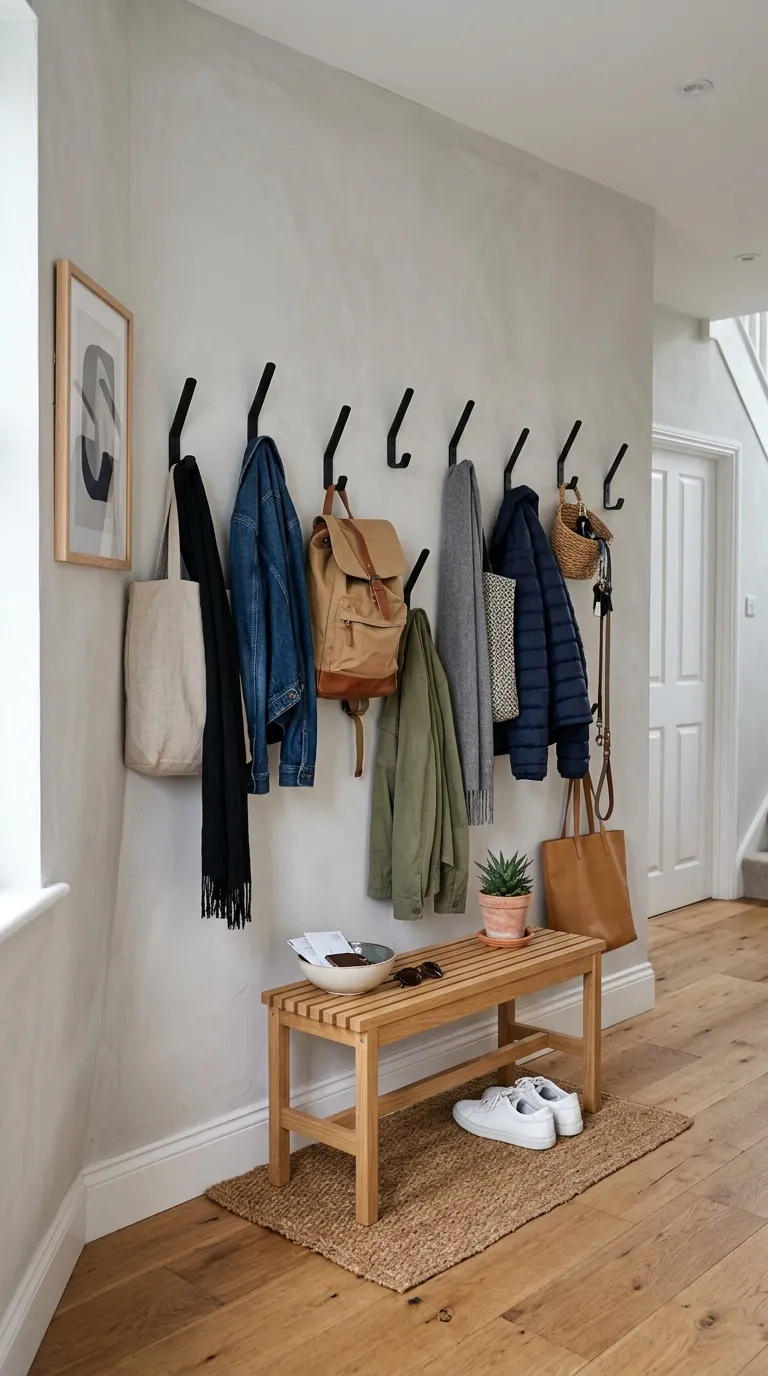
A row of coat hooks gives every household member a designated, easily accessible spot to hang jackets and bags immediately upon entering, which is often faster and more likely to be used consistently than a closet requiring a door to open.
Install hooks at varying heights if the household includes both adults and children, giving everyone a hook they can comfortably reach without assistance.
Best suited for: any entryway, and one of the simplest, most functional upgrades available.
6. Full-Length Entryway Mirror
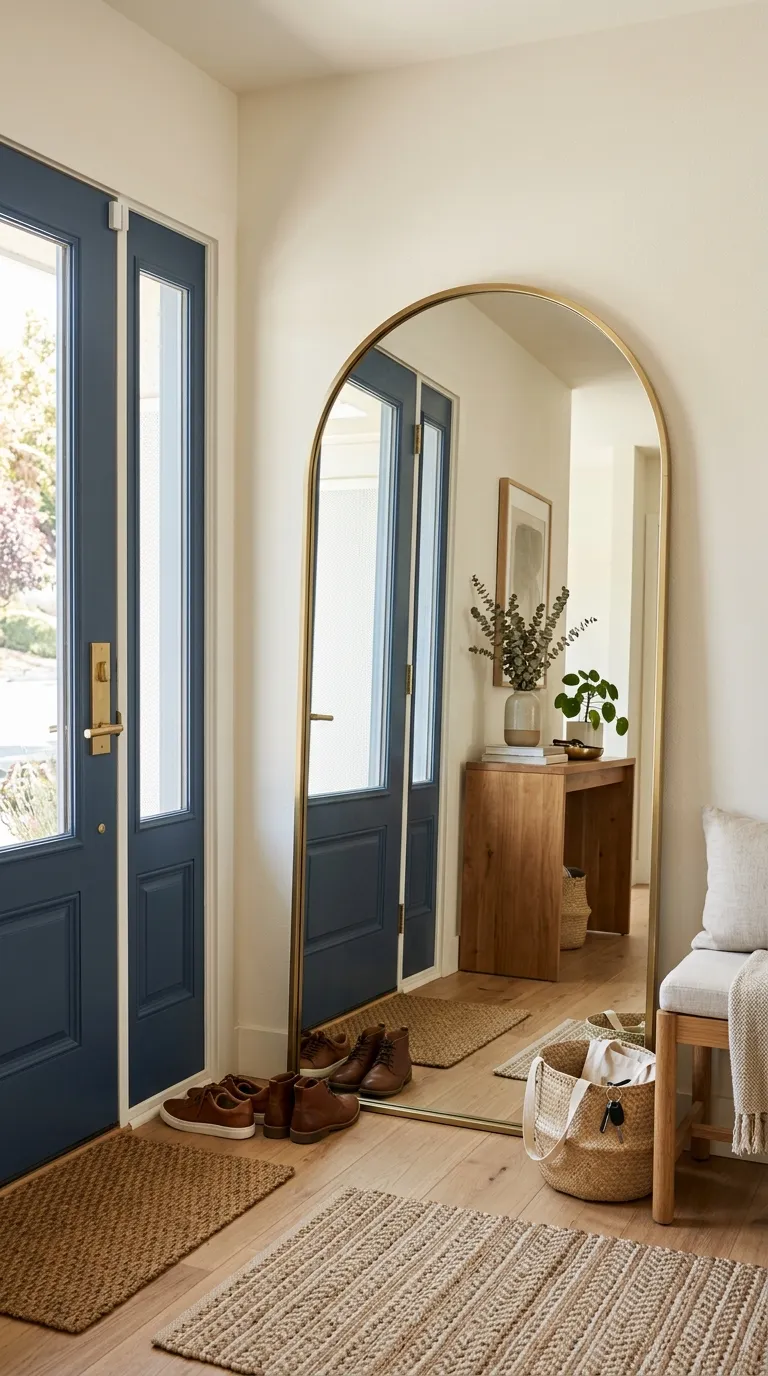
A full-length mirror near the entrance gives household members a final check before heading out the door, while also reflecting light back into what is often a naturally darker, more enclosed area of the home.
Position the mirror to reflect a window or light fixture rather than a blank wall, maximizing the light-bouncing benefit alongside its practical use.
Best suited for: any entryway and a genuinely functional addition beyond its decorative appeal.
7. Umbrella Stand and Boot Tray
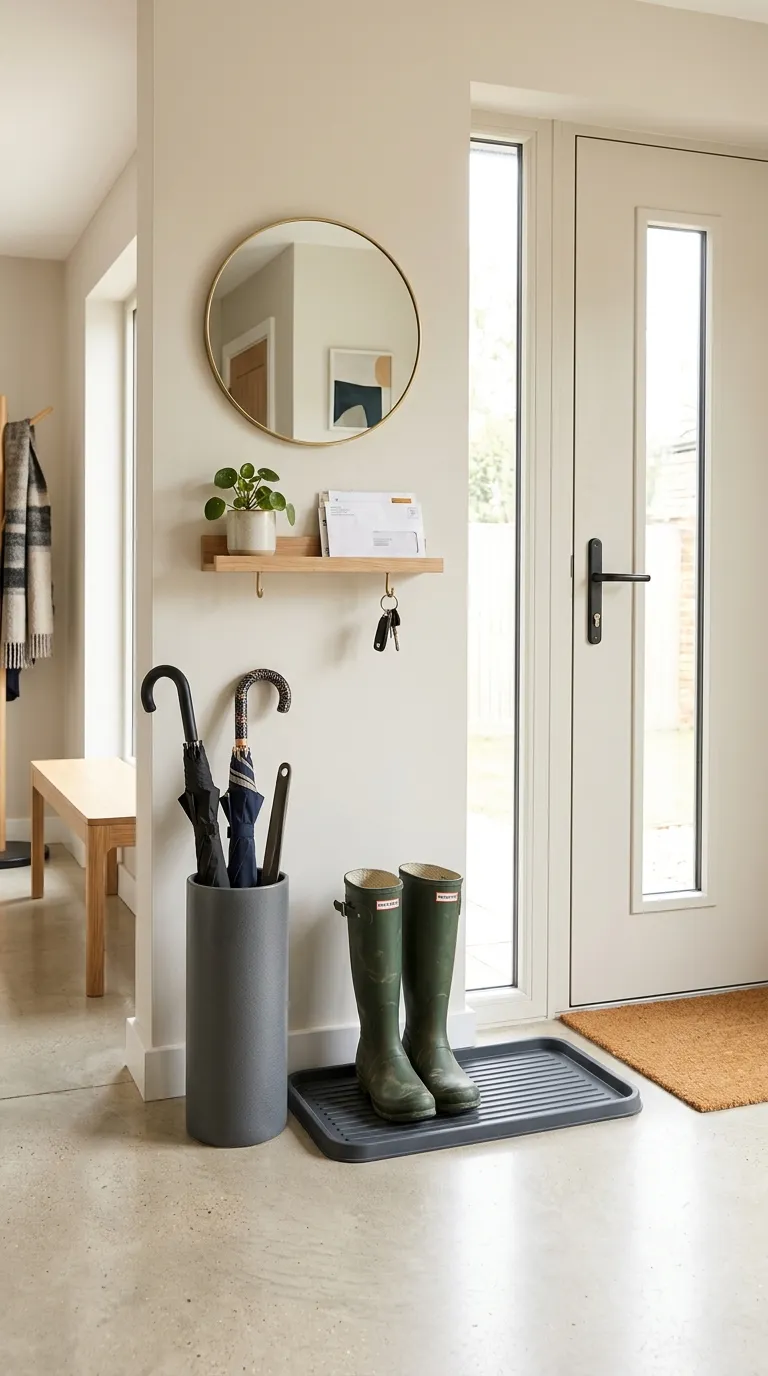
A dedicated umbrella stand and boot tray contain the mess that wet weather items inevitably bring inside, protecting flooring from water damage while keeping these items organized rather than dripping in a random corner.
Choose a boot tray with raised edges specifically designed to contain water and mud, and position it in the most direct path between the door and the rest of the home for maximum actual use.
Best suited for: households in wet or snowy climates, a nd any entryway prone to tracked-in moisture.
8. Statement Entryway Lighting
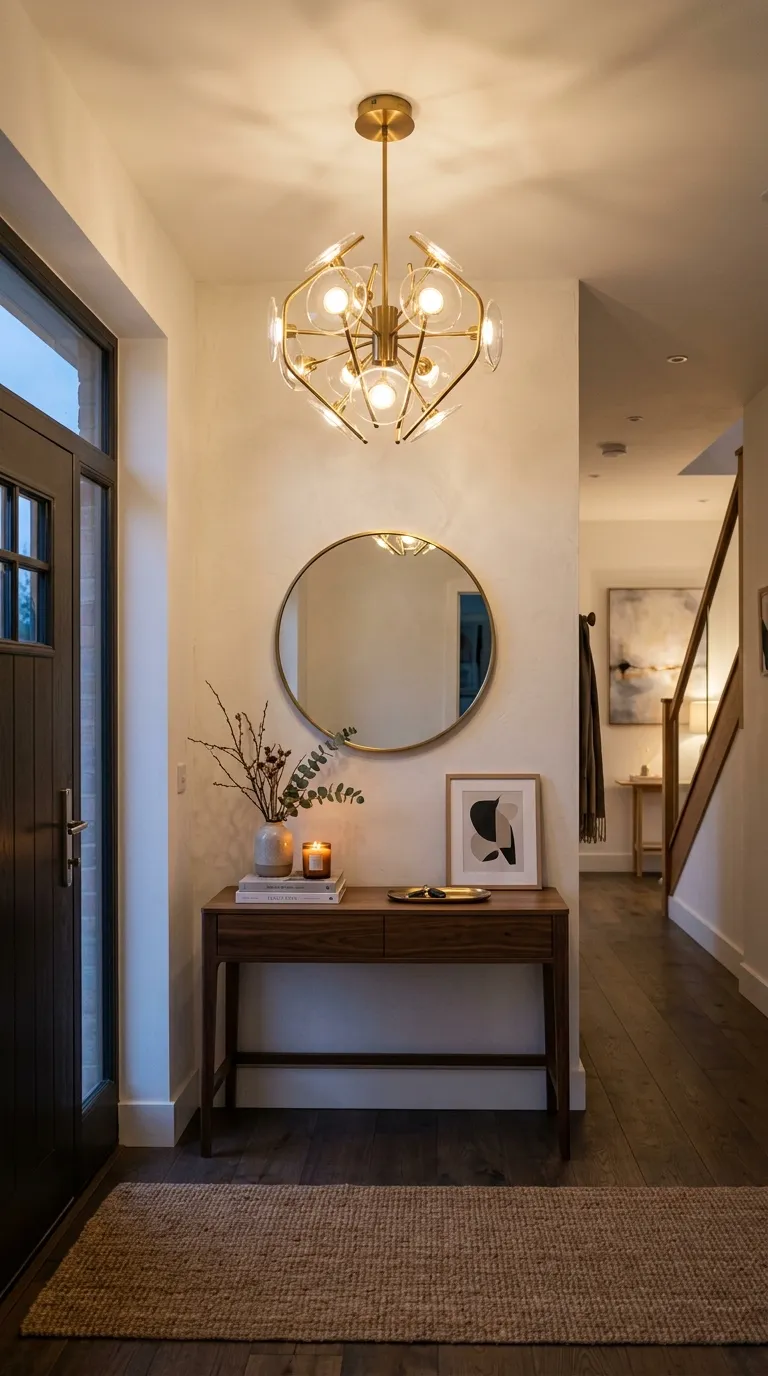
A statement light fixture, whether a pendant or a distinctive flush-mount, gives the entryway a genuine design moment and ensures the space is properly lit, which matters since entryways are often naturally dim compared to rooms with more windows.
Choose a fixture proportional to the entryway’s ceiling height and overall scale, since an oversized fixture in a small foyer can feel overwhelming rather than impressive.
Best suited for: any entryway, and one of the more impactful visual upgrades relative to its cost.
9. Smart Lock or Keyless Entry
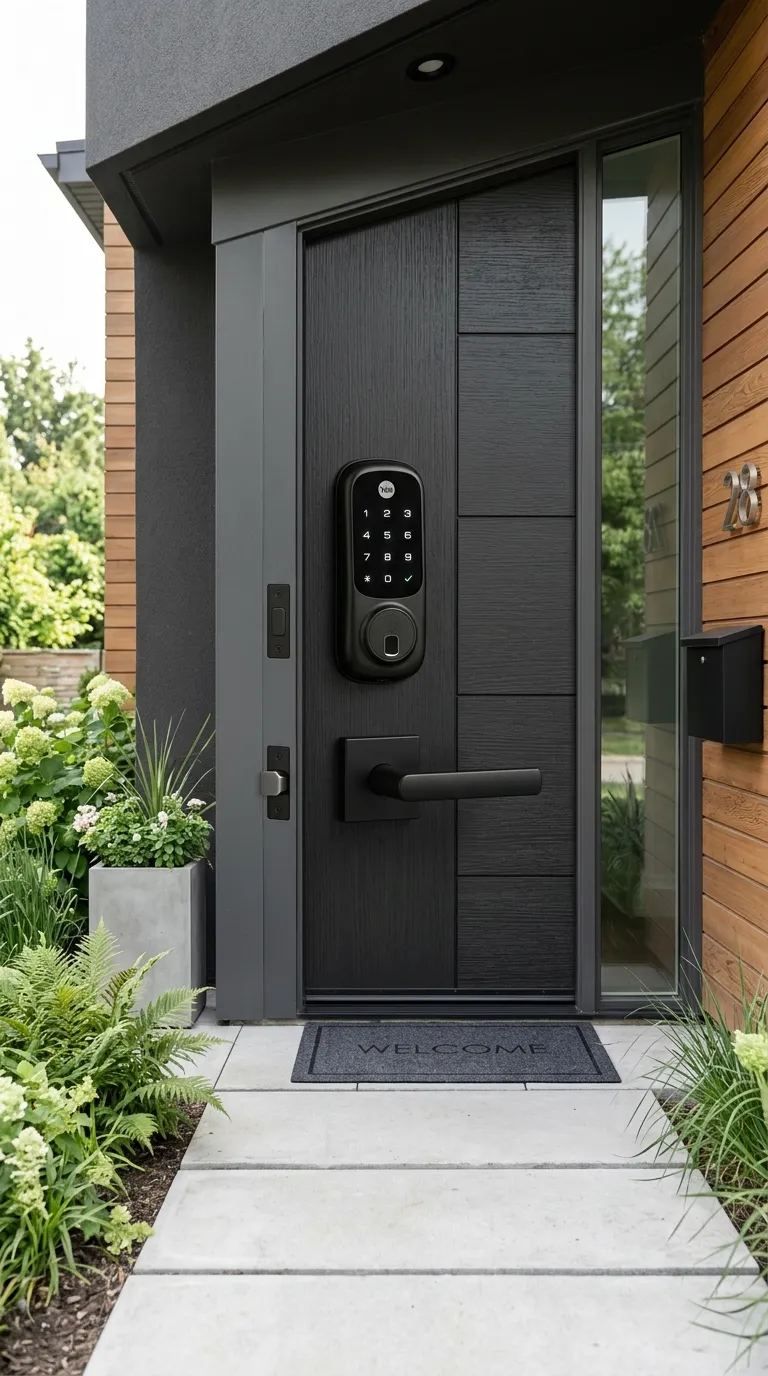
A smart lock eliminates the need for physical keys entirely, offering keypad- or smartphone-based entry along with the ability to grant temporary access codes to guests, cleaners, or family members without duplicating keys.
Choose a lock with a physical key backup option and reliable battery life, since relying entirely on a connected device without any backup access method can create real inconvenience if the battery dies unexpectedly.
Best suited for: households wanting genuine daily convenience and better control over who has access to the home.
10. Labeled Drop Zone Cubbies
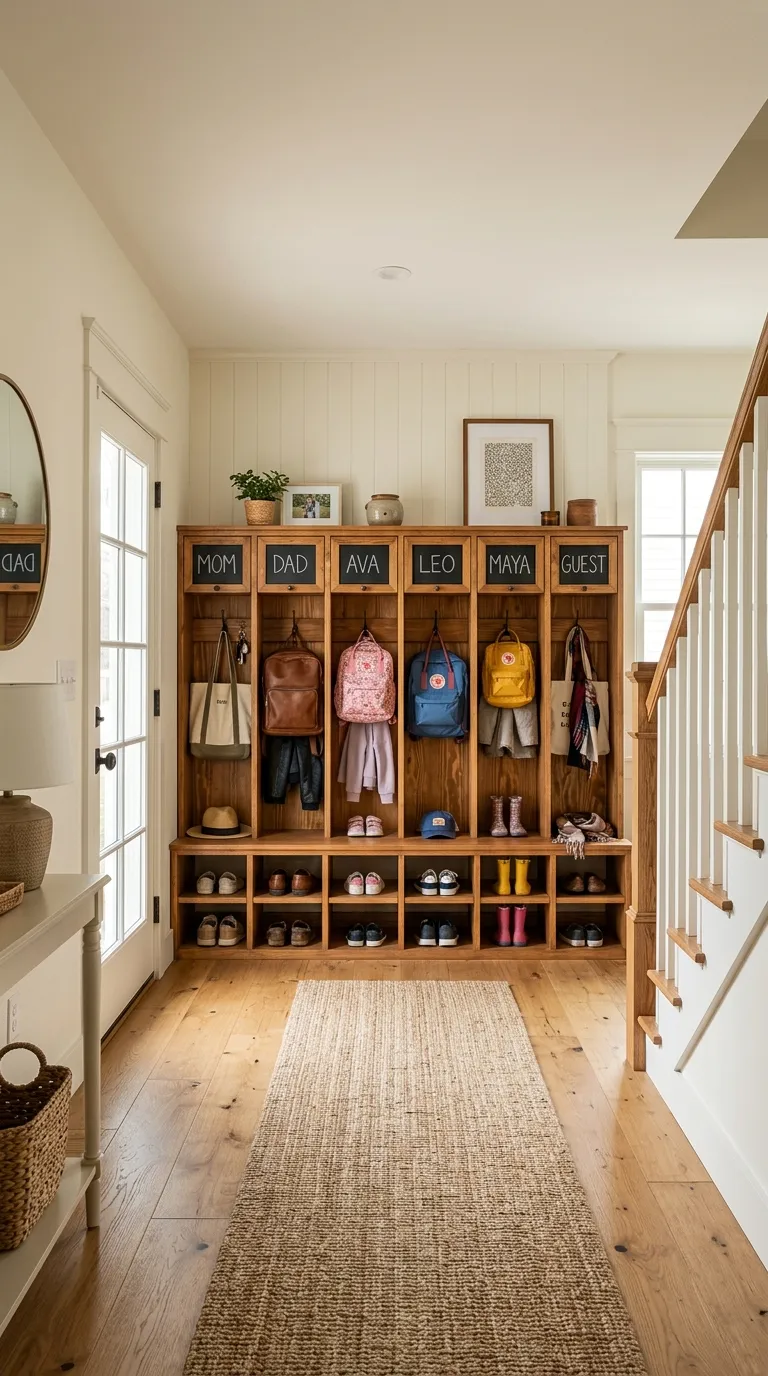
Assigning each household member their own labeled cubby gives every person a designated spot for daily items like backpacks, shoes, and sports gear, which significantly reduces the daily pile-up that happens when storage is shared and unassigned.
Size cubbies based on what they actually need to hold, whether that is a child’s backpack and shoes or an adult’s bag and gym clothes, rather than making every cubby a uniform, generic size.
Best suited for: families with multiple children and households wanting a genuinely functional daily drop zone system.
11. Storage Bench With Hidden Baskets
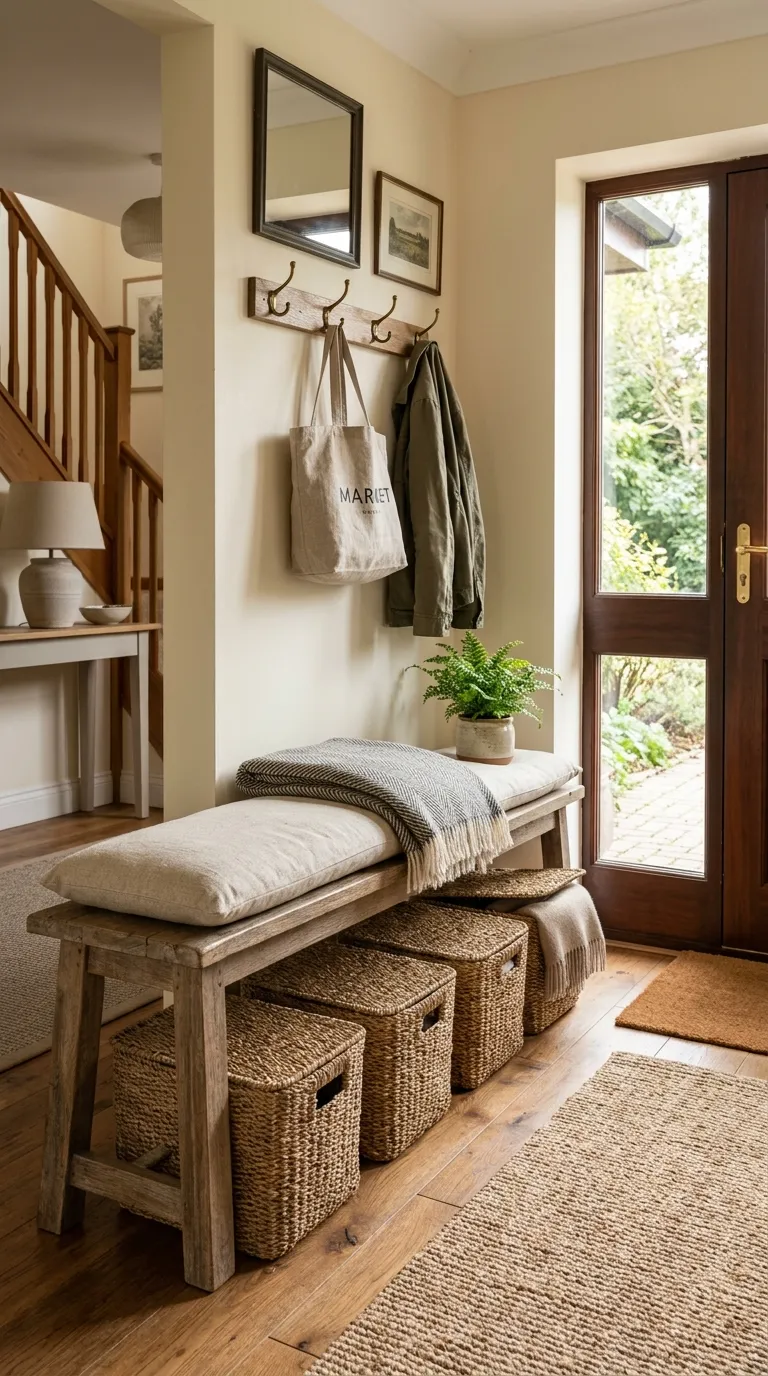
A bench paired with woven storage baskets underneath offers the organizational benefit of a shoe cubby while keeping the actual contents hidden from view, which many households prefer over fully open shoe storage.
Choose baskets sized to slide easily in and out from under the bench, since baskets that require lifting or significant maneuvering are less likely to be used consistently by every household member.
Best suited for: households wanting organized storage with a more polished, concealed appearance than open shelving.
12. Durable Entryway Runner Rug
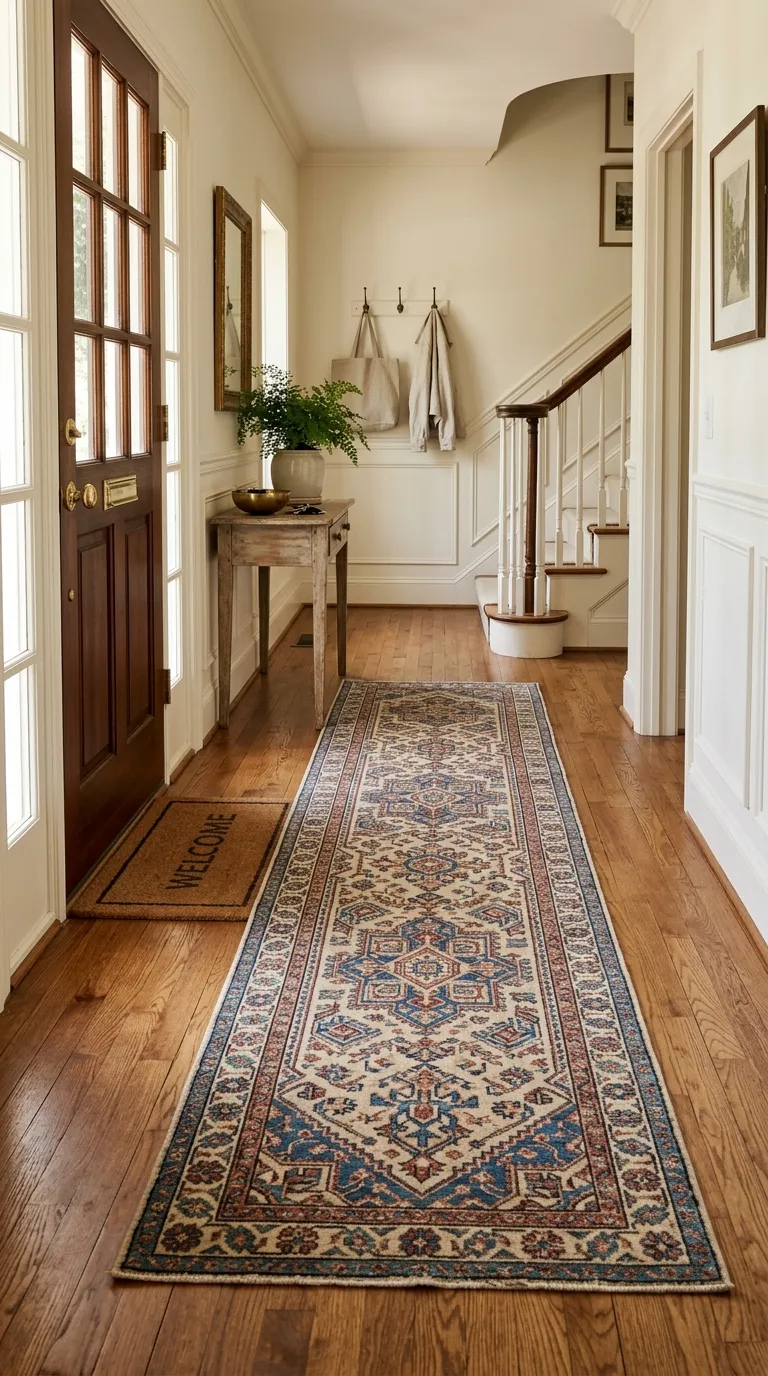
A durable runner rug protects entryway flooring from the heaviest daily foot traffic in the house, while also adding warmth and color to what is often a smaller, transitional space.
Choose a low-pile, stain-resistant rug material specifically rated for high traffic, since entryway rugs face significantly more wear than rugs in most other rooms of the home.
Best suited for: any entryway with hard flooring and a relatively low-cost way to add both protection and style.
13. Wall-Mounted Charging Station
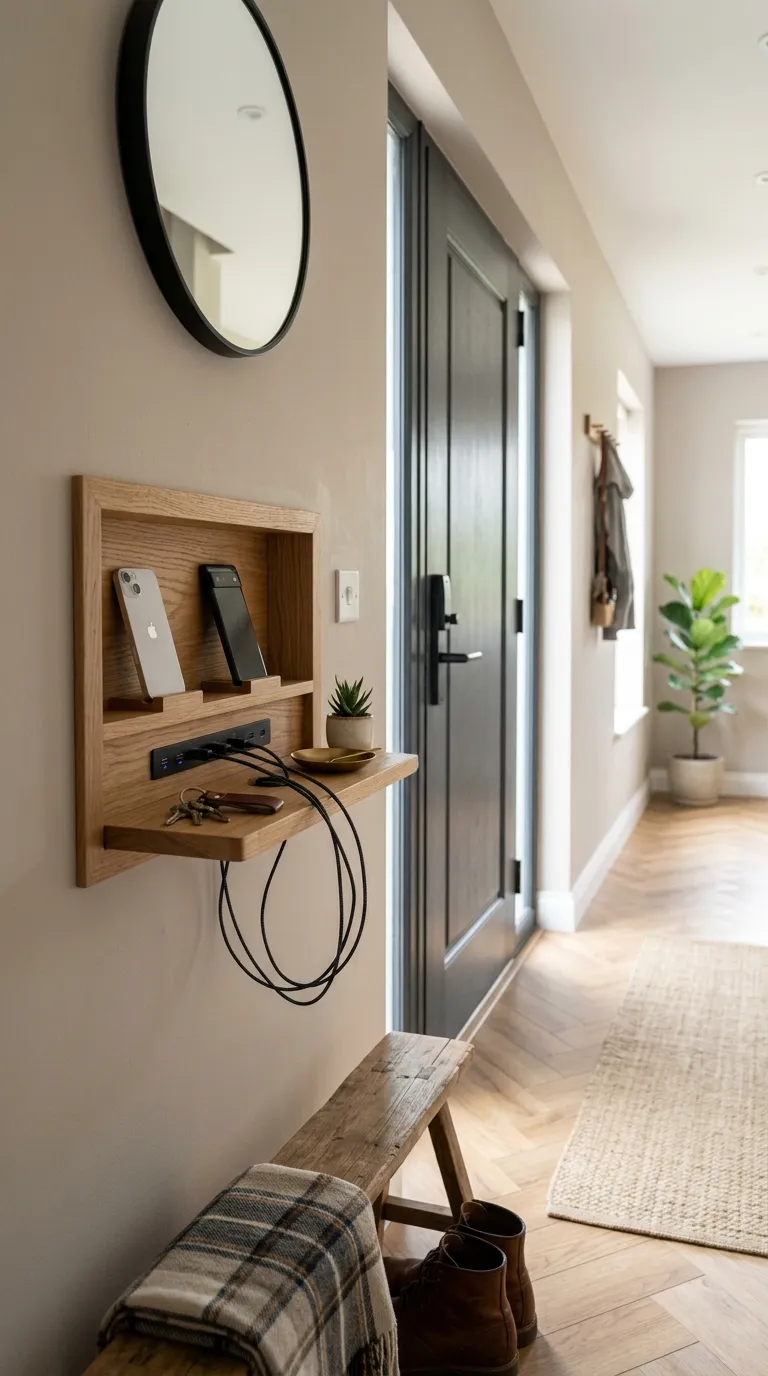
A dedicated charging station at the entry gives household members a consistent spot to charge phones overnight while also serving as a natural catch-all for the devices themselves, preventing phones from being left scattered around the house.
Include a small shelf or tray alongside the charging ports specifically for the device to rest on, rather than just wall outlets alone, since a flat surface significantly increases how consistently the station actually gets used.
Best suited for: households wanting a designated device charging spot separate from bedrooms or the kitchen.
14. Accent Wallpaper or Molding
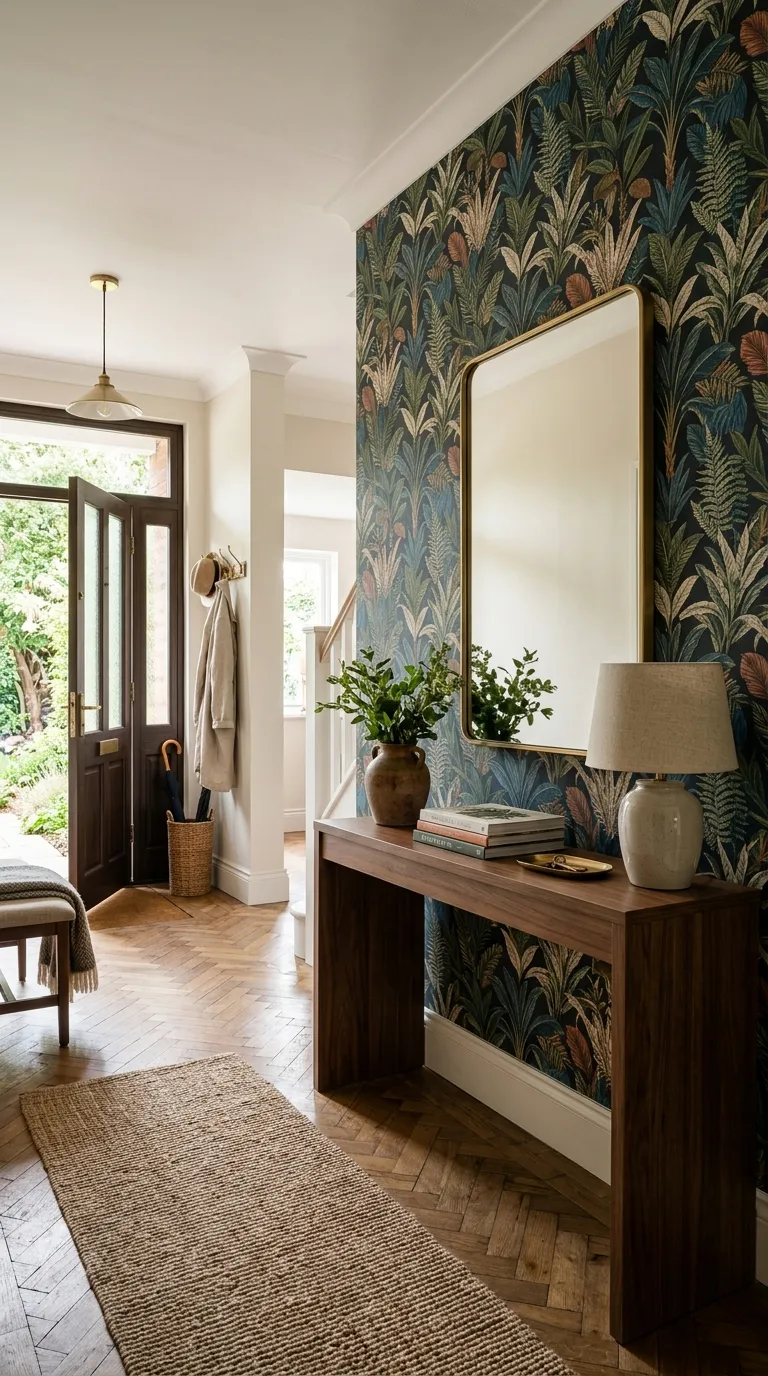
An entrance hall is one of the best places in a home to use bold wallpaper or detailed molding, since the small, enclosed footprint means the pattern or detail reads as an immersive design statement rather than an overwhelming choice.
Choose a durable, washable wallpaper specifically rated for high-traffic areas, since entryway walls see more incidental contact, scuffs, and marks than walls in most other rooms.
Best suited for: entryways wanting a strong first-impression design statement without committing to a full room makeover.
15. Built-In Closet With Sliding Doors
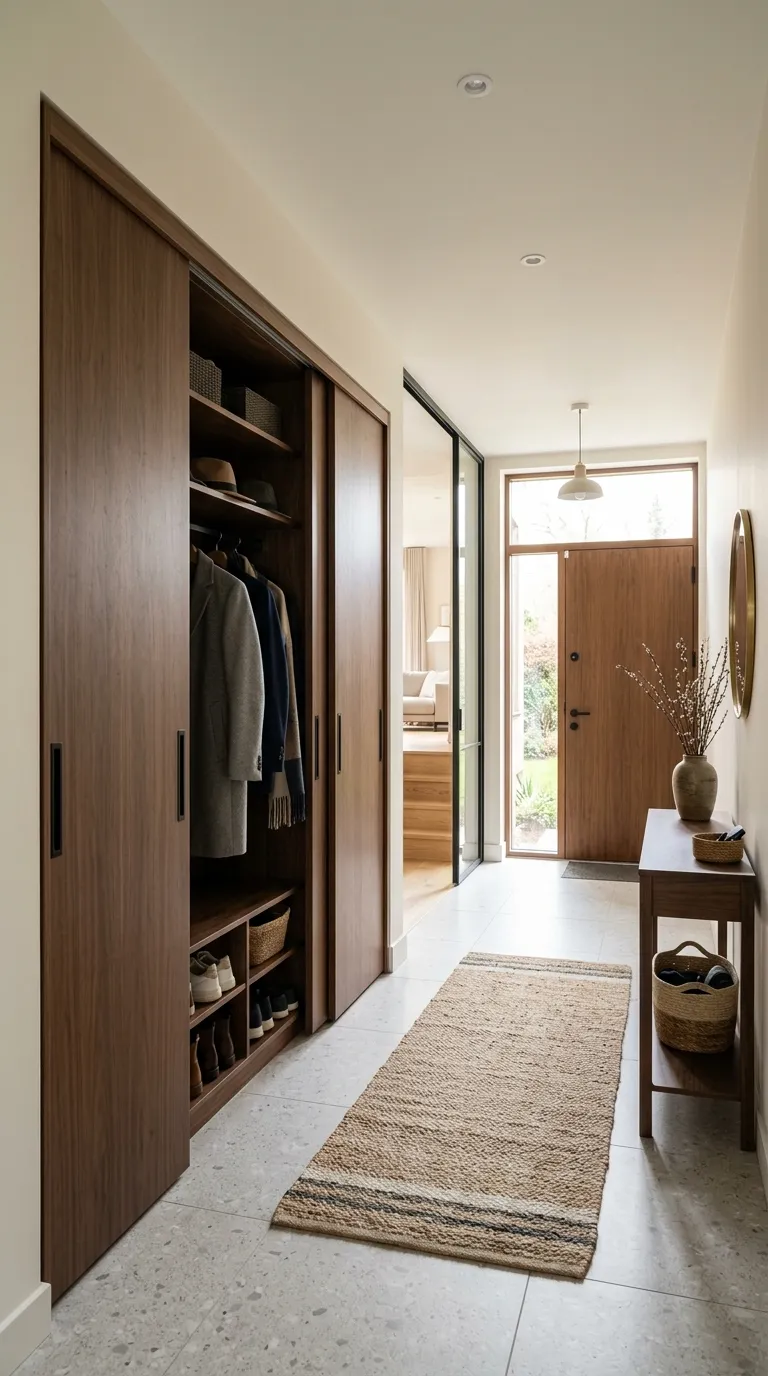
A built-in closet with sliding doors offers significant concealed storage capacity without the swing clearance a standard hinged door requires, which matters in a typically tight entryway footprint.
Plan the interior layout with a mix of hanging rod space and shelving specifically for entryway items like coats, shoes, and bags, rather than a generic closet configuration borrowed from a bedroom layout.
Best suited for: full entryway renovations and households wanting maximum concealed storage capacity.
16. Smart Motion-Sensor Lighting
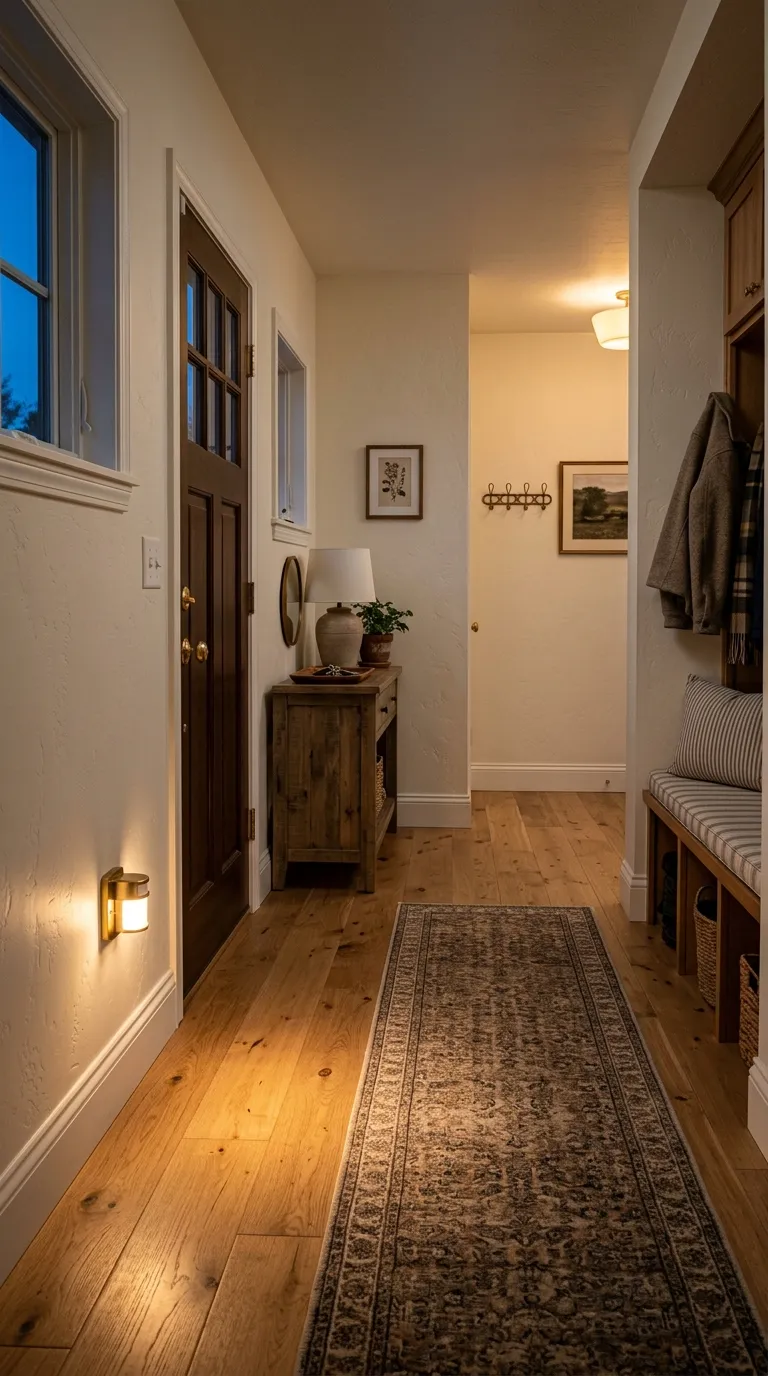
Motion-sensor lighting automatically illuminates the entryway when someone arrives, which is especially useful for hands-full moments like carrying groceries or luggage where reaching for a light switch is genuinely inconvenient.
Choose a model with adjustable sensitivity and timing settings, since a poorly calibrated sensor can either trigger too frequently from passing hallway traffic or fail to activate reliably when actually needed.
Best suited for: entryways used frequently with hands-full moments and households prioritizing convenience and safety.
17. Curated Gallery Wall
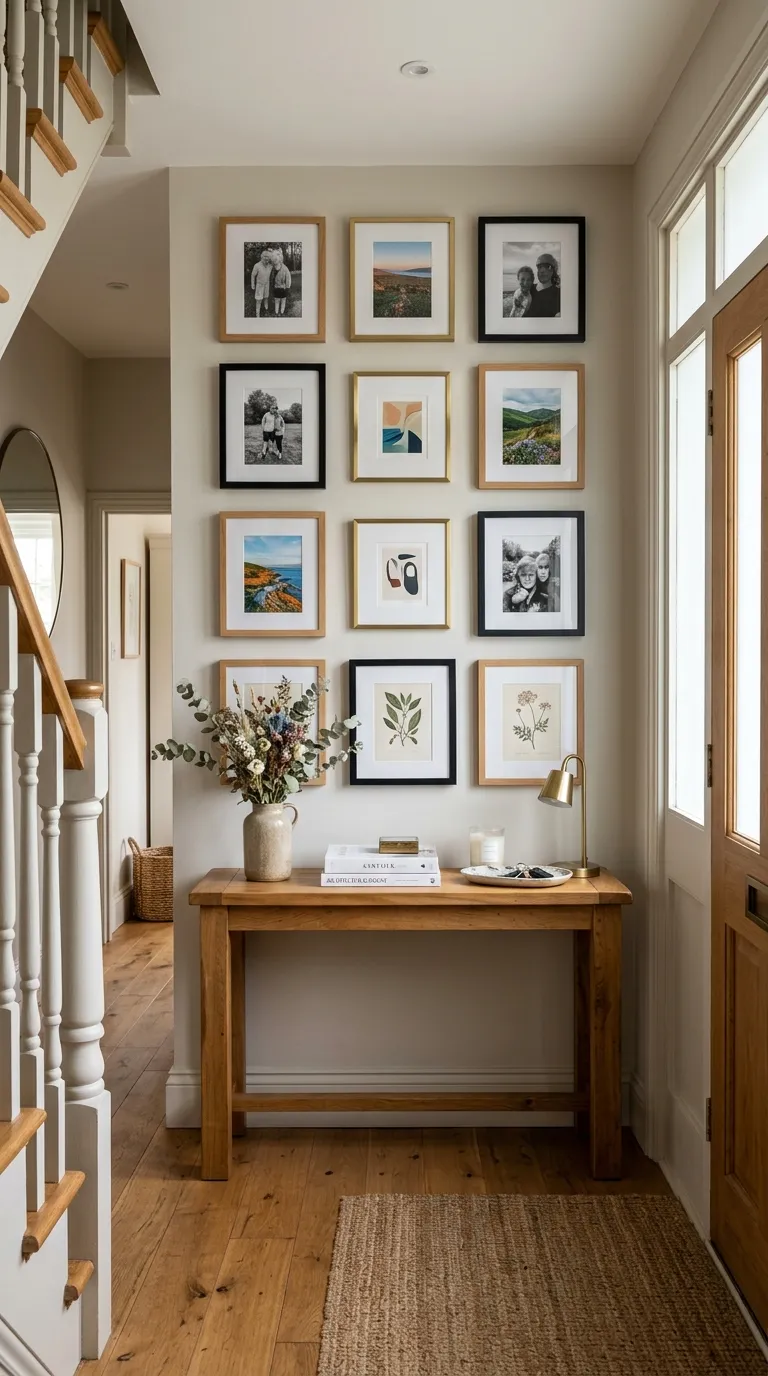
A gallery wall gives the entrance hall a personal, welcoming quality right at the point where guests and family first enter, setting a warm tone that a bare wall or a single small piece of art cannot achieve.
Keep frame styles and colors consistent across the gallery wall, and measure the full layout on the floor before hanging anything, since gallery walls are one of the more common projects to look uneven without proper planning.
Best suited for: entryways with a clear wall not occupied by storage furniture, and anyone wanting a personal design touch.
18. Styled Console Table With Catch-All Tray
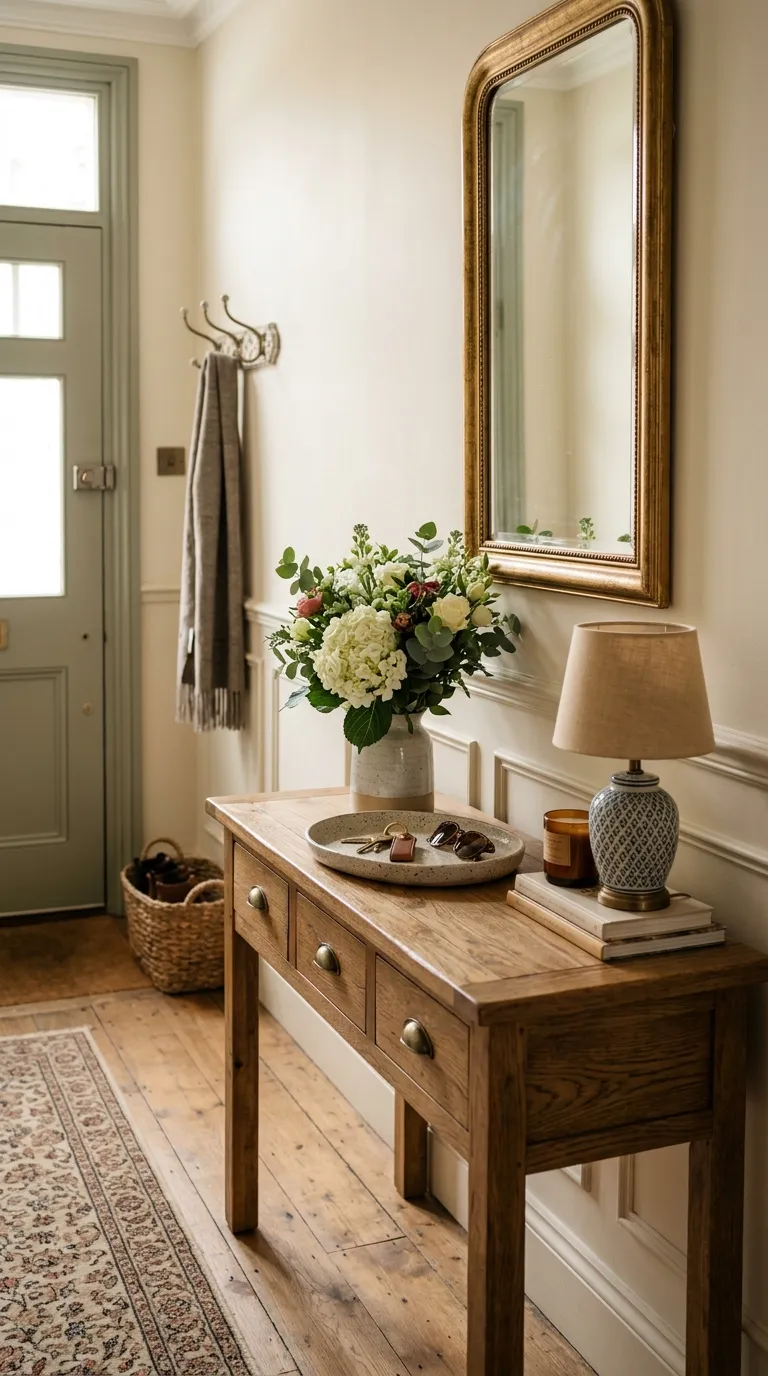
A small decorative tray on the console table gives keys, sunglasses, and other small daily items a designated spot that still looks intentional and styled, rather than a loose pile of items accumulating on a bare surface.
Choose a tray with a slight rim or edge to actually contain loose items, and keep the rest of the console surface relatively clear so the tray remains the clear, obvious catch-all spot.
Best suited for: any entryway with a console table and a simple styling detail with real daily function.
Planning and Buying Tips
A few practical decisions up front will help your entrance hall upgrade function well for your household’s actual daily routine, not just look good when empty.
● Map your household’s daily entry routine before choosing furniture — consider what each family member actually carries in and needs to store, since this varies significantly between households with kids, pets, or frequent outdoor activity.
● Standard sizing to shop for — an entryway bench typically runs 36 to 48 inches long, and a console table depth of 12 to 16 inches works well in most narrow hallways without obstructing the walking path.
● Check Wi-Fi signal strength at the front door before purchasing smart devices — video doorbells and smart locks depend on reliable connectivity, and a weak signal at the entry point is a common source of performance issues.
● Choose durable, easy-to-clean materials for high-contact surfaces — entryway benches, consoles, and flooring see more daily wear than furniture in most other rooms, so prioritize function alongside style.
● Plan storage capacity for your household’s actual size — a single small bench with minimal storage will not adequately serve a family of five the way it might serve a single person or couple, so scale storage to your household size.
● Confirm smart device compatibility with your existing home system — if you already use a specific smart home platform, choosing new devices compatible with that ecosystem avoids app fragmentation and connectivity headaches.
Cost Breakdown: Budget, Mid-Range, and Luxury Upgrades
An entrance hall upgrade can range from a few affordable organizational accessories to a full built-in renovation with integrated smart technology.
Budget ($50–$400)
Coat hooks, a boot tray, a runner rug, and a basic smart video doorbell fall in this range. Installation is largely DIY, with the doorbell being the main item that may require basic wiring knowledge.
Mid-Range ($400–$2,000)
A quality bench with storage, a console table, statement lighting, and a smart lock sit in this tier. Professional installation for lighting or a smart lock typically adds $100–$300 depending on the scope of the work.
Luxury / Premium ($2,000–$8,000+)
A full built-in mudroom-style system with custom cubbies, a sliding closet, integrated charging stations, and a full smart home entry package falls here. Custom built-in installation typically adds $1,500–$5,000 depending on the complexity and materials used.
Furniture and Feature Comparison
| Item | Price Range | Space Efficiency | Daily Use Impact | Best For |
| Coat hook rail | $20–$100 | Very high | High | Any entryway needing basic organization |
| Storage bench | $150–$800 | Moderate | Very high | Households needing seating and shoe storage |
| Console table | $100–$600 | Moderate | Moderate | Styled surface space and small item storage |
| Smart video doorbell | $60–$250 | N/A — exterior mount | High for security and convenience | Any front entrance wanting remote visibility |
| Smart lock | $100–$300 | N/A — door mount | High for daily convenience | Households wanting keyless, flexible access |
| Built-in mudroom system | $1,500–$6,000+ | Very high | Very high | Families needing significant daily storage capacity |
Maintenance Tips
● Benches and consoles — wipe down surfaces regularly, since entryway furniture accumulates dust, dirt, and moisture from shoes and bags more quickly than furniture elsewhere in the home.
● Runner rugs — vacuum at least weekly given the high foot traffic, and consider professional cleaning every six to twelve months to remove ground-in dirt that regular vacuuming cannot fully address.
● Smart devices — keep firmware and app software updated, and check battery levels on battery-powered smart locks and doorbells regularly to avoid unexpected access issues.
● Coat hooks and storage baskets — reassess contents seasonally, since coats, shoes, and gear naturally accumulate and can overwhelm the original storage capacity if not periodically thinned out.
● Boot trays and mats — empty and clean regularly, particularly in wet or snowy climates, since standing water or mud left too long can damage flooring underneath.
● Common mistake to avoid — choosing decorative but impractical materials for high-contact entryway surfaces, like a delicate fabric bench cushion in a household with muddy shoes and pets, which leads to premature wear regardless of how well-designed the piece is.
Frequently Asked Questions
What is the most important thing to include in an entrance hall?
Dedicated storage for shoes and coats is generally considered the highest-priority element, since these items cause the most daily clutter when left without a designated spot, more so than decorative elements like lighting or art.
How do I organize a small entryway with no closet?
Wall-mounted coat hooks, a slim console table with drawers, and a compact boot tray are effective solutions for entryways without a closet, since all three add functional storage without requiring a significant floor footprint.
Is a smart lock worth installing at the front door?
For most households, yes, since a smart lock offers genuine convenience through keyless entry and the ability to grant temporary access to guests or service providers, though it is worth choosing a model with a physical key backup for reliability.
What size bench works best for an entryway?
A bench between 36 and 48 inches long generally works well for most entryways, providing enough seating for one or two people while still fitting comfortably in a standard-sized foyer or hallway.
How can I make a family entryway work for multiple kids?
Labeled individual cubbies or storage bins assigned to each child, positioned at a height they can reach independently, are one of the most effective ways to keep a busy family entryway organized without requiring constant adult intervention.
How to Choose the Right Smart Entrance Hall Ideas for You
The right combination of ideas depends on three factors: your household size and daily routine, your available entryway space, and how much you want to invest in smart technology versus purely organizational furniture. Larger families benefit most from labeled storage and a substantial bench system, while smaller households or couples may need only a compact console and a few coat hooks.
Budget should guide sequencing rather than final scope — coat hooks, a rug, and basic organization offer significant daily function for a low cost, while a full built-in system or comprehensive smart home entry package represents a bigger investment worth making once you understand exactly how the space gets used.
Finally, decide how much smart technology genuinely fits your household’s habits. Some households get significant daily value from a smart lock and video doorbell, while others find the added technology unnecessary and prefer to focus entirely on physical organization and storage.
Start with the storage elements that address your household’s biggest daily entryway frustration, whether that is shoes, coats, or mail, and layer in smart technology and decorative touches from there — a truly smart entrance hall comes from matching the space to how your household actually moves through the door every day, not from any single feature alone.


- Be Respectful
- Stay Relevant
- Stay Positive
- True Feedback
- Encourage Discussion
- Avoid Spamming
- No Fake News
- Don't Copy-Paste
- No Personal Attacks
- Be Respectful
- Stay Relevant
- Stay Positive
- True Feedback
- Encourage Discussion
- Avoid Spamming
- No Fake News
- Don't Copy-Paste
- No Personal Attacks
