18 Small Closet Organization Ideas That Actually Create More Space
Published: 16 Sep 2026
A small closet feels impossibly tight mostly because standard closet setups waste an enormous amount of vertical and hidden space, relying on a single rod and shelf that leave everything else unused. Small closet organization ideas solve that problem by rethinking the entire footprint, from floor to ceiling and door to back wall, so the closet can hold significantly more than its size initially suggests. Most of these ideas require no permanent renovation, which makes them practical for renters and homeowners alike. This guide covers 18 small closet organization ideas for every budget and closet type, from hanging systems to bins, lighting, and small accessory storage. Along the way, you will find honest pros and cons, real price ranges, a storage system comparison table, maintenance advice, and answers to the questions people search for most before organizing a small closet. By the end, you will know exactly which ideas fit your space, your budget, and your wardrobe.
Is a Closet Organization Upgrade Right for You?
A closet organization project is one of the lowest-risk home upgrades available, but it is worth weighing a few practical factors before deciding how far to take it.
Pros
● High functional return for the space — closet organization systems make an enormous difference in usable capacity relative to their cost and footprint, often doubling effective storage.
● Mostly renter-friendly — many organizational solutions, like bins, rods, and door-mounted organizers, require no permanent installation or wall modification.
● Saves time daily — a well-organized closet significantly reduces the time spent searching for items or dealing with clutter every morning.
● Scalable to almost any budget — a closet can be meaningfully improved with a few affordable bins and a rod extender, or fully outfitted with a custom modular system.
Cons
● Custom systems carry real cost — a fully custom, professionally installed closet system represents a significant investment compared to basic organizational accessories.
● Some solutions require tools or drilling — shelving, rod extensions, and certain organizers need proper installation to hold weight safely, which is not always a simple DIY task for everyone.
● Organization alone does not solve overcrowding — a closet holding significantly more items than it was designed for will stay cluttered regardless of the organizational system used, unless some items are also removed.
● Renters face installation limits — permanent shelving or built-in systems may not be allowed or practical in a rented space, limiting some higher-impact options.
For nearly everyone, investing time and a modest budget into closet organization is worthwhile, starting with maximizing vertical hanging space and adding clear storage bins, before considering a more significant investment in a custom modular system.
1. Double Hanging Rod to Maximize Vertical Space
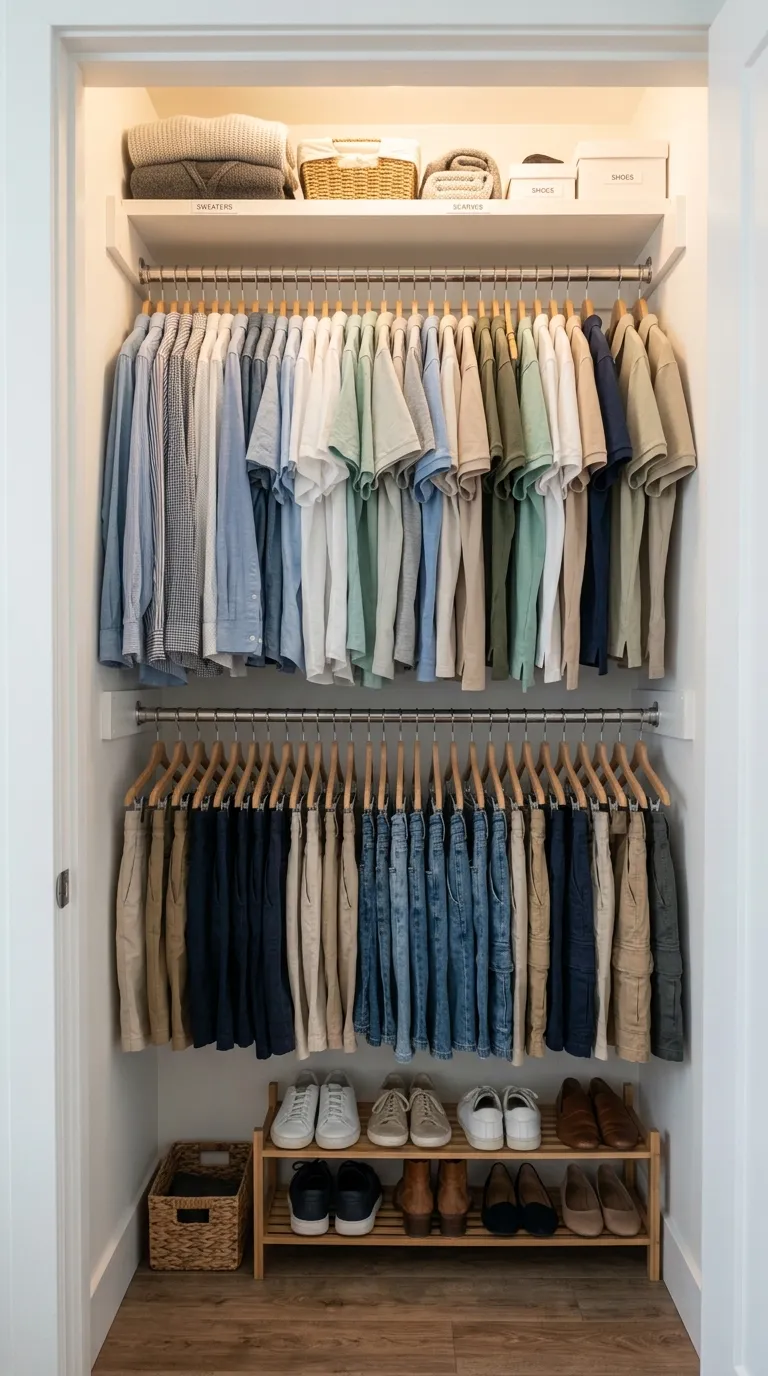
Adding a second rod beneath the existing one instantly roughly doubles hanging capacity for shorter items like shirts, folded pants, and skirts, making it one of the highest-impact changes available for a small closet.
Reserve the double-rod section specifically for shorter garments, and keep longer items like dresses and coats on a single full-height rod elsewhere in the closet so nothing drags on the lower rod’s contents.
Best suited for: any small closet with standard hanging clothing, and one of the most cost-effective upgrades on this entire list.
2. Slim Velvet Hangers
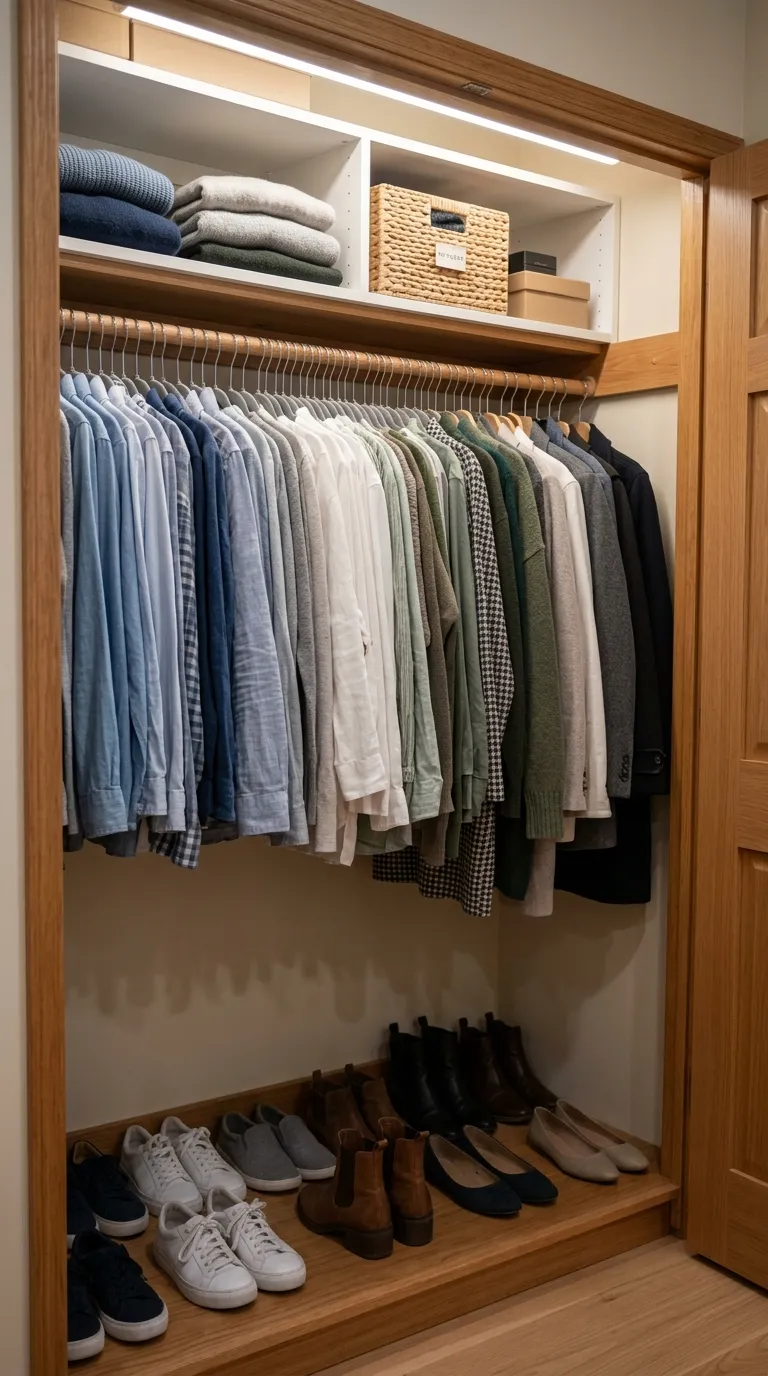
Switching from bulky plastic or wire hangers to slim velvet hangers can free up several inches of rod space simply through their thinner profile, while also preventing clothes from slipping off, which keeps the closet looking tidier day to day.
Choose a single hanger color and style throughout the closet rather than mixing several types, since visual consistency alone makes even a full closet look more organized and intentional.
Best suited for: any closet, and one of the simplest, most affordable upgrades with a genuinely noticeable space-saving effect.
3. Shoe Rack or Shelf Riser
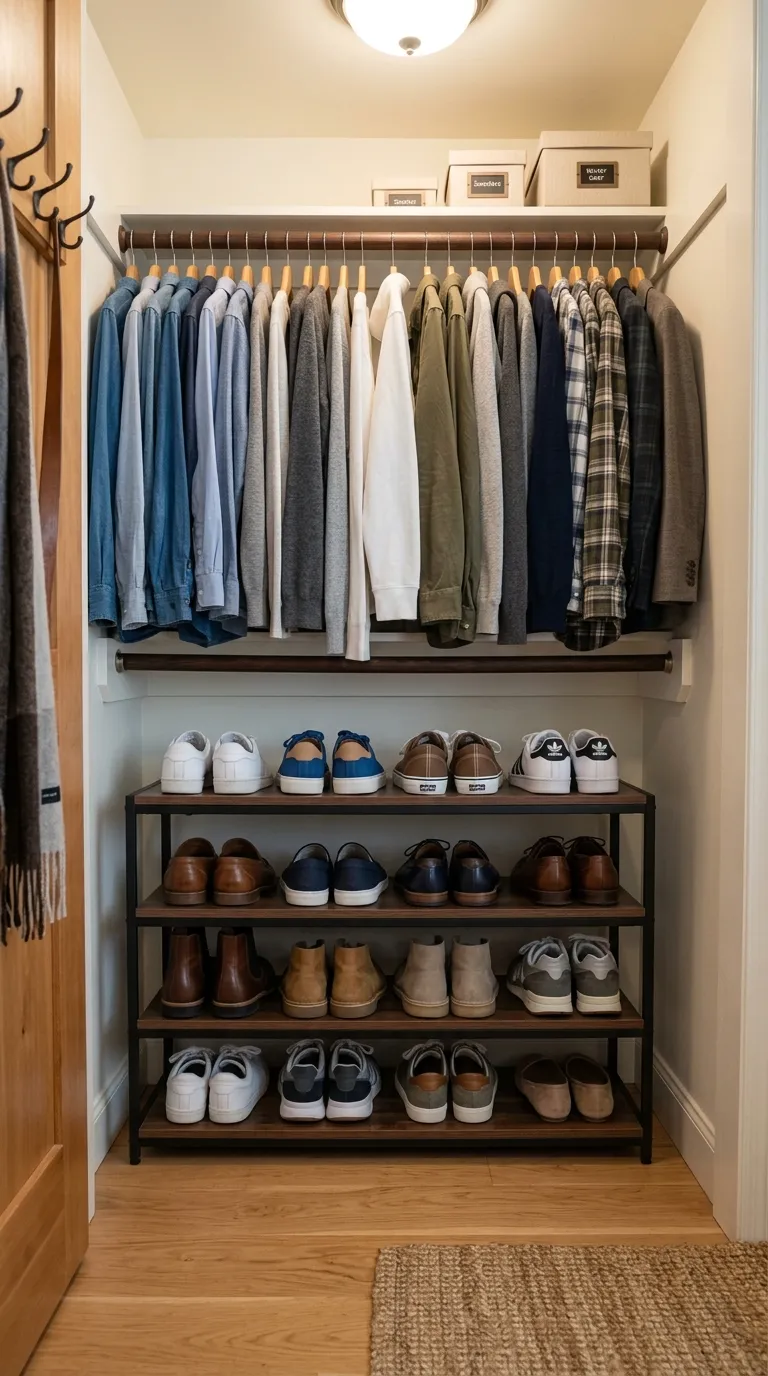
A tiered shoe rack uses vertical stacking to store significantly more pairs of shoes in the same floor footprint than shoes simply lined up on the closet floor, which is often one of the most cluttered areas in a small closet.
Choose an angled or stepped rack rather than flat shelving specifically for shoes, since the angled design makes it easier to see and grab a specific pair without disturbing the rest of the row.
Best suited for: any closet floor space currently occupied by loose or piled shoes.
4. Modular Closet System With Drawers and Shelves
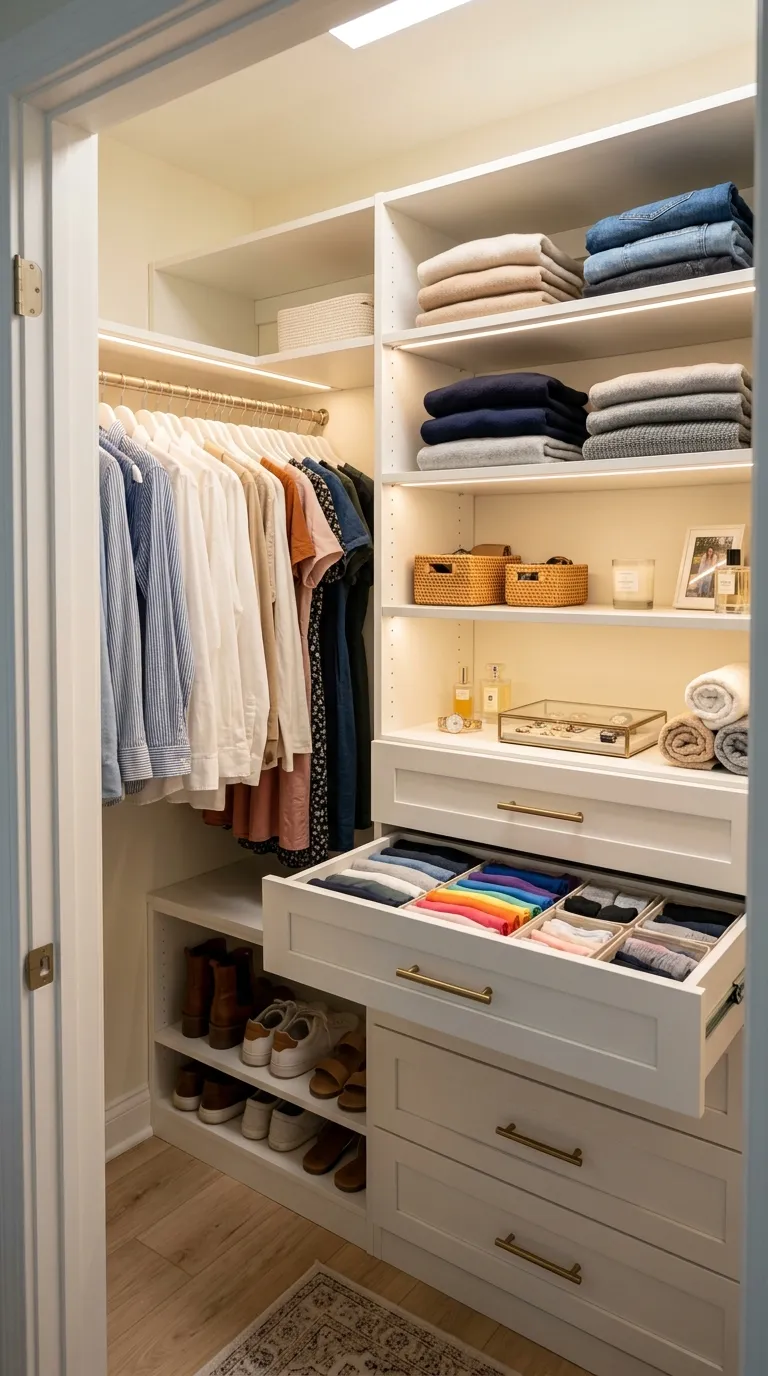
A modular closet system, whether a professionally installed built-in or a DIY-assembled kit, customizes the exact mix of hanging space, shelving, and drawers to match your specific wardrobe rather than relying on a generic single-rod-and-shelf layout.
Measure your current wardrobe breakdown, roughly how much is hanging versus folded versus shoes and accessories, before choosing a modular configuration, since the right system depends entirely on your actual storage needs rather than a one-size-fits-all layout.
Best suited for: closets undergoing a more significant organizational overhaul and homeowners willing to invest in a longer-term system.
5. Door-Mounted Organizer
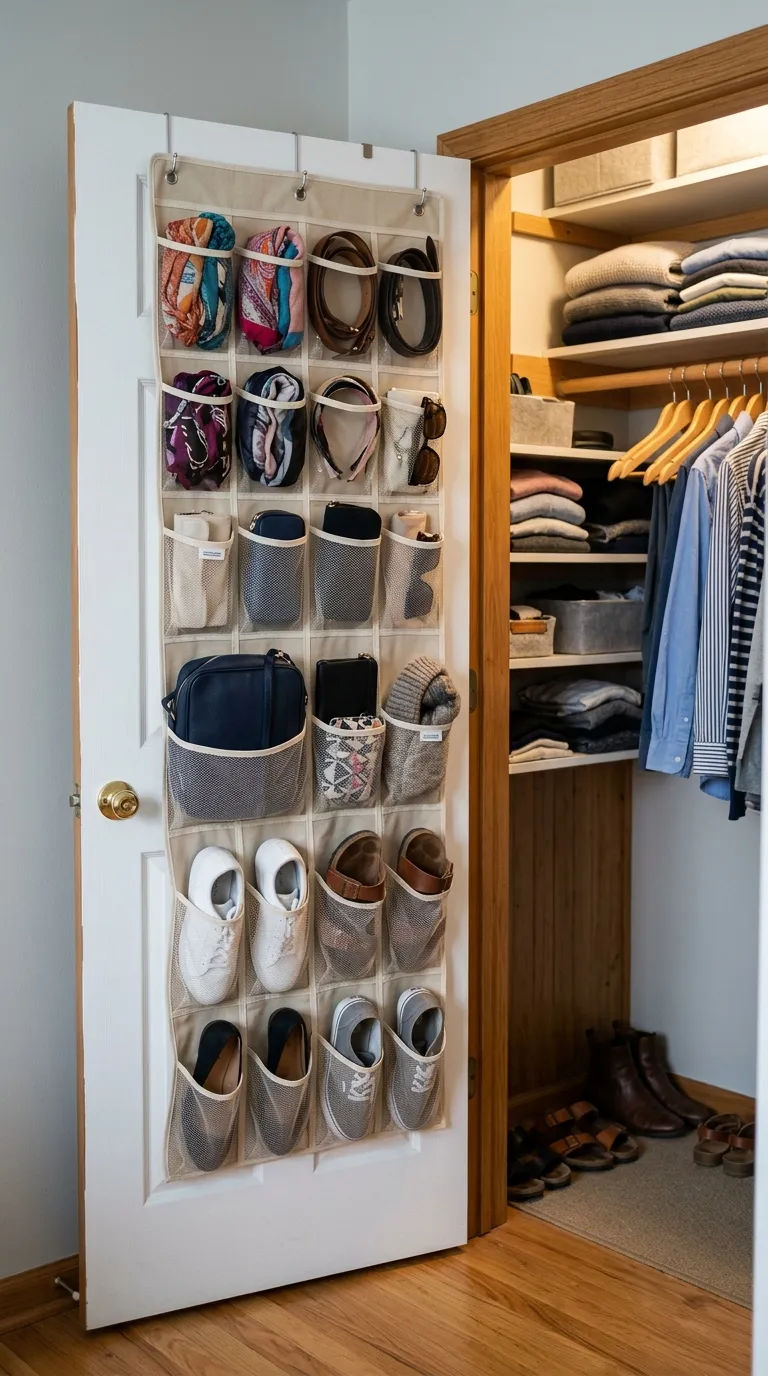
A door-mounted organizer uses one of the most commonly overlooked surfaces in a closet, the back of the door itself, to store shoes, accessories, or small folded items without requiring any additional floor or shelf space.
Choose an organizer with adjustable or varied pocket sizes to accommodate different item types, and confirm the door can close fully with the organizer loaded before committing to a specific model.
Best suited for: any closet with a swinging door and a genuinely free source of additional storage that most closets are not using.
6. Clear Stackable Storage Bins
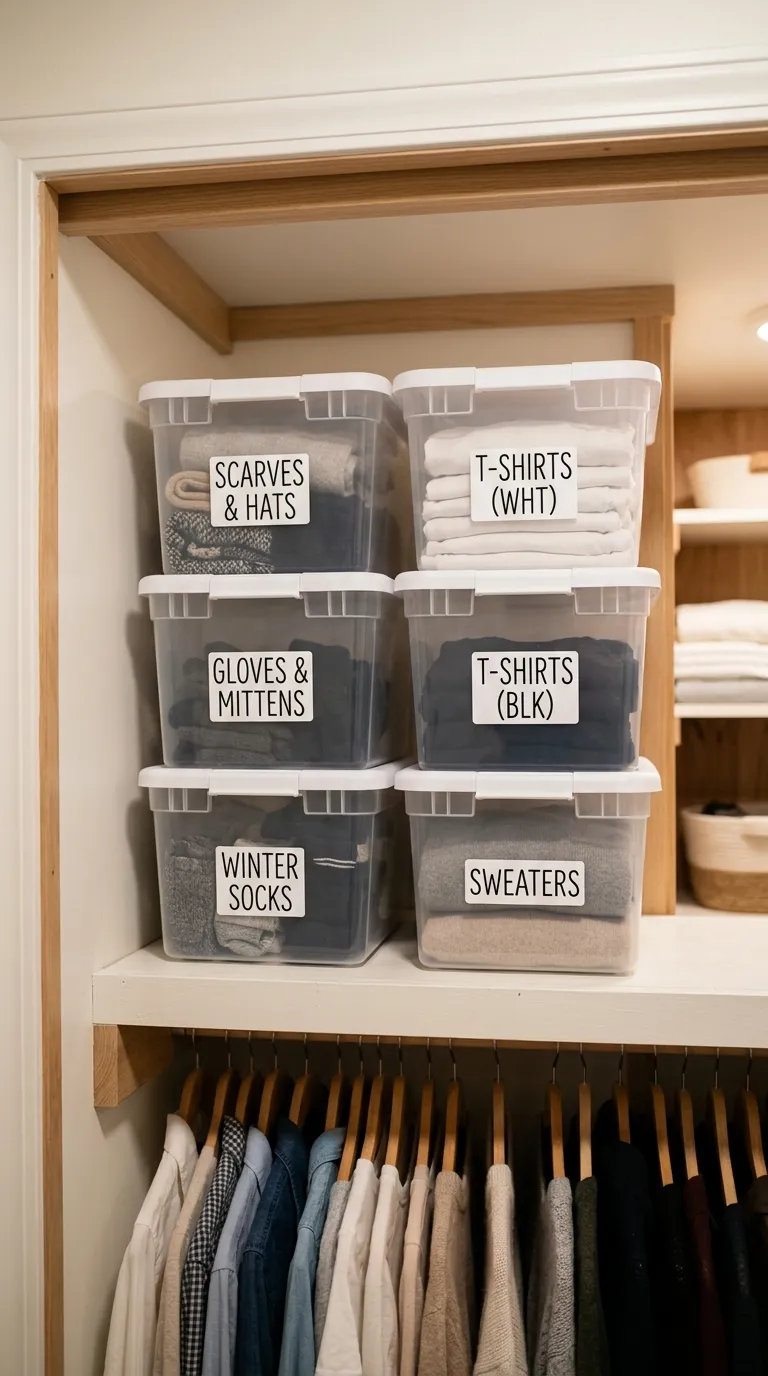
Clear bins let you see contents at a glance without pulling every box down to check, which both saves time and makes better use of shelf space by allowing bins to stack securely rather than leaving gaps between opaque, mismatched containers.
Choose a single bin size and style for uniformity across the shelf, and stack no more than two or three bins high in most cases to keep the top layer easily accessible without a step stool.
Best suited for: closets with upper shelf space currently underused or filled with loose, unorganized items.
7. Vertical Shelf Dividers for Folded Items
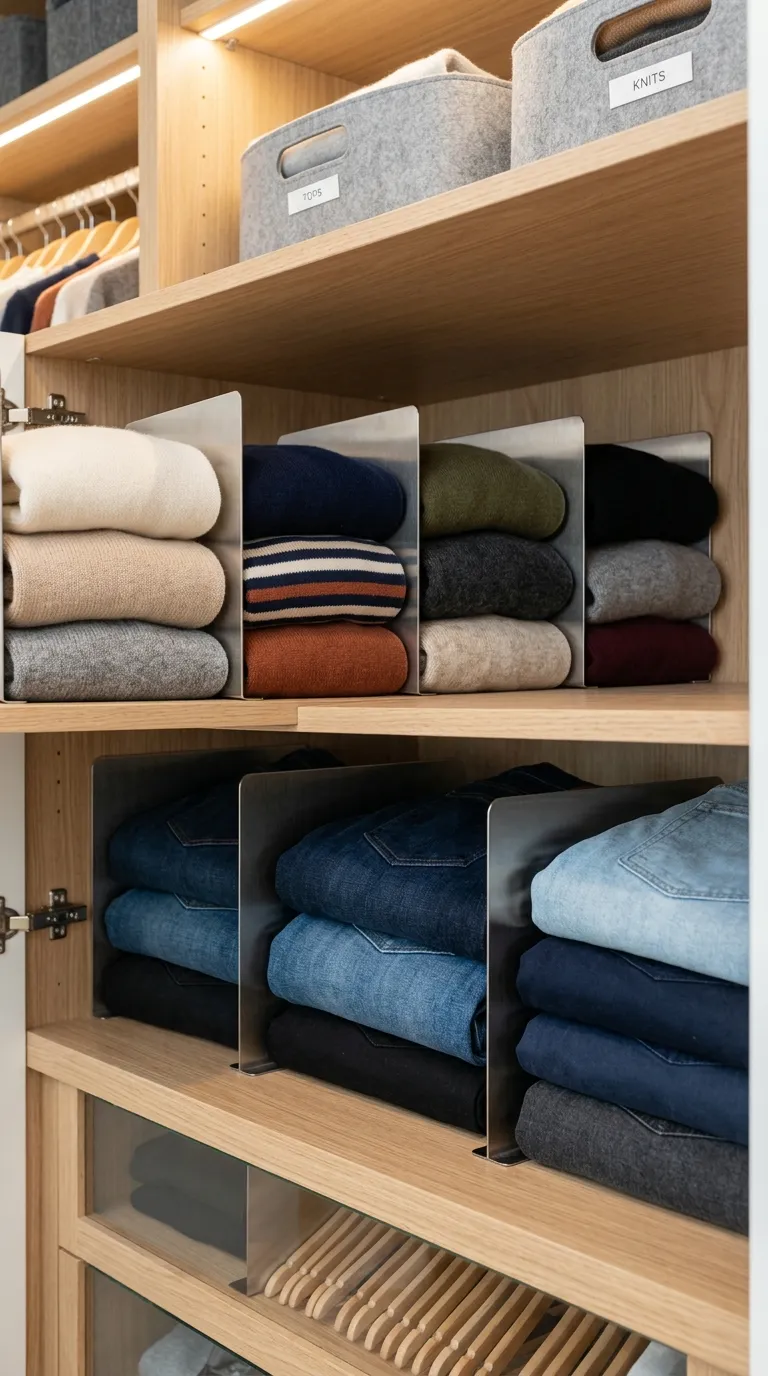
Shelf dividers keep folded stacks of clothing upright and separated by category, preventing the common problem of folded piles slumping sideways and merging into a single disorganized mass over time.
Space dividers based on the width of your specific folded item categories, such as sweaters versus jeans, rather than evenly spacing them regardless of what each section will actually hold.
Best suited for: closets with significant folded clothing storage on open shelving.
8. Wall Hooks for Bags and Accessories
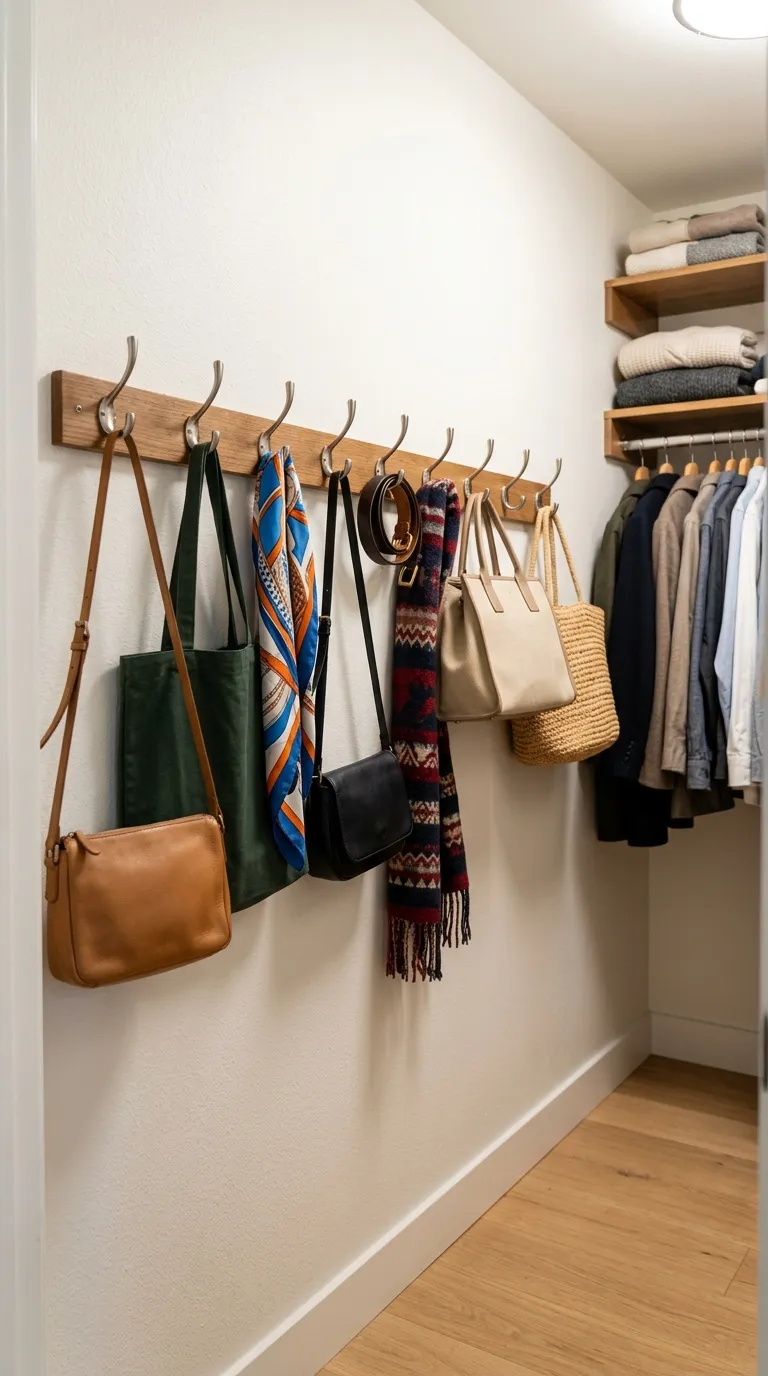
A row of wall hooks gives bags, scarves, and other accessories a dedicated spot off the closet floor and rod, addressing a category of items that often end up piled in a corner without a designated storage solution.
Space hooks widely enough that hanging bags do not overlap and crush each other, and choose hooks rated for the actual weight of a loaded bag rather than the lightest, most decorative option available.
Best suited for: any closet storing bags, scarves, or other accessories without a current dedicated storage spot.
9. Consistent Label System
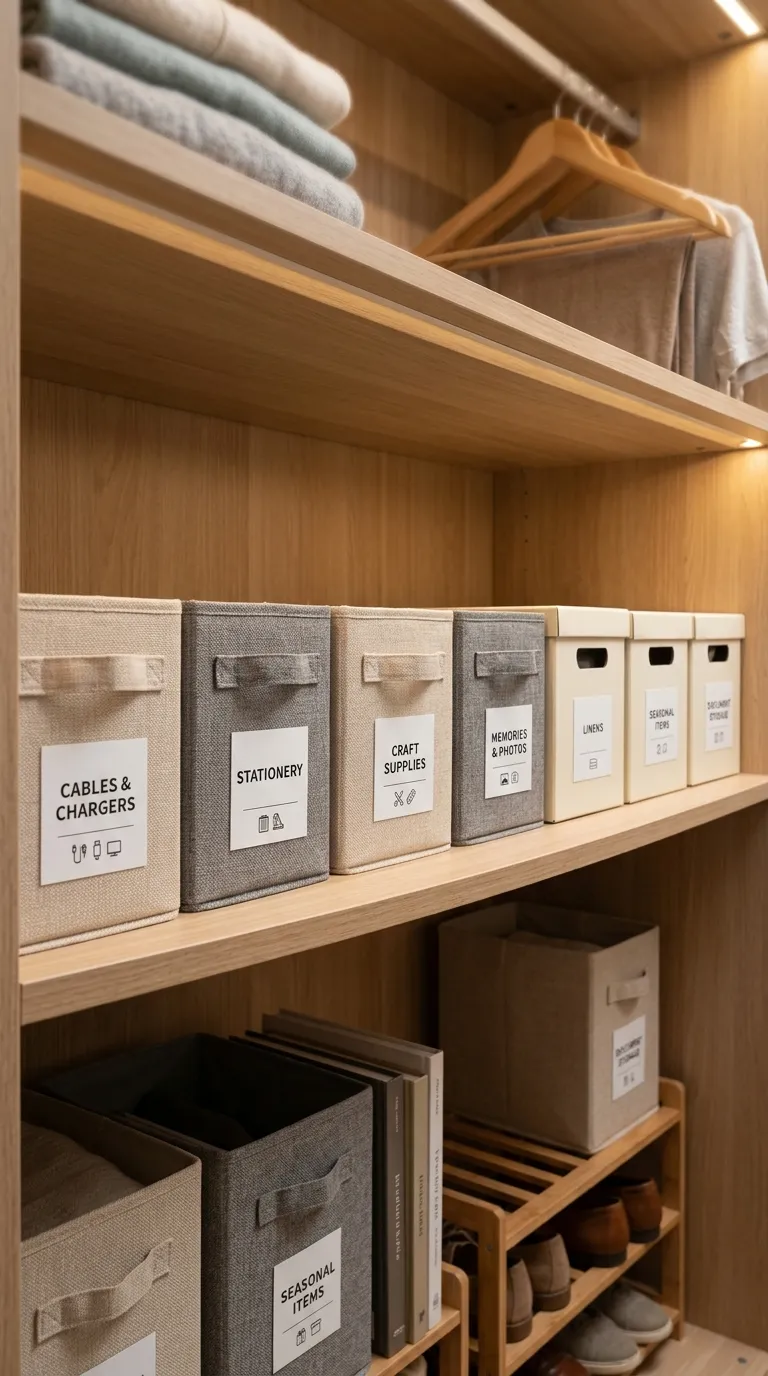
A consistent label system across bins, boxes, and baskets makes finding specific items significantly faster, and it also helps maintain the organization system over time, since everyone using the closet knows exactly where each category belongs.
Choose a simple, consistent label style, whether printed or handwritten, rather than mixing formats, and update labels promptly if the contents of a bin change to keep the system reliable.
Best suited for: closets with several bins or boxes where contents are not immediately visible from the outside.
10. Under-Shelf Hanging Baskets
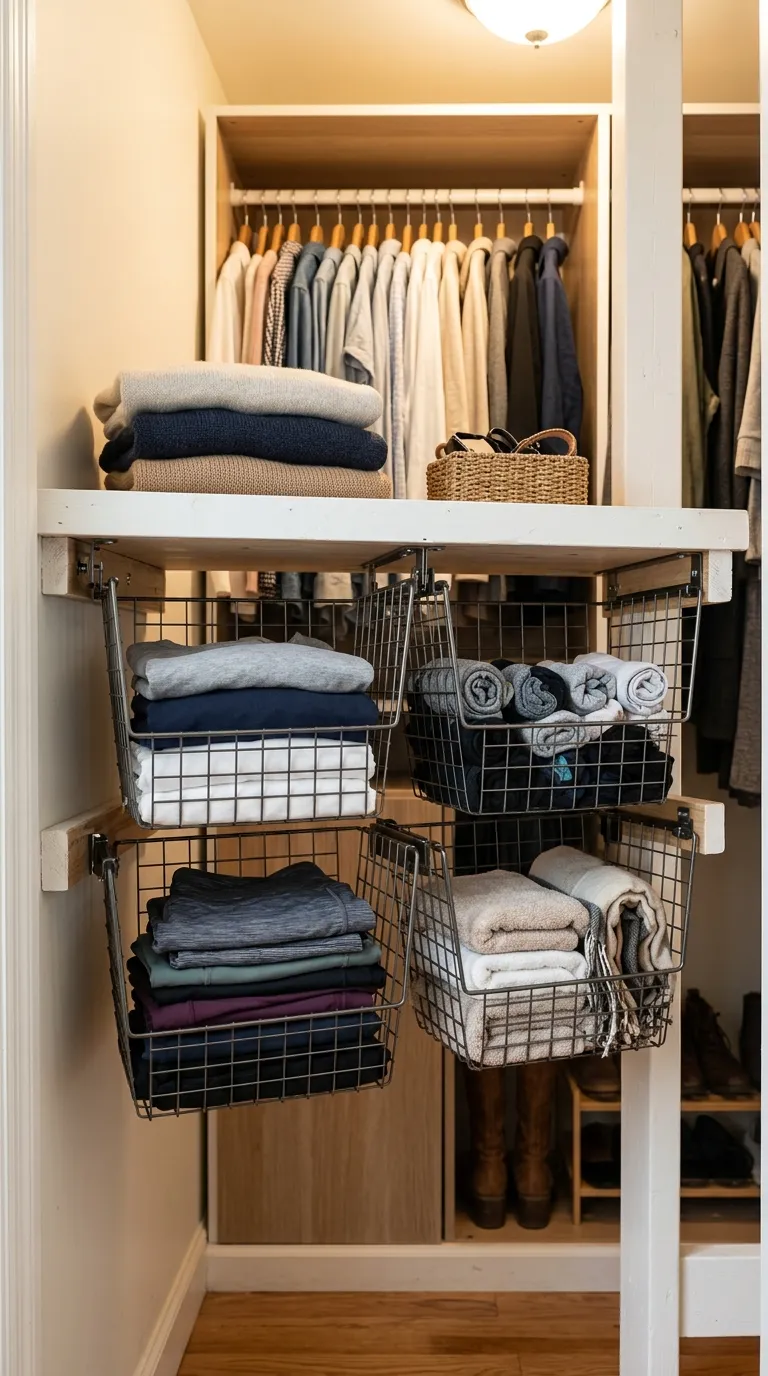
Under-shelf hanging baskets add an entirely new storage tier by using the empty air space beneath an existing shelf, which is one of the most overlooked areas in a typical closet layout.
Choose baskets sized to fit the specific clearance beneath your shelf, and use them for smaller, lighter items rather than heavy folded stacks, since the hanging mechanism generally has a lower weight capacity than a solid shelf.
Best suited for: closets with a single shelf and significant unused vertical space directly beneath it.
11. Valet Rod for Outfit Planning
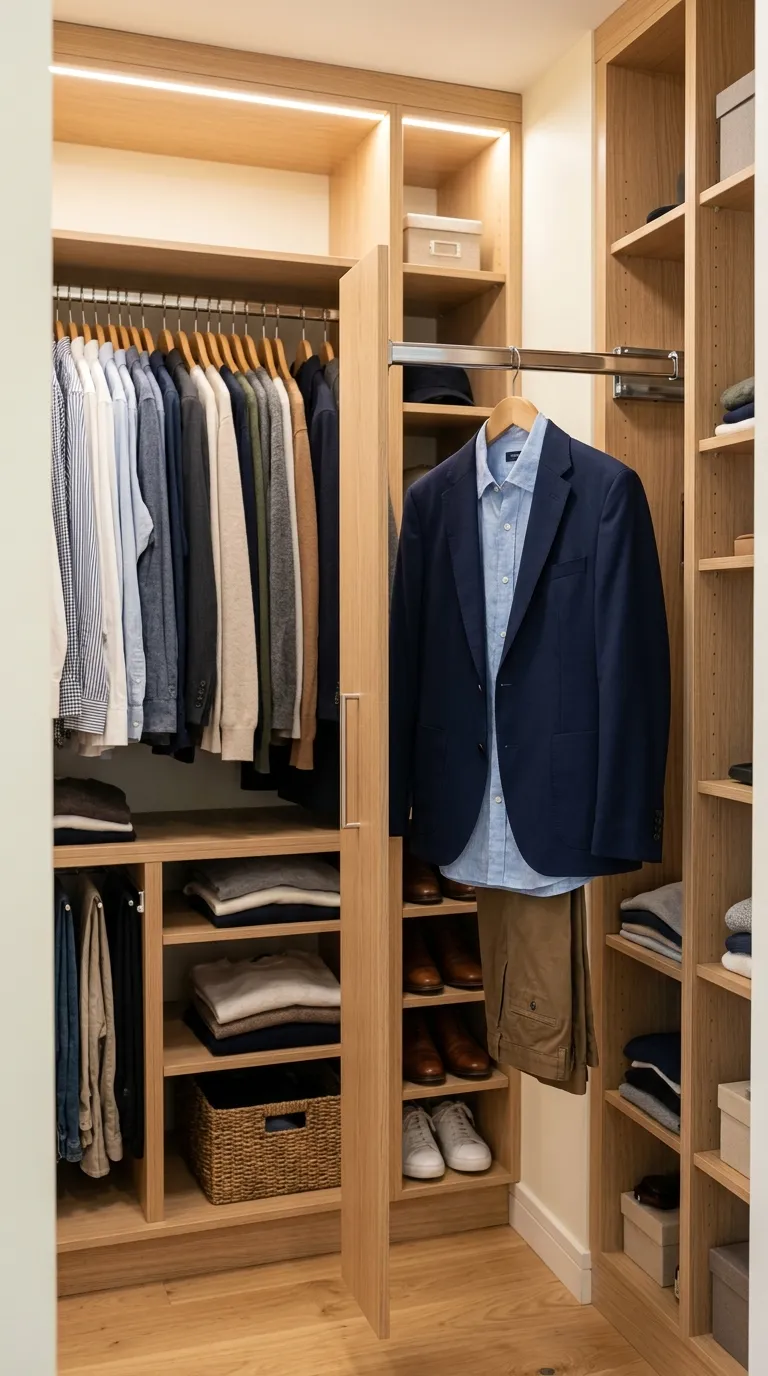
A valet rod, which pulls out temporarily from the side of the closet, gives you a dedicated spot to plan and stage an outfit separately from the main hanging rod, which is especially useful for packing or planning ahead for a specific event.
Choose a rod that folds flush against the wall when not in use, since a permanently extended rod can become an obstruction in an already tight closet space.
Best suited for: closets used for regular outfit planning or frequent travel packing.
12. Jewelry Organizer
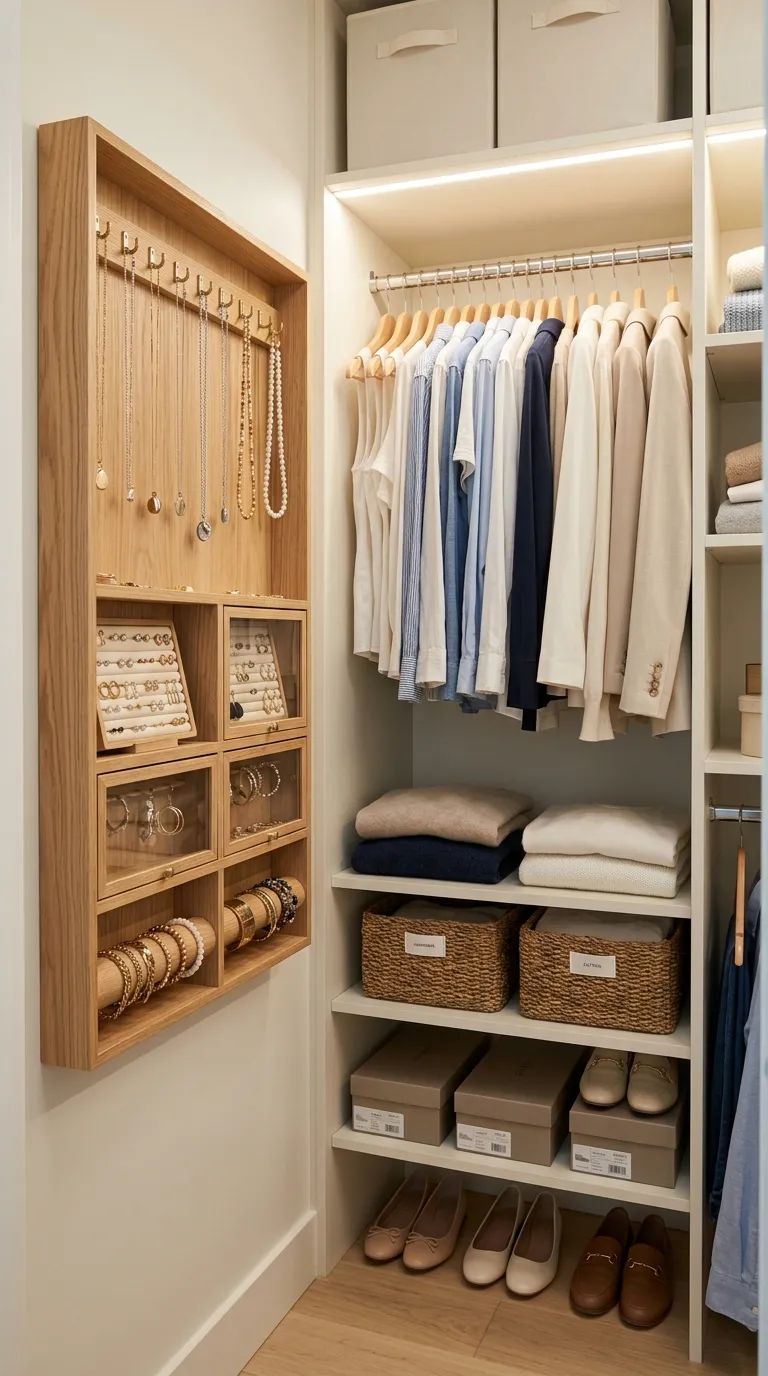
A dedicated jewelry organizer, whether wall-mounted or a drawer insert, prevents small items from becoming tangled or lost among clothing, and it makes selecting jewelry as quick and visible as choosing an outfit.
Choose a wall-mounted option if closet wall space allows, since visible, hanging storage tends to make jewelry easier to see and select than digging through a closed drawer or box.
Best suited for: closets currently storing jewelry loosely in a drawer, box, or tangled together without a dedicated system.
13. Seasonal Rotation Storage
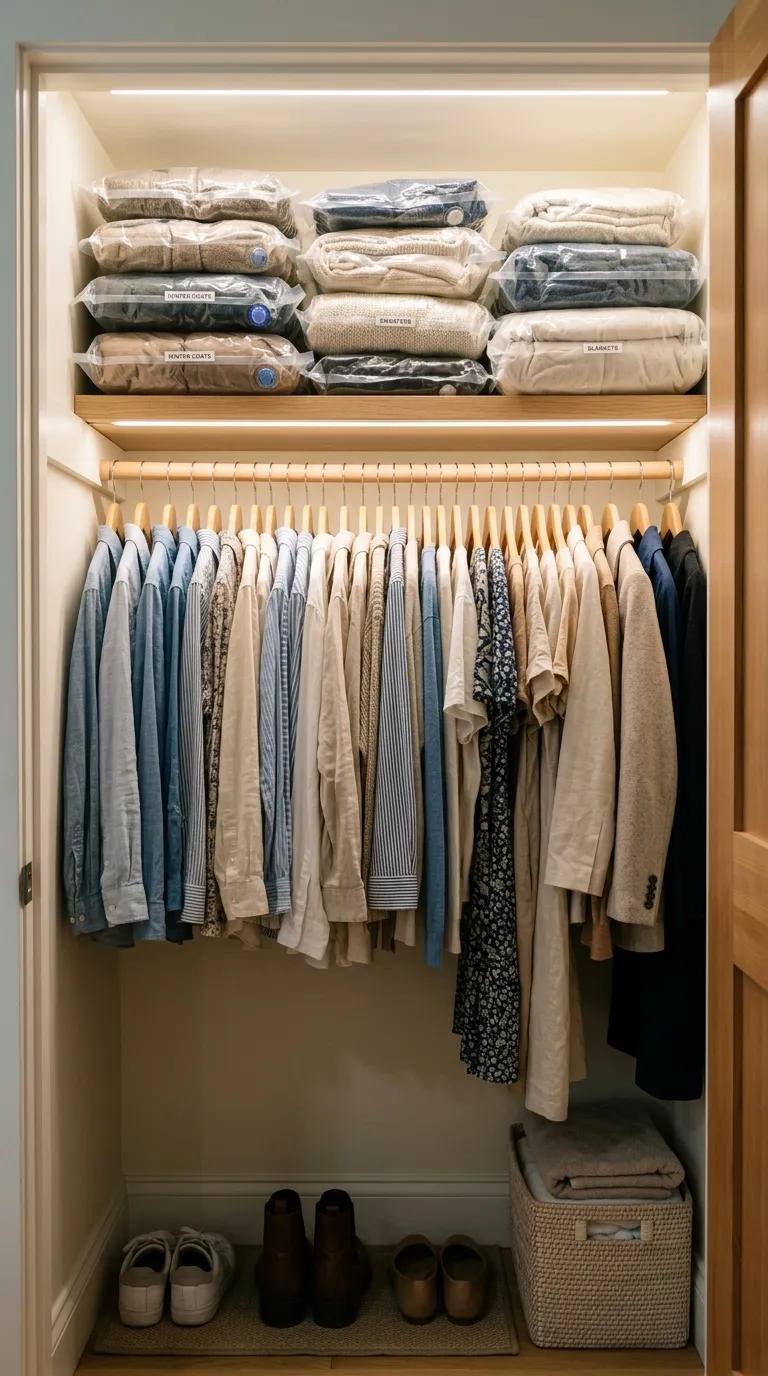
Rotating out-of-season clothing into vacuum-sealed bags or under-bed storage frees up significant closet space for the items you actually need access to during the current season, which matters enormously in a genuinely small closet.
Store off-season items somewhere fully separate from daily closet space, such as under a bed or in a hall closet, rather than simply pushing them to the back of the same closet where they will continue taking up prime space.
Best suited for: small closets holding a full year-round wardrobe in a space really only sized for one season at a time.
14. Upgraded Closet Lighting
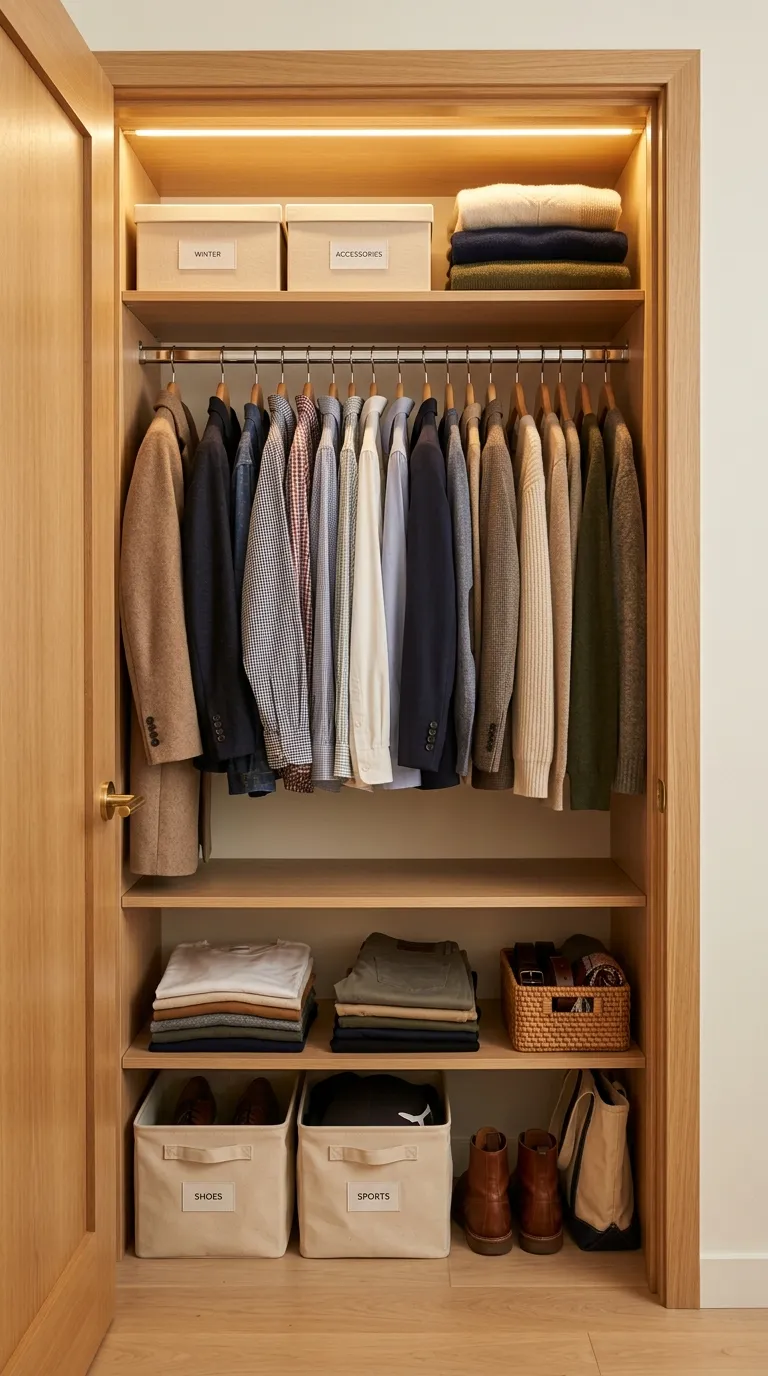
Many closets rely on dim ambient light from an adjacent room or a single weak fixture, and adding a proper LED strip or puck light system makes it significantly easier to find and match items, particularly colors, accurately.
Choose battery-powered or plug-in LED options if the closet lacks existing wiring, since these require no electrical work and can typically be installed with adhesive mounting in under an hour.
Best suited for: any closet with inadequate lighting and a relatively affordable upgrade with a significant functional impact.
15. Belt and Tie Rack
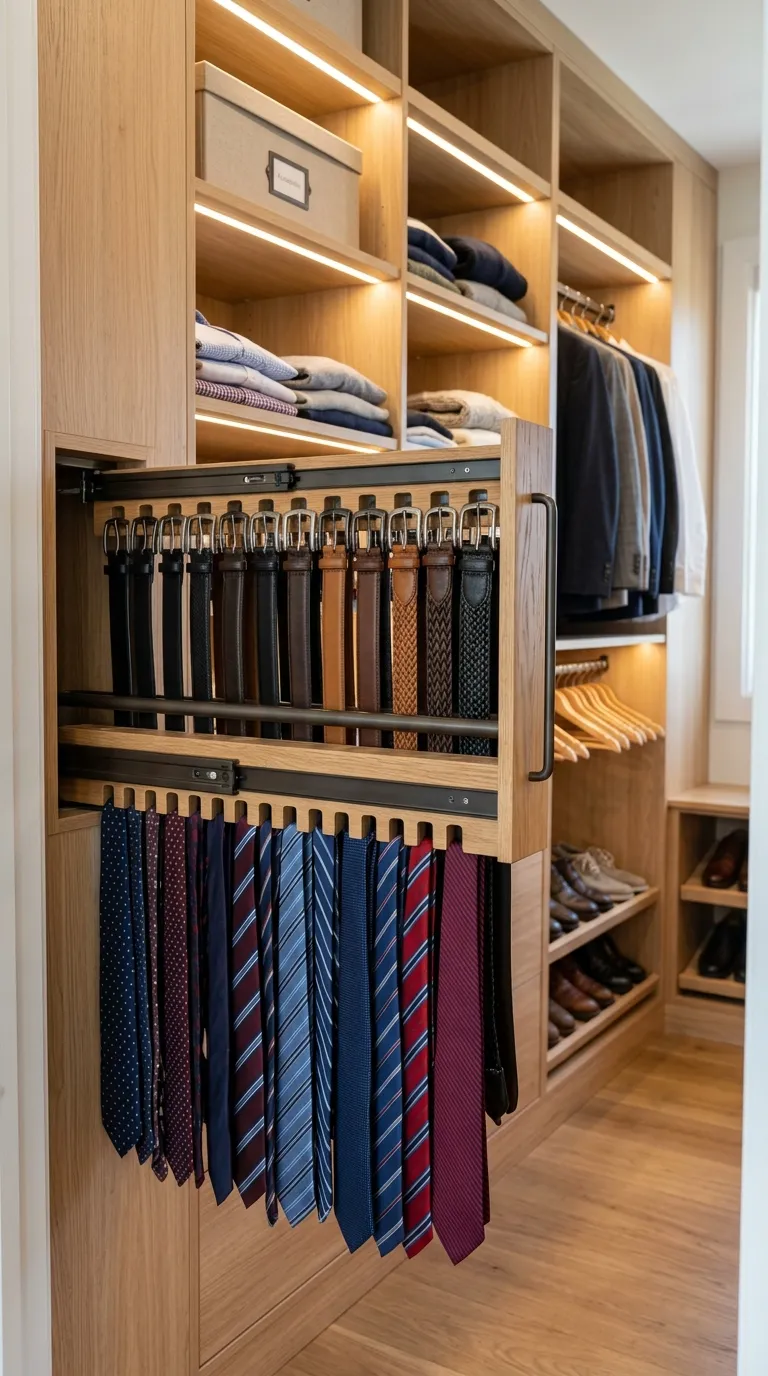
A dedicated belt and tie rack keeps these smaller accessories visible and tangle-free, addressing items that otherwise tend to end up balled up in a drawer or draped loosely over other hanging clothing.
Choose a rack with enough individual slots for your actual collection size, and mount it at a height where items are easy to see and select without needing to crouch or search.
Best suited for: closets storing a meaningful collection of belts, ties, or similar small hanging accessories.
16. Pull-Out Hamper
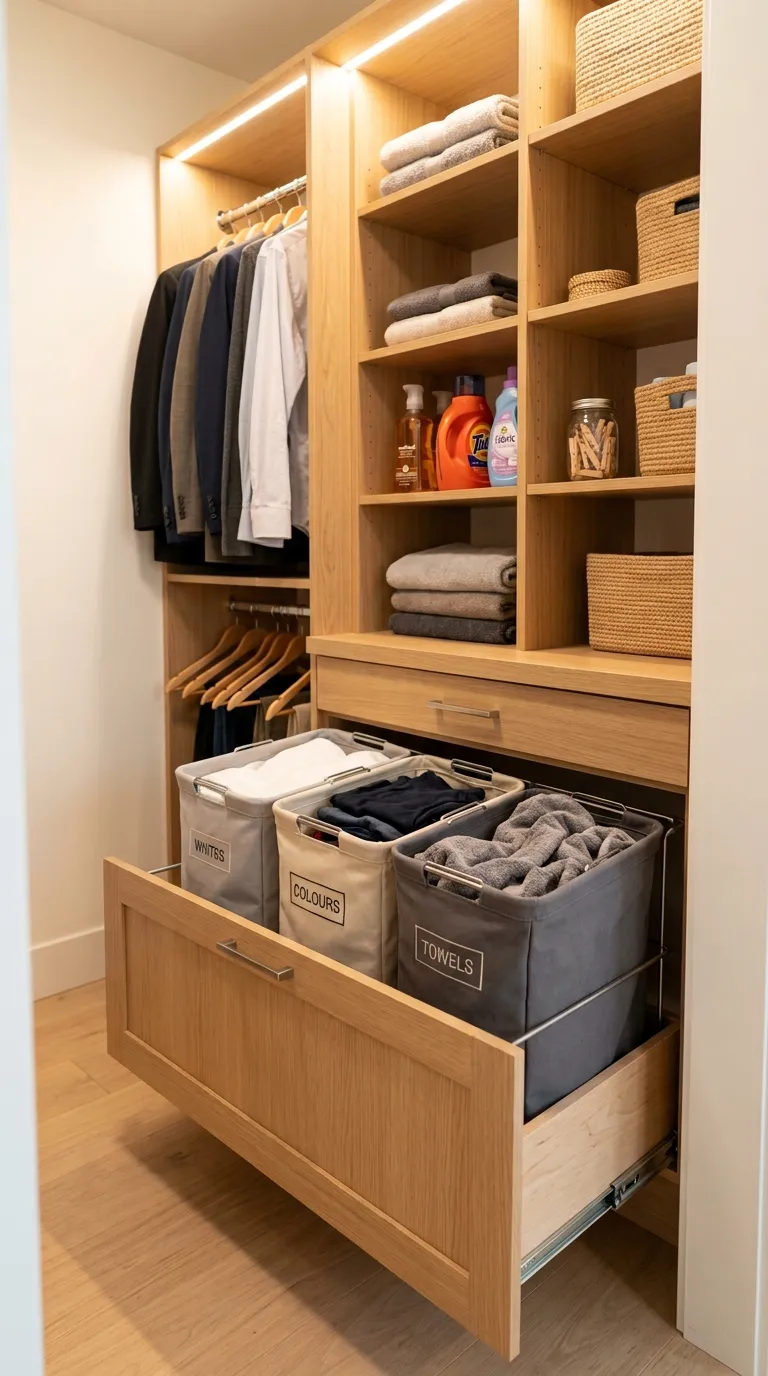
A pull-out hamper built into the closet’s base storage keeps laundry contained and out of sight while still remaining fully accessible, which is especially useful in closets that also need to handle daily laundry sorting.
Choose a hamper with a removable liner bag for easy laundry transport, and consider a dual-compartment version if you want to separate lights and darks directly at the point of use.
Best suited for: closets that also function as the primary laundry drop point in the room.
17. Mirror on the Closet Door
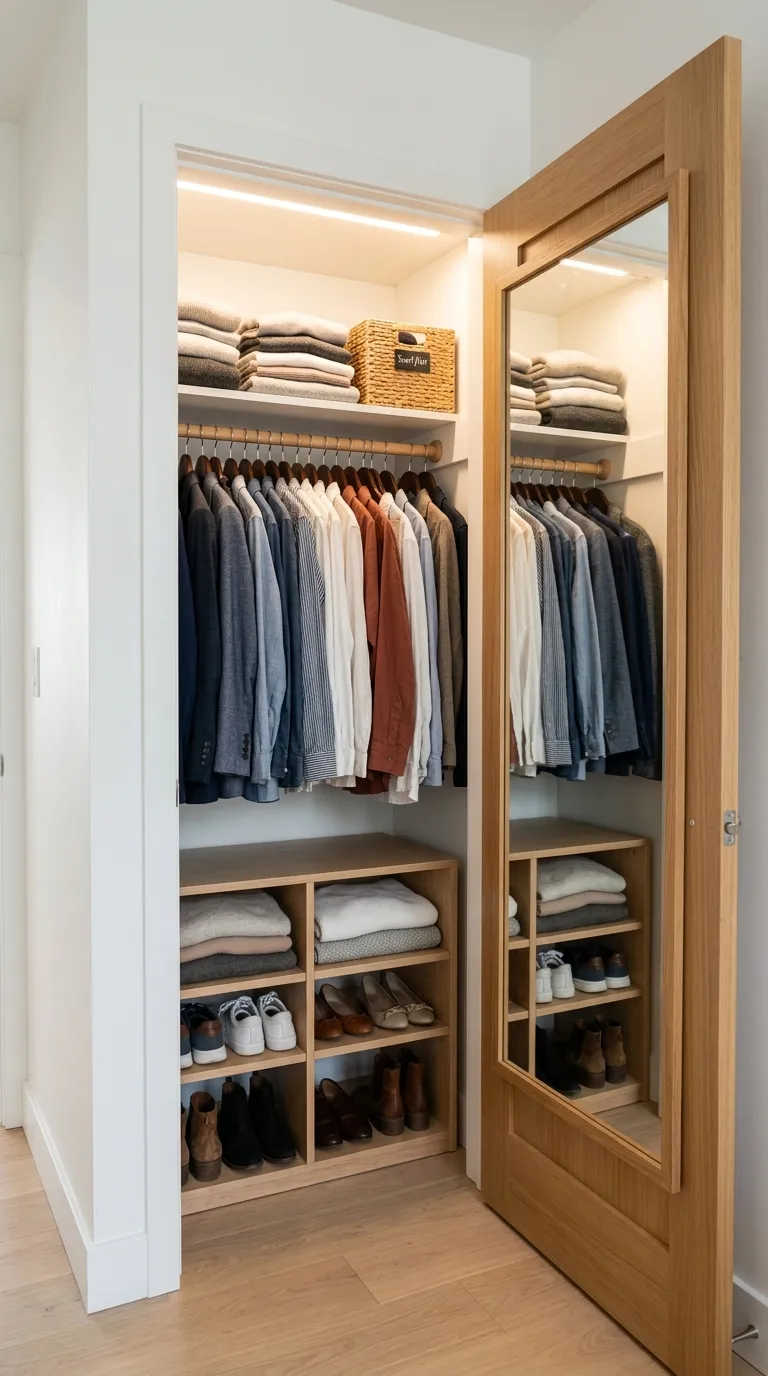
Mounting a full-length mirror on the inside of the closet door adds genuine function without using any closet interior space at all, since the mirror occupies a surface that would otherwise sit unused.
Choose a mirror with a lightweight frame or adhesive mounting specifically rated for door installation, since standard leaning floor mirrors are not designed to be permanently mounted vertically on a door.
Best suited for: any closet with a swinging door and no existing full-length mirror elsewhere in the room.
18. Corner Shelving Unit
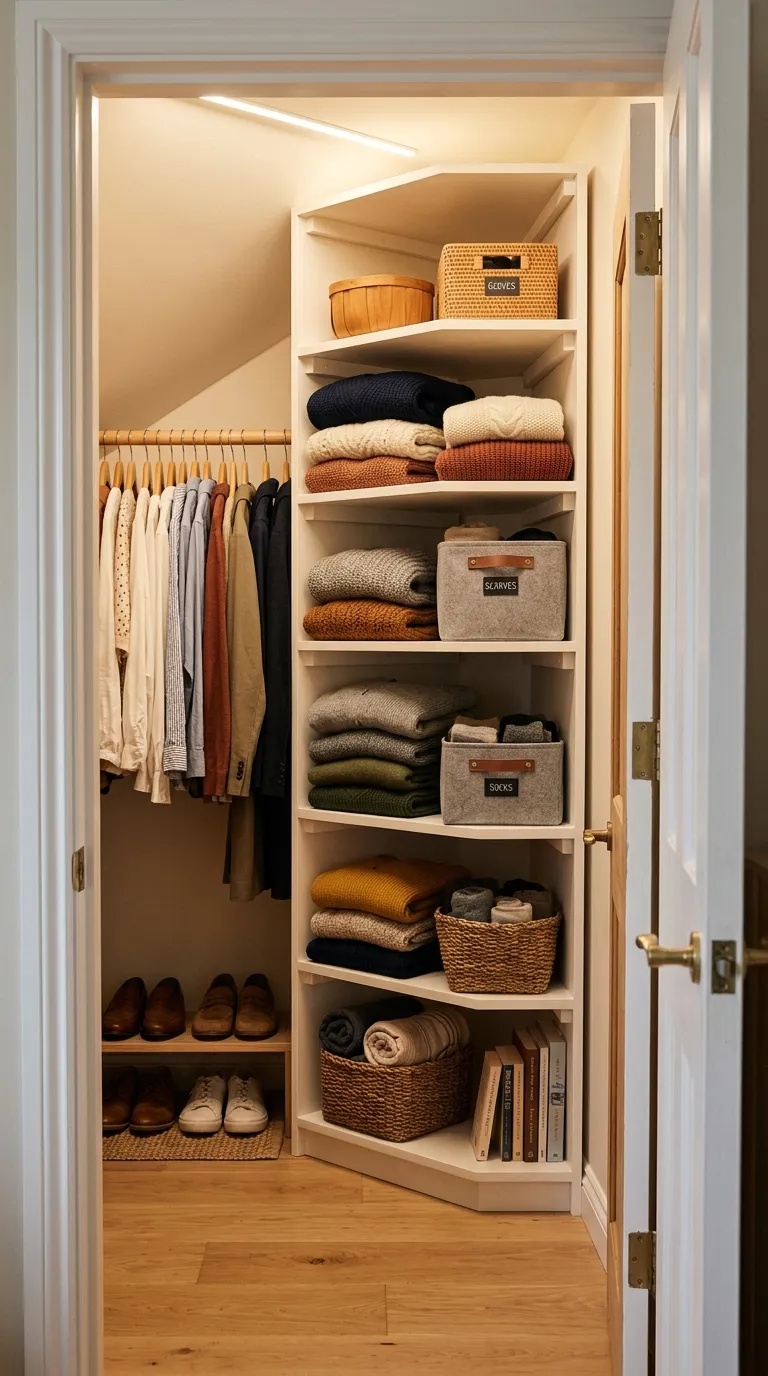
A corner shelving unit specifically designed to fit an angled or triangular closet corner captures storage space that standard rectangular shelving cannot use effectively, which matters in closets with an awkward or underutilized corner.
Measure the exact corner dimensions before purchasing a corner unit, since fit tolerances are tighter for angled furniture than for standard rectangular shelving that can simply be pushed against a flat wall.
Best suited for: closets with an unused or awkward corner not currently holding any storage.
Planning and Buying Tips
A few practical decisions up front will help your closet organization system actually work for your specific wardrobe rather than just looking tidy on installation day.
● Sort and purge before organizing — installing a new system around clothing you no longer wear just organizes clutter more neatly rather than solving the underlying space problem.
● Standard sizing to shop for — double hanging rods generally need at least 80 inches of total vertical clearance to fit both rods comfortably, and standard shelf depth for folded clothing runs 12 to 16 inches.
● Measure your actual wardrobe breakdown — count roughly how many items are hanging versus folded versus shoes and accessories before choosing a system, since the ideal ratio of rod, shelf, and drawer space varies significantly by person.
● Check weight ratings before mounting anything — shelving, hooks, and rod brackets all have specific weight capacities, and exceeding them is one of the most common causes of closet hardware failure.
● Consider renter restrictions before drilling — door-mounted, freestanding, and adhesive-based solutions avoid permanent wall modification for anyone who cannot make structural changes to the space.
● Plan for growth, but not too much — leave a small amount of buffer space in the new system rather than filling it to capacity immediately, since wardrobes tend to grow over time and a completely full system offers no flexibility.
Cost Breakdown: Budget, Mid-Range, and Luxury Systems
Closet organization can range from a few affordable accessories to a fully custom, professionally installed system, with a significant cost difference between the two approaches.
Budget ($30–$200)
Slim hangers, a shoe rack, storage bins, wall hooks, and a door organizer fall in this range. Installation is fully DIY with no additional cost beyond your own time.
Mid-Range ($200–$800)
A double hanging rod system, a modular shelving kit, LED lighting, and a pull-out valet rod sit in this tier. Basic installation is typically DIY-friendly, though some drilling or mounting is usually required.
Luxury / Premium ($800–$3,000+)
A fully custom, professionally installed closet system with built-in drawers, shelving, and integrated lighting falls here. Professional installation typically adds $500–$1,500 depending on the closet’s size and system complexity.
Storage System Comparison
| System | Price Range | Installation Effort | Renter-Friendly | Best For |
| Double hanging rod | $20–$80 | Low to moderate | Depends on mounting method | Maximizing hanging capacity for shorter items |
| Clear storage bins | $20–$150 (set) | Very low | Yes | Visible, stackable shelf storage |
| Door-mounted organizer | $15–$60 | Very low | Yes | Free additional storage using the door |
| Modular shelving/drawer system | $150–$800 | Moderate | Depends on model | Customizing space to a specific wardrobe mix |
| Custom built-in closet system | $1,000–$3,000+ | High — professional install | No | Full closet renovation and long-term investment |
| LED closet lighting | $20–$100 | Low | Yes — battery/adhesive options available | Improving visibility and color matching |
Maintenance Tips
● Hanging systems — periodically check rod brackets and hardware for looseness, especially on double-rod setups carrying significant daily weight and movement.
● Storage bins — reassess and re-sort bin contents every few months, since items can drift between categories over time and undermine the label system’s accuracy.
● Shelving units — dust regularly and avoid overloading shelves beyond their rated weight capacity, which is one of the most common causes of sagging or collapsed shelving over time.
● Door-mounted organizers — check adhesive or hardware mounting periodically, particularly in humid climates where adhesive strips can weaken faster than in drier conditions.
● Seasonal storage bags — inspect vacuum-sealed bags periodically for seal integrity, since a failed seal allows dust and moisture back in, undermining the protection the sealed storage was meant to provide.
● Common mistake to avoid — organizing around a wardrobe that has not been purged first, which results in a tidier-looking but still fundamentally overcrowded closet that becomes disorganized again quickly.
Frequently Asked Questions
What is the most space-efficient way to organize a small closet?
Adding a double hanging rod for shorter items and using vertical wall space through hooks, door organizers, and stacked bins are generally considered the most space-efficient starting points, since both approaches use vertical and often-overlooked space rather than expanding the closet’s actual footprint.
How do I organize a small closet without drilling holes?
Door-mounted organizers, freestanding shelving units, clear stackable bins, and adhesive-mounted hooks or lighting all provide meaningful organization without requiring any permanent wall modification, making them well suited to rental properties.
Is a custom closet system worth the cost?
For homeowners planning to stay in a home long-term and needing a system tailored to a specific wardrobe mix, a custom system is often worth the investment, though many of the same space-maximizing benefits can be achieved at a lower cost with modular, non-custom components.
How often should I reorganize my closet?
Most organization experts recommend reassessing a closet at each seasonal change, both to rotate seasonal clothing and to remove items that are no longer worn, which keeps the organizational system from gradually becoming overcrowded again.
What is the best way to store shoes in a small closet?
A tiered or angled shoe rack that uses vertical stacking is generally the most space-efficient solution, storing significantly more pairs in the same floor footprint than shoes left loose or lined up flat on the closet floor.
How to Choose the Right Closet Organization Ideas for You
The right combination of ideas depends on three factors: your specific wardrobe mix, whether you rent or own, and your available budget. A wardrobe heavy in folded items benefits most from bins, dividers, and modular shelving, while a hanging-heavy wardrobe gets the most value from a double rod system and slim hangers.
Budget should guide where to start rather than the final scope — hangers, bins, and door organizers offer significant improvement for very little cost, while a modular or custom system represents a bigger investment worth making once you understand exactly how your wardrobe fits the space.
Finally, always sort and purge before investing in a new system. Even the best organizational tools cannot fully solve a closet holding more items than it was ever designed to store.
Start by sorting what you actually wear and use, then add one or two high-impact changes like a double rod or storage bins before considering a bigger system investment — a truly organized closet comes from matching the right tools to your actual wardrobe, not simply adding more storage.


- Be Respectful
- Stay Relevant
- Stay Positive
- True Feedback
- Encourage Discussion
- Avoid Spamming
- No Fake News
- Don't Copy-Paste
- No Personal Attacks
- Be Respectful
- Stay Relevant
- Stay Positive
- True Feedback
- Encourage Discussion
- Avoid Spamming
- No Fake News
- Don't Copy-Paste
- No Personal Attacks
