18 Ceiling Beam Ideas That Instantly Elevate Any Room
Published: 29 Aug 2026
If a room feels flat or forgettable no matter how you decorate it, the fix might be above your head. Ceiling beams add architectural character, warmth, and a sense of craftsmanship that flooring and furniture alone can’t deliver. They work especially well for homeowners staring at a plain, builder-grade ceiling and wondering how to add personality without a full renovation, since beams can be installed over existing drywall in a single weekend in many cases.
Whether you’re drawn to rustic reclaimed wood, sleek matte black beams, or a coastal whitewashed look, there’s a style that fits your home and your budget. This guide walks through 18 ceiling beam ideas, what each one costs, how to plan and install them, and the maintenance involved so you can choose the right option with confidence.
Are Ceiling Beams Right for You?
Ceiling beams aren’t the right fit for every room or every budget, so it’s worth weighing the trade-offs before you commit.
Pros
● Adds instant architectural interest and a custom, high-end look
● Works with almost any style, from farmhouse to industrial to coastal
● Faux/polyurethane options are lightweight, affordable, and DIY-friendly
● Can visually raise or define a ceiling, especially in vaulted spaces
● Increases perceived home value and buyer appeal in listing photos
Cons
● Real wood beams add weight and may require structural support or a contractor
● Can make a low ceiling feel lower if not planned carefully
● Installation cost varies widely depending on material and ceiling height
● Dust and cobwebs collect on exposed beams, adding a small maintenance task
● Removing or changing beams later is more involved than repainting a wall
If you have at least 8 feet of ceiling height, a style direction in mind, and a budget that ranges from a few hundred to several thousand dollars depending on material, ceiling beams are very likely worth it.
1. Rustic Reclaimed Wood Beams
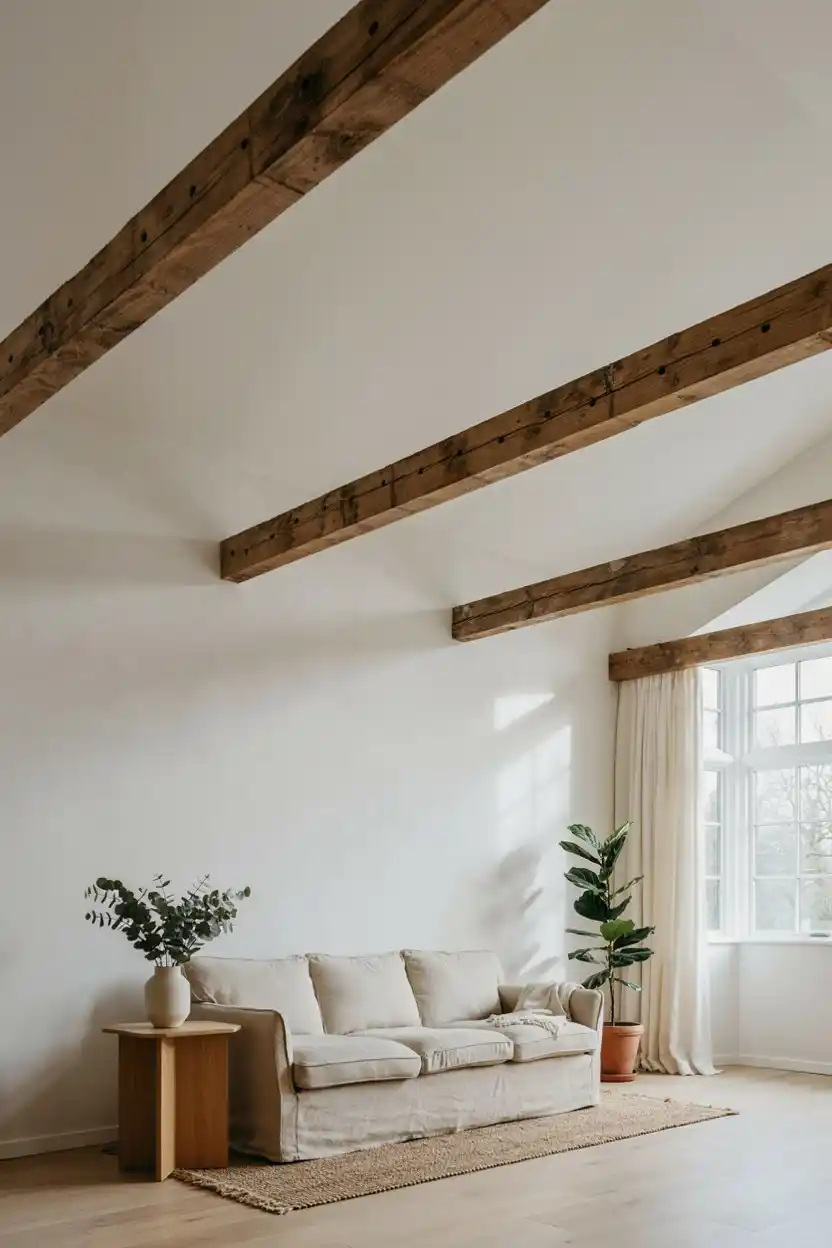
Reclaimed wood beams bring history and texture into a room the moment you look up. Salvaged from old barns, factories, or railway structures, each beam carries unique grain patterns, nail holes, and weathering that new lumber simply can’t replicate.
They pair beautifully with white or light gray ceilings, letting the warm brown tones stand out as a focal point. This look is best suited for farmhouse, cottage, or transitional interiors where a lived-in, storied feel is the goal.
2. Whitewashed Farmhouse Beams
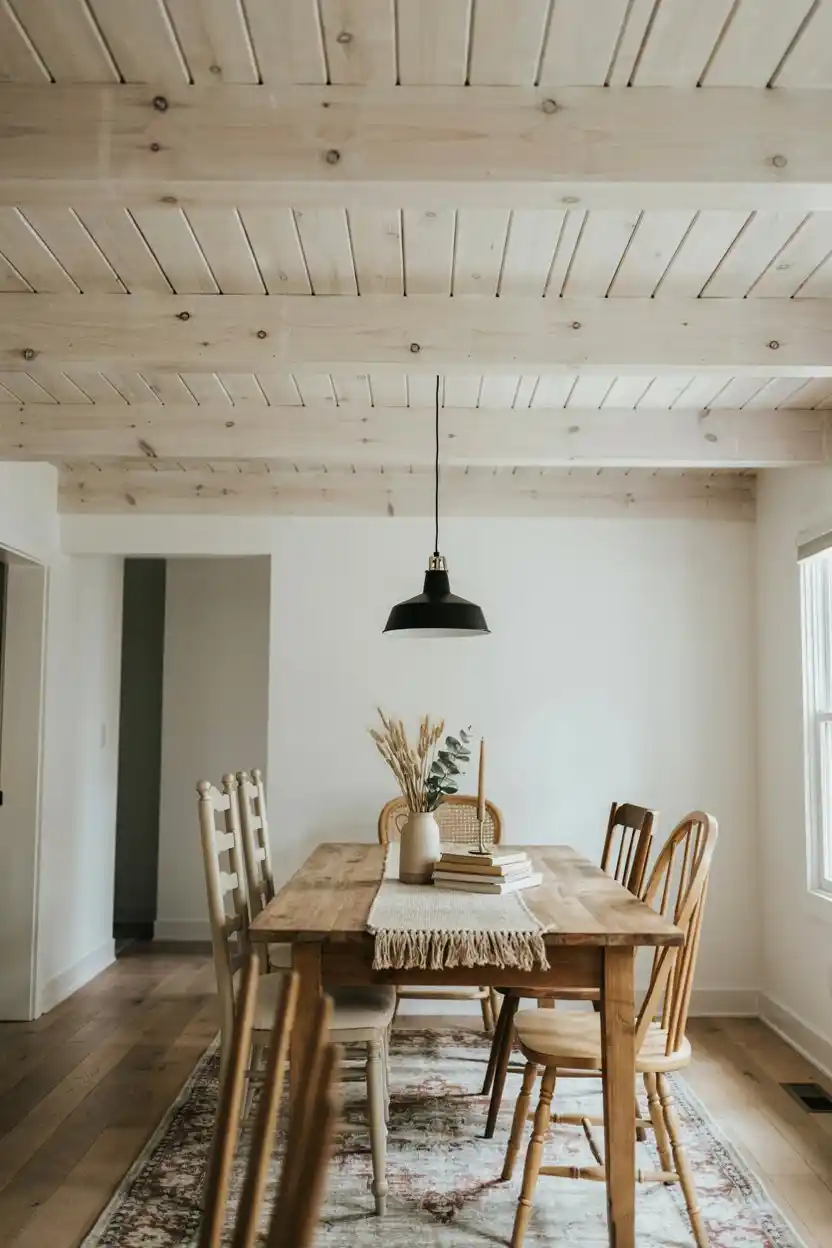
Whitewashing softens the heaviness of exposed beams while keeping their natural texture visible underneath. It’s a popular choice for dining rooms and kitchens where you want warmth without the room feeling dark or cabin-like.
This finish is achieved with a diluted white paint or specialty whitewash stain brushed on and wiped back, letting grain show through. It suits farmhouse, french country, and modern rustic homes especially well.
3. Faux Wood Beams for a Budget-Friendly Upgrade
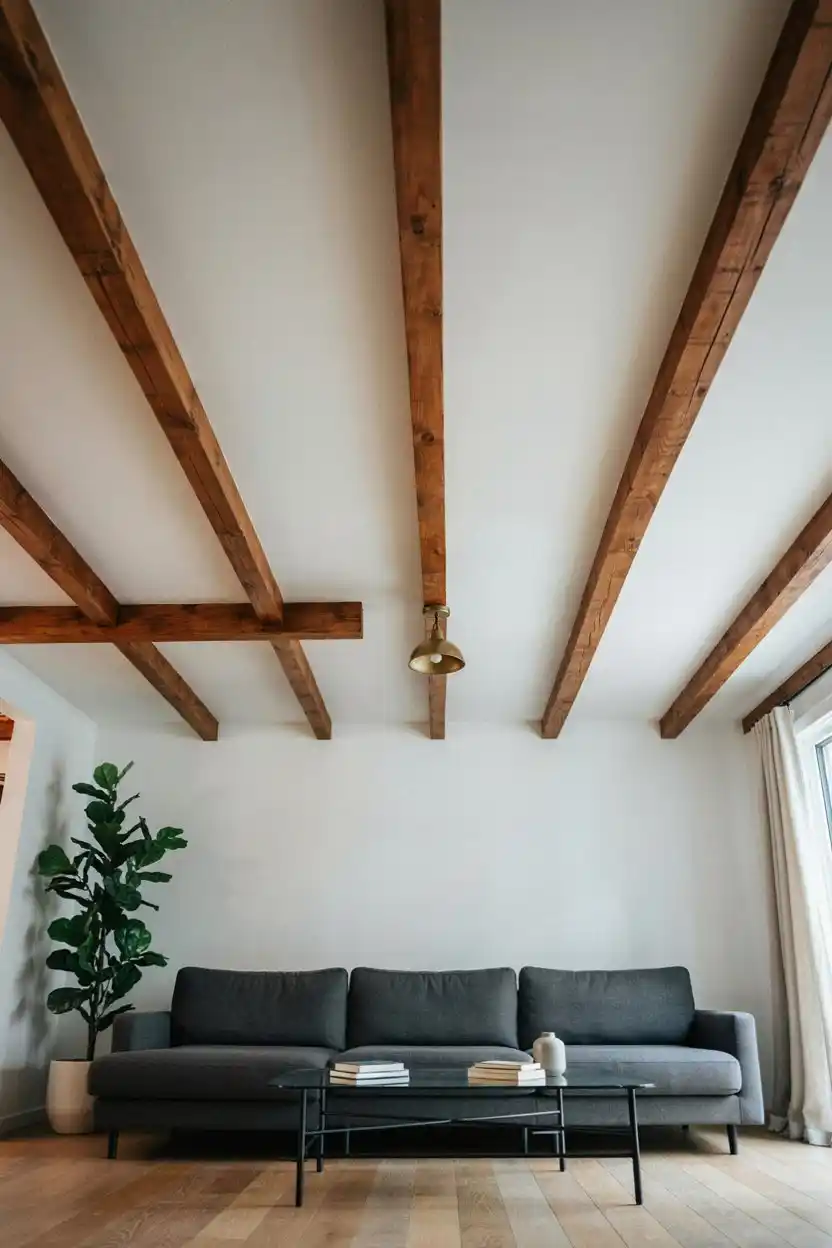
Faux wood beams are made from molded polyurethane and are a fraction of the weight and cost of real lumber, making them ideal for renters, DIYers, or anyone working with a tighter budget.
They install with construction adhesive and screws directly onto drywall, often in an afternoon with no structural reinforcement needed. Modern faux beams are remarkably realistic and work well in almost any home style.
4. Exposed Structural Wood Beams for an Industrial Loft Look
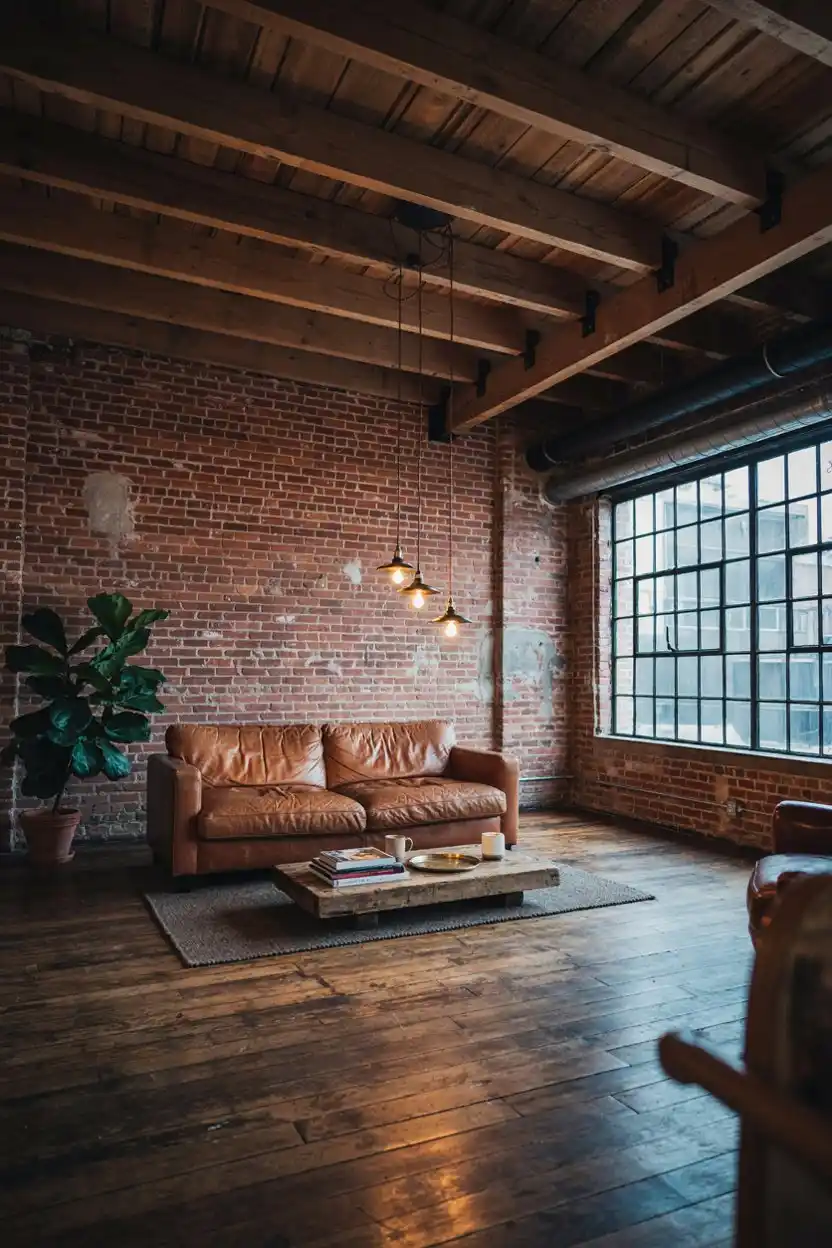
This look celebrates the beams as functional structures rather than decoration, often left in their natural, unfinished state with visible saw marks and mounting hardware. It’s the signature look of converted warehouses and urban lofts.
Best suited for open-concept spaces with high ceilings, this style pairs naturally with brick, concrete, and metal finishes. It’s a strong fit for anyone drawn to a raw, industrial aesthetic.
5. Matte Black Painted Beams for Modern Contrast
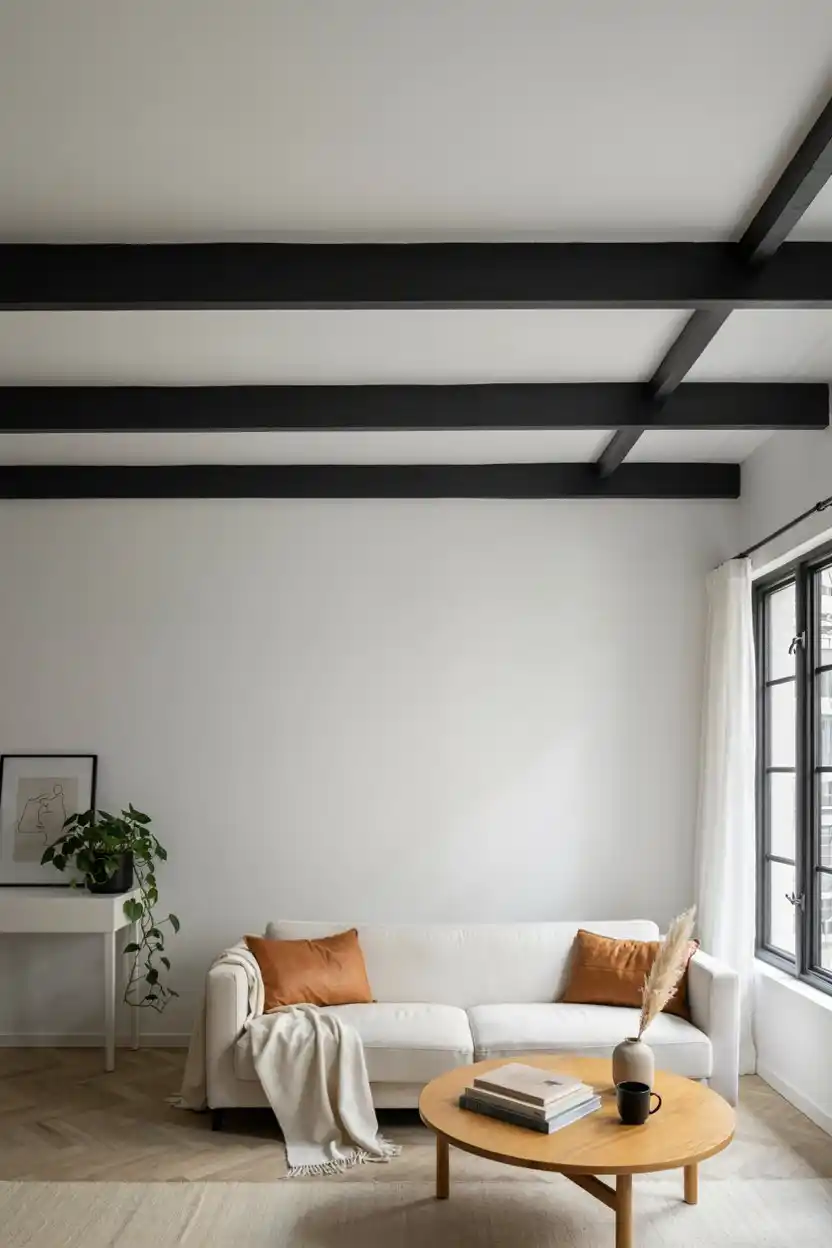
Painting beams matte black turns them into a bold design statement rather than a rustic accent, creating graphic lines against a white or light ceiling. It’s a favorite in modern farmhouse and contemporary interiors.
This treatment works especially well when paired with black window frames, light fixtures, or hardware elsewhere in the room to tie the look together. It suits homeowners who want a striking, editorial-style ceiling.
6. Box Beam Ceiling Grid
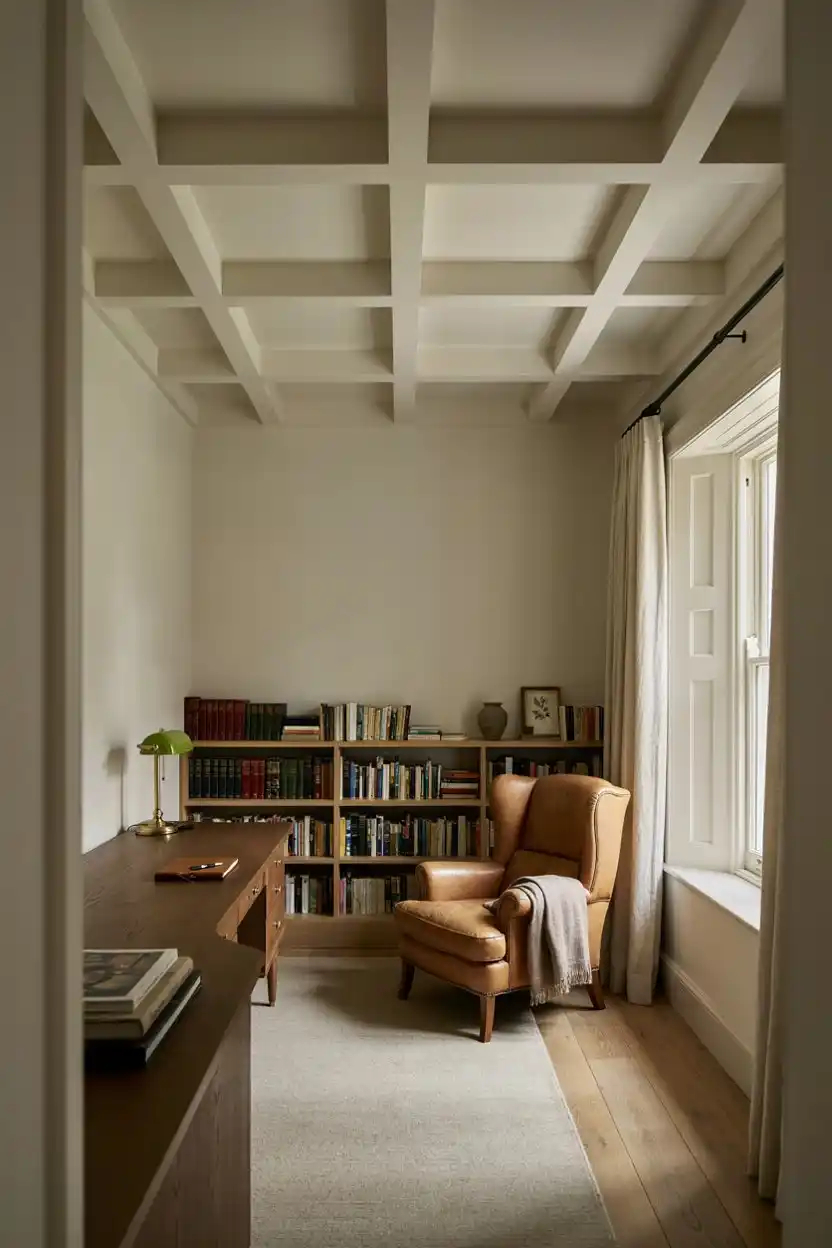
box beams are hollow, lightweight frames built from three boards joined into a U or box shape, then mounted to the ceiling in a grid pattern. They deliver a tailored, architectural look without the weight of solid timber.
This style suits home offices, dining rooms, and primary bedrooms where a refined, symmetrical ceiling adds quiet sophistication. It works in both traditional and transitional homes.
7. Coffered Ceiling with Beams
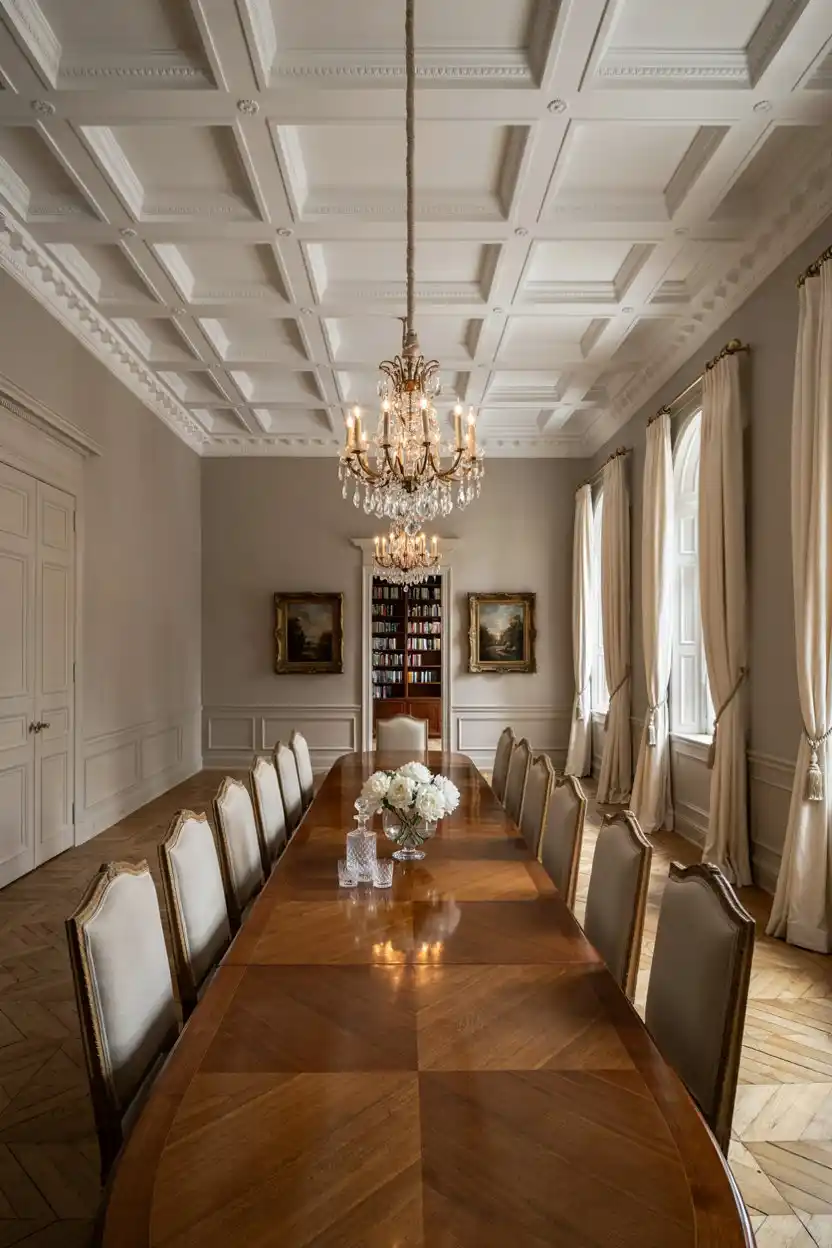
Coffered ceilings combine beams with recessed panels and decorative molding for a formal, high-end effect often seen in dining rooms and libraries. Each panel can include trim detail, paint contrast, or even a light fixture.
This is one of the more elaborate and costly beam styles, typically installed by a finish carpenter. It’s best suited for formal living spaces, generously sized rooms, and homeowners aiming for a traditional, luxury look.
8. Natural Cedar Beams for a Cabin or Mountain Retreat
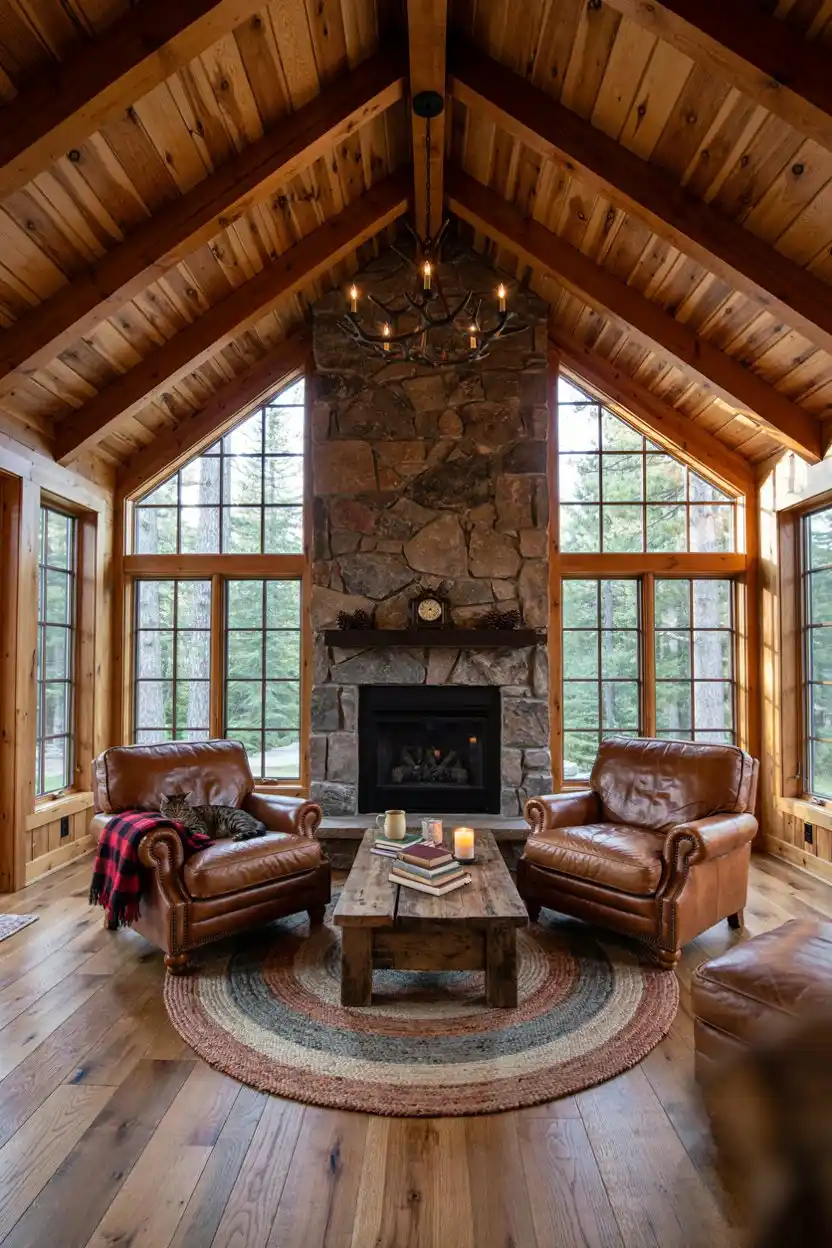
Natural cedar beams bring warmth, aroma, and a sense of retreat to a space, often left with just a clear protective coat to preserve their golden hue. Cedar also naturally resists insects and decay.
This style is a natural fit for cabins, lake houses, and mountain homes, especially paired with stone, log siding, or exposed rafters. It suits homeowners wanting a cozy, nature-inspired interior.
9. Dark Walnut Stained Beams
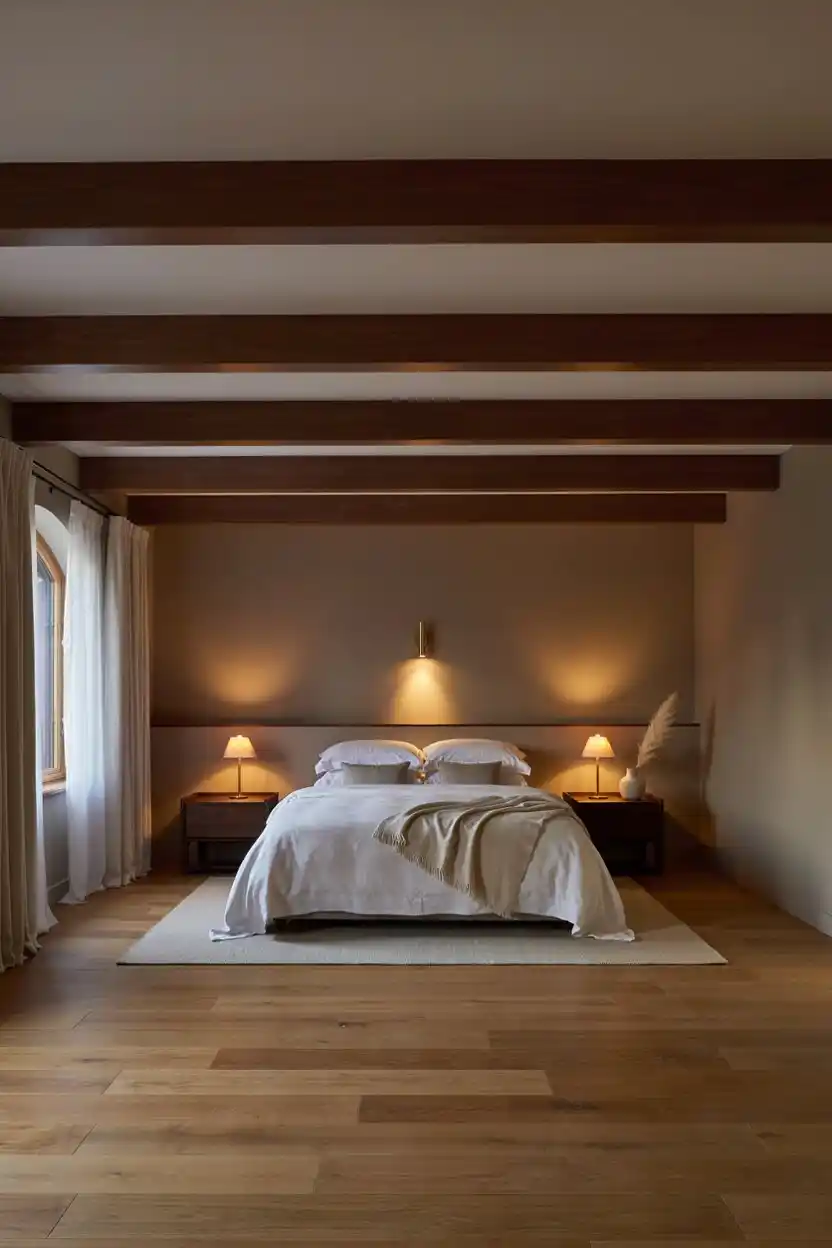
Dark walnut staining gives beams a polished, upscale look rather than a rough-hewn one, making them feel intentional and refined. The deep tone pairs beautifully with brass, black, and warm neutral color palettes.
This treatment is especially popular in primary bedrooms and formal living rooms, where a moody, elegant contrast against a light ceiling elevates the whole space. It suits transitional and modern traditional interiors.
10. Whitewashed Pine Beams for a Coastal or Scandinavian Look
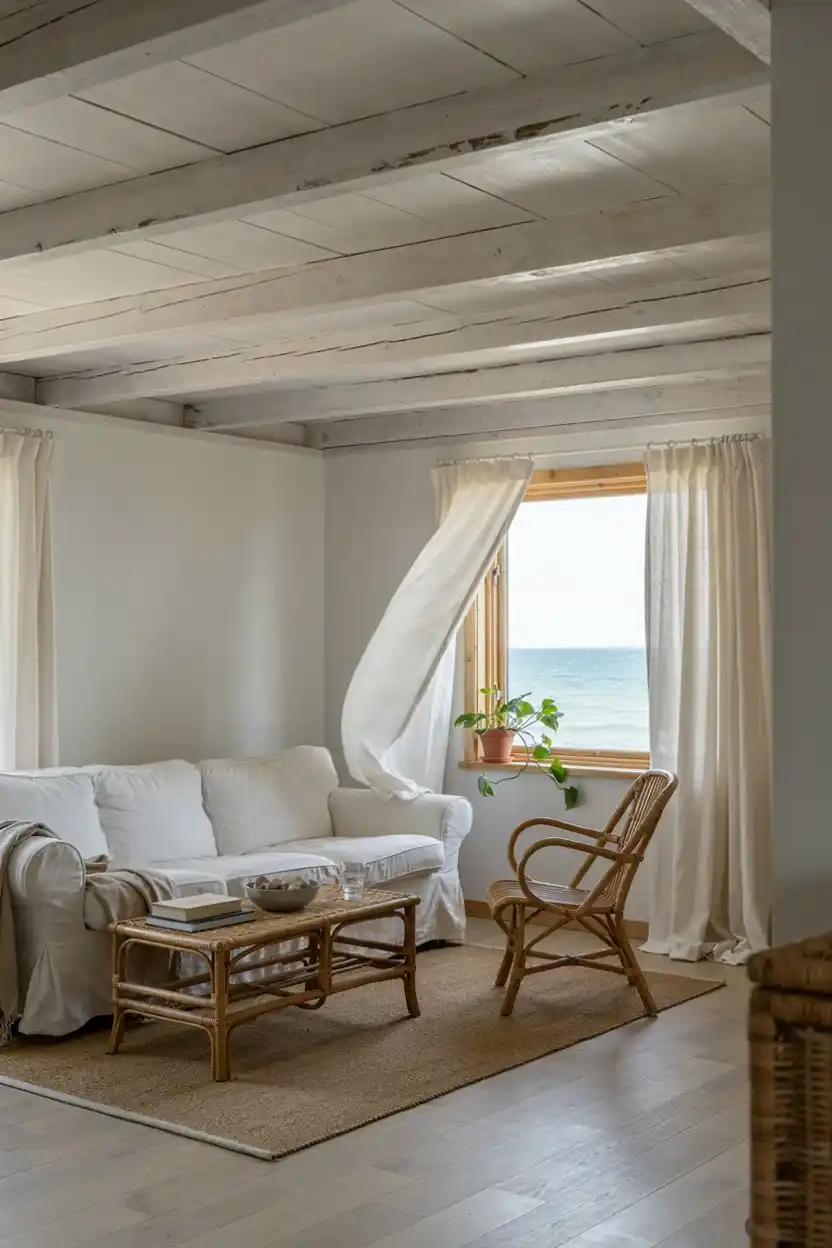
Whitewashed pine keeps the ceiling light and bright, ideal for coastal cottages and Scandinavian-inspired interiors where airiness is the priority. The pale finish reflects natural light rather than absorbing it.
This look pairs naturally with linen, rattan, and soft neutral palettes. It’s best suited for beach houses, sunrooms, and any space where you want beams without visual heaviness.
11. Steel-and-Wood Combination Beams for an Industrial-Modern Look
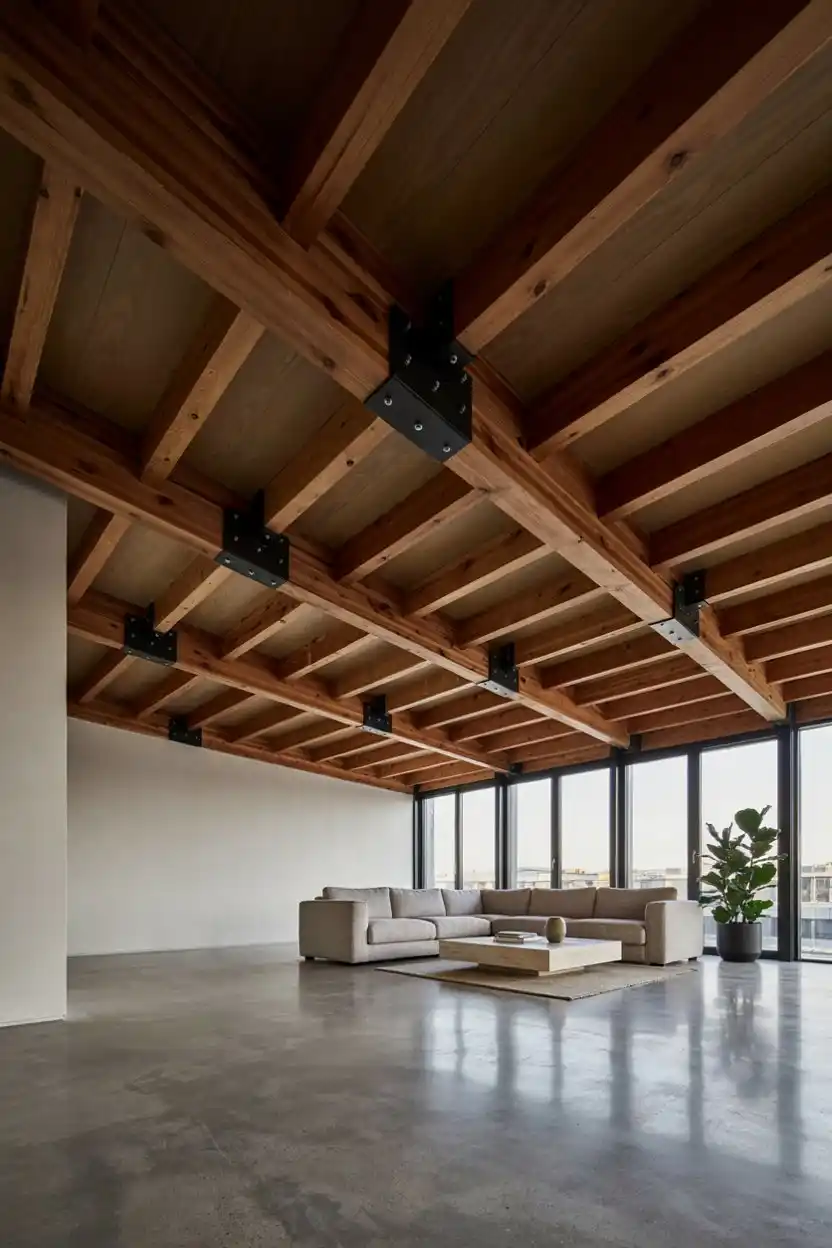
Combining wood beams with exposed steel brackets or connector plates adds an industrial-modern edge, showing off the engineering as part of the design. It’s a popular choice in new-construction homes with an urban aesthetic.
This style works best in open, modern spaces with concrete, glass, or metal finishes elsewhere in the room. It suits homeowners who want the warmth of wood without a purely rustic feel.
12. Vaulted Ceiling with Exposed Beams
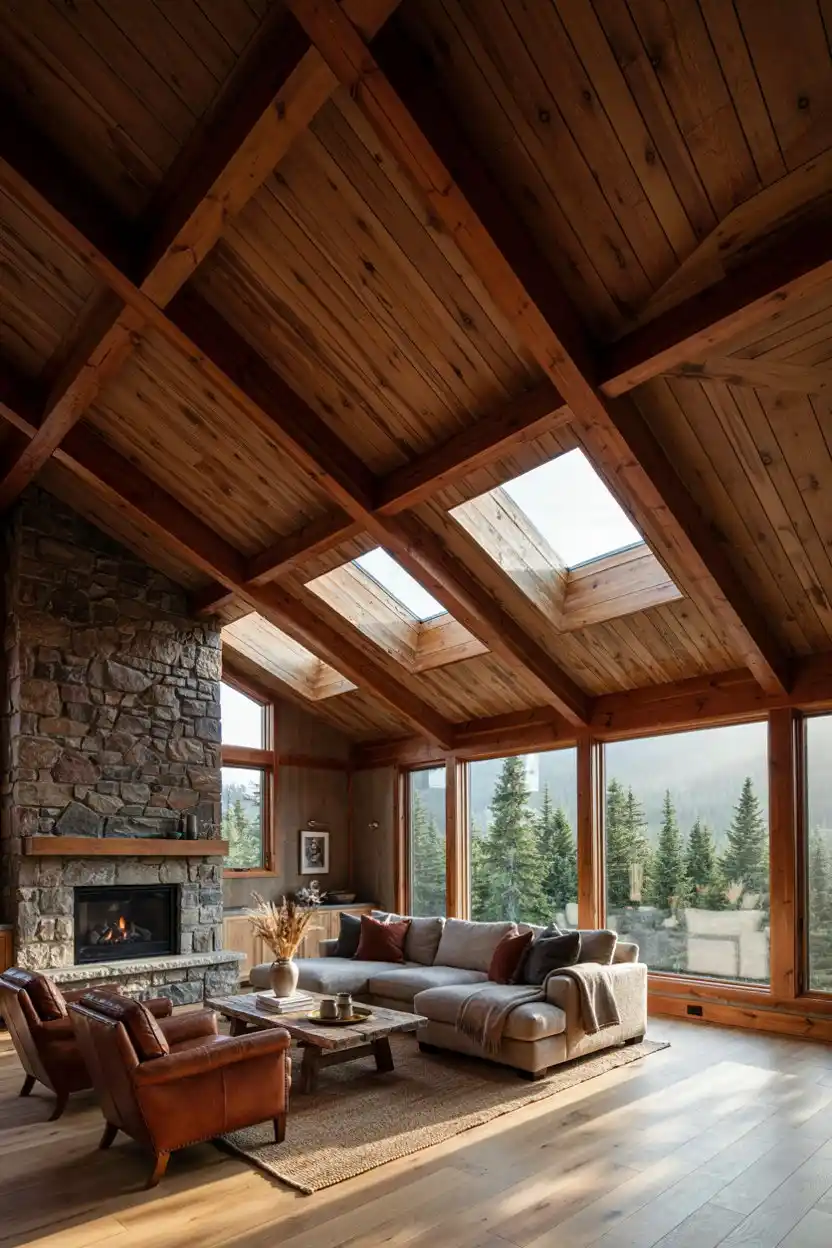
Vaulted ceilings with exposed beams create dramatic height and make even modestly sized rooms feel expansive. The beams typically follow the roofline, often meeting at a central ridge beam for a cathedral-style effect.
This style requires the right architecture to begin with, since it’s tied to the actual roof structure rather than a flat ceiling add-on. It’s best suited for great rooms, entryways, and homes already built with vaulted framing.
13. Kitchen Island Beam Accent
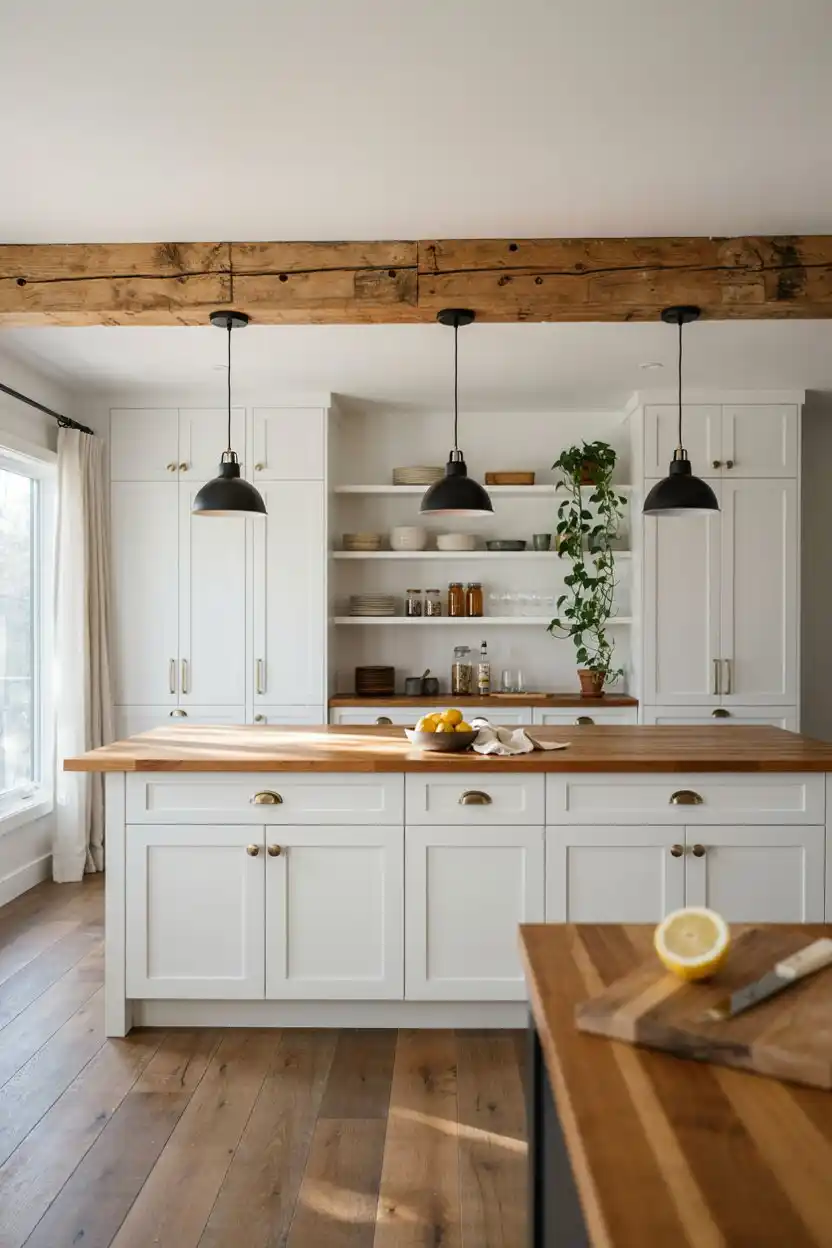
Rather than beaming an entire ceiling, a single accent beam positioned above a kitchen island adds architectural interest exactly where it’s needed, often doubling as a mounting point for pendant lighting.
This is a budget-friendly way to introduce the beam look into a kitchen without a full ceiling overhaul. It suits homeowners who want a focal point over the island without committing to a larger installation.
14. Beamed Ceiling with Recessed Lighting
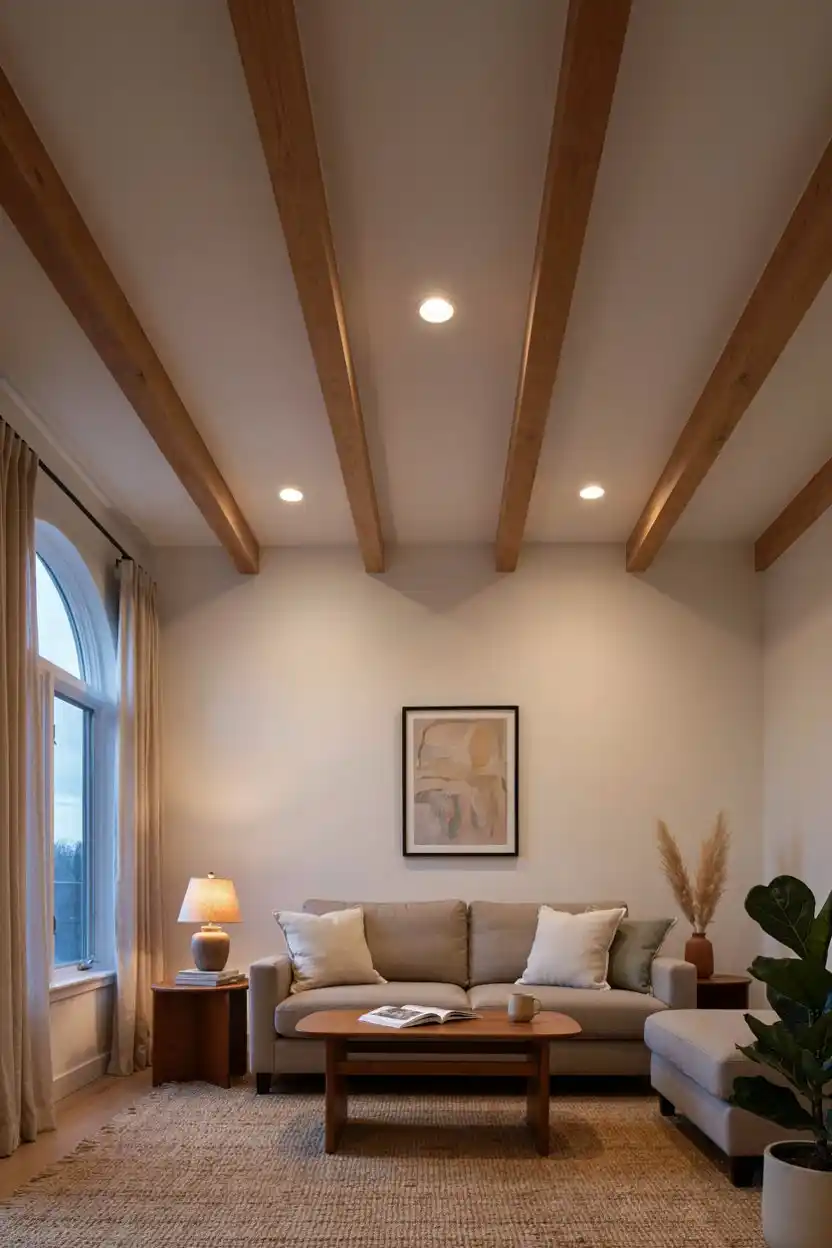
Integrating recessed lighting between ceiling beams solves a common complaint that beamed ceilings can feel dark, since the beams themselves can block ambient light from a central fixture.
Cans are typically placed within each beam bay for even, shadow-free lighting. This approach suits family rooms, kitchens, and any space where beams and everyday functional lighting both matter.
15. Beams Paired with Shiplap Ceiling
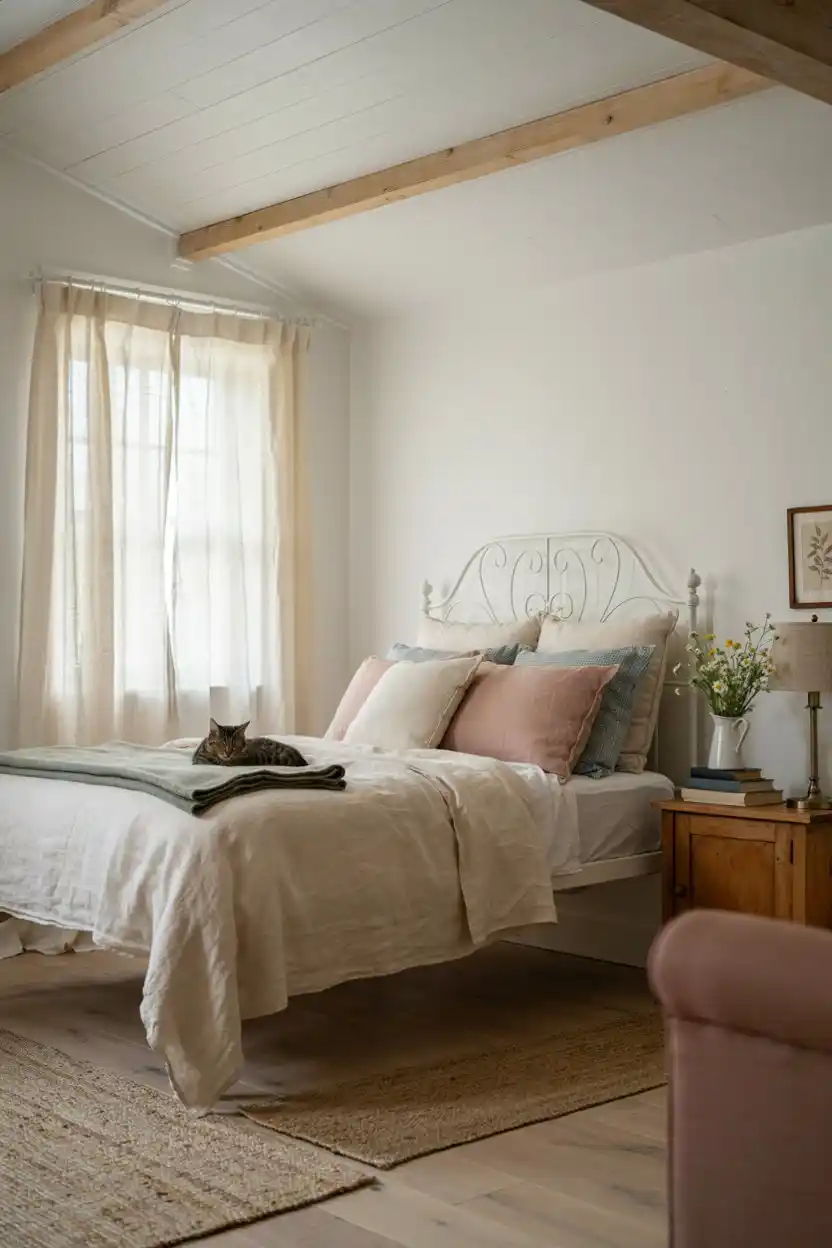
Pairing beams with a shiplap ceiling adds two layers of texture, the horizontal planking and the crossing beams, for a detailed, cottage-inspired look that feels intentional rather than busy.
This combination is especially popular in bedrooms, nurseries, and cottage or coastal homes. It suits homeowners who want a soft, textured ceiling with more visual interest than a flat painted surface.
16. Two-Tone Beam Ceiling: Wood Beams, White Ceiling
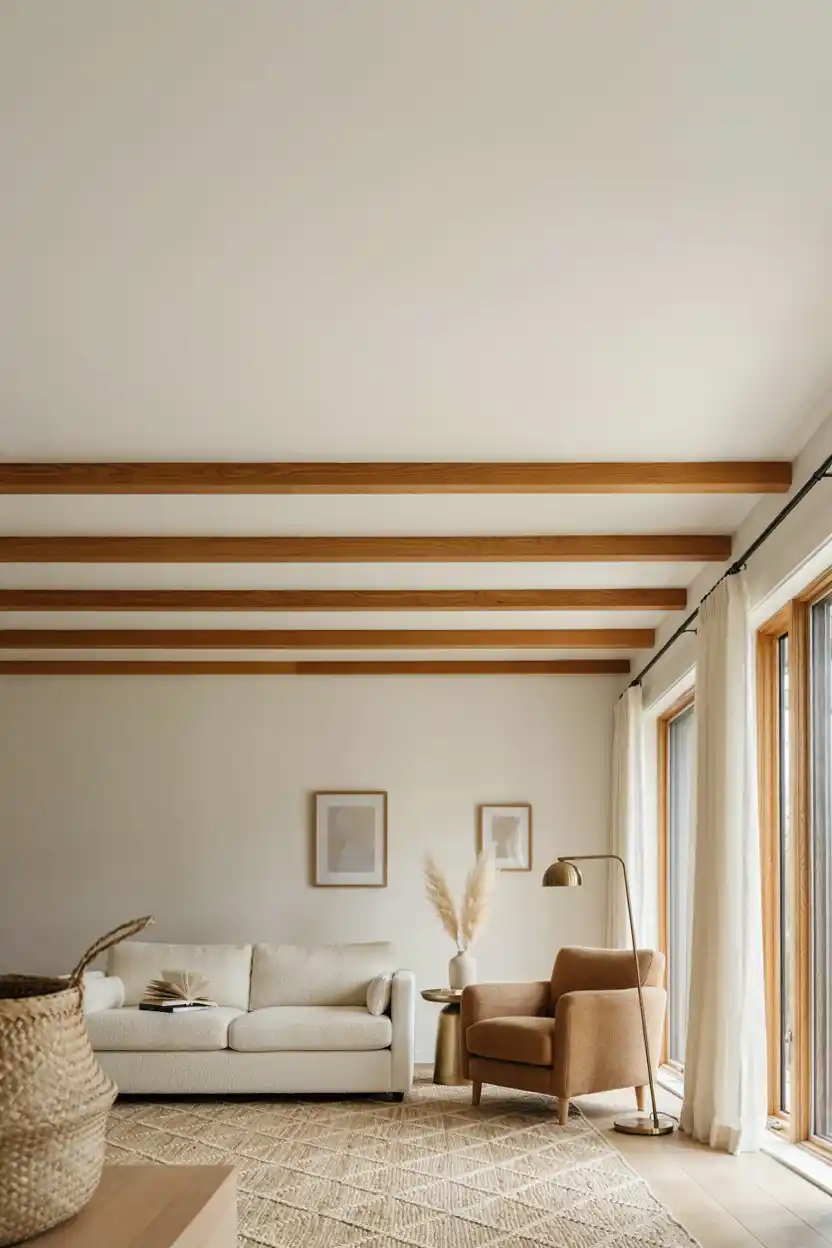
Keeping the ceiling surface bright white while leaving the beams in natural or stained wood creates a strong, clean contrast that reads as both modern and warm at the same time.
This is one of the most versatile beam styles, working across modern, transitional, and farmhouse interiors alike. It suits homeowners who want the warmth of wood without darkening the room.
17. Curved or Arched Beams
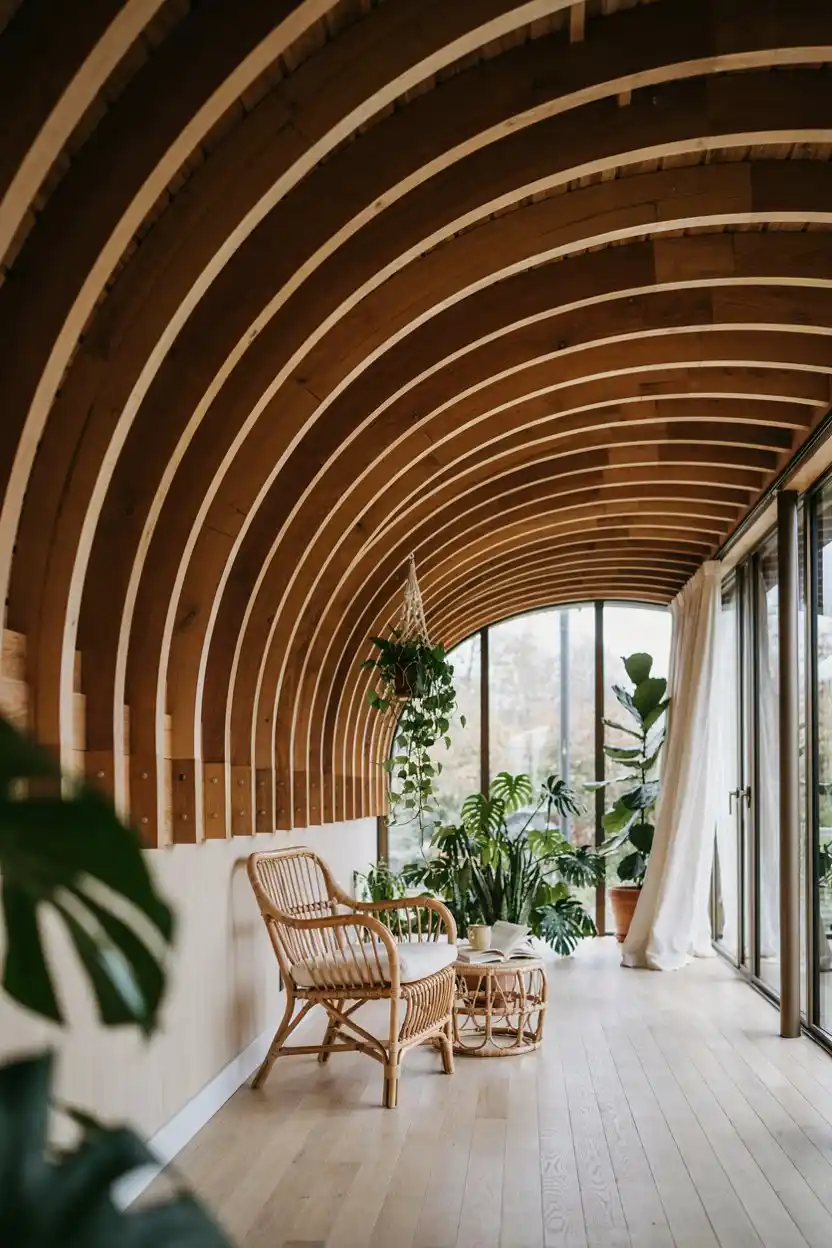
Curved or arched beams add a sculptural, custom quality that’s rarer and more architecturally complex than straight beams, often used in sunrooms, entryways, or homes with vaulted, curved rooflines.
Because bending or shaping wood this way requires specialized craftsmanship, this look tends to be a premium option. It suits homeowners with a distinctive architectural vision and a budget to match.
18. Minimalist Single Statement Beam
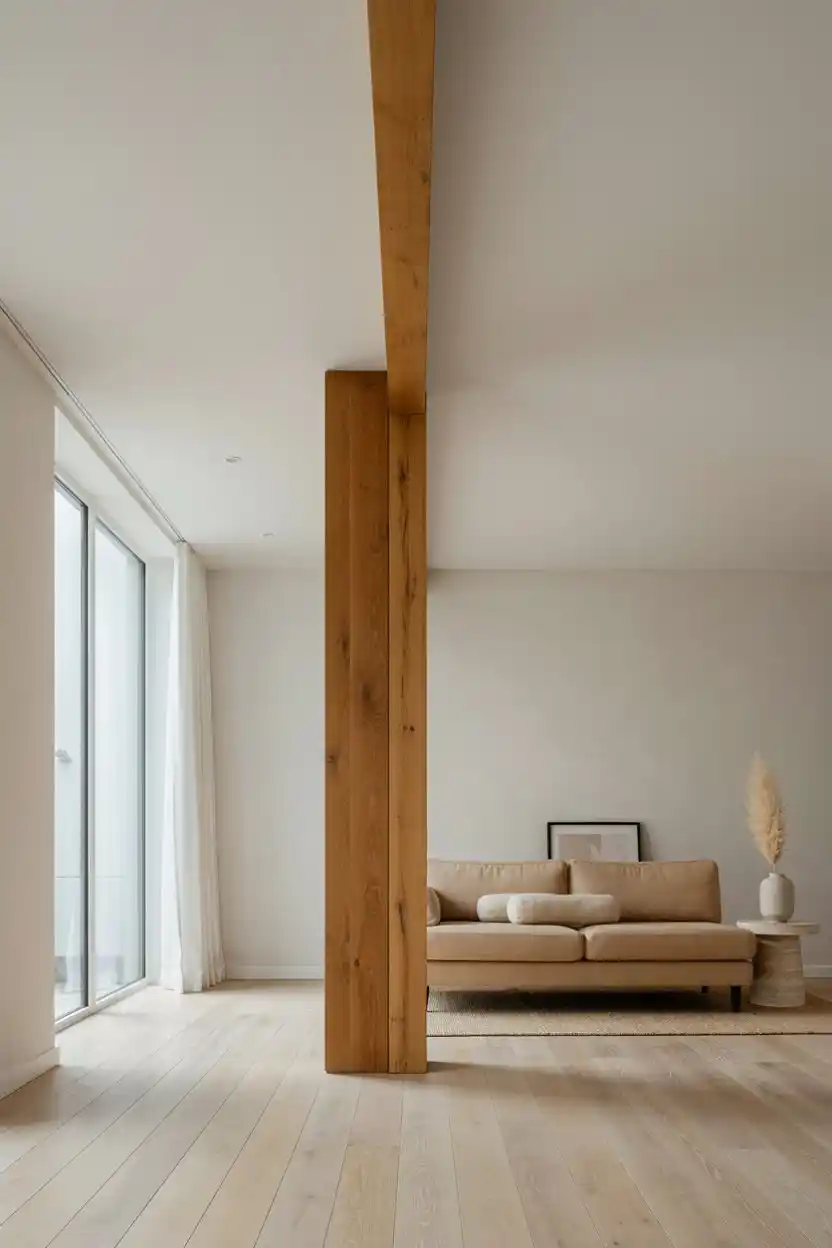
Sometimes one substantial beam says more than a full ceiling of them. A single statement beam, often oversized, draws the eye without crowding a minimalist space.
This approach suits modern and minimalist interiors where restraint is part of the design language, and it’s also one of the more affordable ways to add architectural interest since only one element is involved.
Planning and Buying Tips
Measure your ceiling height first
Beams typically take up 4 to 8 inches of vertical space depending on size, so rooms under 8 feet of ceiling height can start to feel cramped. Aim for at least 9 feet of ceiling height for a comfortable result with standard-sized beams.
Check for structural support
Real wood beams, especially load-bearing ones, may require a contractor to confirm that your ceiling joists or framing can support the added weight or to install blocking between joists for secure anchoring.
Decide between decorative and structural
Purely decorative beams (faux or hollow box beams) attach directly to drywall with adhesive and screws into joists, while structural beams are part of the actual roof or floor framing and involve more significant construction work.
Plan your spacing and layout
Beams are typically spaced 24 to 48 inches apart, either running the length or width of the room, in a grid, or as a single accent. Sketch the layout in relation to windows, light fixtures, and furniture below.
Factor in electrical and lighting needs
If you want recessed lighting, pendants, or a ceiling fan, plan the electrical layout before the beams go up, since running wiring afterward is far more difficult.
Choose the right beam size
Standard beam dimensions range from about 6×6 inches for a subtle look to 8×8 or 10×10 inches for a bolder statement. Larger rooms and higher ceilings can handle bigger beams without feeling overwhelming.
Ceiling Beam Cost Breakdown
Costs vary widely based on material, room size, and whether the project is DIY or professionally installed. Here’s a general breakdown to help you budget.
Budget ($200–$800)
Faux polyurethane beams for a single room, DIY installation with adhesive and screws, no structural work required. Covers materials for 3 to 5 beams in an average-sized room.
Mid-Range ($800–$3,500)
Real wood or box beams professionally installed, including staining or painting, basic electrical adjustments, and standard ceiling heights. Covers most kitchens, living rooms, and primary bedrooms.
Luxury/Premium ($3,500–$12,000+)
Structural or reclaimed wood beams, coffered ceilings, curved or custom-milled beams, and full-room installations requiring a contractor, engineer sign-off, or crane placement for large timbers.
Beam Materials Comparison
Use this comparison to weigh cost, durability, and best use case across the most common beam materials and types.
| Material/Type | Avg. Price per Beam | Durability | Best For |
| Faux Polyurethane | $50–$150 | High (won’t crack or warp) | DIY projects, renters, budget upgrades |
| Reclaimed Wood | $150–$500+ | High, but shows natural wear | Farmhouse, rustic, character-driven spaces |
| New Solid Lumber | $100–$400 | Very high | Custom stain/paint jobs, structural use |
| Box/Hollow Beams | $80–$300 | Moderate to high | Coffered ceilings, symmetrical grids |
| Steel-Reinforced Wood | $300–$900+ | Very high | Industrial-modern, load-bearing spans |
| Cedar | $150–$450 | High, naturally insect-resistant | Cabins, mountain homes, natural finishes |
Maintenance Tips
● Dust beams every few weeks with a microfiber duster or vacuum brush attachment to prevent buildup, since dust and cobwebs are more visible on exposed horizontal surfaces.
● Wipe painted or stained beams with a slightly damp cloth for deeper cleaning; avoid soaking wood, which can cause warping or finish damage.
● Recoat exposed real wood beams with a fresh clear coat or wax every few years to maintain protection and sheen, especially in humid climates.
● Watch for hairline cracks or checking in solid wood beams, which is normal as wood dries and settles, but have a professional inspect any structural beam showing significant movement.
● Keep humidity levels in the home relatively stable, since large swings can cause real wood beams to expand, contract, or crack over time.
Frequently Asked Questions
How much do ceiling beams cost to install?
Ceiling beam installation typically ranges from $200 for a small DIY faux beam project to $12,000 or more for a full-room installation with real or structural wood, professional labor, and finishing work.
Are faux wood beams as good as real wood beams?
Faux polyurethane beams are lightweight, resist cracking and warping, and are far easier to install than real wood, making them a practical choice for most homeowners, though real wood offers unmatched texture and authenticity for those prioritizing natural materials.
Do ceiling beams make a room look smaller?
Beams can make a low ceiling feel lower, but in rooms with 9 feet or more of height, they typically add visual interest and architectural depth without shrinking the perceived space.
Can you add ceiling beams to an existing flat ceiling?
Yes, decorative beams, including faux and hollow box beams, can be added to an existing flat ceiling using construction adhesive and screws anchored into the ceiling joists, without any structural changes to the home.
What is the standard spacing for ceiling beams?
Ceiling beams are most commonly spaced 24 to 48 inches apart on center, though the ideal spacing depends on room size, beam thickness, and the overall look you’re aiming for.
How to Choose the Right Ceiling Beams for You
The right ceiling beam style comes down to three things: the space you’re working with, your budget, and the aesthetic you’re already building around it. A low-ceilinged room calls for lighter, whitewashed, or faux beams, while a vaulted great room can handle thick, dark, structural timber. If budget is the main constraint, faux beams or a single accent beam deliver most of the visual impact at a fraction of the cost of a full real-wood installation.
Let your existing decor guide the finish: whitewashed and cedar tones for coastal or cabin interiors, matte black or steel accents for modern spaces, and rich walnut or reclaimed wood for warm, traditional rooms. However you approach it, ceiling beams are one of the most effective ways to turn a plain ceiling into the most memorable feature in the room.
Ready to bring your ceiling to life? Start by measuring your space and picking the beam style that matches your home’s character, then reach out to a local contractor or supplier to get a firm quote for your project.


- Be Respectful
- Stay Relevant
- Stay Positive
- True Feedback
- Encourage Discussion
- Avoid Spamming
- No Fake News
- Don't Copy-Paste
- No Personal Attacks
- Be Respectful
- Stay Relevant
- Stay Positive
- True Feedback
- Encourage Discussion
- Avoid Spamming
- No Fake News
- Don't Copy-Paste
- No Personal Attacks
